
The Global Mosse Lectures is a platform for innovative thinkers to confront and address the challenges that face our global societies. The Series is managed and supported by The Mosse Foundation and the George L. Mosse Program in History at the University of Wisconsin–Madison.
Upcoming Events
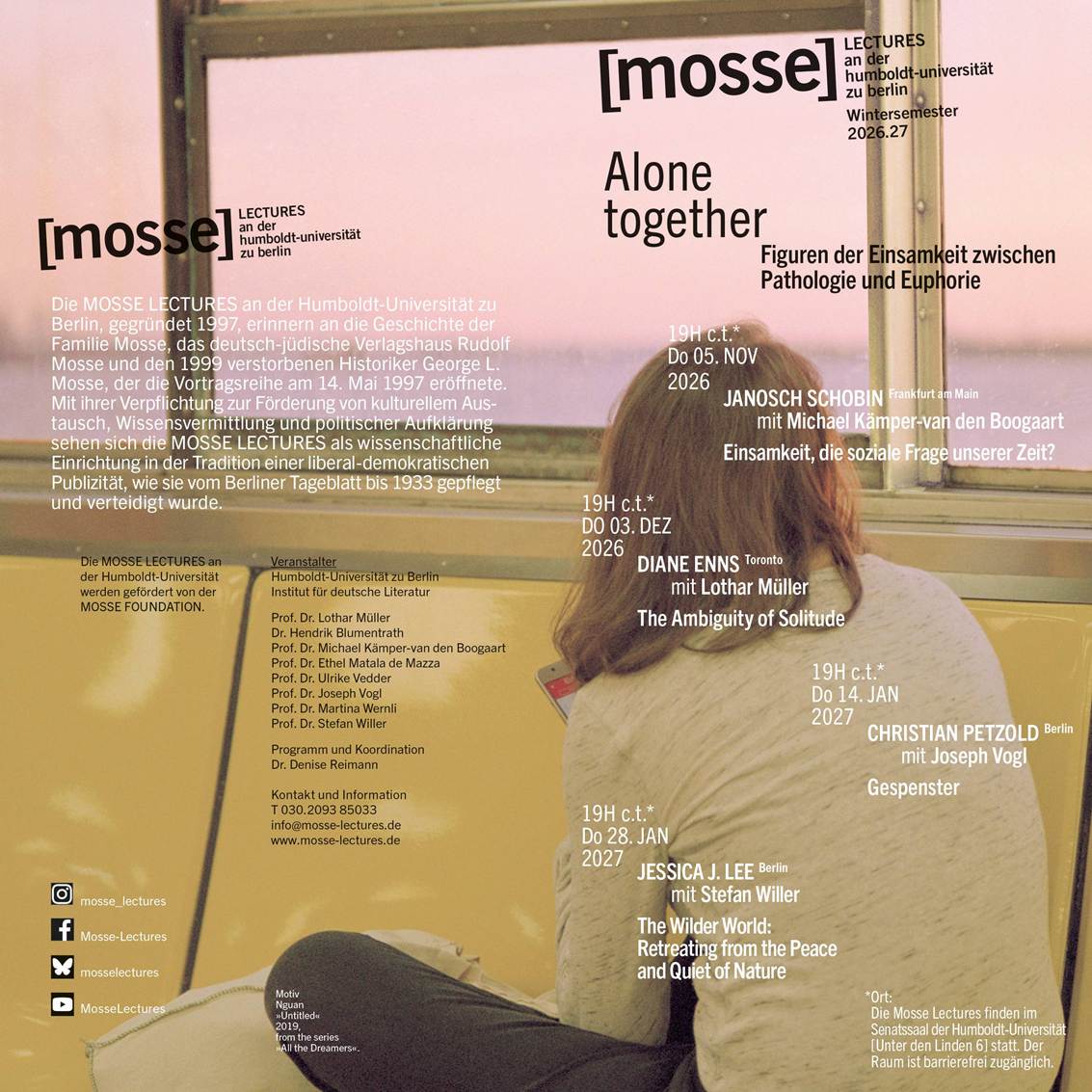
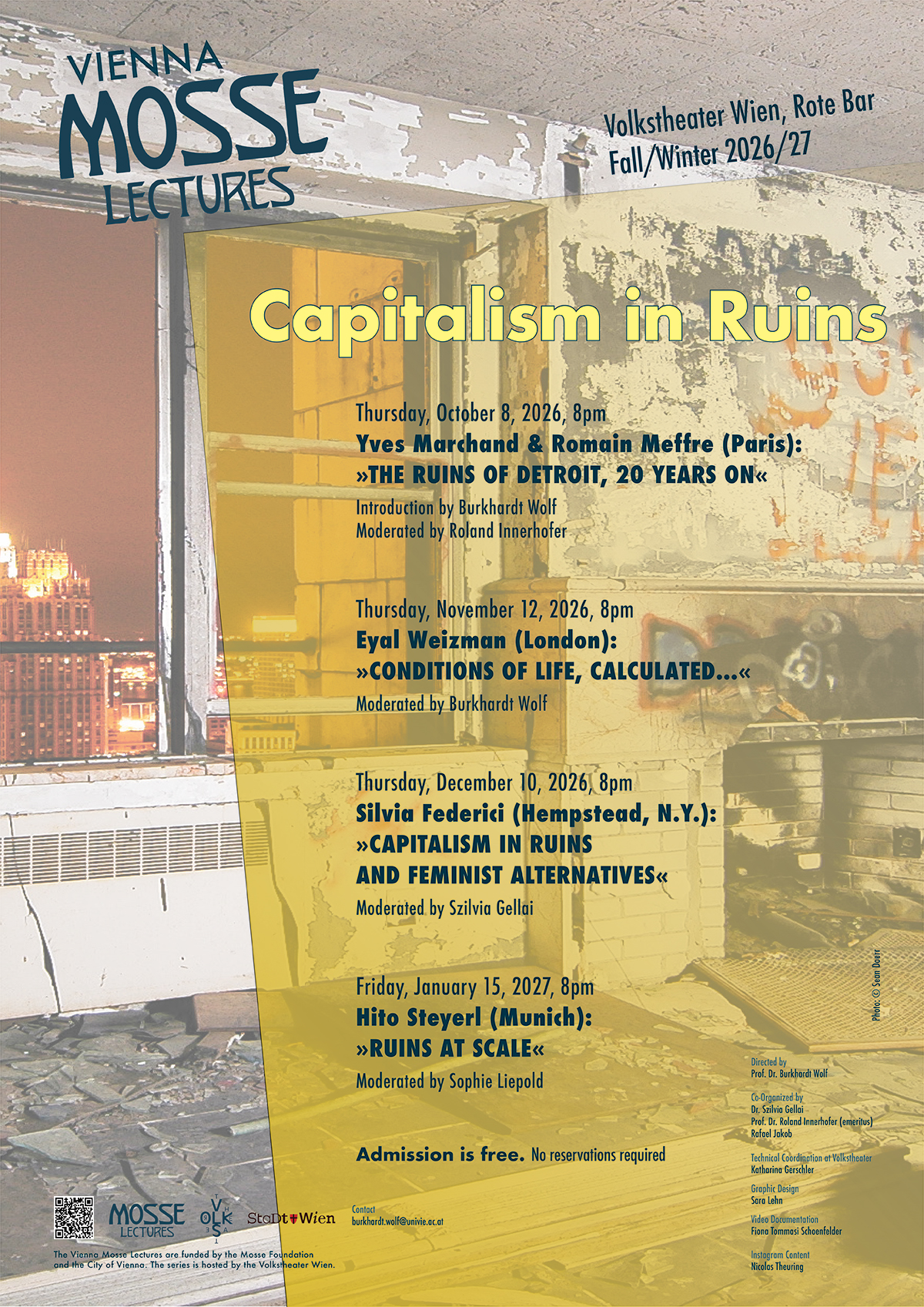
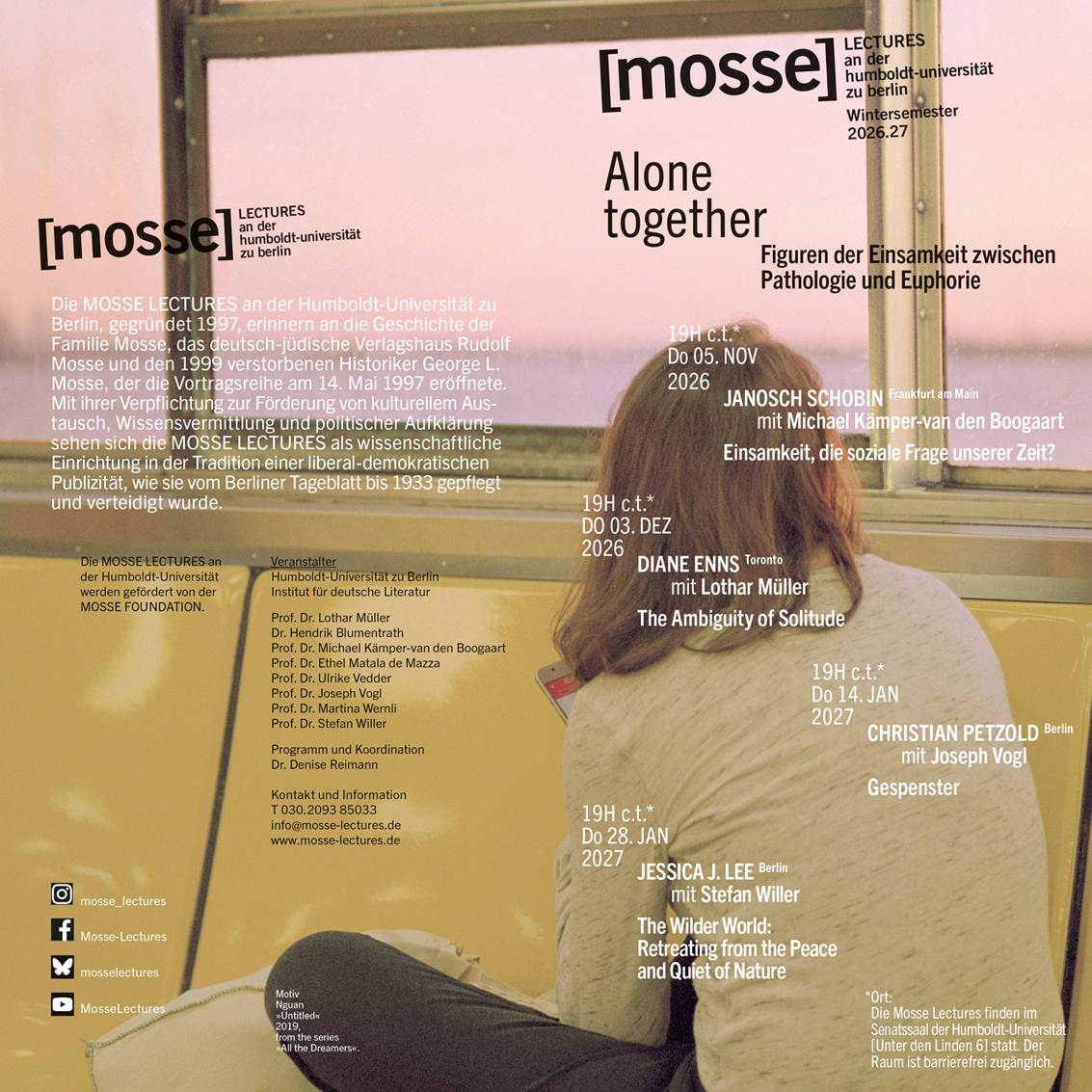
What’s Happening Next?
Recent Recordings:
Learn About Recent Mosse Lectures:
-
2026: Andy Horowitz, “Katrina’s America: New Orleans’s History and the Future of the Climate Crisis”
-
2026: Paula A. Oppermann, “Thunder Cross: Fascist Antisemitism in Twentieth-Century Latvia”
-
2026: Sabine Müller-Mall, “Künftige Freiheit und die Gegenwart des Verbots” / “Future Freedom and the Presence of Prohibition”
-
2025: Jule Govrin, “Verbotene Körper? Demokratische Sorge und körperliche Selbstbestimmung in Zeiten autoritärer Austerität”/”Forbidden Bodies? Democratic Worries and Bodily Self-Determination in Times of Authoritarian Austerity”
-
2026: Hannes Bajohr, “Wirklichkeit auf Abruf: Künstliche Intelligenz und die Welten des Romans”/”Reality on Demand: Artificial Intelligence and the Worlds of the Novel”
-
2026: Heike Behrend, “Schrecknisse des Wissenwollens: Frageverbot und die Fraglichkeit von Fragen in der ethnografischen Feldforschung” / “The Terror of the Desire to Know: The Prohibition on Asking Questions and the Questionability of Questions in Ethnographic Fieldwork”
-
2026: Tom Lanoye, “Mosse Fonds 2026 Lecture”
-
2026: Adrian Daub, “‘Noch’, ‘Nicht mehr’, ‘Endlich wieder’: Kollektive Zeitwahrnehmung und Verbotsdiskurse” / “‘Still’, ‘No Longer’, ‘Finally Again’: Collective Perception of Time and Discourses on Prohibition”
-
2026: Benjamin Steininger und Alexander Klose, “Chemisch Verfügbar. Zufluss und Entzug an den Grenzen der Petromoderne” / “Chemically Available. Inflow and Outflow at the Limits of Petromodernity”
-
2026: Marina und Herfried Münkler, “Bürgerschaft und Mediale Verfügbarkeit. Transformationen des Demokratischen in der Plattformdemokratie”/”Citizenship and Medial Availability. Transformations of the Democratic in the Platform-Democracy”
-
2026: Camille Robcis, “The War on Gender: The History of a Dangerous Idea”
-
2026: Chad S.A. Gibbs, “Survival at Treblinka: Geography, Gender, and Social Networks in Jewish Resistance”
-
2026: Renato Moro, “A Disputed Resistance: The Memory of Anti-Fascism in Italy (1945-2025)”
-
2026: Theodora Becker, “Dialektik der Hure. Über die (Un-)Verfügbarkeit von Prostitution und Sexarbeit”/”Dialectic of the Harlot. On the (Un)availability of Prostitution and Sex Work”
-
2026: Daniel Kelhmann, “The Long Night Comes to an End”
-
2026: Kristin Surak, “Migration in the 21st Century: What Elite Mobility Reveals About the Present and Future of International Migration”
-
2026: Hisham Matar, Daniel Mendelsohn, “On Exile: A Conversation” with Negar Azimi
-
2026: Robert Beavers, “’Diminished Frame’ and ‘The Sparrow Dream’”
-
2026: Alan Pauls: “The Coup Factor”
-
2026: Kim Lane Scheppele, “Counter-Constitutions: On Being the Object of a Coup”
-
2026: Joseph Vogl, “Epoche des Amok”
-
2025: Mouhamadou El Hady Ba, “Decolonial Coup d’Etat?”
-
2025: Gabriela Ivens, “Nature as a Digital Witness: Using Environmental Clues to Investigate Human Rights Abuses”
-
2025: Anna-Bettina Kaiser, “Staatsstreich, Ausnahmezustand, Regression”/”Coup d’état, State of Emergency, Regression”
-
2025: Irina Scherbakowa: “Der lange Schatten des Stalinismus. Putins Russland 2025” / “The Long Shadow of Stalinism: Putin’s Russia 2025”
-
2025: Doris Kearns Goodwin, “The Lesley University 2025 Thought Leadership Series”
-
2025: Eliot Higgins, “Demanufacturing Consent: How Disordered Discourse is Destroying Democracy”
-
2025: Kathryn Brackney, “Surreal Geographies: A New History of Holocaust Consciousness”
-
2025: Shaul Magid, “On the Obsession with Defining Antisemitism: Why Do Jews Find It So Difficult to Talk about Antisemitism Today?”
-
2025: Bashir Bashir, “The Holocaust and the Nakba: On the Ethics of Egalitarian Binationalism”