
2026: Hisham Matar, Daniel Mendelsohn, “On Exile: A Conversation” with Negar Azimi
Hisham Matar, Daniel Mendelsohn, “On Exile: A Conversation” with Negar Azimi
New York University Mosse Lecture
mosselectures.wisc.edu/nyu
Friday, 13 February 2026, 17:00 EST

The Remarque Institute
60 5th Ave, 8th Floor
New York, NY 10011
Chair: Stefanos Geroulanos (New York University)
Sponsored by:
Global Mosse Lecture Series
New York University Remarque Institute
New York University Migration Network
Lecture Series Overview: Exile was a deeply personal and profoundly intellectual theme for two generations of European writers, including George and Hilde Mosse, as well as the Institute’s namesake: Erich Maria Remarque. Living in exile deeply influenced how Europeans—especially exiled Germans, European Jews, and Russians—abroad thought of their relationship to the homelands to which they aspired to return. Some sought to express the ways in which they were carrying something of the Old World with them, others to think about that world and its inaccessibility. Reflecting on Hilde’s life in March 1982, George outlined how Hilde found “an almost superhuman strength” after being displaced. After leaving Germany, she overcame her natural shyness and self-doubt to speak defiantly against fascism on Swiss radio out of Basel. It was exile that drove Hilde to dedicate herself to cultivating critical minds and improving the mental health landscape of New York City.
As scholars have long recognized—and as they begin to ask new questions of the subject—intellectual attitudes on exile of course varied considerably and have been largely determined by the experience itself, something scholars long recognized but have begun to interrogate anew. Remarque himself famously told a reporter that “I do not think in German nor feel German, nor talk German. Even when I dream it is about America, and I swear, it is in American,” whereas Thomas Mann no less famously declared upon arriving in America that he hadn’t left Germany behind, that Germany was simply where he was. Others—from Alexander Solzhenitsyn, who wrote much about his own exile, to Zhang Ailing, who never managed to break into American letters as she had in China—inhabited variable, often extremely precarious worlds, in which they both profited creatively and suffered greatly. The émigré generation has continued to provide an intellectual framework for artists and scholars currently displaced from their homelands.
And yet exile is historically contingent; it remains today a particularly tricky and confusing concept. Is it something we use specifically for intellectuals and to understand prohibited speech? Does it really exist anymore in the same way that Hilde and George experienced in the twentieth century? How has it mutated? In what way can we think of refugees or those seeking political asylum as exiles? How do we single out—or interweave—these different concepts? Put another way, how do we rethink the history of the twentieth century across the history of exile from our perspective today? And, in more contemporary questions: Who gains the place or disposition of an émigré, of a writer in exile—and how do they do so? What kind of symbolic capital does exile rely on, or feed into? How and where are exiles welcomed today? In what ways is the tide shifting given new political trends and policies on migration and refugees? Where does the concept begin and end?
Event Transcript:
Stefanos Geroulanos: Good evening, I’m Stefanos Geroulanos, I’m the director of the Remarque Institute.
Thank you for both braving the cold and also enjoying the first day, skipping the first day that’s actually half-decent in terms of the weather to come to a discussion for which the cold is a pretty standard, ever-present but insufficient metaphoric on exile. It used to be a concept that was much discussed, especially in New York. One identified with the experience of the twentieth century, the violence of states, their capacity to create some of the worst circumstances on their citizens. And I’m very pleased that in the middle of today’s horrors, there’s at least, shall we say, renewed appetite for discussing this matter.
It’s perhaps less obvious today what exile means than it was even twenty years ago. I want to say a couple of things about the context in which we’re hosting this discussion today at the Remarque Institute through the Mosse Lectures and in coordination with the NYU Migration Network.
As many of you will know well, exile was a deeply personal and profoundly intellectual theme for two generations of European writers, including George and Hilde Mosse, after whom the lectures are named, as well as the Institute’s namesake, Erich Maria Remarque.
Over the twentieth century, living in exile deeply influenced how Europeans and others abroad, notably from our perspective here at Remarque, German, Jewish, and Russian intellectuals, how they thought of their relationship to the homelands to which they aspired to return. Some sought to express the ways in which they were carrying something of an old world with them, others to think about that world, its inaccessibility, and its failures.
Intellectual attitudes on exile, of course, varied considerably and have been largely determined by the experience. Remarque himself famously told a reporter that “I do not,” quote, “I do not think in German, nor feel German, nor talk German, even when I dream it’s about America.” Well, long gone. “And I swear,” he goes on, “it is in American.” No, not even in English, he says, in American. whereas Thomas Mann no less famously declared upon arriving in America that he hadn’t left Germany behind because Germany was simply where he was. George Mosse was less sure. “I myself never doubted that I was German,” he said, “until well into exile.” So he wrote in his memoir, in a passage actually trying to negotiate his Jewishness. Others from Alexander Solzhenitsyn, who wrote much about his own exile to Zhang Ailing, who never managed to break into American letters as she had in China, inhabited variable often extremely precarious worlds, which offered both creativity but also great anguish.
But it is also worth noting that, as forced migration has once again worsened dramatically in recent decades, as walls physical, digital, and metaphorical are being raised and as conditions of post-globalization, whatever exactly post-neoliberalism is, confront the new face of the fascism today around the world. The very concept of exile has frayed, where it seems to refer either to the past century or to a predominantly intellectual experience, whose contours are quite unclear. So I don’t know if a starting point can have parts, but this is one part of our starting point from Remarque’s time to today.
I am delighted that we get to hold this first Mosse Lecture at Remarque as a public conversation under the auspices of the NYU Migration Network. Thank you Natasha Iksander for working with us. The Migration Network brings together NYU faculty and affiliated researchers whose work engages with questions of migration and mobility, and we profoundly agree with the network’s urgency, purpose, and scholarship today. From the fellows that we’ve hosted at Remarque to events that we’ve held involving refugees from Russia or discussing American debates from the Nakba to Gaza. The Migration Network has been an ally, and it’s great to be able to work together properly for the first.
The Mosse Lectures, meanwhile, for those of you who haven’t had the chance to attend one before, seek to confront daunting contemporary socioeconomic, geopolitical, and environmental challenges by creating the opportunity for the development and free exchange of pressure ideals. They aim to popularize new and creative approaches to pressing problems of our time, from the emergence of authoritarian forms of government to political polarization and socio-economic inequality.
(00:04:47,990 –> 00:04:49,590)
Now, of the two siblings, George Mosse is the better known, thanks to his pioneering work in the study of Nazism, which very unusually for the time he treated as an intellectual and cultural revolution, not some surprising barbarism, not a specific effect of the Nazi leadership or irrational ideas. His work, including Nationalism and Sexuality, The Crisis of German Ideology, The Image of Man, and The Nationalization of the Masses, remain at the front of cultural history on National Socialism today. It was also, in a sense, if that concept exists, my Dr. Grossvater, my doctoral grandfather, doctoral father of my doctoral father.
His memoir, Confronting History, brims with thoughts, often quite touching, often very pained, on the exile that he and his family went into, crossing, in his case, from his boarding school in the middle of the night into Switzerland in 1933, and then on exile’s crushing effects on their formerly politically visible family, where, quote, “exile meant recriminations in the family. The soul searching of what could have been had one fought harder,” but also of its alternating effects on himself, where at times he despaired and also wrote, “I never experienced the personal and mental deprivations of exile. On the contrary, I never missed the past. exile energized me and challenged me as nothing ever had done before.” It became part of his participation in the anti-fascist struggle and to his thinking as it developed. And later, quote, he writes, “I wanted to be measured only by my own accomplishments, which were the fruits of exile, and not by what my name might represent.”
That’s for George. But we’re informally thinking of this set of Mosse Lectures on exile. And by we, I mean, Skye, where are you, Skye? There you are. Skye Doney, who runs the Mosse Program at Wisconsin, were informally thinking of the set of Mosse lectures in exile by reference to Hilde instead, who said little publicly about herself. Reflecting on her life in 1982, George Mosse outlined how she had found an almost superhuman strength after being displaced from Germany to overcome her shyness and self-doubt and become a
psychoanalyst and to speak defiantly against fascism on Swiss radio out of Basel. Exile drove Hilde to dedicate herself as a child psychiatrist, working at Queen’s General Hospital, and more importantly, founding and working in the Lafargue Clinic in Harlem together with Frederich Werthem, following on Werthem’s discussions with Ralph Ellison and Richard Wright.
The Lafargue Clinic operated out of a church basement on 133rd Street, and it offered free and near-free psychiatric treatment to Black residents in Harlem who faced discrimination or who couldn’t afford hospital beds. I don’t think that I need to explain what the radical project this was for the period 1946-1958 when it operated, but I do want to add here that the doctors served there, and service seems the right term for this, were predominantly exiles, Hilde, of course, among them.
Now, I’m delighted that we get to bring together in this discussion three astonishing writers. I’m not going really to introduce them because you wouldn’t really be here if you knew nothing about them. And second, because I want to let them speak about themselves without the kind of pedigree introduction that we usually end up going with. But I do want to say a few words about them and the theme.
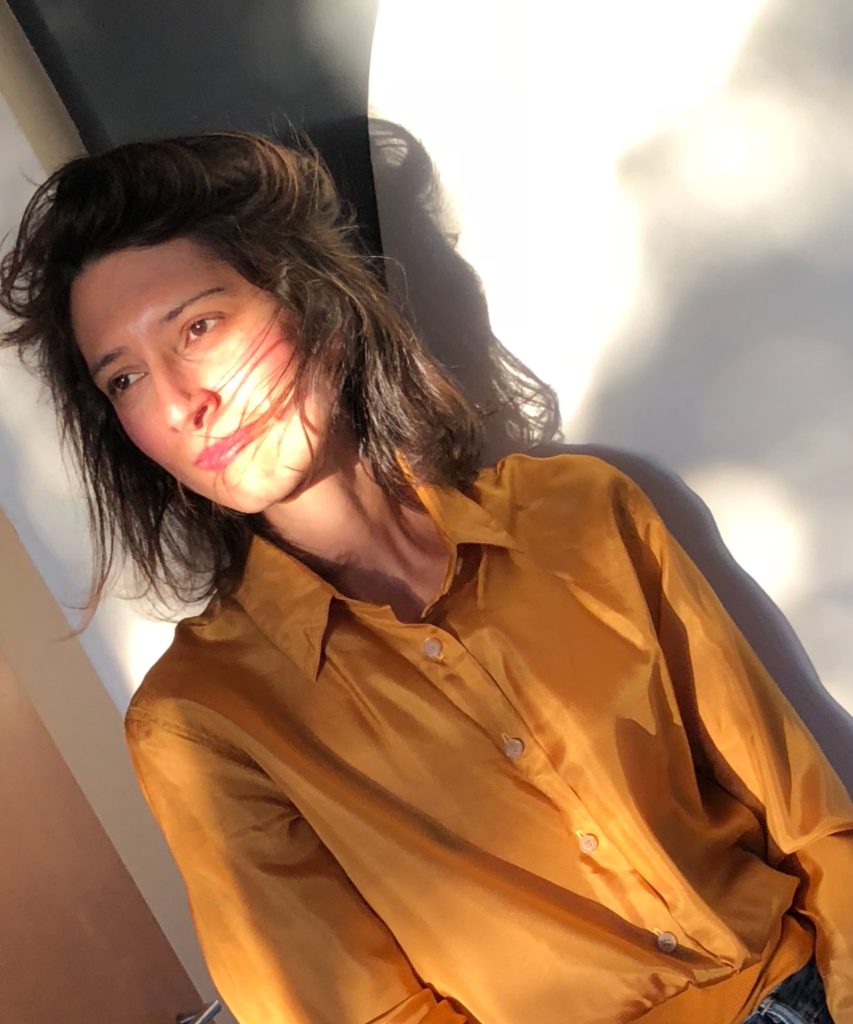
Moderating the discussion will be Negar Azimi, whom you’ll know as the editor-in-chief of the publishing and curatorial project Bidoun, but to put a plug-in for a new project, also an editor of Equator, a new magazine of politics, culture, and art. That’s not to introduce Negar, it’s to introduce Equator. So she has repeatedly written about exiles from Edward Said to Fanon to Ahmed Hussain, and about exile as such, too. In one podcast, she quotes Adorno, that everything is a commodity, even language, and to resist this state of affairs is the responsibility, the intellectual mission of the exile. Whereupon she adopts the point to ask about the form of language, the syntax, the style that one might adopt in order to follow this issue.
All three of Hisham Matar’s novels are invested in questions of exile, perhaps most of all the Pulitzer Prize winning The Return, but also now in his most recent book, My Friends. He speaks in a recent interview about exile in a way that I found very moving. He phrases exile from Libya and especially Egypt in terms of survivor guilt, noting at once its presence when he left at the age of 15 for London, but then emphasizing how this also doubled the violence of the world on him. Forgive me, all of you, for reading your words back to you, you’re exposed much more fiercely to the consequences you’re less protected
by the accumulation of experiences and he goes on to dispel what he calls “the fantasy,” “the fantasy of the exile is I will remain the same and my home will remain the same and at some point in the distant future these two things will be reunited and we live happily ever after. Thirty-three years of exile in his case. in My Friends he writes also several beautifully ambiguous passages and one passage that breaks through the narrative. He calls exile “a thermometer of our times” and later talks of the game was not asking where your interlocutor is from quote “an immigrant’s test of discipline most probably ancient for this instinct to pass unnoticed to veil oneself it must surely be as old as time as old as exile, as old as when Adam and Eve cast out of Eden and sent down to earth were made to live on opposite sides of the empty planet.”
(00:10:28,240 –> 00:10:31,220)
I struggled to decide meanwhile what to reference from Daniel Mendelsohn’s work. As with Matar’s The Odyssey and The Figure of Telemachus especially seemed to run through it all, long before his beautiful translation of The Epic which came out last year. I then wondered about his translations ofin his version of Figadus, Fugitives, which features exiles coming to terms with life in Alexandria, but conniving as to how they can overthrow the Byzantine Emperor, a subject that speaks for Cavafy of his present diaspora as well.
From The Lost to Three Rings, he writes about departure and exile the departure that is both an escape and an exile, of Aeneas and of Cain, and yet also the past century’ destruction in terms always entwined with the possibility, if such there is, of looking again at these classic figures to think about the present. And the translations as well as in the memoirs, he remains very careful about the class meanings of the word exile and he also sometimes uses it as an active verb, to exile, something that reminds us today again of the double inspiration that exile is a condition but also a political act.
Last words before we begin. I want to thank Roger and Hans Strauch, the co-trustees of the Mosse Foundation, and Skye Doney, the director of the Mosse Program at the University of Wisconsin–Madison, who have worked with us to establish the Mosse Lectures. I also want to thank Natasha for proposing that we set this up as an NYU Migration network public conversation, and for recommending both Daniel and Hisham for this discussion as we first start, and then for working closely with us to organize the event. And last but not least, I want to thank Sam Paul, Amy Nguyen, and Sarah Carliner. Sarah’s still downstairs, when you met downstairs. You worked with me at the Remarque Institute. Who’ve done the organizational work for today, including for our reception afterward. And no further ado from me, so .. Thank you.
Negar Azimi: Thanks, Stefanos, Thank you Skye, and thank you, Natasha, for hosting us. It’s such a huge pleasure and privilege to be in conversation with Daniel and Hisham, two writers whom I admire very much, both of whom have work that touches on exile in completely surprising, idiosyncratic, but in original ways. I hope we can begin to touch on each of their respective practices tonight.
At the same time, I hope we can begin to talk about contemporary forms of exile, which is just to say, I think most people in this room can agree that displacement, whether psychic or physical, is increasingly the norm, rather than the exception. One can even say that the modern condition is one marked by estrangement, whether that means estrangement in one’s homeland, in one’s government, or in fact in one’s self.
If the Cold War was the dominant paradigm through which we began to think about exile in the latter half of the twentieth century, how can we begin to think about it today, with revealing frameworks? At the same time, we’re presiding over a moment at which the sort of post-war liberal order is crumbling and the sort of the mythology that institutions and governments would protect the exile and more specifically the twentieth century creation of the refugee has been crumbled. So where does that leave us now?
Another question that might animate this discussion. If we have time, I’d also like to open up the question of how the figure of the exile has inflected art. We can say that most of modern culture is actually a product of exiles. Greenwich Village, where we are today, is sort of a bohemian HQ for exiles for many years. Where are we now? I’d like to quote Edward Said, quoting the critic George Steiner on the subject. Quote, “it seems proper that those who create art in a civilization of quasi-barbarism which has made so many homeless should themselves be poets, unhoused and wanderers across language eccentric, aloof nostalgic, deliberately untimely.” So can we speak about what it means to be a wanderer across language or deliberately untimely?
(00:14:57,960 –> 00:15:00,220)
So there’s some thoughts to frame the discussion, but I’d love for you guys to digress as you wish. Maybe we can start by I having each of you read from your respective works that address this question in exile. I think which one of you wants to go first?
Hisham Matar: I’d love to hear Daniel.
Azimi: Daniel is reading from Three Rings, I think.
Daniel Mendelsohn: Thank you. I’m going to read for a couple of minutes. So this book, Three Rings, is a kind of a meditation on the relationship. I guess you could say it’s a meditation on the relationship between exile and literary style, maybe. And the book operates as a series of studies of three different writers, and there’s a kind of a leitmotif, sort of Homeric stock passage that runs throughout the book. And it starts the book, and then it is used to introduce each of the characters at different moments. So what I’m going to do is I’m going to read the first paragraph of the book, which is the first instance of this trope. And then I’ll read a page and a half from a later part to show you how it operates within the context of the book,
A stranger arrives in an unknown city after a long voyage. He has been separated from his family for some time. Somewhere there is a wife, perhaps a child. The journey has been a troubled one and the stranger is tired. He stops before the building that is to be his home and then begins walking toward it, the final short leg of the improbably meandering way that has led him here. Slowly he makes his progress through the arch that yawns before him, soon growing indistinguishable from its darkness like a character in a myth disappearing into the jaws of some fabulous monster or into the barren sea. He moves with difficulty his shoulders hunched by the weight of the bags he is carrying. Their contents are everything he owns now he has had to pack quickly what do they contain? Why has he come?
A man has arrived in an unknown city after a long voyage. He is tired, middle-aged, wracked with anxieties about the wife and child from whom he has been separated. He stands now before a building whose architecture is slightly fantastical to his eye and whose as yet unknown interior will be his home for years to come. Wearily, he begins to climb the stairs. Who is he? He could be so many people, the Spaniard or the Jew, the Muslim or the Greek. He could be a refugee from the Christians’ destruction of Thessaloniki, returned home at last to start rebuilding. He could be a Byzantine scholar fleeing westward from the fall of Constantinople, of whom, as we know, there were so many. It could be someone more recent. It could be a Jew in the 1930s. And indeed, it is. For it is neither 1204 nor 1453 now. It is rather the late summer of 1936. And the stranger pausing before his new life is a middle-aged German Jew who has been separated from his family.
There is in fact a wife. There is in fact a child. We know that a few months after this exhausted refugee arrives in his exotic new home, they will safely follow him here. On this summer day, he is in his mid-40s but seems older. A number of photographs of him survive. He has a fine, intelligent face with heavy cheeks that never quite become jowls, balanced by a high forehead which seems to be racing back to meet the vanishing hairline. The dure effect of the strong nose, which ends sharply, and the wide, slightly frowning mouth is alleviated somewhat by the dark eyes which, with their heavily hooded lids, look kindly and a little bit tired. The eyes of a person who understands a great deal and says somewhat less.
His journey has been winding, wearying. We know that he has passed through many cities, Berlin, Munich, Vienna, Budapest, Bucharest. He has settled into his new home here in Istanbul and today arrives for the first time at the building that will house the office where he can do his precious work.
(00:20:03,720 –> 00:20:07,580)
He begins walking toward the strangely ornate edifice a quote-unquote magnificent palace as another refugee once said a friend of our wanderer would later recall with views of the blue sea of Marmara with beetles at every door but almost no books there’s a short flight of stairs leading up to the doorway which he mounts effortfully his shoulders it is not hard to imagine are hunched by the weight of the bag he is carrying, we can guess what is inside.
His friend, that other refugee scholar, whose name was Spitzer, and who has preceded this tired traveler to Turkey long before the trickle of scholars became a desperate eastward rush, had warned him about the libraries, which could not compare to those of the rich German universities the two had know so well, and from which they have recently been expelled unfortunately he had said there are no books but they were safe our wanderer hoists the bag up the stairs to his new place of work he is Erich Auerbach.
Matar: Hello everyone. Hi, thank you for having me. Thank you Stefanos and Samantha Natasha, the Remarque Institute. Thank you also to Negar and to Daniel for sitting beside me. I will also do something similar. I will read from the beginning for a bit and something a little in, that I hope you will find in equal measures amusing and rude, the second bit.
It is, of course, impossible to be certain of what is contained in anyone’s chest, least of all one’s own or those we know well, perhaps especially those we know best. But as I stand here on the upper level of King’s Cross Station, from where I can monitor my old friend, Hosam Zowa, walking across the concourse. I feel I’m seeing right into him perceiving him more accurately than ever before as though all along during the two decades that we have known one another our friendship has been a study and now ironically just after we have bid one another farewell his portrait is finally coming into view and perhaps this is the natural way of things that when a friendship comes to an inexplicable end or wanes or simply dissolves into nothing the change we experience at that moment seems inevitable a destiny that was all along approaching like someone walking towards us from a great distance recognizable only when it is too late to turn away no one has ever been a nearer neighbor to my heart I’m convinced as I watch him go to his train for Paris that city where the two of us first met so long ago and in the most unlikely way that he is carrying, right where the ribcages meet an invisible burden one, I believe, I can discern from this distance when he still lived here in London hardly a week would pass without us taking a walk either through the park or along the river we sometimes got into a debate usually concerning an obscure literary question arguments that, perhaps like all arguments conceal deeper disagreements I would sometimes to my regret for the gesture has always displeased me. Tap my forefinger on his chest and let my palm rest there for a fleeting moment as though to keep whatever it was that I believed I had placed there stable and I would once again take note of the distinct pattern of his ribs, the strange way his bones protruded as if in constant expectation of an attack.
And now for the rude bit,
Back when I was fourteen living in Benghazi with no intention of leaving home the thought of ending up living in London for the rest of my life would have never crossed my mind. I had the vague impression partly inspired for the chimes of Big Ben heard on the radio that the English capital was a melancholy place and that this gathering of Arab writers there which included authors my parents held in high regard such as the Sudanese novelist Tayeb Saleh the Syrian poet Nizar Qabbani and the Lebanese journalist Salim El-Lozi took place at night long after the sun had set. I imagined that London was perched at the edge of a terrifying precipice, a precarious place but one that afforded an expansive view, making it seem at times to my boyish mind that these Arab exiles were driven away less by fear and more by courage.
Years later on mentioning this to Hosam, he thought it was exactly that sort of courage that was the problem. For a writer their exile is prison, he said, a severing from the source. And so, courageous or not, he dies in front of our eyes. Then Hosam’s eyes turned mischievous, and he said, of exile, which sounded good, like the crack of a whip. And so he said it again, and we laughed. We both did. And from then on, f exile became a refrain, our private platitude added as if a blessing enjoy your meal and of exile good night and f exile, safe travels, f exile
(00:26:39,660 –> 00:26:41,320)
Azimi: Thank you both. Thank you both, I love both of these books. I wonder if we can talk a little bit about the drama of return. Hisham, this is most canonically sort of memorialized in your book, The Return, which you did not read, but which chronicles your efforts to understand your father’s disappearance in Libya. And Daniel, you’ve written a lot about your own family and the legacies of the war period and efforts to understand and excavate their lives. And I wonder if you can both talk a little bit about the question of exile as a wound and in this case the return as an effort to sort of heal, perhaps. Maybe it’s a form of repetition and compulsion can we speak of longing too? I’m just wondering and I just want to mention actually there are two people in this room who are teaching a course on returns at Columbia, Thomas Dodman and Yasmine Seale. I encourage you each to ask for their syllabi. But in the meantime, if you guys can think about this question of the return, the wound, longing, anything that comes to mind, how it animates these works and your work in general.
Mendelsohn: Does this come out of this? Well, I’ll plunge in. I’m going to start by saying something that Leon Weaseltier said to me before we did an event. So, in 2006 I published a book called The Lost, which you just mentioned which was about my attempts to sort of excavate in detail what happened to my mother’s family during the war- a family of six Polish Jews, my mother’s aunt and uncle and four cousins, and to sort of get beyond statistics and recreate the material reality of who they were and what happened to them. And when I was on my book tour, so I grew up in the 1960s and 70s on Long Island. my parents were first-generation Americans. I grew up surrounded by either survivors or refugees, so that colored my approach to this subject, you could say.
And Leon and I were doing an event like this, and he looked at me with great irritation at one point, and because I was describing the trips, I had many trips I had taken to Eastern Europe for the purposes of this research. And he looked at me with great irritation. He said, why do you always talk about going back to Poland? You’ve never been there before.
(00:29:41,300 –> 00:29:50,600)
And I somehow want to get at your interest in both wounds and returns through that comment, because I think on the one hand, there is the wound of separation from the originary territory which can clearly be inherited in some odd way. Because I grew up hearing about you know we called it the old country and I always like to joke I was 40 before I realized that was not the name of the country, but that you know it has a great psychological presence I think when you’ve come from someplace else and, you know, for me of course this is second if not third hand. I think Hisham has a much greater claim to be able to speak about this with authority but it isn’t a strange environment to grow up with and therefore I think the idea of going back is both it’s recuperative, right? It’s a recuperative act to even in this case when you know that what you are going back to find out about doesn’t exist anymore.
But the power of the fantasy is so strong that you keep thinking you know if you dig one more inch down you will find the magic whatever, the token, the photograph or whatever and you know it’s not there. So, I do think there’s something interesting about the idea of return and in my case it’s not it can’t be a return because I’m never there but I think it just illustrates sort of the allure of the idea of the place that you either were from or could have been from or should have been from in some creepy way, you know? Because, of course, we all grew up saying, you know, if my grandfather hadn’t decided he might have a better time in New York, we would have ended up like my relatives. So, I think it’s a very powerful yin-yang between the wound of the separation and the balm or the fantasy of the balm of the return which can never can never work in some sense.
Matar: I mean the funny business about this is that actually I’m not interested in exile. That’s the funny business of it is, that it does feel like a distraction and And it is. It’s literally a distraction. And so, you know, on the was here, I was thinking, oh, I’d much rather speak to you about Titian or about my mother’s tajine or something like that. Something more fun than…but it’s sort of, you know, I’ve sort of brought it on to myself, you know, literally, you know, written about this. So it’s something that I am, that I’m thinking about. And one of the things that tends to happen is that you’re constantly negotiating this distance between the obligation to address it, to speak about it, and the desire to be free from it, to not to be distracted by it.
And of course, some things come to aid, you know, that is that I’ve always been very interested in that text that Ovid writes when he’s exiled. And it’s a very strange book because he’s sort of, it’s filled with all of these gestures of wanting to exact a kind of authority, whilst also asking his book to hold its tongue, to not say everything,
Little book no I don’t begrudge you to you you’re off to the city without me on your way then but penny plain this befits an exiled. Its sad offering later on he says. Appear for inspection briskly unkempt. Go book and bring to the places I love. My greeting, let me reach them with what feet I may and if in the throng. There is one who should chance to ask about me. Don’t say he’s well, say he lives by the grace of the god for the rest but the grace of a god for the rest remain silent.
So he’s constantly instructing the book what to do, what not to do and it seems to me that’s really pertinent to this condition because you’re also trying to exact a kind of authority on something that is deeply difficult to stabilize.
The other thing that’s very difficult about it is that you’re also, on some level, an object of contempt, which is why, on the way here, the other thing I was thinking about is this question that Virginia Woolf brings up.
(00:35:06,880 –> 00:35:10,140)
I think it’s the heart of that essay she writes, A Room of One’s Own. And there’s this brilliant question of basically, given that you are a subject of contempt, if you read what men are writing about you, it’s very difficult for you to not escape this conclusion that you are the subject of contempt.
Why is it today? Why are they so pissed off? Why are they angry all the time? And she comes up with very good reasons why they’re angry. Actually, she comes up with reasons that are to do with the nature of power itself. But then ultimately, what she’s thinking about is how am I not going to be distracted by this how do I find my freedom here and this is I think a subject that hovers over this condition one way or another.
Azimi: You mentioned, Hisham, you mentioned Tayeb Salih’s season of migration which is kind of I would say, Heart of Darkness, in reverse. So for the tale of two Sudanese men who spend time in the UK, come back, and there’s subsequent, at least one of them, subsequent fragmentation. And can we talk a little bit about the emotional and psychic tools of exile? In your case, literal, and in your case, this sort of this elusive recovery project that’s hung over you in practice.
Mendelsohn: Well, I was very taken by your reference to Ovid, naturally. And what it reminds me of is I think it might be useful to define terms to some extent. So exile is a political act, and it is the second most, perhaps, the second most powerful act that a polity can do, the first being to take away somebody’s life. And in this case, it is to deprive people of their country and also their language and also everything else that goes with the place that you come from. And I think about this because we’re talking about my family who are not exiles, properly speaking, they were refugees, which is a slightly different thing. And I think it’s interesting maybe to think about that.
Exile is, you know, Ovid was exiled for political reasons and exiled to a place, and this has to do with language and writing, he was exiled to a place where people did not speak Latin. was, you know, exiled to the farthest shores of the Roman Empire, which was a specific kind of specifically horrible punishment for a poet who could not exercise his art or hear the language that nourished him. And so I just think, I just want to think about exile always in relation to politics and not just, I think in this country, and I was thinking about this on the way over, Or there has been, for all kinds of reasons, that would be interesting to think about at some point, you know, a romance, I think one could say, about exiles which ignores the ugly reality of what it means to be forcibly expelled from one’s context, socially, emotionally, literarily, and linguistically. And I think that has always made it hard to talk about exile here because we Americans, I think, do romanticize the state of being in exile. It has a kind of glamour here. I think it’s very important to sort of claw that away.
There’s a very good book, because you had asked us to think about it, there’s a very good book by George Prochnik called The Impossible Exile about Stefan Zweig, and it’s a harrowing book because, and I think of Ovid also in this respect, it catalogues the humiliations and the frustrations of this person who was one of the most popular writers of his time. And that led to his suicide. And I think it’s an excellent book and reminds you why we should not be romanticizing exile. It drives people, you know, mad, actually.
(00:39:42,000 –> 00:39:44,300)
Matar: No, there’s definitely a problem with the word. The word has got a halo around it. That’s definitely an issue. But I also think that there are, of course, different forms of it. There’s political exile. There is also, you know, if we broaden the term a little bit and think about it in the ways that you suggested earlier, Negar, as sort of also being, you know, connected to estrangement, that it’s, you know, it’s political, there’s linguistic, territorial, cultural, the language between the lines, you know, that all exiles or immigrants or refugees need to contend with being constantly caught up in a state of you know perpetual translation all the time what is meant by that, that gesture what is polite here suddenly rude here. What is, you know, this is partly why I feel very comfortable.
One of the many reasons why I feel very comfortable in Ireland because the Irish have this thing where if you’re asked a question, if somebody offers you something, you’re meant to decline. It’s rude to say yes straight away, say no and they ask you again, if they ask you three times then you say yes, because it means they have it to give, right? And a good Arabic education teaches you that, that you should always say no. Do you like a cup of tea? No. Come on, you must have a cup of tea. No.
So when I first went to England, in England, good manners, is that you don’t insist so you say do you want a cup of tea? No. That’s it, it dies there. You don’t get a cup of tea for a long time and even today now even though I’ve been the overwhelming majority of my life in England. I’m 55, I went there when I was 15. When somebody says, do you want a cup of tea? When I say yes the first time I say it with a sense of adamance you know?
Yes, not just, you know, so also all these compensations that, you know, you’re constantly having to do with it are fascinating, but also would like to posit a sort of another sort of dimension of exile that I think can bring us closer to this moment which is to do with a sense of exile from history, that you start to realize that you’re spoken about in ways that you don’t recognize and this has been a very big part of my life turning up in Britain as in a 15 year old North African boy, the ways that people were speaking about Arabs Muslims- completely unrecognizable to me. Made no sense, you know, and this only sadly has continued and become more entrenched, more aggressive, more dominant, and more complicated in how you extract yourself from it. I don’t mean extract myself from it in the sort of practicalities of everyday life. I’m very good at that, right? I’m fairly robust. I’m talking about the imagination. How do you do this thing that Woolf is talking about? And to some extent, Ovid is talking about in Trestia, is how do you liberate your imagination? How do you not be constantly calling people out on these kind of ridiculous things that they’re saying about you all the time?
And of course, this has become very aggressive, very explicit in these last couple of years with what’s happening in Gaza. You really see it and you see how there is a kind of harvest of all of the films that you watched when you were young, these Hollywood films and all the things, all the books you’ve read, all the things that have been said about you. All of that now is being harvested so as to mobilize a certain kind of exile from a future that you can sort of speculate about, you know, and all of that is very contested and complex and it really remains to me genuinely a very open question, ‘how do you resist whilst also remaining undistracted?’ because if that’s not what you’re going to be you know one of the things that
Virginia Woolf asks in that essay is that, ‘if that’s not what I’m going to be thinking about, what else can I be thinking about what else can I do with myself?’ You know, and so this is something else that I think, you know, being exiled from history from future but also from a present sense of the possibility of yourself, you know, of speaking about Titian and tajin you know like what else can we do right? It’s something that’s…
(00:44:50,660 –> 00:44:55,140)
Azimi: That’s beautiful, on this question of being an exile from history, or not having the means of narrating one’s place in history, I gues relatedly, you know there’s an opportunity to talk about formal considerations, and also how we meet this moment in which you mentioned Gaza, but also in this country. Again, these terms are all a little bit fuzzy, exile, refugee, asylum, seeker, what is willed and what is imposed. But certainly in this country, we’re in a conundrum or a situation in which you have people who have risked life and limb to come here, or sometimes forcibly deported, sometimes to a third country which isn’t even their own, it’s a double exile, how do we meet this moment?
And I guess in terms of form, Daniel, you speak so eloquently in this book, Three Rings, about the ring structure and perhaps we can speak a little bit about that structure, it’s sort of quintessential, there’s a sort of quintessential formal conceit for the exile. It just memorialized, I mean, obviously, for coming back always to the same age.
Hisham, in that book, My Friends, I feel like you knowingly or unknowingly sort of employ that tendency because in 1984, is that right? There was a shooting outside the Libyan embassy in London and that’s sort of the primal scene that you keep coming back to in that book. and I wonder if we can talk a little bit about form and also perhaps this moment and how we can resist being exiled from history?
Mendelsohn: Well, I mean, in my book I was just interested in the possibility that the literal exile to which these writers were subject. So the book is about Auerbach as you heard and the conundrum of, well, this goes to your wonderful point, Hisham, about, you know, the other kind of exile, which is that the people in the place where you end up have created a sort of version of who you are that has very little relation to reality. So they have created this simulacrum that you are then forced to inhabit in some way and that is somewhat what interested me about Auerbach the famous story about Auerbach who fled from Hitler after he lost his university job is that he then I think incredibly poignantly wrote his great masterwork Mimesis, about western literature in not in the west and deprived, or so the legend has it, of his library in fact the library where he was wasn’t totally there were some books, actually. But the idea of having had to reconstitute from memory, more or less, what he remembered of the entire trajectory of Western literature from Homer to Virginia Woolf, right? The last chapter is Virginia Woolf and Proust speaking, you know, it’s maybe the resistance to the thing that you are talking about or maybe not maybe it’s a poignant recreation of it. it becomes its own fantasy, you know, I know even though I am in this strange place which in his case, you know, there’s almost a literary schematic about it. He’s the great champion of Western literature who then ends up in Istanbul, which itself has a double identity as both Western and Eastern for the obvious reasons.
So, I was very struck when you were saying that because I think there’s always something that strikes me as incredibly poignant about the idea of this guy conjuring the civilization that he has lost and then creating this great monument to it. And there’s something both heroic and pathetic about it, I think. But what interested me about him and my other character is W.G. Sebald, who is not exiled, but is a sort of self-exile from a culture that he cannot tolerate.
So, in his case, it’s this sort of inverse of Auerbach, where he is so affected by guilt, inherited guilt for the Second World War that he can’t live in his own country and then goes to England where he spends his life and spends the rest of his life writing about Germany.
But what interests me about Sebald, which is also what interests me about my second character, who is the 17th, early 18th century French writer and prelate François Fénelon, was that their styles are very elliptical and that and I couldn’t help thinking that in that ellipsis that that sort of wandering digressive style that there was a both a kind of reinscription of their own experience and a kind of repetition compulsion. You know, that you can only write in a way that is oblique and wandering in some sense. So that spoke to me very strongly. And I just
thought there was something that all three of these characters had in common, although their exiles were different. They, in Fénelon’s case, exiled from court. In Sebald’s case, self-exiled, and in Auerbach’s case, obviously, a refugee.
So that was what interested me, and I don’t, you know, I just think it was interesting that they should write in this way that seemed to me to be an echo of their experience.
Matar: You mentioned language, in the context of all that we’ve talked about, you talked about language, and I wonder you’ve spoken very eloquently about your underblowness, your sort of in-betweenness between Arabic and English, and how that perpetually being out of place, which I just learned is the subject of the course that you’re teaching at the moment.
(00:51:30,220 –> 00:51:32,200)
I wonder if you can speak to that, the out-of-placeness of exile, which consumes your work. It’s very hard for me to speak with any sort of sense of confidence about you know my relationship to, so what’s happening in my work all I know is that when I’m working it’s the only moment when I don’t think of myself. I don’t think, I don’t think of much at all, actually. And it’s very… it seems like really my only true, my only true sense of home, if I can put it that way, in some sense, you know, so I’m not sure about what’s going on with the work and the subject. And maybe also I’m ambivalent about extending a gesture of authority over it, you know, in some sense.
But with language, I migrated, if you want to put it that way, between Arabic to English at a very young age. I was about 11.And it was like being pickled. You know, I was sort of put into it totally. pickled into it I didn’t have I had to stop speaking Arabic if I were to catch up quickly with this language that I was obliged now to work in and I had a very deep powerful love affair with the Arabic language. I was very good at it as a child. I wrote things, was constantly being told that I had a great command of it and so it was a very painful.
It wasn’t by choice, it was because circumstances put me in that situation but then this facility started to develop with the language in the early days when I started writing. It was a real problem, this question was a real problem for me and then I got to a place of some kind of place of harmony, but I noticed that. But now, occasionally, it’s aggravated again. And I’m going through one of those stages where I’m sort of aggravated by it.
But to go to this question of the center, what you said earlier about, you know, hovering around the center and this thing that, in a way, we are in some way talking about. I think, the possibility of not being distracted with the possibility of getting…being more being able to lend oneself more to one’s mentality. In some sense it makes sense that Auerbach was a close reader because you are, you need to close read you need to figure out what’s going on, but if you permit me I want to read you something I’m not in the habit of looking at my phone in such things in such events but I’m also not in the habit of reading personal correspondences but I’m going to do both of those things.
(00:55:08,660 –> 00:55:11,480)
I have a very powerful and deeply treasured correspondence with a writer in Gaza she’s 31 years old she’s written three novels she’s been moving from place to place. She’s currently in a tent very close to the coast and the exchanges between us are largely about literature and writing. And in this letter she asked me a question that I think is really part of what we are talking about in some way. She says, I actually spoke to her on the phone on the way here and I took her permission just in case you think I’m a scoundrel who reads, “For a writer in a situation like mine where the horizon of the future has collapsed, what is the most crucial step to take to ensure one’s voice and one’s life is not extinguished?”
I’m reading it because I think her situation is such that the situation of all the people in Gaza is that they’re internally exiled. Many of them have been, of course, forced to leave or to die. But also, they don’t recognize, she doesn’t recognize the place around her. She doesn’t recognize the sense of her future, so I think that must also be part of our expanding definition here of what exile might be.
Azimi: Well I guess relatedly I was thinking related concepts of survival, I mean you’re talking about Auerbach’s post-reading the elliptical. Load of Sebald it almost feels like a survival strategy and in this case it literally is.
Mendelsohn: Well I would say, you know, it’s such an interesting concept that you know this the the center that is both empty and potentially a site of creation somehow. What, it’s always interesting so if you look at Sebald, right? The fascinating thing about him is you could say all of his work circles around the subject that is never actually named and yet we all know what he’s talking about. And I think it’s a kind of a model for this object that we’re sort of working our way towards describing, which is the center. Which is whether it’s the homeland or the memory or whatever and that it’s a Zeno’s Paradox. You can keep talking about it but you’re never going to get there. Into the terms of the project I was engaged in or as with Sebald, you can you can only write around it because the thing itself is so horrible that it can’t actually be articulated and I think that’s also a psychological model, in my personal experience of people in my family who suffered expulsion or were refugees, that, that there is an absence of the center.
And that’s why the fantasy. To come back to your first question, you know, the fantasy of recuperation is so powerful because it’s like an entire puzzle that has been completed except there’s one piece in the middle that is missing. So you know what the shape of it is, you know what the colors of it are, but you can’t get the piece, right? And this seems to be a symbol of something that is central to the experience we’re interested in. But it can also be a positive thing in the sense that it becomes the place from which you create, ultimately.
Matar: Yeah, no, I think that’s true and I also think it’s part of perhaps even the very nature of literary expression that Sebald’s idea was that if you hold the thing in mind and you never mention it you could write about anything else you could you could hold it in mind and write about a cat somehow the thing will express itself it will come through. He was very interested in that story by Woolf, suddenly Woolf keeps coming in here today. That story, “The Moth,” right? Where she is observing a moth but she’s actually writing about a song, or writing about something else, right? So he was very interested in that gesture. In fact, he thought it’s the only way. You can’t write directly at it. You’d fail. You can’t you, and I think, I feel both he was right, but he was also exaggerating. Both at the same time, because I think he needed that exaggeration. Because he needed to create a space where the things that he wanted to speak about can not be sort of determined by his will or whatever the intention would be. But I also think he was right because the nature of literature itself is very interested, I think, in questions of command. It’s very interesting those moments in a book or in a poem where you feel that the writer is really just creating space for something else that it’s not clear to me that she is in
command at that particular moment. There are of course certain kinds of writing that is pleasurable exactly because of its command a bit muscular you know there’s that too but there’s that sense that you feel that the writer is creating space for something that is that she or he acknowledges beyond themselves. It could be a myth that they’re functioning under it could be the truth, and I’ve always been drawn to those I’ve always felt a kind of sympathy, not only artistic admiration but also a kind of sympathy of sensibilities or something.
(01:01:47,760 –> 01:01:50,240)
You know, that’s why I’ve always preferred, for example Bach to Beethoven, Beethoven wants you to fall on your knees he would love it if you fell on your knees, I love Beethoven but he would be very pleased if you fell on your knees. It will delight him. Whereas Bach always feels like he’s saying come, come, listen, let me show you this, you know, there’s something as if what he’s doing is a found object. You know, Proust is like that too I feel, but I think in that is a kind of acknowledgement of whatever that event is when a sensibility an individual sensibility is coming into contact with a particular idea, a particular theme, a particular emotion, and trying to create space for something else to emerge. So, yeah. That’s my thought.
(01:02:38,120 –> 01:02:42,640)
Azimi: That makes me think of Sebald’s use of images in his books, which are always uncaptioned, enigmatic, atmospheric, oblique, the gaps allow for this.
Mendelsohn: Right, because it’s, I mean, because again, the exile becomes sort of metaphorically useful at a certain moment. So it’s the estrangement, it’s the confusion that he’s creating in the books that open up a space for the reader to become an active participant by having to interpret or question. And to some extent, in that sense, you could say this manner of writing by an exilic author is creating a different kind of space for the reader to inhabit that in some sense replicates the space that the writer is familiar with, which is both open and closed at the same time in some sense.
Azimi: We may be running out of time. No? I thought perhaps I would ask you each, and you do this, Daniel, beautifully. Maybe to think a little bit about your literary elders when it comes to the question of exile and or writers that we ought to be reading who are profoundly interesting on this subject today. Hisham?
Matar: Gosh, just because it’s a book that I’m particularly excited by these days and very few very few people to go back to this question of not recognizing the ways in which your host culture thinks about your culture. One of the things that is lost is all these great books of course suddenly nobody knows who al-Ma’arri is or Ibn Tufayl and right now I’m going through a wonderful…I’m having a wonderful time with Ibn Tufayl. Ibn Tufayl wrote…it’s his only surviving book I believe and he wrote it in I think, and it’s called Hayy ibn Yaqdhan, and it’s a wonderful book. It’s a book that has had you might know of it because it’s had several sort of entries into Western literature. John Locke was very interested in it for example. His teacher translated it from Arabic to Latin it’s how he got to it. But in that novel is a novel of in a sense a novel. Well, first of all, it changes one’s idea about the novel, right? Because every time everybody speaks about the history of the novel they speak about Don Quixote maybe they’ll mention the Arabian Nights. Maybe, you know, but it’s usually… this is, what? Years before Don Quixote is this wonderful, very slim book and it’s a novel about a man who grows, who’s adopted by a deer and he grows in the wild and he comes into his conception of what it might be to a human being and how he can acquire certain knowledge of the world. So, it’s a very exilic novel in that sense.
And it’s wonderful, there’s a scene in it that I feel is so moving is when his mother dies and he thinks, but hold on, he thinks that thing that we thought, I hope you’ve never had this happen to you, but when somebody very dear to you dies and you see their body, you think but where are they? What happened? He thinks that. And then he has a sense a clue that it might be actually here. That’s where. Whatever was animating her was here. And so Ibn Tufayl was a philosopher, but he was also a physician, so he really knew the body. So he opens her up searching for her essence it’s a very moving strange passage. But yeah, I would say Ibn Tufayl. I’m very happy to say that was part of our great books course, at our mandatory great books course at Bard for many years and the kids loved it.
Well, I don’t know, I mean I just finished translating The Odyssey, but I want to say something about that which is only because it makes me think of another dimension that ought to be taken into consideration when we think about exile and all these various ways we’ve been discussing.
So, I mean, I’m an Odyssey guy, and to me, that’s the great book. I had two thoughts listening to today’s discussion. I was happy you mentioned Ovid, and I think The Odyssey is alluring because it’s about wandering, not exile, but wandering, but there is a return so it gives you both as it were experiences the displacement the estrangement the being in new places where people think they know all about you and they don’t know anything about you.
(01:08:08,140 –> 01:08:11,060)
But it gives you the promise of return. And then the insight I had, insight I had listening to is that the opposite of The Odyssey which all my students think is The Iliad is actually The Aeneid, because the Aeneid is about a person who permanently loses his home and has to reconstitute a new reality, and not terribly successfully, actually. I mean, Aeneid famously is a very damaged and strange protagonist, and I think that’s why. And I think those two, I had never thought of those two before as being, I
mean, obviously, Virgil knew Homer, But I think those two texts are, I think The Aeneid is more tragic in a certain way. But the thing that I think about most when I think about The Odyssey, which is a kind of template for thinking about narratives of estrangement and wandering, because of words, he doesn’t know he’s going to get back, is that is the element of time. I think about this a lot as I get older when I read The Odyssey, because it’s so much about it’s obsessive about time and I think for the exile time is measured time begins. It’s sort of the new time begins at the moment you leave the old place somehow everything is measured from that moment that’s the new originary, you know you’re born but then there’s this new kind of perverted birth and and I think that has to be, and I’m not sure how… I’m not articulating well, but I just think it’s a very important part of, because exile is the things that happens over time.
You are counting how many days, months, years it has been, you know, obsessively in The Odyssey. There are all kinds of things about time, marking time. Where is the moon? Where are you? How many years this trip took? How many years that took? You know, and I think it’s part of the experience. There’s this sort of, it’s not just spatial, to say nothing, of cultural and emotional. There is this sort of temporal element, because it creates a new way of counting, in a funny way, that changes one’s reality. So I don’t know where I’m going with this, but it just occurred to me that it might be worth thinking.
Azimi: Likewise, I think that when two exiles meet in New York, the first question is, how long have you been here? How much time have you been in this prison? And maybe it’s a good time to open it up because I think that this is, you know, I’m sure it’s going to be important to different questions.
Geroulanos: Right in the middle. You wouldn’t mind introducing yourself? That would be actually helpful. Just the word: name and question.
Audience member: So my question is about, so there’s, there’s thi tension between political freedom and writing an exile, and about how writing an exile could actually help us secure our political freedom at home, but also here. And I wonder, when the exile, we’re always kind of, there’s this tension, I feel, where if we only write about ourselves in the perfect way, and if we’re perfectly understood by their liberal conscience, then we can be liberated, right? On the one hand, there’s is this kind of feeling. And then on the other, which when I read the A Month in Siena recently from you I felt like, wow, Libyan guy got to write about Sienese arts, that is so free. I want that for all of us. And this is a different kind of freedom, where someone growing up in Benghazi gets to do that. And I wonder, what does it mean when an exile writes about not the place they come from, but a totally different place? What does that do to that dichotomy?
Geroulanos: Yeah. Can I maybe take one or two more questions in the Senate? Or in the back, in the back.
Audience member: Yeah, thank you. Hi, I’m Or Rosenboim. I’m a visiting fellow here at the Remarque Institute, but usually based in Bologna and maybe in exile also, I don’t know. I was wondering about the notion of recognition. So both the kind of person who recognizes their own position in exile or just a migrant or a refugee and also others recognizing them as such because you could feel like you’re in an exile but nobody recognizes them and you’re just considered an economic migrant or something so does that influence the way you see yourself in the world the way others see you. General question, thank you.
Matar: Well, I mean, about just the question about Sienna, there’s… I’ve always been intrigued by the fact that uh um growing up, my whole life, reading writers who didn’t think twice about going somewhere and writing about. If it’s a genuine response, how many books written about the places that I’m very familiar. A European would come to Egypt and write a book or would go to Sudan and write a book and there are some books that are better than others that have been written that way and that’s wonderful. But I was always curious that if an Egyptian were to write a book about Libya then people would be, ‘but that’s a problem why are you writing book?’ You know? So there was this sort of sense thatour job is to stick to our lot and this goes for so many writers from many places, your job is really stick to your lot but the European can go and write about all sorts of things. So I wasn’t deliberately running in the opposite direction, but I always thought that is actually a problem. It’s not something that I want to take for granted.
(01:14:17,520 –> 01:14:19,400)
The question about recognition is very interesting because it’s also because of this novel, My Friends, someone asked me, someone I know quite well said, what is it? I mean, I thought this book was like a thesis on friendship. It’s not a thesis on friendship, so what is your definition of friendship. And I thought actually the thing that I want is to be drawn out and I want to draw them out. In other words, I want to know the encounter with the friends. I want to know where am I? I want to know where they are that’s really, it should be it, and it’s to do with this question of recognition to do with being seen in a certain way. And I think that’s the reason why we need more than one friend. We might not need more than one lover, but we definitely need more than one friend because each friend is recognizing something about us that is obscured the rest of the time to others and also to ourselves.
Mendelsohn: What’s interesting to me, to come back to the first question, is I mentioned, you know, at the beginning, the romance of exile that I think is quite strong in this country. And I think part of that is, and this is something, Hisham, you were responding to very vigorously, the fact that exile imposes a subject and the subject has to be either exiled or the home, the lost home, and I think a kind of fetishization of that is a hallmark of a certain echelon of literary culture, you know, and that it can create a kind of kitsch. I won’t mention any names, but I do think it gets to be a stick. You know that wherever you are you know you have to be thinking of whatever I is and I, you know, I can think of some things where I do, I remember thinking this is like a schtick after a while and you would rather read about Sienna or whatever but it is very deeply ingrained and I think our image of this.
It’s funny, I was just in Ireland, speaking of Ireland, staying with a writer friend of mine, and we watched Casablanca. And, you know, there’s a famous scene in Rick’s Cafe where they have that whole motley crew and the darling old German couple who can’t speak English. And, you know, ‘vhat vhatch?’ And I thought, well, that’s sort of charming, but it can become a literary problem, I think, when it’s not that the subject is imposed. but it becomes a kind of playground, and you end up sort of doing the same thing over and over again. And so, I mean, I can’t speak to this because this is not my own situation, but I think it must be oppressive, you know, unless you embrace it in this way and make it into a, you know, a thing.
Matar: Yeah, but I also think these limitations, I mean, we’re speaking about one form of, yeah, a more structural limitation. But I think we all function. We’re all sort of susceptible to these limitations in some way.
Mendelsohn: Well, I think it’s an attractive idea because of a sort of parallel romance, which is that the writer, any writer in any place, has to be an exile in some metaphorical sense. You have to feel yourself to be. I mean, this is the cliché I’m talking about, you know, that you have to feel estranged from your own culture. You’re an outsider. You’re, you know, whatever. And so that’s why I think I’m just interested in this idea of the kind of the literary glamour that attaches maybe because we are trained to think that we all have to be exiled or outsiders maybe, you know, in some way. And maybe that’s why it is fetishized in this way.
Geroulanos: We’re going to go for two brief questions. So please take 45 seconds and have a question mark at the end. I’ll have a better speech.
Matar: Oh, they’ve been so well behaved. Why are you speaking to them like this? This would not help. You had given us very long. Is it not to suggest that we have those before? It’s my usual spiel when we begin with Q&A. Go ahead.
Audience member: This is more of a comment. No, I’m just kidding. Just responding. I’m Gabriel. I finished my PhD at NYU last year. I guess responding to what you brought up again, Daniel, about the romance of exile and just what the relationship is that you or anyone else on the panel, and thank you it was beautiful, what the relationship between that maybe fetishization or romance is on the one hand and reality of America as thi mix mixture, you know, and although it’s obviously a country founded on genocide and the erasure of people. It’s also a place where there was kind of unprecedented and mixing in the 19th to 20th centuries and being in New York on Mandani’s inauguration was just one more example of that and I don’t know what you think maybe Negar, you brought up the Cold War context at the beginning maybe that’s the maybe that’s a period which this gets kind of lost and the exile in the context of the American fate in the late twentieth century is something that becomes sort of primary but just what the relationship is between exile on the one hand and the sort of syncretism of America and the other opinions.
Geroulanos: And one last question. Did I do that?
Audience member: But it really was more of a comment.
Matar: You scared her.
Geroulanos: That’s my job. I’m supposed to enable short questions with long answers. As opposed to long questions.
Audience member: Yeah, thank you so much for your ideas. So my question is about the glamorization and idealization of exile as well, And the way that we, like, especially in American culture and contemporary, we see exiles are associated with kind of dissidence and upsetting and challenging power relations and being that kind of vested with that power. But we also so that kind of occludes another way in which exiles operate as kind of reinforcing empire and I have a very contemporary example in mind but, I mean, so if you can speak to that point a little bit like if that so thinking about exiles in terms of upsetting or reinforcing power relations the whole power relations?
(01:21:12,220 –> 01:21:17,180)
Azimi: Can I ask what you had in mind?
Audience member: Of Iranian diaspora in the U.S. Although we think of and also like just injecting one more layer there about like exile in relation to diaspora also as well if we can think about those relations.
Mendelsohn: I’ve never done this two questions at once thing before, and I have a very hard time remembering the first question, but I know that I liked it. I guess, I have to corner you over a glass of wine on why you think that’s a good idea.
Well, to speak to the first question, which I actually do remember, I would say so here again time makes a difference. So, I think my parents generation, people born in the 1920s and 1930s, I think for them the stronger impulse would be sort of, you know, the immigrant impulse and the fetishization of the old country. I think as the generations proceed, the syncretism becomes more attractive as a model, right, that is horizontal in some sense rather than vertical, if that makes any sense. And I think those tensions, you
know, the tension between those two can be sort of productive, actually, because especially at a moment like the present, sorry, moment in the history of this country where, and you have mentioned something about at some point about historical imagination or the failure of historical imagination. You know, that to make a bald statement, we are very, you know, some of us are very conveniently forgetting that there was an old country at one point, right? We’re pretending that that wasn’t part of our stories, right? So it’s a kind of interesting mix, I think.
But it goes to a point, Negar, that you had raised, which we haven’t really addressed, which is, and this may be the moment to throw it over as well to you, Hisham, which is, The fact that we live in ways now unimaginable to my parents and certainly my grandparents, which is virtually right, and that our sense of both time and space is very different, actually, from a preceding generation. And our imagination of space, cross-cultural spaces, cultural exchange, you know, have been opened up in such extraordinary ways in the past 30 years, basically, that just thinking, I mean, this is sort of a separate subject, right, but just thinking about these things, which have for me, as a baby boomer, talking about refugees, exiles, whatever, has a very specific valence that is really going the way of the dodo bird. I think just because nothing is far away anymore in a certain sense, in a certain way of imagining things. So I don’t know. I think that’s a kind of interesting.
Matar: I mean, what you said made me think of how also exiles or refugees, or in the wider sense that we’re speaking about, are both left because they felt targeted in some sense or were literally targeted but also in their place of refuge they become targets, targets for a certain kind of politics, certain language around that politics. I live both in London and New York and conversations around immigrants are sort of infuriating and embarrassing. I just think ‘really?’ I mean look at this contribution, there so you’re constantly sort of feel a sense of targeting in that sense.
But also, your question also made me remember something. I came to America a month or two after 9/11, and it was quite interesting that the biggest flags and cars that had more than one flag were mostly of first generation immigrants. There was also a sense that you have, this is anecdotal, this wasn’t a study, I’m just saying from that I felt that immigrants had to somehow very strongly state their patriotism in that sense so I think if we are talking about the space not only the space for the imagination not only sort of a liberty of imagination one thing that exile is not is a kind of expansive, ecstatic expression. It’s always tight. There’s always this bolting around in some sense that you’re working against or through, right? And so if we’re talking about an expansive sense of liberal freedom of the mind but also of circumstances of work, of liberty to campaign to do whatever it is I think everything becomes contested I’m sorry to speak in general terms but I think it’s very difficult to speak specifically. I think you were asking with a particular example in mind. But, yeah.
Mendelsohn: But it’s interesting because to come to your question the irony of the exiles or the refugees landing to connect it to a point that you were making, Hisham, is that they end up in a place where the local bigots don’t distinguish between the right-wing people who want the return of the Shah or whatever and the actual political refugees, right? To them, it’s all the same. And so that’s another kind of ironic estrangement because to the place where you end up, they’re all the same, right?
And the other thing, and apropos of books to recommend, I highly recommend any of the memoir of the émigrés from the French Revolution along those lines, who were all courtiers, you know, who found themselves living in very odd places. There was a lady-in -waiting to Marie Antoinette called Madame de La Tour-du-Pin-Gouvernet, who ended up farming pigs in Maine. But, you know, it’s an interesting look at the people who ran away and who were not necessarily on the side of the angels all the time. It’s a different, because of the romance, as you point out, we tend to, we fetishize the dissidents, the noble dissidents without realizing that not everyone is here for that reason and that’s part of the fantasy that is projected onto the exile by the receiving culture.
Geroulanos: Why don’t we continue with some, over some wine. Thank you very much, all.
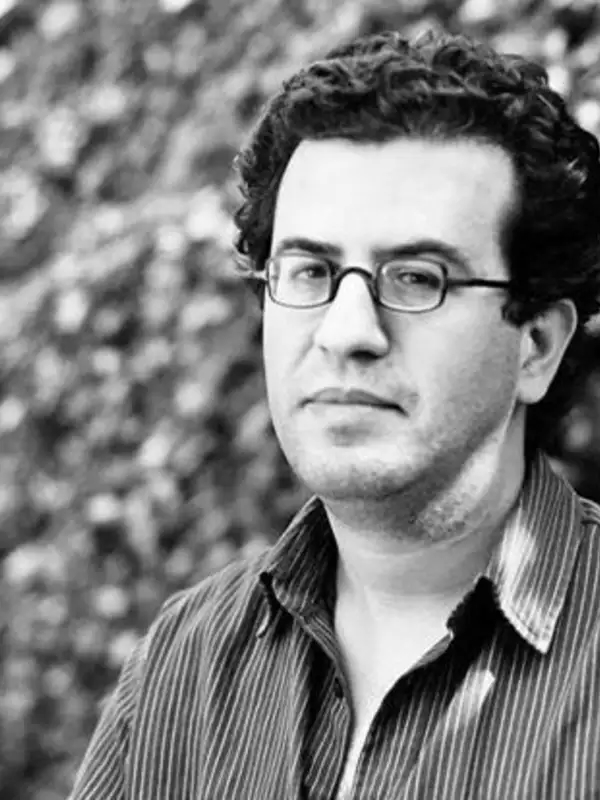
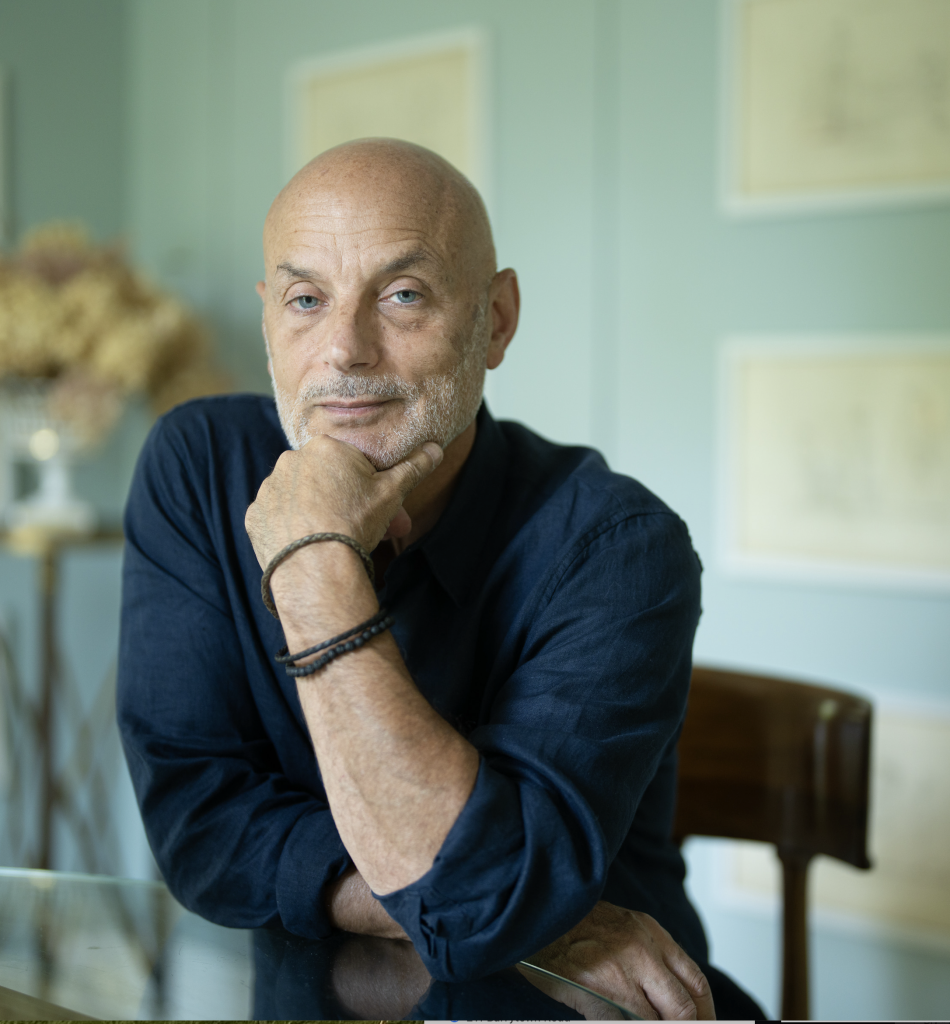
Daniel Mendelsohn is an internationally bestselling author, critic, essayist, and translator. Born in New York City in 1960, he received degrees in Classics from the University of Virginia and Princeton. After completing his PhD he moved to New York City, where he began freelance writing full time; since 1991 he has been a prolific contributor of essays, reviews, and articles to many publications, most frequently The New Yorker and The New York Review of Books. He has also been a contributing editor at Travel + Leisure and a columnist for The New York Times Book Review, Harper’s, and New York magazine, where he was the weekly book critic. In February 2019, he was named Editor-at-Large of the New York Review of Books and the Director of the Robert B. Silvers Foundation, a charitable trust that supports writers of nonfiction, essay, and criticism.
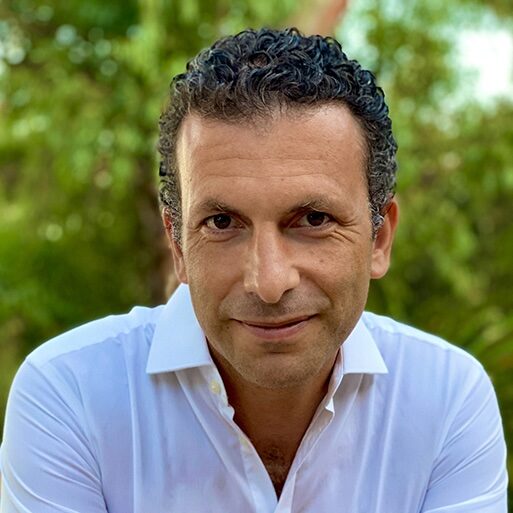
He is the author or co-author of 4 other books—on the history of antihumanism, on transparency in postwar French thought, and on neurophysiology and conceptions of the human body after World War I. He has co-edited or co-translated another dozen books.
He serves as a Co-Executive Editor of the Journal of the History of Ideas. In the past, he has also served as Director of the Center for International Research in the Humanities and Social Sciences (Centre National de Recherche Scientifique/NYU) and, with Gisèle Sapiro, as the co-Principal Investigator of the FACE Foundation’s PUF grant Crossroads in Intellectual History (2016-2021).