
2025: Anna-Bettina Kaiser, “Staatsstreich, Ausnahmezustand, Regression”/”Coup d’état, State of Emergency, Regression”
Anna-Bettina Kaiser, “Staatsstreich, Ausnahmezustand, Regression”/”Coup d’état, State of Emergency, Regression”
Humboldt University Berlin Mosse Lecture
mosselectures.wisc.edu/berlin/
Thursday, 4 December 2025, 19:00 CET
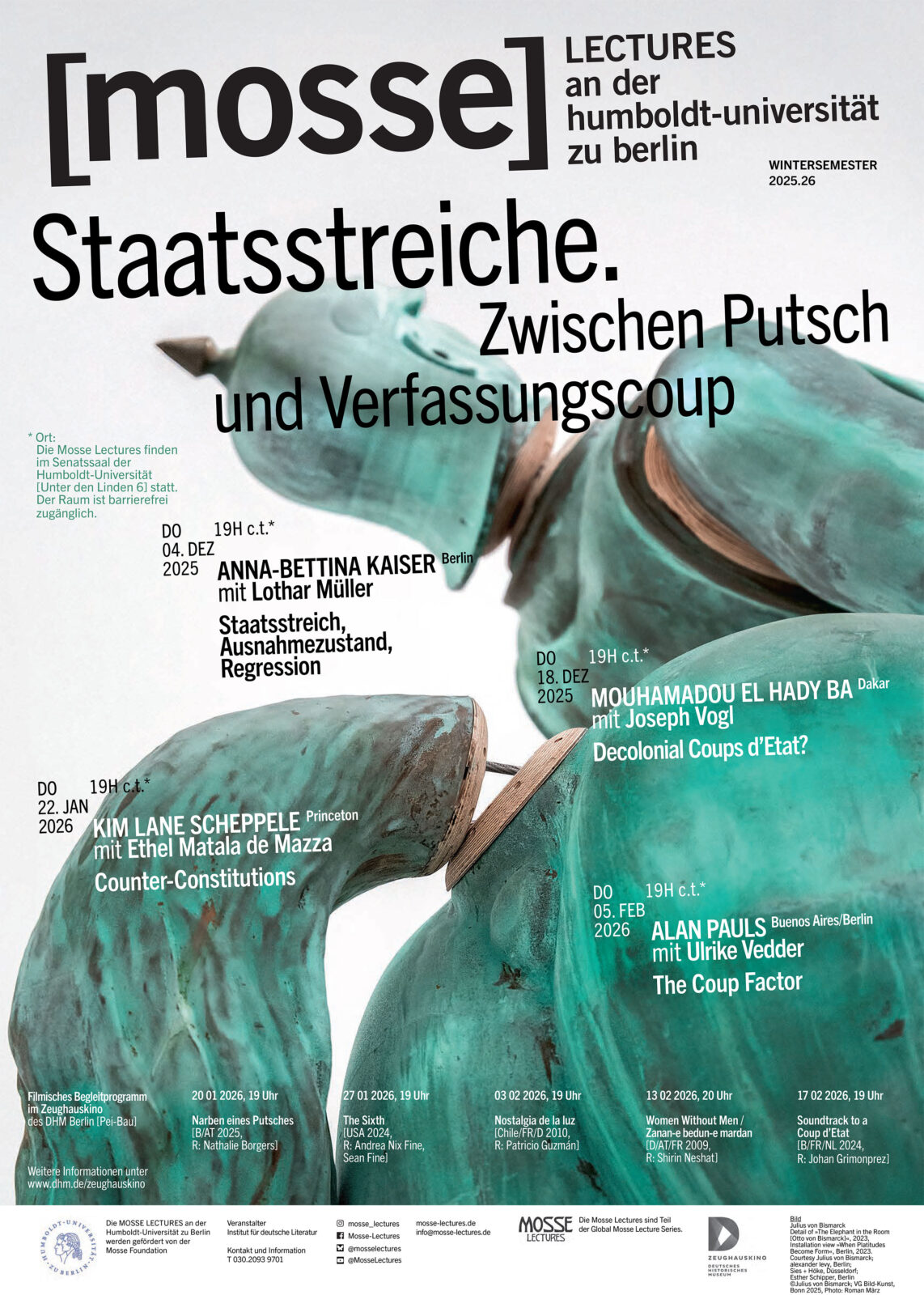
Senatssaal of Humboldt University
Unter den Linden 6
10117 Berlin
GERMANY
Sponsored by:
[mosse] LECTURES an der humboldt-universität zu berlin
The Mosse Foundation
Global Mosse Lecture Series
Institut für deutsche Literatur
Humboldt University
ZeughausKino
Deutsches Historisches Museum
Moderator: Lothar Müller (Humboldt University)
Lecture Description: The coup d’état as a form of constitutional upheaval has had its day; today, democracies are dying a slow death — that is the common assumption. Yet, upon closer inspection, it becomes clear that there is no single »script« for the gradual destruction of democracy. In fact, we are currently witnessing a variety of different forms of constitutional dismantling. How can these diverse phenomena be conceptualized? Under what conditions does law play an essential role, and under what conditions does force? Will we ultimately see the return of the coup d’état?
Lecture Series Theme: Coups d’état: Zwischen Putsch und Verfassungscoup [Between military Coups and Constitutional Captures]
Lecture Series Description: Writing at the beginning of the 20th century, Max Weber observed that, owing to its internally rationalized structure, the modern bureaucratic state apparatus has replaced »revolutions« with »coups d’état.« This observation remains as relevant today as it was at the time. Moreover, we are currently witnessing another significant change. In Europe and the United States, the classic coup d’état is being replaced by the gradual transformation of the constitution, characterized by its erosion from within and the dynamic breakdown of the rule of law and the separation of powers, driven by elected governments. »Democratic backsliding today begins at the ballot box,« write Steven Levitsky and Daniel Ziblatt in ›How Democracies Die‹ [2018]. At the same time, there are still military coups, as seen in West Africa. The Mosse Lectures aim to shed light on the forms of coups d’état in historical and systematic terms, examining the accompanying cultural shifts in power. What significance does the coup d’état have in times of a general »return to authoritarianism« and a re-emergence of traditional masculinity? What role does the rise of the tech elite play in the weakening of democratic institutions? What new insights can a postcolonial perspective on coups d’état offer? Can the undermining of democracies be curbed in time by identifying and visualising patterns? The Mosse Lectures address these questions, focusing on Europe, the United States, West Africa, and South America.
The complex interplay of visibility in politics can be part of the performance of coups d’état, which, as acts of seizing power, exhibit a unique form of theatricality. From coups captured on camera to the exploitation of social media to undermine the separation of powers, autocratic takeovers frequently resemble political spectacles. It is therefore unsurprising that they have been recounted and filmed so often. This semester’s Mosse Lectures will be complemented by an accompanying program on coups in film, which will be shown on five evenings in January and February 2026, in collaboration with the Zeughauskino at Deutsches Historisches Museum in Berlin.
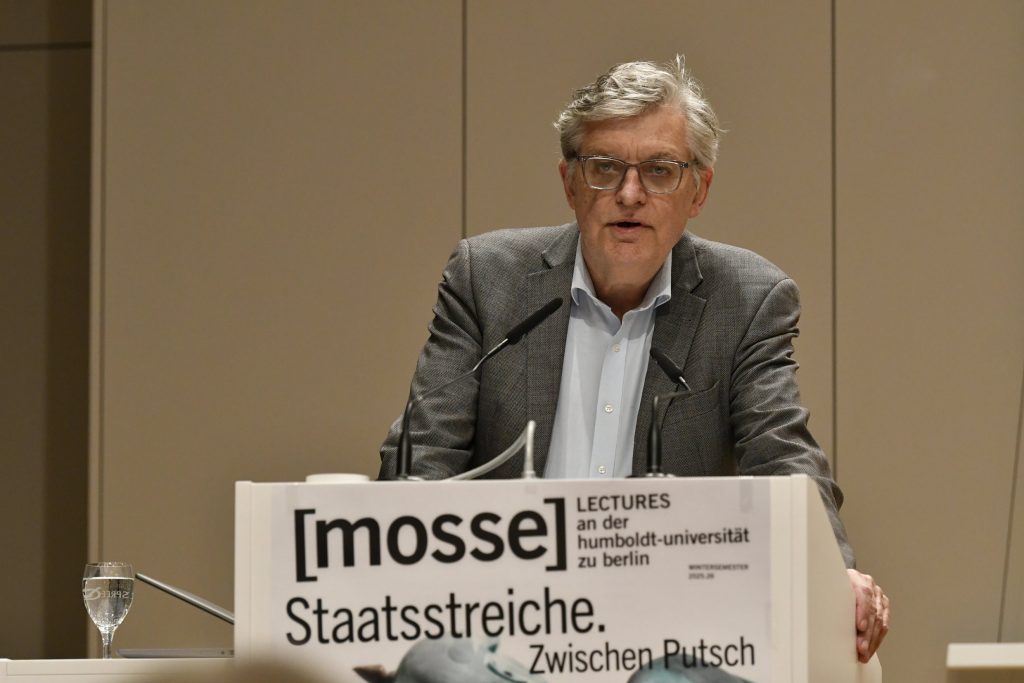
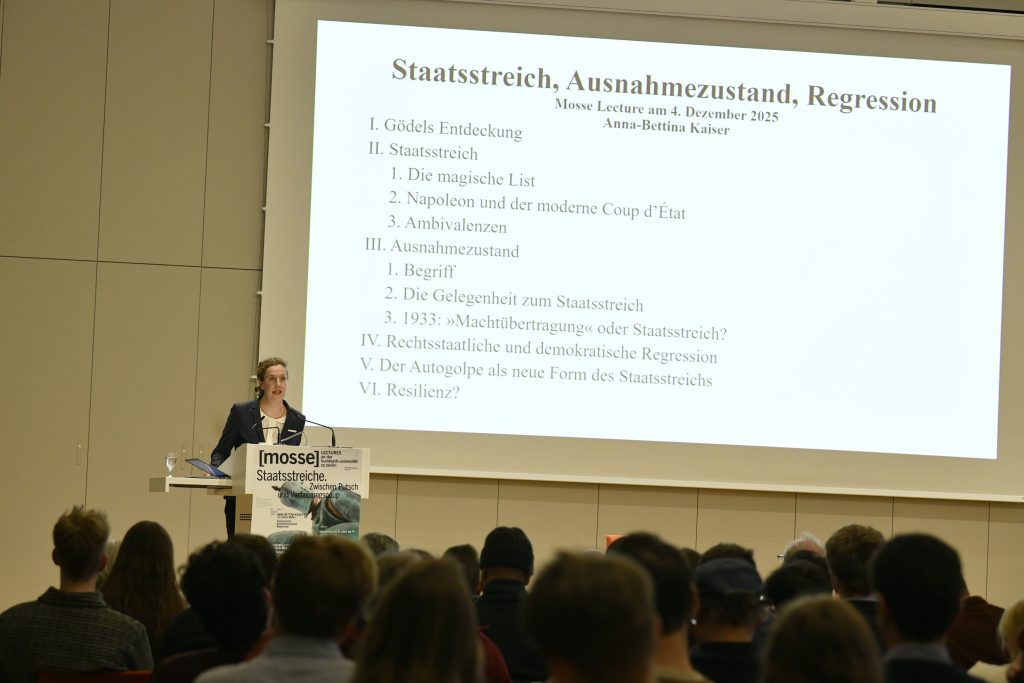
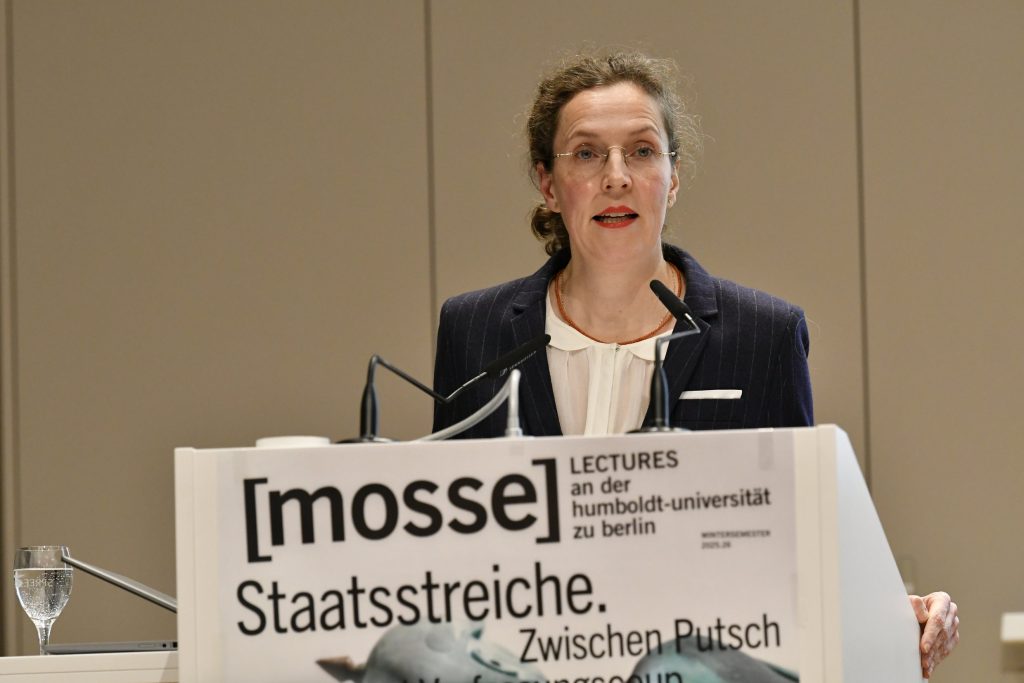
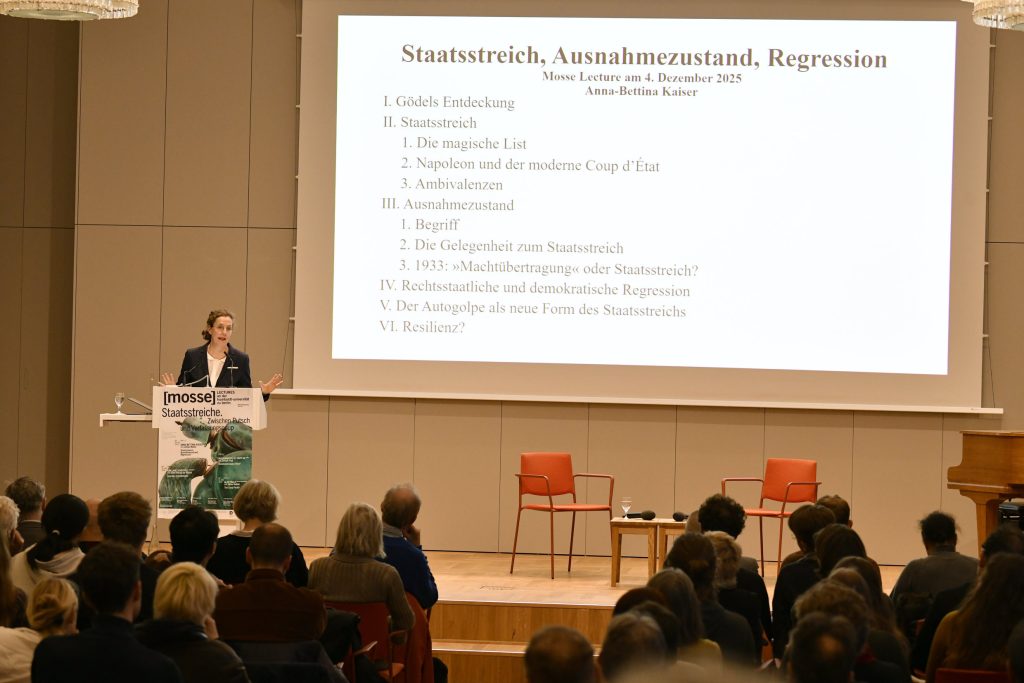
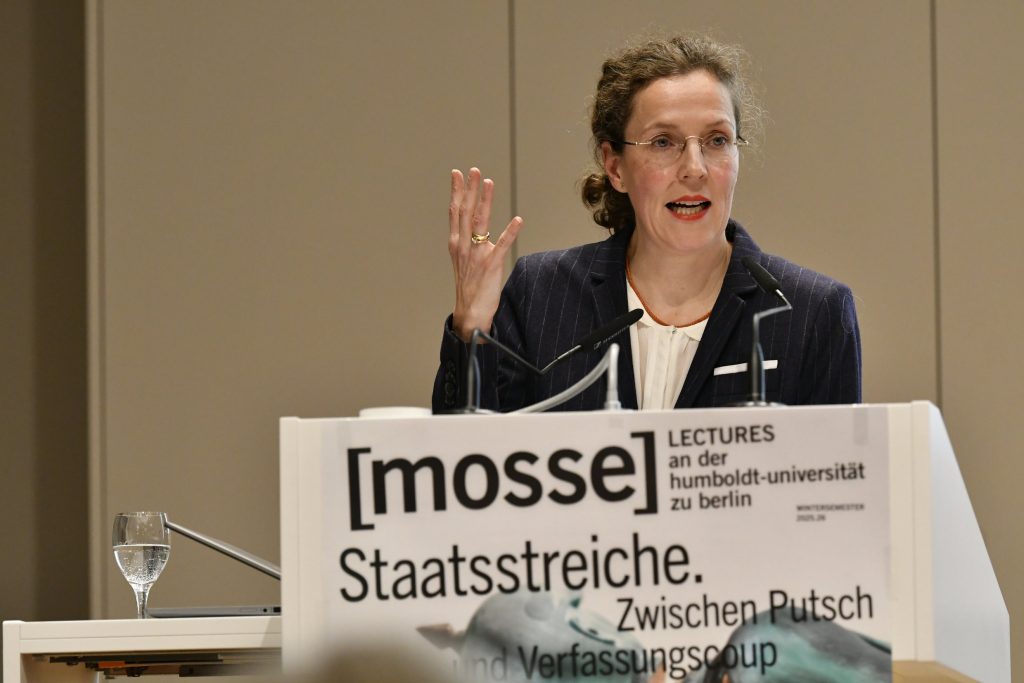
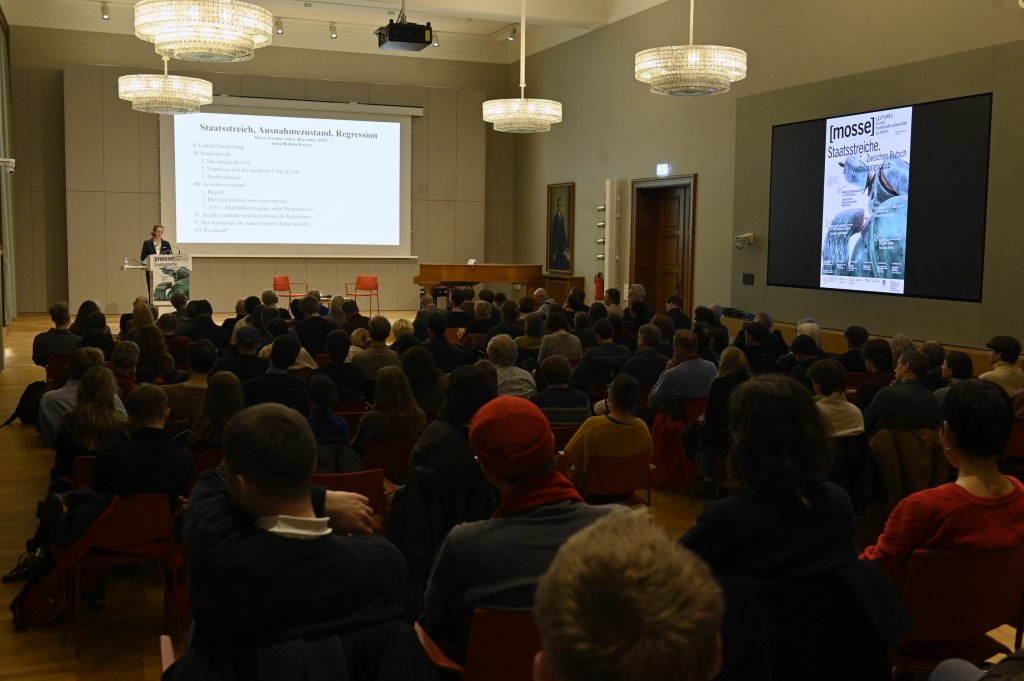
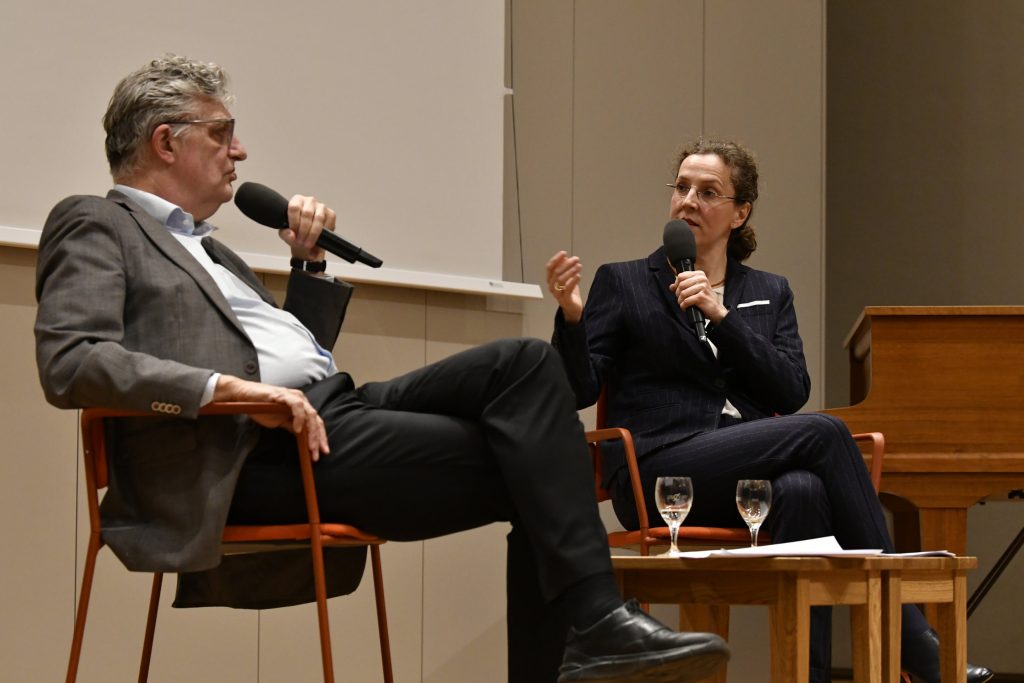
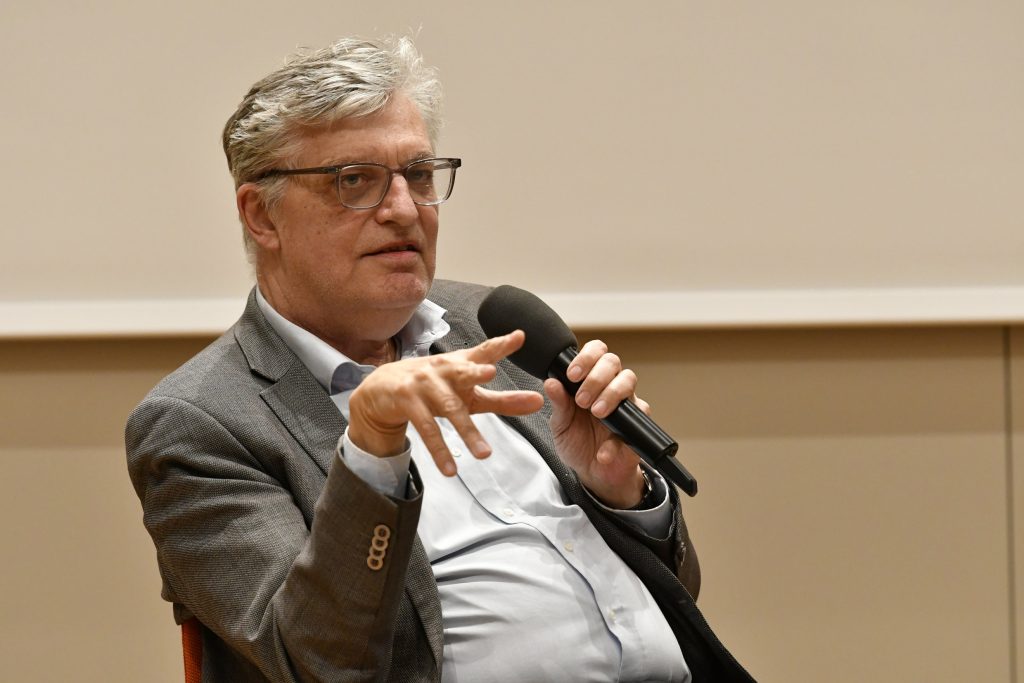
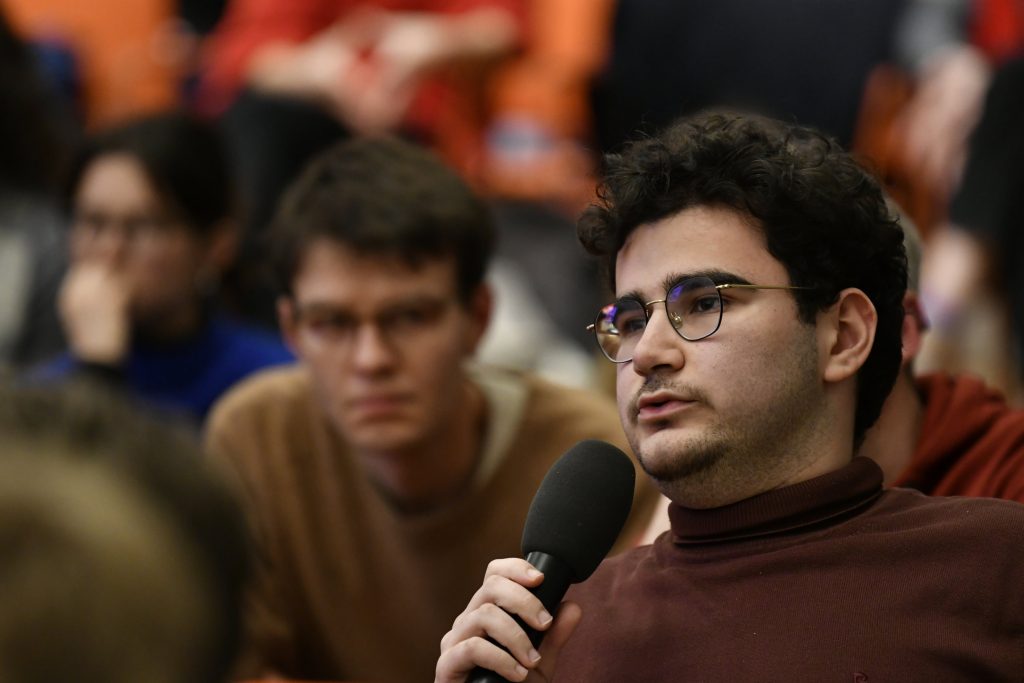
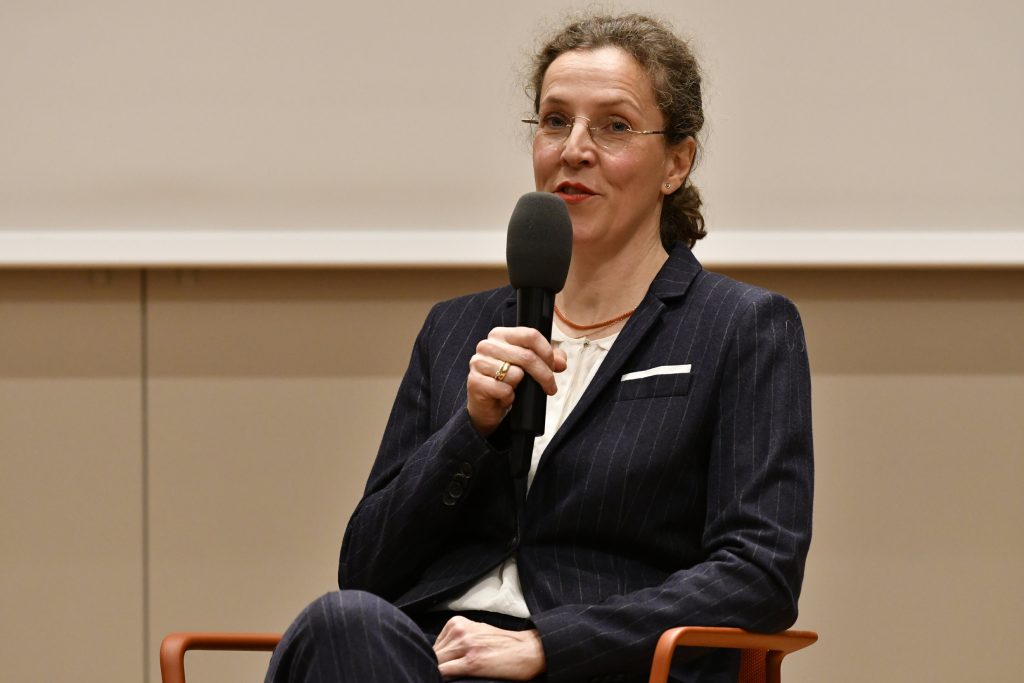
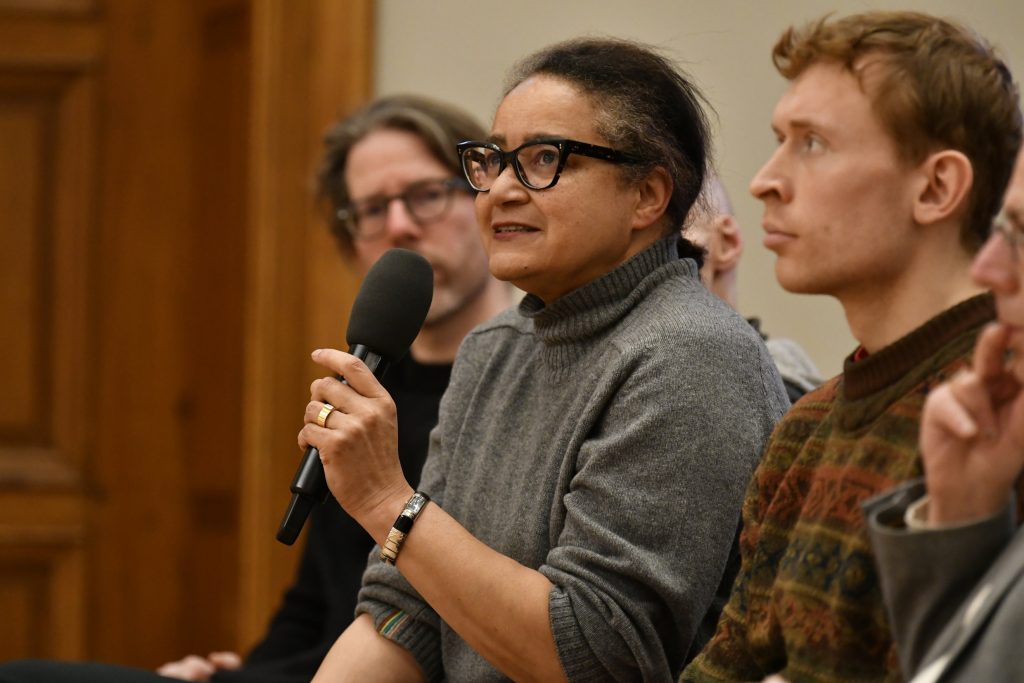
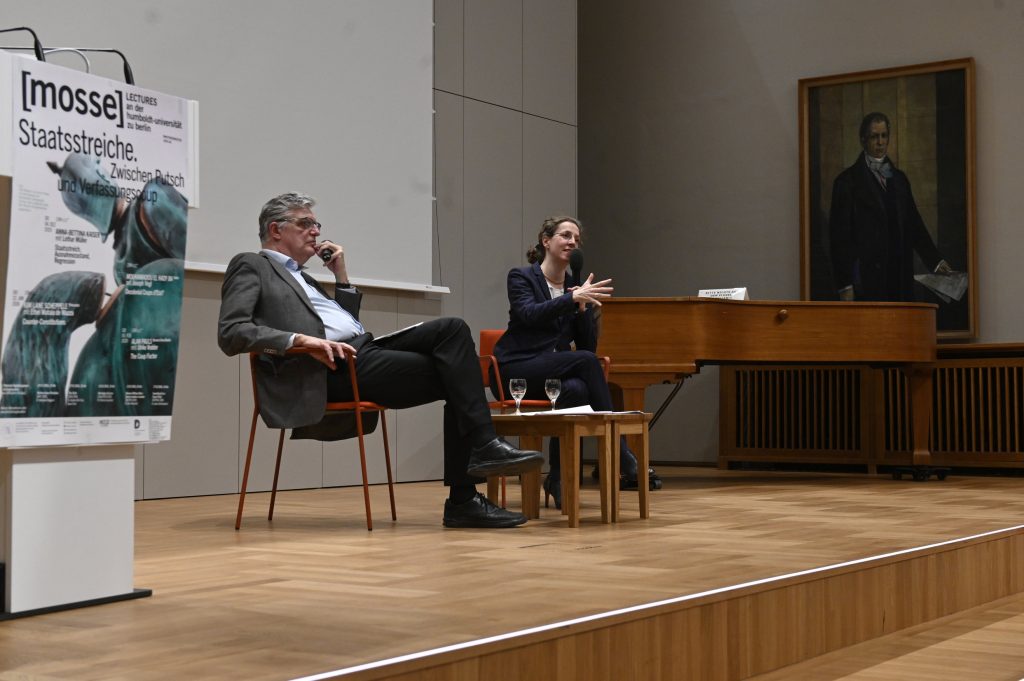
Photo Credit: Niels Leiser for the Mosse Lectures

Anna-Bettina Kaiser: Legal scholar; Professor of Public Law and the Foundations of Law at Humboldt University, Berlin. Kaiser has been part of the “Constitutionalism under Stress” [CONSTRESS] project in cooperation with Princeton University since 2016 and has been co-director of the Integrative Research Institute Law & Society [LSI] at Humboldt-Universität since 2019. Her areas of expertise include constitutional law [constitutions in times of crisis, freedom of speech], comparative constitutional law, constitutional theory, and the crisis of the rule of law. Her book Ausnahmeverfassungsrecht [The State of Exception in German Constitutional Law], published in 2020, was on the non-fiction bestseller list of ZDF, Deutschlandfunk, and DIE ZEIT and was awarded the Werner von Simson prize. Most recently, she was a Fulbright Scholar and Senior Emile Noël Global Fellow at New York University in 2023/24.
Rechtswissenschaftlerin; Professorin für Öffentliches Recht und Grundlagen des Rechts an der Humboldt-Universität zu Berlin. Kaiser ist seit 2016 Teil des Projekts »Constitutionalism under Stress« [CONSTRESS] in Kooperation mit der Princeton University und seit 2019 Co-Direktorin des Integrative Research Institute Law & Society [LSI] der Humboldt-Universität. Zu ihren Fachgebieten gehören Verfassungsrecht [Verfassungen in Krisenzeiten, Meinungsfreiheit], vergleichendes Verfassungsrecht, Verfassungstheorie und die Krise der Rechtsstaatlichkeit. Ihr 2020 erschienenes Buch »Ausnahmeverfassungsrecht« stand im selben Jahr auf der Sachbuch-Bestenliste von ZDF, Deutschlandfunk und DIE ZEIT und wurde mit dem Werner-von-Simson-Preis ausgezeichnet. Zuletzt war sie 2023/24 Fulbright-Stipendiatin und Senior Emile Noël Global Fellow an der New York University.
Lothar Müller has worked as an editor for the Frankfurter Allgemeine Zeitung and the Süddeutsche Zeitung, and lectured at the Institute for Comparative Literature at the Free University. Since 2010, he has served as Honorary Professor in the Institute for German Literature at the Humboldt University Berlin. He is the author of numerous publications, including Adrien Proust und sein Sohn Marcel. Beobachter der erkrankten Welt (2021) and Weiße Magie. Die Epoche des Papiers (2012). He was awarded the Berlin Prize for Literary Criticism in 2013.
In the Media:
The lecture by Anna-Bettina Kaiser was discussed by Torsten Flüh on Night Out @ Berlin: “Von der harten Wahrheit des Staatsstreichs“
This lecture series was covered by Torsten Flüh on Night Out @ Berlin: “Das Homogenität-Versprechen des Staatsstreichs“
The lecture by Anna-Bettina Kaiser was discussed by Hörsaal-podcast of Deutschlandfunk Nova (rerun, moderated by Katja Weber): “Staatsstreiche: Wie Verfassungen ausgehebelt werden“
