
2025: Jule Govrin, “Verbotene Körper? Demokratische Sorge und körperliche Selbstbestimmung in Zeiten autoritärer Austerität”/”Forbidden Bodies? Democratic Worries and Bodily Self-Determination in Times of Authoritarian Austerity”
Jule Govrin, “Verbotene Körper? Demokratische Sorge und körperliche Selbstbestimmung in Zeiten autoritärer Austerität”/”Forbidden Bodies? Democratic Worries and Bodily Self-Determination in Times of Authoritarian Austerity”
Humboldt University Berlin Mosse Lecture
mosselectures.wisc.edu/berlin/
Thursday, 2 July 2026, 19:15 CET
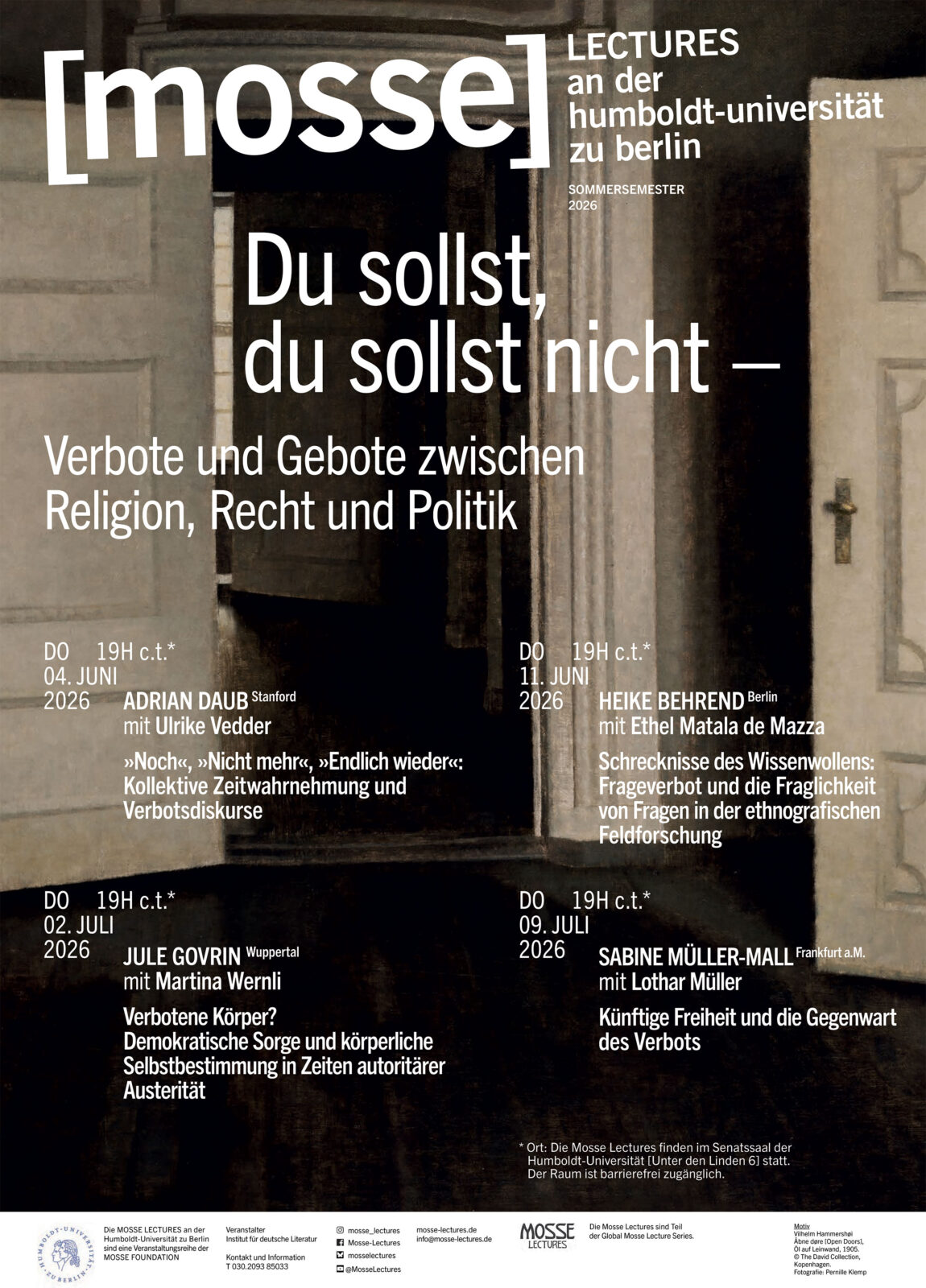
Senatssaal of Humboldt University
Unter den Linden 6
10117 Berlin
GERMANY
Sponsored by:
[mosse] LECTURES an der humboldt-universität zu berlin
The Mosse Foundation
Global Mosse Lecture Series
Institut für deutsche Literatur
Humboldt University
Moderator: Martina Wernli (Humboldt University)
Lecture Description: Demokratien scheinen derzeit gefährdet, inmitten von Krisenkaskaden und gesellschaftlicher Krisenstimmung. Rechtsextreme Parteien wie die AfD profitieren von den krisenzeitlichen Unsicherheiten. Mit dem Aufwind autoritärer Kräfte zeichnet sich global eine neue Phase der Austerität ab, deren disruptive Politiken extreme Konsequenzen für demokratisches Leben haben. Pionierfiguren dieser autoritären Austerität wie Javier Milei in Argentinien und Donald Trump in den USA fallen durch politische Performanzen autoritärer Männlichkeit auf. Gezielt kürzen sie bei Gleichstellungsmaßnahmen und schränken die Rechte von Frauen und queeren Menschen ein. Wie lassen sich die Zusammenhänge zwischen Austerität, Autoritarismus und Antifeminismus fassen? Wie manifestieren sie sich körperpolitisch, als Angriffe auf die soziale Reproduktion der gesamten Gesellschaft und als Angriffe auf die körperliche und geschlechtliche Selbstbestimmung? Wo finden sich Gegenstrategien einer demokratischen Sorge, die Demokratie nachhaltig stärkt?
Democracies currently appear to be under threat, amid a cascade of crises and a climate of social unease. Far-right parties such as the AfD are capitalizing on the uncertainties of these crisis times. With the rise of authoritarian forces, a new phase of austerity is emerging globally, whose disruptive policies have extreme consequences for democratic life. Pioneers of this authoritarian austerity, such as Javier Milei in Argentina and Donald Trump in the U.S., stand out for their political performances of authoritarian masculinity. They deliberately cut funding for gender equality measures and restrict the rights of women and queer people. How can the connections between austerity, authoritarianism, and anti-feminism be understood? How do they manifest in terms of body politics, as attacks on the social reproduction of society as a whole, and as attacks on bodily and gender self-determination? Where can we find counterstrategies of democratic care that sustainably strengthens democracy?
Lecture Series Theme: Du Sollst, du sollst nicht – Verbote und Gebote zwischen Religion, Recht und Politik/Thou shalt, thou shalt not. Prohibitions and Commandments between Religion, Law, and Politics
Lecture Series Description: Prohibitions and commandments are the pivots of religious and ethical ways of life, they stabilize social orders, protect against violence, and limit the abuse of power. Rights, including fundamental rights, are safeguarded by prohibitions. At the same time, prohibitions themselves are an expression of political, economic, and social power relations. Prohibiting others—or even oneself—from doing something means restricting scope for action and self-realization. The fact that this repressive function of prohibitions and taboos inherently possesses a culture-forming dimension accounts for the discontent that Sigmund Freud already attributed to civilization at the beginning of the 20th century. The productive power of prohibitions can also be traced etymologically: As far back as Old Low German, the verb »verbieten« [to forbid] [Middle Low German »vorbēden«] was closely related to the command, in the sense of an emphatic directive for action.
In the summer semester of 2026, the Mosse Lectures aim to shed light on the ambivalences of prohibitions from a historical and systematic perspective and to examine their relevance to contemporary social debates. For while criticism of prohibitions has seemed ubiquitous in many social spheres for some time now, and »destigmatization« carries positive connotations for good reasons, prohibitions are experiencing a renaissance in contexts where they become instruments of crisis management. For example, in the global discussions surrounding the necessity and legitimacy of a social media ban for children and adolescents. Or in current climate policy, which—under the banner of safeguarding intertemporal freedom—faces the task of recalibrating the relationship between intergenerational justice and a »culture of prohibition« and debating the current imperative for bans. The debates surrounding cancel culture, fake news, and digital privacy rights also revolve around the possibilities of prohibitive restrictions. The Mosse Lectures bring together perspectives from philosophy, cultural studies, ethnology, and legal studies to examine the conditions under which prohibitions appear legitimate, their cultural foundations and political functions, and, not least, the power that is constituted in the very act of prohibiting.
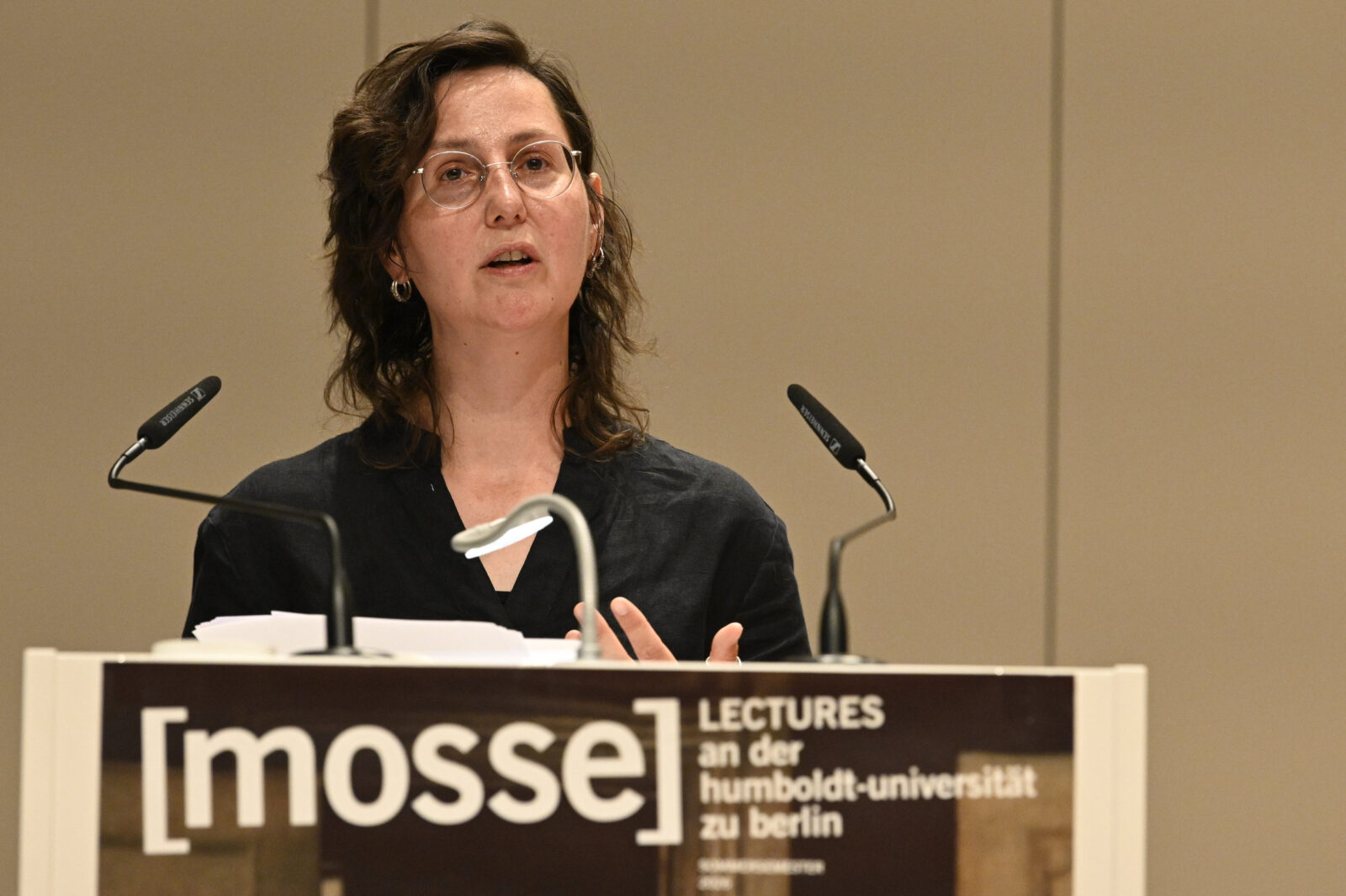
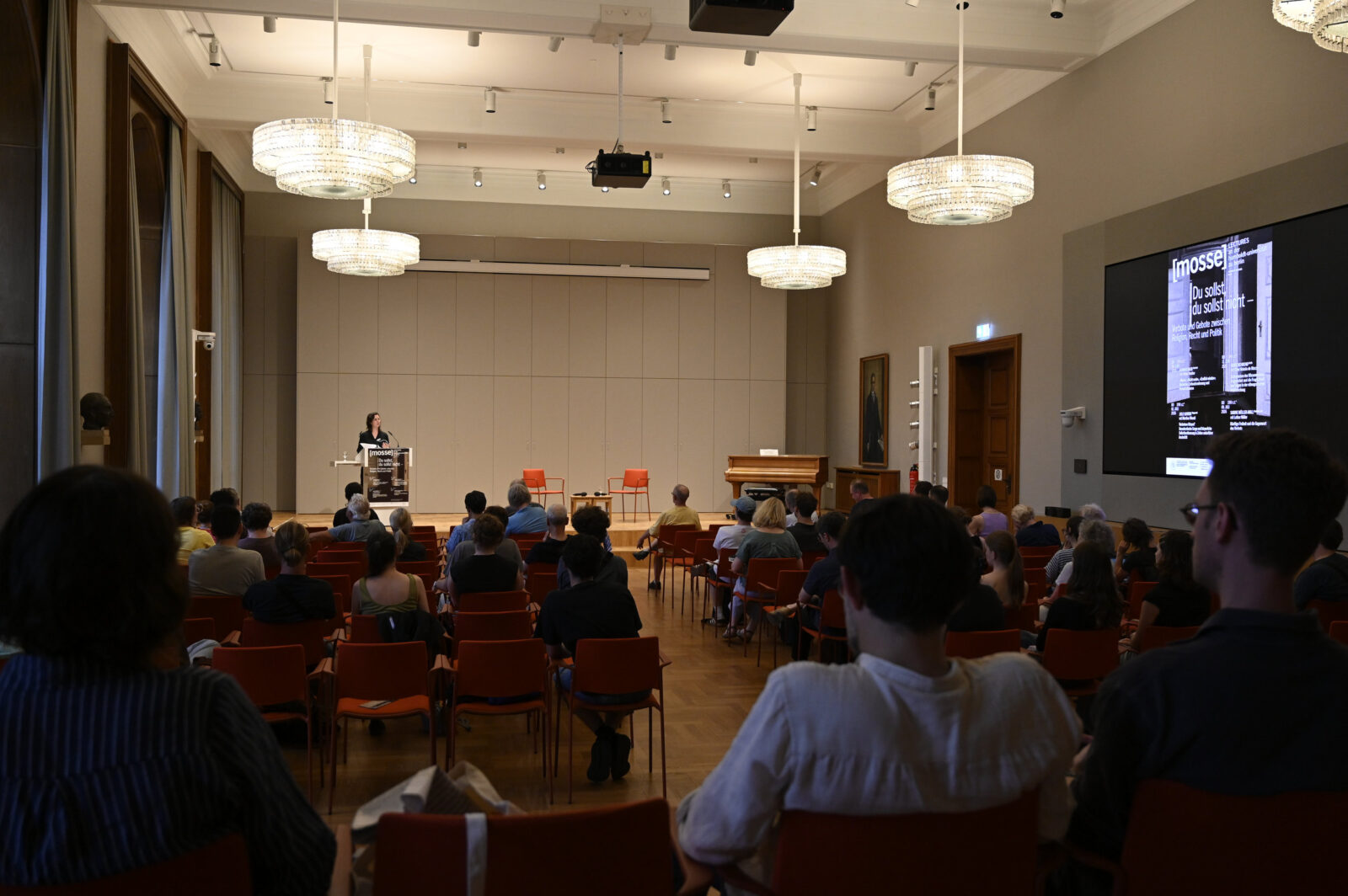
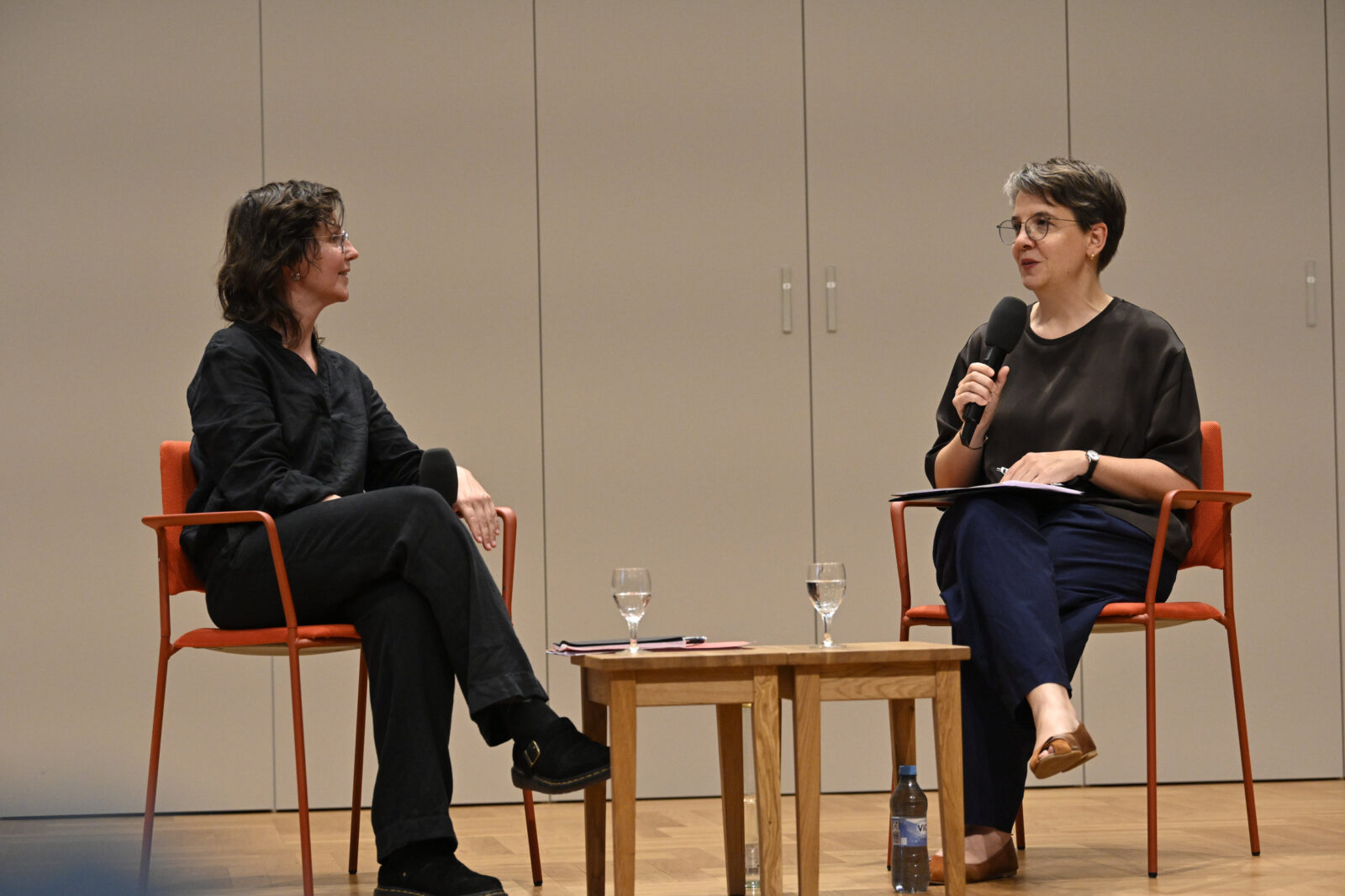

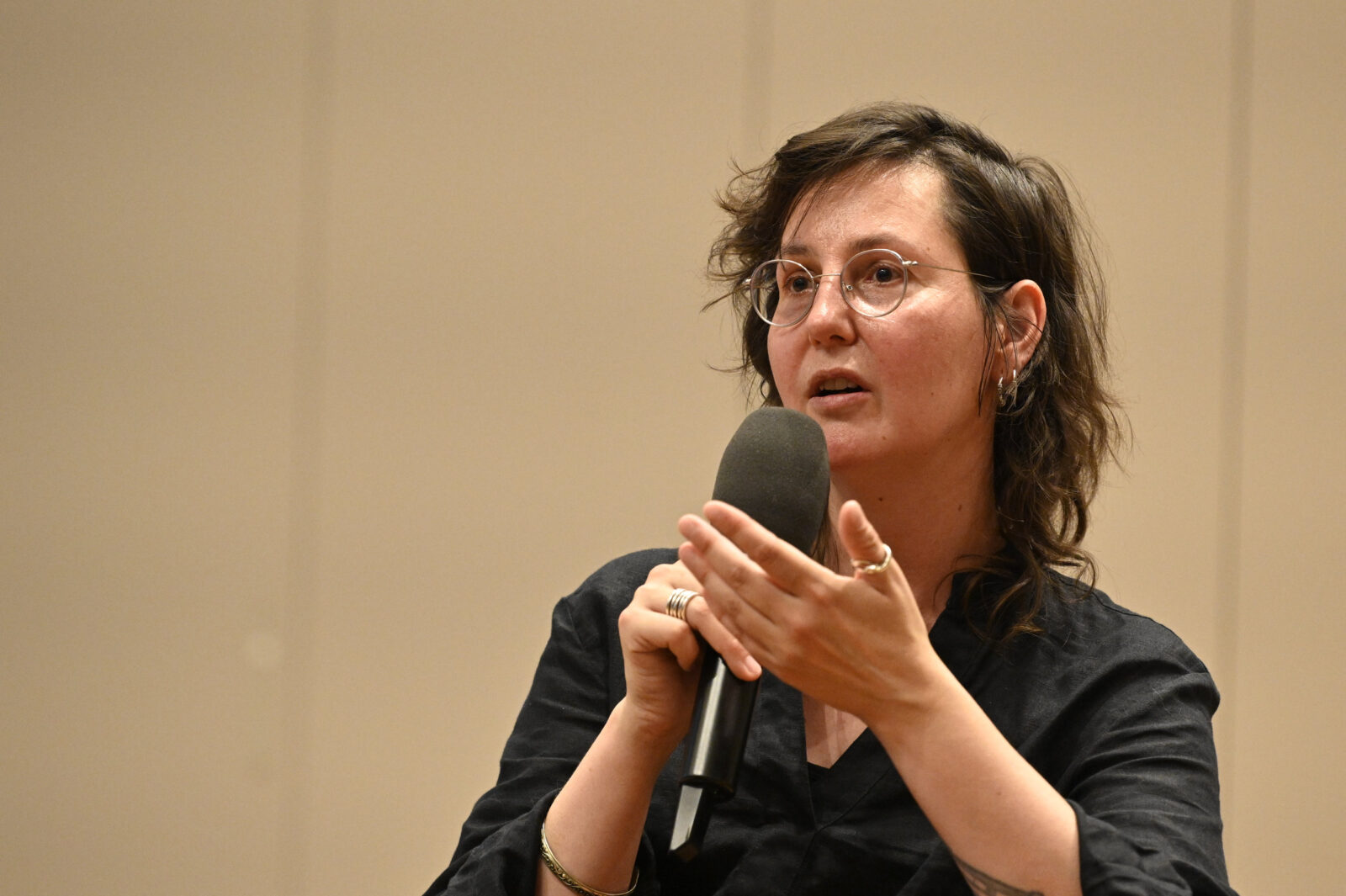
Photo credit: Neils Lesier for the Mosse Lectures
Jule Govrin: Philosopher; visiting professor of practical philosophy at Bergische Universität Wuppertal. Govrin conducts research at the intersection of social philosophy, feminist political philosophy, ethics, and aesthetics. Her work focuses on issues of equality and universalism, care and solidarity, and the political dimension of bodies. In addition to research stays in Marseille and Porto Alegre, she was a visiting scholar at the Centre Marc Bloch in Berlin and the Institut für Sozialforschung in Frankfurt am Main. Her publications include »Politische Körper. Von Sorge und Solidarität« [Matthes & Seitz 2022], »Begehrenswert. Erotisches Kapital und Authentizität als Ware« [Matthes & Seitz 2023], and »Begehren und Ökonomie. Eine sozialphilosophische Studie« [de Gruyter 2020]. Her most recent book, »Universalismus von unten. Eine Theorie radikaler Gleichheit,« was published by Suhrkamp in 2025.
