
2012: Ulla Haselstein, “Gertrude Stein und das amerikanische Gesetz der Serie” / “Gertrude Stein and the American Law of the Series”
Ulla Haselstein, “Gertrude Stein und das amerikanische Gesetz der Serie” / “Gertrude Stein and the American Law of the Series”
Berlin Mosse Lecture
https://mosselectures.wisc.edu/berlin/
Thursday, 21 June 2012, 19:00 CET
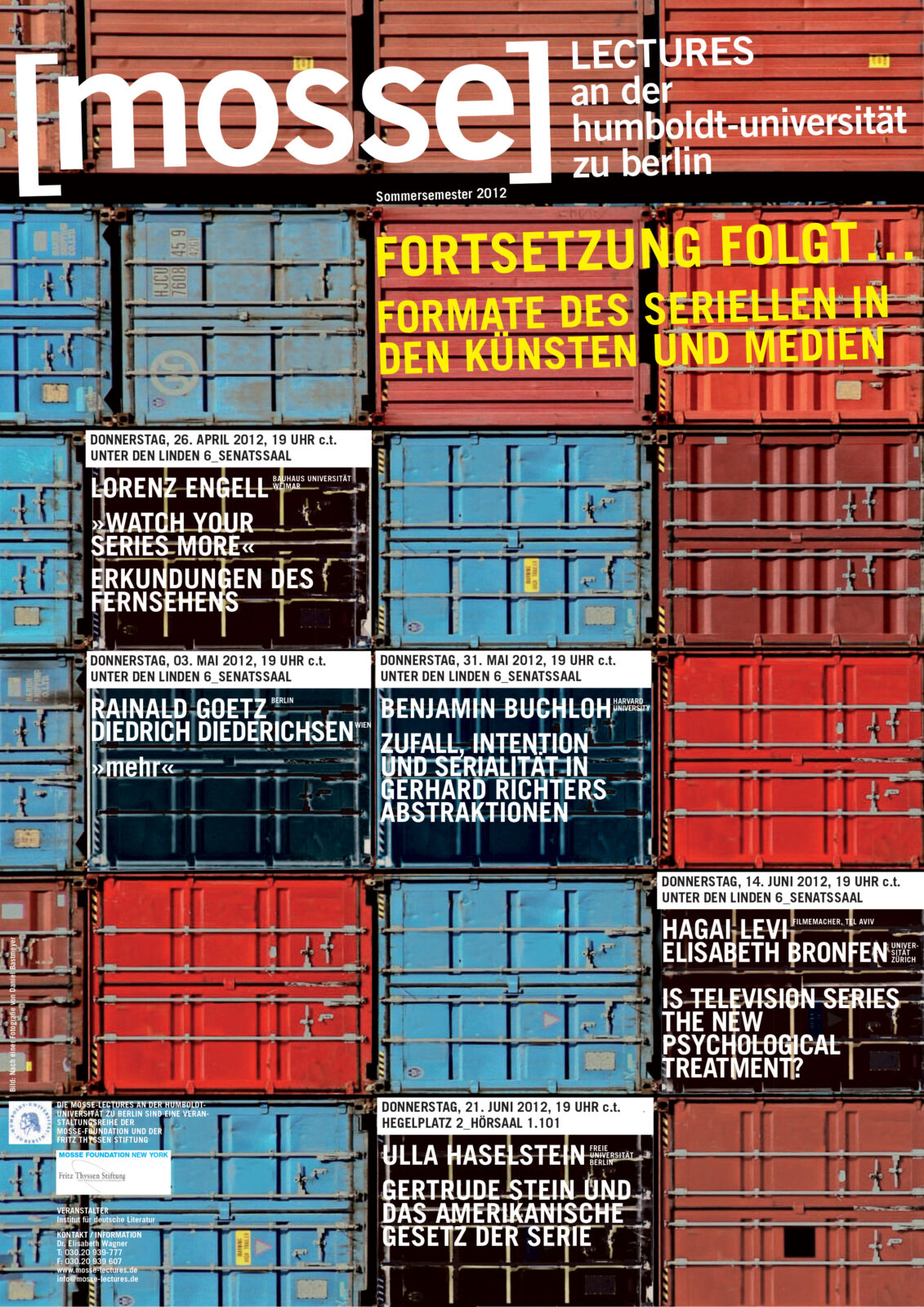
Hörsaal 1.101
Hegelplatz 2
10117 Berlin
GERMANY
Sponsored by:
[mosse] LECTURES an der humboldt-universität zu berlin
The Mosse Foundation
Global Mosse Lecture Series
Fritz Thyssen Stiftung
Institut für deutsche Literatur
Humboldt University
Moderator: Ulrike Vedder (Humboldt University)
Lecture Description: Gertrude Stein ist als Sammlerin moderner Kunst und scharfzüngige Salondame bekannt, nicht aber als Schriftstellerin: wegen der Serialität ihrer literarischen Arbeiten gelten diese bis heute als unlesbar. Stein selbst hielt ihre Texte für ‚perfectly natural‘; sie machte den Satz »Rose is a rose is a rose is a rose« zu ihrem Markenzeichen und verwies zur Erklärung ihrer Texte auf den Film, die industrielle Serienfertigung und die amerikanische Kultur. Der Vortrag wird diesen Verweisen nachgehen und zeigen, dass die Autorin mit der Serialität unterschiedliche Darstellungsabsichten verfolgt, die in Steins Begriff der Moderne konvergieren.
Lecture Series Description: Creativity and Originality are bound up with the individual and unique work of art. But ever since “Arabian Nights” and the 19th century serial novels of Charles Dickens and Eugène Sue other forms of narrative representation became popular: namely stories spanning several episodes with the promise that the storyline is to be continued beyond the cliffhanger, maybe indefinitely. The single story becomes a variation in the narrative pattern with contingent beginnings and uncertain endings. The “aesthetics of the serial”, playfully elaborated by Umberto Eco, is not just a timely mode of industrial and media production, statistics and digital calculation. Not only the variant but variation as such, the regular irregularity with its potential of virtual infinity may cause aesthetic pleasure. Difference may be explored in repetition. To be sure, the narrative formats of telenovelas and soap operas foster consumerism. However, ritualization in the serial form of produc-tion can create more than affirmation. Gertrude Stein’s “rhythm of being” favors continuation und duration in mere presence, indulgence in the promotion of the ever same as divergent. The MOSSE-LECTURES of the summer semester 2012 will focus attention on the new narrative forms of complexity and ambiguity in high quality television series, revisiting at the same time the serial structures of novels, and observing the production of different forms of art, film, video and interactive modes of narration.
Ulla Haselstein: ist Professorin für amerikanische Literatur am John F. Kennedy Institut für Nordamerikastudien an der FU Berlin, 2009 Forschungsprofessorin der Aby Warburg Gesellschaft in Hamburg, zahlreiche Publikationen zur modernen amerikanischen Literatur und Literaturtheorie, zu Bild-Text-Relationen und zum Holocaust, Monographien zum Thema Entziffernde Hermeneutik. Zum Begriff der Lektüre in der pychoanalytischen Theorie des Unbewußten (1991), Die Gabe der Zivilisation: Interkultureller Austausch und literarische Textpraxis in Amerika (2000), mithg. Sammelbände u.a. Cultural Transactions (mit B. Ostendorf, 2005), The Culture Power of Aesthetics in American Culture (mit K. Bennesch, 2007), The Pathos of Authenticity (mit A. Gross, M. Snyder-Körber, 2010, demnächst erscheint ein gemeinsam edierter Sammelband zum Thema The Cultural Career of Coolness.
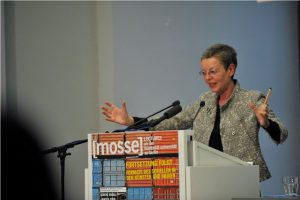
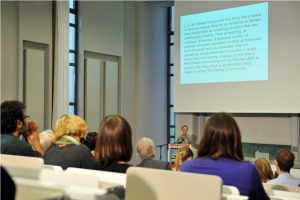
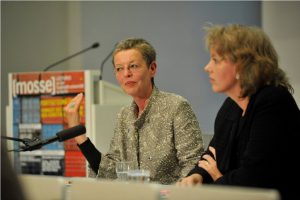
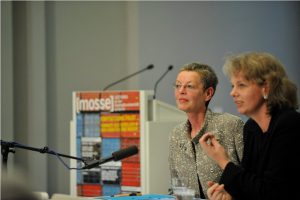
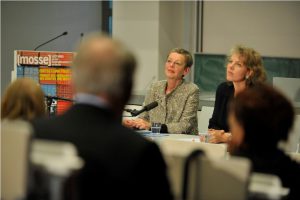
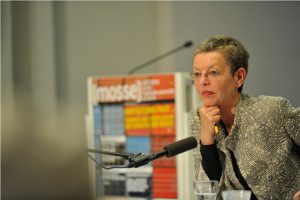
Photo Credit: Niels Leiser for the Mosse Lectures
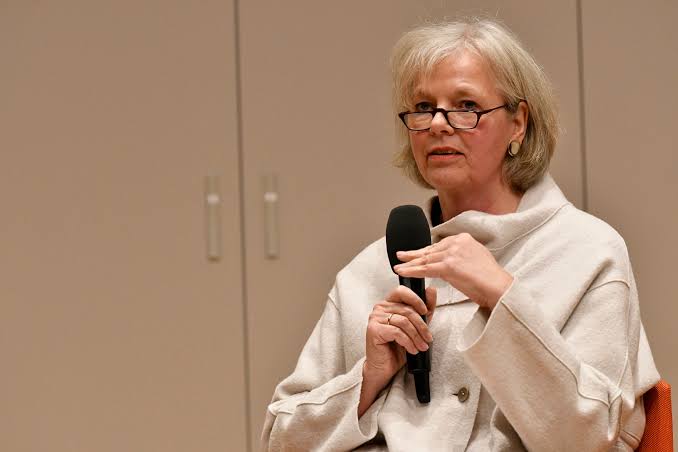
Her research focuses on literature and material culture (museum narratives, literary thing culture, poetics of collecting); literary and cultural history of genealogy, generation, heritage; gender studies in literary studies; narratives of liminality (death narratives, coma, old age, dementia, care, poetics of the afterlife).
She is part of the interdisciplinary project team of „Liminality and Transfer“ (funded by the Einstein Foundation Berlin, 2023-2027) and the Collège doctoral „Littérature et savoirs, XVIe – XXIe siècles“ (in cooperation with Sorbonne nouvelle).
