
2025: Steven E. Aschheim: “Reflections on Liberal and Humanist Nationalism in Times of War: George L. Mosse and the Contradictions of Jewishness, Zionism and Israel”
Steven Aschheim (Hebrew University, emeritus), “Reflections on Liberal and Humanist Nationalism in Times of War: George L. Mosse and the Contradictions of Jewishness, Zionism and Israel”
Humboldt University Mosse Lecture
mosselectures.wisc.edu/berlin/
Thursday, 15 May 2025 19:15 CET
Senatssaal of Humboldt University
Unter den Linden 6
10117 Berlin
GERMANY
Sponsored by:
[mosse] LECTURES an der humboldt-universität zu berlin
The Mosse Foundation
Global Mosse Lecture Series
Institut für deutsche Literatur
Humboldt University
Moderator: Ethel Matala de Mazza (Humboldt University)
Lecture Description: What is the relationship between the ongoing Israel-Gaza War and the person and thought of George Mosse in whose name these Lectures are dedicated? Given Mosse’s deep commitments to both enlightened liberalism and what he called »humanist nationalism«, this talk will examine the threats and challenges the war is posing to the possibilities and realities of these fragile values and institutions in the midst of war and its aftermath.
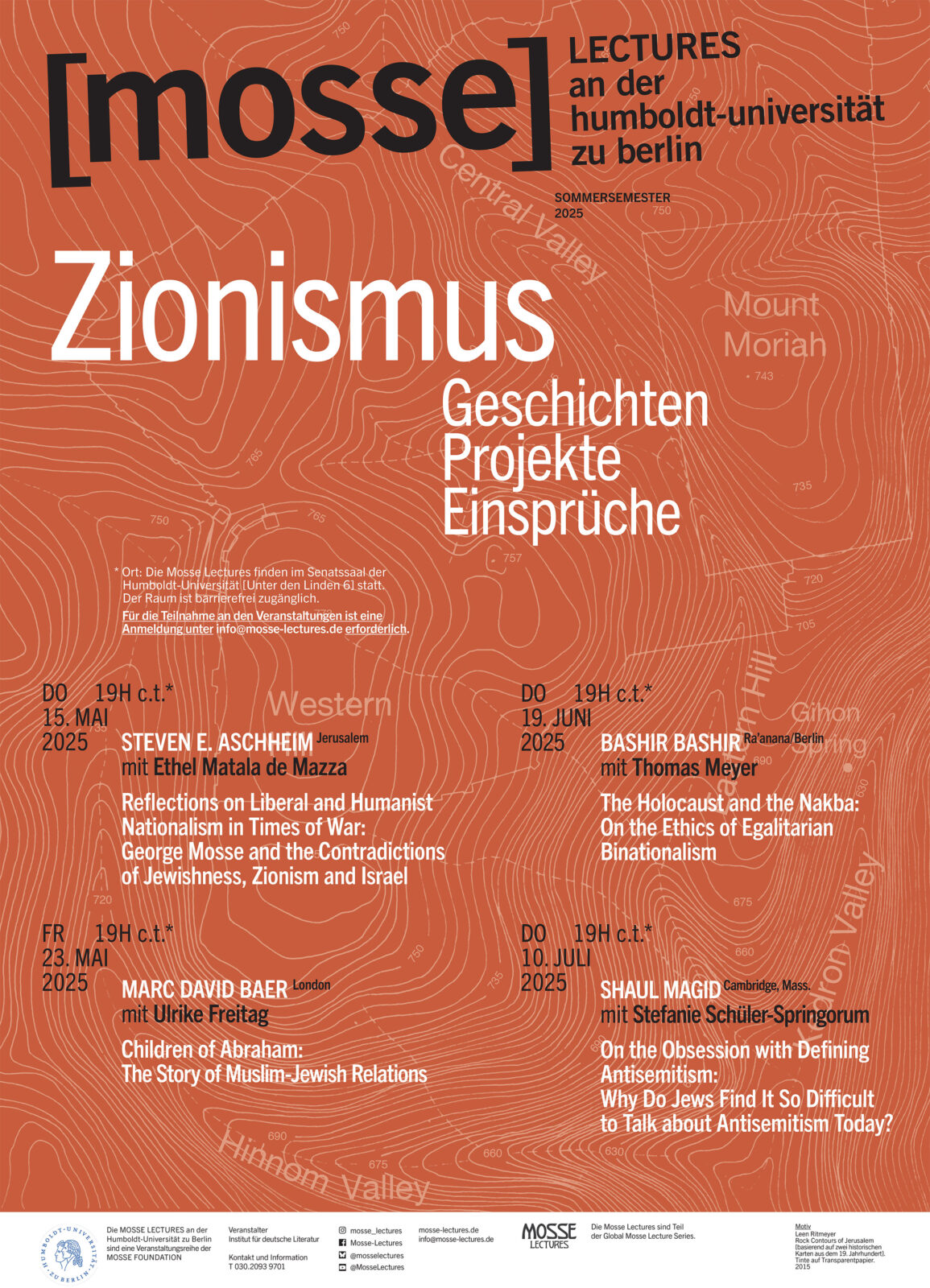
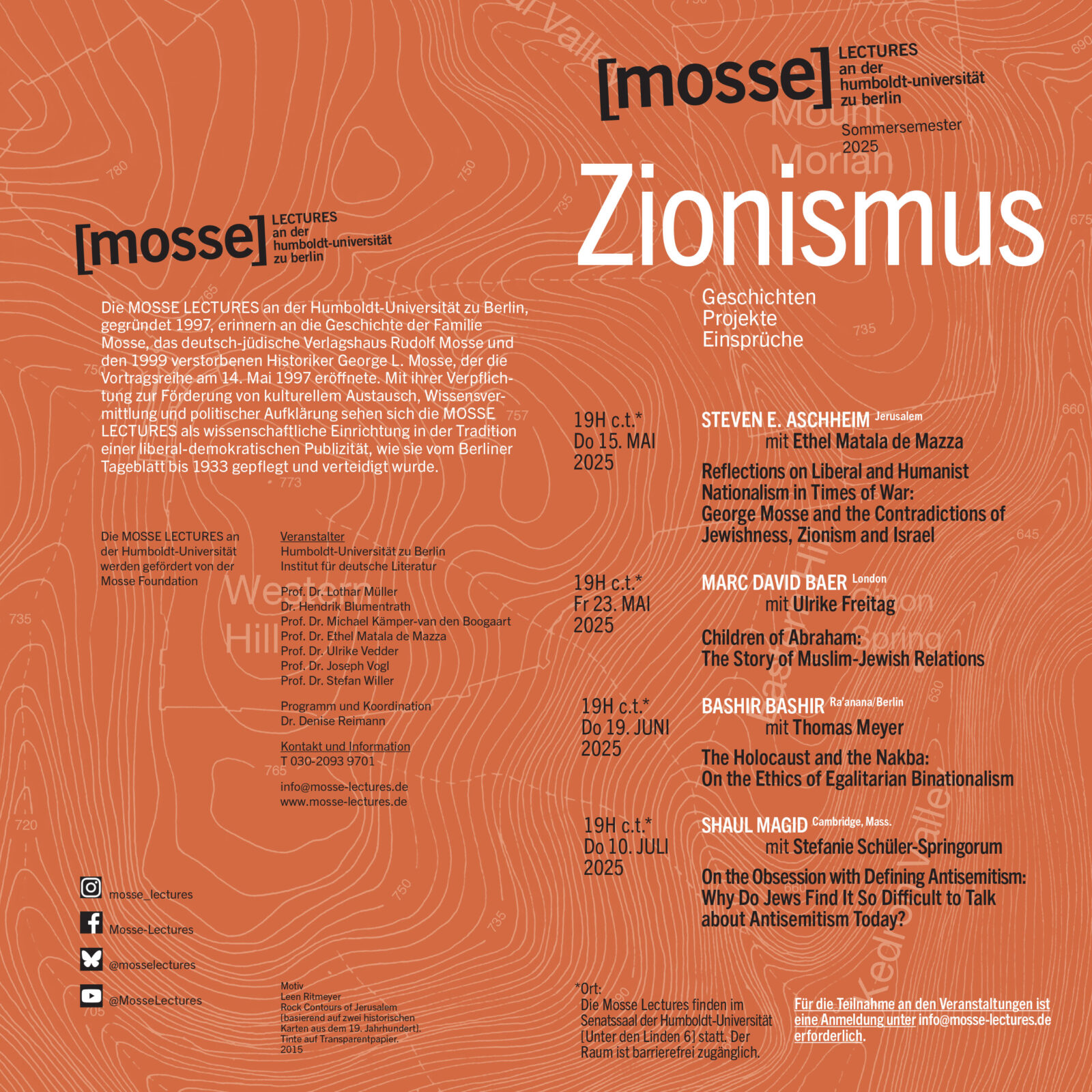
Lecture Series Theme: Zionismus. Geschichten – Projekte – Einsprüche/Zionism. Histories – Projects – Objections.
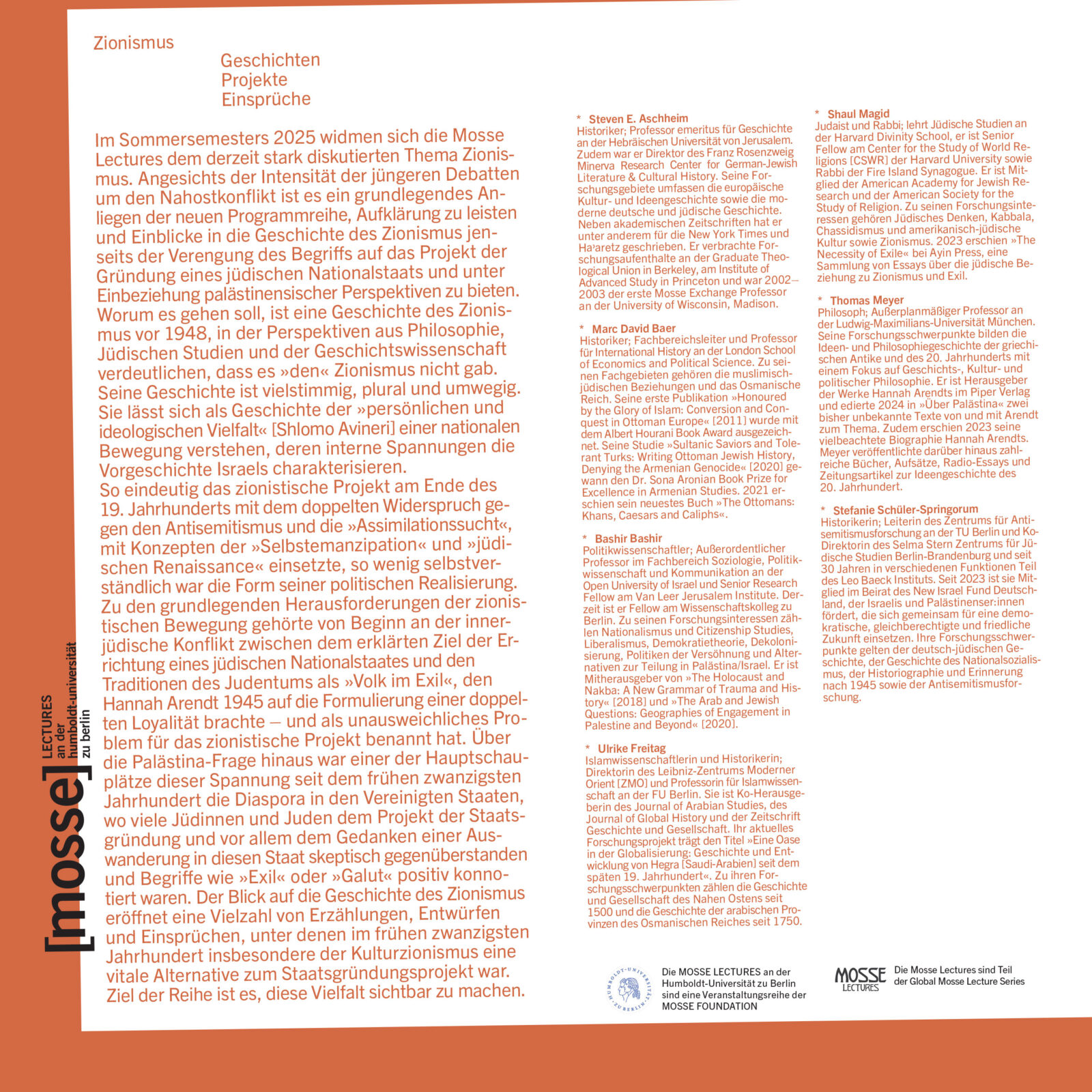
Lecture Series Description: In the summer term 2025, the Mosse Lectures will be dedicated to the currently much-discussed topic of Zionism. In view of the intensity of the recent debates surrounding the Middle East conflict, the new series of lectures aims to provide clarification and insight into the history of Zionism beyond the narrow definition of the term as the project of founding a Jewish nation-state and by including Palestinian perspectives. The aim is to outline a history of Zionism before 1948, in which perspectives from philosophy, Jewish studies and historiography make it clear that there was no such thing as the Zionism. Its history is polyphonic, plural and circuitous. It can be understood as the history of the »personal and ideological diversity« (Shlomo Avineri) of a national movement whose internal tensions characterize Israel’s prehistory.
As clearly as the Zionist project began at the end of the 19th century with the dual opposition to antisemitism and the »addiction to assimilation«, with concepts of »self-emancipation« and »Jewish renaissance«, the form of its political realization was not self-evident. One of the fundamental challenges facing the Zionist movement from the very beginning was the internal Jewish conflict between the declared goal of establishing a Jewish nation state and the traditions of Judaism as a »people in exile«, which Hannah Arendt formulated in 1945 as a dual loyalty – and identified as an unavoidable problem for the Zionist project. In addition to the question of Palestine, one of the main sites of this tension since the early twentieth century has been the diaspora in the United States, where many Jews were sceptical about the project of founding a state and, above all, about the idea of emigrating to it, and where terms such as »exile« or »galut« had positive connotations. A look at the history of Zionism opens up a multitude of narratives, drafts and objections, among which cultural Zionism in particular was a vital alternative to the project of founding a state in the early twentieth century. The aim of the series is to make this diversity visible.
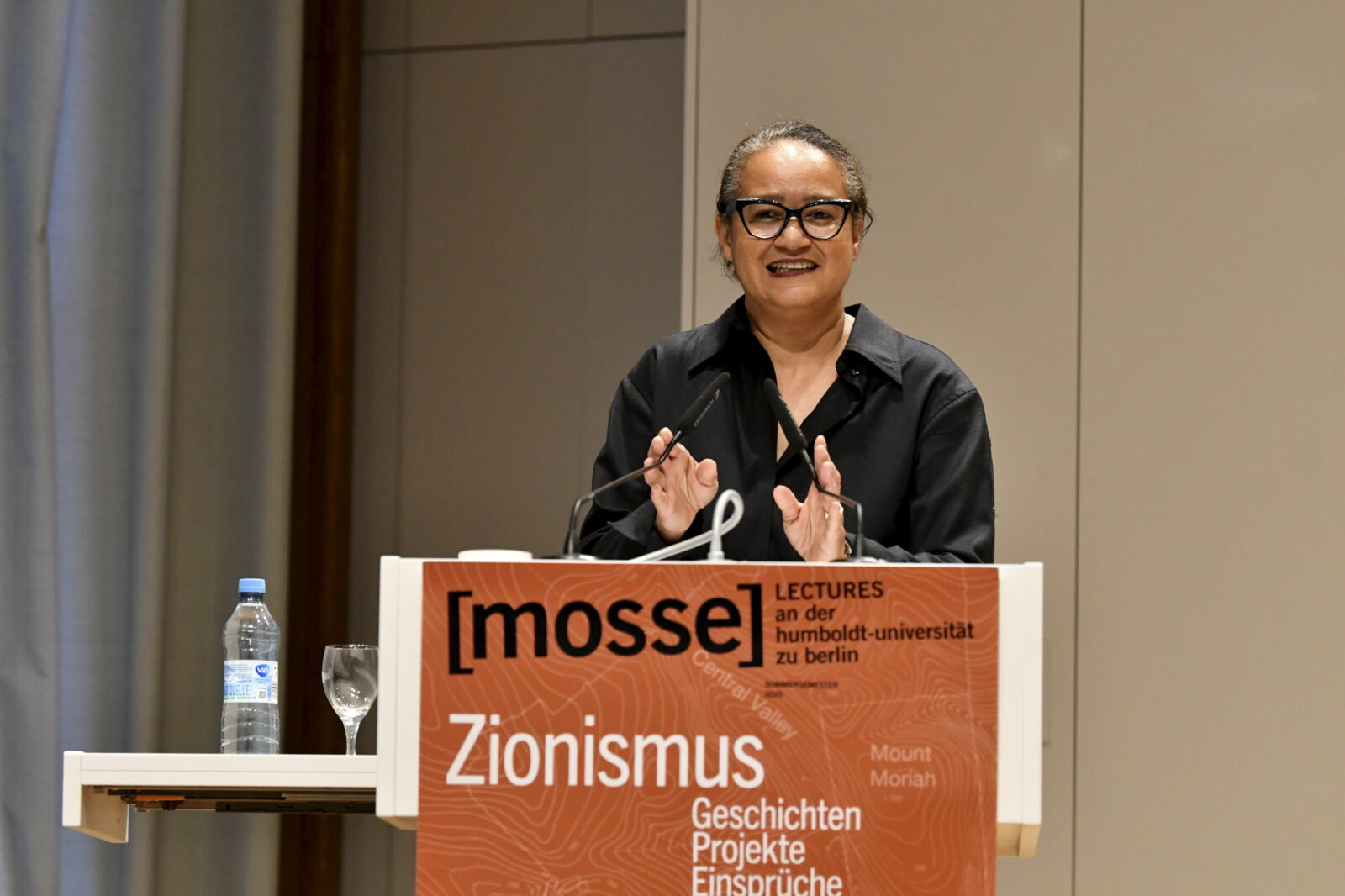
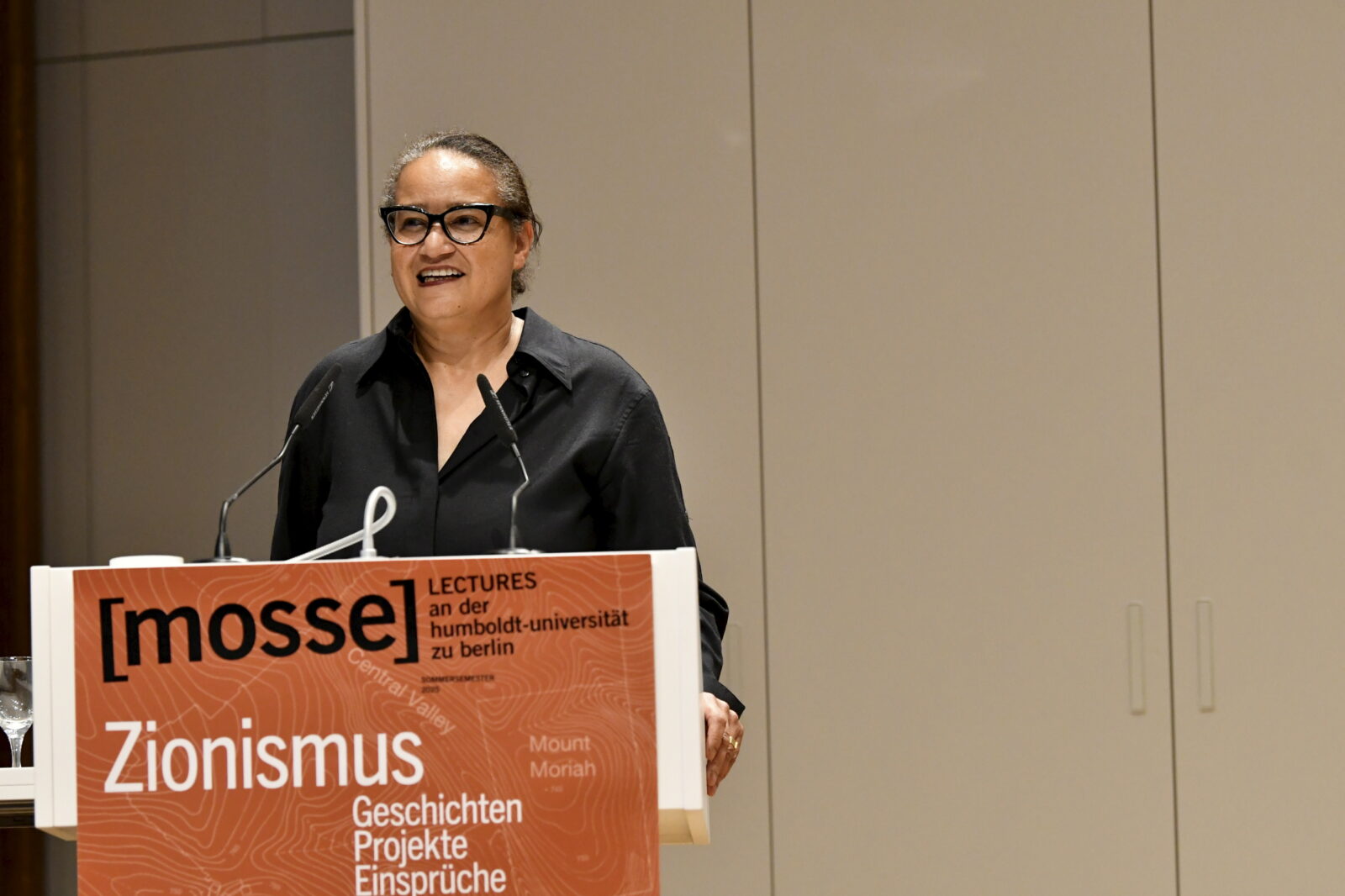
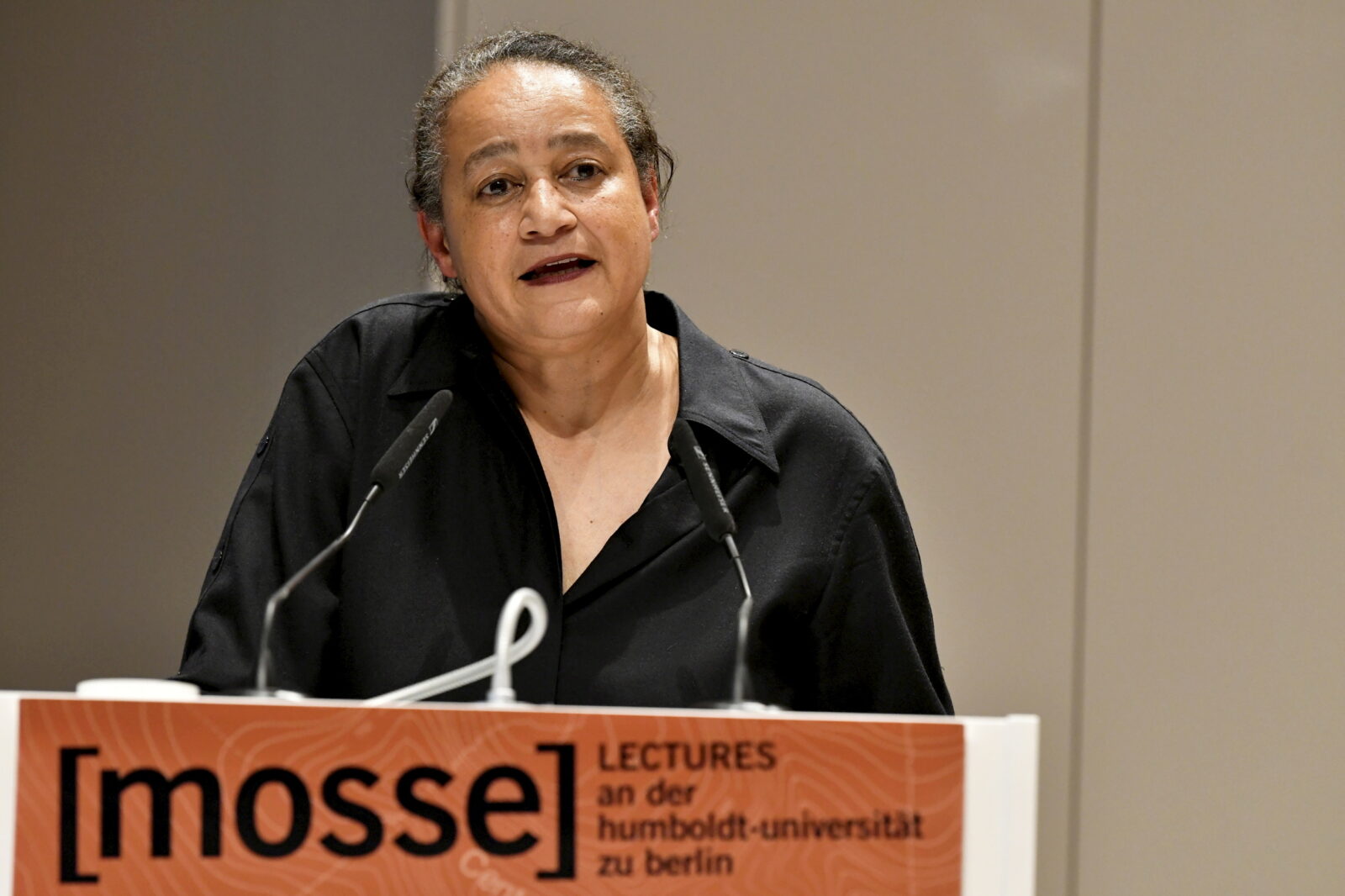
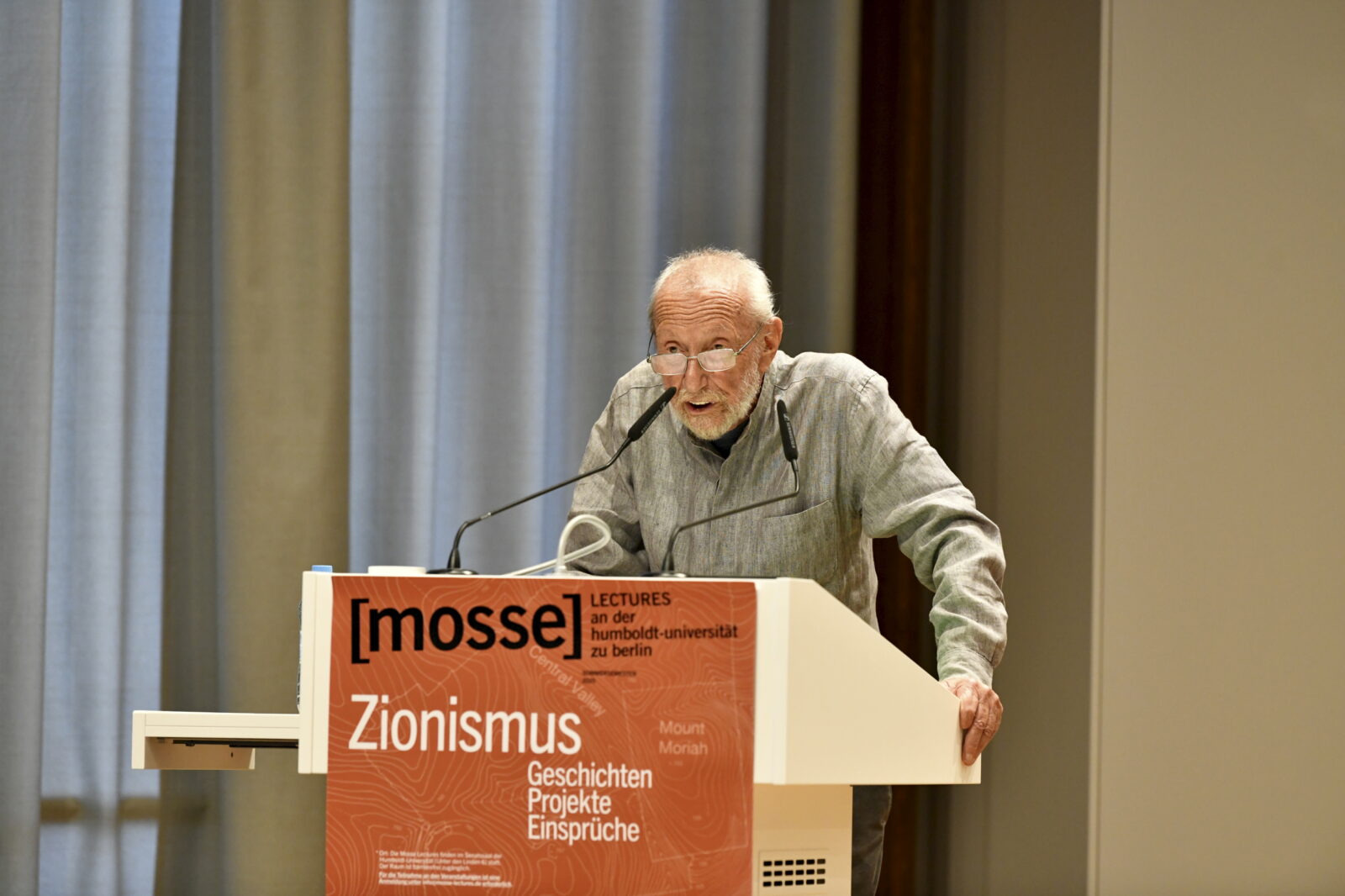
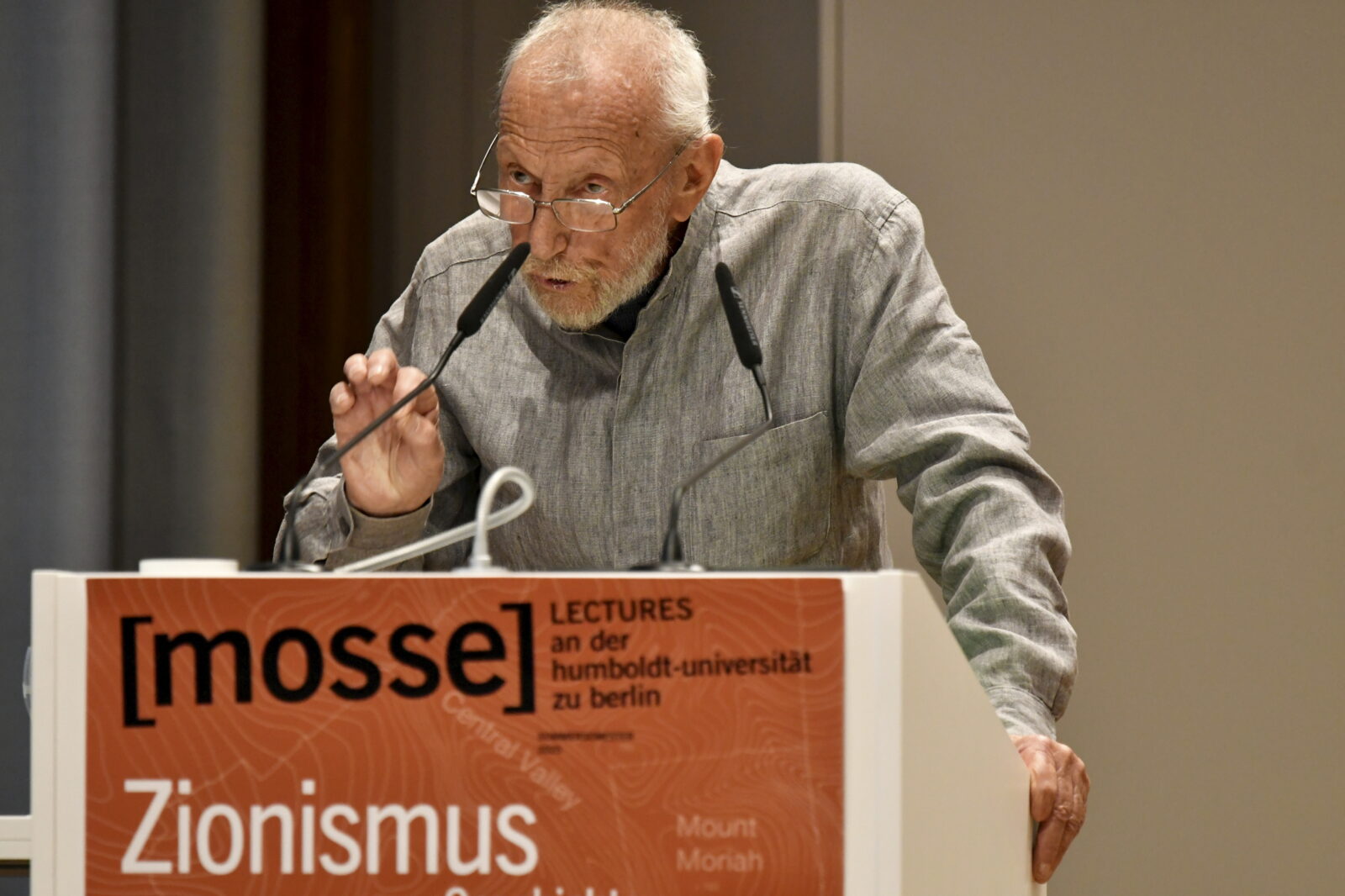
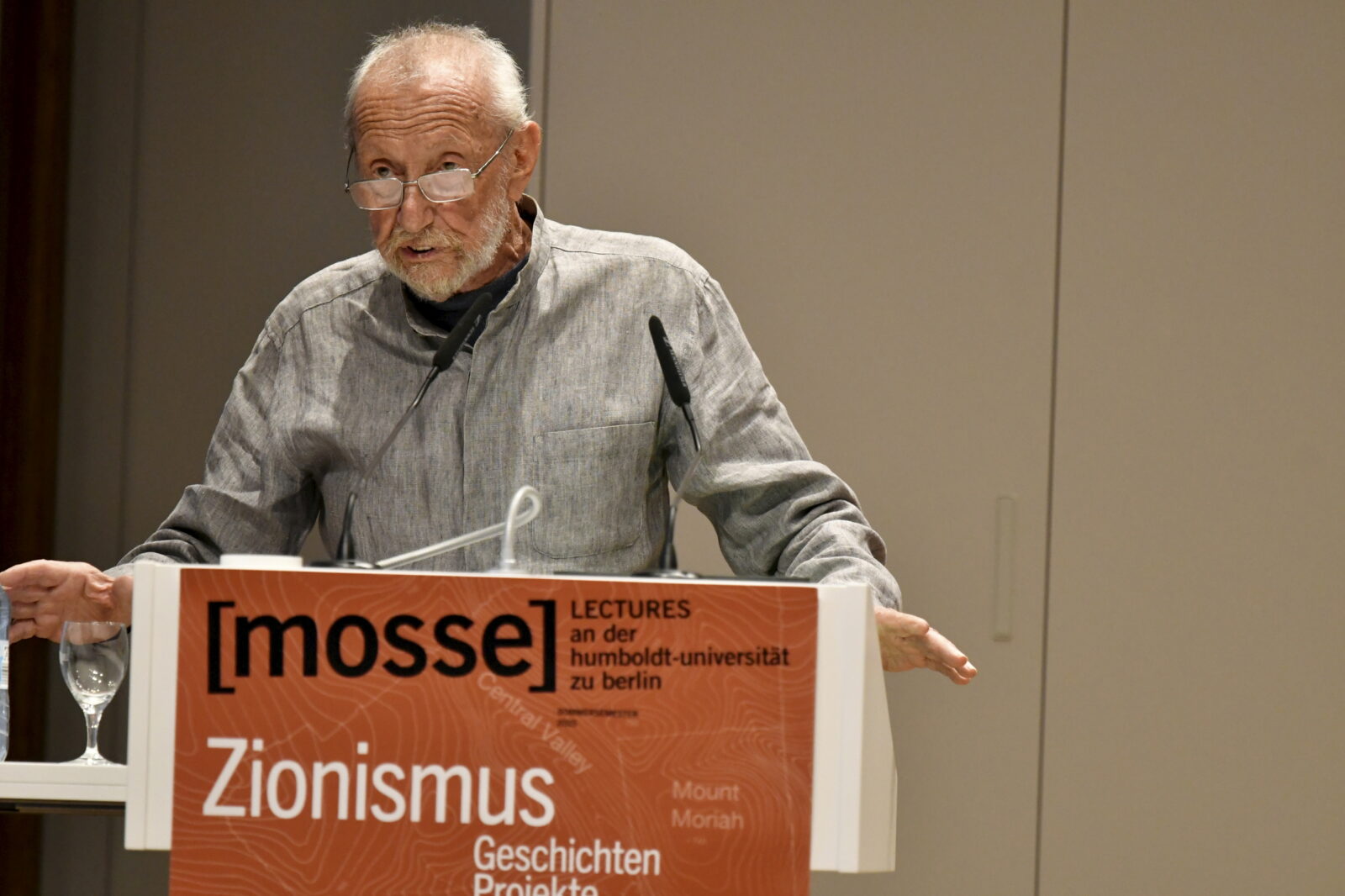
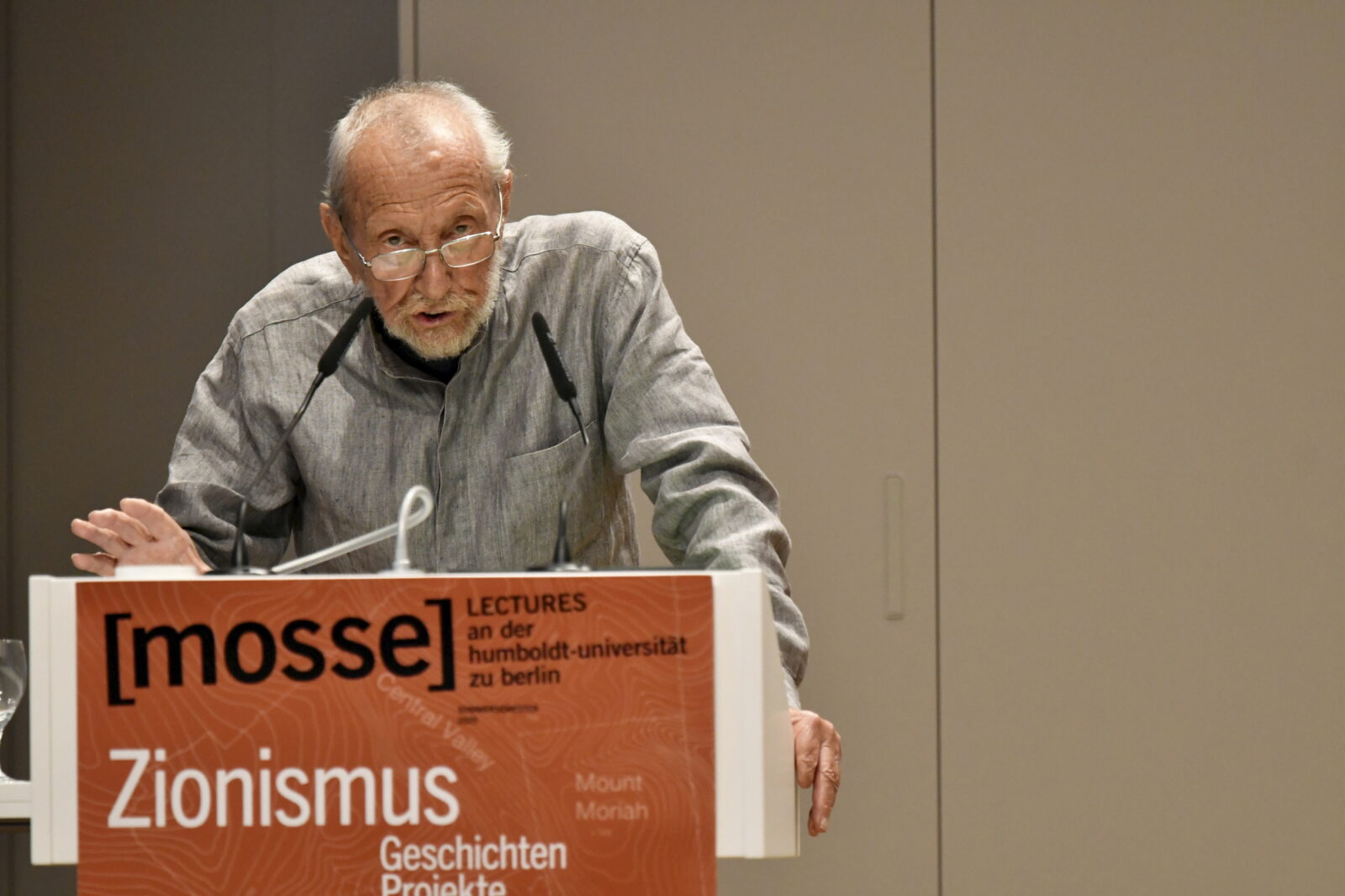
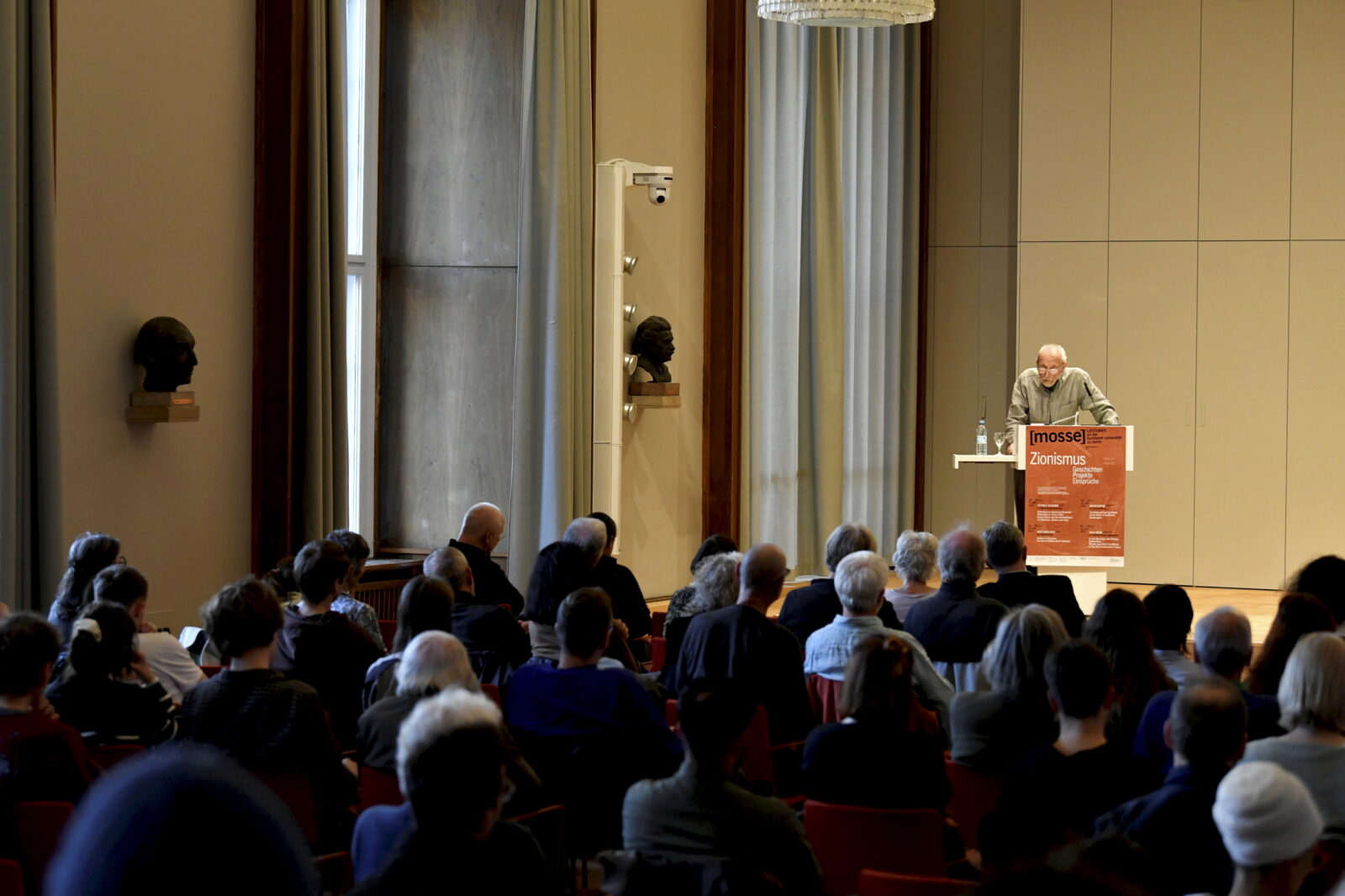
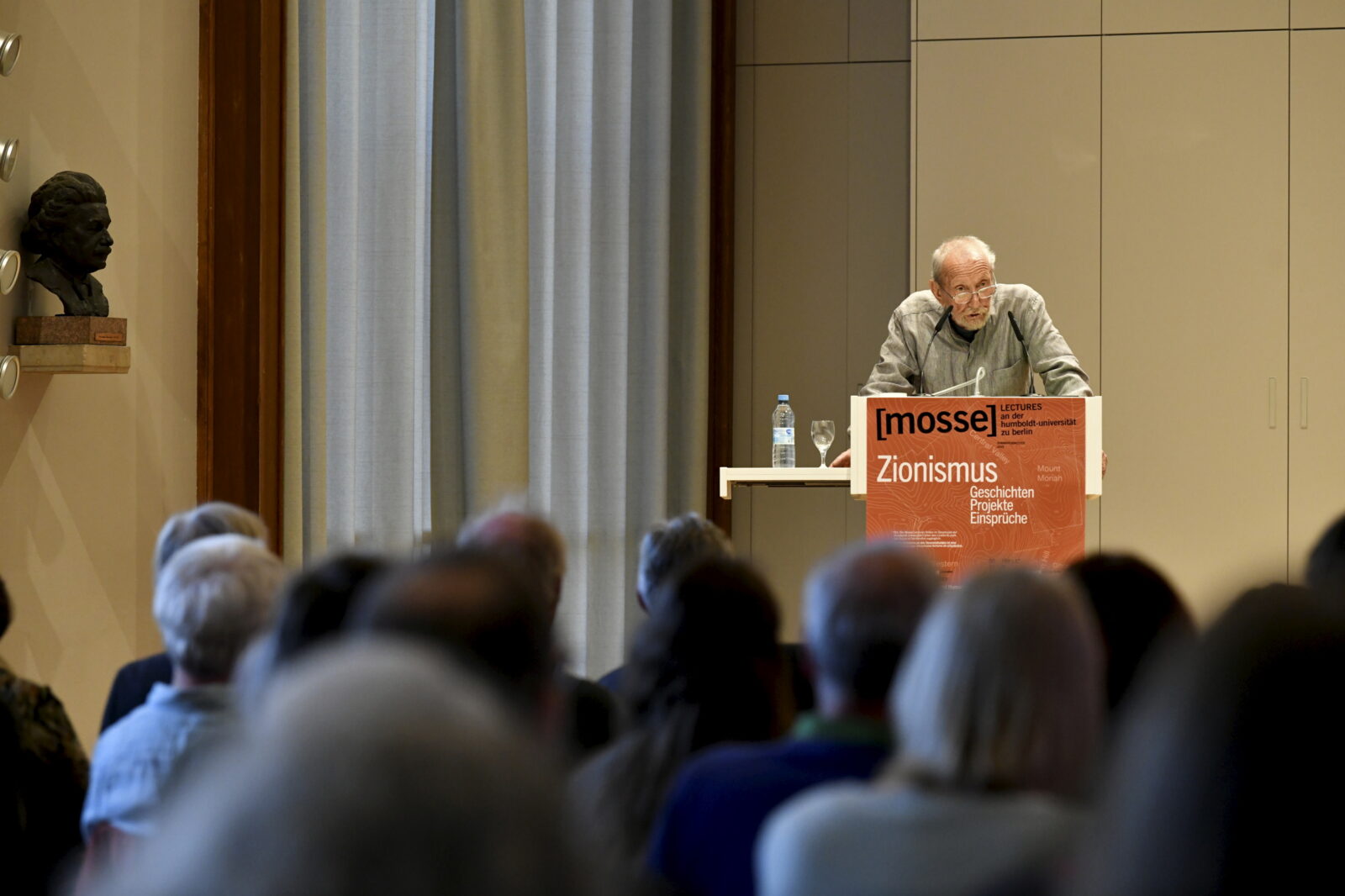
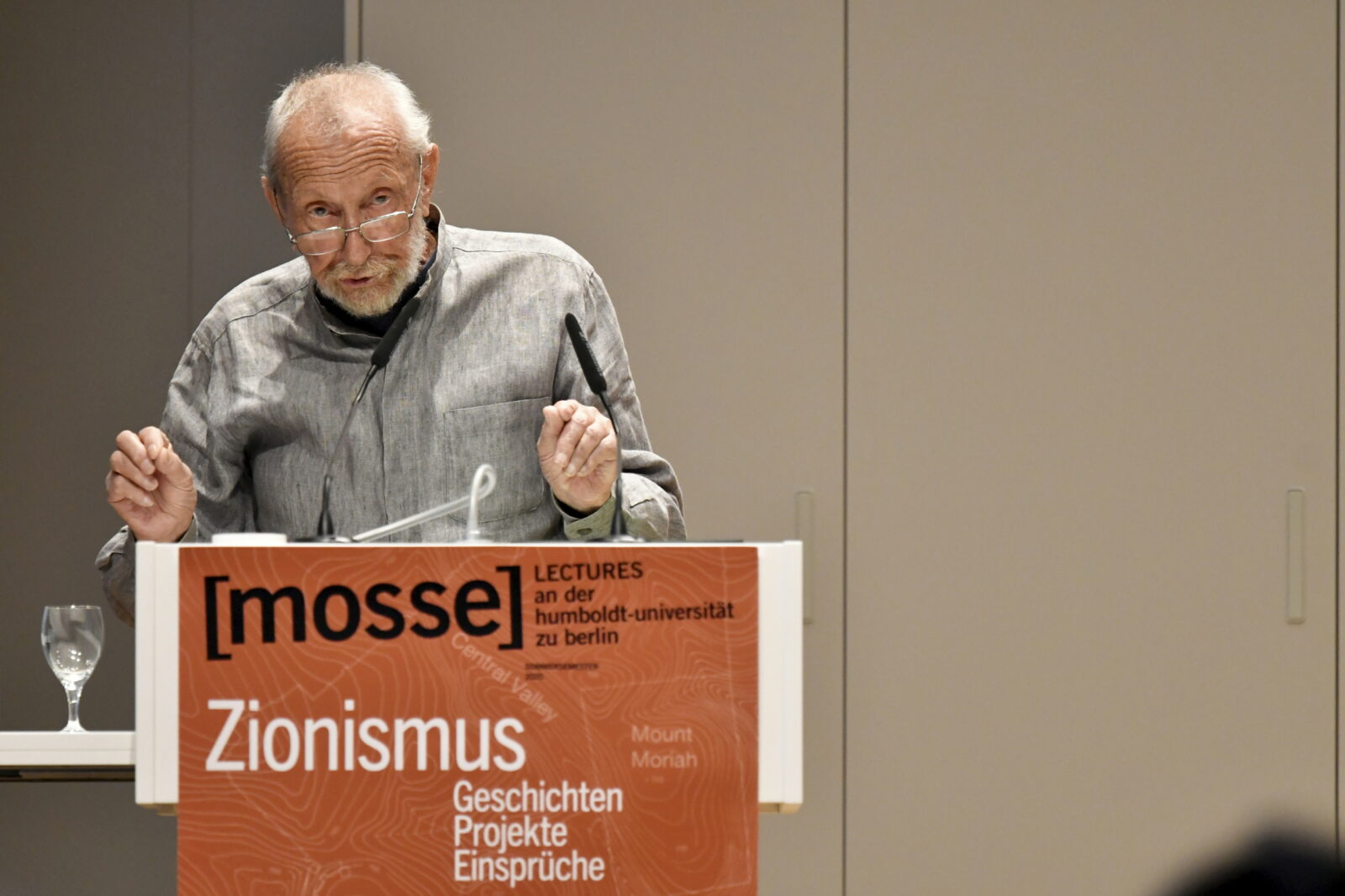
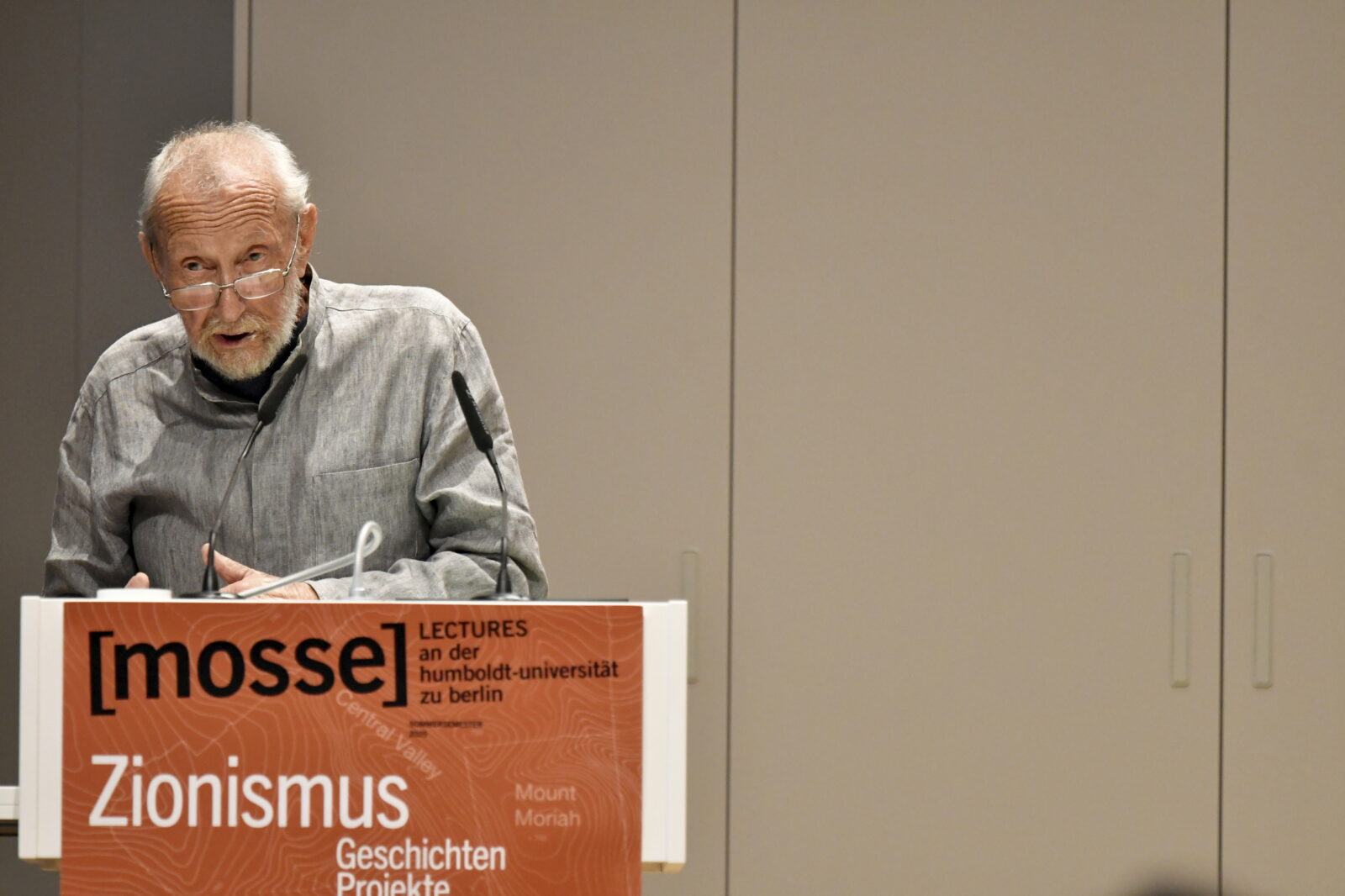
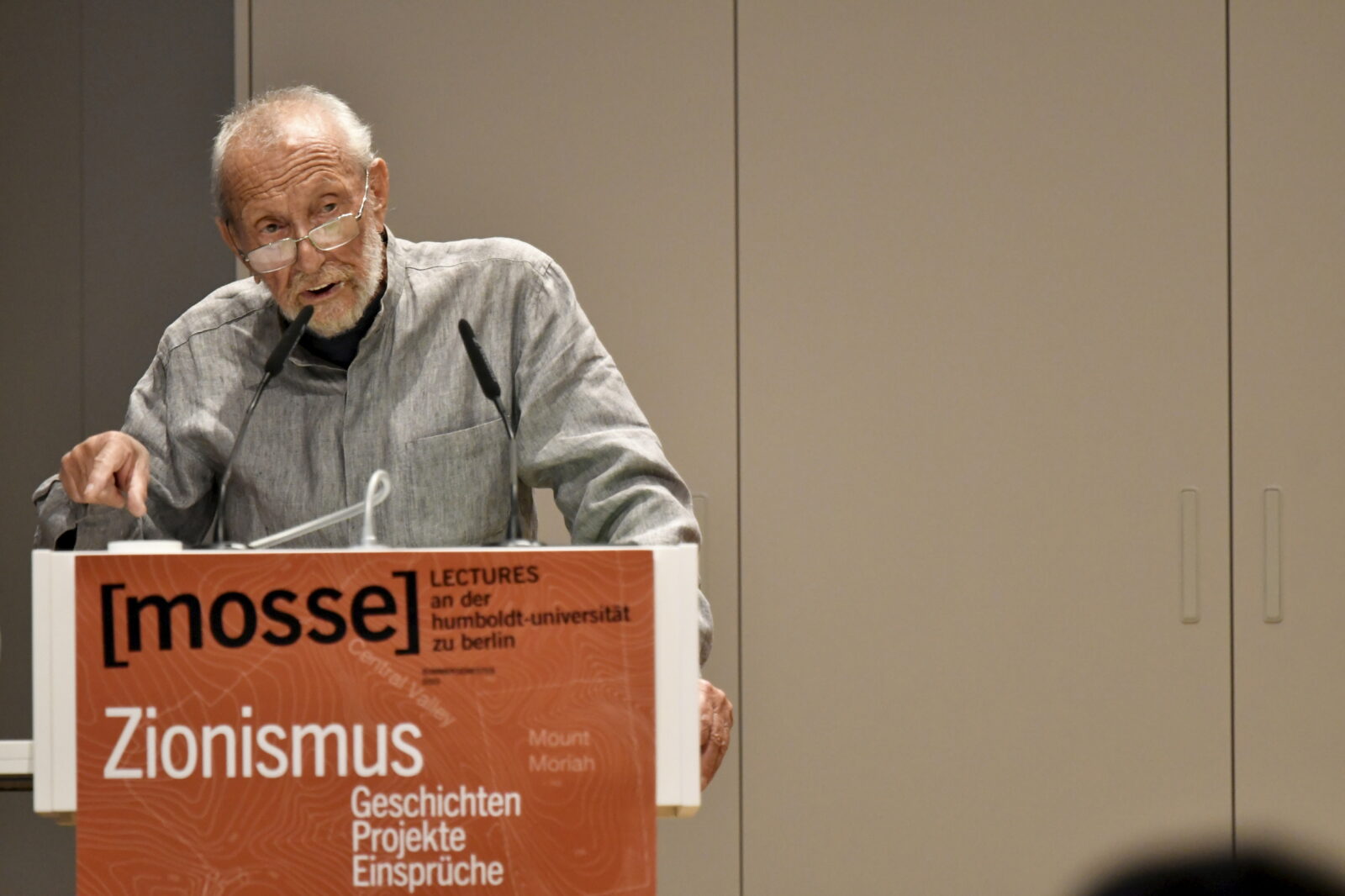
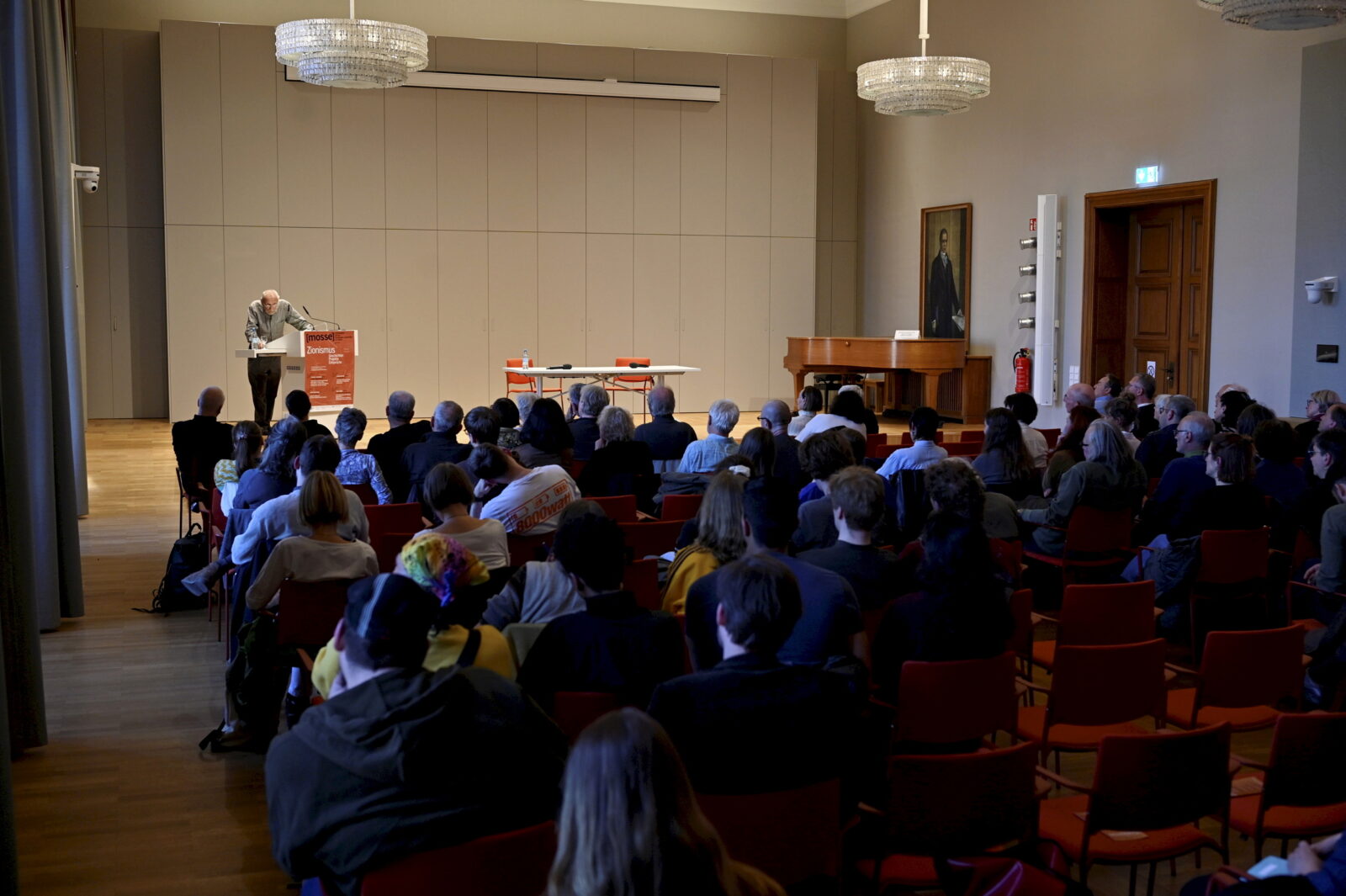
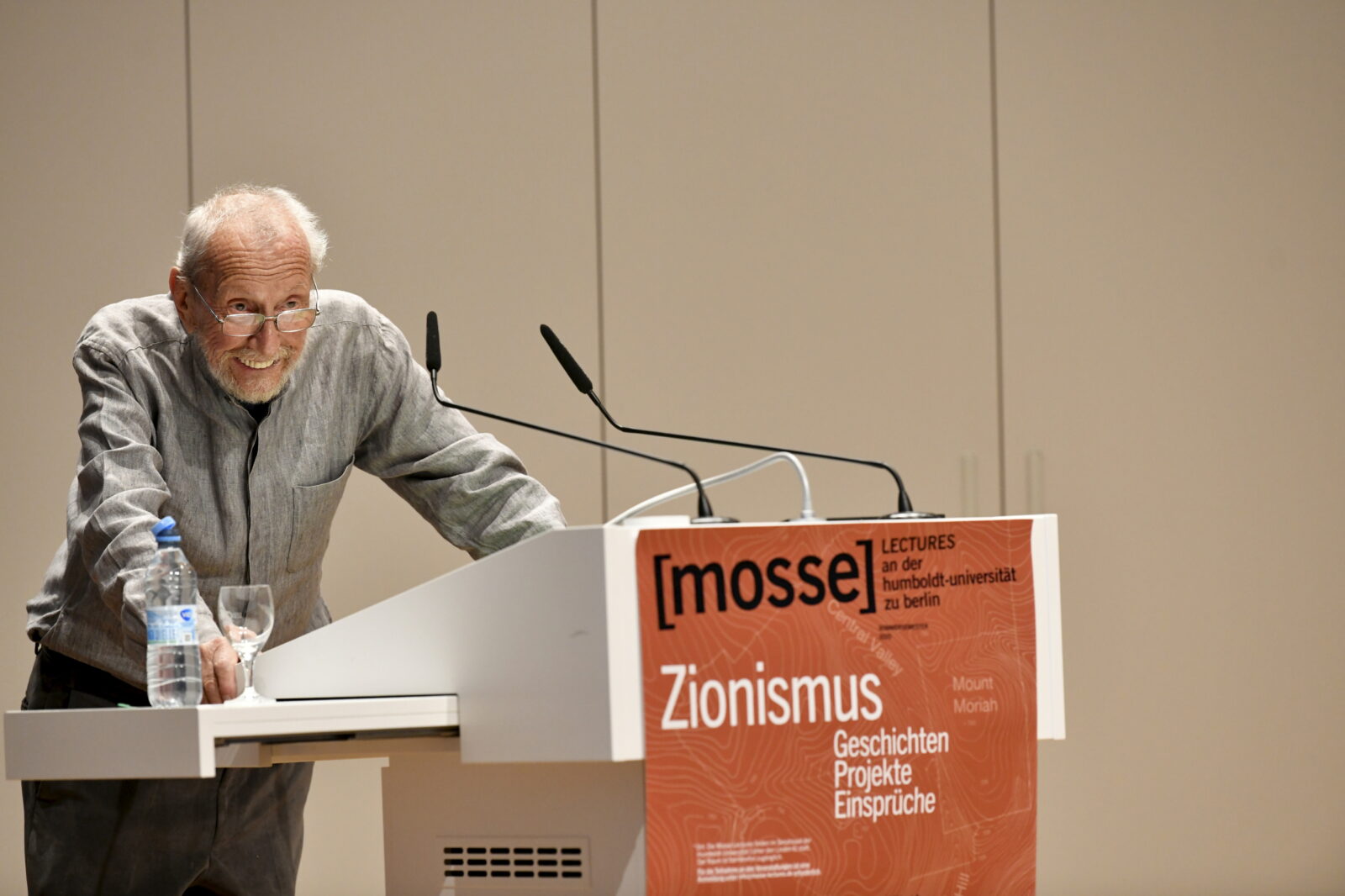
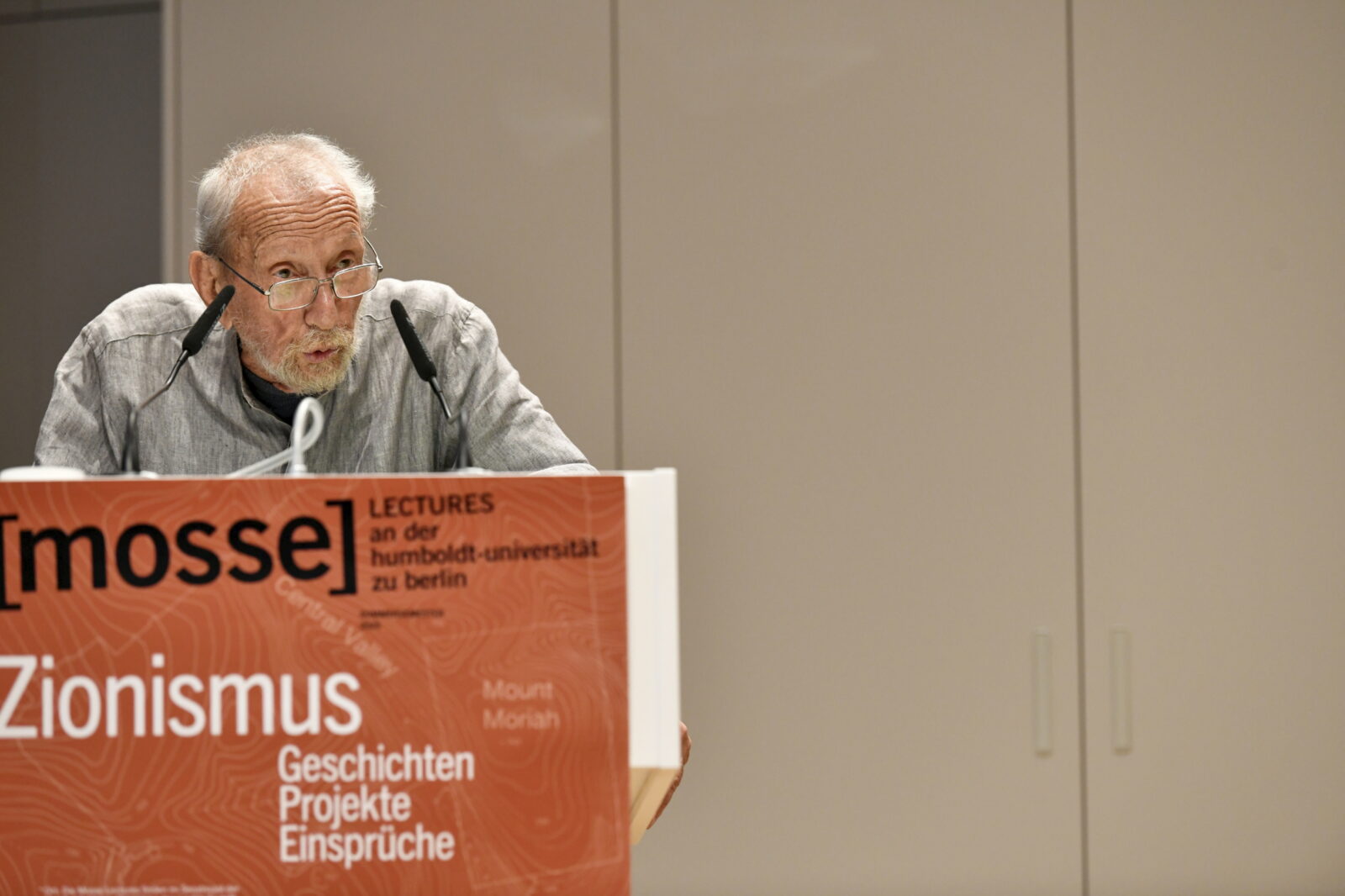
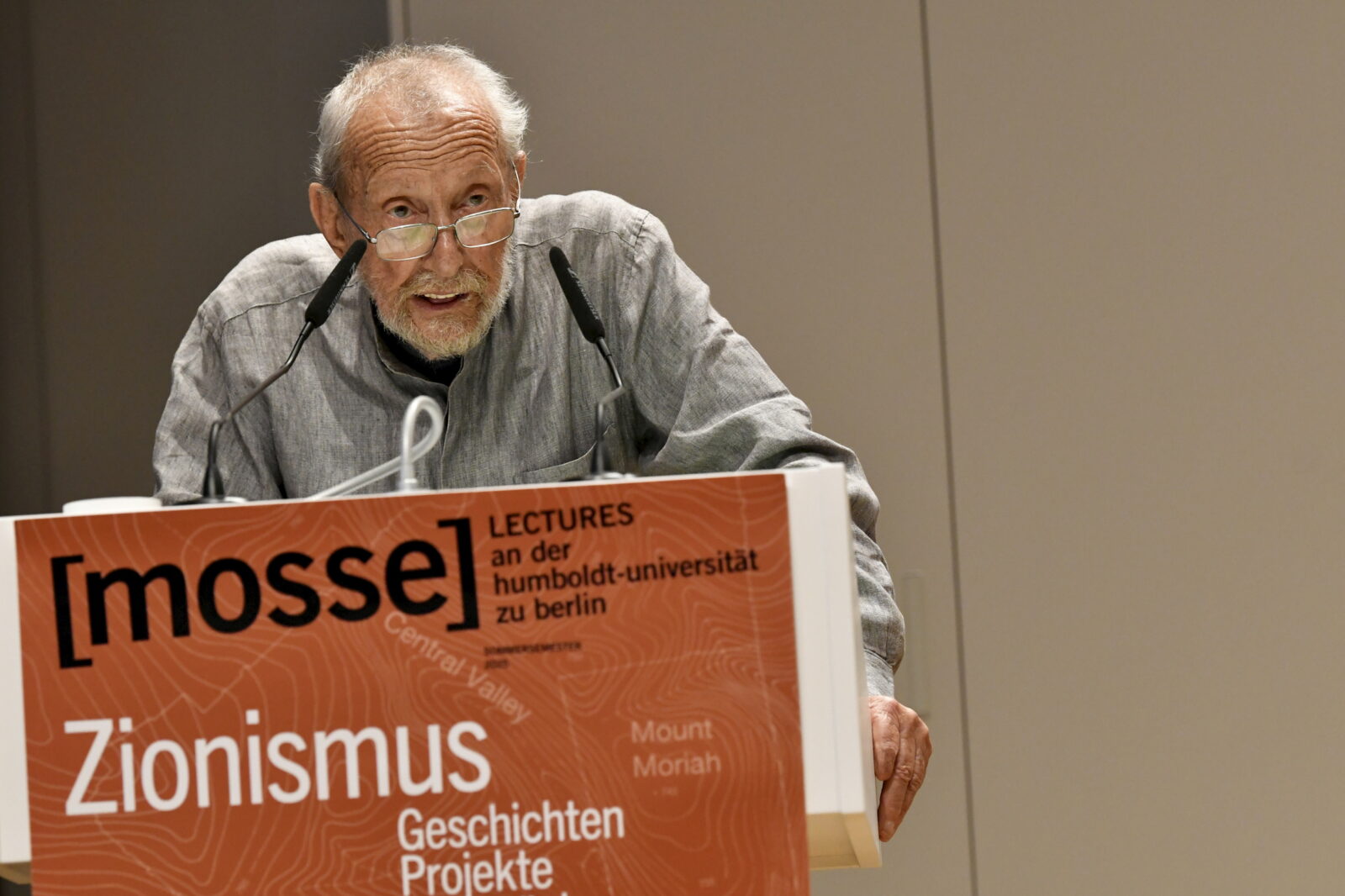
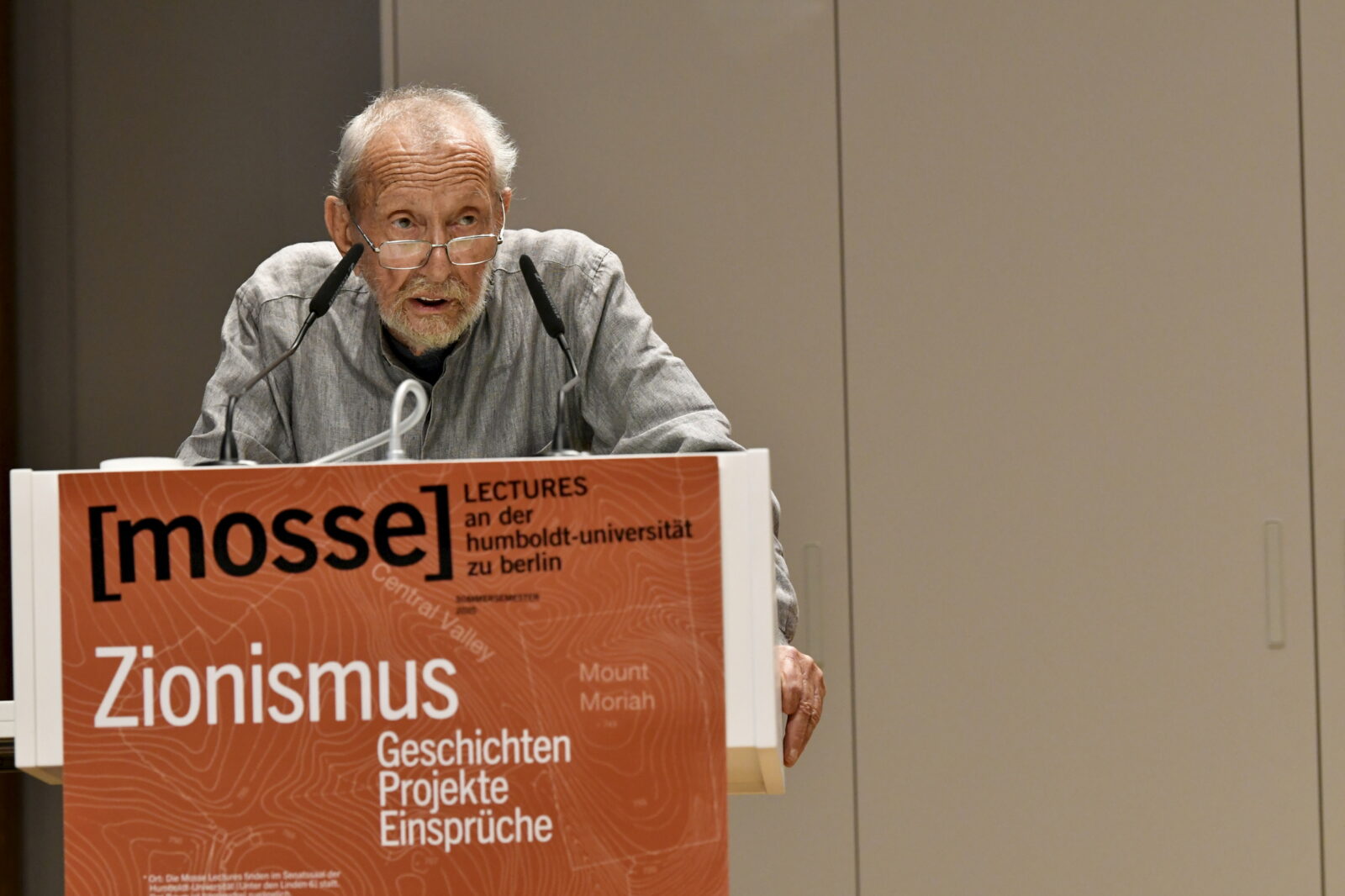
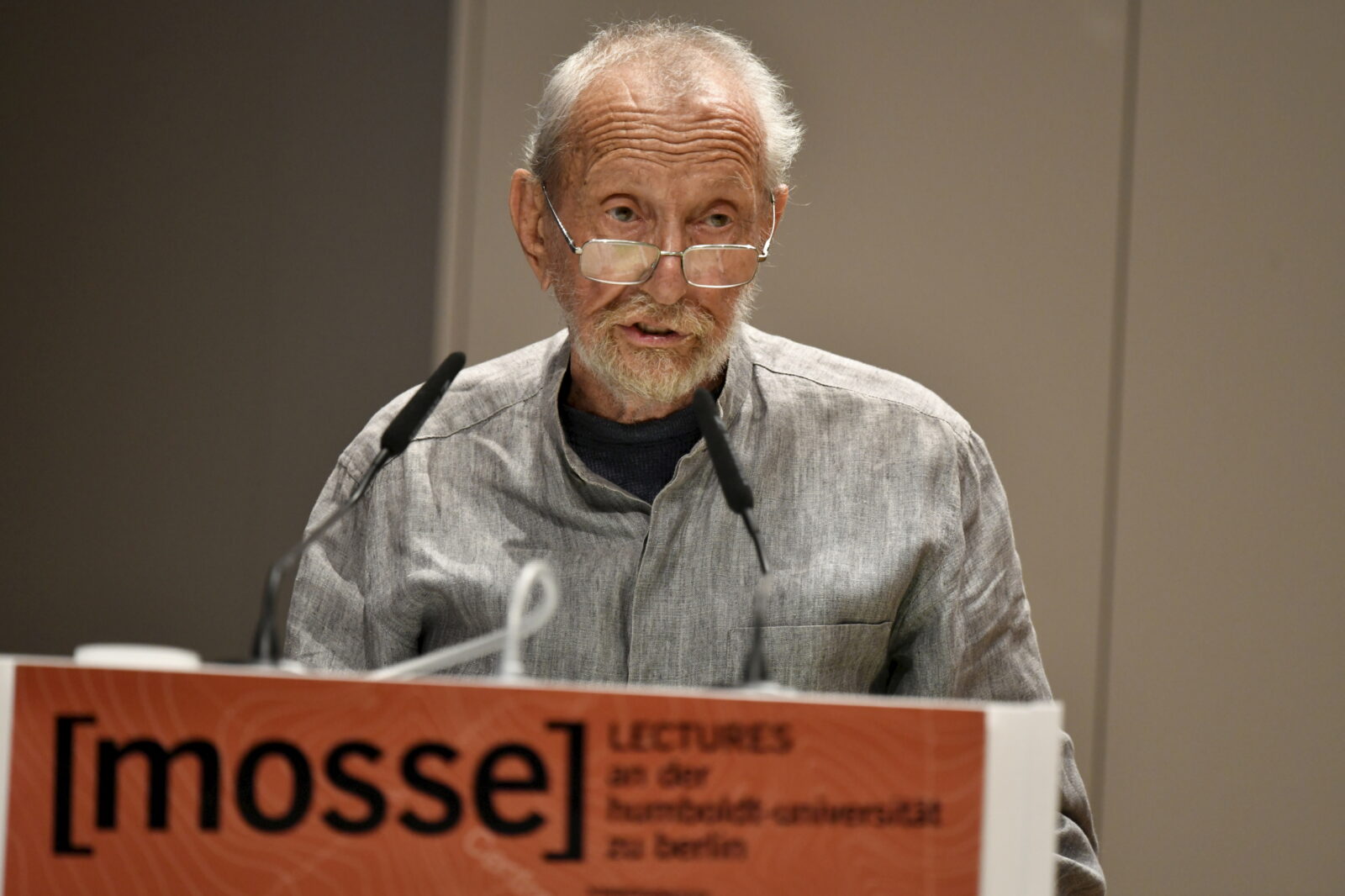
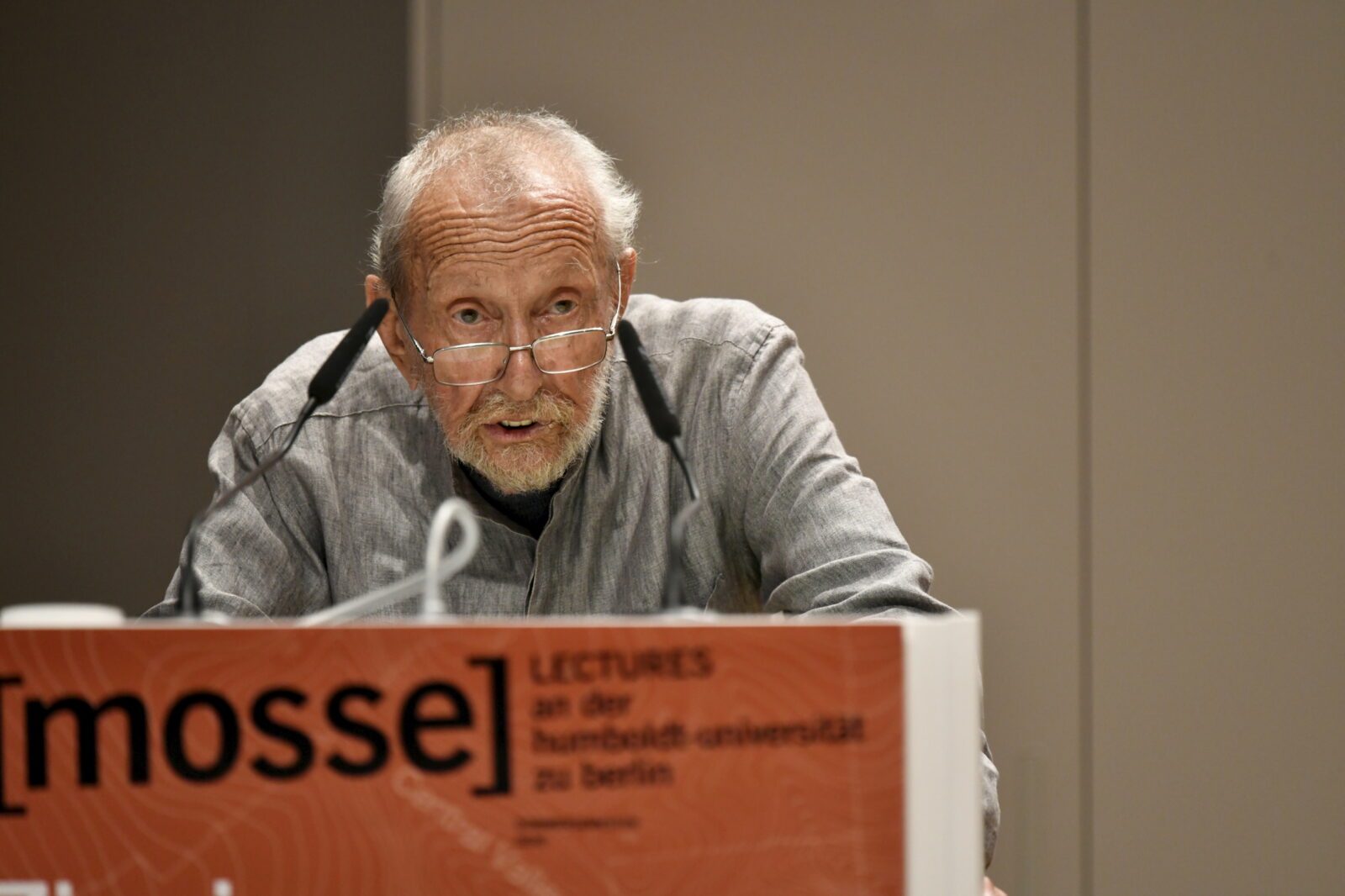
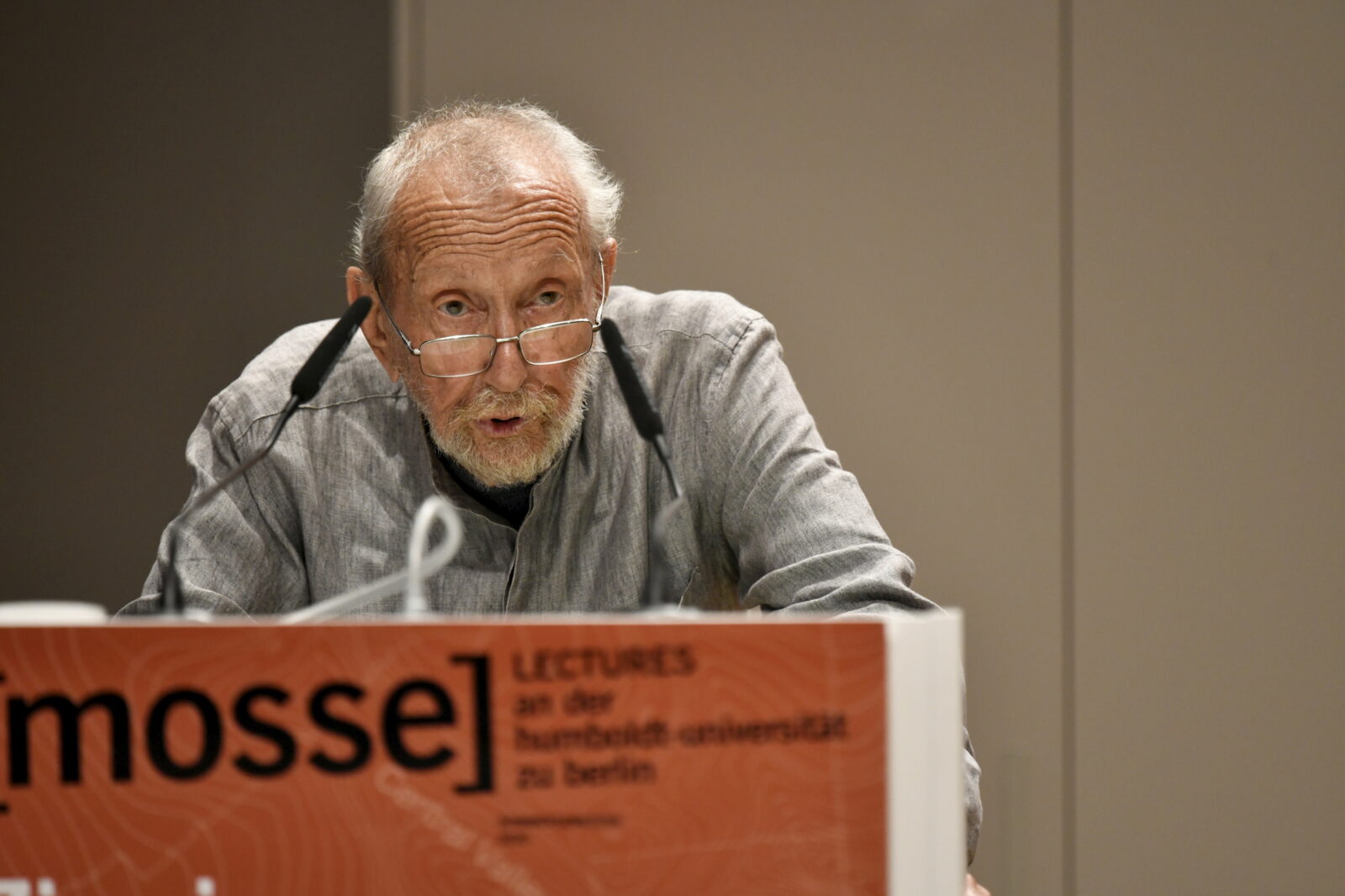
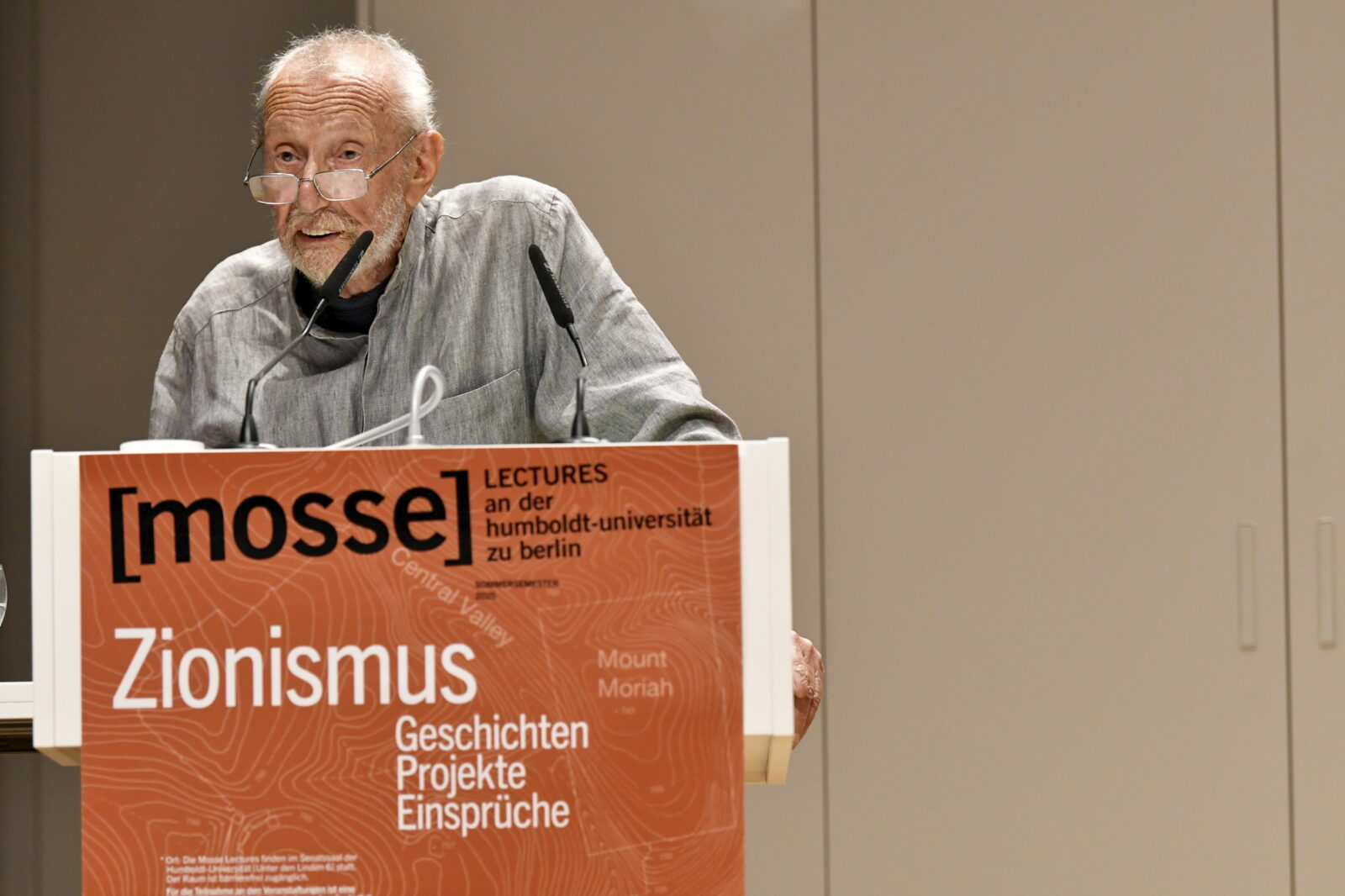
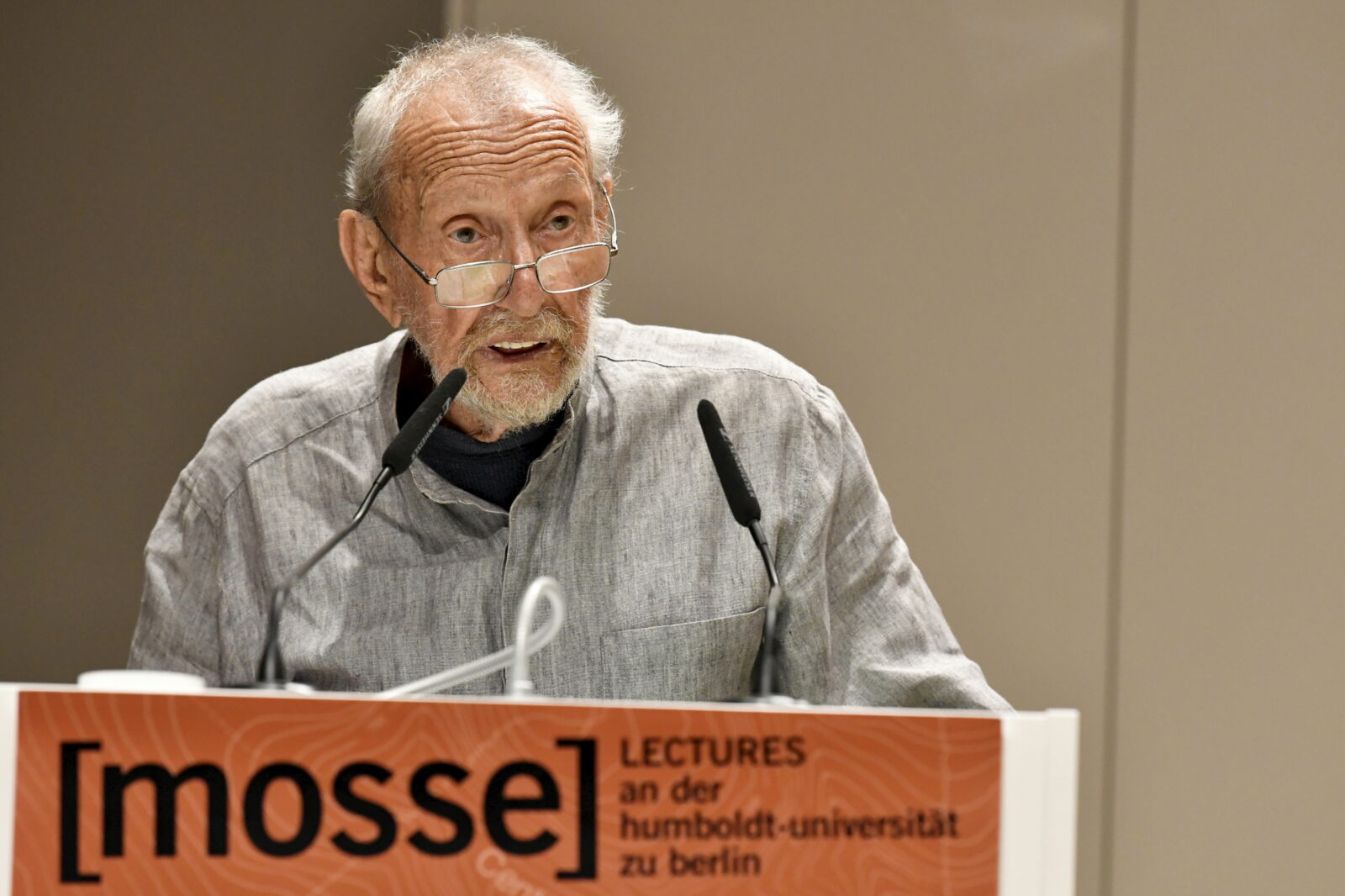
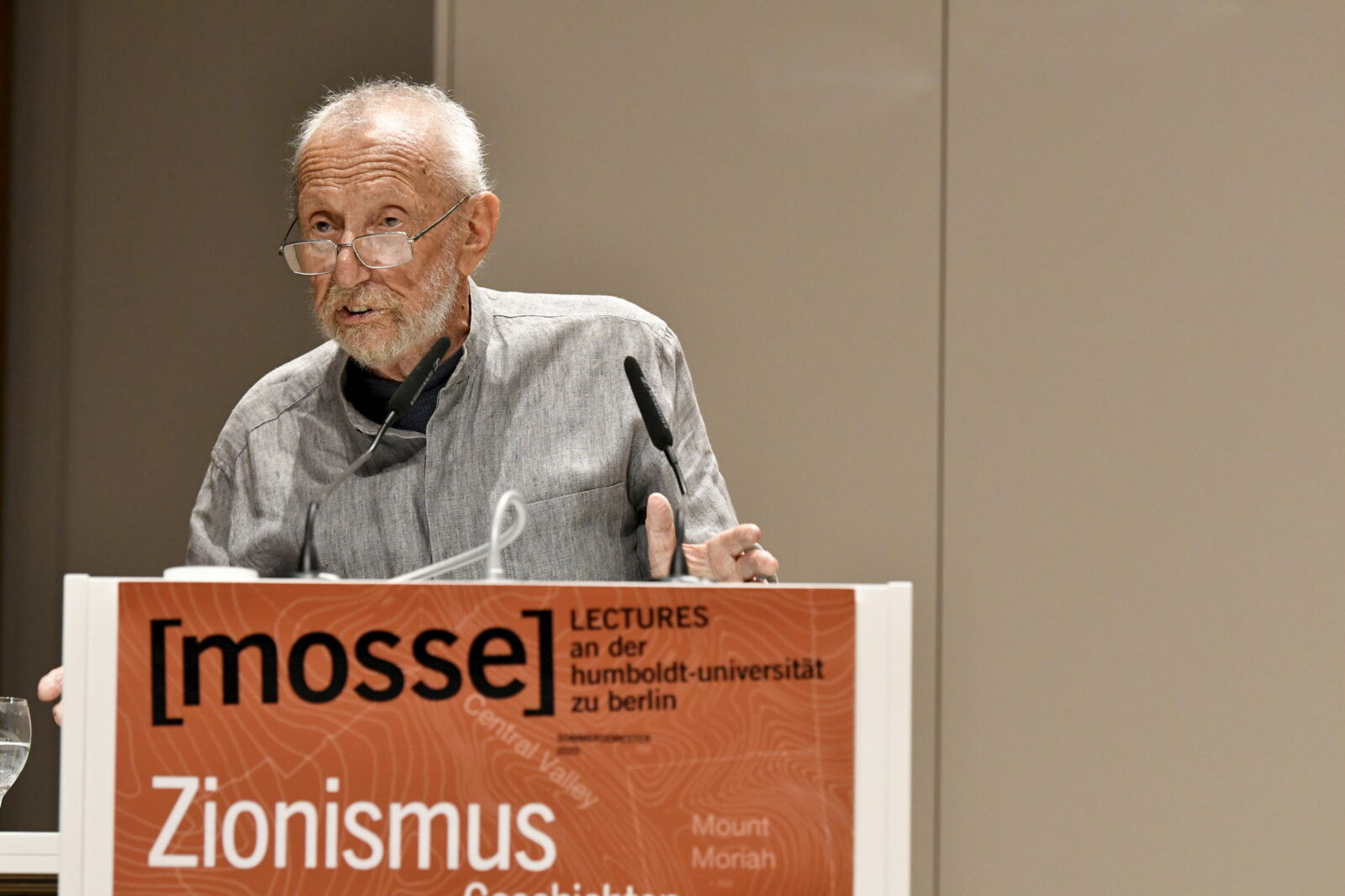
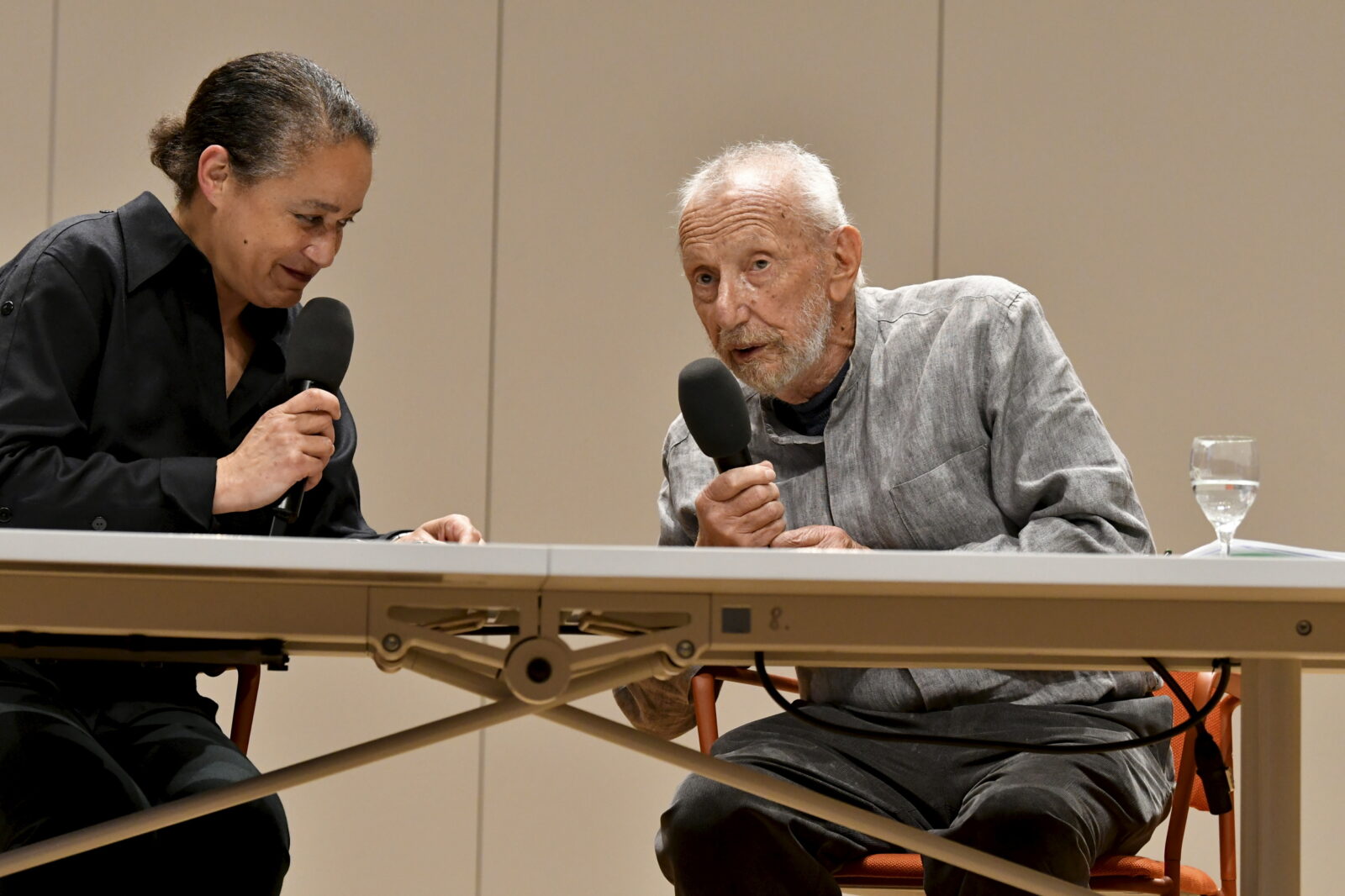
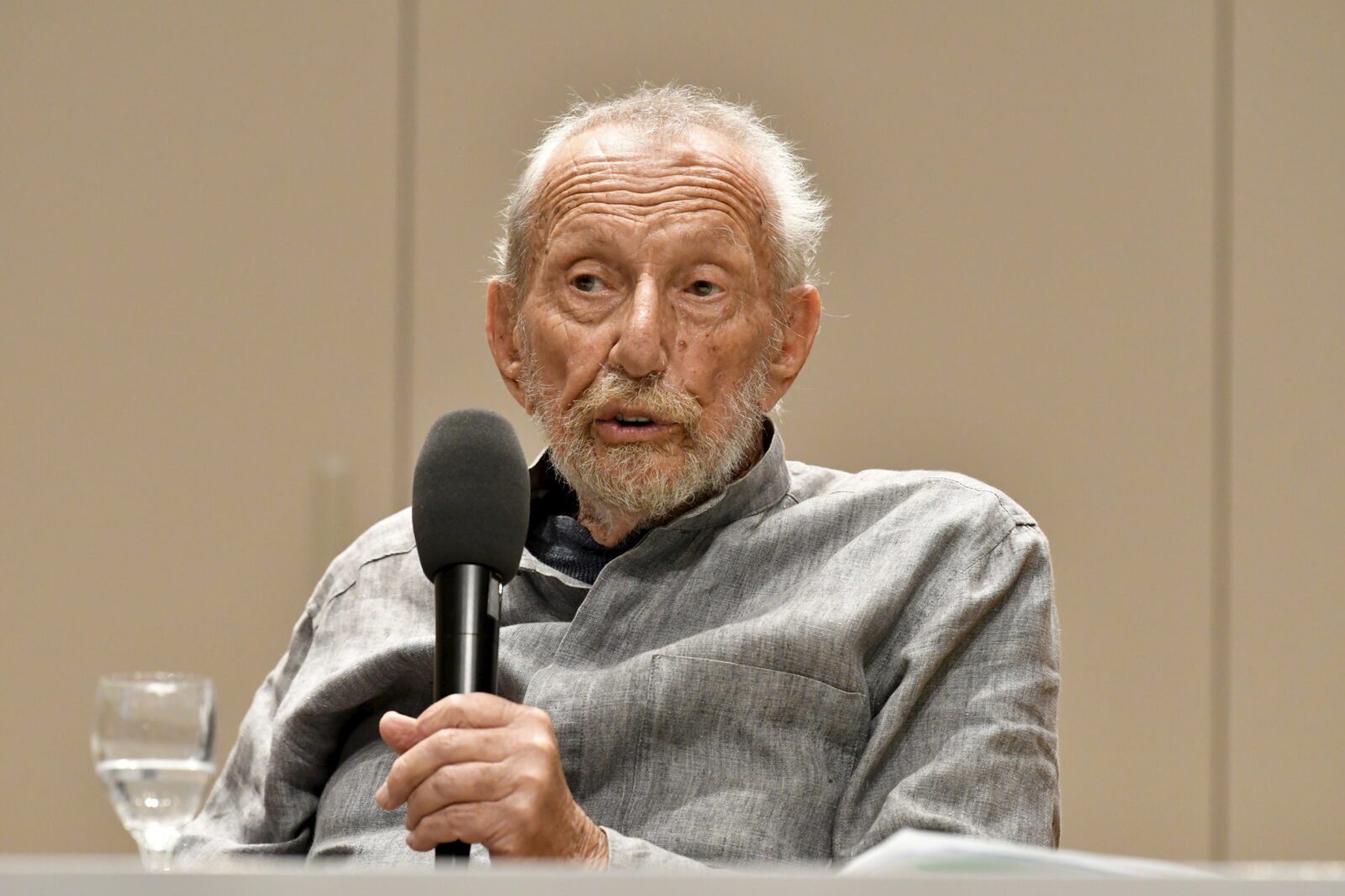
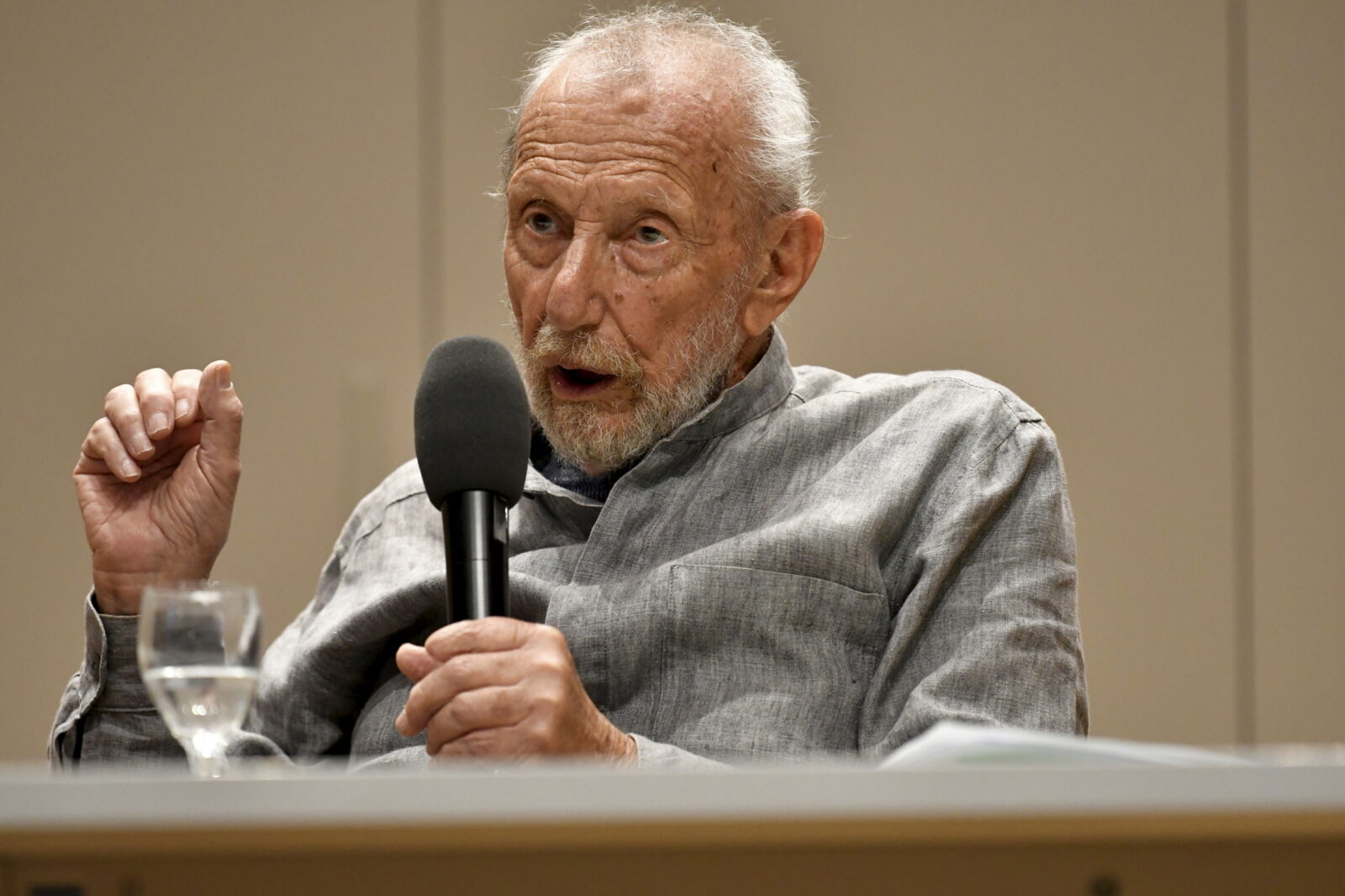
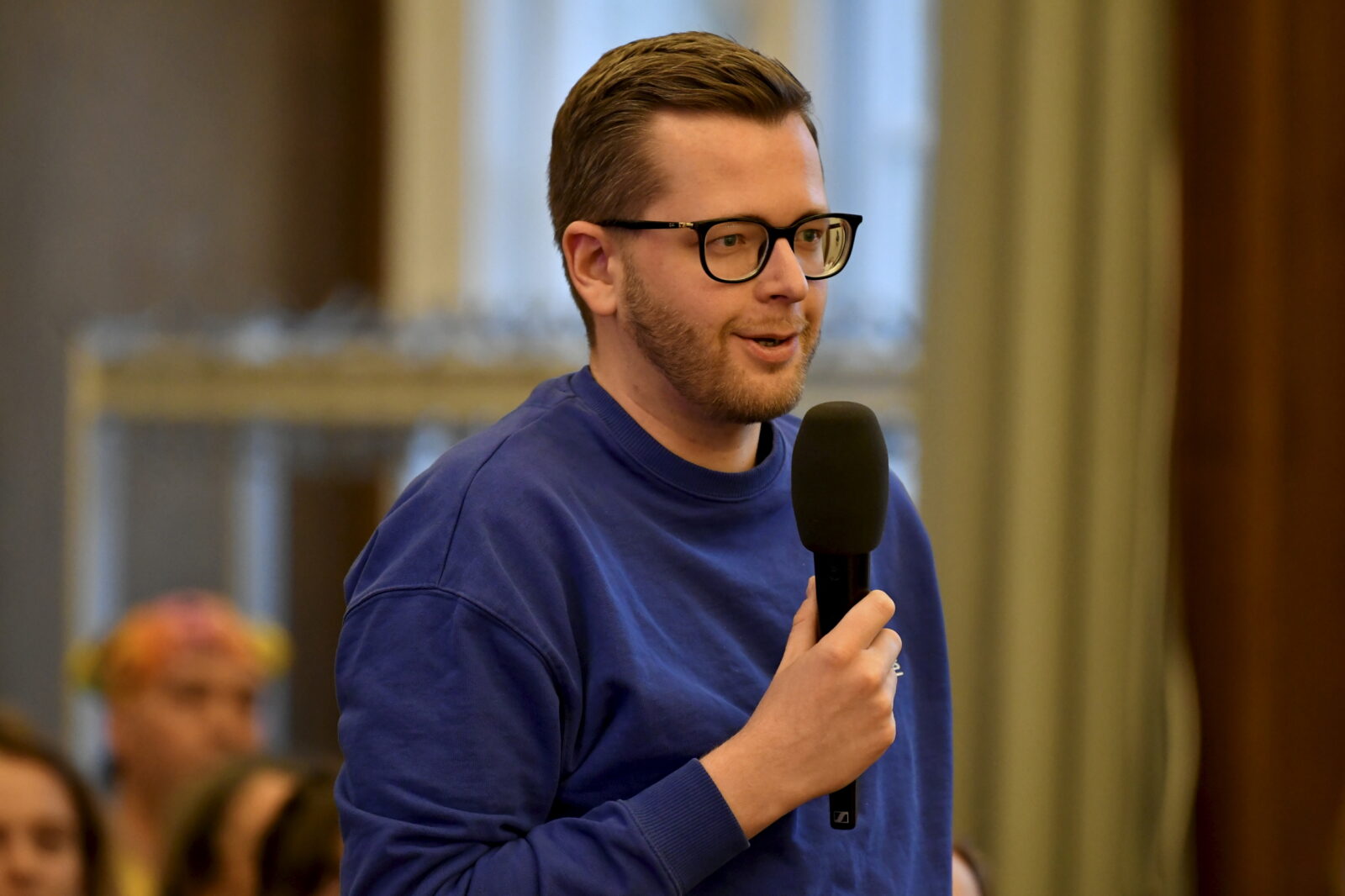
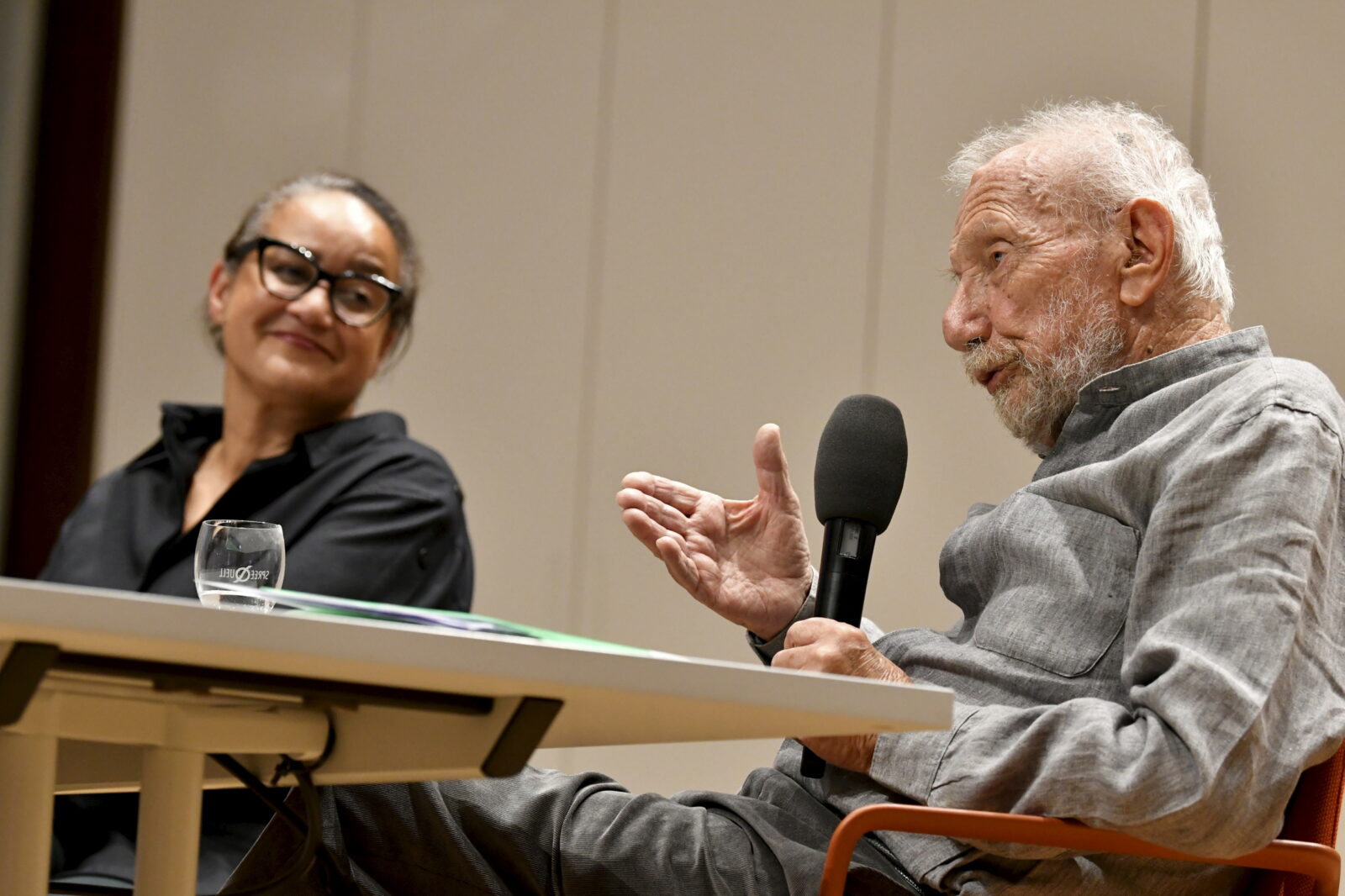
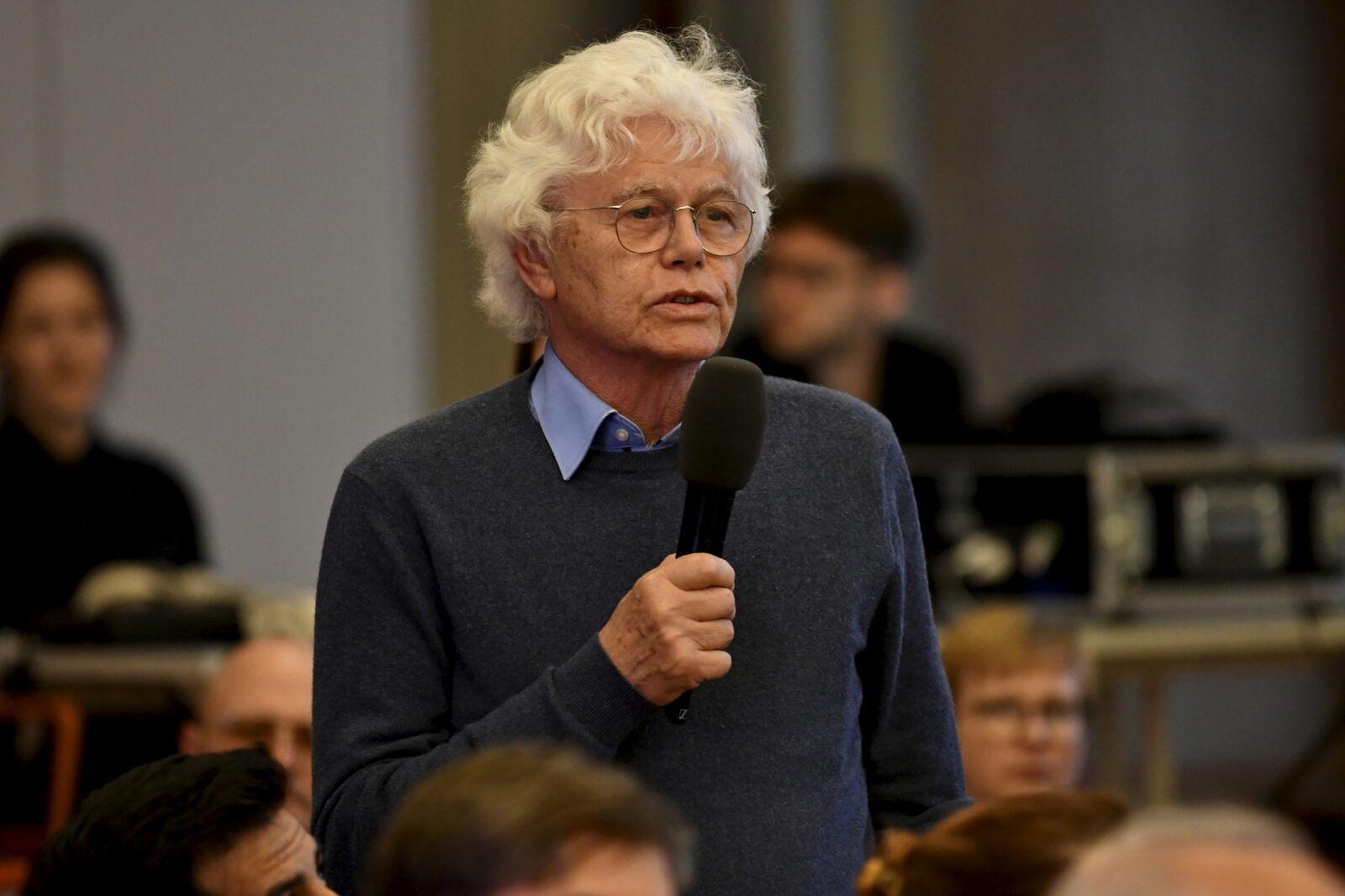
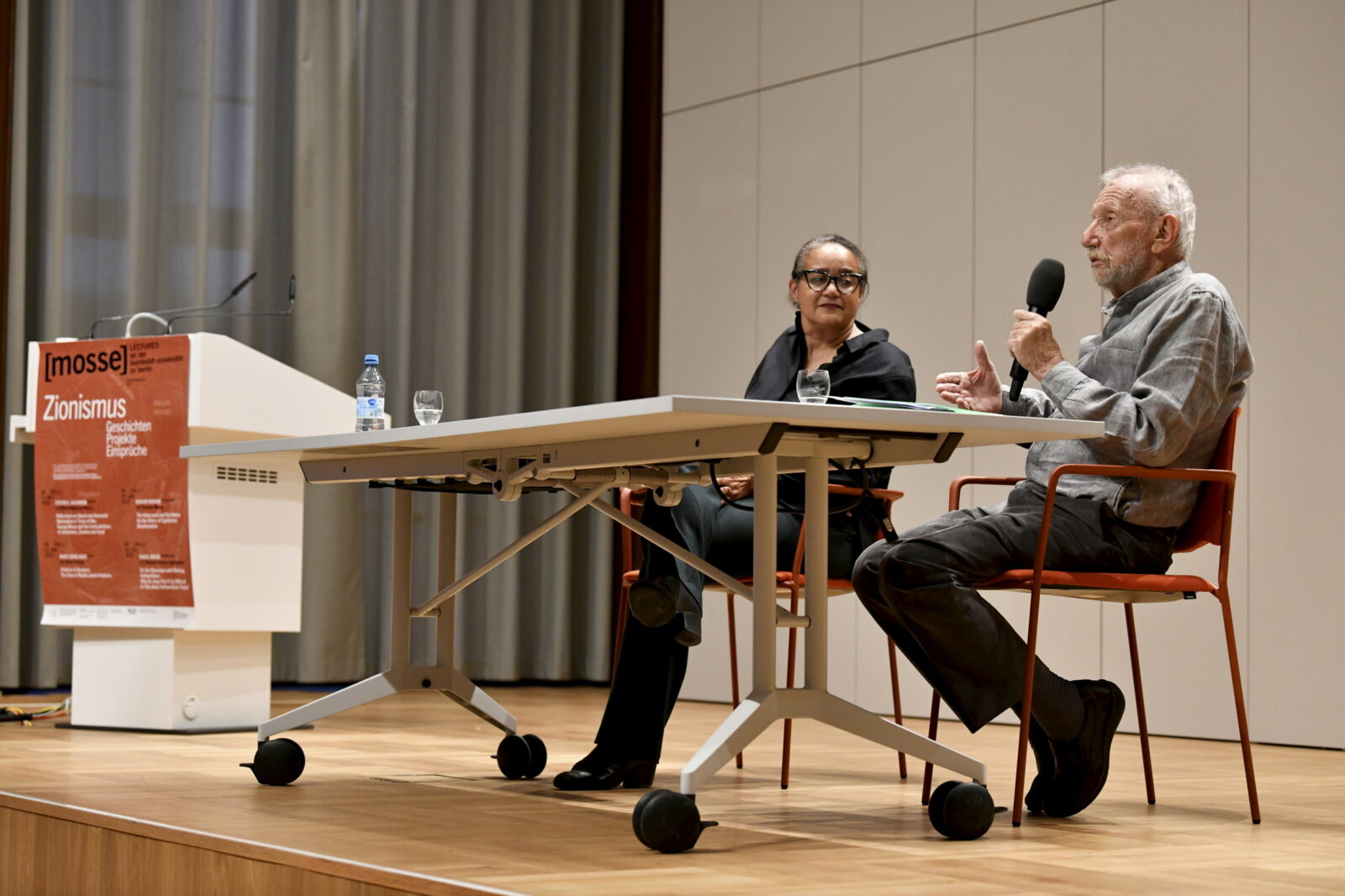
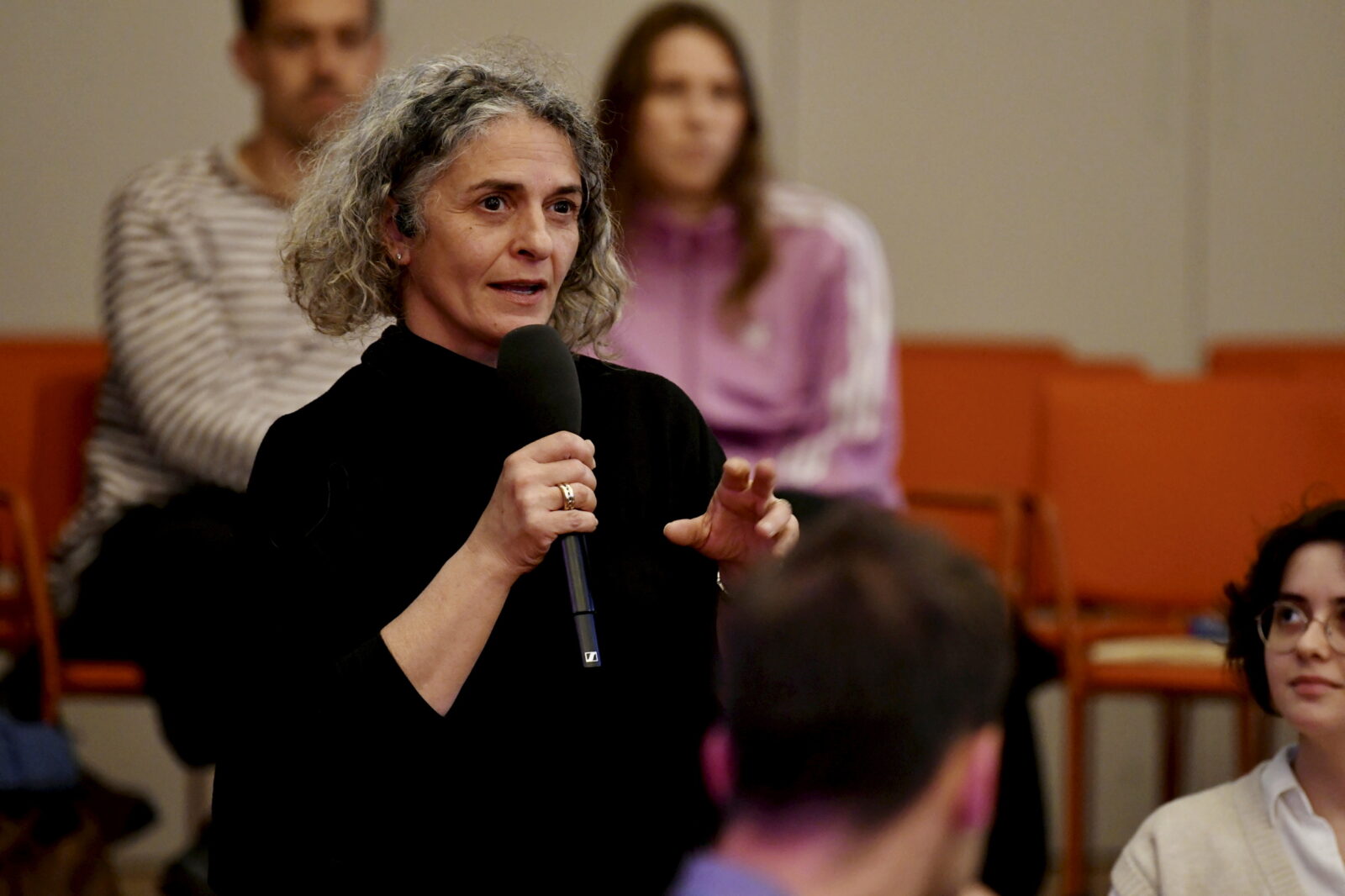
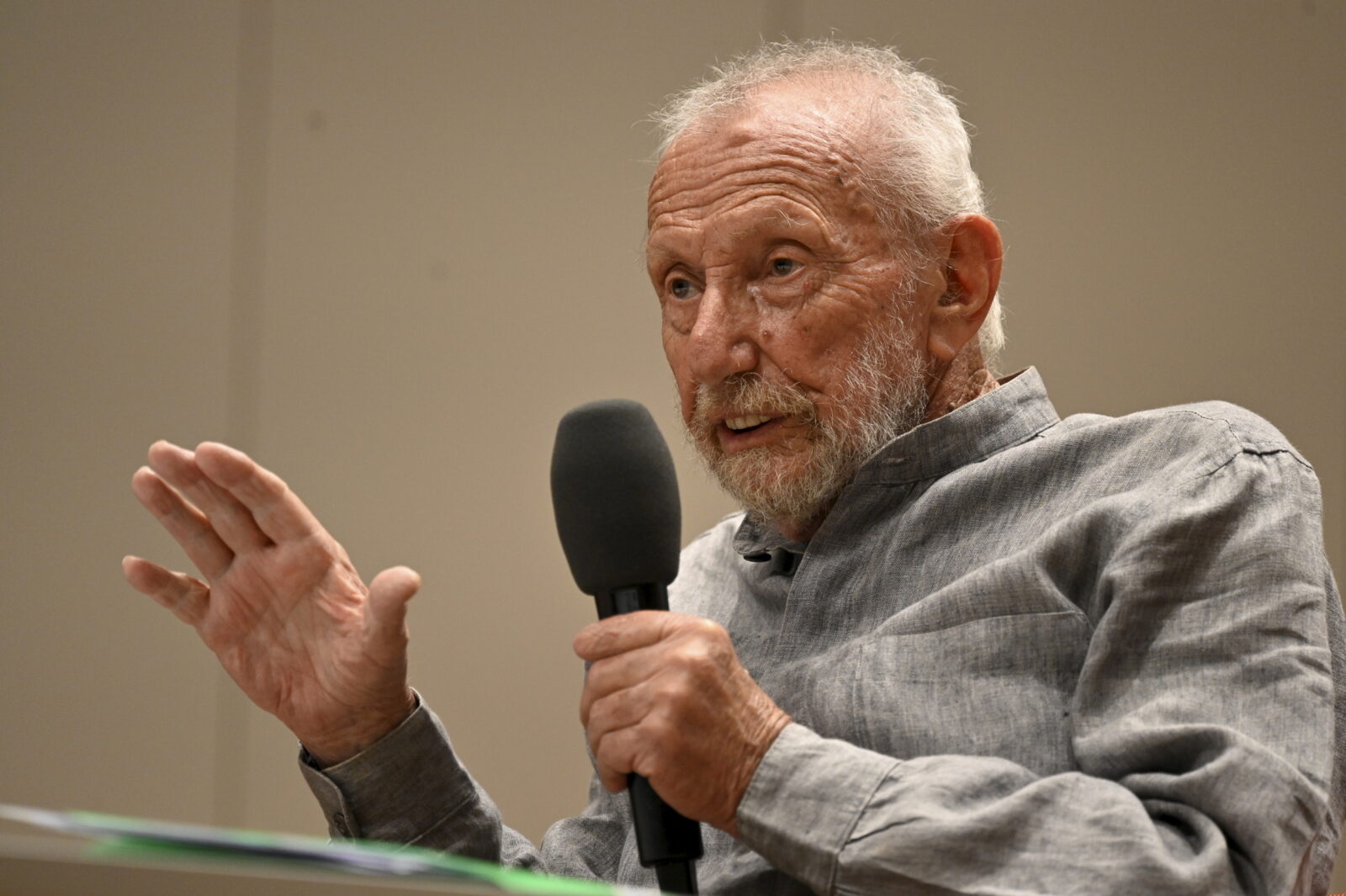
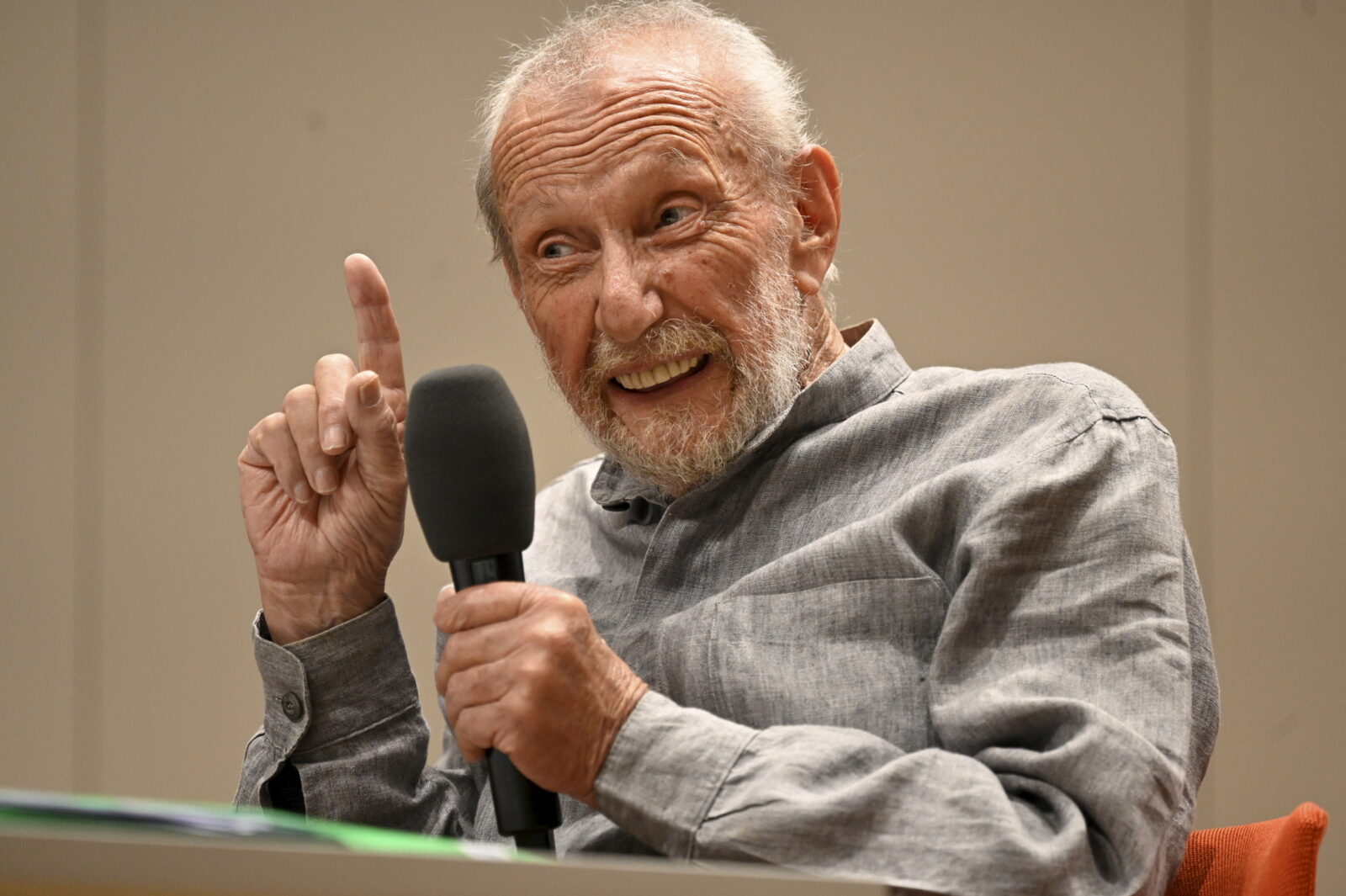
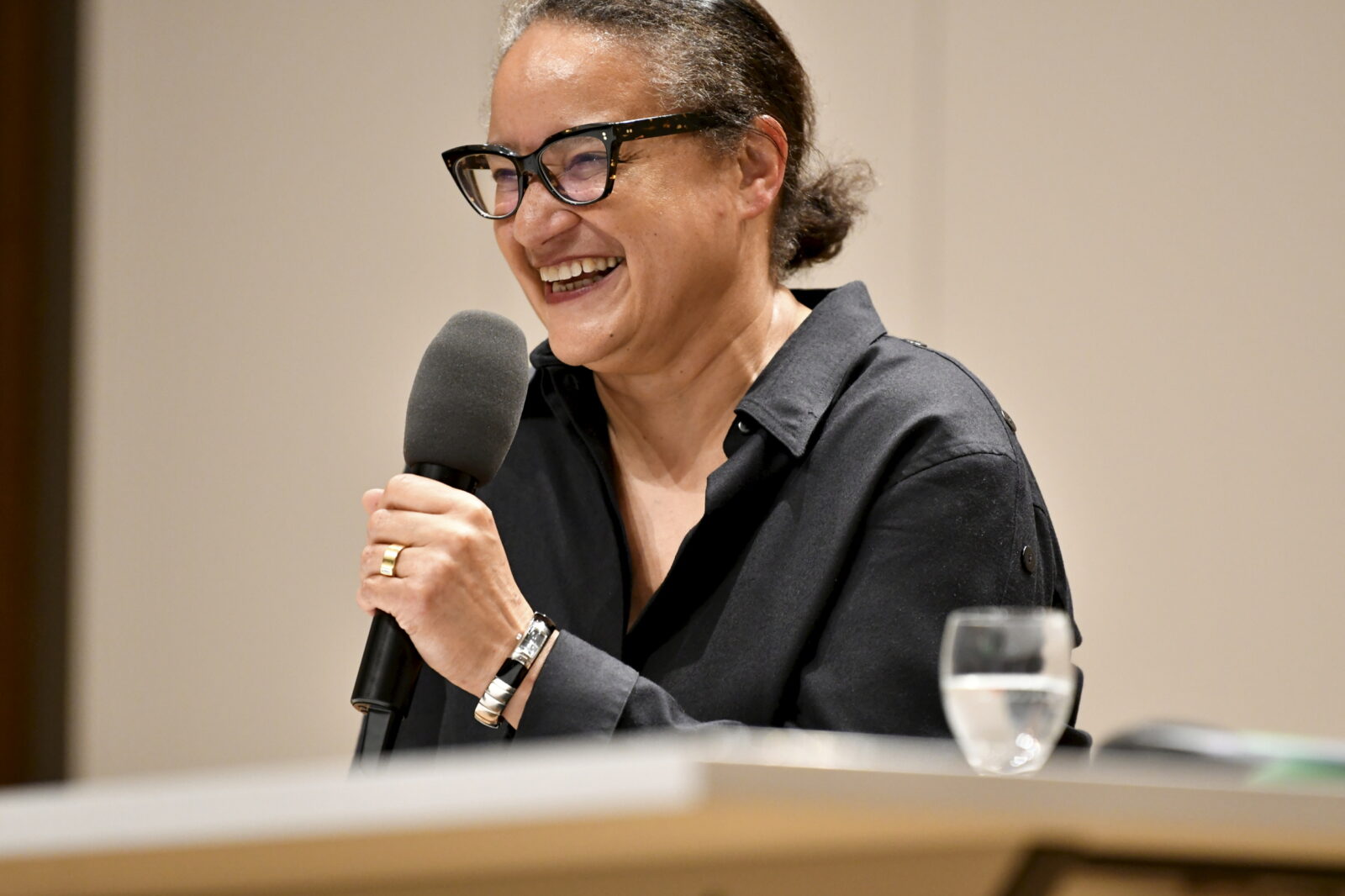
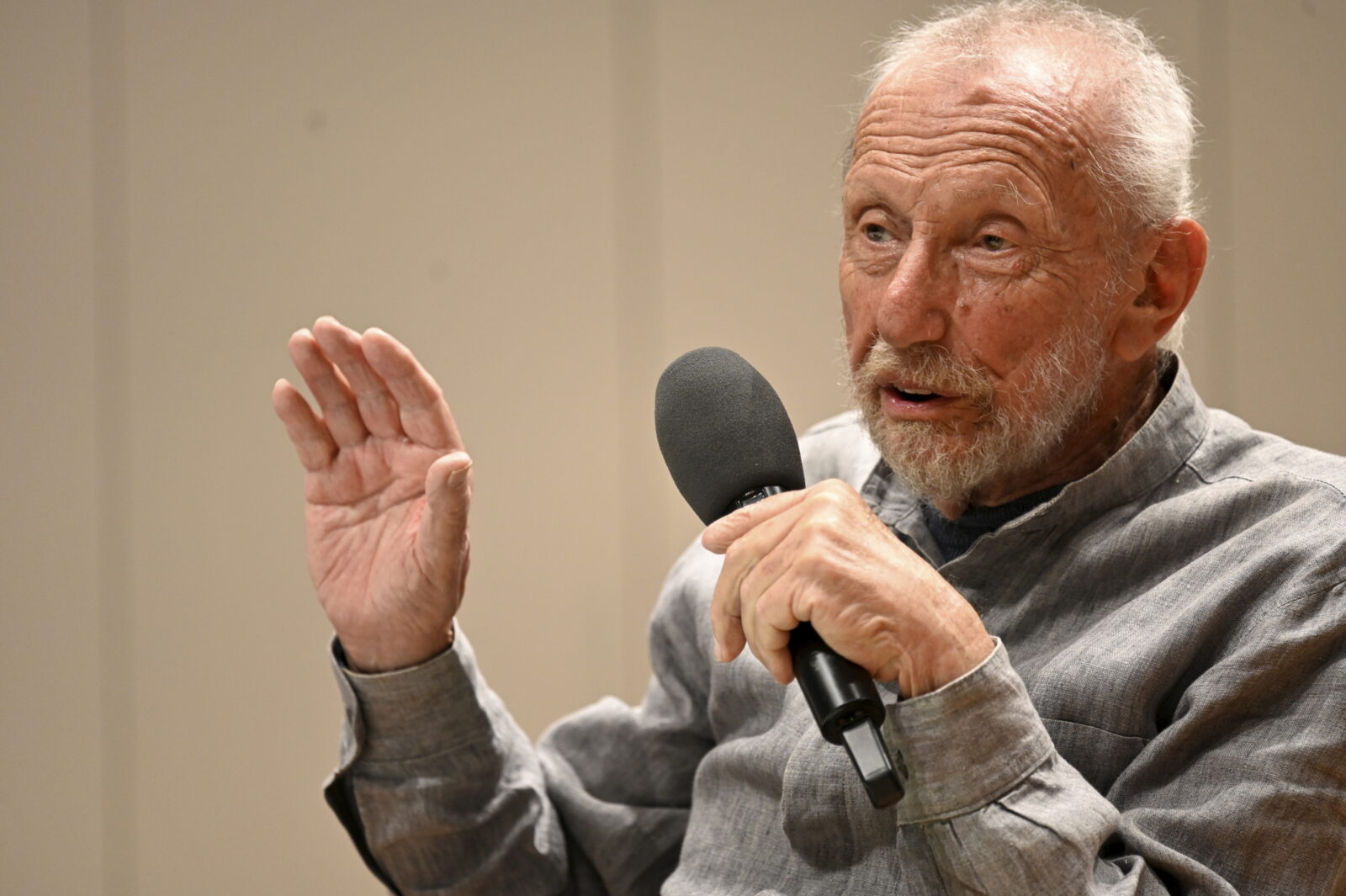
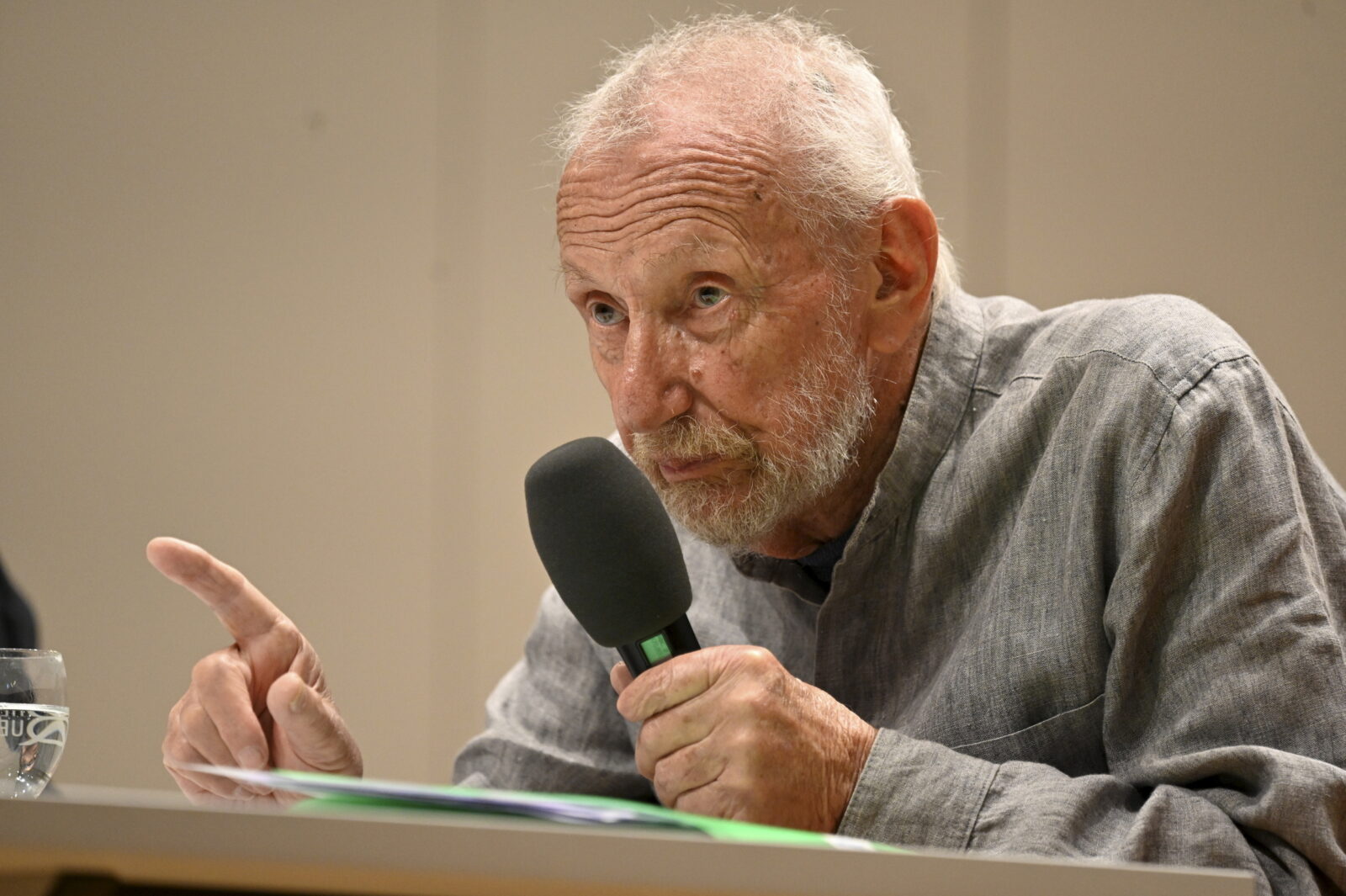
Photo credit: Neils Leiser for the Mosse Lectures
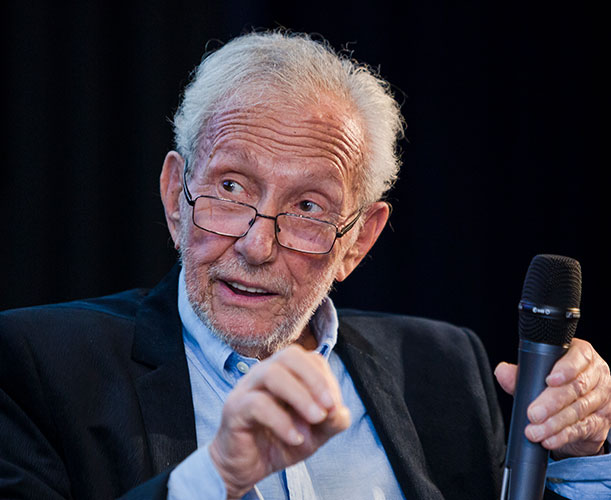
Steven E. Aschheim Historian; Emeritus Professor of History at the Hebrew University, Jerusalem. He also acted as the Director of the Franz Rosenzweig Minerva Research Center for German-Jewish Literature & Cultural History. His research areas include European cultural and intellectual history as well as modern German and Jewish History. Apart from academic journals, he has written for the New York Times and Ha’aretz, among others. He has spent sabbaticals at the Graduate Theological Union in Berkeley, the Institute of Advanced Study at Princeton and in 2002–2003 was the first Mosse Exchange Professor at the University of Wisconsin, Madison.
Historiker; Professor emeritus für Geschichte an der Hebräischen Universität von Jerusalem. Zudem war er Direktor des Franz Rosenzweig Minerva Research Center for German-Jewish Literature & Cultural History. Seine Forschungsgebiete umfassen die europäische Kultur- und Ideengeschichte sowie die moderne deutsche und jüdische Geschichte. Neben akademischen Zeitschriften hat er unter anderem für die New York Times und Ha΄aretz geschrieben. Er verbrachte Forschungsaufenthalte an der Graduate Theological Union in Berkeley, am Institute of Advanced Study in Princeton und war 2002–2003 der erste Mosse Exchange Professor an der University of Wisconsin, Madison.
Ethel Matala de Mazza has been professor of modern German literature at Humboldt University since 2010. She is the author of three monographs, including Der populäre Pakt. Verhandlungen der Moderne zwischen Operette und Feuilleton (Fischer, 2018) and Der verfaßte Körper. Zum Projekt einer organischen Gemeinschaft in der Politischen Romantik (Rombach, 1999). She has served as a visiting professor at Johns Hopkins University, the University of Indiana, Bloomington, and the University of California, Berkeley, Harvard University, and the University of Chicago. She received her terminal degree in German literature at the University of Munich in 2007.
