
2013: Gayatri Chakravorty Spivak, “Europe?”
Gayatri Chakravorty Spivak, “Europe?”
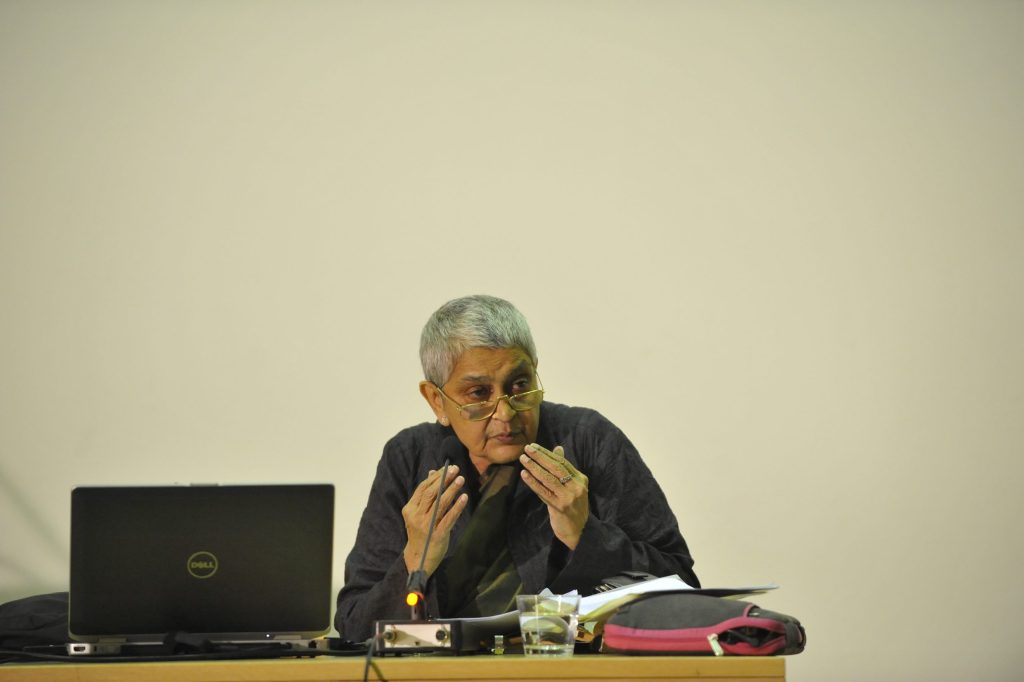
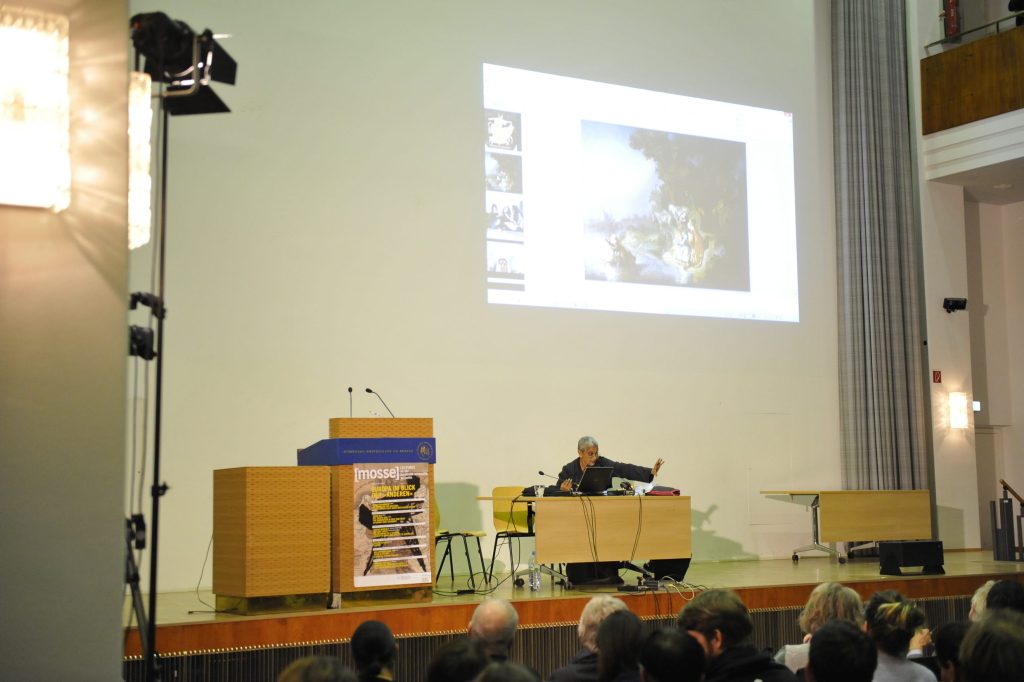
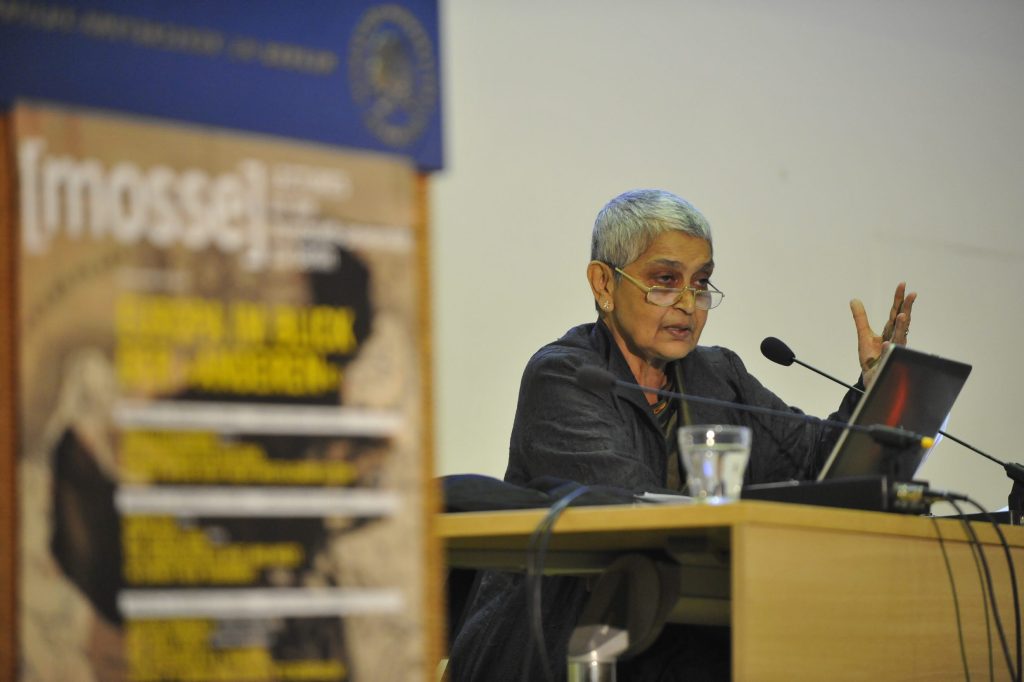
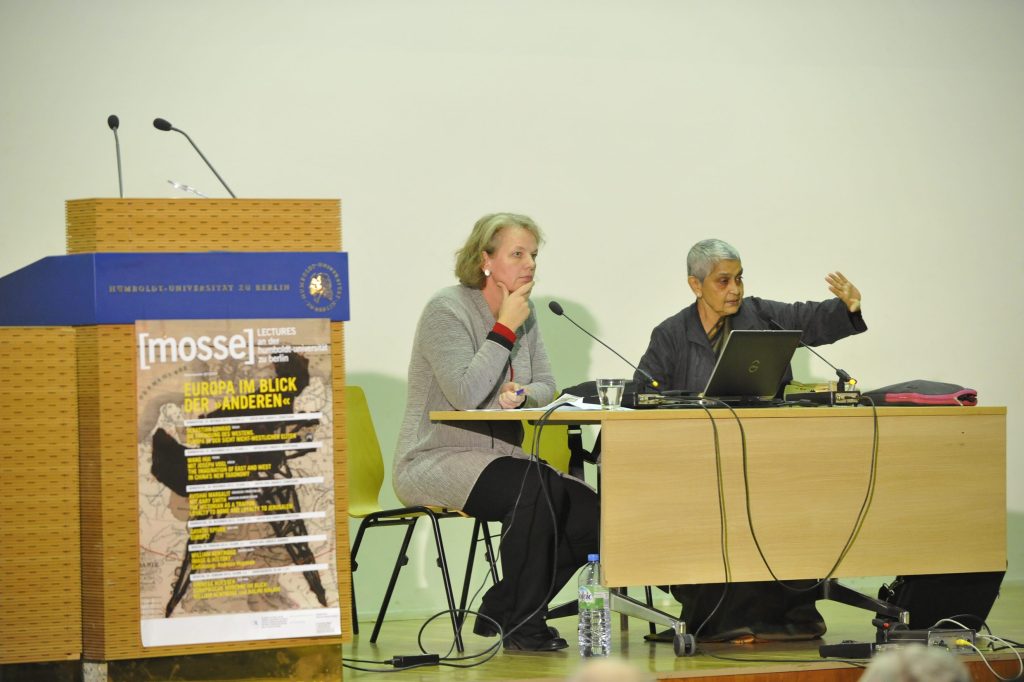
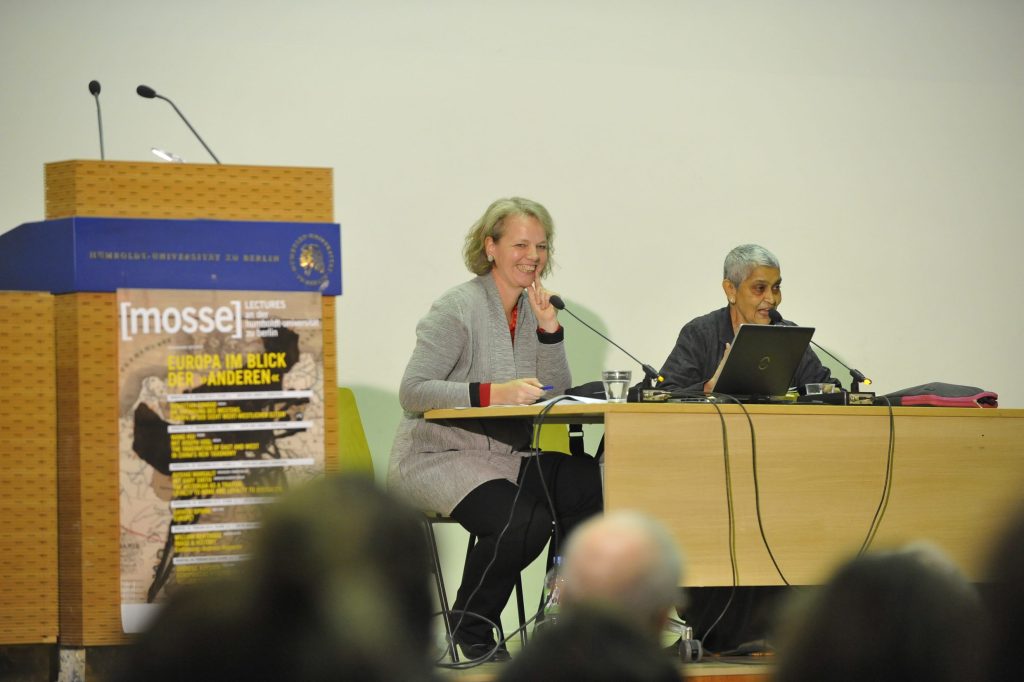
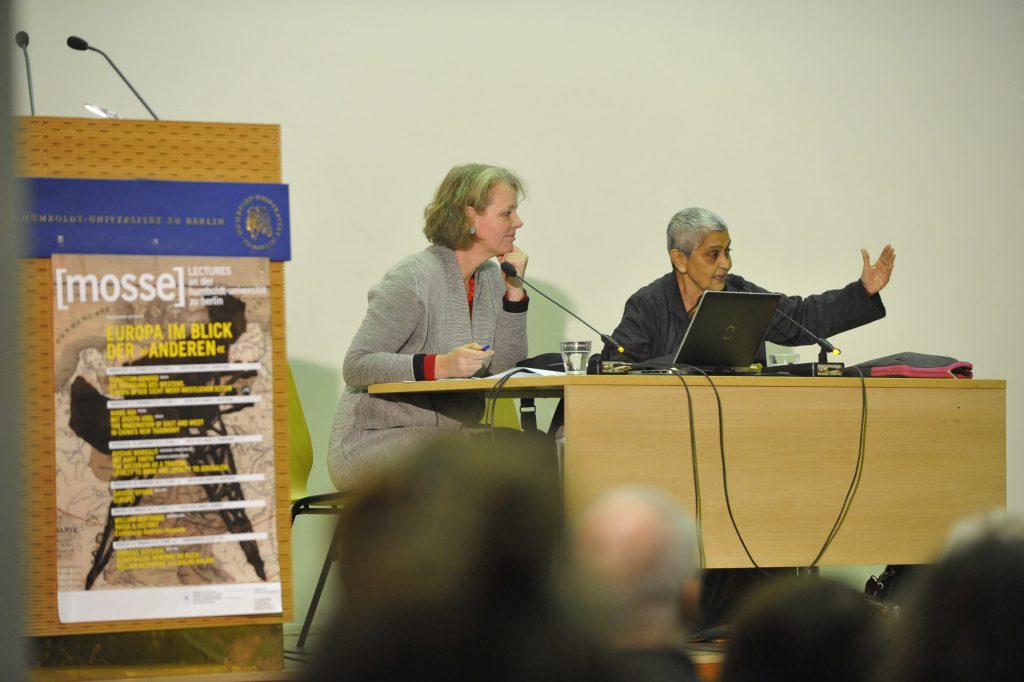
Berlin Mosse Lecture
https://mosselectures.wisc.edu/berlin/
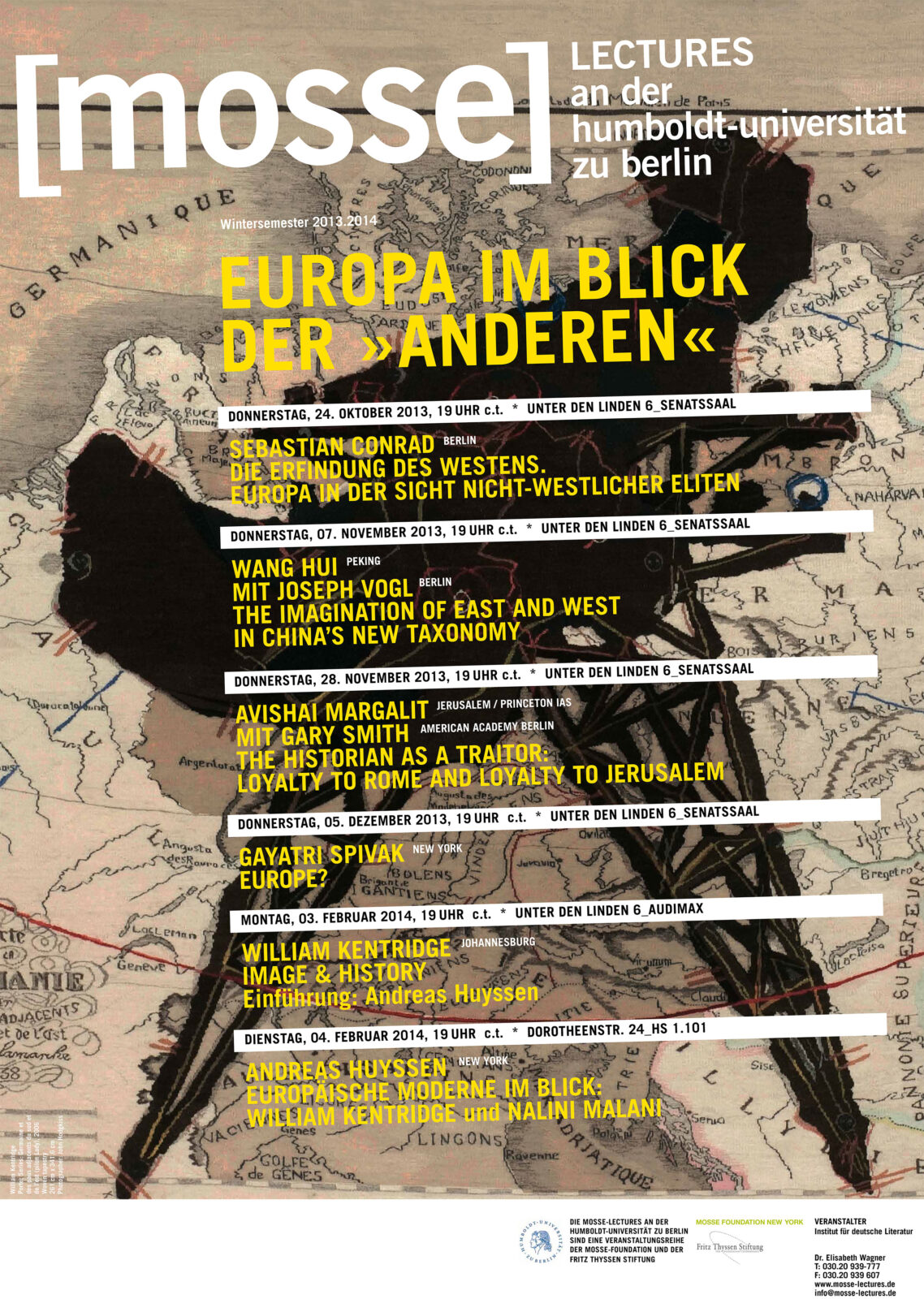
Thursday, 5 December 2013, 19:00 CET
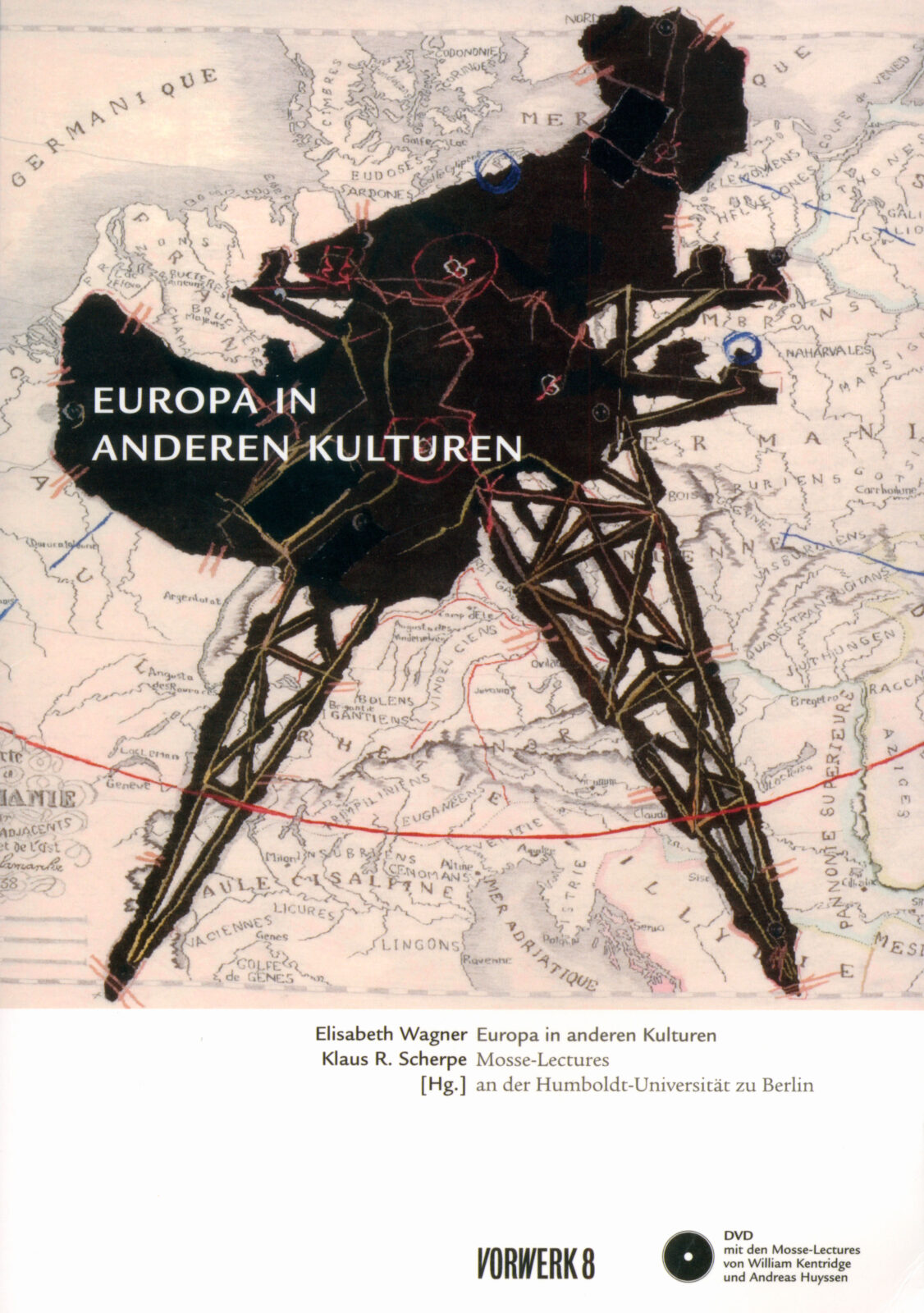
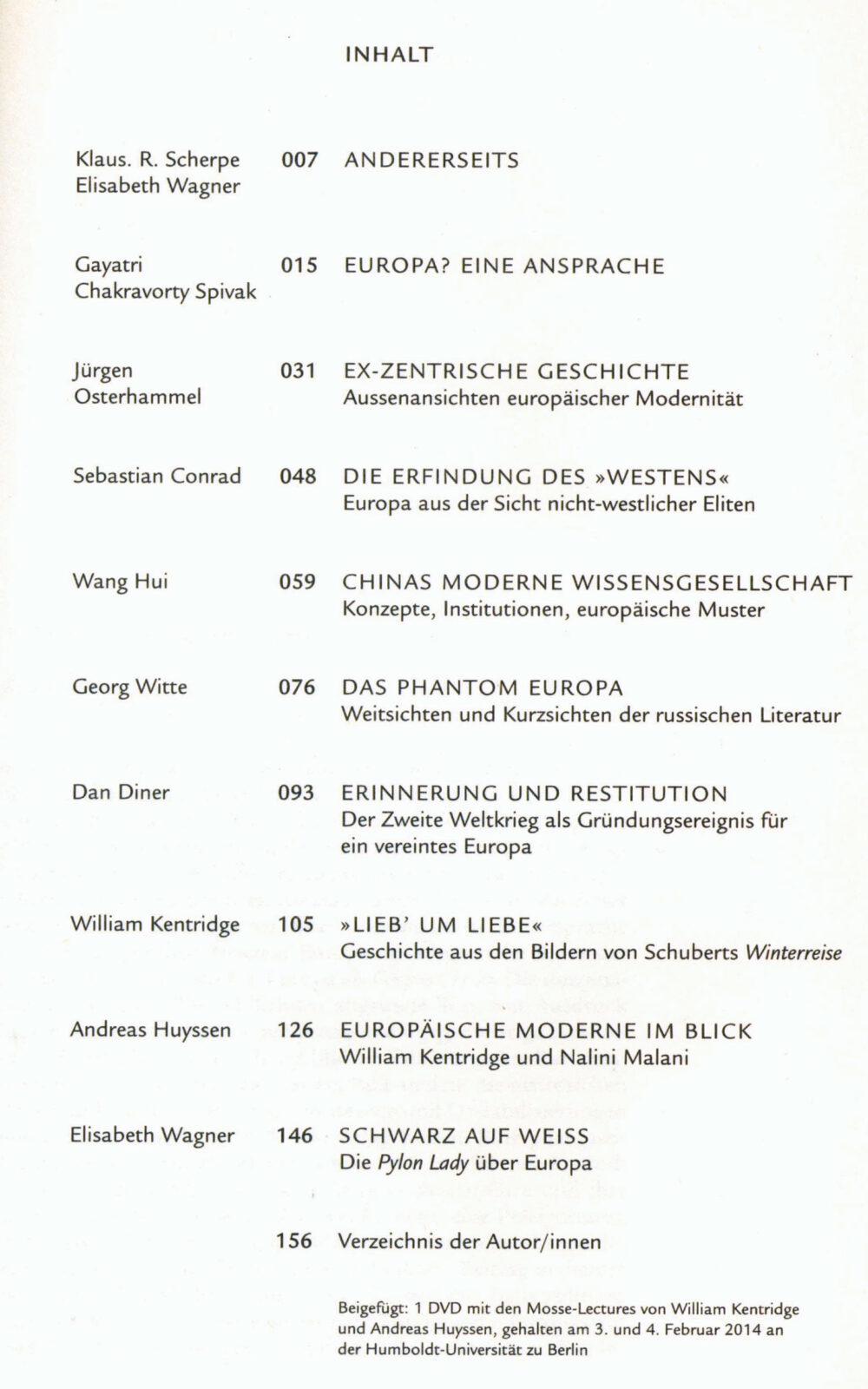
A version of this lecture was published in Elisabeth Wagner, Klaus R. Scherpe, ed. Europa in Anderen Kulturen. Mosse-Lectures an der Humboldt-Universität zu Berlin (Berlin: Vorwerk 8, 2015), 15-30. See table of contents below.
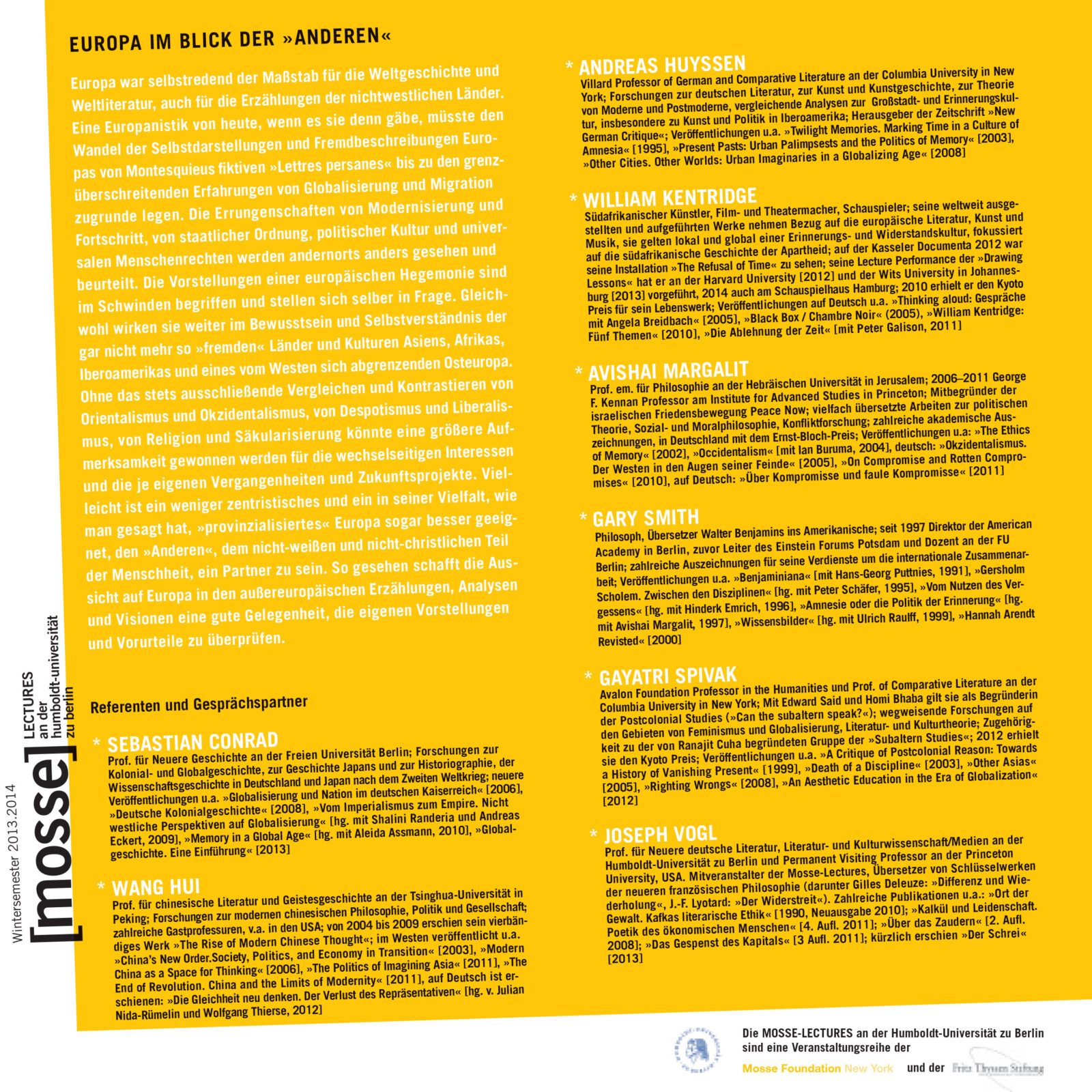
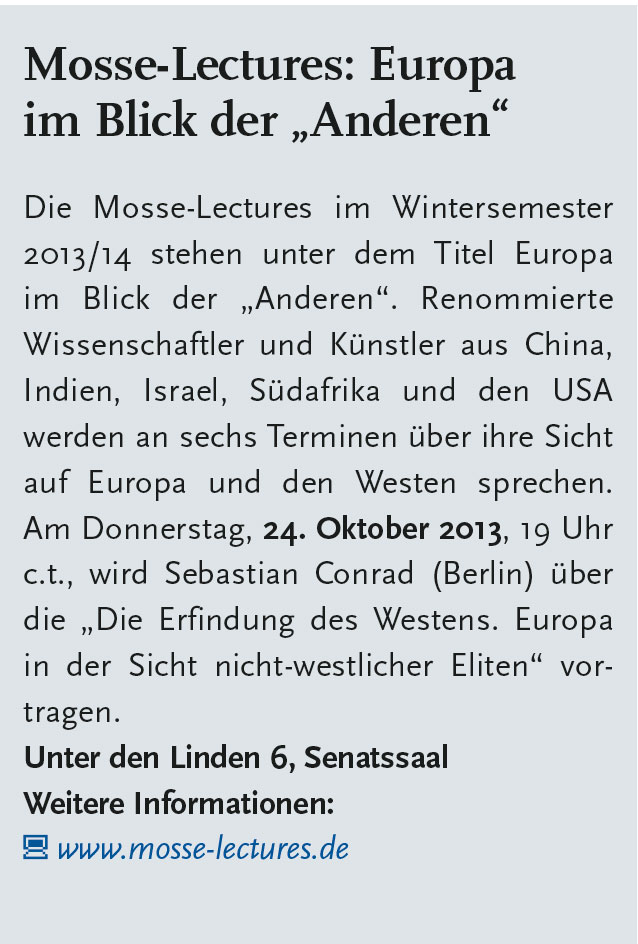
Moderator: Ulrike Vedder (Humboldt University)
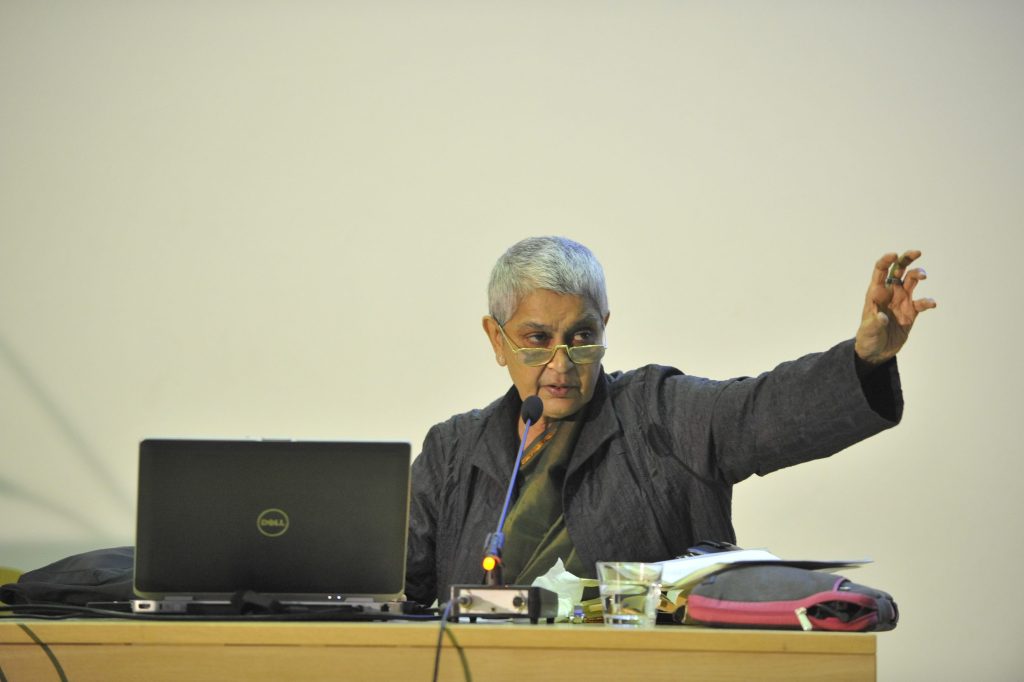
Lecture Description: Mein Thema heißt „Europa?“ Das Fragezeichen ist ein Zeichen dafür, dass hier eine Intellektuelle spricht. Fraglich ist und bleibt der Anspruch auf ein Kontinentaleuropa, den dieses winzige nordwestliche Kap des riesigen Eurasischen Kontinents stellt. Fraglich eben deshalb, weil dieser Anspruch mit Nachdruck vorgebracht wird, nunmehr im Namen einer Union, die man ganz offen als nichts anderes als eine Ansammlung von Kredit- und Schuldnerstaaten beschreibt unter der Aufsicht Deutschlands. Die europäische Verfassung, die entworfen wurde, um behaupten zu können, dass es sich bei diesem Gebilde um eine schon etablierte multikulturelle Kontinentalgemeinschaft handelt, musste sich als Fehlschlag erweisen, weil mit ihr die allein ökonomische Zweckdienlichkeit verschleiert werden sollte. Auf der wegweisenden Essex-Konferenz von 1982 hatte ich vorgeschlagen, nicht von „Europa und seinen Anderen“ zu sprechen, sondern von Europa als „dem Anderen“. Wir waren uns damals sicher, dass die Zeit für diesen oder jenen Europagedanken noch nicht gekommen war. Im Zuge der fortschreitenden Globalisierung hat sich diese Art zu denken ohnehin als überholt erwiesen. Heute stelle ich fest, dass, wenn man in Afrika oder Asien an „Europa“ denkt, immer noch die alten Imperialmächte meint: Großbritannien und Frankreich, auch Deutschland. Aus diesem Grund habe ich in meinem Vortrag eher den „Rändern“ Aufmerksamkeit gewidmet, der Vorstellung von den Balkanländern seit dem 18. Jahrhundert. Und da ich mich vor allem für die „gendered subalternity“ interessiere, komme ich auf die Frauen der Roma zu sprechen, die ein Schattendasein als eine Art „shadow of the shadows“ führen. Am Ende möchte ich eine andere, leichtere Tonart anschlagen und von denen sprechen, die gar nicht an „Europa“ denken können oder wollen.
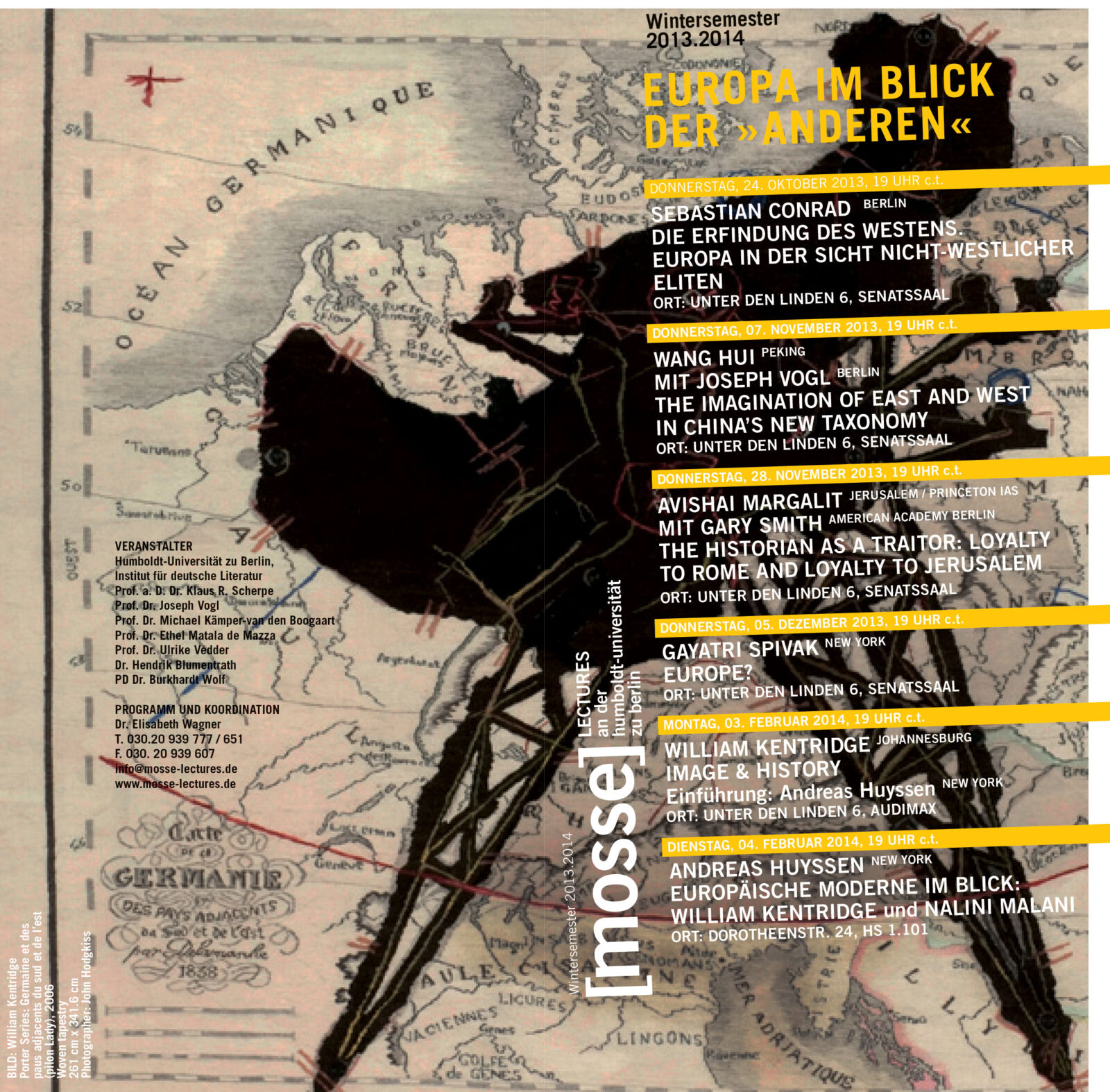
Lecture Series Description: It is taken for granted that Europe has been the measure of world history and world literature. It even appears as such in the narratives of non-Western countries. Any comprehensive study of Europe today would have to ground itself in the transformations of Europe’s self-representations and descriptions in the eyes of the “others” from Montesquieu’s fiction of the “Lettres persanes” up to the present day realities of border crossing globalization and migration. Key European ideas such as modernization and progress, democratic institutions, nation state regimes, political culture and human rights are viewed differently in other places. An overpowering European hegemony has waned in the wake of self-doubt and criticism, but it continues to have an effect on the consciousness and self-conception of other, nowadays perhaps less “alien” countries and cultures in Asia, Africa, Latin America, and an Eastern Europe that insists on its differences from the West. If we could avoid the usual exclusionary comparisons and hostile characterizations – orientalism versus occidentalism, despotism versus liberalism, religion versus secularization – a greater respect for mutual interests and for the very different understandings of the past and the divergent prospects of the future could be gained. Maybe a less Eurocentric and “provincialized” Europe would be more inclined to cooperate with the “others”, the non-white and non- Christian part of mankind. Thus the view of Europe in non-European narratives, analyses and visions will give us ample opportunities to revise our own beliefs and prejudices.
Gayatri Chakravorty Spivak: Avalon Foundation Professor in the Humanities und Prof. of Comparative Literature an der Columbia University in New York; Mit Edward Said und Homi Bhabha gilt sie als Mitbegründerin der Postcolonial Studies (“Can the subaltern speak?”); wegweisende Forschungen auf den Gebieten von Feminismus und Globalisierung, Literatur- und Kulturtheorie; Zugehörigkeit zu der von Ranajit Cuha be-gründeten Gruppe der „Subaltern Studies“; 2012 erhielt sie den Kyoto Preis; Veröffentlichungen u.a. A Critique of Postcolonial Reason: Towards a History of Vanishing Present (1999), Death of a Discipli
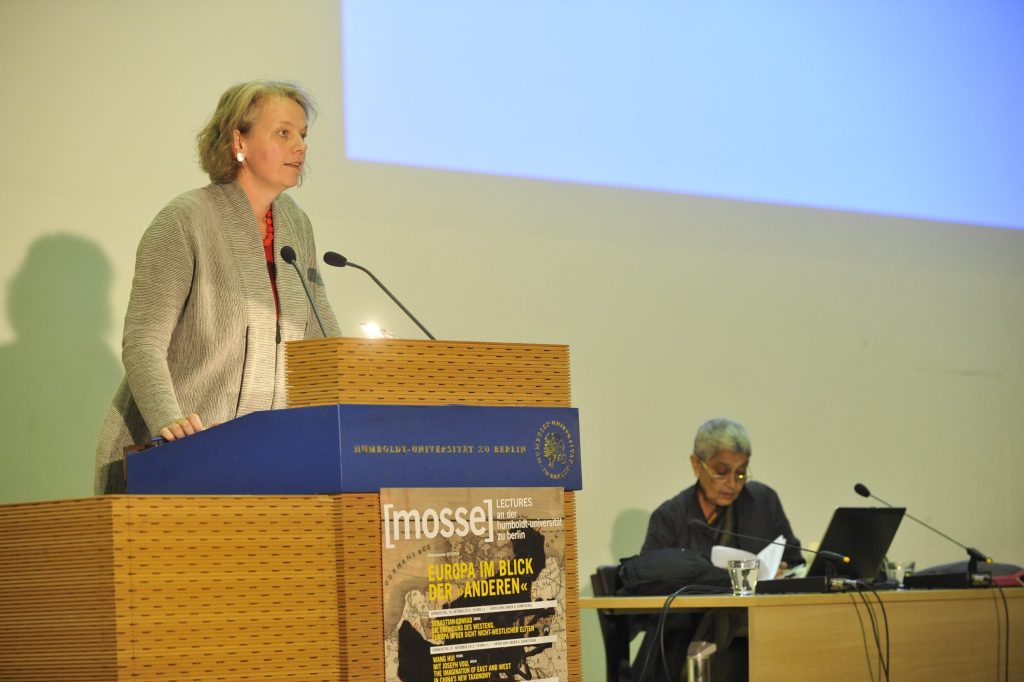

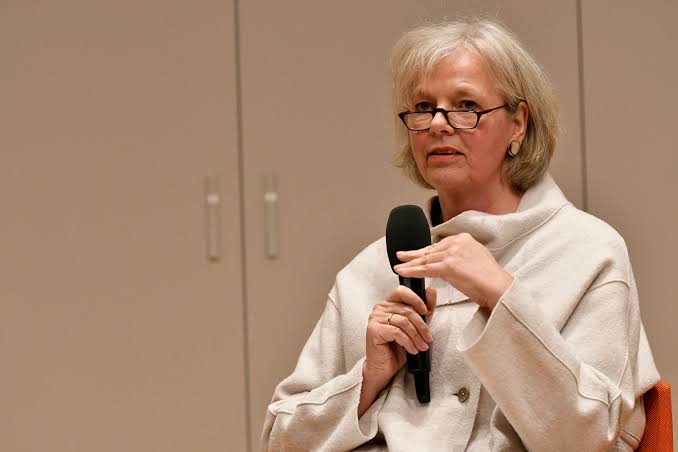
Her research focuses on literature and material culture (museum narratives, literary thing culture, poetics of collecting); literary and cultural history of genealogy, generation, heritage; gender studies in literary studies; narratives of liminality (death narratives, coma, old age, dementia, care, poetics of the afterlife).
She is part of the interdisciplinary project team of „Liminality and Transfer“ (funded by the Einstein Foundation Berlin, 2023-2027) and the Collège doctoral „Littérature et savoirs, XVIe – XXIe siècles“ (in cooperation with Sorbonne nouvelle).
