
2013: Heinz-Elmar Tenorth, “Bildung als Ressource. Status, Lebensform und Ökonomie” / “Education as a Resource: Status, Way of Life, and Economy”
Heinz-Elmar Tenorth, “Bildung als Ressource. Status, Lebensform und Ökonomie” / “Education as a Resource: Status, Way of Life, and Economy”
Berlin Mosse Lecture
https://mosselectures.wisc.edu/berlin/
Thursday, 25 April 2013, 19:00 CET
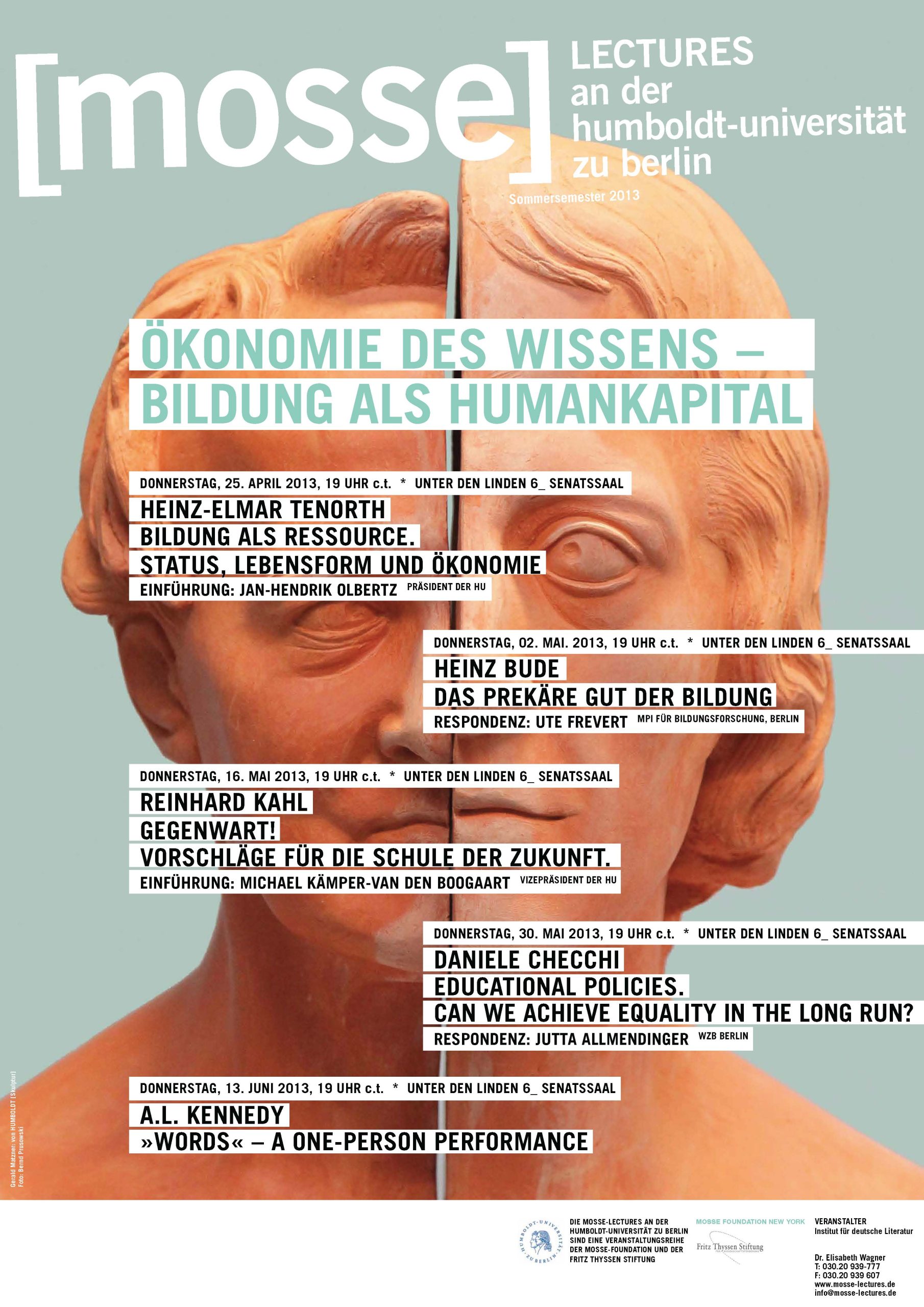
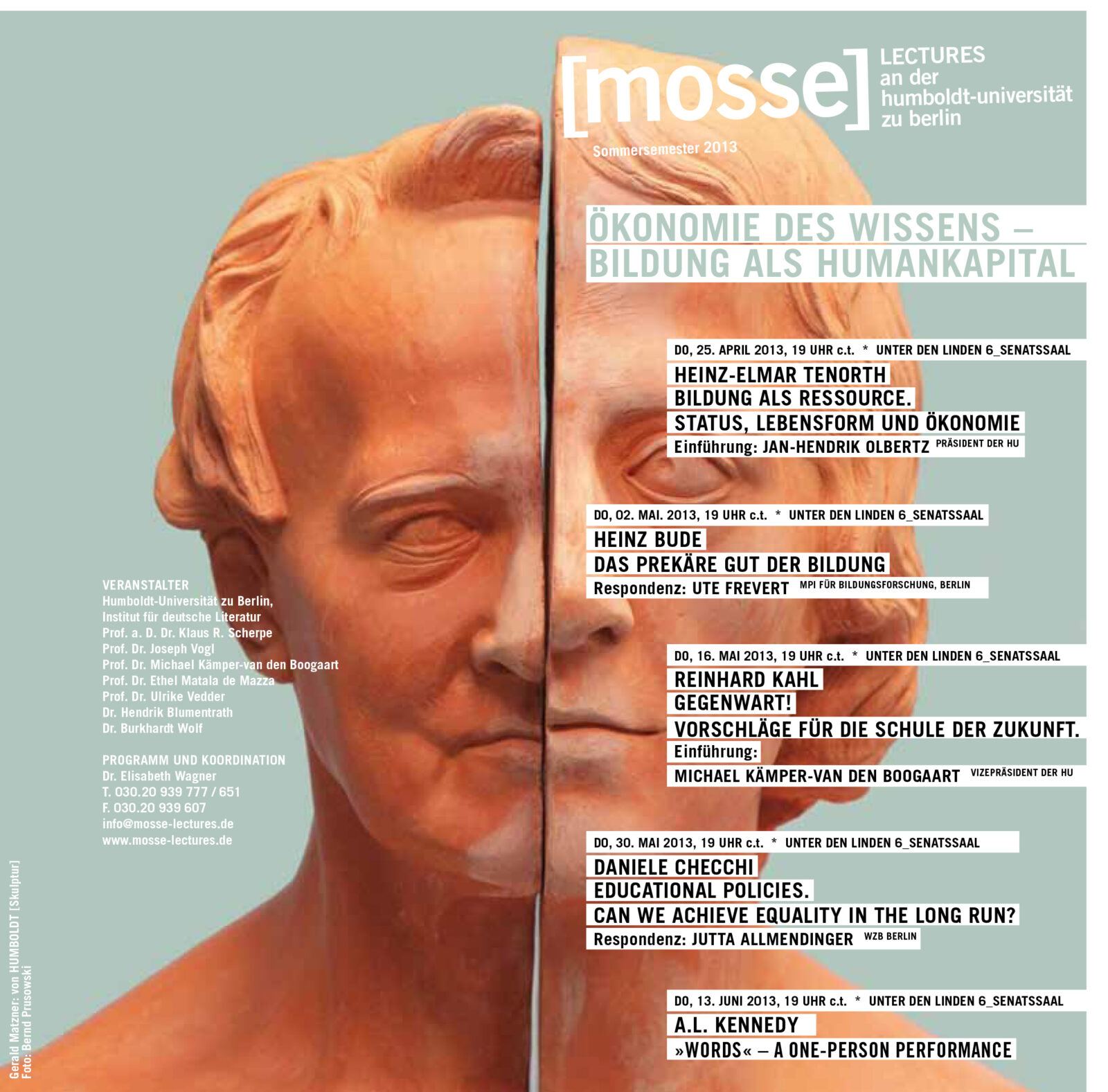
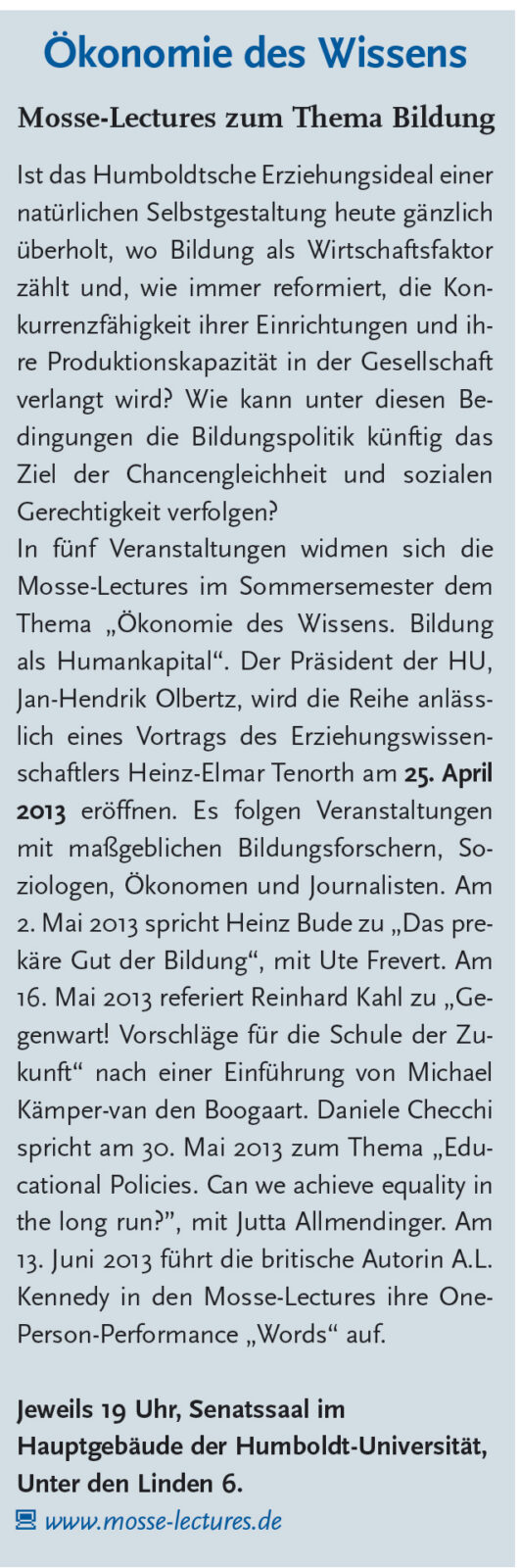
Senatssaal of Humboldt University
Under den Linden 6
1. Stock
10117 Berlin
GERMANY
Sponsored by:
[mosse] LECTURES an der humboldt-universität zu berlin
The Mosse Foundation
Global Mosse Lecture Series
Fritz Thyssen Stiftung
Institut für deutsche Literatur
Humboldt University
Introduction: Klaus Scherpe (Humboldt University)
Moderator: Jan-Hendrik Olbertz (Humboldt University)
Lecture Description: „Bildung“, so die leitende These, wird schon im Ursprung um 1800 zugleich als gesellschaftliche und ökonomische Ressource und als zentrales Potential der Subjektwerdung betrachtet. Wegen dieser Ambivalenz kulturkritisch besorgt diskutiert, ist Bildung historisch primär präsent als eine der wesentlichen Ressourcen, die Individuen zu ihrer sozialen Reproduktion und Gesellschaften für ökonomisches Wachstum, soziale Stabilität und politische Legitimation benötigen. Für sozialen Aufstieg und Statussicherung begehrt, ökonomisch in ihrer Wirksamkeit vielleicht überschätzt, bleibt Bildung bis in die Gegenwart ein zentraler Mechanismus sozialer Distinktion und Grundlage einer eigenen Lebensform, Ermöglichungsform von Individualität und Kontrollinstrument zugleich.
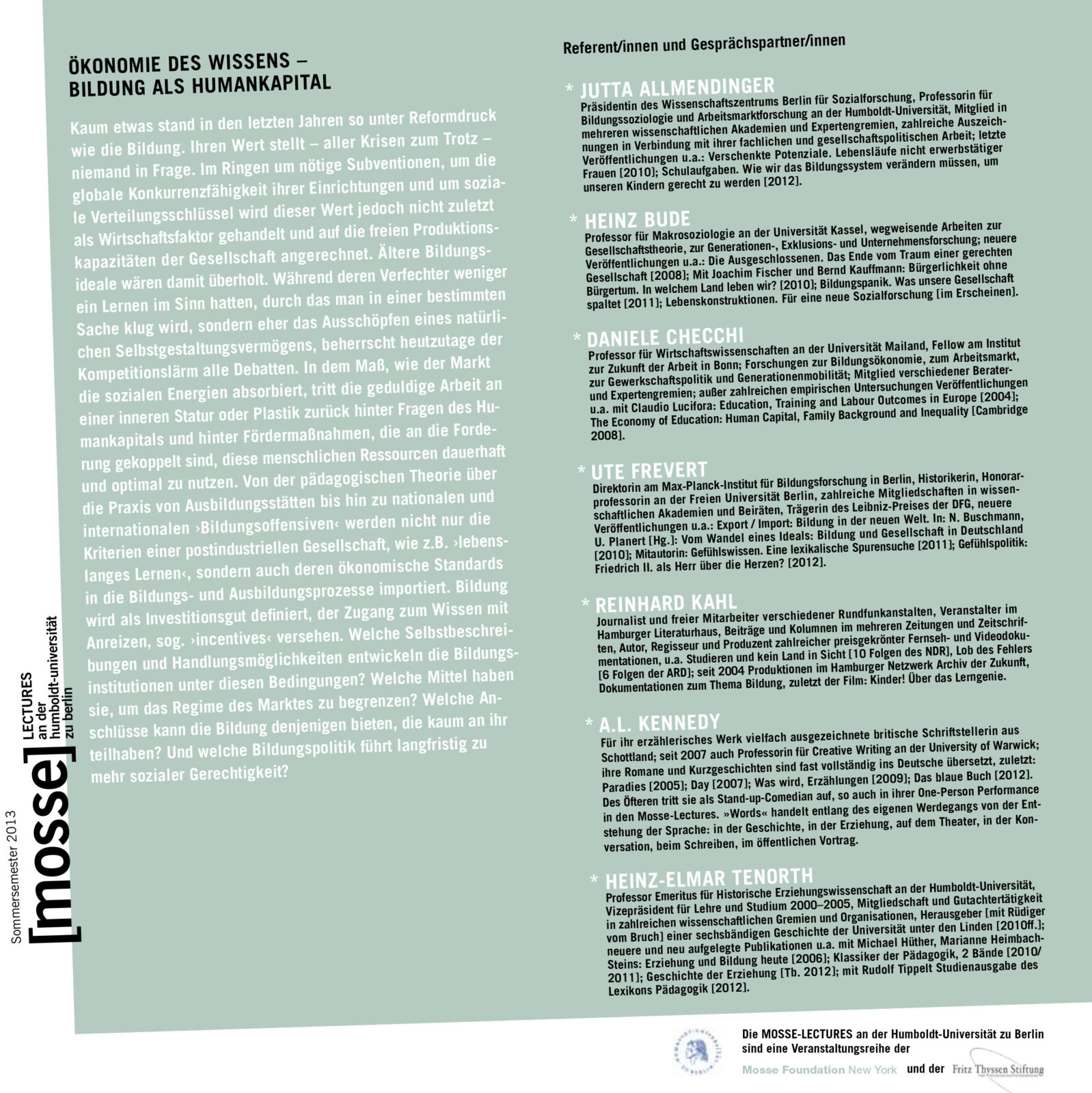
Lecture Series Description:More than anything else, education in recent times has been pressured to reform. Despite its permanent crises, its value is not in question. While struggling for necessary subsidies, global competitiveness and socially broad accessibility, this value is actively traded as economic resource and judged in its potential for expanding productivity. Previous ideals of education have thus become outdated. While the advocates of education as Bildung had the natural capacity of self-creation in mind rather than the acquisition of skills, all of today’s noisy debates focus on competitiveness. In as much as the market absorbs most social energies, the patient commitment to an inward form or shape of the personal gives way to issues of human capital and to the promotion of demands for an enduring and optimal exploitation of human resources. Theories of education and practical experience gained in educational institutions as well as national and international so-called ‘offensives of education’ such as ‘life-long learning’ are measured according to the criterion of post-industrial society; economic standards are directly imported into the proceedings of practical learning and higher education. Education as durable investment gives access to knowledge, supported by a system of ,incentives’. How do institutions of education describe themselves under these conditions and what forms of governance do they develop? What means do they have to limit the rule of the market? What kind of accessibility can education provide for those who can hardly participate? If ever more people from educationally disadvantaged backgrounds end up socially as losers: How in the long run could reforms lead to less social inequality?
Heinz-Elmar Tenorth: Professor Emeritus für Historische Erziehungswissenschaft an der Humboldt-Universität, Vizepräsident für Lehre und Studium 2000-2005, Mitgliedschaft und Gutachtertätigkeit in zahlreichen wissenschaftlichen Gremien und Organisationen, Herausgeber (mit Rüdiger vom Bruch) einer sechsbändigen Geschichte der Universität unter den Linden (2010ff.); neuere und neu aufgelegte Publikationen u.a. mit Michael Hüther, Marianne Heimbach-Steins: Erziehung und Bildung heute (2006); Klassiker der Pädagogik, 2 Bände (2010/2011); Geschichte der Erziehung (Tb. 2012); mit Rudolf Tippelt Studienausgabe des Lexikons Pädagogik (2012).
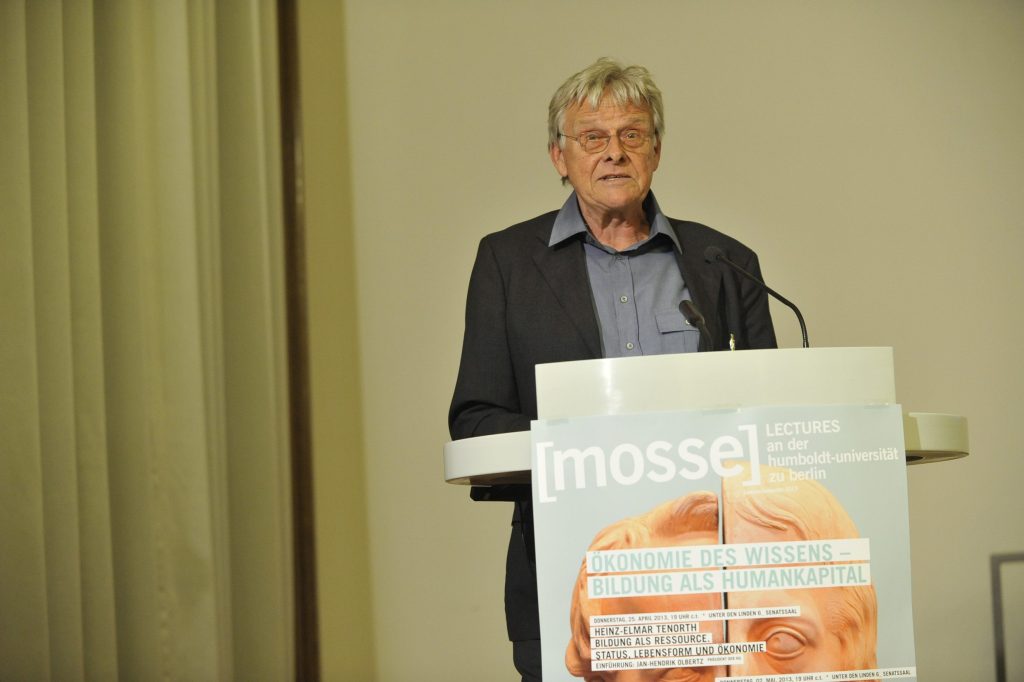
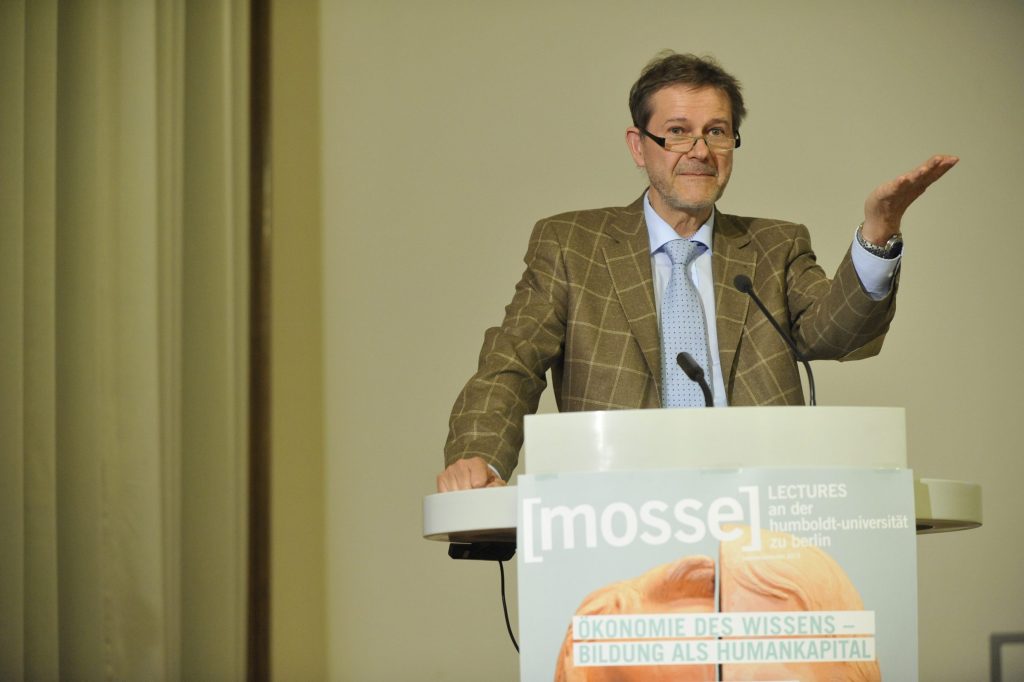
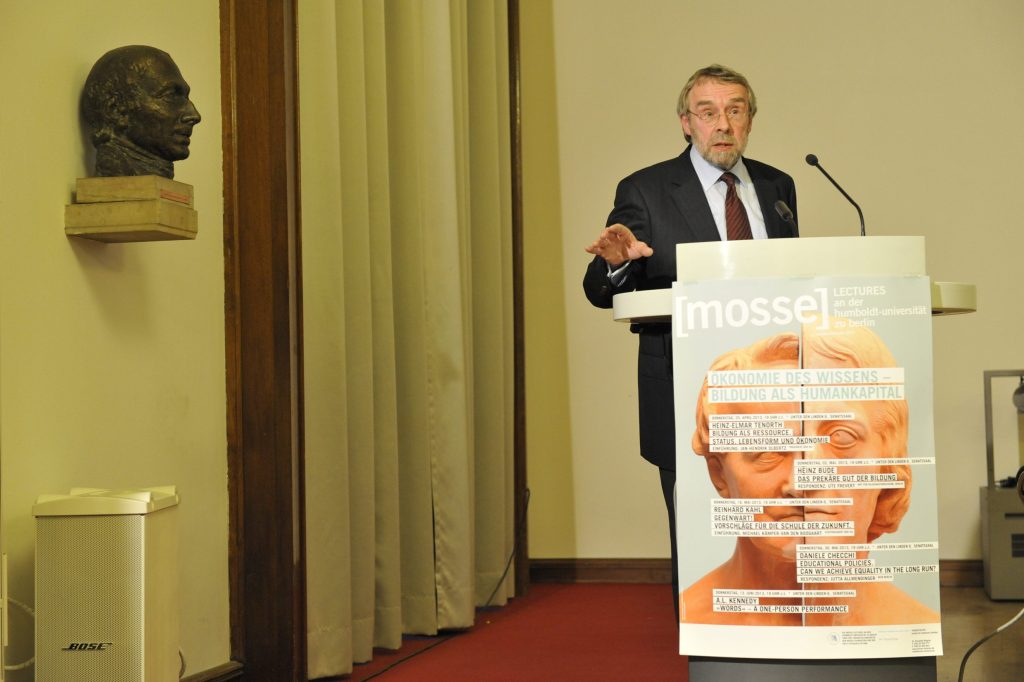
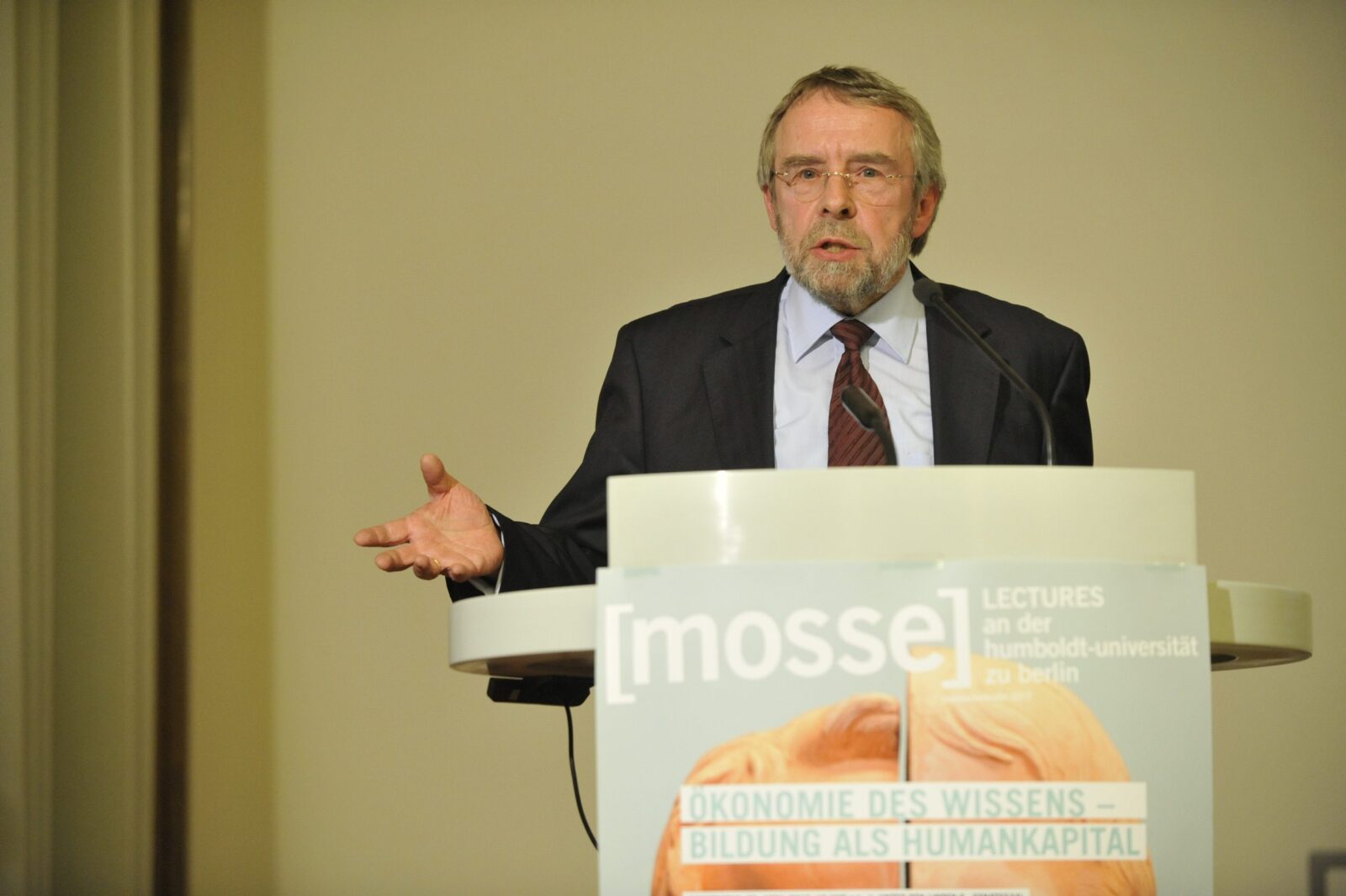
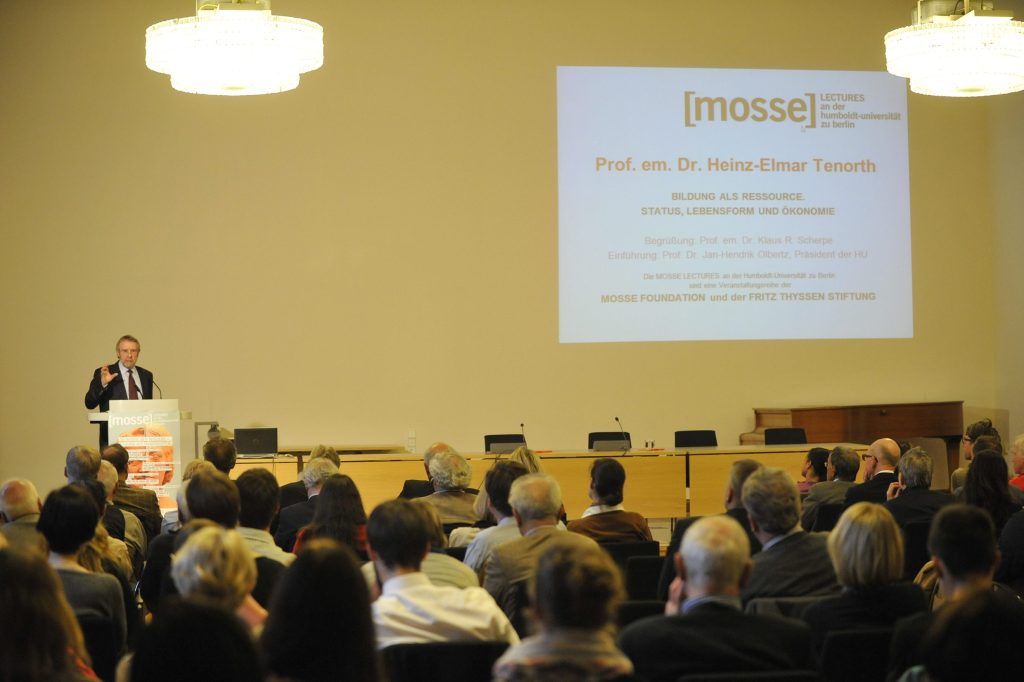
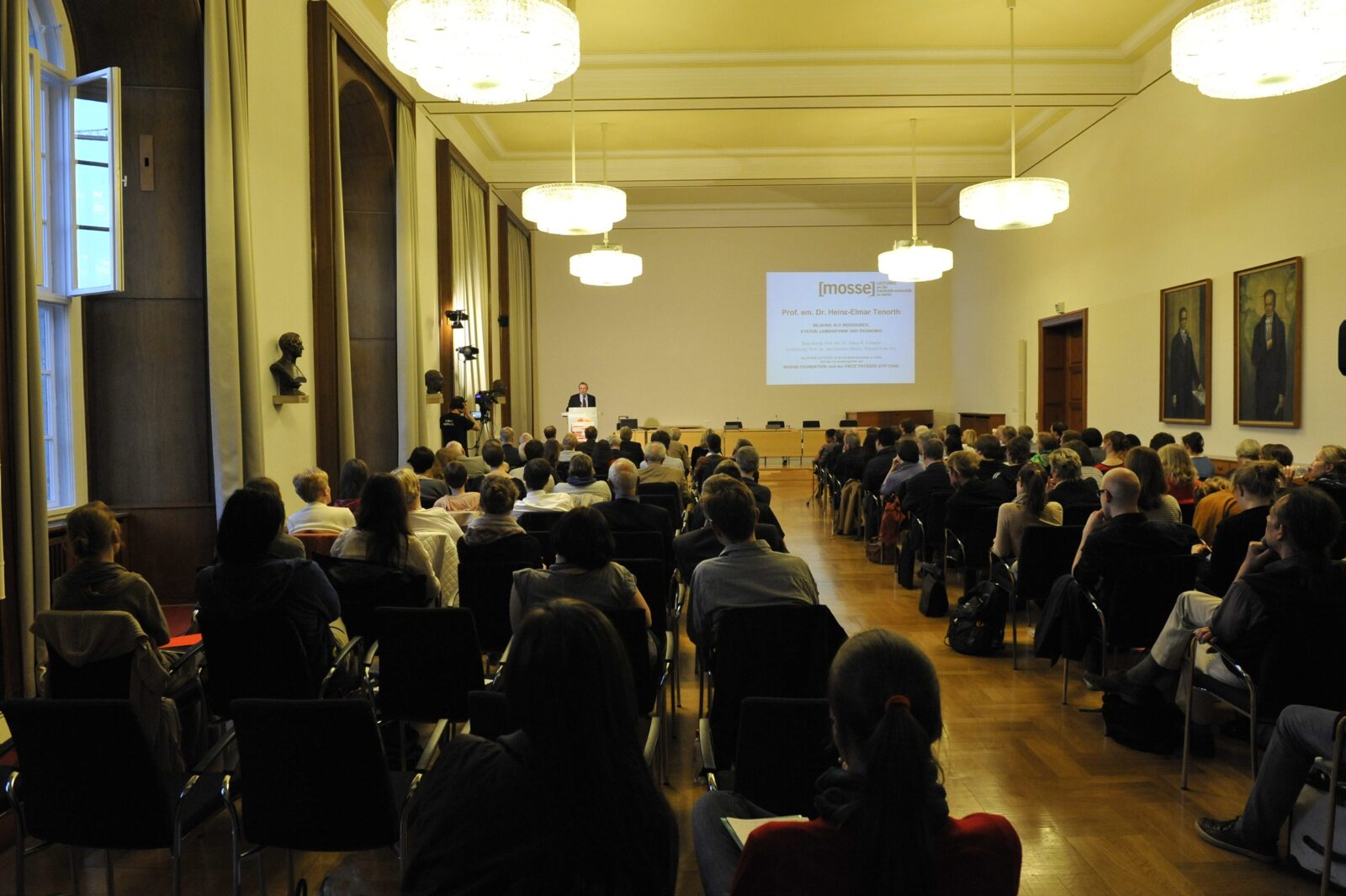
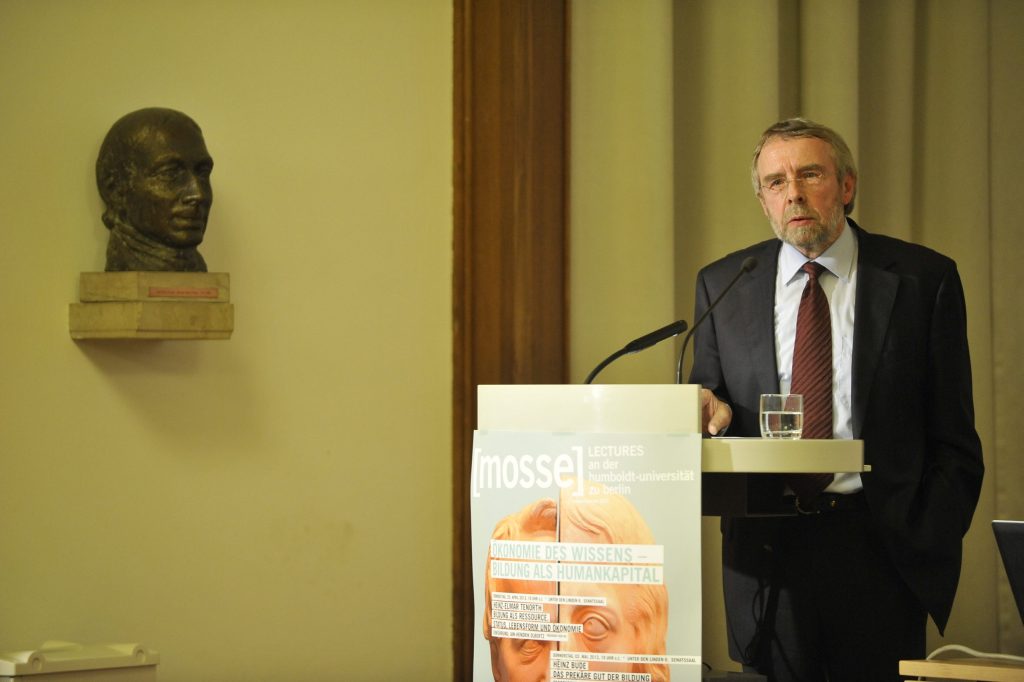
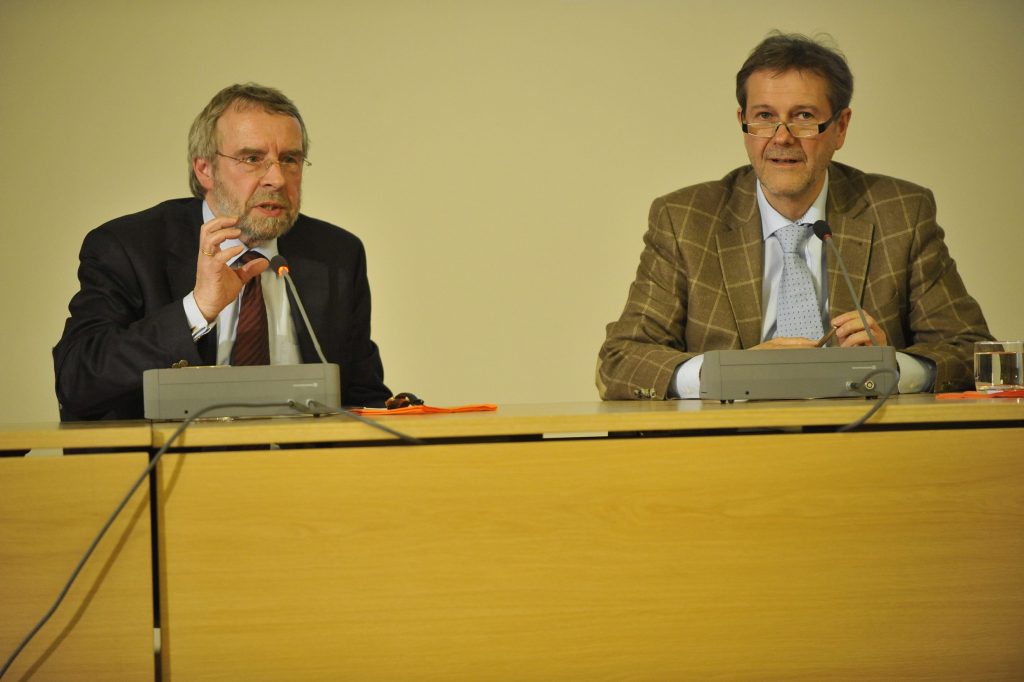
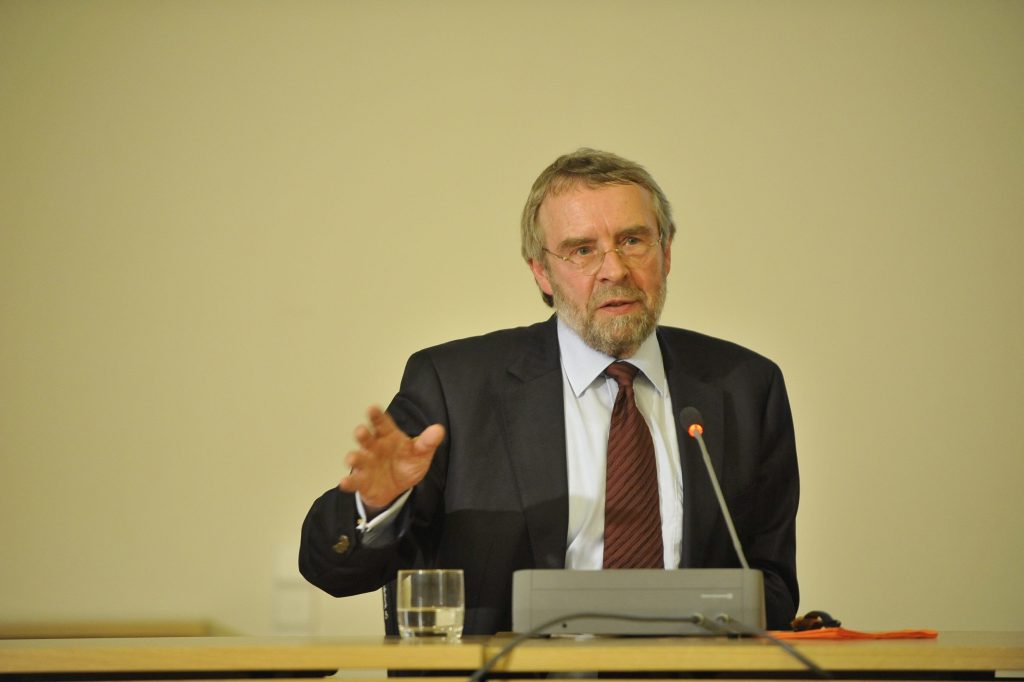
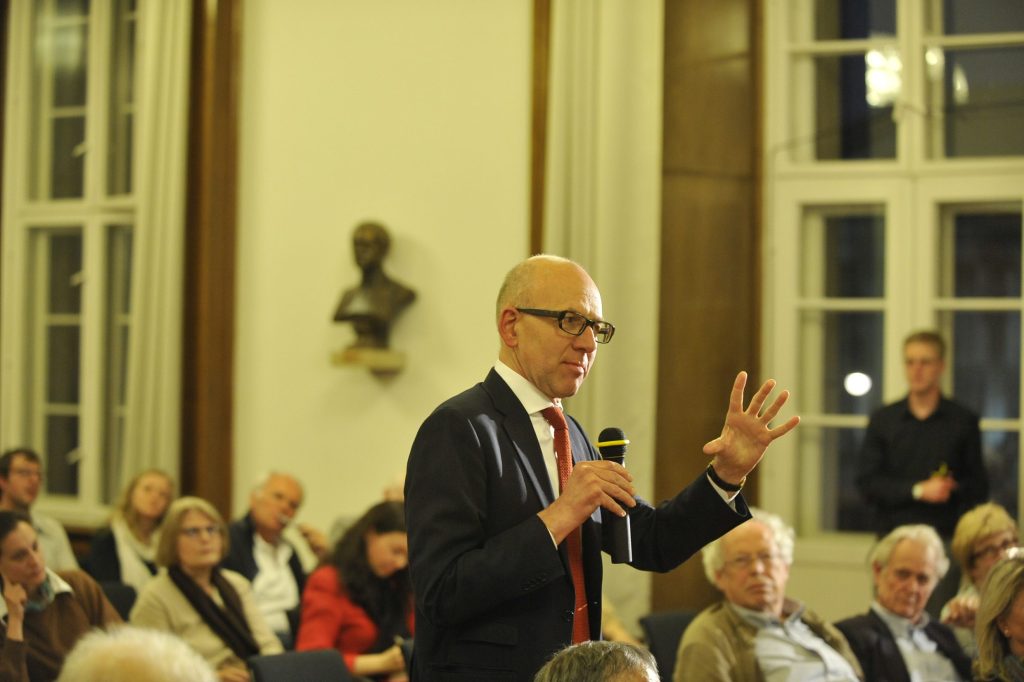
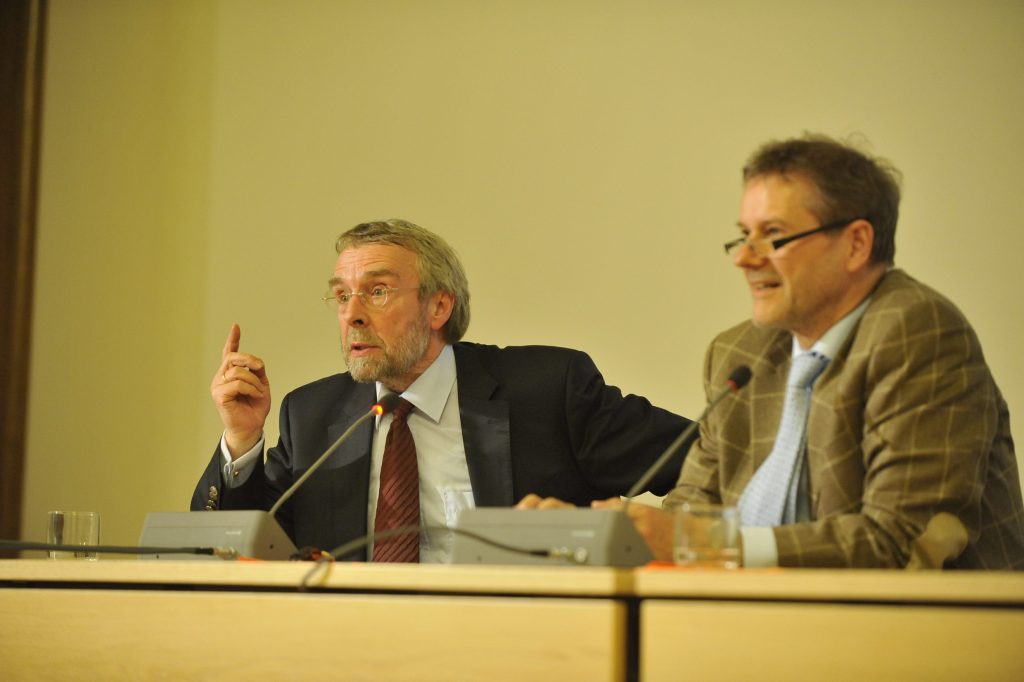
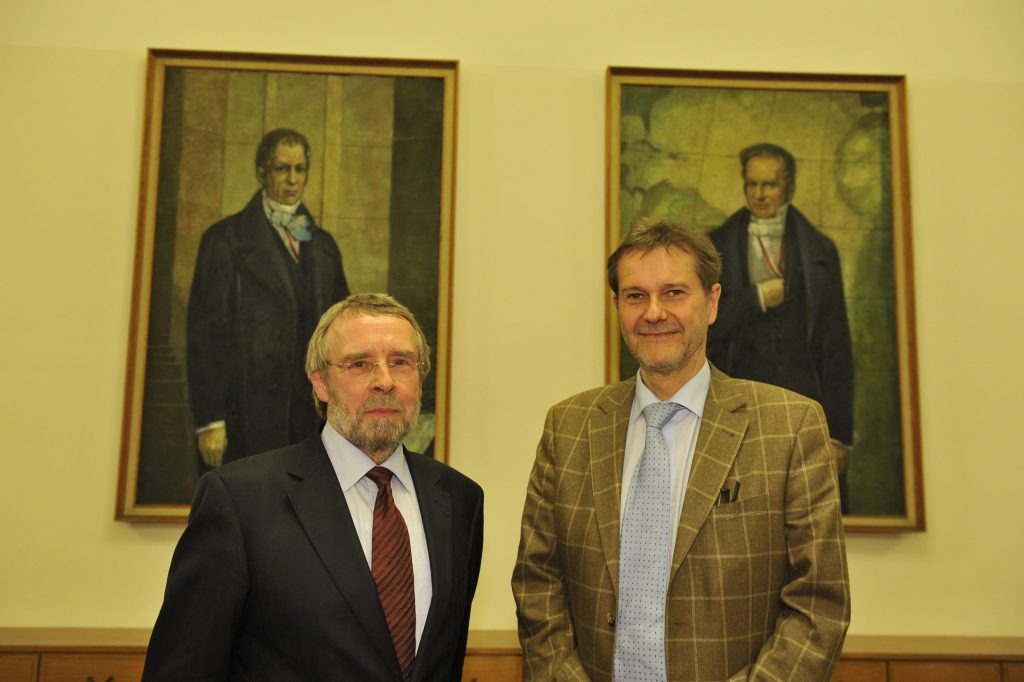
Photo Credit: Niels Leiser for the Mosse Lectures
