
2011: Ulrike Ottinger, “Bamboo-Telefon und Gelbe Post”/”Bamboo Telephone and Yellow Post”
Ulrike Ottinger, “Bamboo-Telefon und Gelbe Post”/”Bamboo Telephone and Yellow Post”
Berlin Mosse Lecture
https://mosselectures.wisc.edu/berlin/
Thursday, 3 February, 19:00 CET
Senatssaal of Humboldt University
Unter den Linden 6
1. Stock
10117 Berlin
GERMANY
Sponsored by:
[mosse] LECTURES an der humboldt-universität zu berlin
The Mosse Foundation
Global Mosse Lecture Series
Fritz Thyssen Stiftung
Gerda Henkel Stiftung
Institut für deutsche Literatur
Humboldt University
Moderator: Dirk Naguschewski (Zentrum für Literatur- und Kulturforschung Berlin)
Description: Auf der Flucht vor Verfolgung und Tod war Shanghai für die Juden aus Deutschland, Österreich und Russland, deren Lebensgeschichten Ulrike Ottinger rekonstruiert, der »allerletzte Ort«. Ihr Film und ihr Hörspiel Exil Shanghai sowie die begleitenden Texte und Ausstellungen zeigen Entsprechungen und Bilder der exterritorialen Wirklichkeit der Emigranten in der seither entstehenden Großstadtmoderne Chinas. Ihre ›poetische Kamera‹ entdeckt die in Shanghais Völkergemisch reproduzierte Kultur und Lebenswelt von Wien und Berlin. Im Dickicht der Sprachen hieß bereits eine 1937 erschiene Schrift von Adolf Josef Storfer, des Leiters des Psychoanalytischen Verlages in Wien, der 1938 nach Shanghai emigrierte und hier die »Gelbe Post« herausgab: eine Exilzeitschrift und subtile Chronik jener vergangenen Gegenwart, die Ulrike Ottinger in ihrem Film als mise-en scéne einer widersprüchlichen Lebenswelt aufscheinen lässt.
Lecture Series Description: In times of global economic crisis, increasing worries about the stability of states and political systems and, in view of profound demographic changes, attention focuses inevitably on processes which determine continuity and transformation of cultures, as well as their finite nature and downfall. What procedures, interests and institutions ensure and renew the cultural reproduction as tradition, heritage or memory? What is the role of literature and art, educational policy or – particularly relevant today – the transdisciplinary life sciences, and how do their procedures of reproduction relate to current economical and ecological circumstances? How do we act on the basis of things that have long been negotiated? Or do modern reproduction techniques detache the reproduced completely from tradition, as Walter Benjamin suggested? What are the challenges to reproducing existing systems of science and art, of legislative and religious norms? And what differential quality is intended when the anthropologist Homi Bhabha describes cultural reproduction succinctly as „always the same, but not quite“?
In a series of historical and contemporary contributions which have their focal point in the upheavals and reforms of society, the Mosse-Lectures look at the dynamics and crises of cultural reproduction. Questions range from cultural history and theory to variegated expert knowledge and current interventions and governmental practices. What role do crises and the perception of crises play for the optimization or the dissolution of social and political systems? What factors determine the duration and the transformation, the securing and the erosion of cultural units? In which way do the social, biological and symbolical processes of reproduction correspond or diverge? What historic and current forms of knowledge are invoked in each case?
Ulrike Ottinger ist Filmemacherin, Fotografin, Regisseurin, Autorin. Zu ihren bekanntesten und oft preisgekrönten Dokumentar- und Spielfilmen gehören außer Exil Shanghai (1997): Freak Orlando (1981), Dorian Gray im Spiegel der Boulevardpresse (1984), Prater (2007) und zuletzt Die koreanische Hochzeitstruhe. In Vorbereitung sind die Filme Unter Schnee sowie Die Blutgräfin mit Tilda Swinton und Isabelle Huppert in den Hauptrollen. Ausstellungen und Retrospektiven u.a. auf der Documenta 11, den Biennalen von Berlin und Shanghai, dem Centro de Arte Reina Sofia in Madrid, dem MoMa in New York und dem Centre Pompidou, Paris.
Dirk Naguschewski ist promovierter Romanist und Bereichsleiter am Zentrum für Literatur- und Kulturforschung in Berlin; im Anschluss an seine Dissertation zahlreiche Publikationen zur Sprache und Kultur des frankophonen Afrika, zum afrikanischen Kino, zur Fremdeforschung und zu den Gender Studies.
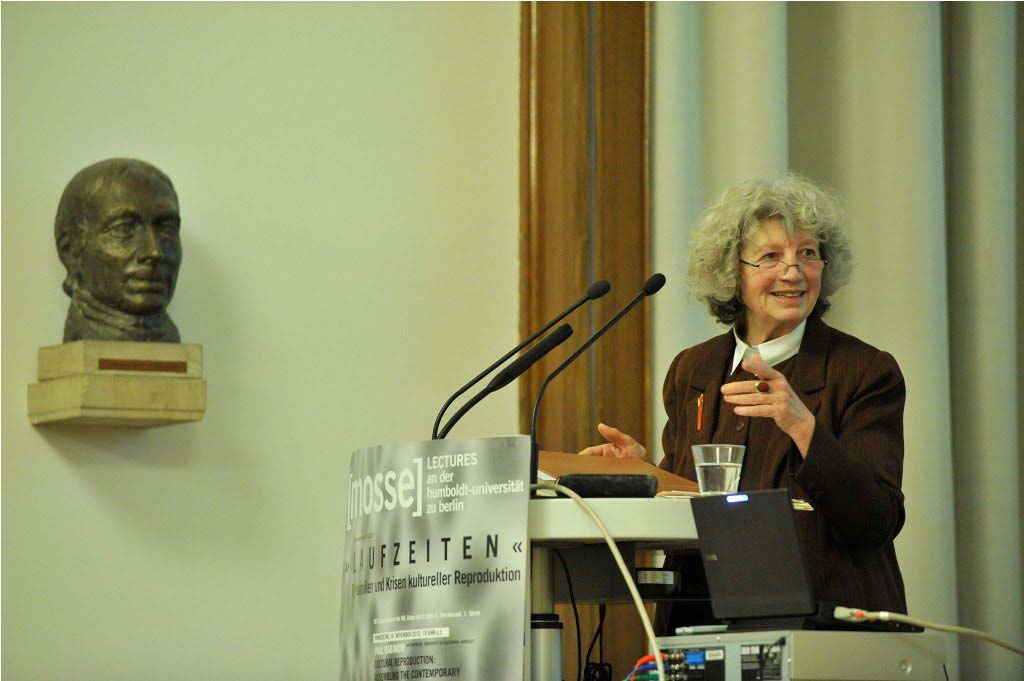
Photo Credit: Niels Leiser for the Mosse Lectures
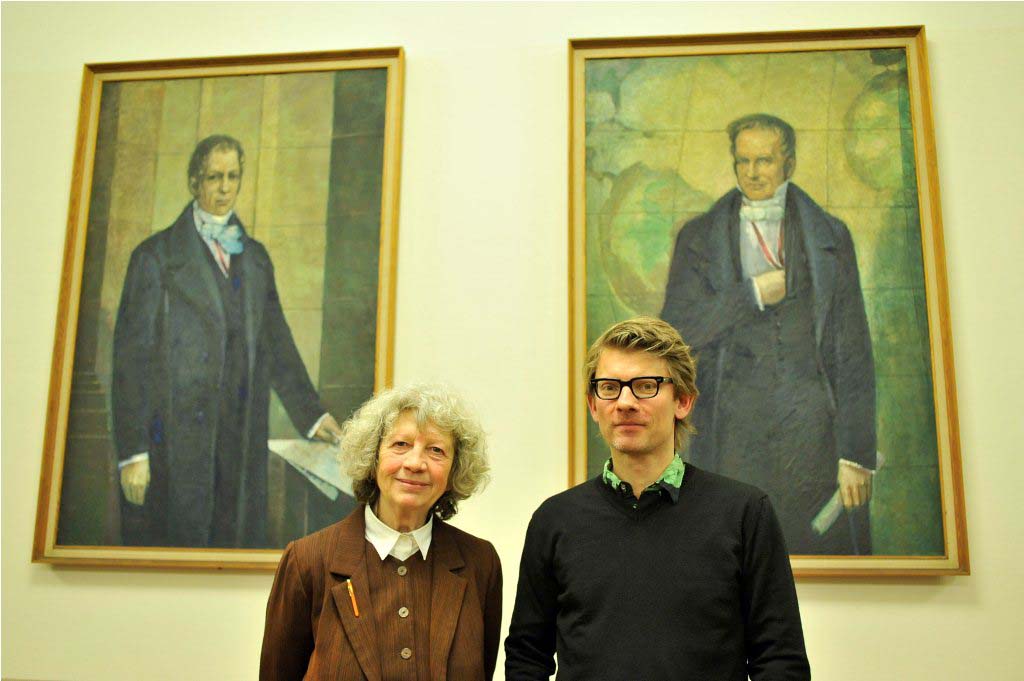
Photo Credit: Niels Leiser for the Mosse Lectures
