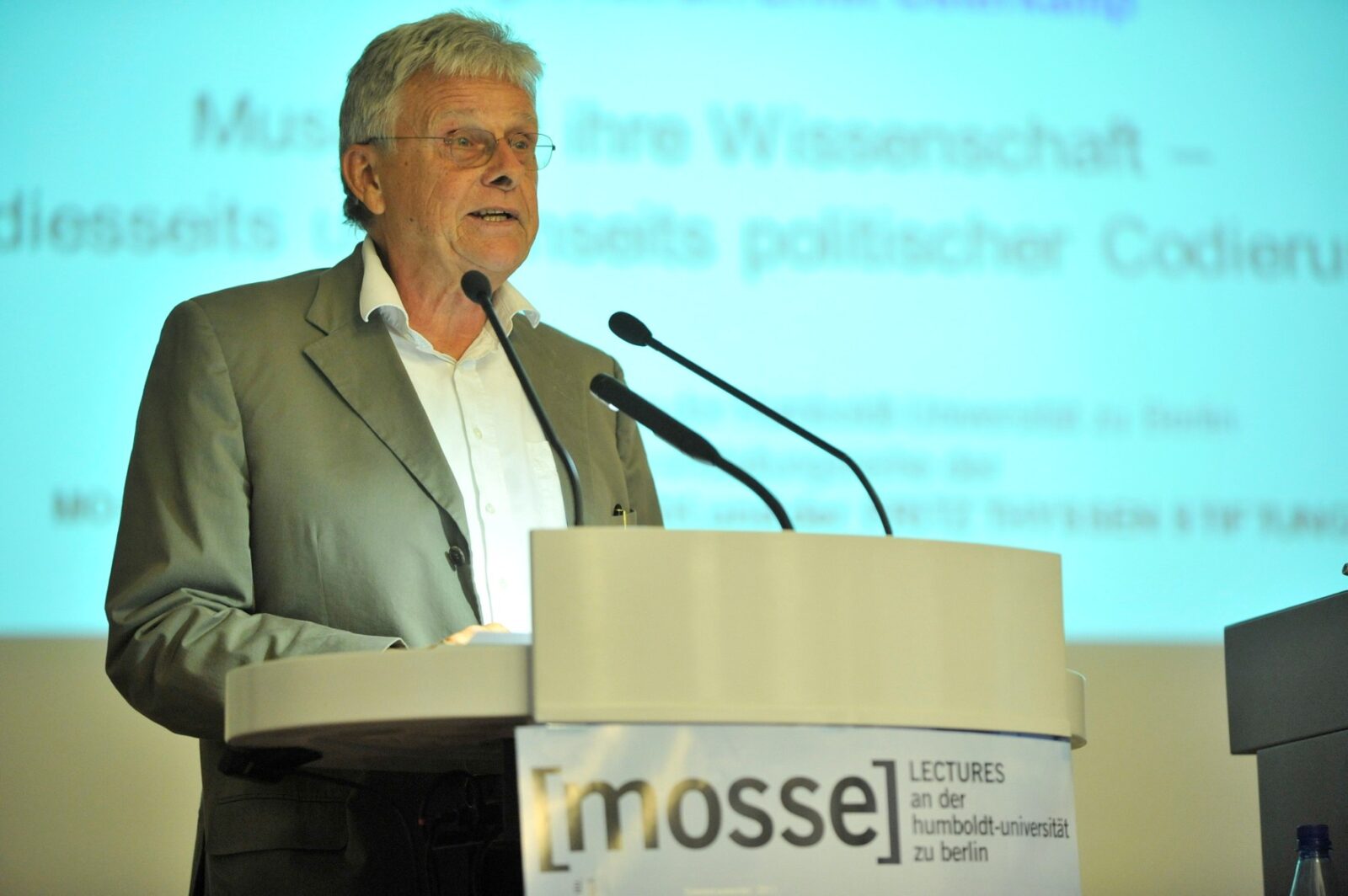
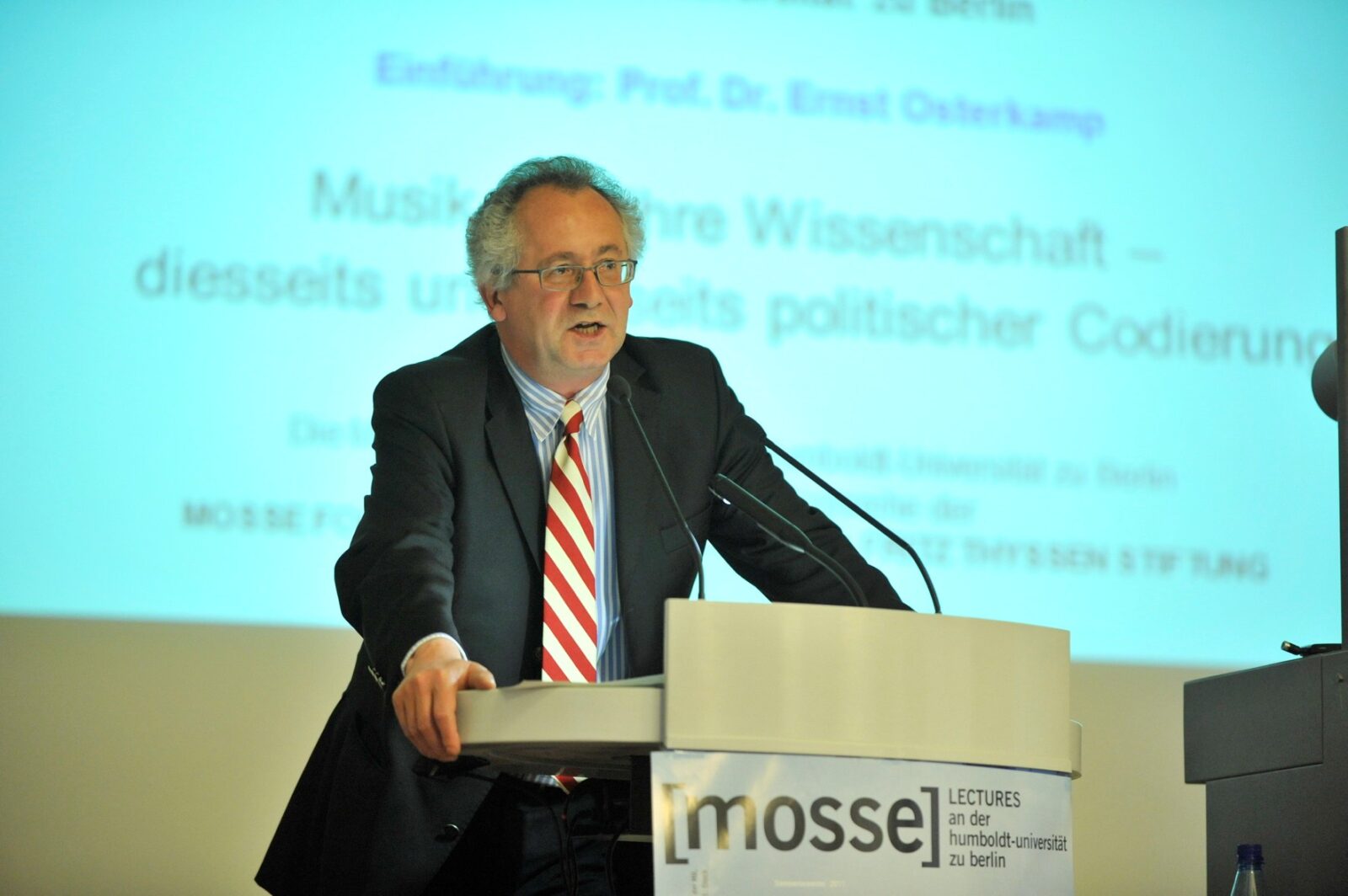
2011: Hermann Danuser, “Musik und ihre Wissenschaft – diesseits und jenseits politischer Codierung” / “Music and its Science: On this Side and Beyond Political Coding”
Hermann Danuser, “Musik und ihre Wissenschaft – diesseits und jenseits politischer Codierung” / “Music and its Science: On this Side and Beyond Political Coding”A
Berlin Mosse Lecture
https://mosselectures.wisc.edu/berlin/
Thursday, 5 May 2011, 19:00 CET

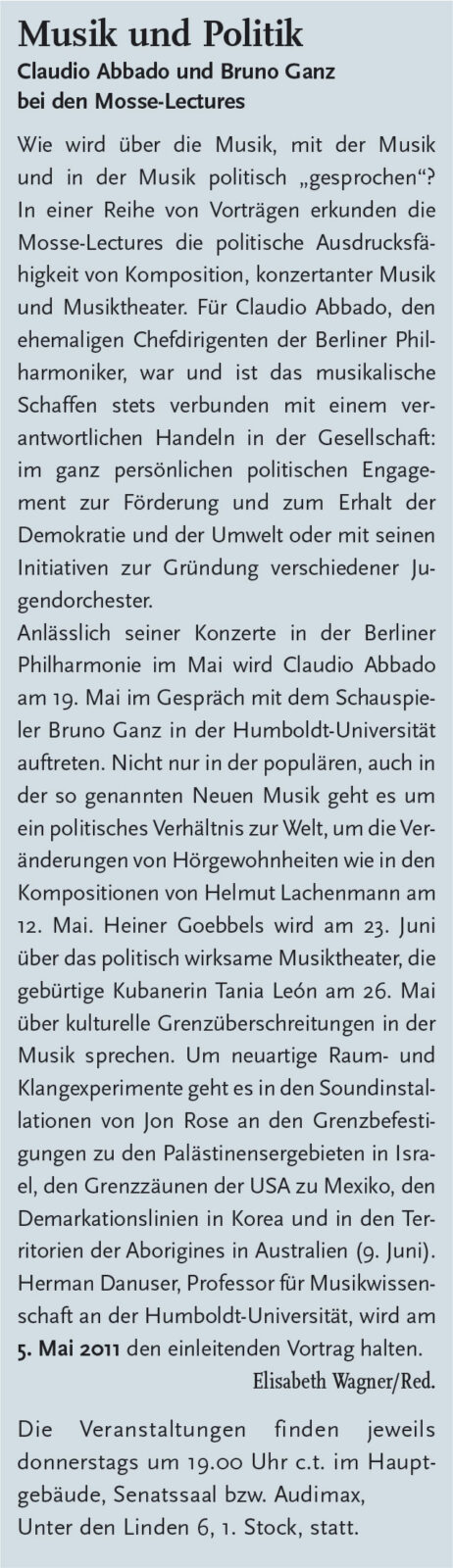
Senatssaal of Humboldt University
Unter den Linden 6, 1. Stock
10117 Berlin
GERMANY
Sponsored by:
[mosse] LECTURES an der humboldt-universität zu berlin
The Mosse Foundation
Global Mosse Lecture Series
Fritz Thyssen Stiftung
Gerda Henkel Stiftung
Institut für deutsche Literatur
Humboldt University
Lecture Description: Der Vortrag geht davon aus, dass Musik und Musikwissenschaft wie jede kulturelle Praxis politisch verstanden werden können. Um das Politische der Musik zu ergründen, ist es wenig hilfreich eine Gegensätzlichkeit von innermusikalischen Strukturen einerseits und politischer Erkenntnis und Wirkung andererseits anzunehmen. Die Geltung und der Wandel musikalischer Topoi sind eine Voraussetzung zum Verständnis von Musik in verschiedenen historischen Zusammenhängen, ebenso ihre institutionelle Verfasstheit und Marktgängigkeit. Das musikalische Erlebnis kann indes politisch sein, ohne dass der einzelne Rezipient beim Hören und Sehen vom politischen, sozialen und gesellschaftlichem Kontext wissen muss. Die Musikforschung hat die Aufgabe, die historischen und die aktuellen Codierungen und Umcodierungen der Instrumental- und Vokalmusik, nicht zuletzt die wechselhaften Inanspruchnahmen des politischen Liedes, analytisch zu reflektieren.
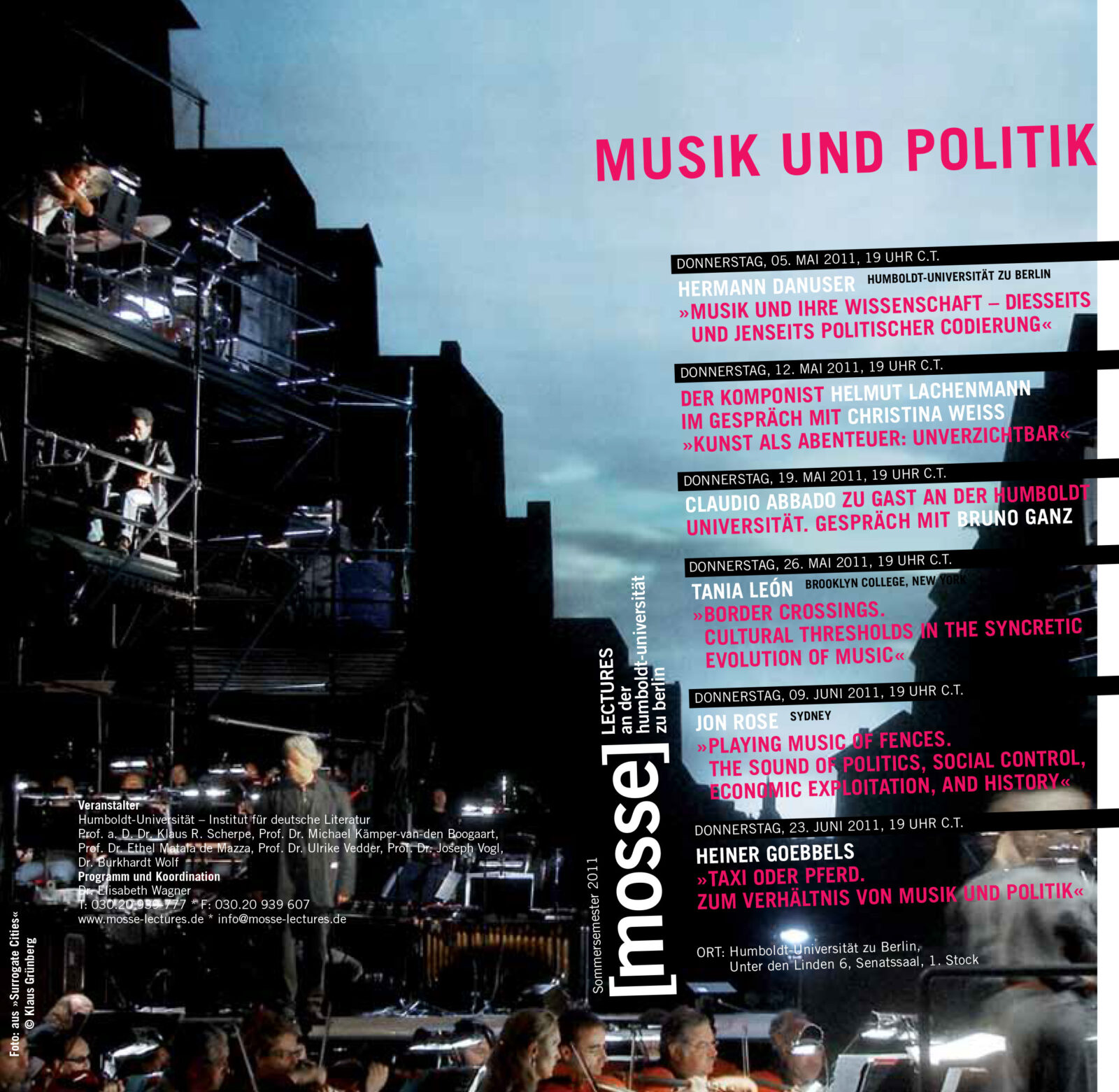
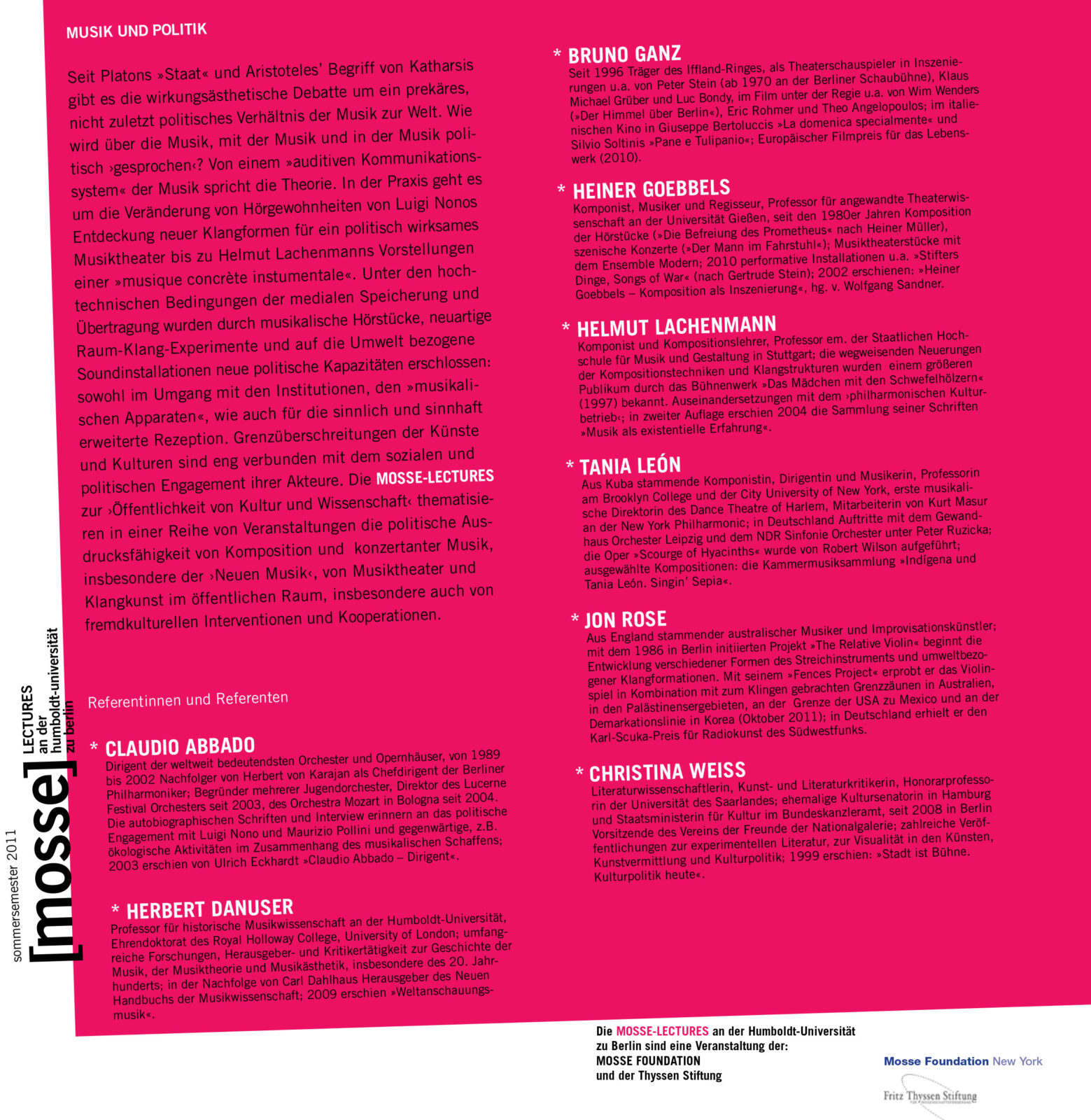
Lecture Series Description: Ever since Platos Politeia and Aristotle’s concept of katharsis the discussion of aesthetic effective-ness and reception centers around the precarious, ultimately political relationship of music to the world. How does one speak politically about music, with music or within it? Music theory speaks of an „auditory system of communication“. In practice we have many efforts and experi-ments to change the habits of listening: beginning with Luigi Nono, disclosing new forms of sound to be effective politically in theatrical performances, up to Helmut Lachenmann’s idea of musique concrète instrumentale. Under hightech conditions of media storage and transmission new possibilities to act politically have been disclosed, in auditory pieces of musical experiments, innovative space-sound-samples and environmental installations, which aim at expanding musical experience, and challenge the „musical apparatus“ of institutions. Borders crossings of the arts and cultures are frequently and closely connected with social and political activities of both artists and their audiences. In a series of events, the Mosse-Lectures devoted to the „Public of Cultures and Sciences“ in a series of events thematize the political expressiveness of composition and concert music, „Neue Musik“ in particular, of theatrical presentation, and sound art in public spaces; special attention will be paid to interventions and cooperation with non-western cultures.
Hermann Danuser: Musikwissenschaftler, Professor für Historische Musikwissenschaft an der Humboldt-Universität, umfangreiche Forschungen und Publikationen zur Geschichte der Musik, der Musiktheorie und Musikästhetik, insbesondere des 20. Jahrhunderts; Herausgeber u.a des Neuen Handbuchs der Musikwissenschaft in der Nachfolge von Carl Dahlhaus; 2009 erschien sein Buch »Weltanschauungsmusik«.
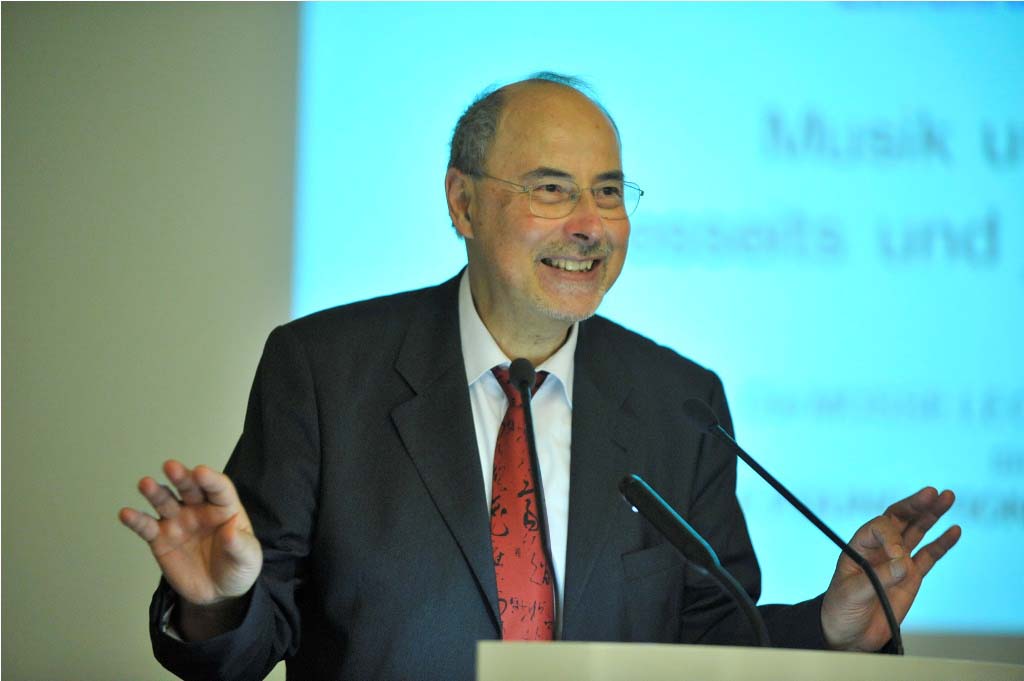
Photo Credit: Niels Leiser for the Mosse Lectures
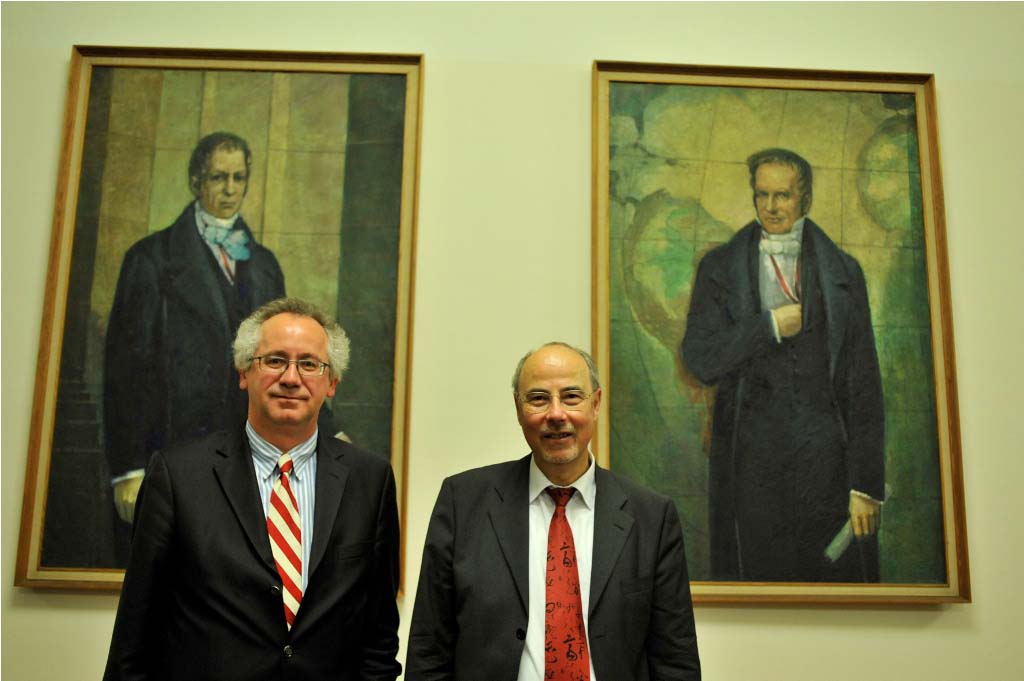
Photo Credit: Niels Leiser for the Mosse Lectures