
2011: Suzanne Romaine, “‘Vanishing Voices’: Language, Culture, and Identity in a Multilingual World”
Suzanne Romaine, “‘Vanishing Voices’: Language, Culture, and Identity in a Multilingual World”
Berlin Mosse Lecture
https://mosselectures.wisc.edu/berlin/
Thursday, 20 January, 19:00 CET
Senatssaal of Humboldt University
Unter den Linden 6, 1. Stock
10117 Berlin
GERMANY
Sponsored by:
[mosse] LECTURES an der humboldt-universität zu berlin
The Mosse Foundation
Global Mosse Lecture Series
Fritz Thyssen Stiftung
Gerda Henkel Stiftung
Institut für deutsche Literatur
Humboldt University
Moderator: Rainer Dietrich (Humboldt University)
Description: Für die kulturelle Vielfalt ist Sprache eine entscheidende Größe, weil praktisch alle we-sentlichen Aspekte menschlicher Kultur von der Klassifikation der Verwandtschaftsbezie-hungen bis zur Religion von der Sprache als vermittelndem Medium abhängig sind. Kul-turelle Vielfalt ist gefährdet, wenn Sprachen aussterben. Wenn die Prognose stimmt, dass bis zum Ende dieses Jahrhunderts bei fortschreitender Globalisierung 50 bis 90 % der auf der Welt existierenden 6900 Sprachen ausgestorben sein werden, dann bedeutet dies, dass die kulturelle Diversität in dem Masse zurückgeht wie die sprachliche Vielfalt. Zugleich sind wir Zeugen eines erheblichen Rückgangs der biologischen Artenvielfalt. Ohne hier einen direkten Zusammenhang nachweisen zu können, lässt sich doch beobachten, dass Sprachen und Arten in den gleichen Gegenden der Welt vom Aussterben bedroht sind, wobei das Risiko für die Sprachen um einiges größer ist als für die Pflanzen- und Tierwelt. Wenn in den potenziell gefährdeten Regionen eine bestimmte Interdependenz zwischen dem Verlust an Sprachen und Artenvielfalt und der zugehörigen Kultur festzustellen ist, dann müssen aufeinander abgestimmte Strategien entwickeln werden, die das Überleben menschlicher und biologischer Vielfalt sichern.
Lecture Series Description: In times of global economic crisis, increasing worries about the stability of states and political systems and, in view of profound demographic changes, attention focuses inevitably on processes which determine continuity and transformation of cultures, as well as their finite nature and downfall. What procedures, interests and institutions ensure and renew the cultural reproduction as tradition, heritage or memory? What is the role of literature and art, educational policy or – particularly relevant today – the transdisciplinary life sciences, and how do their procedures of reproduction relate to current economical and ecological circumstances? How do we act on the basis of things that have long been negotiated? Or do modern reproduction techniques detache the reproduced completely from tradition, as Walter Benjamin suggested? What are the challenges to reproducing existing systems of science and art, of legislative and religious norms? And what differential quality is intended when the anthropologist Homi Bhabha describes cultural reproduction succinctly as „always the same, but not quite“?
In a series of historical and contemporary contributions which have their focal point in the upheavals and reforms of society, the Mosse-Lectures look at the dynamics and crises of cultural reproduction. Questions range from cultural history and theory to variegated expert knowledge and current interventions and governmental practices. What role do crises and the perception of crises play for the optimization or the dissolution of social and political systems? What factors determine the duration and the transformation, the securing and the erosion of cultural units? In which way do the social, biological and symbolical processes of reproduction correspond or diverge? What historic and current forms of knowledge are invoked in each case?
Suzanne Romaine ist seit 1984 Merton Professor of English Language an der University of Oxford, zahlreiche Gasteprofessuren; Fellow am Behavioral Sciences Center in Stanford (2004/2005), Forschungsarbeiten in Australien, den USA und Papua Neu Guinea, Mitglied der UNESCO Expert Group Education in a Multicultural World (2003); Veröffentlichungen u.a. Language in Society (1994), Cambridge History of the English Lanuage 1776-1997 (1998), Communicating Gender (1999). Das gemeinsam mit Daniel Nettle verfasst Buch Vanishing Voices: The Extinction of the World’s Languages (2000) wurde in sechs Sprachen übersetzt.
Rainer Dietrich ist Professor em. am Institut für deutsche Sprache und Linguistik der Humboldt-Universität und Honorarprofessor an der Universität Heidelberg; zahlreiche Publikationen zur Sprachverarbeitung, zur Psycholinguistik und zum Zweitspracherwerb u.a. Modalität im Deutschen (1992), Psycholinguistik (2. Aufl. 2007), Mhg.: Group Interaction in High Risk Environments (2004), Mhg.: Teaming Up. Components of Safety and High Risk (2004)
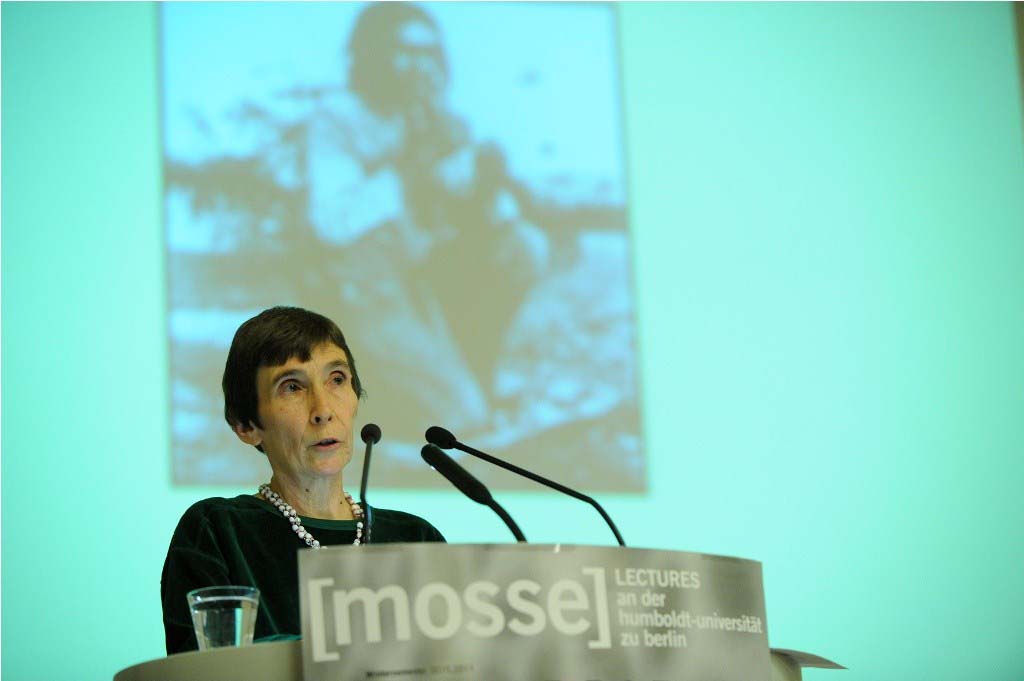
Photo Credit: Niels Leiser for the Mosse Lectures
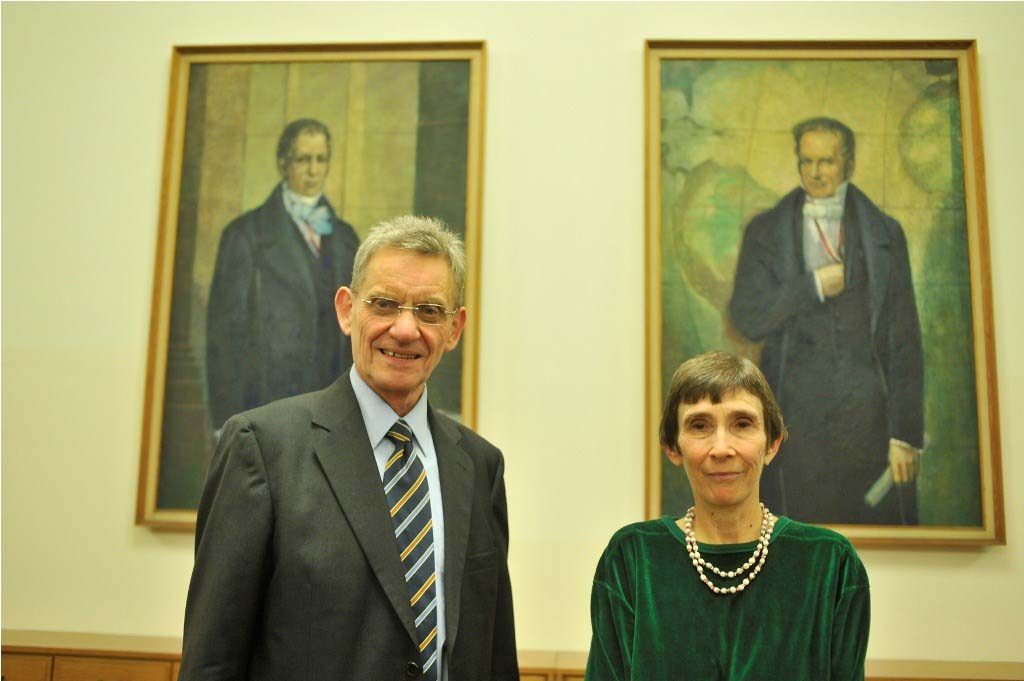
Photo Credit: Niels Leiser for the Mosse Lectures
