
2010: Carlo Ginzburg, “Duplication as Distance. A Case Study”
Carlo Ginzburg, “Duplication as Distance. A Case Study”
Berlin Mosse Lecture
https://mosselectures.wisc.edu/berlin/
Thursday, 9 December 2010, 19:00 CET
Senatssaal of Humboldt University
Unter den Linden 6
1. Stock
10117 Berlin
GERMANY
Sponsored by:
[mosse] LECTURES an der humboldt-universität zu berlin
The Mosse Foundation
Global Mosse Lecture Series
Fritz Thyssen Stiftung
Gerda Henkel Stiftung
Institut für deutsche Literatur
Humboldt University
Moderator: Matala de Mazza (Humboldt University)
Respondent: Lorraine Daston (Max Planck Institute for the History of Science, Berlin)
Lecture Description: Als Bestandteil einer größeren, im Entstehen begriffenen Forschungsarbeit setzt der Vortrag ein mit dem Buch des deutschen Humanisten Erasmus Alberus Barfüsser Mönche Eulenspiegel und Alkoran von 1542. Dieses auch in französischer und lateinischer Übersetzung verbreitete Buch hat man oft als die Parodie eines mittelalterlichen Traktat angesehen: Bartholomäus von Pisas Liber confirmitatum (Über die Gleichförmigkeit). Aber was ist eine Parodie? Lässt die Parodie auch auf eine bestimmte Haltung der historischen Distanz schließen? Mit der hier vorgestellten Fallstudie soll aus einem eher ungewöhnlichen Blickwinkel ein derzeit vielfach diskutiertes Problem zur Sprache kommen: die Frage nach den Ursprüngen der modernen Wissenschaft (oder Geschichte) der Religionen und ihrer vielfältigen Beziehungen.
Lecture Series Description: In times of global economic crisis, increasing worries about the stability of states and political systems and, in view of profound demographic changes, attention focuses inevitably on processes which determine continuity and transformation of cultures, as well as their finite nature and downfall. What procedures, interests and institutions ensure and renew the cultural reproduction as tradition, heritage or memory? What is the role of literature and art, educational policy or – particularly relevant today – the transdisciplinary life sciences, and how do their procedures of reproduction relate to current economical and ecological circumstances? How do we act on the basis of things that have long been negotiated? Or do modern reproduction techniques detache the reproduced completely from tradition, as Walter Benjamin suggested? What are the challenges to reproducing existing systems of science and art, of legislative and religious norms? And what differential quality is intended when the anthropologist Homi Bhabha describes cultural reproduction succinctly as „always the same, but not quite“?
In a series of historical and contemporary contributions which have their focal point in the upheavals and reforms of society, the Mosse-Lectures look at the dynamics and crises of cultural reproduction. Questions range from cultural history and theory to variegated expert knowledge and current interventions and governmental practices. What role do crises and the perception of crises play for the optimization or the dissolution of social and political systems? What factors determine the duration and the transformation, the securing and the erosion of cultural units? In which way do the social, biological and symbolical processes of reproduction correspond or diverge? What historic and current forms of knowledge are invoked in each case?
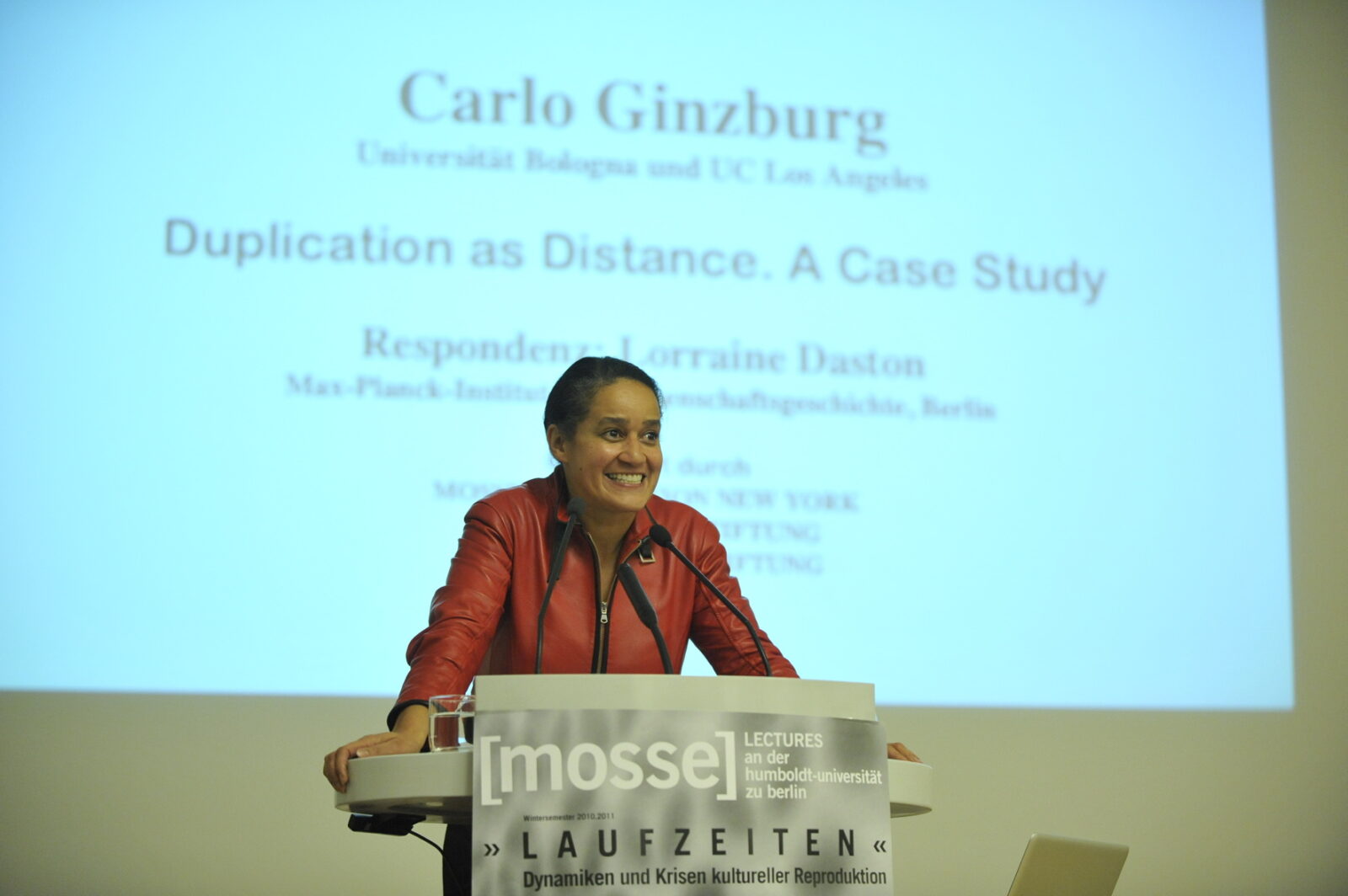
Foto: Niels Leiser-Veröffentlichung nur frei für Mosse-Lectures.
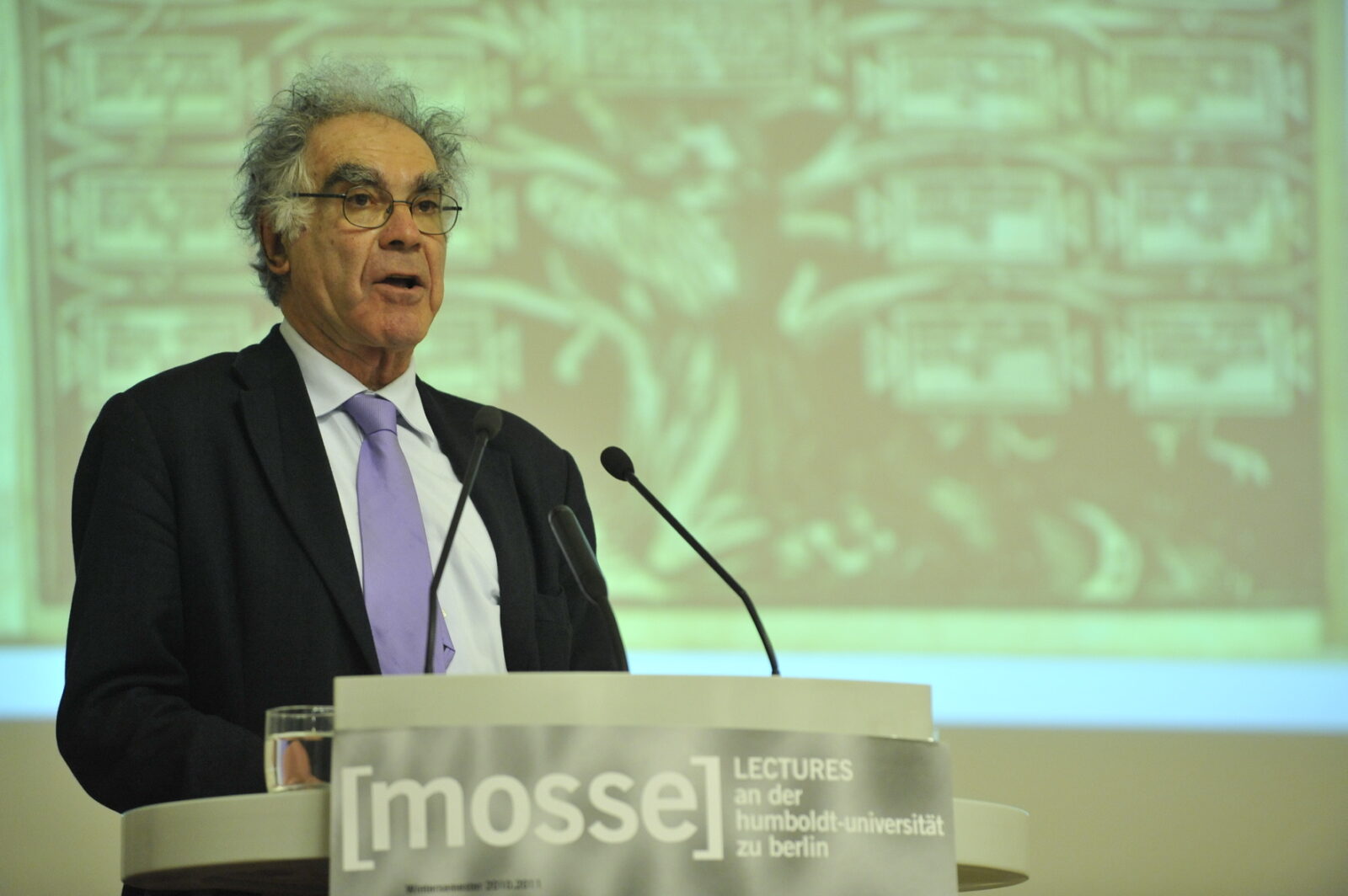
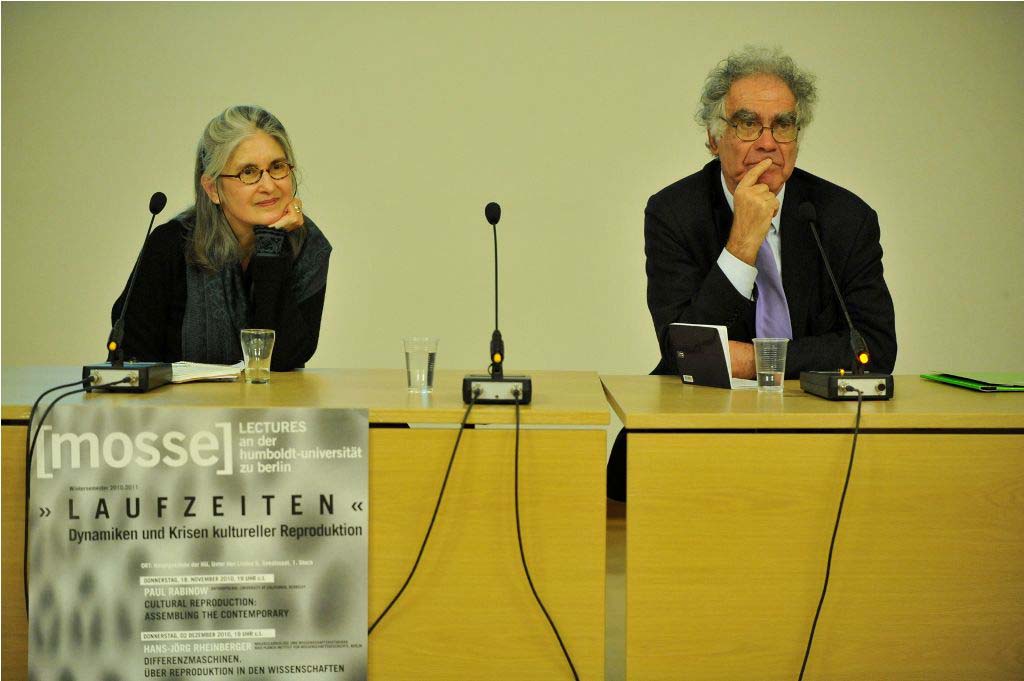
Photo Credit: Niels Leiser for the Mosse Lectures
Carlo Ginzburg hat einen Lehstuhl für Neuere Geschichte an der Universität von Bologna und ist zugleich Professor of Italian Renaissance Studies an der UC Los Angeles und Professor an der Scuola Normale Superiore in Pisa. Mit seinen Arbeiten zu einer neuartigen Kulturwissenschaft (Stichwort „Mikrogeschichte”) wurde er vielfach ausgezeichnet, u.a. mit dem Aby-Warburg-Preis der Stadt Hamburg (1999), dem Forschungspreis der Alexander-von-Humboldt-Stiftung (2008) und dem international hoch angesehenen Balzan-Preis (2010). Von seinen zahlreichen Werken in italienischer und deutscher Sprache sind auf Deutsch erschienen u.a.: Der Käse und die Würmer. Die Welt eines Müllers um 1600 (1979); Spurensicherung. Die Wissenschaft auf der Suche nach sich selbst (1995); Hexensabbat. Entzifferung einer nächtlichen Geschichte (1990); Holzaugen. Über Nähe und Distanz (1999); Erkundungen über Piero della Francesca (Taschenbuch 1999); Die Wahrheit der Geschichte. Rhetorik und Beweis (2001).
Lorraine Daston ist Professorin und Direktorin am Max-Planck-Institut für Wissenschaftsgeschichte in Berlin, als Gast-dozentin war und ist sie tätig u.a. an der Harvard University, Stanford University, University of Oxford und der Humboldt Universität. Sie ist Fellow der American Academy of Arts und Mitglied der Berlin-Brandenburgischen Akademie. Veröffentlichungen u.a.: Mit Katharine Park: Wonders and the Order of Nature 1150-1750 (1998); Classical Probability in the Enlightenment (1998); Wunder, Beweise und Tatsachen. Zur Geschichte der Rationalität (2001); mit Peter Galison: Objectivity (2007); mit Michael Stolleis (Hg.) Natural Law and Laws of Nature in Early Modern Europe (2000).
