
2026: Adrian Daub, “‘Noch’, ‘Nicht mehr’, ‘Endlich wieder’: Kollektive Zeitwahrnehmung und Verbotsdiskurse” / “‘Still’, ‘No Longer’, ‘Finally Again’: Collective Perception of Time and Discourses on Prohibition”
Adrian Daub, “‘Noch’, ‘Nicht mehr’, ‘Endlich wieder’: Kollektive Zeitwahrnehmung und Verbotsdiskurse” / “‘Still’, ‘No Longer’, ‘Finally Again’: Collective Perception of Time and Discourses on Prohibition”
Humboldt University Berlin Mosse Lecture
mosselectures.wisc.edu/berlin/
Thursday, 4 June 2026, 19:15 CET
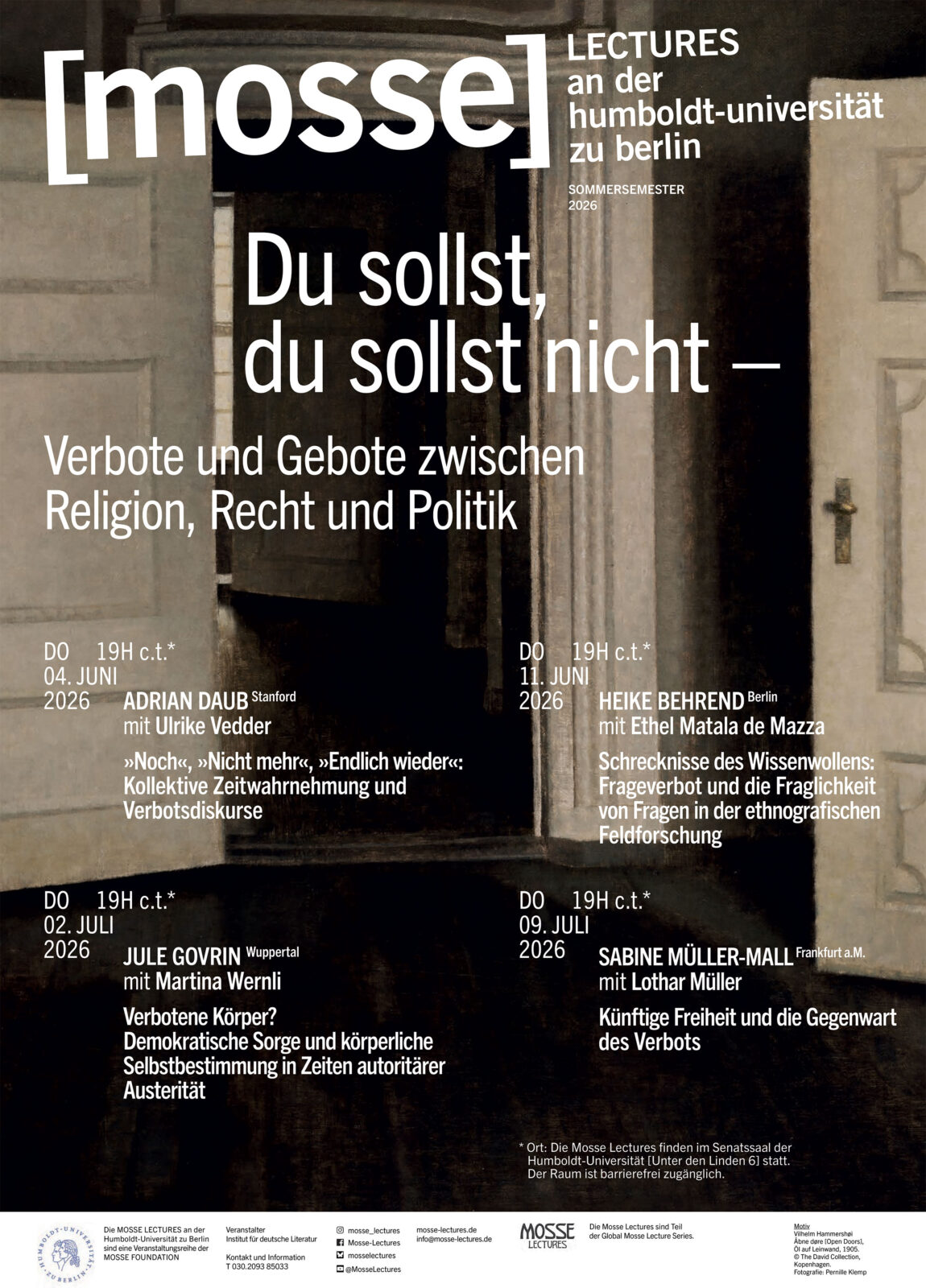
Senatssaal of Humboldt University
Unter den Linden 6
10117 Berlin
GERMANY
Sponsored by:
[mosse] LECTURES an der humboldt-universität zu berlin
The Mosse Foundation
Global Mosse Lecture Series
Institut für deutsche Literatur
Humboldt University
Moderator: Ulrike Vedder (Humboldt University)
Lecture Description: The claim that »one« can or may »no longer« say x, y, or z has been firmly entrenched in political discourse since at least the 1980s. It stands for a broader feeling of unsayability and the mechanisms by which this supposedly spreads—mechanisms that, for the people who describe them, have the character of prohibitions, even though these prohibitions are rarely explicitly put into words. Moreover, the sense of a historical shift expressed through speech prohibitions seems to structure a certain audience’s relationship to the political. This lecture challenges the notions of sayability and unsayability, of historical shift and political power, that underlie this linguistic game. Above all, however, it deals with time and the experience of time, with nostalgia, and with the feeling you get when »everyone« speaks the same way you do.
Lecture Series Theme: Du Sollst, du sollst nicht – Verbote und Gebote zwischen Religion, Recht und Politik/Thou shalt, thou shalt not. Prohibitions and Commandments between Religion, Law, and Politics
Lecture Series Description: Prohibitions and commandments are the pivots of religious and ethical ways of life, they stabilize social orders, protect against violence, and limit the abuse of power. Rights, including fundamental rights, are safeguarded by prohibitions. At the same time, prohibitions themselves are an expression of political, economic, and social power relations. Prohibiting others—or even oneself—from doing something means restricting scope for action and self-realization. The fact that this repressive function of prohibitions and taboos inherently possesses a culture-forming dimension accounts for the discontent that Sigmund Freud already attributed to civilization at the beginning of the 20th century. The productive power of prohibitions can also be traced etymologically: As far back as Old Low German, the verb »verbieten« [to forbid] [Middle Low German »vorbēden«] was closely related to the command, in the sense of an emphatic directive for action.
In the summer semester of 2026, the Mosse Lectures aim to shed light on the ambivalences of prohibitions from a historical and systematic perspective and to examine their relevance to contemporary social debates. For while criticism of prohibitions has seemed ubiquitous in many social spheres for some time now, and »destigmatization« carries positive connotations for good reasons, prohibitions are experiencing a renaissance in contexts where they become instruments of crisis management. For example, in the global discussions surrounding the necessity and legitimacy of a social media ban for children and adolescents. Or in current climate policy, which—under the banner of safeguarding intertemporal freedom—faces the task of recalibrating the relationship between intergenerational justice and a »culture of prohibition« and debating the current imperative for bans. The debates surrounding cancel culture, fake news, and digital privacy rights also revolve around the possibilities of prohibitive restrictions. The Mosse Lectures bring together perspectives from philosophy, cultural studies, ethnology, and legal studies to examine the conditions under which prohibitions appear legitimate, their cultural foundations and political functions, and, not least, the power that is constituted in the very act of prohibiting.
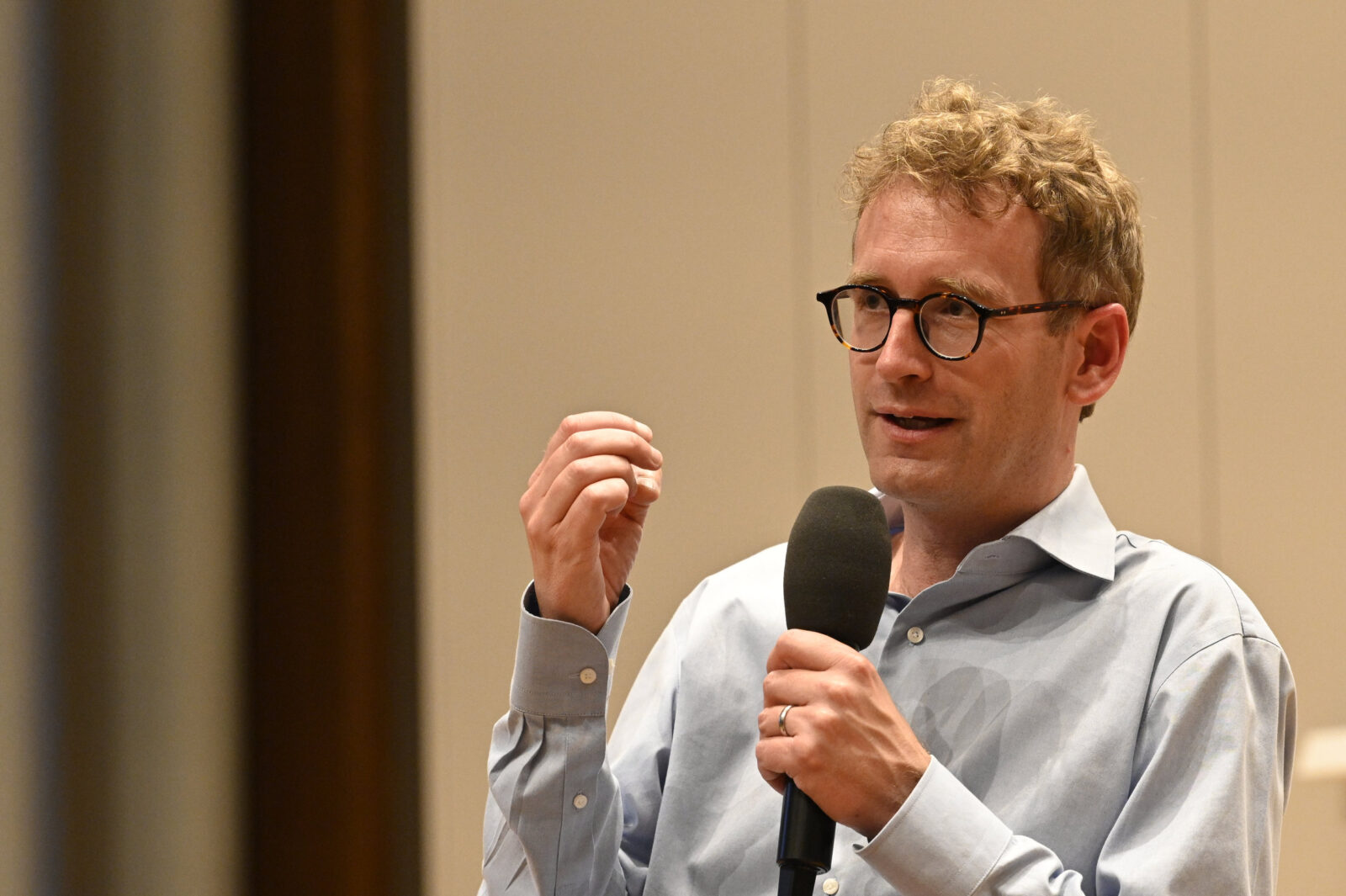
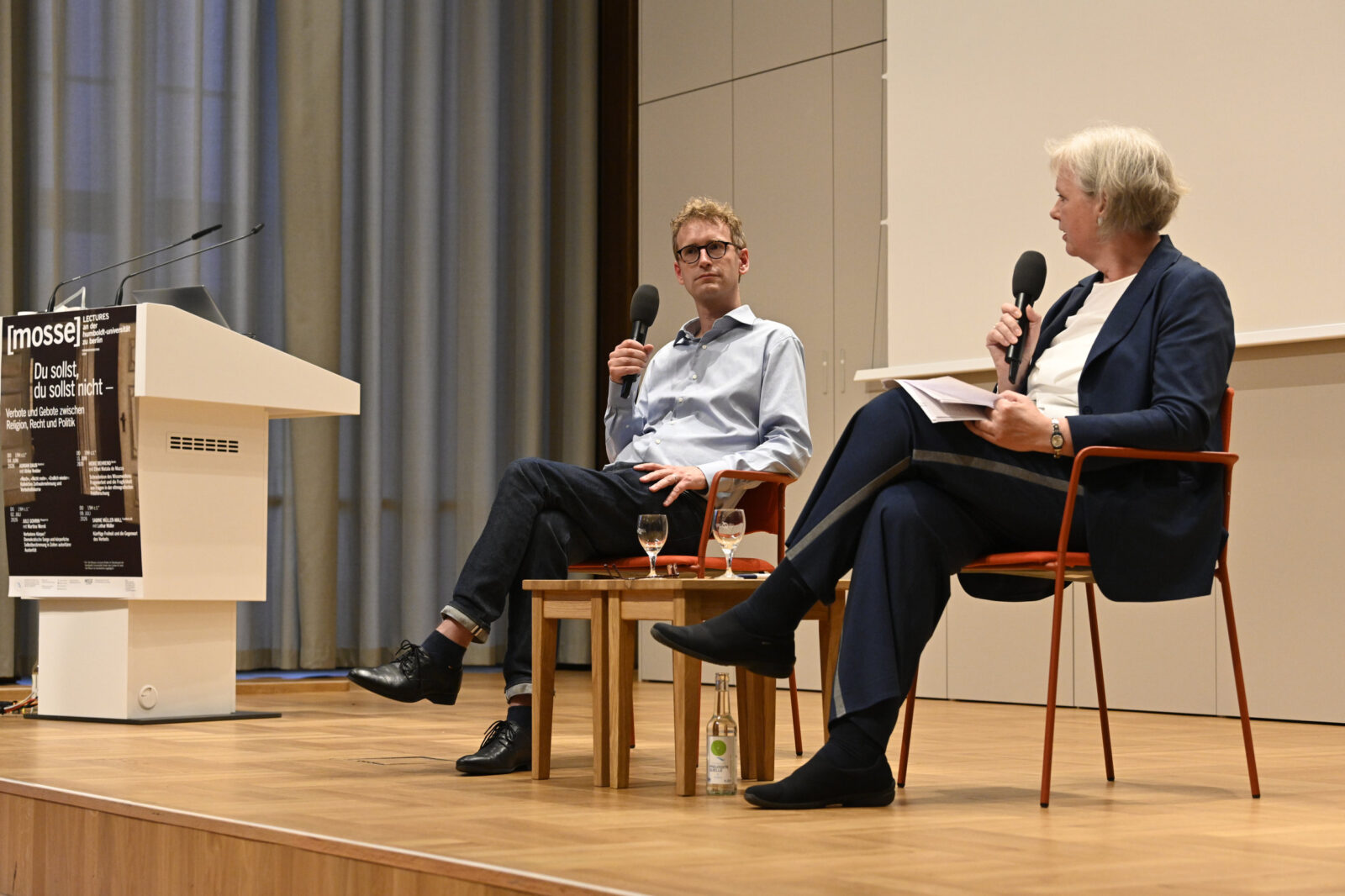
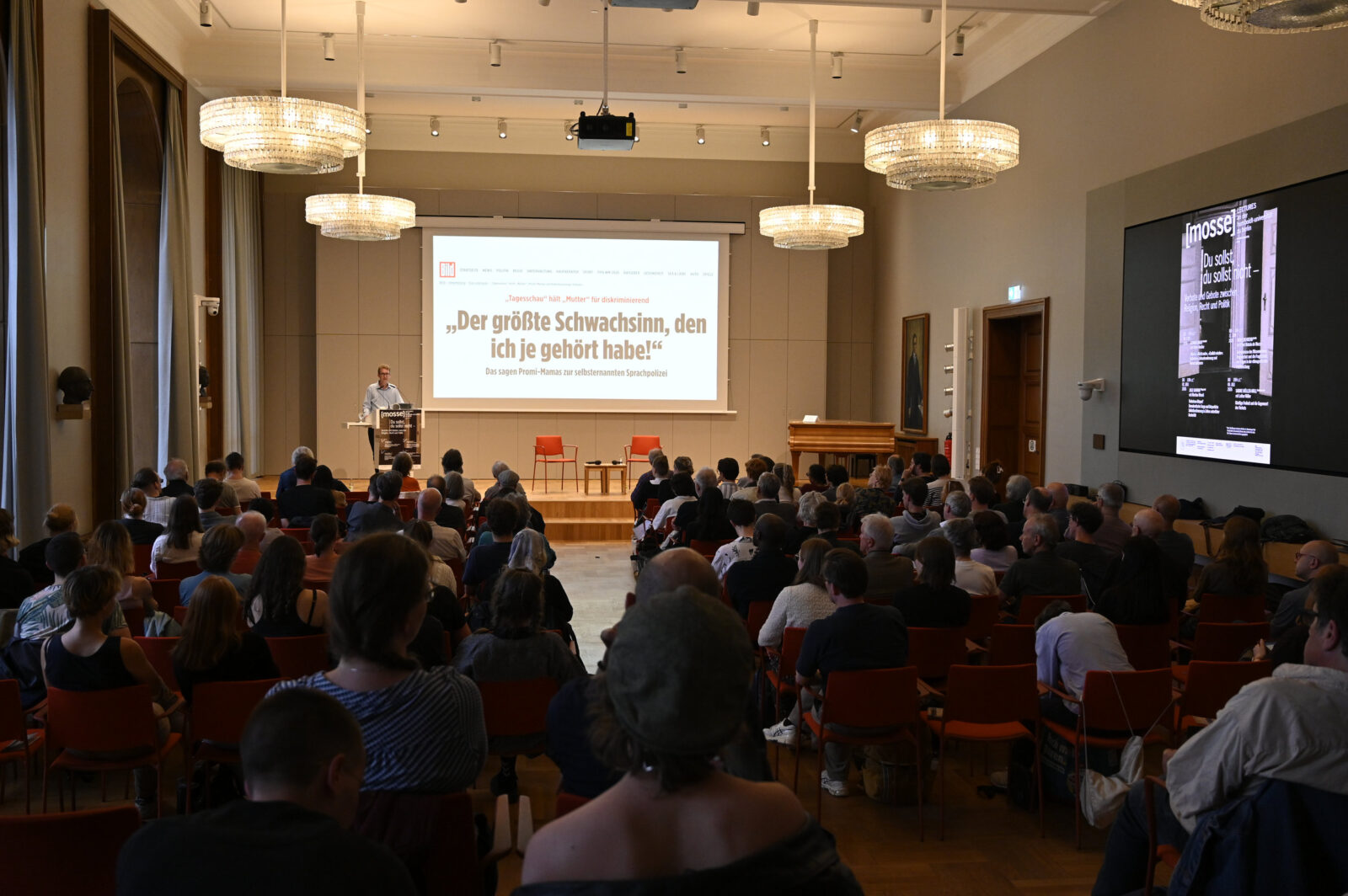
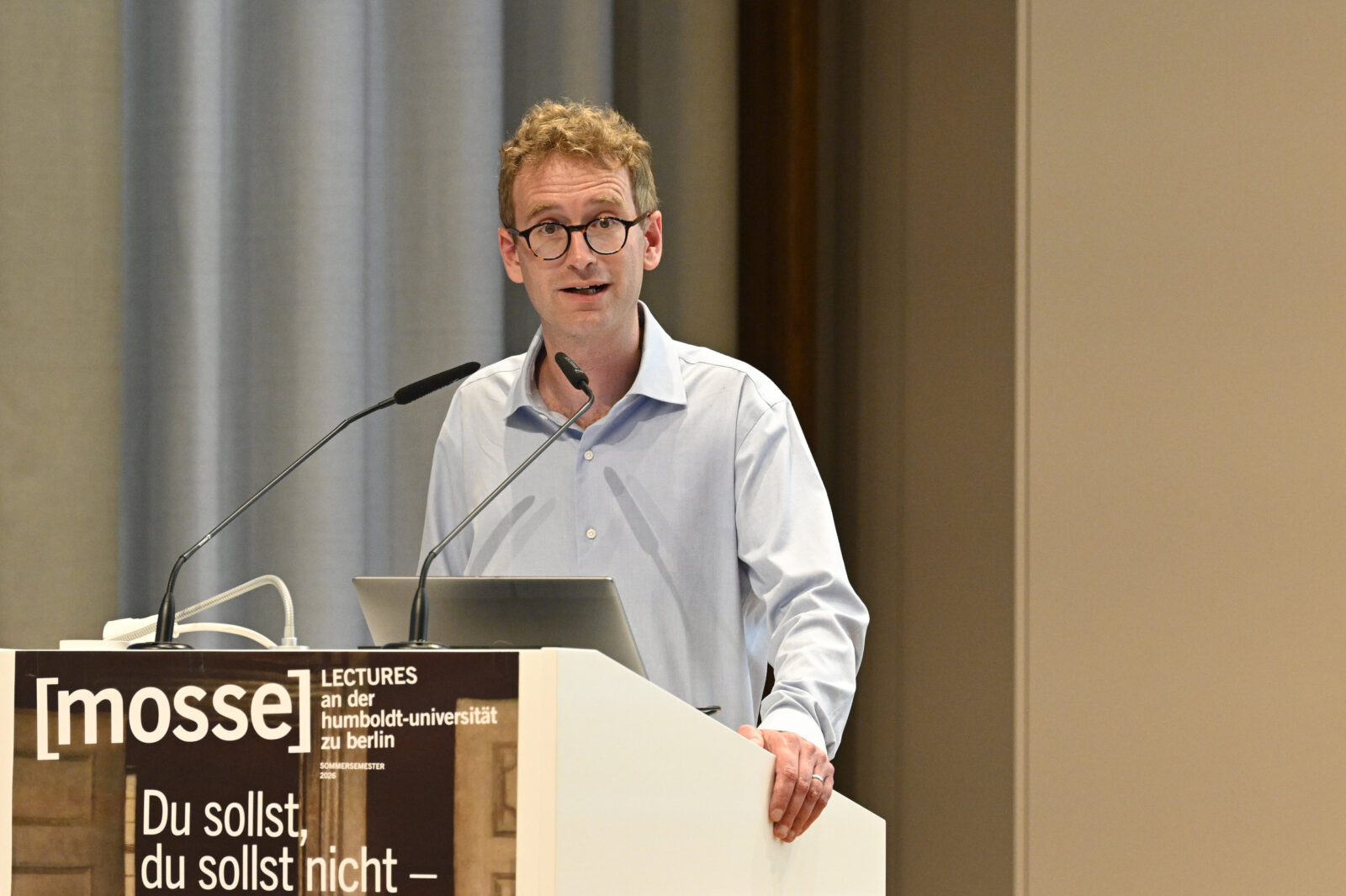
Photo credit: Neils Lesier for the Mosse Lectures
Adrian Daub: Literary scholar; J.E. Wallace Sterling Professor of the Humanities in the departments of Comparative Literature and German Studies at Stanford University. Since 2019, Daub has also served as Faculty Director of the Michelle R. Clayman Institute for Gender Research. His research interests include the intellectual and cultural history of the 19th century, as well as issues of gender and sexuality. In addition to his academic work, Daub acts as a political commentator on current affairs in German and English-language newspapers [including FAZ, DIE ZEIT, NZZ, and The Guardian], as well as in the podcast »The Feminist Present,« produced with Laura Goode. His latest book, »Cancel Culture Transfer. Wie eine moralische Panik die Welt erfasst,« was published by Suhrkamp Verlag in 2022 [»The Cancel Culture Panic. How an American Obsession Went Global«, thoroughly revised english edition, published by Stanford University Press in 2024]. The book appeared on the non-fiction bestseller list of ZDF, Deutschlandfunk, and DIE ZEIT in January 2023.
Professor of modern German literature at Humboldt University, Berlin, since 2009, Ulrike Vedder studies contemporary literature, gender studies, generations, and near-death experiences. Among other works, she is the author of Geschickte Liebe. Zur Mediengeschichte des Liebesdiskurses im Briefroman „Les Liaisons dangereuses“ und in der Gegenwartsliteratur (2002) and editor of Gender und Genre. Essayistik deutschsprachiger Autorinnen (2025). She also serves on the editorial board of Zeitschrift für Germanistik.
