
2009: Karin Knorr Cetina, “Maverick Markets: Fantastische Finanzmärkte und ihre eigentümlichen Charakteristiken” / “Maverick Markets: Fantastic Financial Markets and their Peculiar Characteristics”
Karin Knorr Cetina, “Maverick Markets: Fantastische Finanzmärkte und ihre eigentümlichen Charakteristiken” / “Maverick Markets: Fantastic Financial Markets and their Peculiar Characteristics”
Berlin Mosse Lecture
https://mosselectures.wisc.edu/berlin/
Wednesday, 15 April 2009, 19:00 CET
Senatssaal of Humboldt University
Unter den Linden 6
1. Stock
10117 Berlin
GERMANY
Sponsored by:
The Mosse Foundation
Global Mosse Lecture Series
Gerda Henkel Stiftung
Stiftung Preußische Seehandlung
Humboldt University
Institut für deutsche Literatur
Public Affairs Program of the Embassy of the United States
Lecture Description: Die Finanzmärkte haben uns wieder einmal überrascht: diesmal nicht als Quelle von Dividenden und steigenden Investitionswerten, sondern als Auslöser einer weltweiten Krise. In diesem Vortrag werden einige Charakteristiken herausgearbeitet, die diese Märkte als globale soziale Form auszeichnen. Es geht nicht darum, den bestehenden ökonomischen Krisenerklärungen eine weitere hinzuzufügen, sondern darum festzustellen, in welchen Hinsichten Finanzmärkte von gut bekannten Organisationsformen abweichen, die uns seit dem Beginn der Moderne begleitet haben und unsere Vorstellungen organisierter Aktivitäten prägen.
Lecture Series Description: „Relations of uncertainties“ shape the modern world, the „age of anxiety“ according to W. H. Auden and Günther Anders. Probability theories have been created in response to this since the 17th century – in mathematics, statistics, the economy and in the arts. In the sciences, the establishment of models and formalisations grasp these uncertainties and put them into perspective, into the system. In the economic process this formalisation of knowledge is often not recognised as what it is or can be, what it produces – which is fiction. The logic of the abstraction of money on the financial markets creates its own reality, detached from the references to local, social, to political or even economic data. „Computers conceive the suffering of the millionaires“, writes Wolfgang Koeppen with irony in his New York fiction of 1976. But is it still possible to narrate a different world – such as the one of finances – with the familiar dichotomy of ‘natural’ and ‘artificial’, of ‘illusion’ and ‘reality’? The fuzzy term of virtual reality contains the old expression of virtue – should it be applied to the electronic networks of information which delineate within seconds the movements and events of the global finance markets on the screen? This „greater being“ as an emergent life form: changeable, flowing, without identity, endless. And catastrophic?
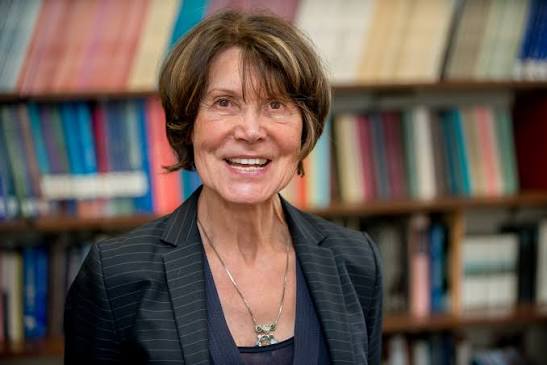
Knorr Cetina is interested in dissertations having to do with finance and markets, science, and information, and globalization and post-social theory, that is attempts to theorize the role of (material, epistemic, consumer, artificial) objects in social life. Current dissertation students work, for example, on global debt relief technologies and software systems produced within the framework of international organizations, and on the conception, use and production of social robots in different countries. These students use an ethnographic approach to better understand the theoretical and cultural construction and the various dimensions of the respective domains.
