
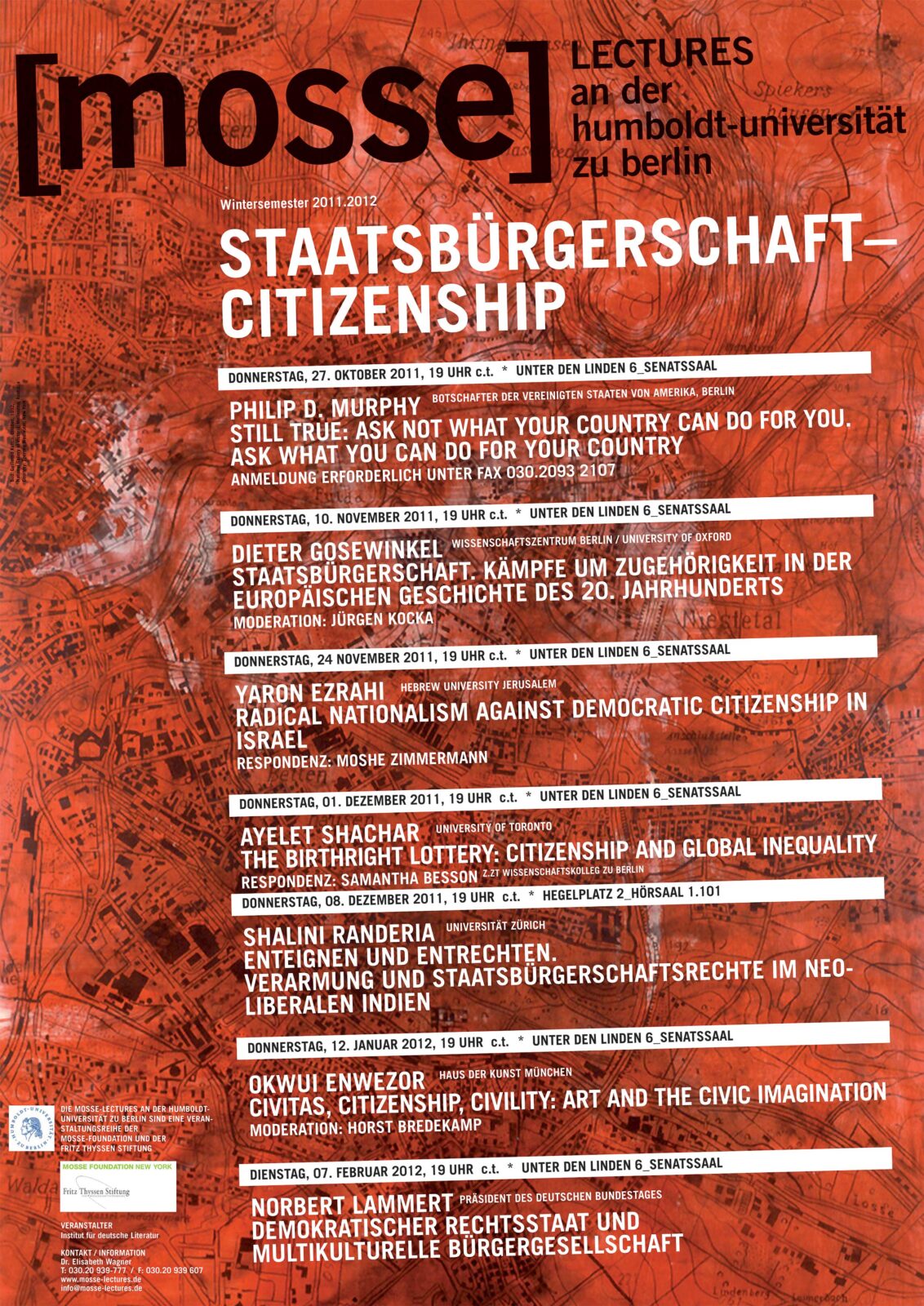
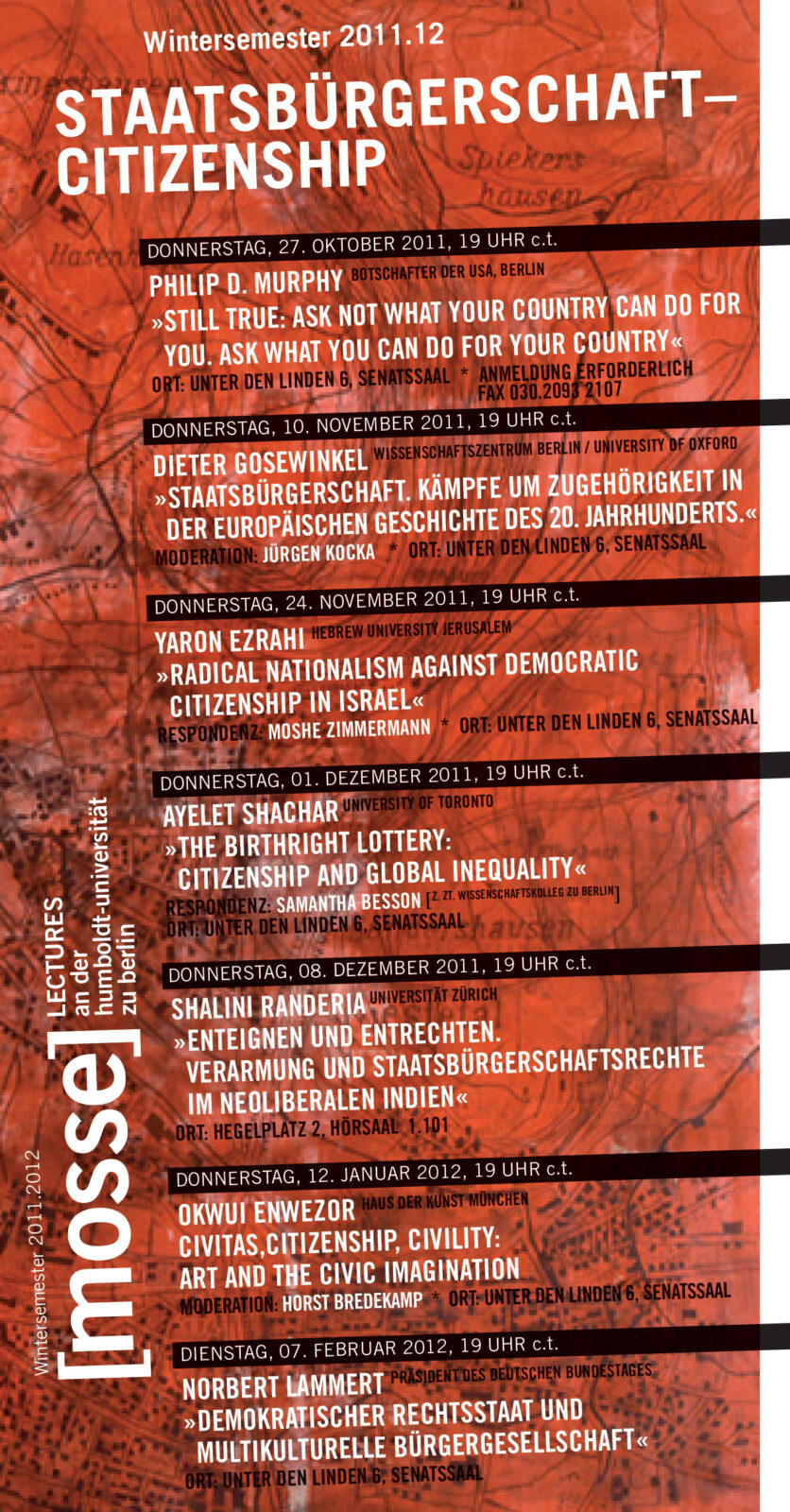
2011: Shalini Randeria, “Enteignen und Entrechten. Verarmung und Staatsbürgerschaftsrechte im neoliberalen Indien” / “Expropriation and Disenfranchisement: Impoverishment and Citizenship Rights in Neoliberal India”
Shalini Randeria, “Enteignen und Entrechten. Verarmung und Staatsbürgerschaftsrechte im neoliberalen Indien” / “Expropriation and Disenfranchisement: Impoverishment and Citizenship Rights in Neoliberal India”
Berlin Mosse Lecture
https://mosselectures.wisc.edu/berlin/
Thursday, 8 December 2011, 19:00 CET
Hörsaal 1.101
Seminargebäude Dorotheenstr. 24
Zugang vom Hegelplatz
10117 Berlin
GERMANY
Sponsored by:
[mosse] LECTURES an der humboldt-universität zu berlin
The Mosse Foundation
Global Mosse Lecture Series
Fritz Thyssen Stiftung
Institut für deutsche Literatur
Humboldt University
Welcome: Jan-Hendrik Olbertz (President of Humboldt University)
Moderator: Ulrike Vedder (Humboldt University)
Lecture Description: Die neue Konstellation von Global Governance umfasst neben dem Staat auch internationale Organisationen, multinationale Konzerne und zivilgesellschaftliche Akteure. Diese Vervielfachung von Akteuren und Arenen einer globalen Ordnungs- und Strukturpolitik hat ambivalente Auswirkungen auf die Bürgerrechte. Denn sie geht sowohl mit einer zunehmenden Transnationalisierung von Recht und Politik als auch mit einer Transformation des Staates selbst einher. Die gegenwärtig stattfindenden Prozesse der partiellen Transnationalisierung und Privatisierung des Staates verwässern die Verantwortlichkeit und Rechenschaftspflicht des Staates gegenüber seinen Bürgerinnen und Bürgern. Angehörige von Staaten, die von der Weltbank und dem Internationalen Währungsfonds Kredite empfangen haben, sind in besonderer Weise mit diesem Wandel demokratischer Partizipationsmöglichkeiten konfrontiert. Wenn mächtige sub- und supranationale nicht-staatliche Akteure die Politik gestalten, verschiebt sich oft der öffentliche Protest von der politischen Bühne auf staatliche Gerichte und internationale Gremien, um Entscheidungen juristisch anzufechten mangels politischen Mitspracherecht. Basierend auf langjähriger Forschung in Indien wird der Vortrag einigen dieser Verschiebungen zwischen öffentlich und privat, national und international, Politik und Recht nachgehen. Es werden sowohl ihre Folgen für demokratische Entscheidungsprozesse erörtert als auch Probleme der überlappenden Souveränitäten und der Fragmentierung von Bürgerrechten thematisiert.
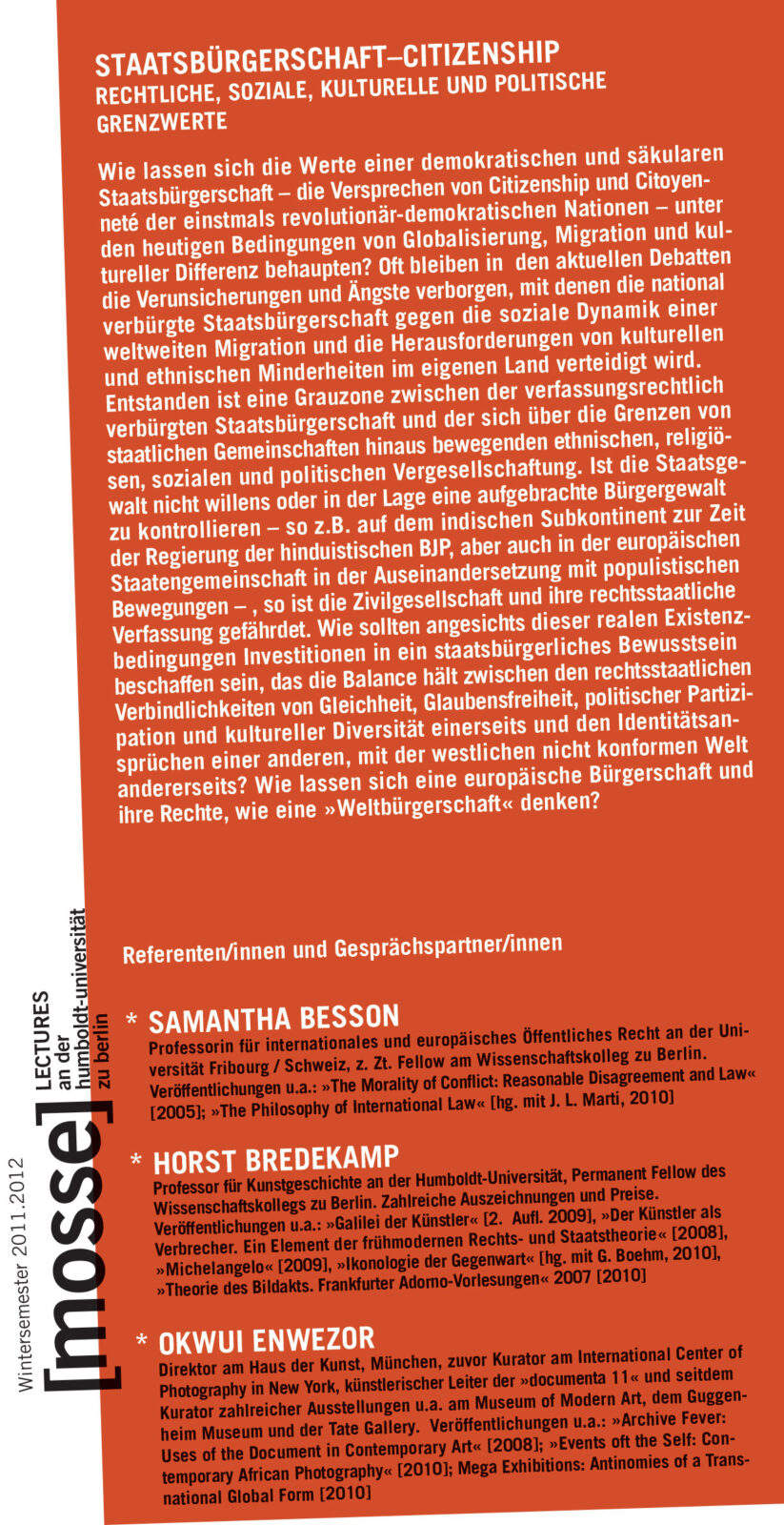
Lecture Series Description: Citizenship and Citoyenneté were a promise of the emerging revolutionary and democrat-ic nation states. How can such ideas and values be kept alive today under the conditions of globalization, migration and cultural difference? In the present debates feelings of uncertainty and anxiety arise in the attempt to defend the consent of citizenship against the dynamics of migration and the aspirations of cultural and ethnic minorities. A grey area has developed between citizenship granted by the constitution and the process of socialization beyond the limits of ethnic, religious, social, and political communities. State power and civilian violence – on the Indian subcontinent under the BJP government, but also within the European community – endanger civil society and its rights of the constitution. Facing these realities, what measures are necessary to make the general public aware of the rights and wrongs of granting citizenship, balancing the commitment of equality, religious freedom, political participation and cultural diversity on the one hand, and the different claims of identity from a world not conforming with western standards on the other? How should we conceive of a European citizenship and its rights, and imagine a »citizenship of the world«?
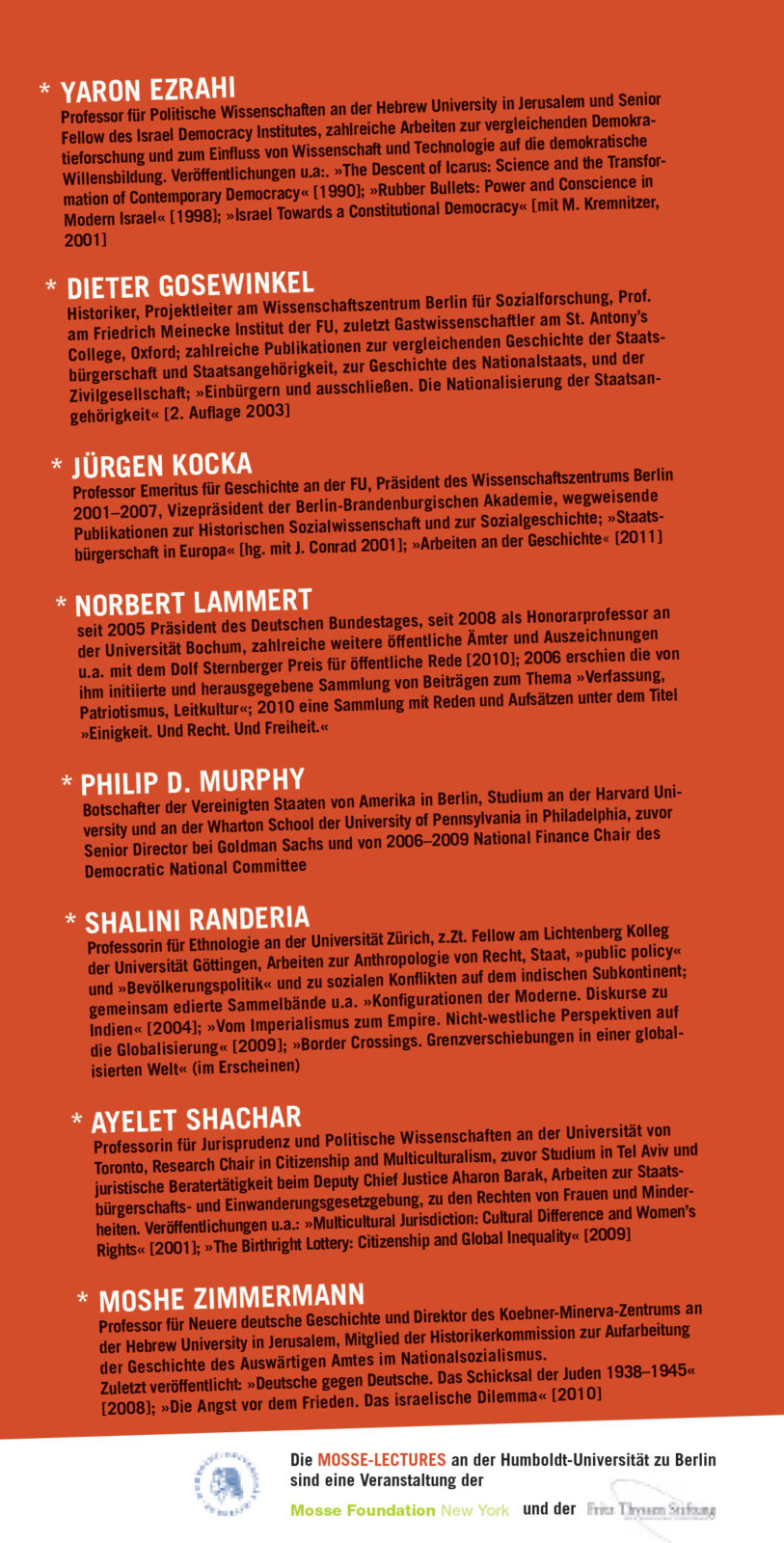
Shalini Randeria ist Professorin für Ethnologie an der Universität Zürich, z.Zt. Fellow am Lichtenberg Kolleg der Universität Göttingen, Arbeiten zur Anthropologie von Recht, Staat, public policy und Bevölkerungspolitik und zu sozialen Konflikten auf dem indischen Subkontinent; gemeinsam edierte Sammelbände u.a. Jenseits des Eurozentrismus. Postkoloniale Perspektiven in den Geschichts- und Kulturwissenschaften (2002); Worlds on the Move: Globalization, Migration and Cultural Security (2004); Konfigurationen der Moderne. Diskurse zu Indien (2004); Vom Imperialismus zum Empire. Nicht-westliche Perspektiven auf die Globalisierung (2009); Border Crossings. Grenzverschiebungen in einer globalisierten Welt (im Erscheinen).
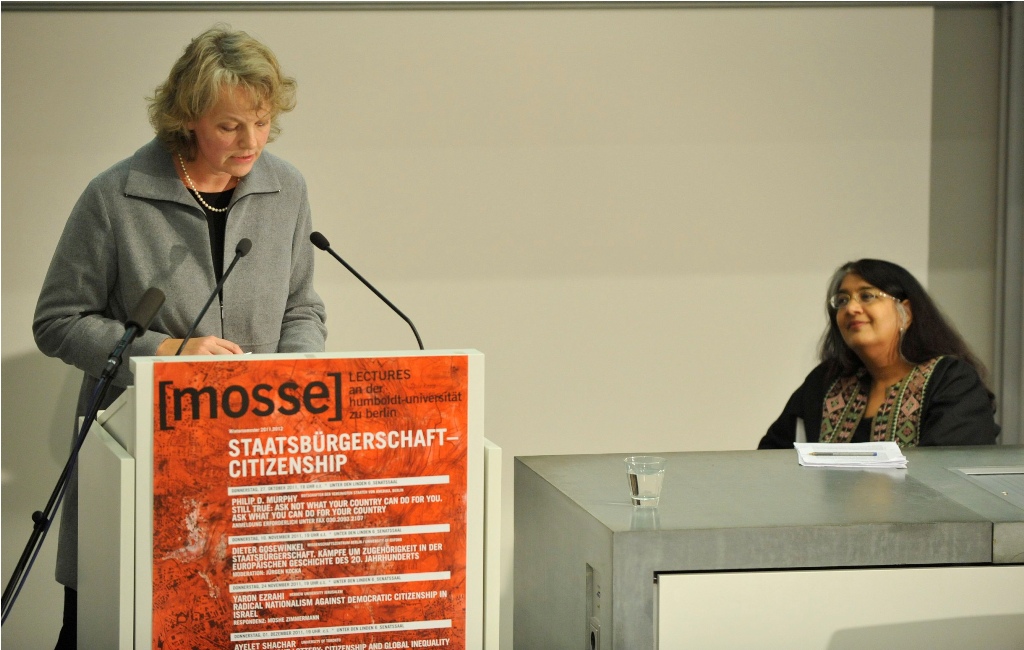
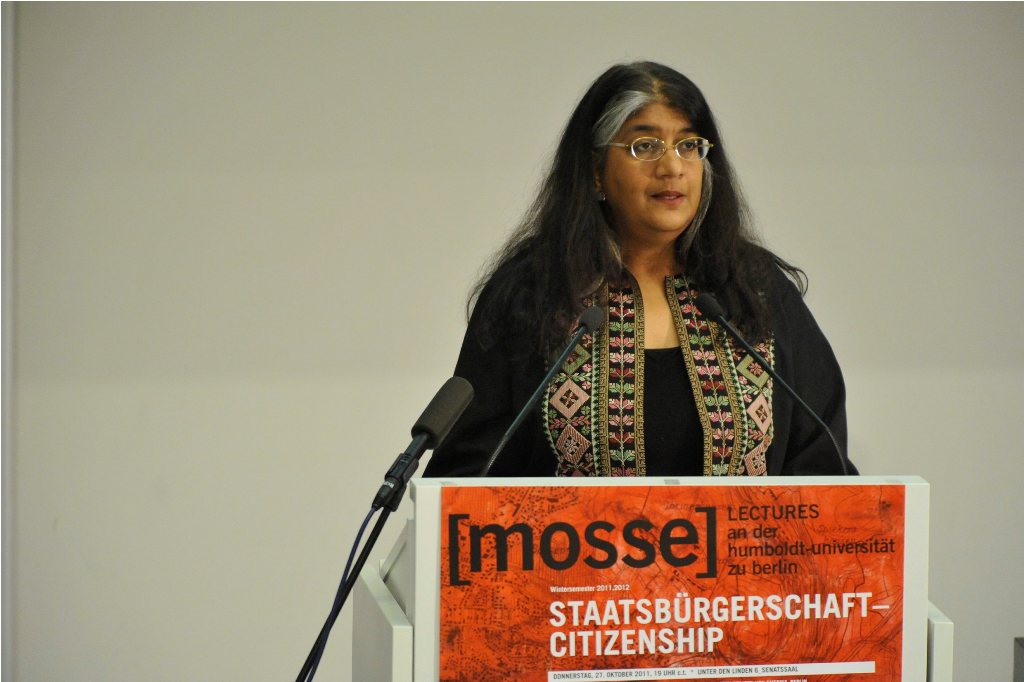
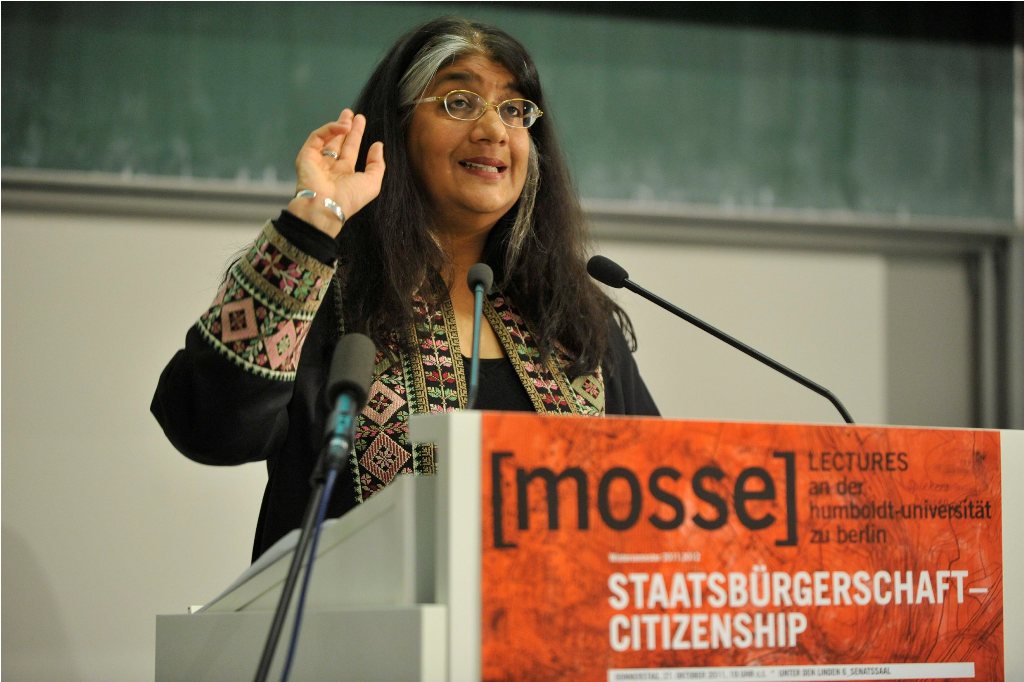
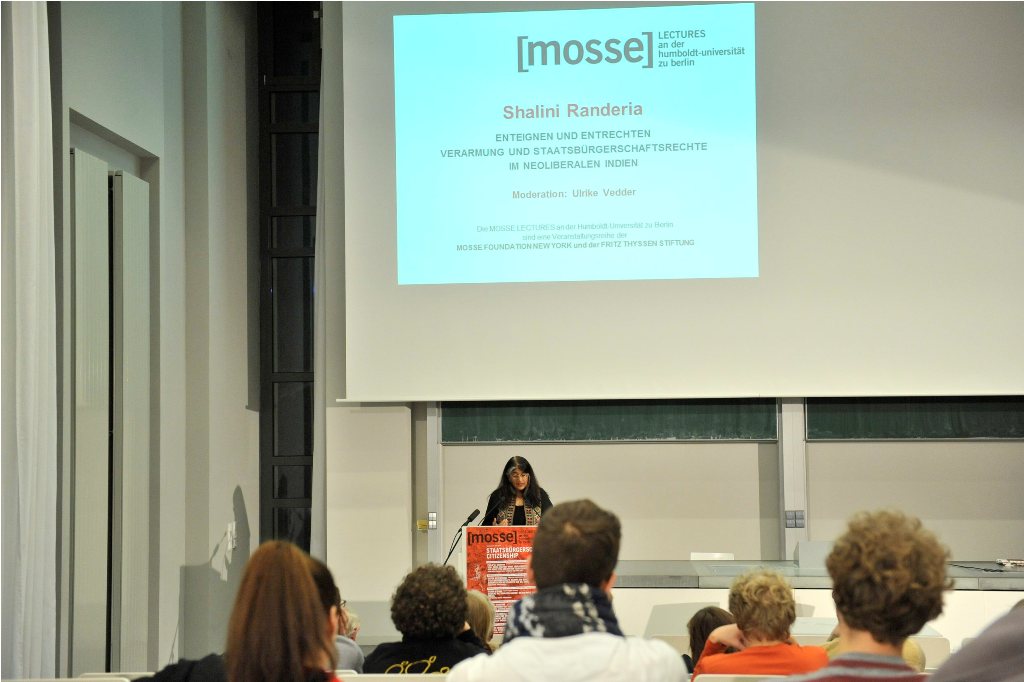
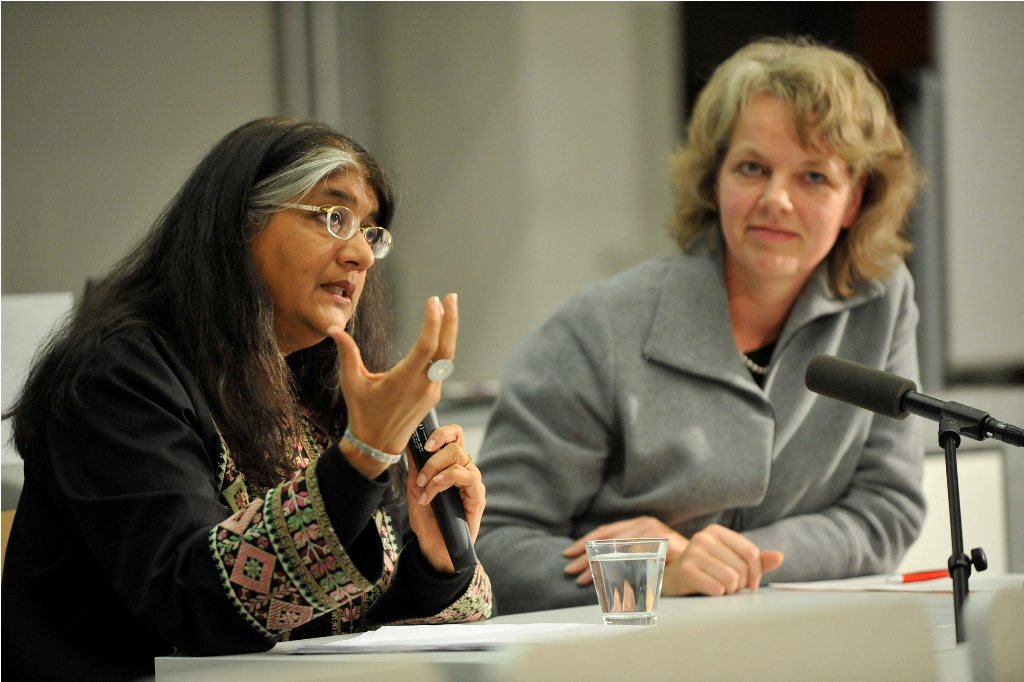
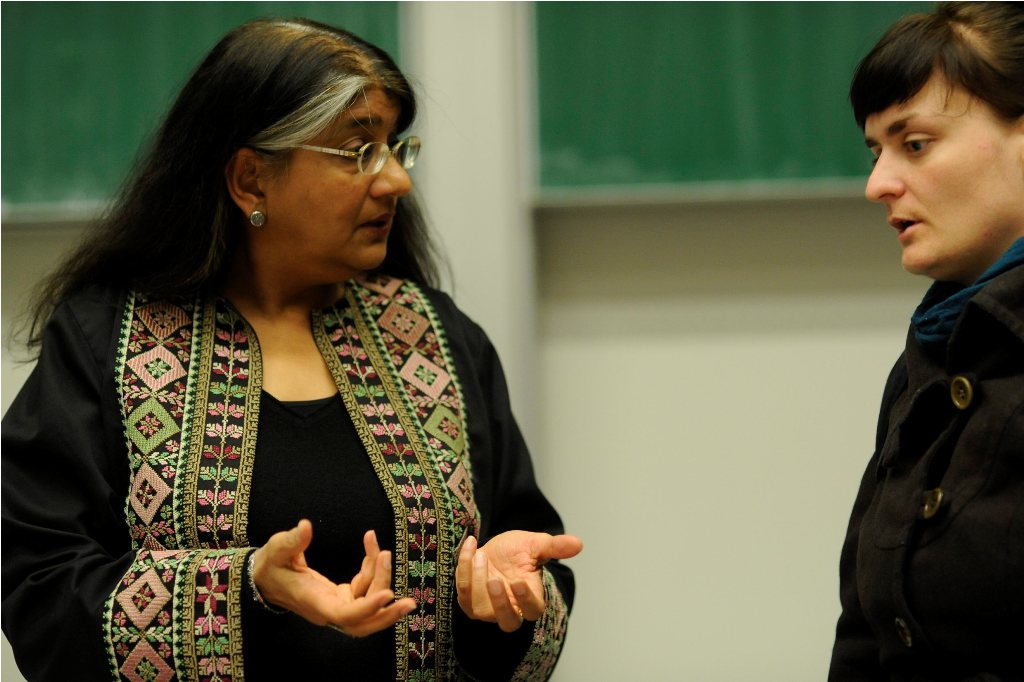
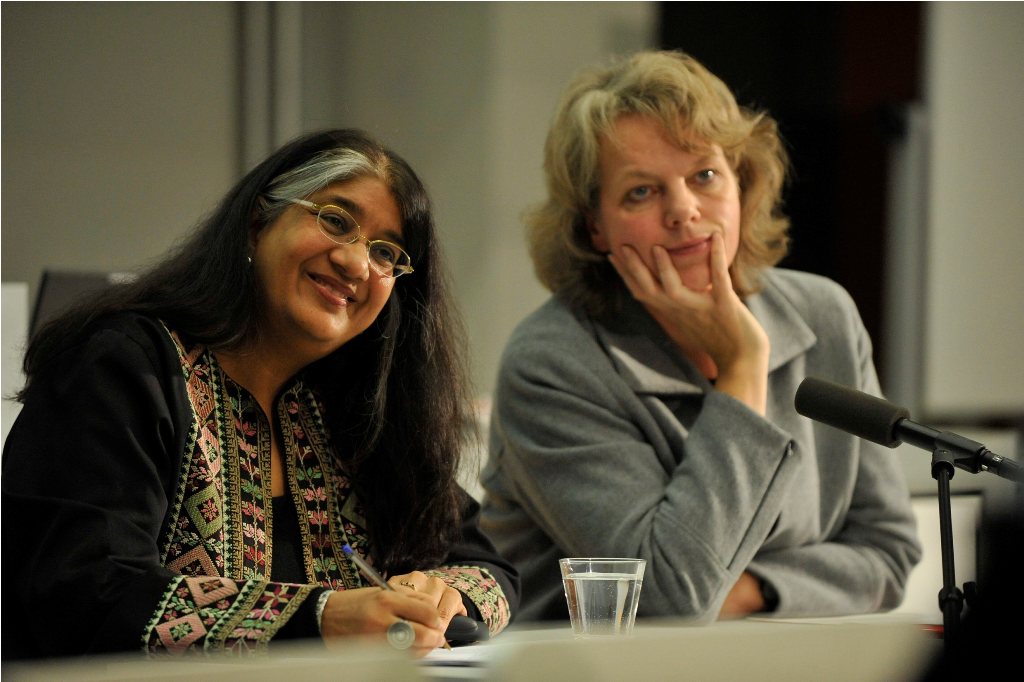
Photo Credit: Niels Leiser for the Mosse Lectures
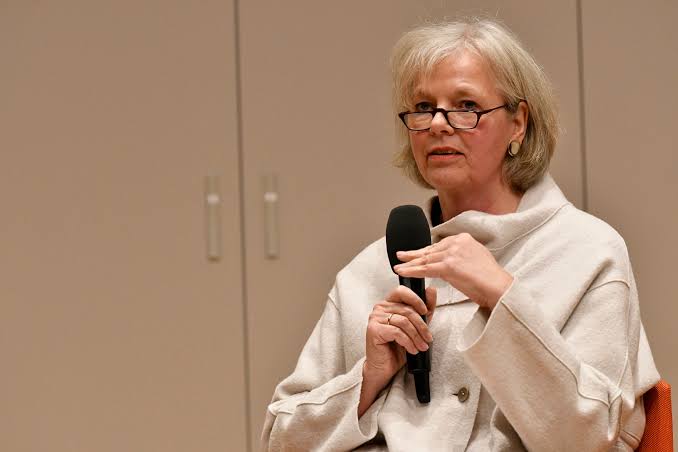
Her research focuses on literature and material culture (museum narratives, literary thing culture, poetics of collecting); literary and cultural history of genealogy, generation, heritage; gender studies in literary studies; narratives of liminality (death narratives, coma, old age, dementia, care, poetics of the afterlife).
She is part of the interdisciplinary project team of „Liminality and Transfer“ (funded by the Einstein Foundation Berlin, 2023-2027) and the Collège doctoral „Littérature et savoirs, XVIe – XXIe siècles“ (in cooperation with Sorbonne nouvelle).
