2025: Jeffrey Schneider, “Uniform Fantasies: Soldiers, Sex, and Queer Emancipation in Imperial Germany”
Jeffrey Schneider, “Uniform Fantasies: Soldiers, Sex, and Queer Emancipation in Imperial Germany“
College of Charleston Mosse Lecture
https://mosselectures.wisc.edu/charleston/
Wednesday, 19 March 2025, 15:00 CST
ZOOM
Chair: Chad S.A. Gibbs (College of Charleston)
Comment: Ervin Malakaj (University of British Columbia)
Sponsored by:
Global Mosse Lecture Series
George L. Mosse Program in History
The Mosse Foundation
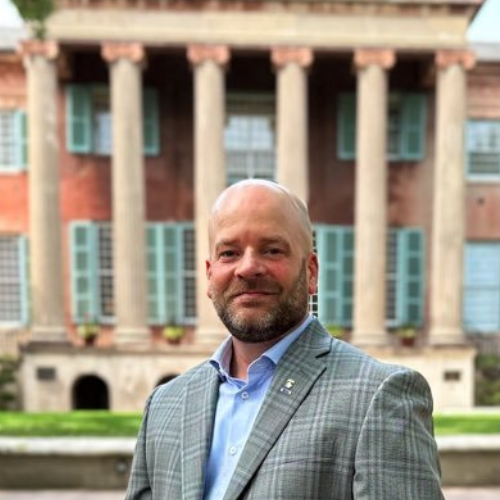
Zucker/Goldberg Center for Holocaust Studies at the College of Charleston
UW–Madison Department of History
UW–Madison Center for German & European Studies
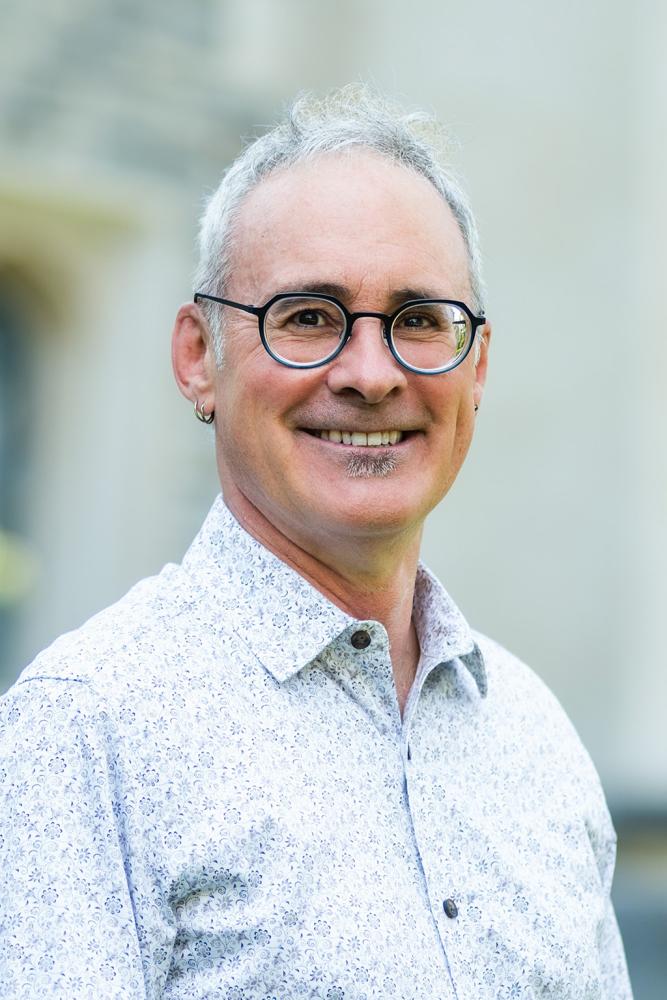
Like his research activities, Jeffrey Schneider’s teaching interests are diverse. In addition to teaching all levels of German language as well as German-language literature and culture from 1750 to today, he offers courses in English on Marx, Nietzsche, Freud. He also regularly teaches a first-year writing seminar (Sex Before, During and After the Nazis) as well as courses in international studies and feminist and queer studies.
In addition to his teaching and research, Professor Schneider also serves as the faculty director of affirmative action in the office of equal opportunity and affirmative action/Title IX and chairs the committee on inclusion and equity. Outside of Vassar, he is a cofounding member of End the New Jim Crow Action Network (ENJAN) in Poughkeepsie, a local community organization that fights mass incarceration and racism in the criminal legal system. In that capacity he also supervises Vassar students interested in community-engaged learning opportunities with ENJAN and its court watching program.
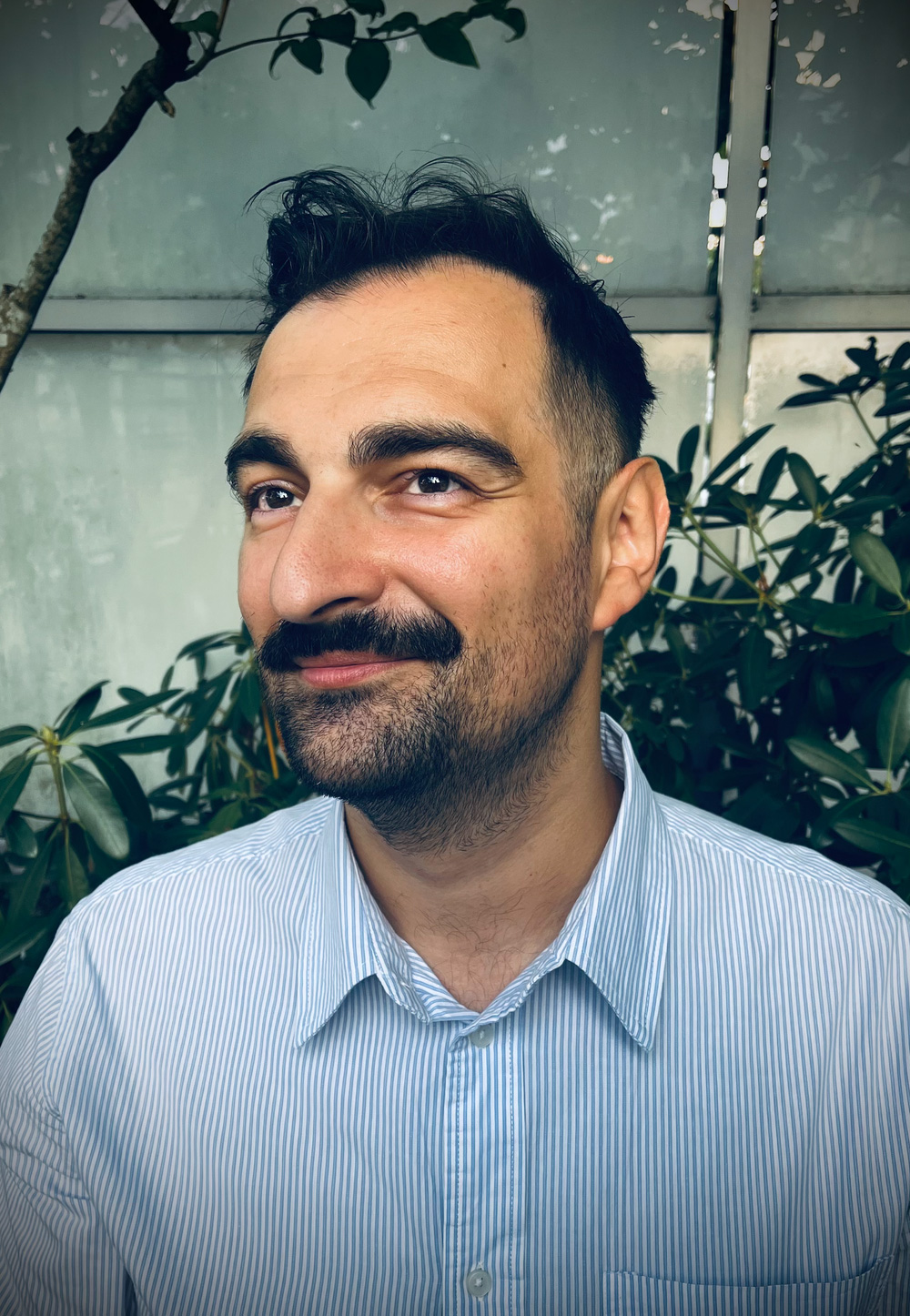
Dr. Malakaj’s first book, Anders als die Andern (McGill-Queen’s University Press, 2023), concerns the aesthetics of mourning at the core of Richard Oswald’s infamous early queer melodrama. The monograph is part of Dr. Malakaj’s broader research arc concerning pre-1933 queer German cultural practice, which also includes a monograph in progress on early queer media theory and occult cultural practice tentatively titled Divinatory Cultural Techniques: Queer Media Engagement, 1900–1933.
Dr. Malakaj’s work on literary studies draws on queer theory, narrative theory, and book history in order to examine the influence of fluctuating literary markets on authorial agency and narrative form. Here, he recently completed a book manuscript provisionally titled Fragile Poetics: Precarity and Literary Form in Early Wilhelmine Germany (under review).
Following the publication of a personal essay on living with trauma, Dr. Malakaj began writing a book of essays provisionally titled, Tetka Theory: A Queer Life in the Bosnian Diaspora. The book theorizes tentative epistemologies as vital resource for navigating life in the queer Bosnian diaspora. Once completed, the book will mark the starting point for a long-term research project on the aesthetic practices of the queer Balkan diaspora.
In 2016, Dr. Malakaj co-founded the international scholarly collective “Diversity, Decolonialization, and the German Curriculum” (DDGC) and is member of its steering committee. Together with Regine Criser (University of North Carolina, Asheville) he co-edited the volume Diversity and Decolonization in German Studies (2020, Palgrave). Dr. Malakaj also serves as a co-editor of DDGC’s official blog and is part of a number of DDGC initiatives, including the DDGC Mutual Aid Network.
At UBC, Dr. Malakaj collaborates with students on initiatives to enhance UBC’s intellectual cultures for undergraduate German studies. In this regard, he helped develop Augenblick: A Journal for Undergraduate German Studies and the annual German Studies Undergraduate Research Showcase. The latter is a collaboration between the undergraduate German Studies programs at UBC, the University of Victoria, and the University of Washington.
Dr. Malakaj serves on the editorial boards for Studies in Twentieth and Twenty-First Century Literature, Feminist German Studies, and the Women, Gender and Sexuality in German Literature and Culture series.