
2020: Ute Frevert, “Edler Zorn und Wut im Bauch. Historische Metamorphosen” / “Noble Anger and Anger in the Stomach: Historical Metamorphoses”
Ute Frevert, “Edler Zorn und Wut im Bauch. Historische Metamorphosen” / “Noble Anger and Anger in the Stomach: Historical Metamorphoses”
Humboldt University Berlin Mosse Lecture
mosselectures.wisc.edu/berlin/
Thursday, 3 December 2020, 19:15 CET


Senatssaal of Humboldt University
Unter den Linden 6
1. Stock
10117 Berlin
GERMANY
Sponsored by:
[mosse] LECTURES an der humboldt-universität zu berlin
The Mosse Foundation
Global Mosse Lecture Series
Friedrich Stiftung
Institut für deutsche Literatur
Humboldt University
Moderator: Michael Kämper-van den Boogaart (Humboldt University)
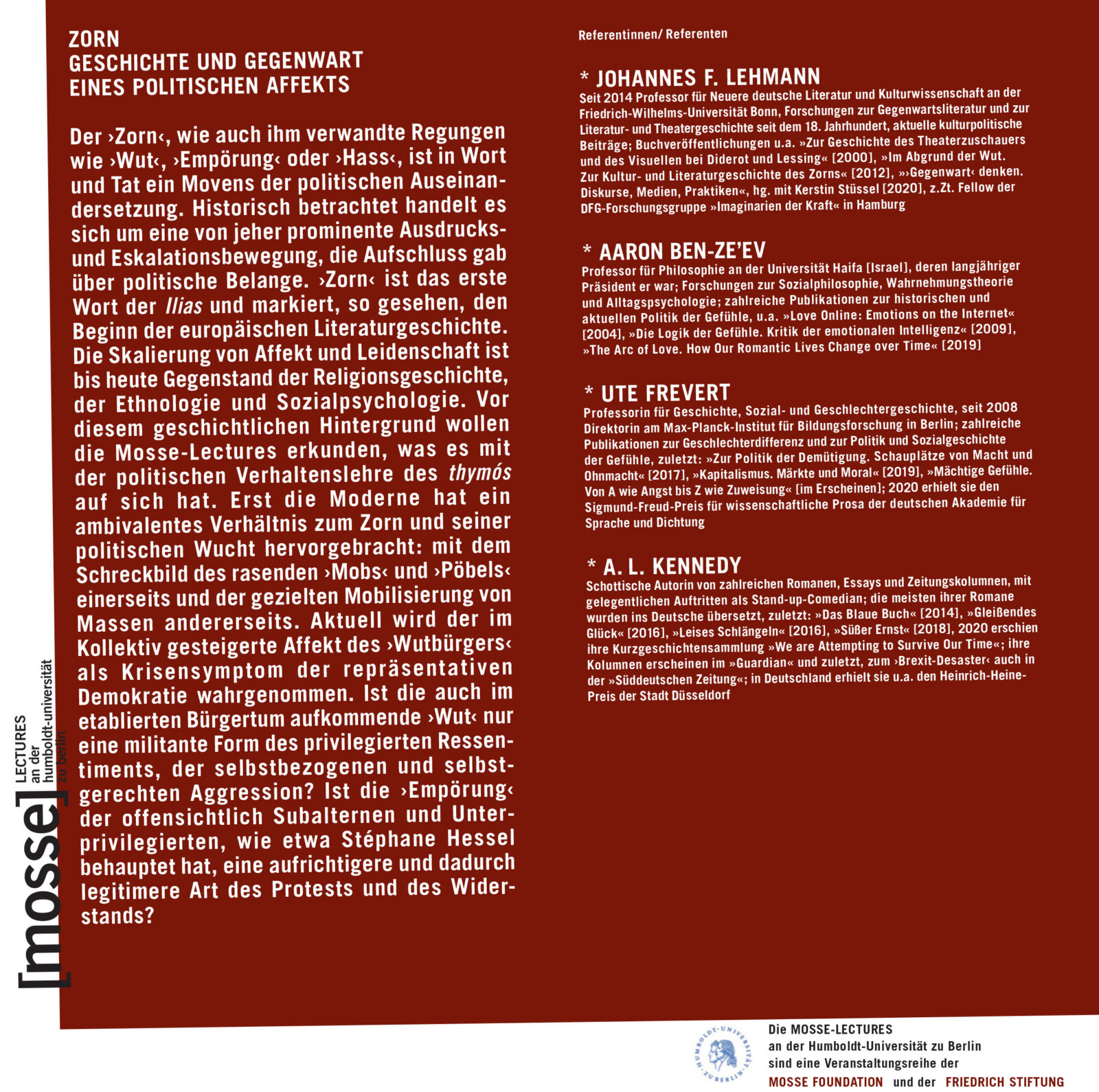
Lecture Description: Der Vortrag analysiert die semantischen Verschiebungen von Zorn und Wut, vor allem mit Blick auf das 20. und frühe 21. Jahrhundert. Er fragt nach den sozialen Standorten dieser Gefühle und nach ihrem Verhältnis zur Demokratie. Wer darf sich Zorn – oder Wut – leisten, wer nicht? Welche Wut gilt als akzeptabel und unter welchen historischen Umständen?
Lecture Series Theme: Zorn: Geschichte und Gegenwart eines politischen Affekts/Anger: History and Presence of a political affect
Lecture Series Description: Der ‚Zorn‘, wie auch ihm verwandte Regungen wie ‚Wut‘, ‚Empörung‘ oder ‚Hass‘, ist in Wort und Tat ein Movens der politischen Auseinandersetzung. Historisch betrachtet handelt es sich um eine von jeher prominente Ausdrucks- und Eskalationsbewegung, die Aufschluss gab über politische Belange. ‚Zorn‘ ist das erste Wort der „Ilias“ und markiert, so gesehen, den Beginn der europäischen Literaturgeschichte. Die Skalierung von Affekt und Leidenschaft ist bis heute Gegenstand der Religionsgeschichte, der Ethnologie und Sozialpsychologie. Vor diesem affektgeschichtlichen Hintergrund wollen die Mosse-Lectures erkunden, was es mit der politischen Verhaltenslehre des thymós auf sich hat. Erst die Moderne hat ein ambivalentes Verhältnis zum Zorn und seiner politischen Wucht hervorgebracht: mit dem Schreckbild des rasenden ‚Mobs‘ und ‚Pöbels‘ einerseits und der gezielten Mobilisierung von Massen andererseits. Aktuell wird der im Kollektiv gesteigerte Affekt des ‚Wutbürgers‘ als Krisensymptom der repräsentativen Demokratie wahrgenommen. Ist die auch im etablierten Bürgertum aufkommende ‚Wut‘ nur eine militante Form des privilegierten Ressentiments, der selbstbezogenen und selbstgerechten Aggression? Ist die ‚Empörung‘ der offensichtlich Subalternen und Unterprivilegierten, wie etwa Stéphane Hessel behauptet hat, eine aufrichtigere und dadurch legitimere Art des Protests und des Widerstands?
Anger, as similar emotions like wrath, outrage and hate, has become, in word and deed, a driving force of political wrangling. Well known in history, it points to a particular escalation of emotions, ground-breaking in political affairs. Art, religion, anthropology and the law have addressed its particular nature. ‘Anger’ is the very first word of Homer’s “Illiad”, and thus it marks the beginning of European literary history. Time and again Sophocles and Shakespeare in drama, Kleist and Melville in their narratives have explored the connection and the synergetic effects of expression and affect, of sign and emotion. ‘Anger’, is it an affect of divine nature? And why and when does it turn over into metaphysical hatred, into fundamental hostility, or nothing more than resentment, a need of revenge? This significant scaling of affect and passion has been, until today, a prominent issue in the history of religion, in ethnology and social psychology. More recently this feeling, collectively exalted in the reactions of so called ‘angry citizens’ (‘Wutbürger’), has been recognized as a symptom of crisis of the representative democracy, a strong factor in the political game.
Against this background the Mosse-Lectures will explore what is at the core of thymós as a habit of political conduct and action, tracing its tradition and public interest, its recent populist drive, termed “anger marketing” (“Zorngeschäft”) by Peter Sloterdijk. As a part of the arcanain the classical art of governing, the ruling class well calculated emotional control rather than a control system for possible public anger. It is only in modernity that an ambivalent attitude to the political affect of anger and its collective force emerged: spreading horror images of a raging mob on the one hand, deliberately mobilizing the masses on the other. This seems to be even more true these days as it remains debatable what shape of the affect may serve what kind of political concept. Wrath and rage also breakthrough in the established middle class. Is this a resentment of the privileged, militantly self-centered, aggressively self-righteous? And how about Stéphane Hessel’s claim, that anger, the outrage of those obviously underprivileged (the subalterns, the disadvantaged) has to be considered as a more honest, justified and therefore more legitimate kind of protest and resistance?
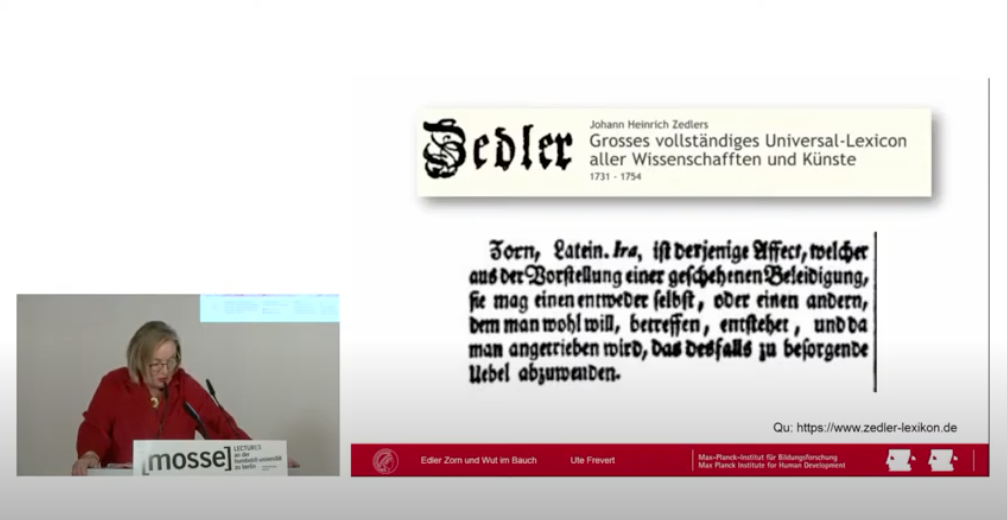
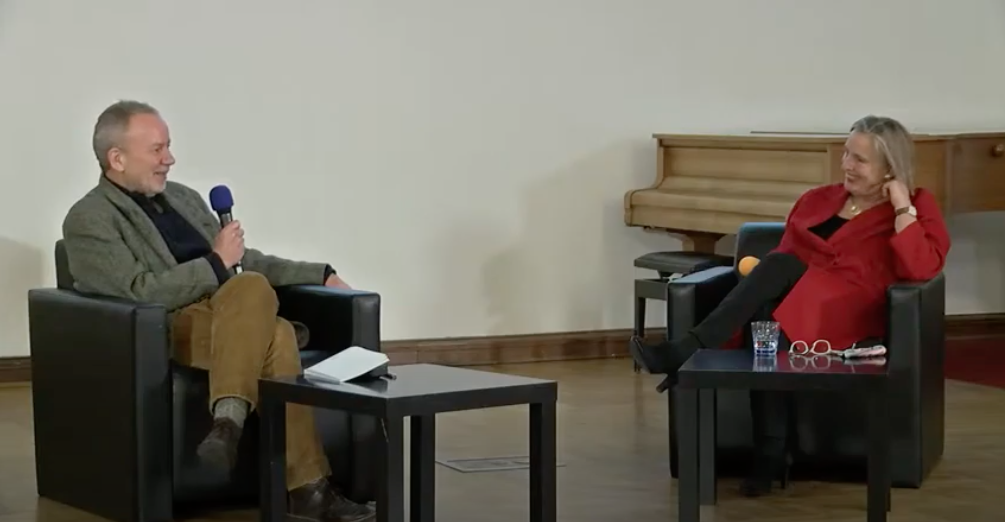
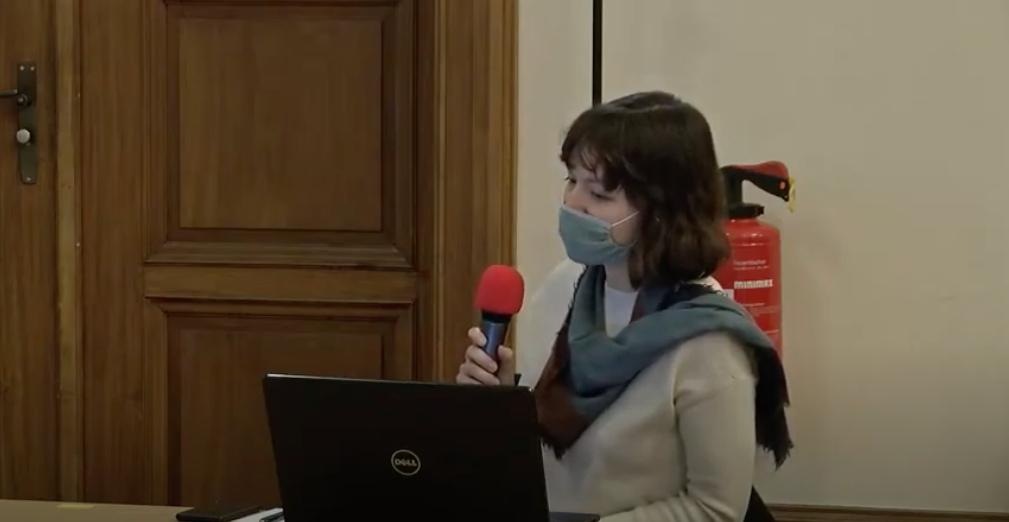
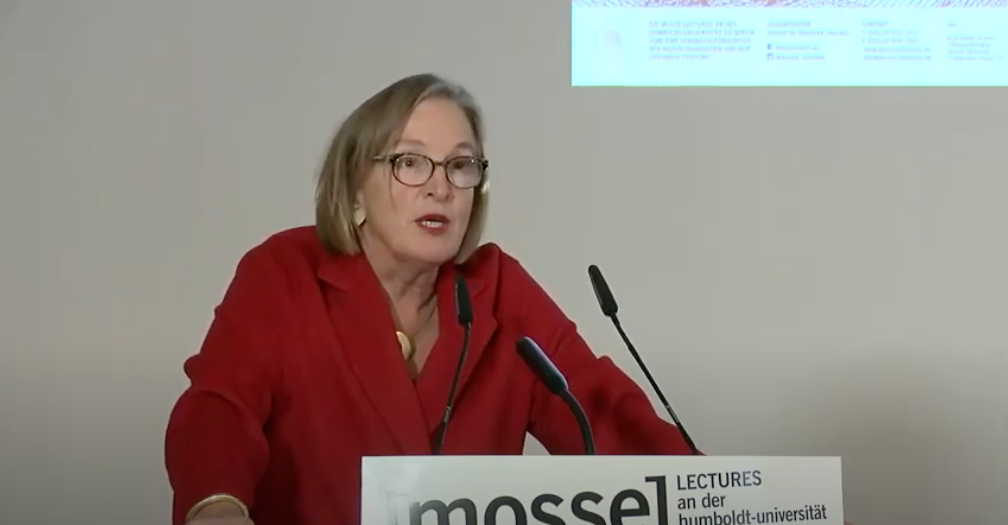
Ute Frevert: Ute Frevert is a German historian who studies modern German cultural and social history. She has been the Director of the Max Planck Institute for Human Development, Berlin, since 2008. She has taught at Yale University, the University of Bielefeld, and several other institutions of higher education. Her most recent book is Writing the History of Emotions: Concepts and Practices, Economies and Politics (Bloomsbury, 2024).
Michael Kämper-van den Boogaart studied German and history, and taught at several schools before earning his PhD in 1990 from the University of Hamburg. In 2002, he was named professor of education and modern German literature at Humboldt University, Berlin, where, in 2011, he was elected vice president for Education and Teaching. He retired in 2023. He specializes in German language pedagogy, the history of education, and the history of 20th-century German literature. His many publications include Ästhetik des Scheiterns. Studien zu Erzähltexten von Botho Strauß, Jürgen Theobaldy, Uwe Timm u.a. (1992) and Thomas Mann für die Schule. Volk und Wissen (2001).
