
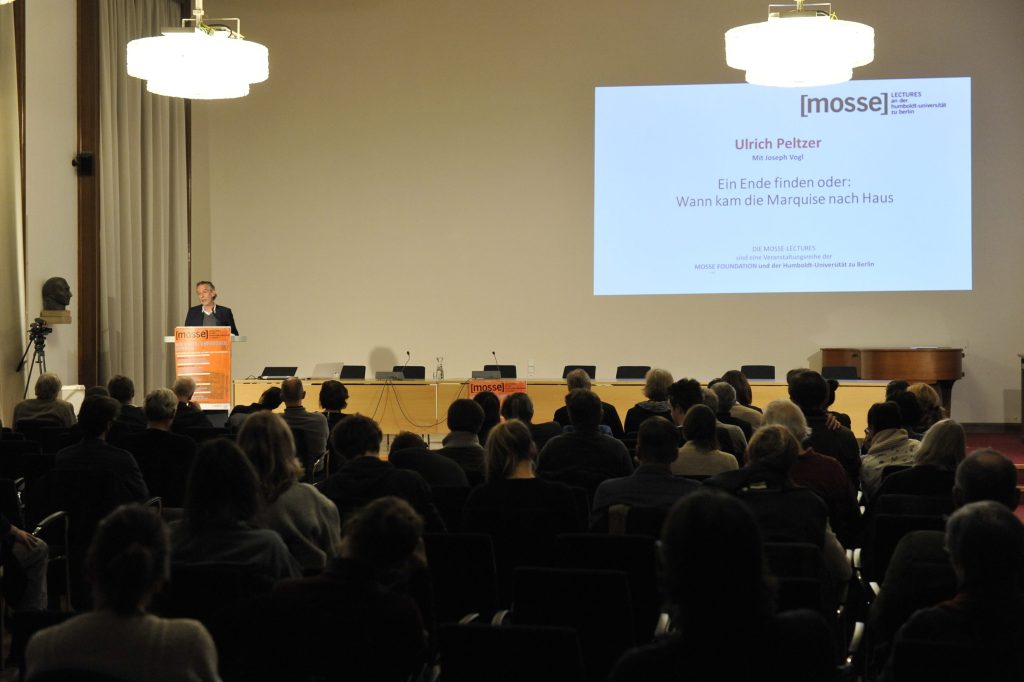
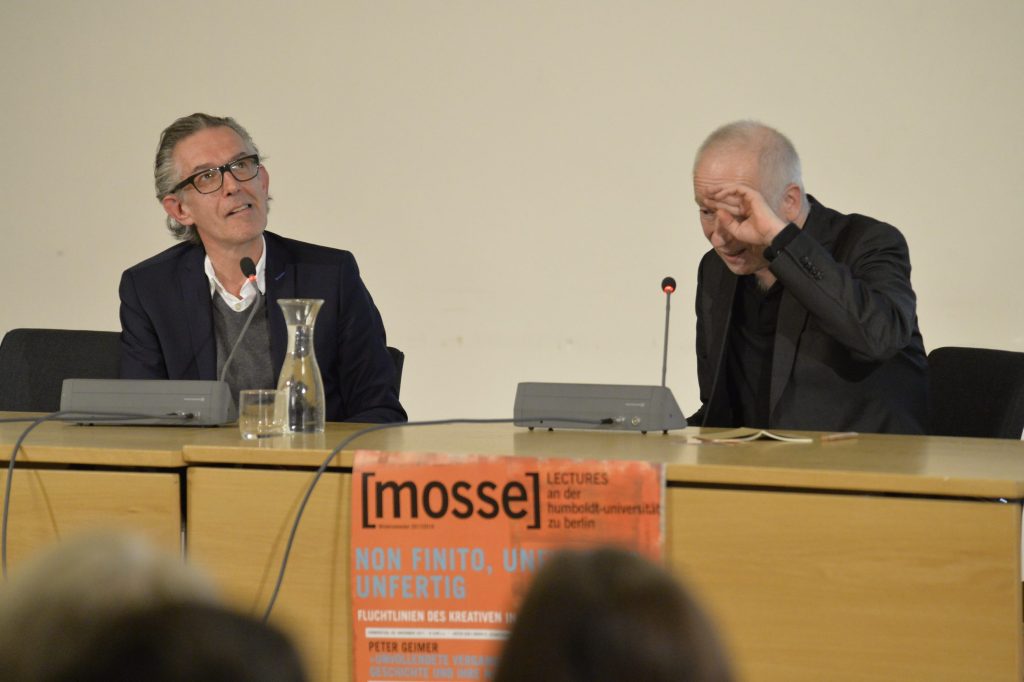
2017: Ulrich Peltzer, “Ein Ende finden oder: Wann kam die Marquise nach Haus” / “Finding an End Or: When Did the Marquise Come Home”
Ulrich Peltzer, “Ein Ende finden oder: Wann kam die Marquise nach Haus” / “Finding an End Or: When Did the Marquise Come Home”
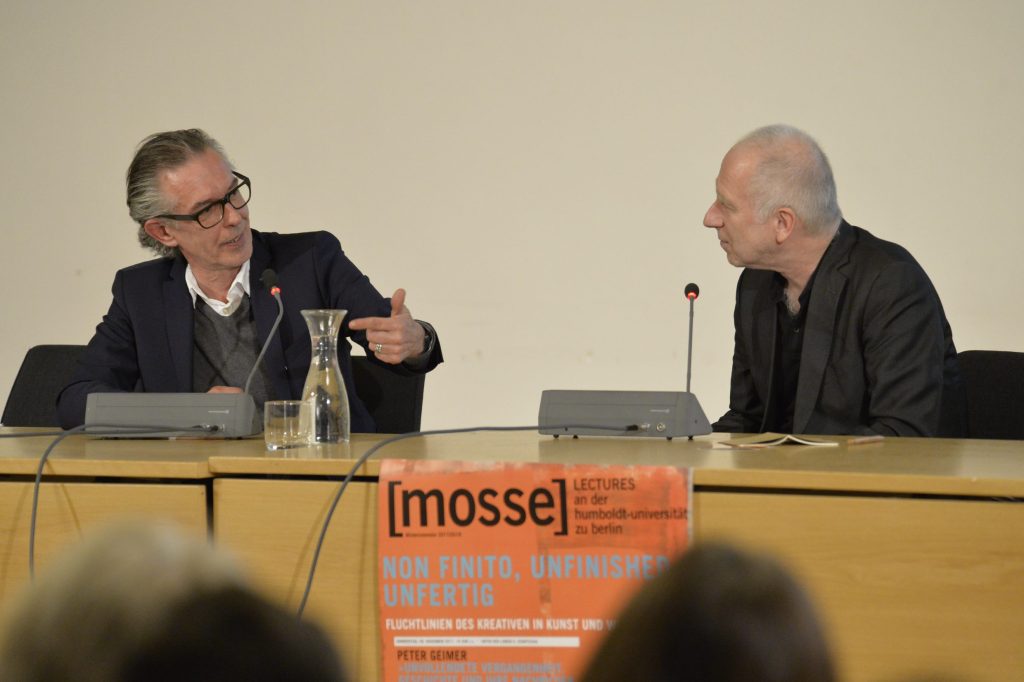
Berlin Mosse Lecture
https://mosselectures.wisc.edu/berlin/
Thursday, 7 December 2017, 19:00 CET
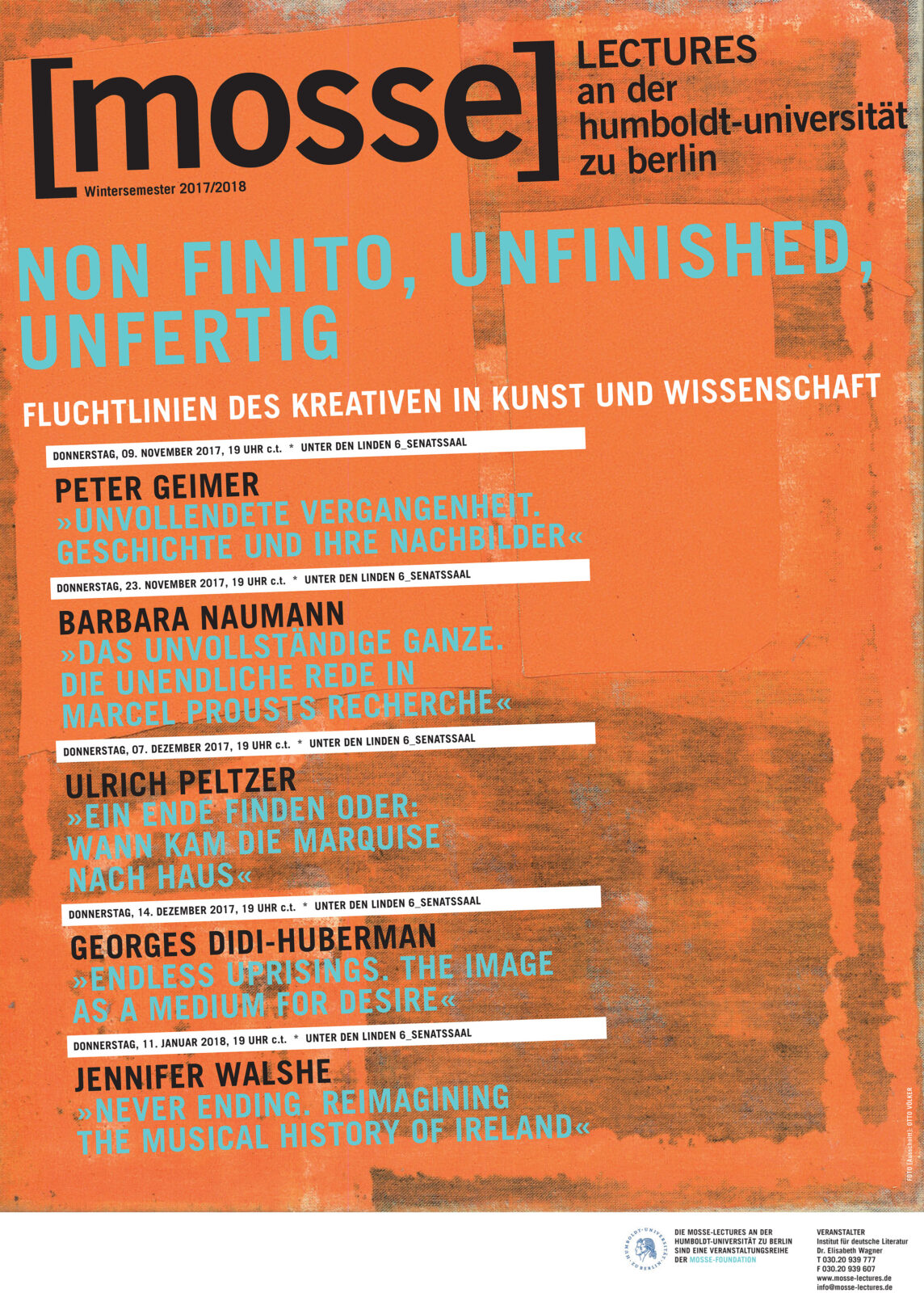
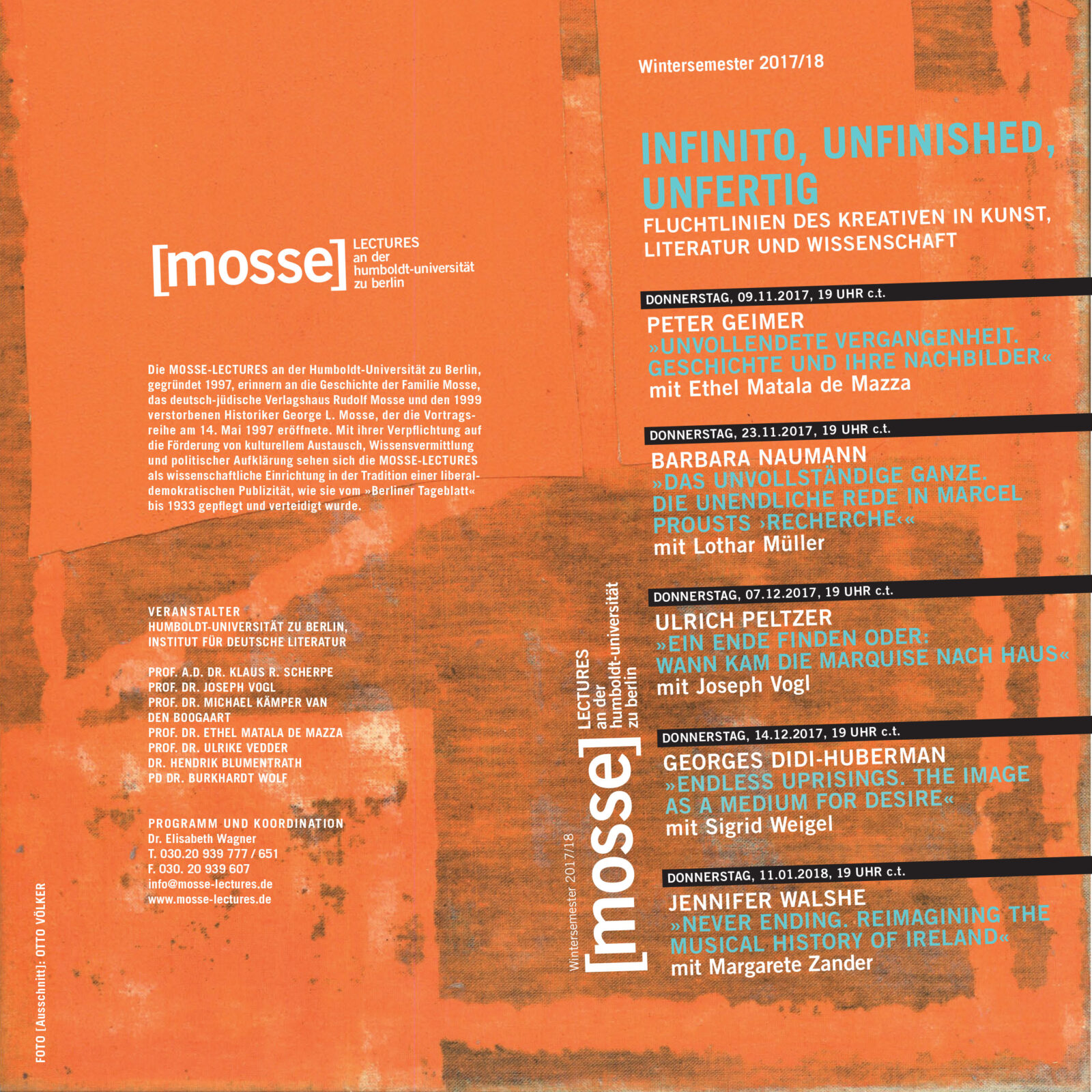
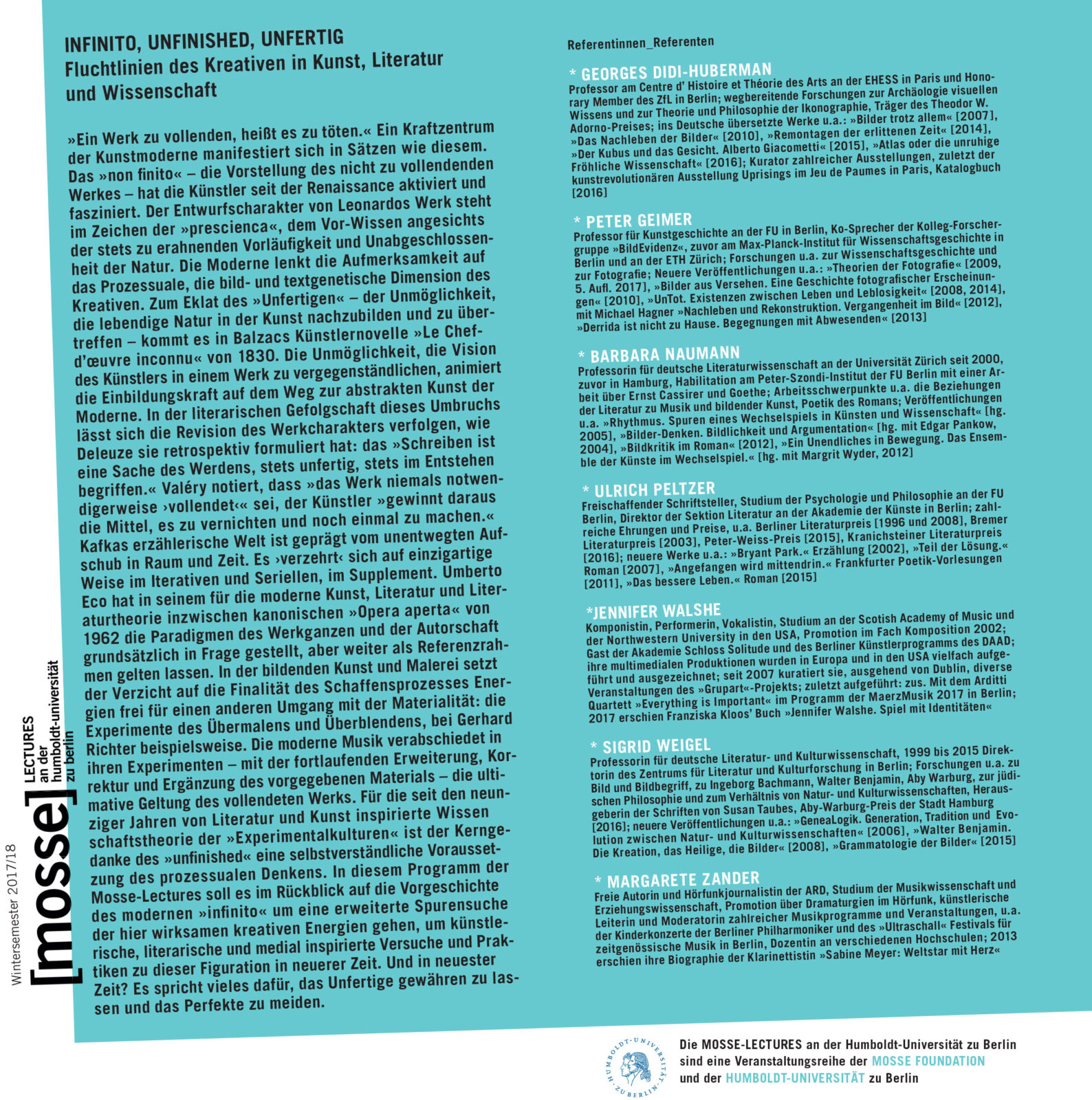
Senatssaal of Humboldt University
Unter den Linden 6
1. Stock
10117 Berlin
GERMANY
Sponsored by:
[mosse] LECTURES an der humboldt-universität zu berlin
The Mosse Foundation
Global Mosse Lecture Series
Institut für deutsche Literatur
Humboldt University
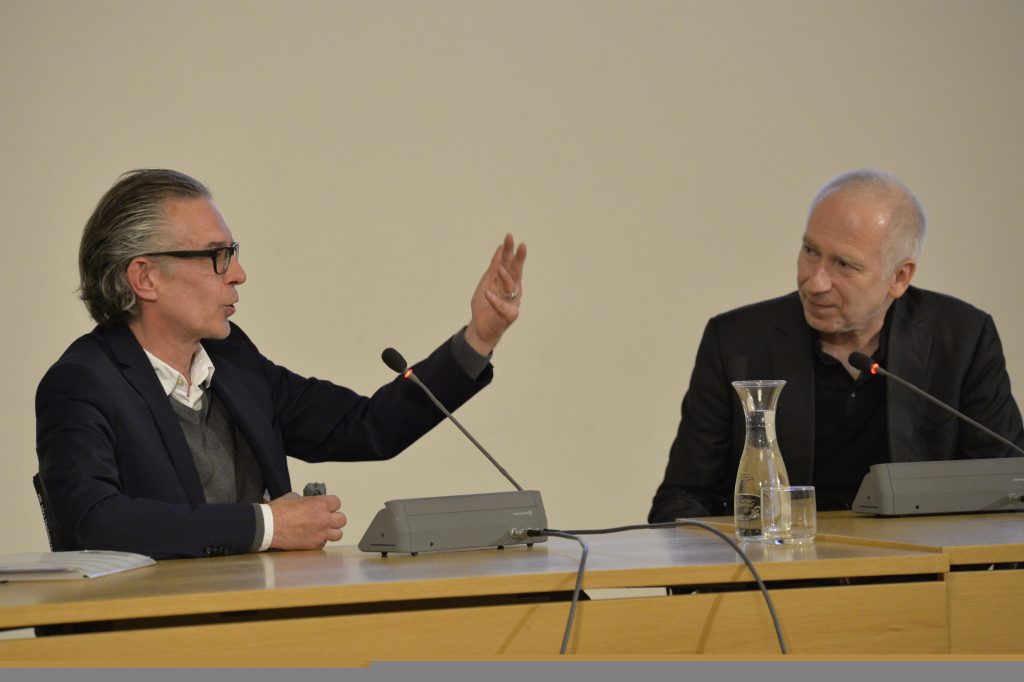
Moderator: Joseph Vogl (Humboldt University)
Lecture Description: streit lässt sich bereits an der Werkgenese beobachten: Proust schrieb den Anfang und den Schluss des Romans zuerst. Er setzte mit der „wiedergefundenen Zeit“ einen meta-physischen Rahmen, um dann die EDie lecture beginnt mit benjamins diktum vom werk als der totenmaske der konzeption (was ich für falsch halte), bewegt sich über die frage des anfangs (wenn man schon keine ausgearbeitete konzeption hat) und probleme von struktur und komposition zum ende des/eines werkes hin, darum kreisend, wie sich poetologische überlegungen in einem text verkörpern, ohne diesen text zu dominieren oder gar zu prädestinieren; und warum der autor, der im übrigen fest daran glaubt, dass die welt erzählbar sei, ihrer unabgeschlossenheit zum trotz, im bewusstsein, nie fertig werden zu können, aber alles mögliche zu und auf einem bestimmten feld von figuren gesagt (und notwendigerweise ausgelassen) zu haben, den roman als akt des widerstand gegen die zumutungen der gegenwart, der buchstäblich letzte satz. gegen alles konzeptionelle, jede finalität. vollendung ohne vollendet zu sein, das macht den schluss jeden buches aus, das mir wichtig ist.
Lecture Series Description: “To complete a work means to kill it.” Manifestos of modern art have their center of energy in such sayings. The non finito – the idea of a work not to be completed – has fascinated artists since the Renaissance. The prospective design of Leonardo’s work acknowledges prescienza: the provisional and unfinished nature of creative work. In modernity process becomes dominant, thus emphasizing the genetic production of texts and images, all the way to the dissolution of the medium of representation itself. The scandal of the unfinished – the sheer impossibility to reproduce and surpass living nature in a work of art – erupts in Balzac’s “Le Chef-d’oeuvre inconnu”, published in 1830. The impossibility to fully materialize the artist’s vision can further be traced in the concept of aesthetic autonomy as it leads to modernist abstraction. In literature, too, we can observe how the original concept of the work as a whole is revised, when Deleuze states retrospectively: “writing is a thing of becoming, always unfinished, always in the making.” Valéry has noted that “by necessity, the work can never be completed”; the writer thus “gains a means to destroy it and make it anew.” Kafka’s narrative world is shaped by a permanent deferral in time and space; it ‘consumes’ itself in its modes of iteration, seriality, and supplementation. In his “Opera aperta” of 1962, canonical by now in literature, literary criticism and art studies, Umberto Eco has questioned the paradigms of authorship and the work as a whole, though still accepting them as an inevitable frame of reference. As the visual arts renounce the finality of the creative process, energies are set free to deal with materiality differently: the cross media experiments of overpainting and superimposing. In their experiments of extending, supplementing and revising the musical material, composers have dismissed the previous validity of completion. In recent times, software supported computer art has explored new ways of unlimited. Since the nineties, the theory of science, creatively inspired by art and literature, has privileged so called “experimental cultures”, where the notion of the unfinished is front and center. This set of Mosse-Lectures will review the past history of the non finito, and search for marks and signs of the unfinished in present day cultural production. We hope to trace and probe the creative energies of this configuration in practical artistic work and in theory.
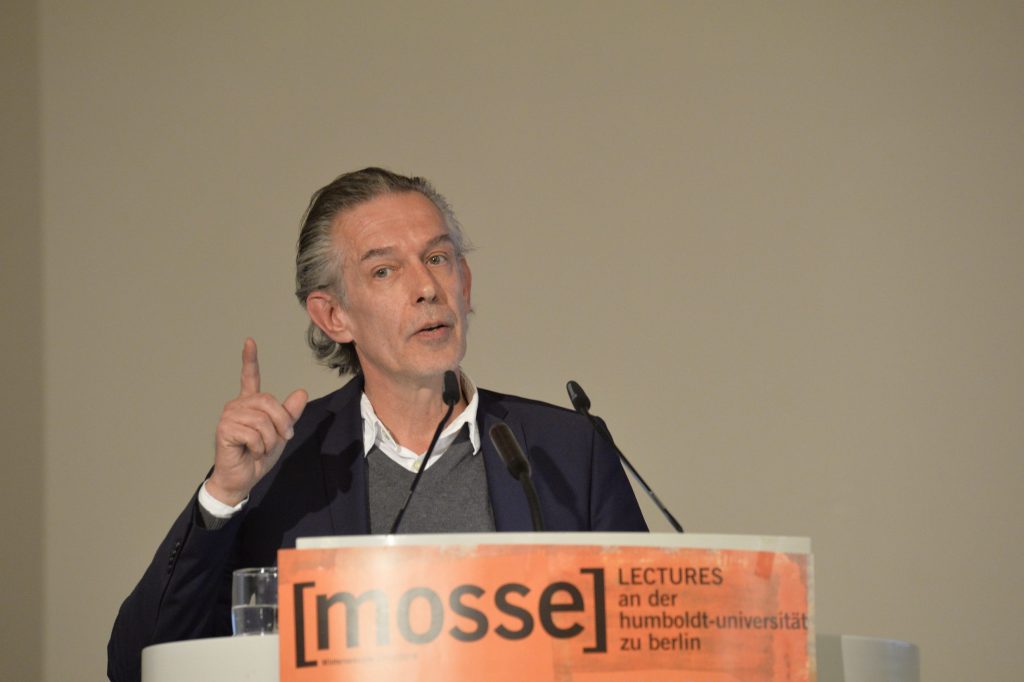
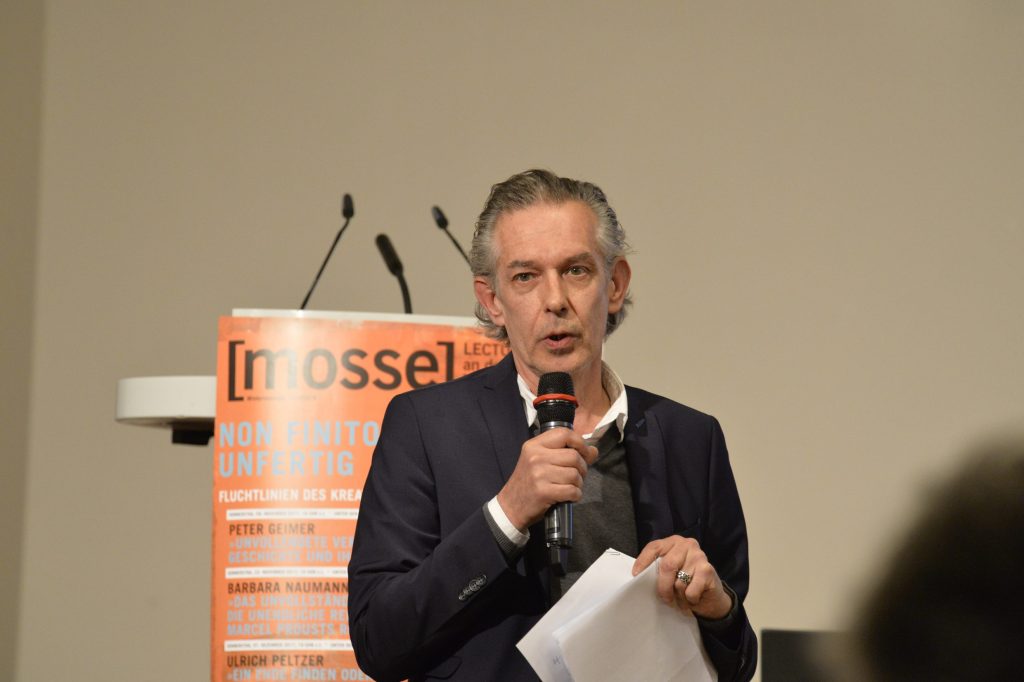
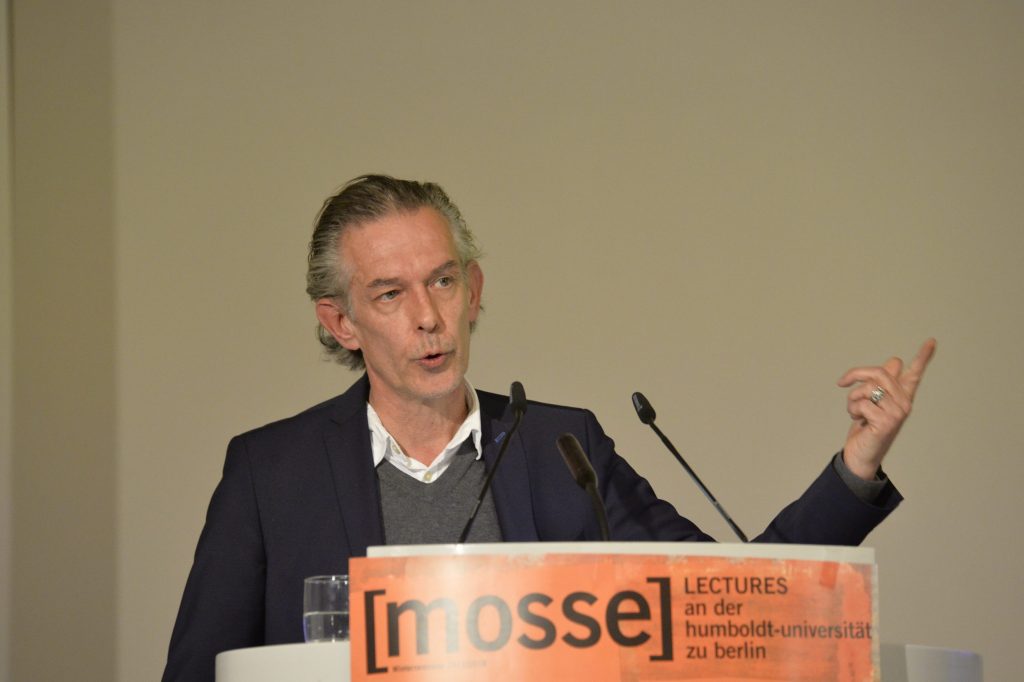
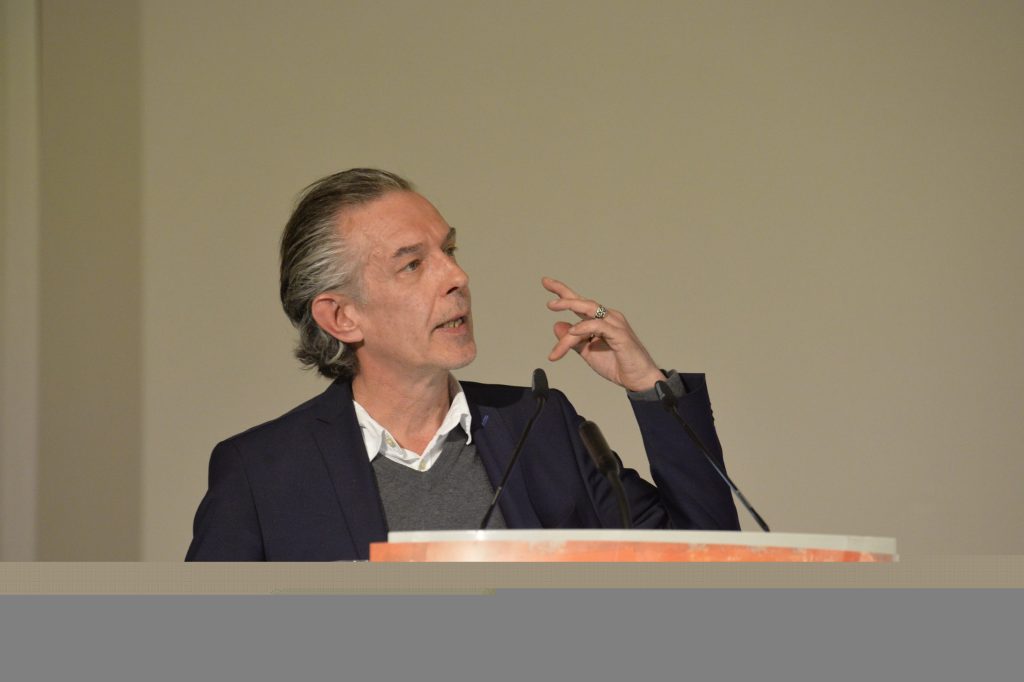
Ulrich Peltzer: Ulrich Peltzer is an award-winning German novelist known for his stream-of-consciousness style. His novels include Teil der Lösung and Das bessere Leben. Ulrich Peltzer ist freischaffender Schriftsteller in Berlin, Studium der Psychologie und Philosophie an der FU, seit 2015 Direktor der Sektion Literatur an der Akademie der Künste. Roman-Veröffentlichungen u. a.: Stefan Martinez (1995), Aller oder keiner (1999), Bryant Park (2002), Teil der Lösung (2007), Frankfurter Poetikvorlesungen Angefangen wird mittendrin (2011), zahlreiche Preise und Ehrungen u.a. mit dem Literaturpreis der Stadt Bremen, dem Berliner Literaturpreis und dem Heinrich-Böll-Preis, zuletzt erschien der Roman Das bessere Leben, der u.a. mit dem Peter-Weiss-Preis ausgezeichnet wurde.
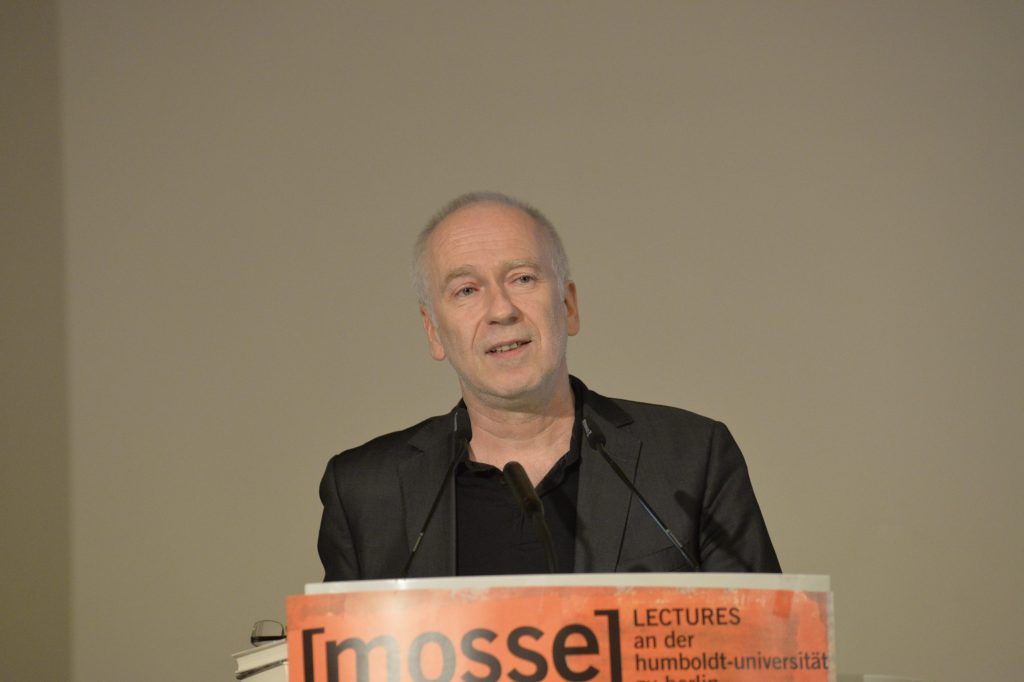
His research and teaching comprises literature from the eighteenth to the twentieth century, media and aesthetics, cultural and political theory. Recent research focuses on the history of financial economy, literature and economics, and the “poetics of knowledge” – the study of the relationships and interactions between forms of knowledge and poetic or aesthetic figures. He is the director or principal investigator of a range of research projects including “The Knowledge of Literature” (PhD-Net), “Small Forms in the History of Literature and Sciences” (Research Training Group), and “Matters of Activity: Image Space Material” (Cluster of Excellence).
Joseph Vogl published more than a hundred articles and book chapters, as well as numerous books and monographs. Among his most important written works are the monographs Ort der Gewalt. Kafkas literarische Ethik (1990); Kalkül und Leidenschaft. Poetik des ökonomischen Menschen (2002); Über das Zaudern (2007; On Tarrying, 2011). Besides his research in literature, cultural and media studies, he is well known for his intensive work on modern and present-day finance and economics, analyzing finance theories from the perspective of cultural history. This work culminated in his books Das Gespenst des Kapitals (2010; The Specter of Capital, 2014), Der Souveränitätseffekt (2015; The Ascendancy of Finance, 2017) and Kapital und Ressentiment. Eine kurze Theorie der Gegenwart (2021; Capital and Ressentiment: A Brief Theory of the Present, 2022), which received wide recognition in the fields of cultural studies as well as economics, and initiated a public debate. Further workings include translations from French to German (Deleuze, Lévi-Strauss, Lyotard) and numerous interviews on TV with Alexander Kluge (see Soll und Haben. Fernsehgespräche, 2009; Senkblei der Geschichten. Gespräche, 2020).
He was awarded the Günther Anders Prize for Critical Thinking (2022). For his book Der Souveränitätseffekt (The Ascendancy of Finance) Vogl was on the shortlist for the Leipzig Book Fair Prize 2015 in the category of non-fiction. In 1988 he received the Translation Prize for the Promotion of Franco-German Relations (DVA Foundation) for his translations of key works of modern French philosophy.
