
2015: Hans Joas, “Ein Christ durch Krieg und Revolution. Alfred Döblins Erzählwerk November 1918” / “A Christian Through War and Revolution: Alfred Döblin’s Short Story ‘November 1918′”
Hans Joas, “Ein Christ durch Krieg und Revolution. Alfred Döblins Erzählwerk November 1918” / “A Christian Through War and Revolution: Alfred Döblin’s Short Story ‘November 1918′”
Berlin Mosse Lecture
https://mosselectures.wisc.edu/berlin/
Thursday, 25 June 2015, 19:00 CET
Senatssaal of Humboldt University
Unter den Linden 6
1. Stock
10117 Berlin
GERMANY
Sponsored by:
[mosse] LECTURES an der humboldt-universität zu berlin
The Mosse Foundation
Global Mosse Lecture Series
Fritz Thyssen Stiftung
Institut für deutsche Literatur
Humboldt University
Moderator: Lothar Müller (Humboldt University)
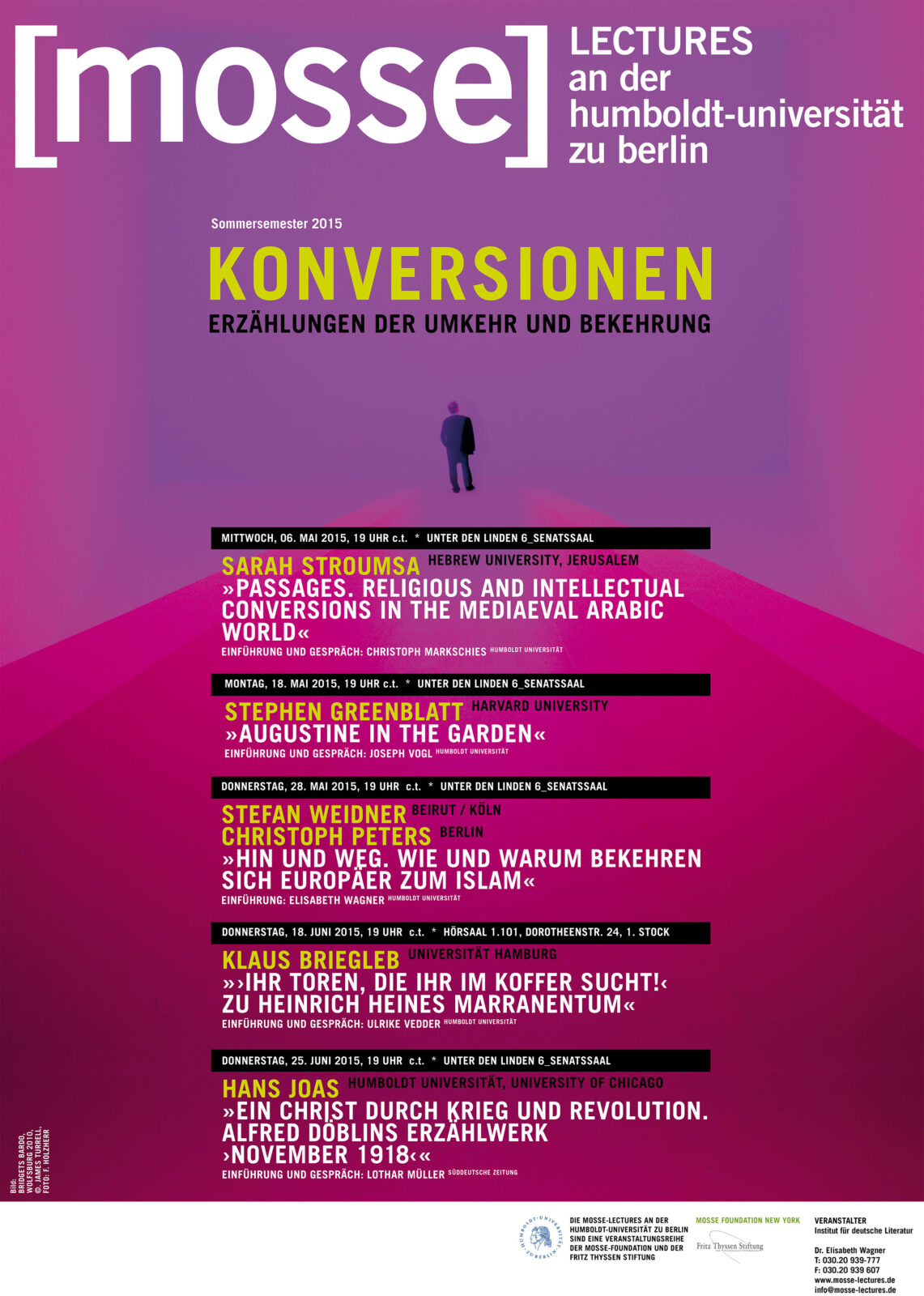
Lecture Description: Im Exil schrieb Alfred Döblin sein mehrbändiges Erzählwerk „November 1918“. In größter Intensität und zeitlicher Konzentration, aber mit einer Vielfalt von Personen und Perspektiven werden darin Erster Weltkrieg und Revolution (vornehmlich in Berlin) zum Thema. Wenn in diesem Vortrag »November 1918« als Buch der Konversionen gedeutet wird, soll die persönliche religiöse Biographie des Autors aber durchaus im Hintergrund bleiben. Wichtiger sind die Konversionsgeschichten im Werk selbst: die eines kriegstraumatisierten Berliner Gymnasial-lehrers, aber auch die von Rosa Luxemburg zur Einsicht in die Unmöglichkeit, durch Gewalt ein irdisches Paradies zu verwirklichen. Der Krieg wird in seinen persönlichkeitsverändernden Wirkungen ebenso erkennbar wie der im Mythos der Revolution steckende Traum von einer neuen Welt. Döblin fragt, wie einer unter diesen geschichtlichen Umständen zum Christen werden kann und wie sich Christen zu diesen Ereignissen hätten stellen müssen.
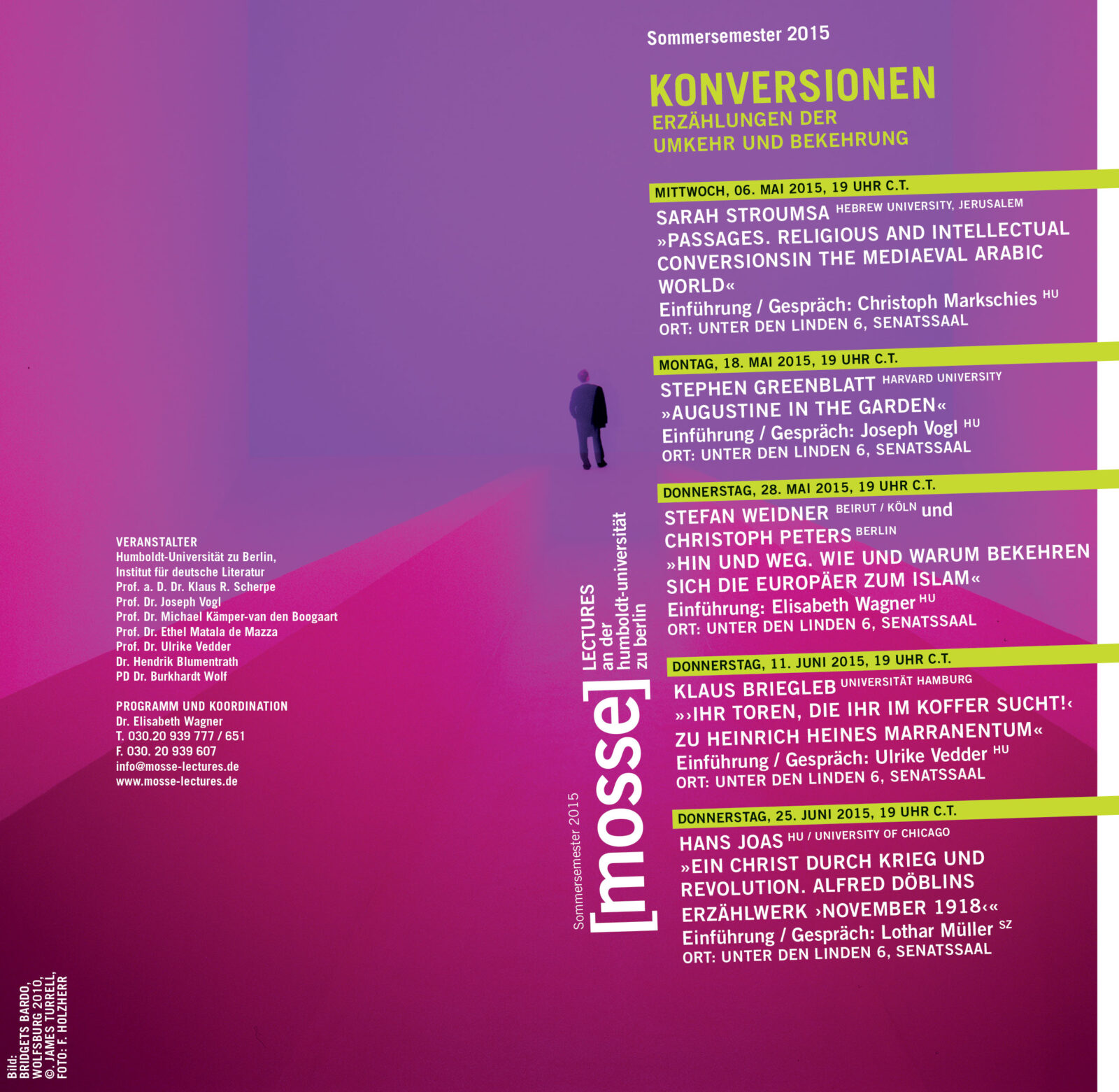
Lecture Series Description: Since the experience of Paulus on the road to Damascus, the profound inspiration that ›things cannot go on this way‹, has been told as individual and spiritual affair, as an evi-dential experience, but also as a narrative of cultural and political change, a transcenden-tal evocation of breakup and outbreak. Radical transition, individual or collective, consti-tutes the symbolical practice and rhetorical strategies of religious, philosophical, political and literary conversion narratives. Since the bitter fate of the conversos, the Jews at the time of the Spanish Reconquista, historical tradition has forced conversions as warning signs of violence and genocide, in modernity the racially, politically und religiously motivated expulsion and annihilation of minorities. How can possibly the radical appeal of confession and conversion be experienced, less dramatic and heroic, when practical everything is ›convertible‹, records of data and information, currencies, languages and identities? In retrospect, referring to the zone of transition, the »becoming otherwise«, the classical examples of a ›blitzconversion‹ might also reveal as a long term, manifold process of transformation, remembering e.g. the implementation of religious symbols, emblems and rites in secular forms. In the autobiographical narrations of conversion we will definitely find traces of the original culture in the text of the newly acquired living. In the program of the Mosse-Lectures the narratives of conversion from Maimonides to Heinrich Heine will be negotiated, as well as the concepts of conversion in the historical writings of religion, political philosophy, literature and anthropology.
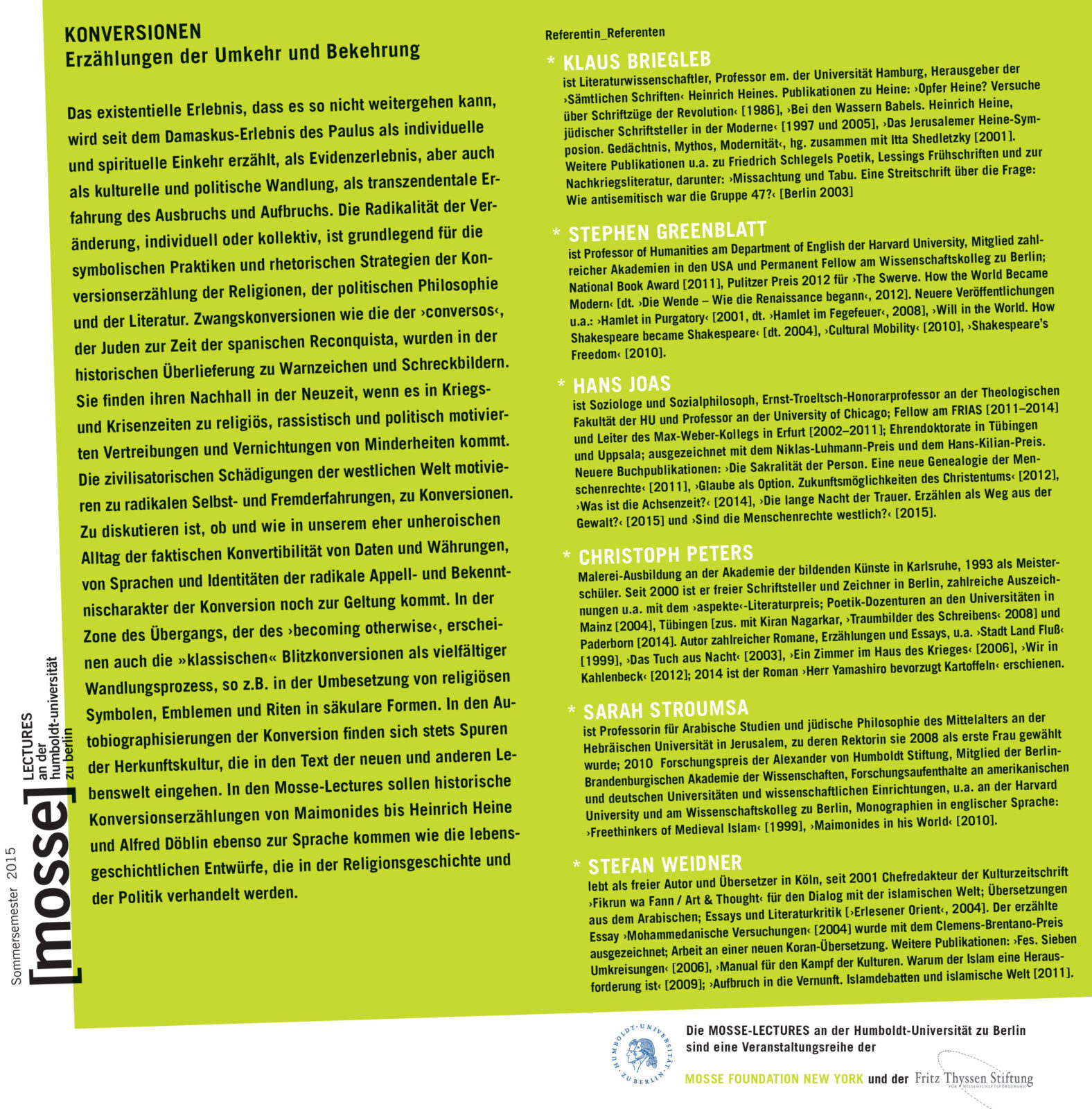
Hans Joas: ist Soziologe und Sozialphilosoph, Ernst-Troeltsch-Honorarprofessor an der Theologischen Fakultät der HU und Professor an der University of Chicago; Fellow am FRIAS (2011-14) und Leiter des Max-Weber-Kollegs in Erfurt (2002-11); Ehrendoktorate in Tübingen und Uppsala; ausgezeichnet mit dem Niklas-Luhmann-Preis und dem Hans-Kilian-Preis. Neuere Buchpublikationen: Die Sakralität der Person. Eine neue Genealogie der Menschenrechte (2011), Glaube als Option. Zukunftsmöglichkeiten des Christentums (2012), Was ist die Achsenzeit? (2014), Die lange Nacht der Trauer. Erzählen als Weg aus der Gewalt? (2015) und Sind die Menschenrechte westlich? (2015).
Lothar Müller has worked as an editor for the Frankfurter Allgemeine Zeitung and the Süddeutsche Zeitung, and lectured at the Institute for Comparative Literature at the Free University. Since 2010, he has served as Honorary Professor in the Institute for German Literature at the Humboldt University Berlin. He is the author of numerous publications, including Adrien Proust und sein Sohn Marcel. Beobachter der erkrankten Welt (2021) and Weiße Magie. Die Epoche des Papiers (2012). He was awarded the Berlin Prize for Literary Criticism in 2013.
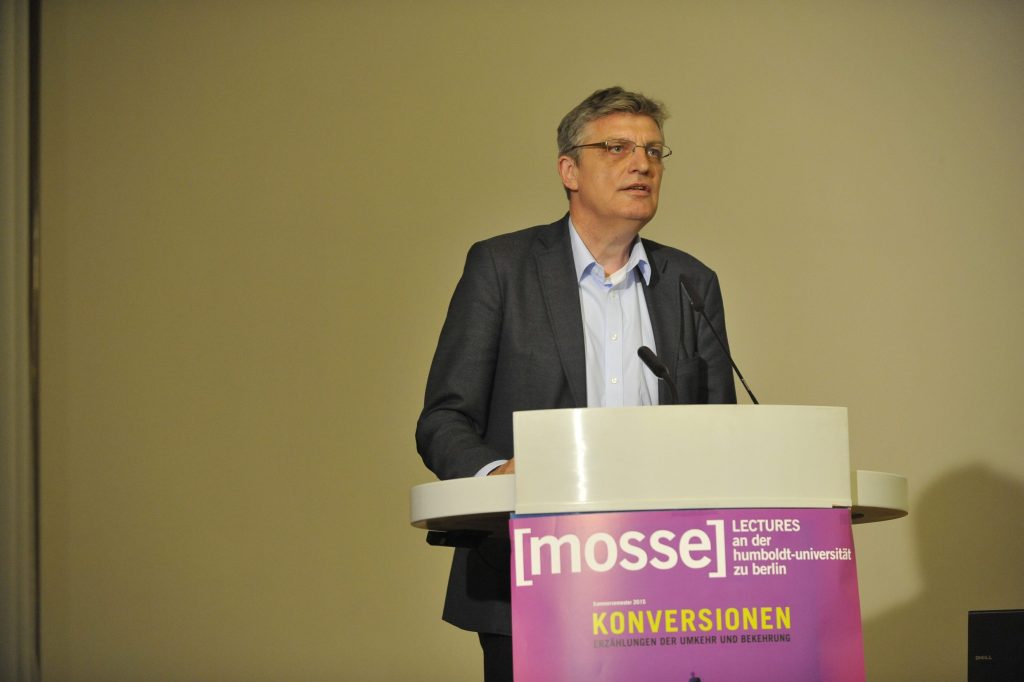
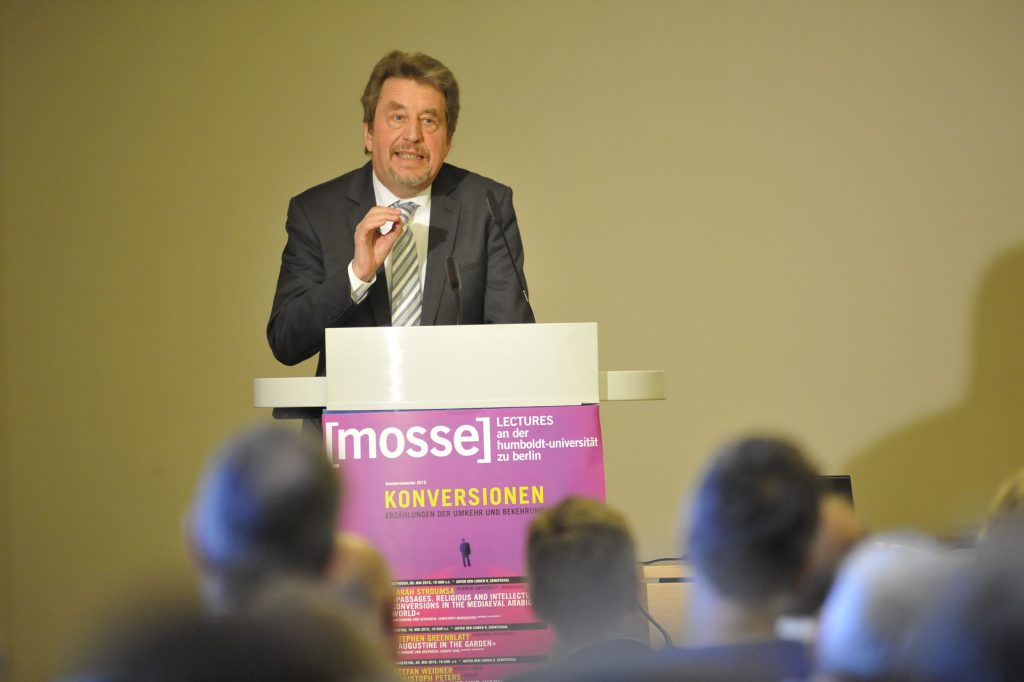
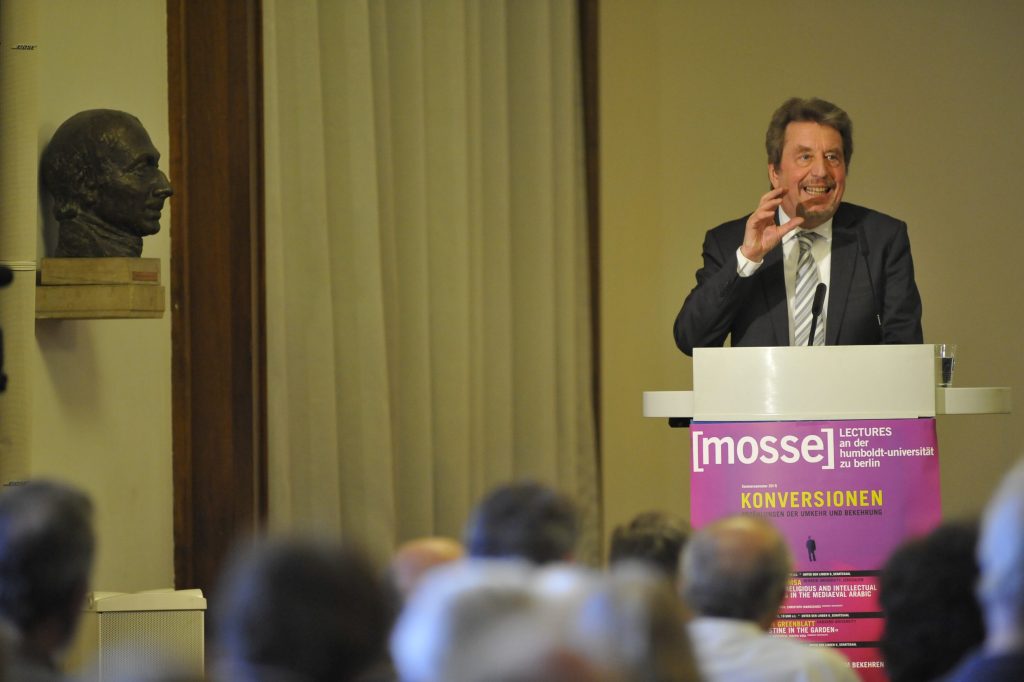
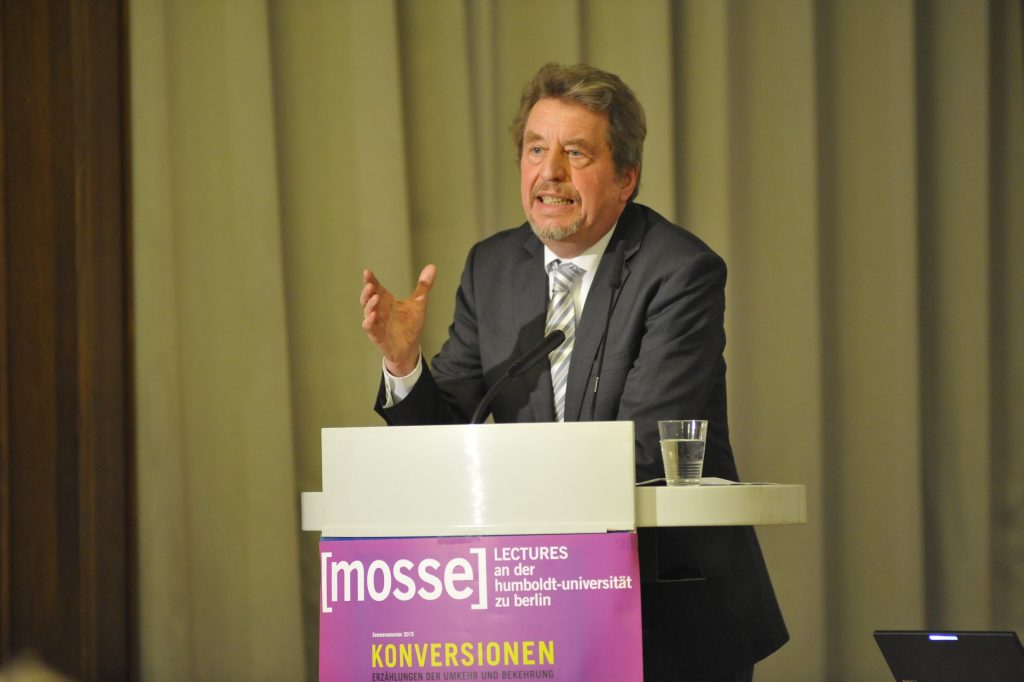
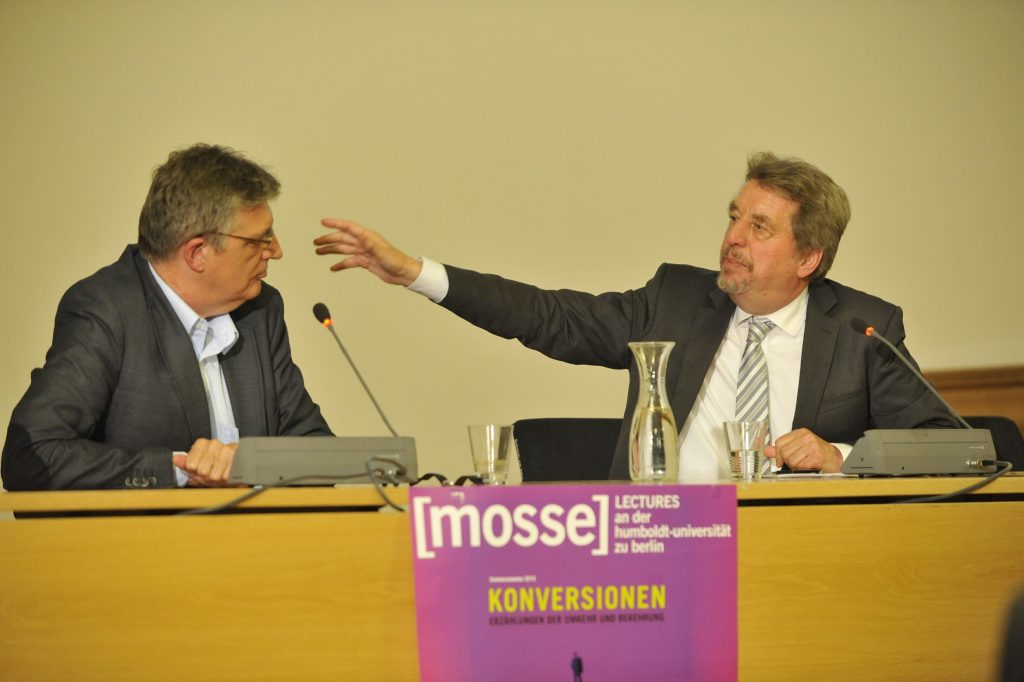
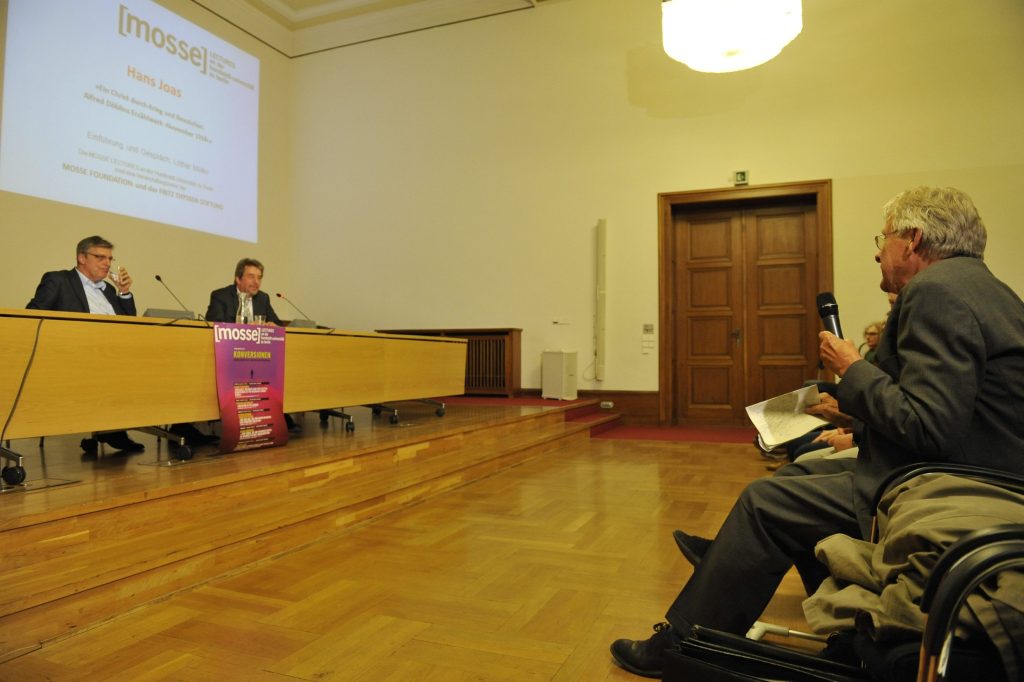
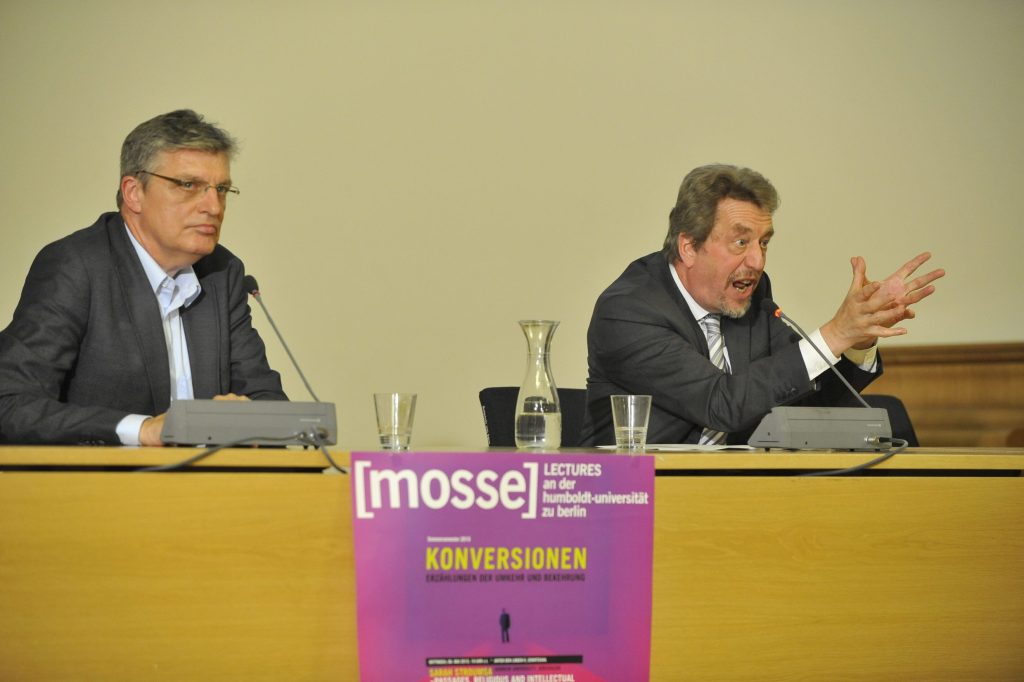
Photo credit: Niels Leiser for the Mosse Lectures
