
2014: Elisabeth Bronfen, “Ein eigener Blick: Amerikas Kriegskorrespondentinnen” / “A Personal View: America’s War Correspondents”
Elisabeth Bronfen, “Ein eigener Blick: Amerikas Kriegskorrespondentinnen” / “A Personal View: America’s War Correspondents”
Berlin Mosse Lecture
https://mosselectures.wisc.edu/berlin/
Thursday, 12 June 2014, 19:00 CET
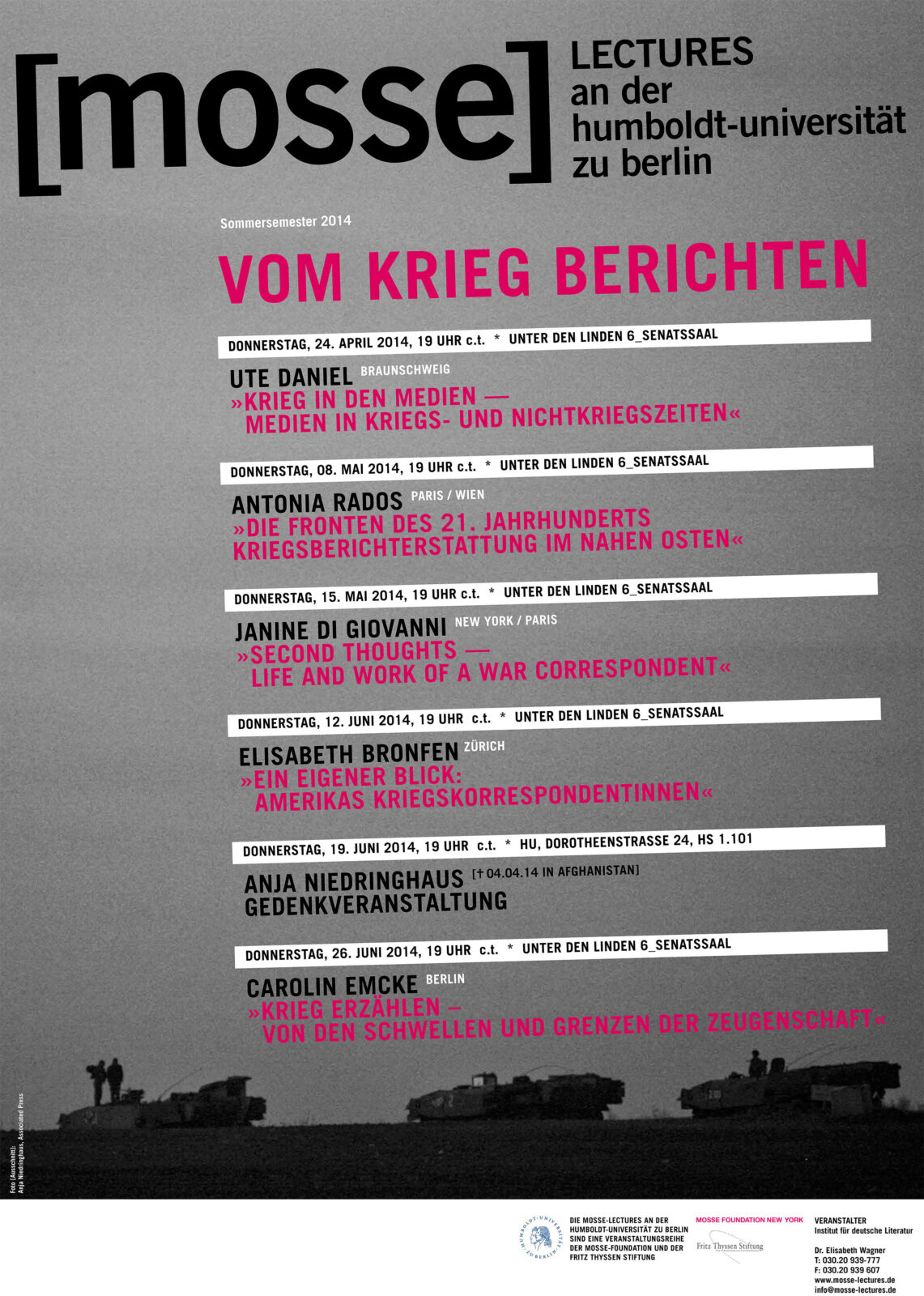
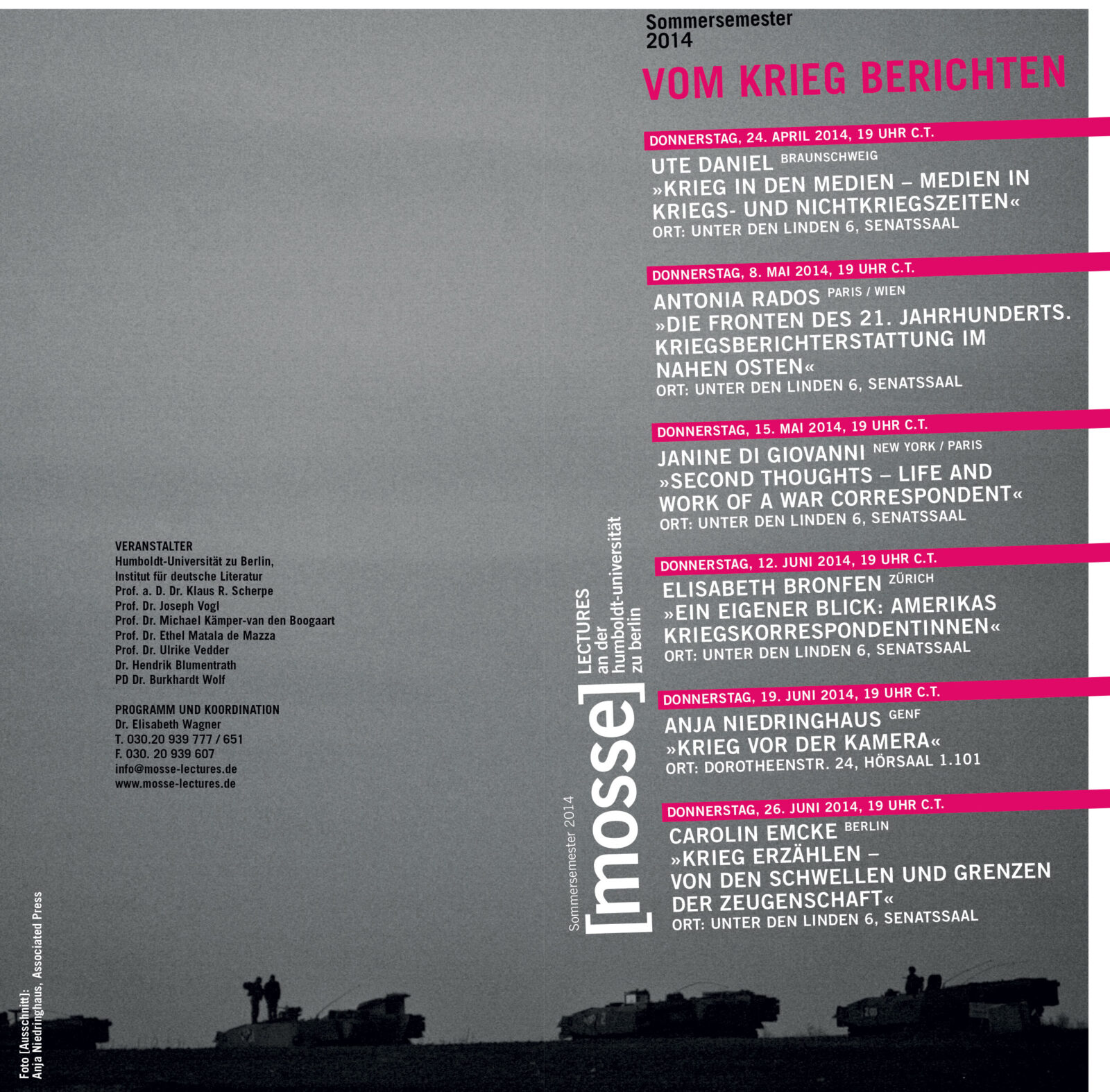
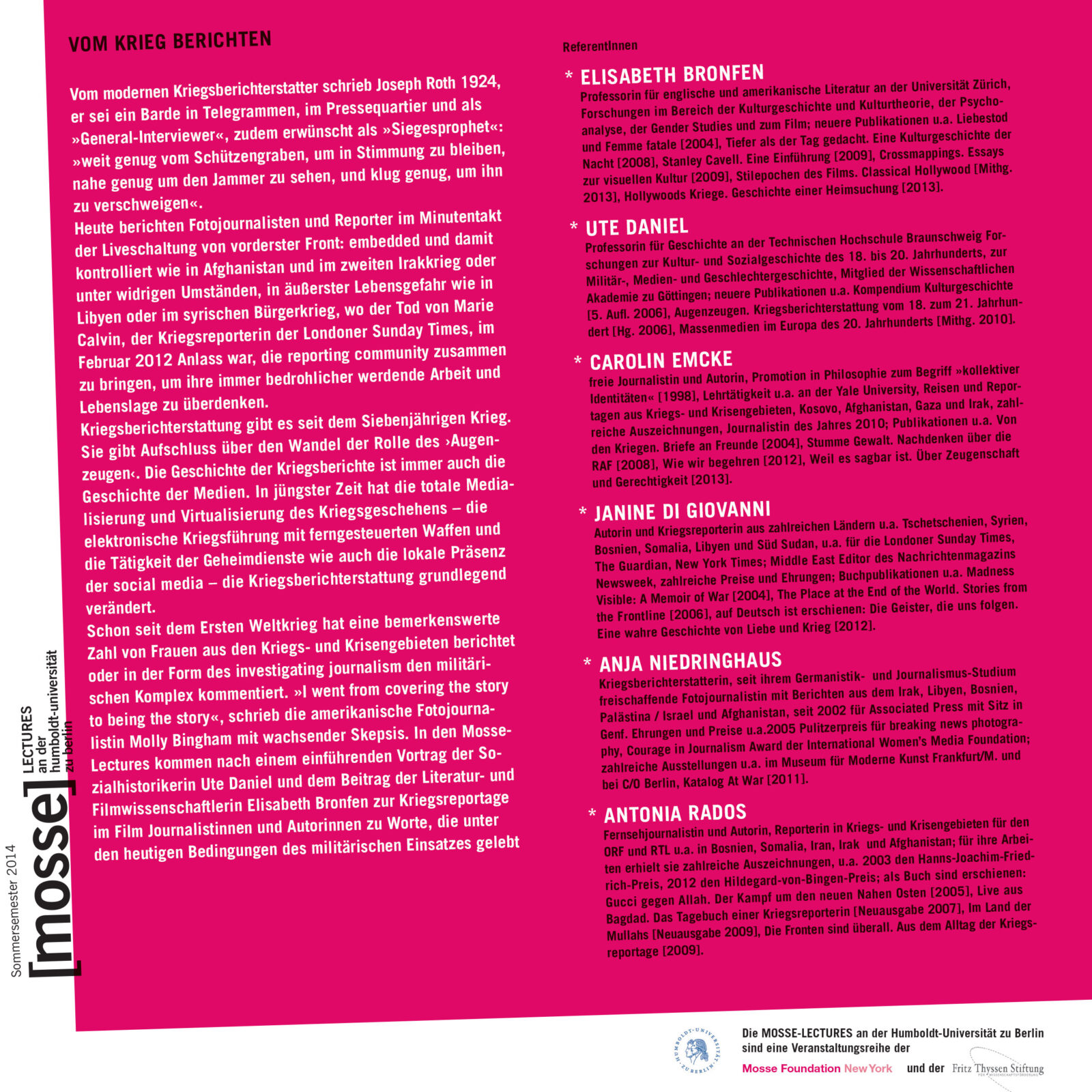
Senatssaal of Humboldt University
Under den Linden 6
1. Stock
10117 Berlin
GERMANY
Sponsored by:
[mosse] LECTURES an der humboldt-universität zu berlin
The Mosse Foundation
Global Mosse Lecture Series
Fritz Thyssen Stiftung
Institut für deutsche Literatur
Humboldt University
Moderator: Joseph Vogl (Humboldt University)
Lecture Description: Hatte die amerikanische Philosophin Margaret Fuller bereits 1848 von der blutigen Revolution in Italien berichtet, sind erst am Anfang des 21. Jahrhunderts Journalistinnen in Kriegszonen selbstverständlich geworden. Der Vortrag beschäftigt sich mit drei Amerikanerinnen, deren Berichterstattung aus dem zweiten Weltkrieg zu dieser veränderten Einschätzung beigetragen hat: Lee Miller, Louise Bourke-White und Martha Gellhorn. Dabei steht die Frage danach auf dem Spiel, wie deren Arbeit im Bereich der Fotoreportage reale Gräuel über eine ästhetische Formalisierung vermittelbar machte, um bei jenen, die am Krieg selber nicht teilgenommen haben, Empathie wie Entrüstung auszulösen. Zugleich gilt es nachzufragen welche Rolle die weibliche Sonderstellung spielte bei der Celebrity, die diese drei Frauen mit ihrer Berichterstattung für sich gewinnen konnten.
Lecture Series Description: In 1924 the novelist Joseph Roth, a First World War veteran, stated what a modern war reporter should be: a bard in telegrams, in the information headquarter and also as a “General Interviewer”, moreover, as demanded, a “prophet of victory”, “away enough from the trenches to stay in the mood, close enough to see the pain and misery and discreet enough to withhold it”. In our days photojournalists and war correspondents in the front line report live in a manner of minutes: embedded and under control like in Afghanistan and in the second Iraq War or under unforeseen circumstances and danger of death in Libya and the Syrian civil war, where Marie Colvin, the war reporter of the London Sunday Times, died in a combat situation in February 2012. In the light of this event the reporting community gathered to rethink their ever more threatening conditions of life and work. The history of war reporting begins in the 18th century, giving evidence of the changing role of the ‘eyewitness’. It is closely connected with the media history. The medialization and virtualization of warfare – electronic equipment, the operations of the intelligence services, and the local presence of the social media – have changed the basic work of war reporters.
Since World War I a remarkable number of women have reported from the areas of conflict and war, also investigated the military complex. “I went from covering the story to being the story” the American photo journalist Molly Bingham wrote with growing skepticism. Women experts, journalists and authors, who lived and did their work under the conditions of military action, will speak in the Mosse Lectures. The social historian Ute Daniel will give an introductory lecture and Elisabeth Bronfen, the literary scholar and film researcher, will comment on war reporting in the Hollywood movies.
Kriegsberichterstattung gibt es seit dem Siebenjährigen Krieg. Sie gibt Aufschluss über den Wandel der Rolle des ‚Augenzeugen‘. Die Geschichte der Kriegsberichte ist immer auch die Geschichte der Medien. In jüngster Zeit hat die totale Medialisierung und Virtualisierung des Kriegsgeschehens – die elektronische Kriegsführung mit ferngesteuerten Waffen und die Tätigkeit der Geheimdienste wie auch die lokale Präsenz der social media – die Kriegsberichterstattung grundlegend verändert.
Elisabeth Bronfen: Professorin für englische und amerikanische Literatur an der Universität Zürich, Forschungen im Bereich der Kulturgeschichte und Kulturtheorie, der Psychoanalyse, der Gender Studies und zum Film; neuere Publikationen u.a. Liebestod und Femme fatale (2004), Tiefer als der Tag gedacht. Eine Kulturgeschichte der Nacht (2008), Stanley Cavell . Eine Einführung (2009), Crossmappings. Essays zur visuellen Kultur (2009), Stilepochen des Films. Classical Hollywood (Mithg. 2013), Hollywoods Kriege. Geschichte einer Heimsuchung (2013).
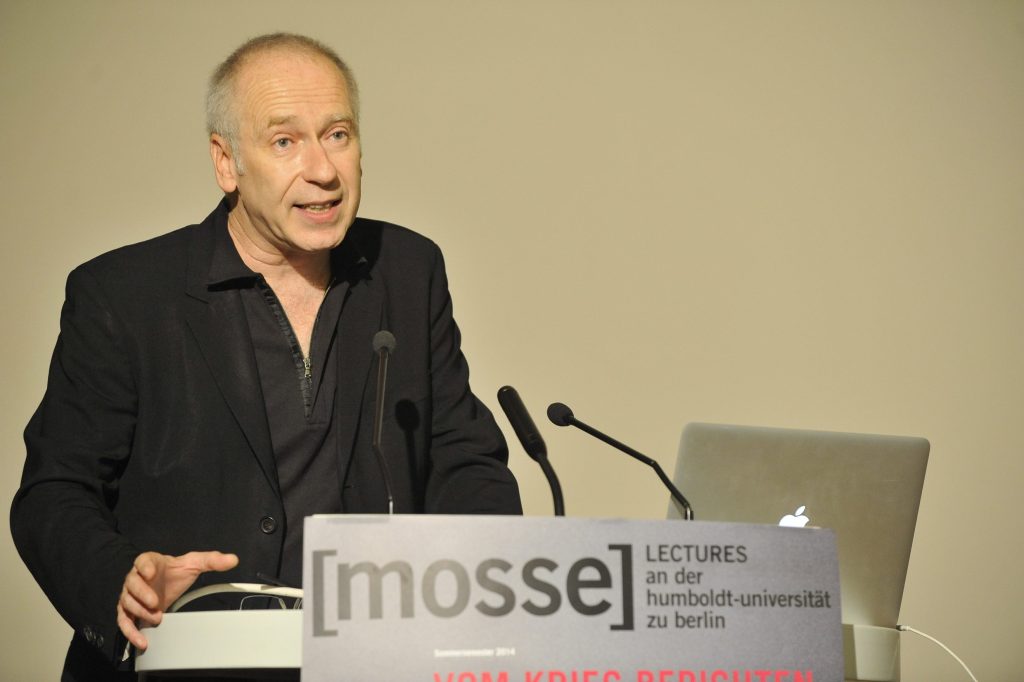
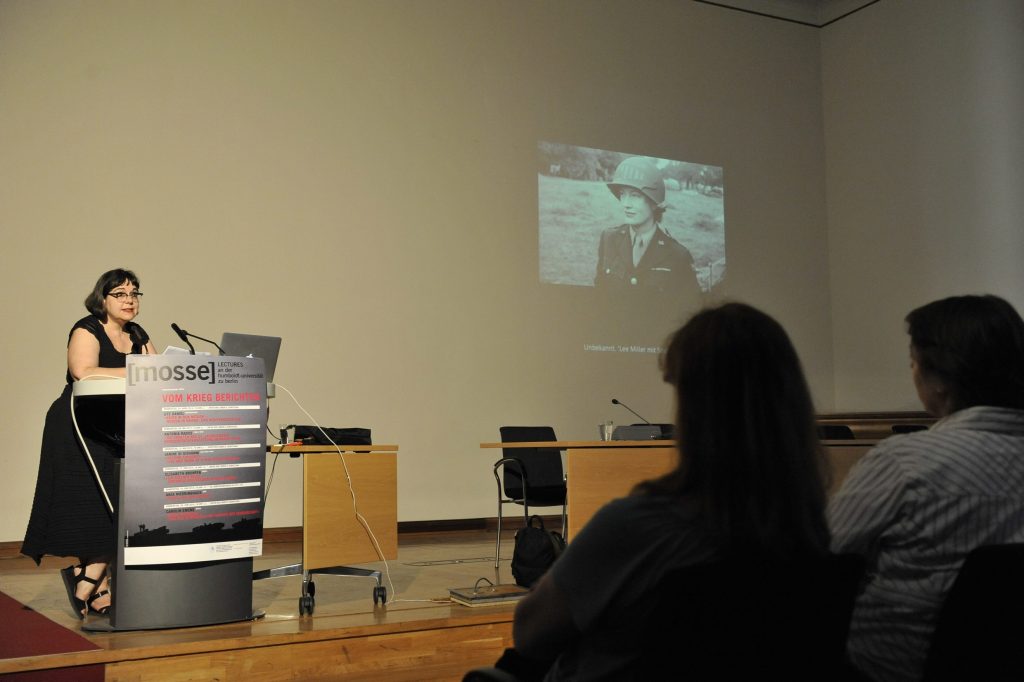
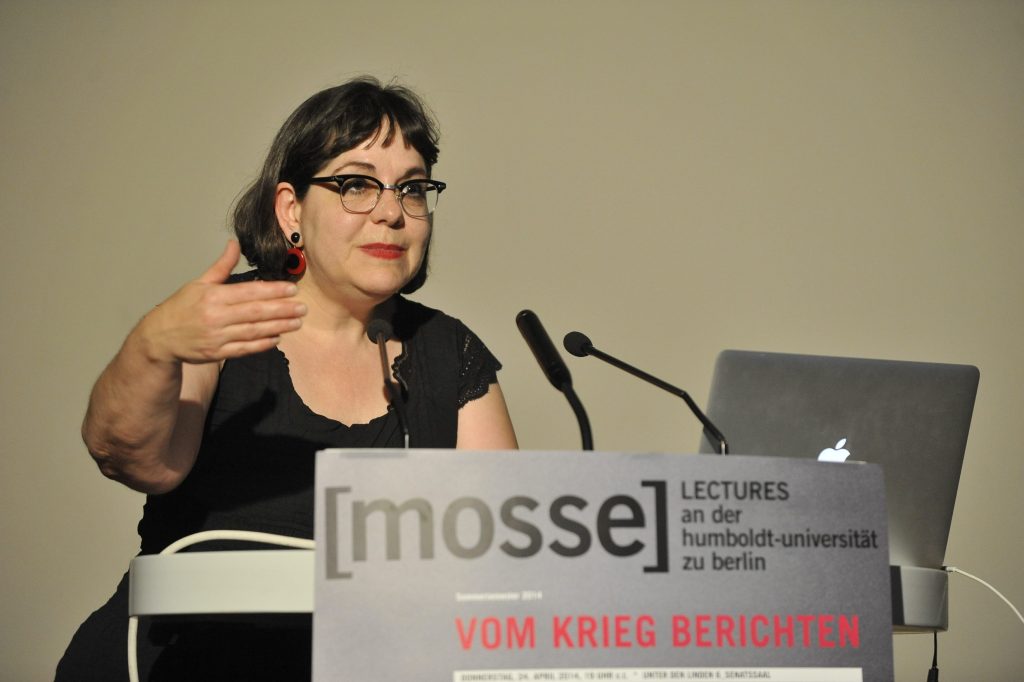
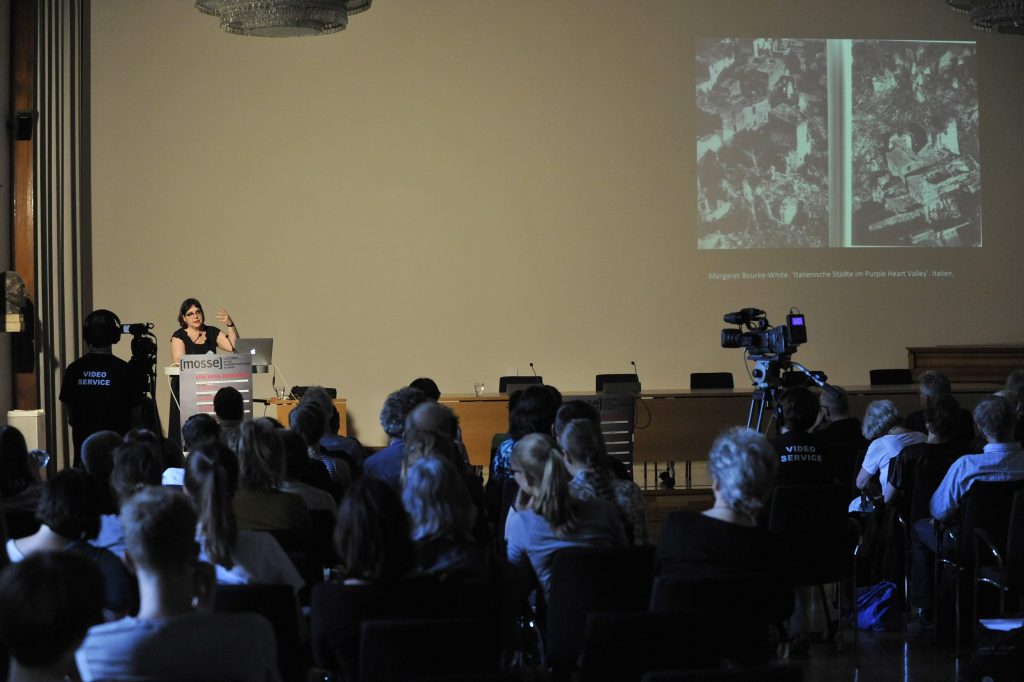
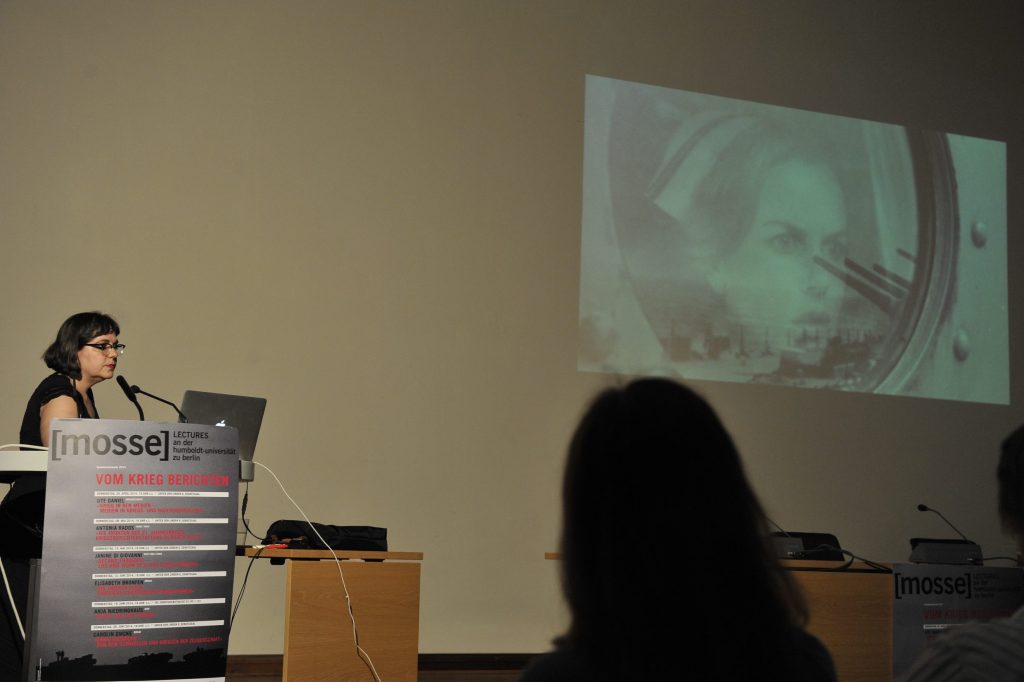
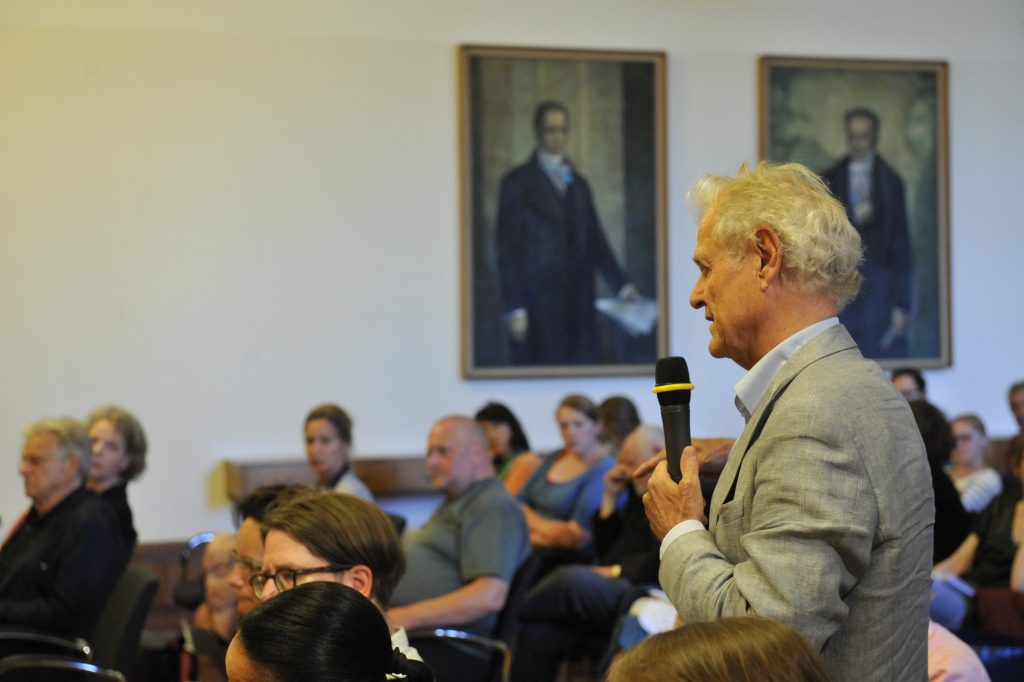
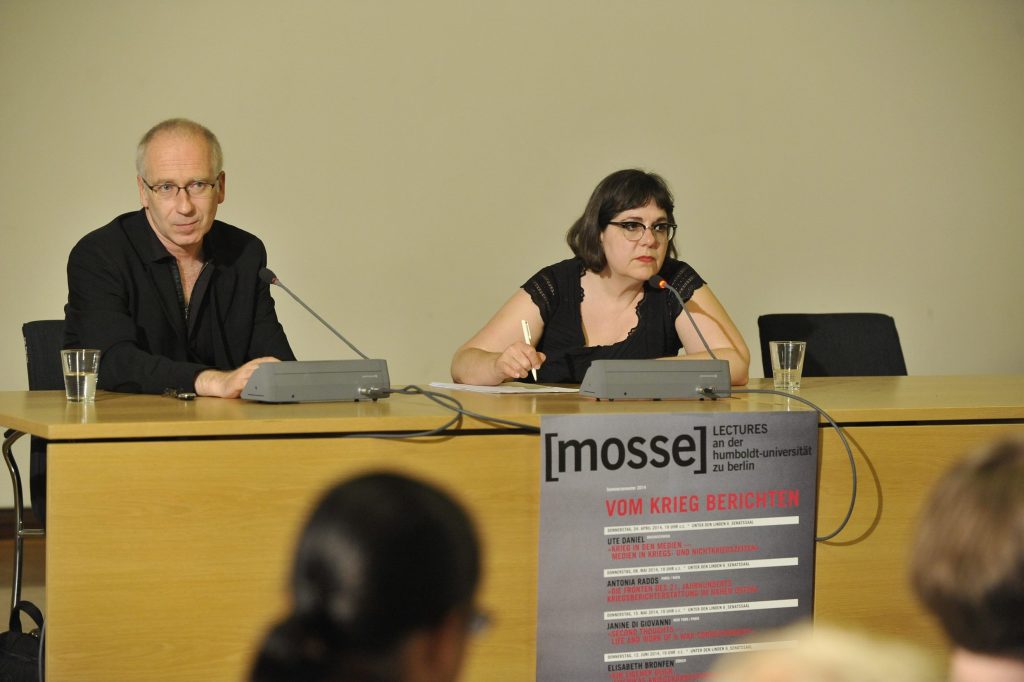
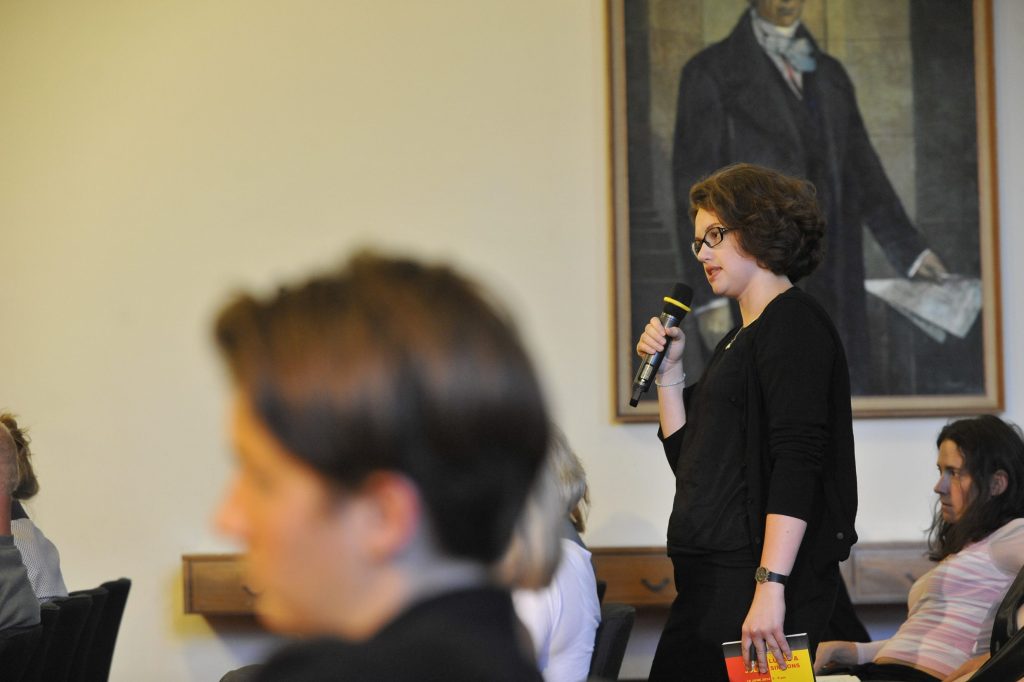
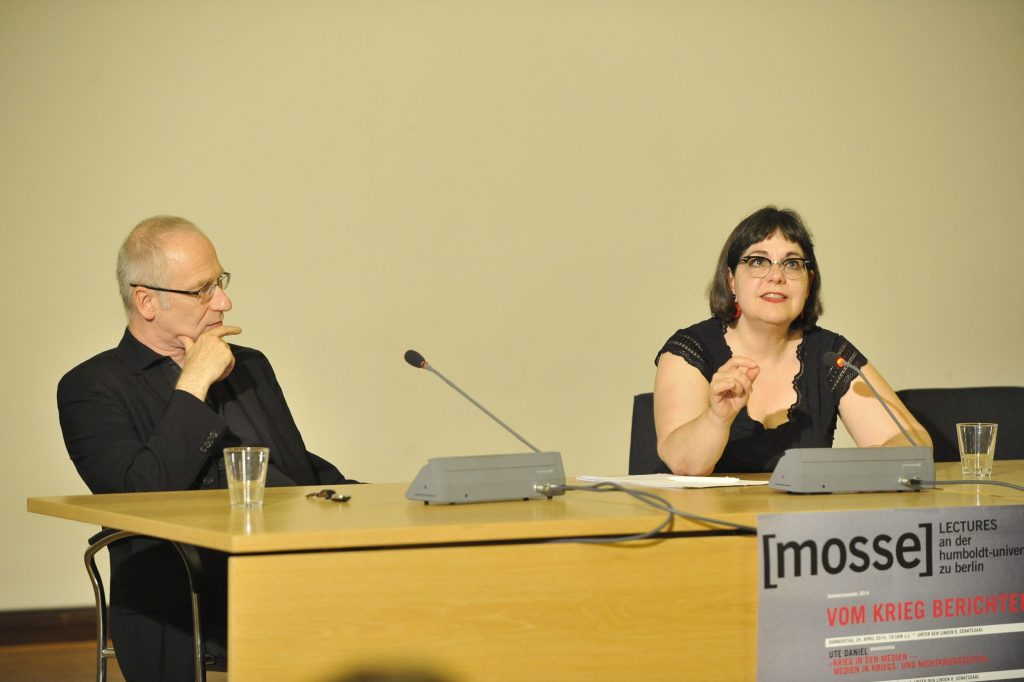
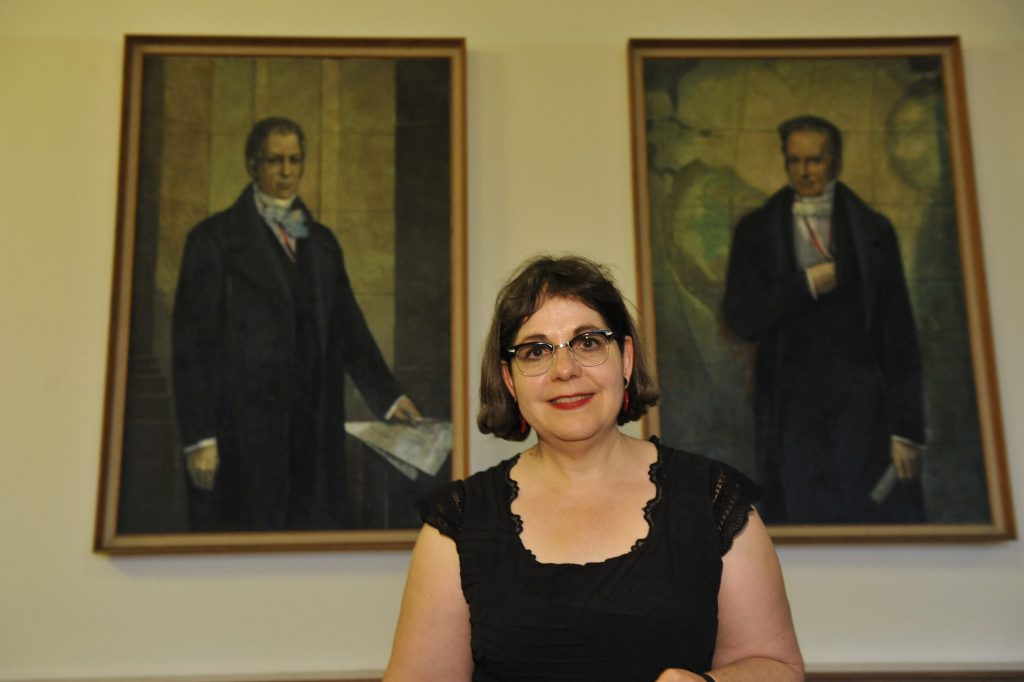
Photo credit: Niels Leiser for the Mosse Lectures
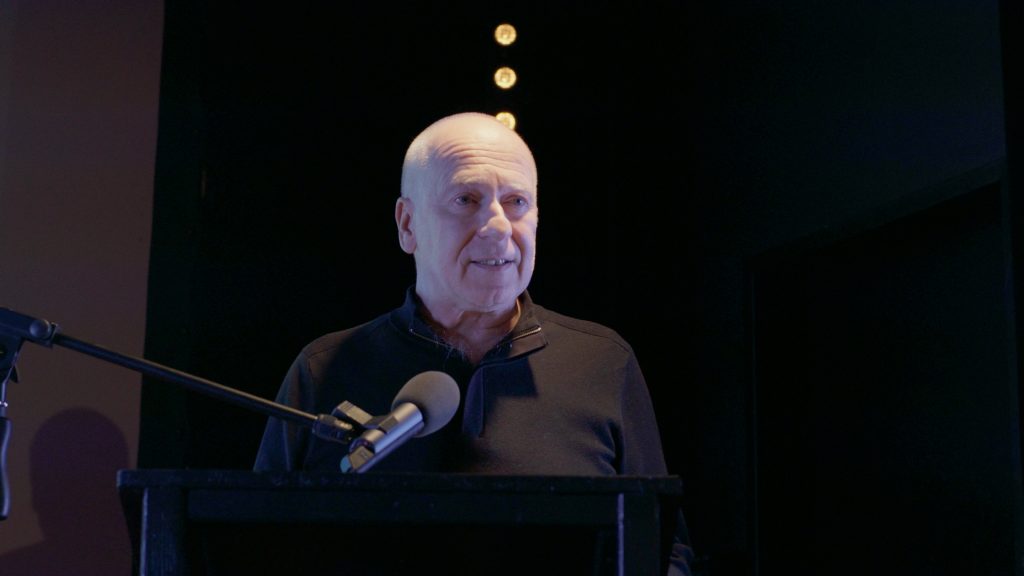
His research and teaching comprises literature from the eighteenth to the twentieth century, media and aesthetics, cultural and political theory. Recent research focuses on the history of financial economy, literature and economics, and the “poetics of knowledge” – the study of the relationships and interactions between forms of knowledge and poetic or aesthetic figures. He is the director or principal investigator of a range of research projects including “The Knowledge of Literature” (PhD-Net), “Small Forms in the History of Literature and Sciences” (Research Training Group), and “Matters of Activity: Image Space Material” (Cluster of Excellence).
Joseph Vogl published more than a hundred articles and book chapters, as well as numerous books and monographs. Among his most important written works are the monographs Ort der Gewalt. Kafkas literarische Ethik (1990); Kalkül und Leidenschaft. Poetik des ökonomischen Menschen (2002); Über das Zaudern (2007; On Tarrying, 2011). Besides his research in literature, cultural and media studies, he is well known for his intensive work on modern and present-day finance and economics, analyzing finance theories from the perspective of cultural history. This work culminated in his books Das Gespenst des Kapitals (2010; The Specter of Capital, 2014), Der Souveränitätseffekt (2015; The Ascendancy of Finance, 2017) and Kapital und Ressentiment. Eine kurze Theorie der Gegenwart (2021; Capital and Ressentiment: A Brief Theory of the Present, 2022), which received wide recognition in the fields of cultural studies as well as economics, and initiated a public debate. Further workings include translations from French to German (Deleuze, Lévi-Strauss, Lyotard) and numerous interviews on TV with Alexander Kluge (see Soll und Haben. Fernsehgespräche, 2009; Senkblei der Geschichten. Gespräche, 2020).
He was awarded the Günther Anders Prize for Critical Thinking (2022). For his book Der Souveränitätseffekt (The Ascendancy of Finance) Vogl was on the shortlist for the Leipzig Book Fair Prize 2015 in the category of non-fiction. In 1988 he received the Translation Prize for the Promotion of Franco-German Relations (DVA Foundation) for his translations of key works of modern French philosophy.
