
2011: Maxim Februari, “Wat is seks eigenlijk? / What Is Sex, Actually?”
Maxim Februari, “Wat is seks eigenlijk? / What Is Sex, Actually?”
Amsterdam Mosse Lecture
https://mosselectures.wisc.edu/amsterdam/
Wednesday, 21 September 2011
Sponsored by:
Stichting Mosse Fonds
IHLIA LGBTI Heritage
Universiteit van Amsterdam

De lezing vroeg welke categorieën bepalen hoe wij lichamen en verlangens begrijpen.
Foto: Niek Stam
With “What Is Sex, Actually?,” Februari brought philosophical sharpness to the Mosse Series. The lecture asked which categories determine how we understand bodies and desires.
Photo: Niek Stam
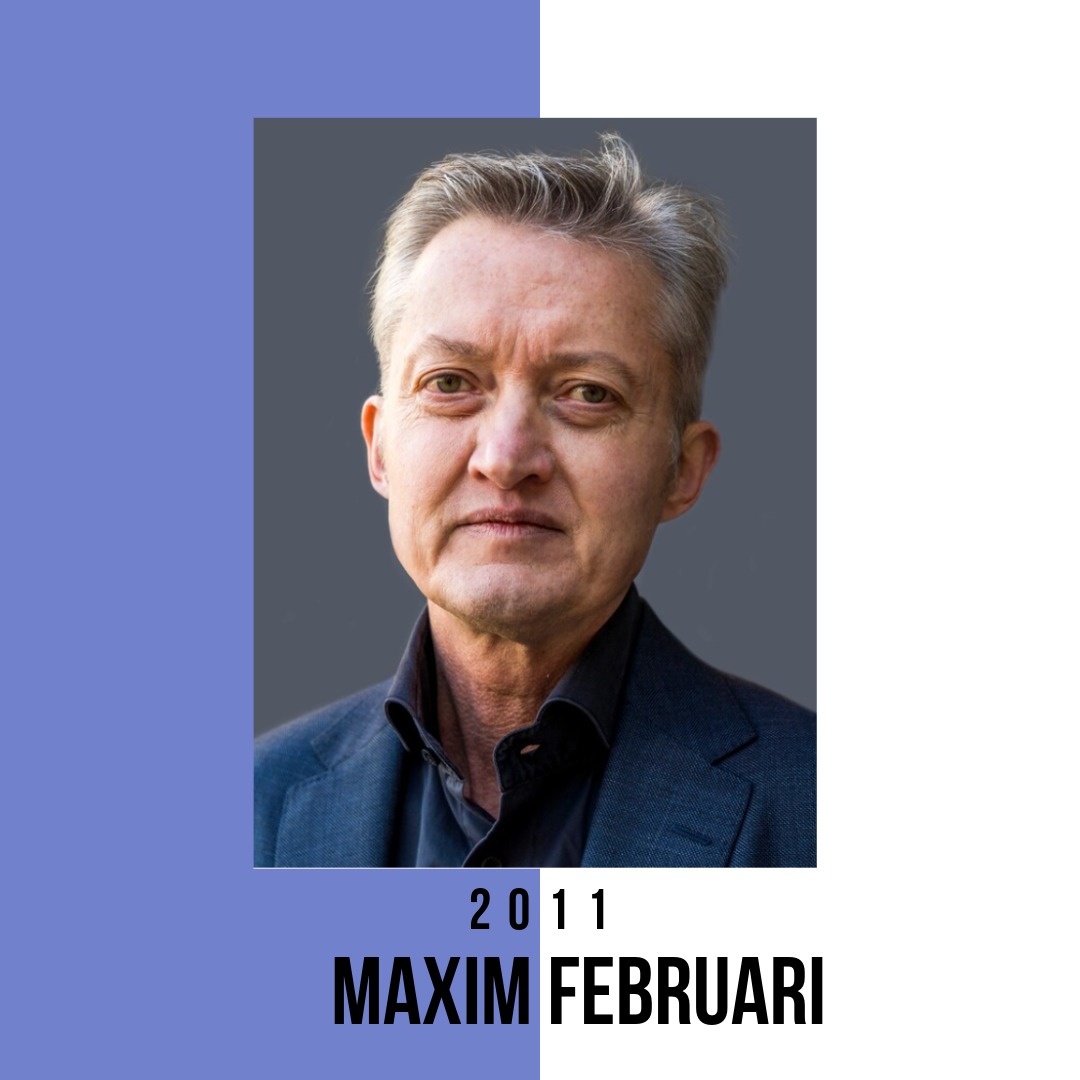
De lezing liet zien hoe “seks” nooit vanzelf spreekt. Het begrip wordt gemaakt door regels, lichamen, verhalen en instituties.
Februari approached sexuality through language and social ordering. The lecture showed how “sex” is never self-evident. The concept is made through rules, bodies, stories, and institutions.

De vraag lijkt eenvoudig. Juist daardoor wordt de vraag radicaal: wie bepaalt wat seks is, juridisch, sociaal en lichamelijk?
In 2011, Maxim Februari delivered the Mosse Lecture under the title “What Is Sex, Actually?” The question seems simple. Precisely for that reason, it becomes radical: who determines what sex is—legally, socially, and bodily?
Maxim Februari (Folia)
Marjolijn Februari: “I Know Nothing About Gays—or About Sex”
Bob van Toor, September 22, 2011 – 5:07 PM
Translated and cross-posted with permission
“The discussion about homosexuality, certainly in the Netherlands, is above all a sociological phenomenon. It is my firm conviction that sociology will be the death of us.” So said publicist and legal scholar Marjolijn Februari yesterday during the tenth Mosse Lecture, organized annually by the Mosse Fund to promote gay and lesbian studies at the University of Amsterdam. This year, Marjolijn Februari delivered the lecture at the OBA under the title “What Is Sex, Anyway?”
Against the “nonsense of sociology,” Februari set the usefulness of law. “Within the law, you do not need to discuss every kind of behavior, only behavior that gives rise to problems. The law describes that behavior and creates linguistic categories—for example, a description of a relationship and a category called ‘marriage.’ We have now adjusted the description of a relationship so that a relationship between two people of the same sex also fits within the category ‘marriage.’ Those linguistic categories are useful.”
Lesbian sex is not sex
Following an introduction by Gert Hekma, lecturer in gay and lesbian studies at the University of Amsterdam, Februari immediately made clear that she herself would never have thought of giving a lecture about sex until she received a request from the UvA, “which had come up with the idea of asking me, as a prominent lesbian, what one is actually supposed to do with sex from the perspective of legal philosophy.” Responding to Hekma’s suggestion that it might nevertheless be interesting for men to know what the “sexual world of lesbians” is really like, she said: “Lesbian sex—and you know this better than anyone—is actually not sex.” Februari did not consider herself an expert on the subject. “In theory, I know nothing about gays, or about sex.”
After listening to the previous Mosse Lectures, she had come to the conclusion that male homosexuals and lesbians think about sex and gender in completely different ways. “For men, the issue is always the distinction between ‘gay or not gay.’ For women, the distinction is between ‘masculinity’ and ‘femininity.’ All women define themselves in relation to masculinity; men do not do the reverse at all. Not a single man in this lecture series has spoken about femininity.” This prompted some protest from male questioners in the audience, but Februari stood by her positions, both regarding the usefulness of law and regarding masculinity and femininity.
There was therefore plenty of material for next year’s speaker to build on: writer and illustrator Ted van Lieshout.
Februari: ‘Ik weet niets van homo’s – of van seks’
Bob van Toor, September 22, 2011 – 17:07
‘De discussie over homoseksualiteit, zeker in Nederland, is vooral een sociologisch verschijnsel. Wij gaan, is mijn stellige overtuiging, aan sociologie ten onder.’ Dat zei publicist en jurist Marjolijn Februari gisteren tijdens de tiende Mosse-lezing, die jaarlijks georganiseerd wordt door het Mosse Fonds ter bevordering van homo en lesbische studies aan de UvA. Dit jaar hield Februari de lezing in de OBA onder de titel ‘Wat is seks eigenlijk?’
Tegenover de ‘onzin van de sociologie’ plaatste Februari de zin van het recht. ‘Je hoeft binnen het recht niet elk gedrag te bespreken, alleen dat gedrag dat problemen oplevert. Het recht beschrijft dat gedrag en maakt taalcategorieën, bijvoorbeeld een beschrijving van een relatie en een categorie “huwelijk”. We hebben nu de beschrijving van een relatie aangepast, waardoor ook een relatie tussen twee personen van hetzelfde geslacht in de categorie “huwelijk” past. Die taalcategorieën zijn bruikbaar.’
Lesbische seks is geen seks
Na de aankondiging door Gert Hekma, docent homo- en lesbische studies aan de UvA, liet Februari meteen weten dat ze er zelf nooit op zou zijn gekomen een lezing te geven over seks, tot ze het verzoek daartoe kreeg van de UvA ‘die op het idee was gekomen om mij, als prominente lesbienne, te vragen wat je nou rechtsfilosofisch eigenlijk met seks aan moet’. Op Hekma’s voorzetje dat het voor mannen toch interessant zou kunnen zijn te weten hoe het nu zit met de ‘seksuele wereld van de lesbiennes’, zei ze : ‘Lesbische seks, en dat weet u zelf het beste, is eigenlijk geen seks.’ Februari beschouwde zichzelf daarbij niet als een expert. ‘Ik weet in theorie niets van homo’s, of van seks.’
Na de voorgaande Mosse-lezingen moest ze tot de conclusie komen dat mannelijke homoseksuelen en lesbiennes volstrekt niet hetzelfde over seks en sekse denken. ‘Voor mannen is het probleem altijd het onderscheid “wel of geen homo”. Voor vrouwen is het onderscheid “mannelijkheid” en “vrouwelijkheid”. Alle vrouwen verhouden zich tot de mannelijkheid, mannen hebben dat andersom totaal niet. Er is niet één man die in deze lezingenreeks heeft gesproken over vrouwelijkheid.’ Dit leidde tot enig protest van mannelijke vragenstellers uit het publiek, maar Februari bleef bij haar standpunten, zowel wat betreft de bruikbaarheid van het recht als mannelijkheid en vrouwelijkheid.
Genoeg materiaal om op voort te borduren voor de spreker van volgend jaar: schrijver-tekenaar Ted van Lieshout.