
2010: Stephan A. Jansen, “Tabuisierung, Medialisierung und Moralisierung der Korruption”/”Tabooization, Medialization and Moralization of Corruption”
Stephan A. Jansen, “Tabuisierung, Medialisierung und Moralisierung der Korruption”/”Tabooization, Medialization and Moralization of Corruption”
Berlin Mosse Lecture
https://mosselectures.wisc.edu/berlin/
Thursday, 29 April 2010, 19:00 CET
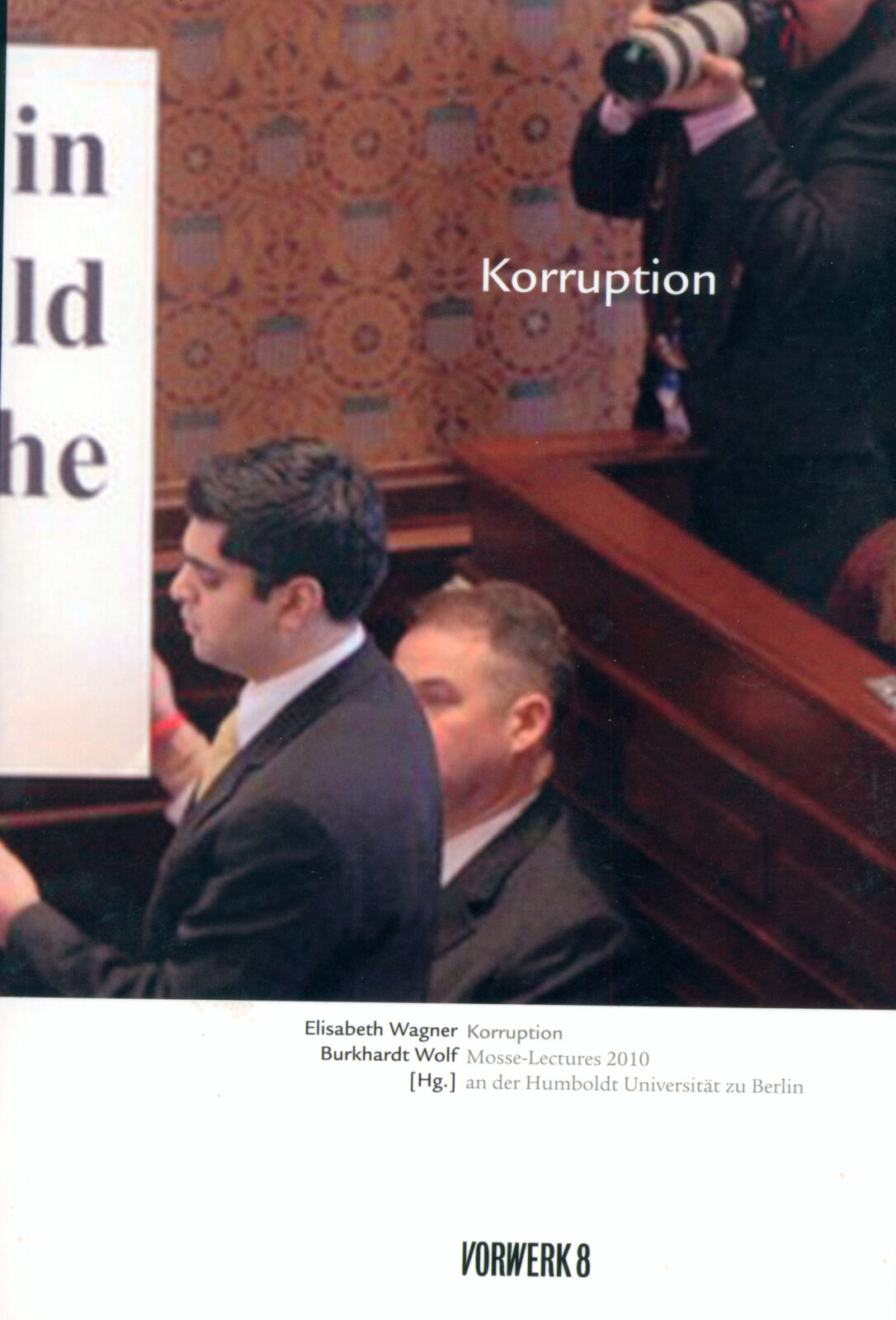
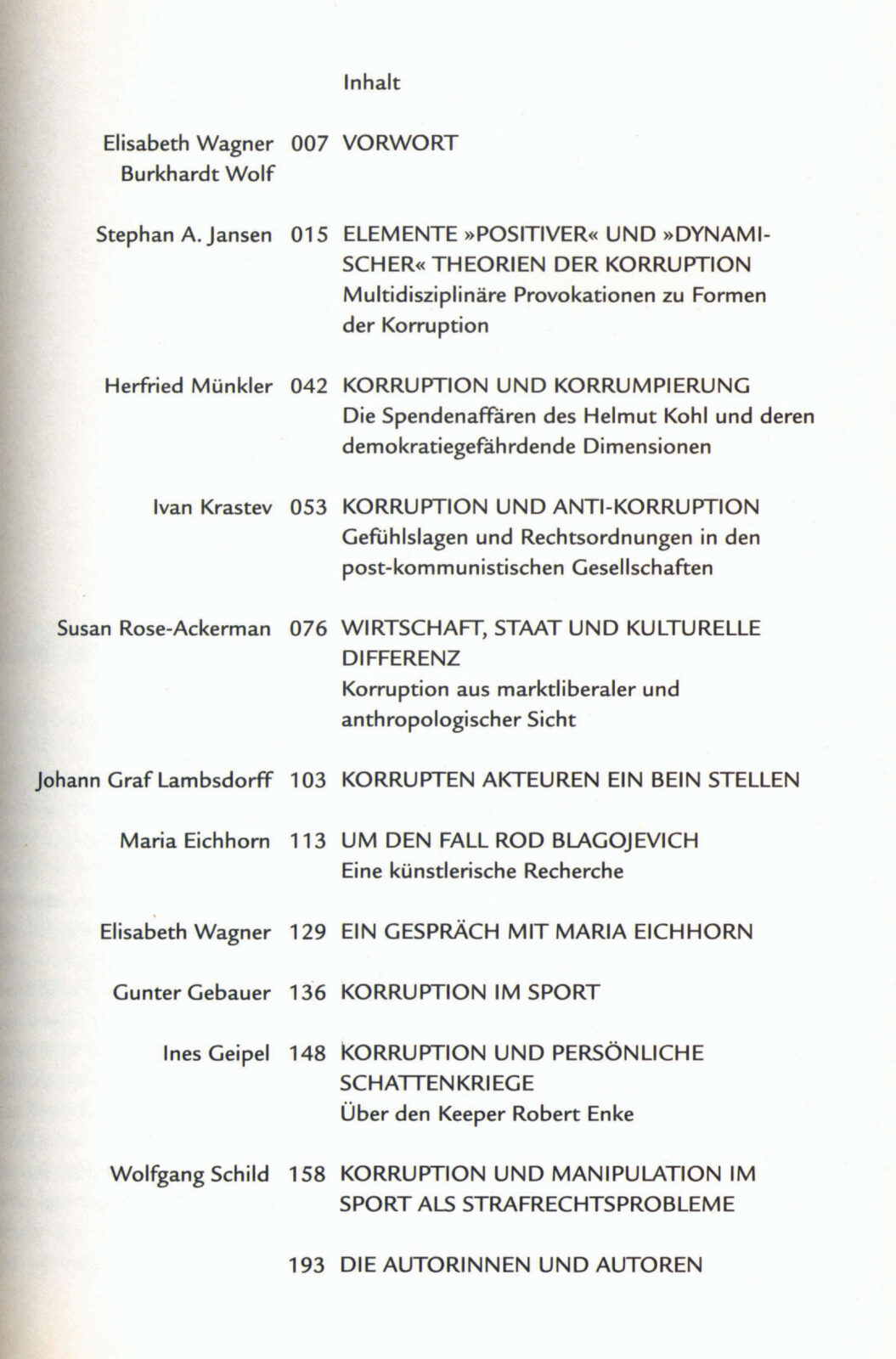
A version of this lecture was published in Elisabeth Wagner, Burkhardt Wolf, ed. Korruption. Mosse-Lectures 2010 (Berlin: Humboldt Universität zu Berlin, 2011), 15-41. See table of contents below.
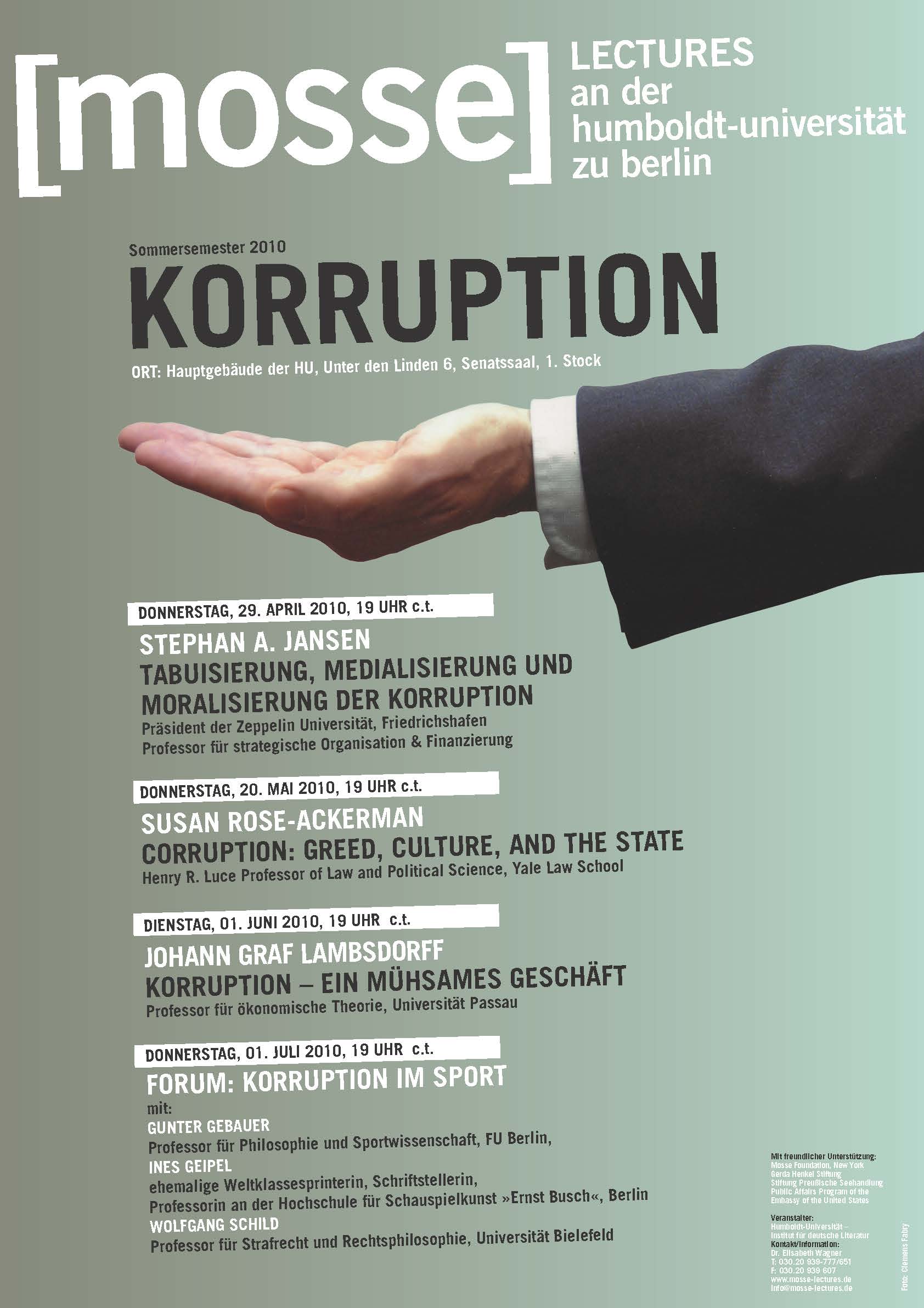
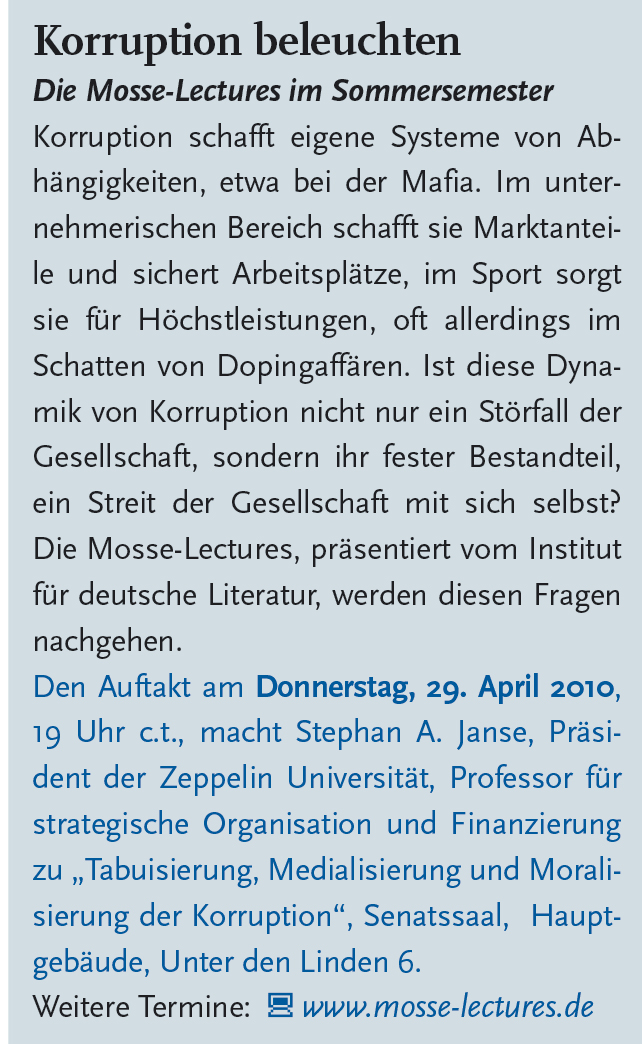
Senatssaal of Humboldt University
Unter den Linden 6
1. Stock
10117 Berlin
GERMANY
Sponsored by:
[mosse] LECTURES an der humboldt-universität zu berlin
The Mosse Foundation
Global Mosse Lecture Series
Fritz Thyssen Stiftung
Gerda Henkel Stiftung
Institut für deutsche Literatur
Humboldt University
Lecture Description: Bürger wie Kunden zweifeln und verzweifeln an der Integrität von Politikern und Vorständen. Korruption ist eine prominente, d.h. medial laut inszenierte Vokabel, die überall betretenes Schweigen auslöst. Die Thematisierung der Korruption ist der Versuch der unsystematischen Erhellung des systematisch Dunklen. Der Versuch der Erhellung scheint paradoxerweise der Verdunklung zu nutzen. So können beispielsweise Personalisierungsversuche der systemischen Immunität dienen. Korruption basiert auf Inkommunikabilität einer Gesellschaft, die sich mit moralisierter Empörung im Streit mit sich selbst befindet.
Bei Korruption haben wir es also mit einem »unaufgeklärten Kapitalismus« zu tun, der sich der Forschung systematisch zu entziehen scheint – und zwar sowohl aufgrund der systemischen Tabuisierung im Vorgang und der ebenso systematischen Moralisierung der »halbseitigen Medialisierung« im Nachgang. Der Vortrag soll einige durchaus provokative Fragen der Korruptionsforschung beleuchten: Welche Auffälligkeiten in der Beobachtung von Korruptionsbeobachtung sind beobachtbar? Welche Formen – also Innen- und Außenseiten – der Korruption können bzw. müssen wir unterscheiden? Welche für die Gesellschaft nützlichen Erkenntnisse lassen sich aus einer »entmoralisierten« Forschungsperspektive gewinnen?
Lecture Series Description: Public opinion regarding the current financial crisis has underlined the doubts about the competence and integrity of politicians and managers and their self-imposed adherence to corporate governance guidelines. Corruption, – understood in a political sense as damage caused to the bonum commune through particular interests and acceptance of benefits, and economically defined as corporate activities in a grey zone between legitimacy and legality – is in the media generally condemned as moral misconduct. But this is very little help in the operative control of corruption as ‘structural interlinking’ (Luhmann) of economic, political, social-psychological and criminological realities. Effective in the media, but not counterproductive with respect to the elucidation and abatement of corruption, is a certain fascination with the ‘scandal’, the unknown figures, black holes and slush funds. The intrinsic ‚incommunicability‘ of corruption (the keeping quiet about the exertion of influence on administrative and legislative processes, on trade agreements and investment plans) is always fuel for more conspiracy theories in your local bar, in the thriller on TV or in the talk shows. ‘Our spontaneous moral outrage about cases of corruption is quite obviously an argument of society with itself’, writes the sociologist Dirk Baecker. Corruption is perceived as a ‘dysfunction’ of the ‘normal’ societal reproduction.
The Mosse-Lectures are considering geo-political, historical and media-research aspects to further explore this ‘phenomenon of an unenlightened capitalism’. It’s about grasping the peculiar functionality and dynamic of corruption in specific areas of activity: for example in a corporation (the fight for market share and jobs legitimizes the break with the company’s own anti-corruption policies), in administration (the paradoxes of inclusion and exclusion in the decision about investments), in the specific cultural environment (the very own ‘currency of corruption’ that insider teams and the mafia appear to have: reciprocal support, social affiliation, complex personal and collective dependencies). Even the activities of anti-corruption organizations such as Transparency International with its strategy of enlightenment (not ‘confrontational’ but ‘consensual’) move within the institutional stress field of functionality and dynamic. Supporting international corporations which it is observing, Transparency often has to endure allegations by NGOs of being system-immanent itself.
Stephan A. Jansen: ist Gründungspräsident der Zeppelin Universität in Friedrichshafen – einer Stiftungsuniversität zwischen Wirtschaft, Kultur und Politik – und dort Professor für Strategische Or-ganisation & Finanzierung. Er ist Autor von 17 Büchern, darunter zahlreichen Publikationen zum Thema, u.a. Korruption – Unaufgeklärter Kapitalismus. Multidisziplinäre Perspektiven zu Funktionen und Folgen der Korruption. Hrsg. mit Birger P. Priddat. Seine Forschungsschwerpunkte liegen im Bereich der Netzwerk-, Organisations- und Managementtheorie sowie der Bildungssystemanalyse. Er hat verschiedene politische Beratungsmandate inne, z.B. als Mitglied der Forschungsunion der Bundesregierung oder seit 2006 im persönlichen Beraterkreis des Bundesfinanzministers a.D. Steinbrück.
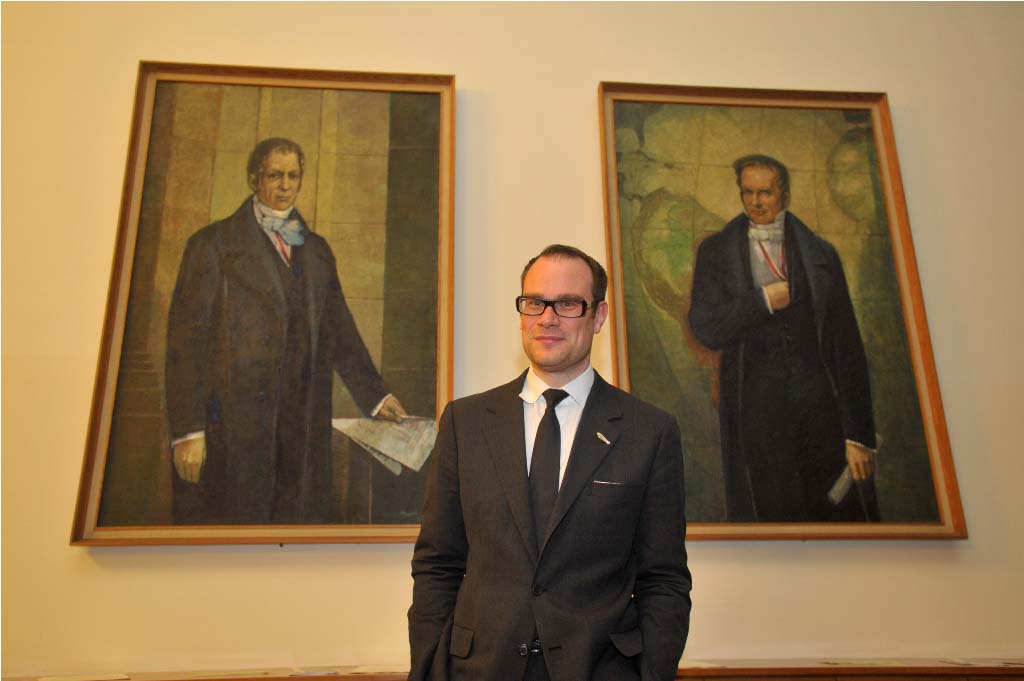
Photo Credit: Niels Leiser for the Mosse Lectures
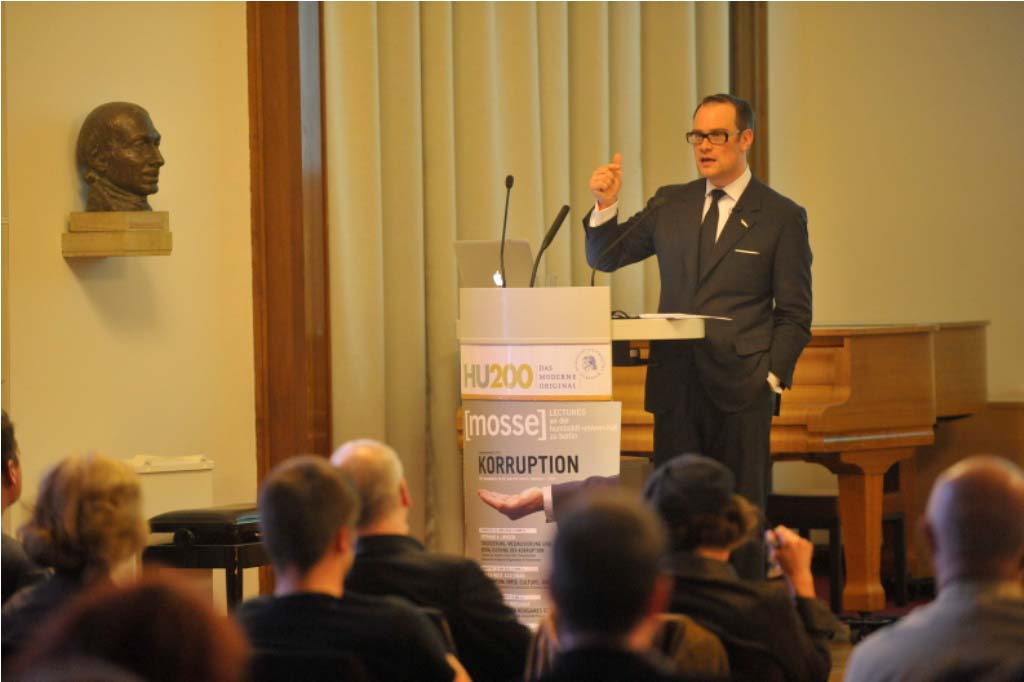
Photo Credit: Niels Leiser for the Mosse Lectures
