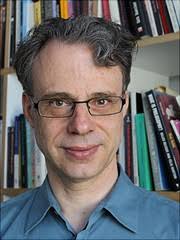
2009: Urs Stäheli, “Globale Paniken: Zur affektiven Logik der Finanzökonomie” / “Global Panics: On the Affective Logic of Financial Economics”
Urs Stäheli, “Globale Paniken: Zur affektiven Logik der Finanzökonomie” / “Global Panics: On the Affective Logic of Financial Economics”
Berlin Mosse Lecture
https://mosselectures.wisc.edu/berlin/
Wednesday, 24 June 2009, 19:00 CET
Senatssaal of Humboldt University
Unter den Linden 6
1. Stock
10117 Berlin
GERMANY
Sponsored by:
The Mosse Foundation
Global Mosse Lecture Series
Gerda Henkel Stiftung
Stiftung Preußische Seehandlung
Humboldt University
Institut für deutsche Literatur
Public Affairs Program of the Embassy of the United States
Lecture Description: Das Ökonomische bedarf kultureller Praktiken und Diskurse, um seine Grenzen bestimmen zu können und einen Raum des Sagbaren zu eröffnen. Der Vortrag fragt danach, was es bedeutet, wenn ökonomische Krisen als Paniken beschrieben werden. Dazu werden zunächst einige begriffsgeschichtliche Stationen der Paniksemantik skizziert (Mythologie und Massenpsychologie), um vor diesem Hintergrund die spezifischen Darstellungsweisen von Finanzpaniken zu diskutieren. Die Finanzpanik ist die „Panik aller Paniken“, da sie panische Logiken der Ansteckung geradezu exemplarisch inszeniert. Es soll gezeigt werden, wie mit der Finanzpanik innerhalb des Ökonomischen über das Scheitern der Ökonomie gesprochen werden kann. Schließlich interessieren die politischen Konsequenzen der Paniksemantik: Die Art und Weise, in der eine Krise als Panik beschrieben wird, bestimmt auch die Möglichkeiten der Politik. Gerade an der Finanzpanik lassen sich die Konturen und Herausforderungen einer neuen „politischen Epidemiologie“ festmachen.
Lecture Series Description: „Relations of uncertainties“ shape the modern world, the „age of anxiety“ according to W. H. Auden and Günther Anders. Probability theories have been created in response to this since the 17th century – in mathematics, statistics, the economy and in the arts. In the sciences, the establishment of models and formalisations grasp these uncertainties and put them into perspective, into the system. In the economic process this formalisation of knowledge is often not recognised as what it is or can be, what it produces – which is fiction. The logic of the abstraction of money on the financial markets creates its own reality, detached from the references to local, social, to political or even economic data. „Computers conceive the suffering of the millionaires“, writes Wolfgang Koeppen with irony in his New York fiction of 1976. But is it still possible to narrate a different world – such as the one of finances – with the familiar dichotomy of ‘natural’ and ‘artificial’, of ‘illusion’ and ‘reality’? The fuzzy term of virtual reality contains the old expression of virtue – should it be applied to the electronic networks of information which delineate within seconds the movements and events of the global finance markets on the screen? This „greater being“ as an emergent life form: changeable, flowing, without identity, endless. And catastrophic?