2022: Ilija Trojanow, “The Utopian Prerogative”
Ilija Trojanow, “The Utopian Prerogative”
Berkeley Mosse Lecture
Thursday, 1 September 2022, 17:00-19:00 PDT
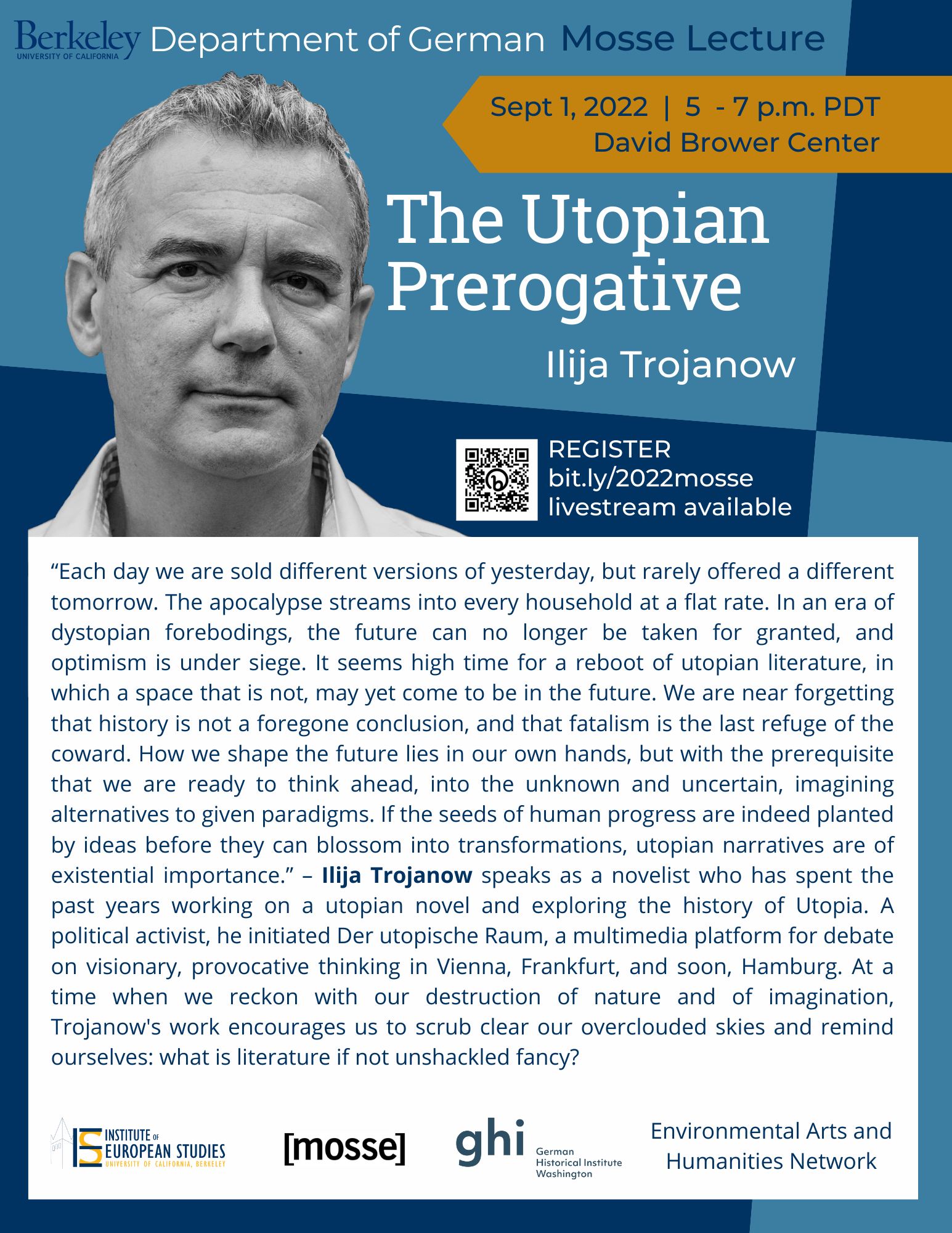
David Brower Center
2150 Allston Way
Berkeley, CA 94704
Sponsored by:
Global Mosse Lecture Series
The Mosse Foundation
UC Berkeley Department of German
Institute of European Studies
German Historical Institute Washington | Pacific Office Berkeley
Moderator: Deniz Göktürk
Lecture Description: Each day we are sold different versions of yesterday, but rarely offered a different tomorrow. The apocalypse streams into every household at a flat rate. In an era of dystopian forebodings, the future can no longer be taken for granted, and optimism is under siege. It seems high time for a reboot of utopian literature, in which a space that is not, may yet come to be in the future. We are near forgetting that history is not a foregone conclusion, and that fatalism is the last refuge of the coward. How we shape the future lies in our own hands, but with the prerequisite that we are ready to think ahead, into the unknown and uncertain, imagining alternatives to given paradigms. If the seeds of human progress are indeed planted by ideas before they can blossom into transformations, utopian narratives are of existential importance.” – Ilija Trojanow speaks as a novelist who has spent the past years working on a utopian novel and exploring the history of Utopia. A political activist, he initiated Der utopische Raum, a multimedia platform for debate on visionary, provocative thinking in Vienna, Frankfurt, and soon, Hamburg. At a time when we reckon with our destruction of nature and of imagination, Trojanow’s work encourages us to scrub clear our overclouded skies and remind ourselves: what is literature if not unshackled fancy?
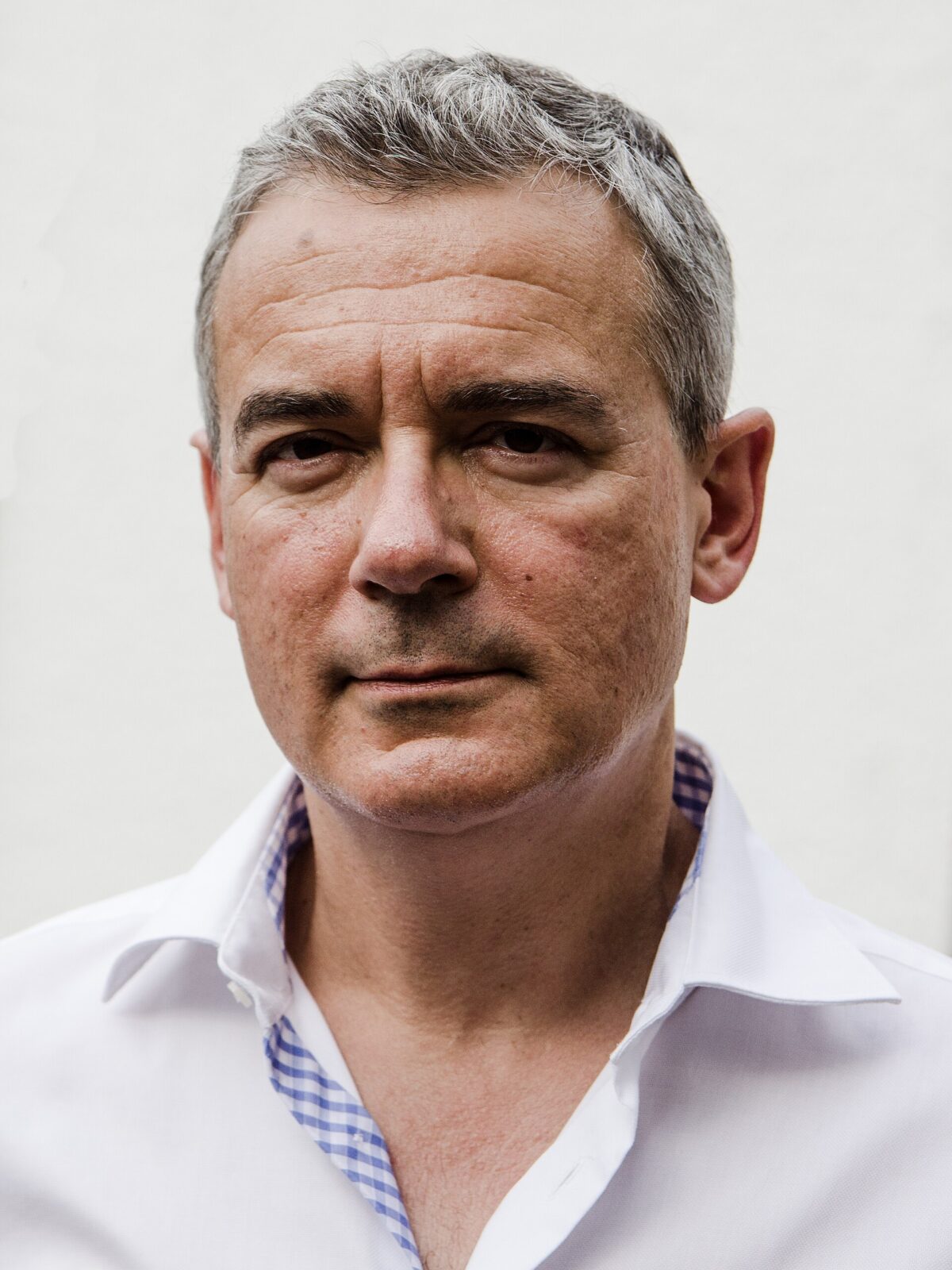
Ilija Trojanow has reported regularly on India, Africa, and other parts of the world for newspapers such as Frankfurter Allgemeine Zeitung, Süddeutsche Zeitung, Neue Zürcher Zeitung, and other papers, and he has published multiple volumes of collected essays. He continues to write about current controversies in the column Schlagloch in Die Tageszeitung. With Ranjit Hoskote, he co-authored Kampfabsage (2007) / Confluences: Forgotten Histories from East and West (2012). In his ecofictional novel EisTau (2011) / The Lamentations of Zeno (2016), he took on the melting of glaciers and travels to Antartica. We might get to hear a brief passage from that book at the end of today’s discussion. Further recent books include: Macht und Widerstand (Power and Resistance, 2015), the gripping memories of an aging dissident in Bulgaria; Nach der Flucht (After Flight, 2017), which is inspired by African American painter Jacob Lawrence’s Migration Series and composed of aphorisms and short scenes that encapsulate the experience of exile. The essay “Hilfe? Hilfe! Wege aus der globalen Krise” (“Aid? Aid! Ways out of Global Crisis”) (co-authored with Thomas Gebauer, 2018) offers a critique of philanthropy. Doppelte Spur (Dual Trace, 2020) is a Cold War novel about a dual agent. He is a masterful narrator, and he might well be Germany’s candidate for the Nobel Prize some day.
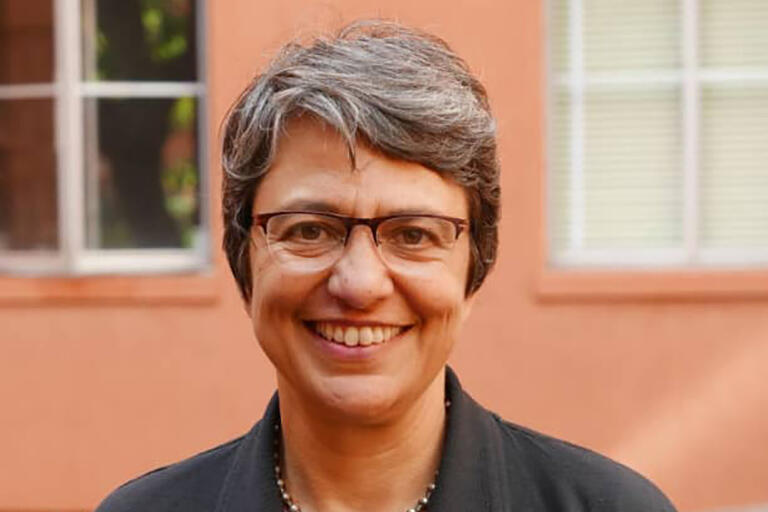
She has held awards and grants from the DAAD, the Economic and Social Sciences Research Council (ESRC) in the UK, the Institute for European Studies, the Institute for International Studies, the Townsend Center for the Humanities, the Center for Middle Eastern Studies, and Digital Humanities at Berkeley. She has been an invited fellow at the Institute for Advanced Study Konstanz and the Center for Cinepoetics at the Freie Universität Berlin
On campus, she holds affiliations with the Department of Film and Media, the Berkeley Center for New Media, Digital Humanities, the Center for Middle Eastern Studies, the Center for Race and Gender, the Department of Gender and Women’s Studies, and the Program in Critical Theory. She has participated in cross-campus collaborations on “Cultural Forms in Transit” and a strategic working group on “Circulation.” She is co-founder and concept coordinator of TRANSIT, the electronic journal launched by the Berkeley German Department in September 2005, and coordinator of the Multicultural Germany Project.