
2026: Sabine Müller-Mall, “Künftige Freiheit und die Gegenwart des Verbots” / “Future Freedom and the Presence of Prohibition”
Sabine Müller-Mall, “Künftige Freiheit und die Gegenwart des Verbots” / “Future Freedom and the Presence of Prohibition”
Humboldt University Berlin Mosse Lecture
mosselectures.wisc.edu/berlin/
Thursday, 9 July 2026, 19:15 CET
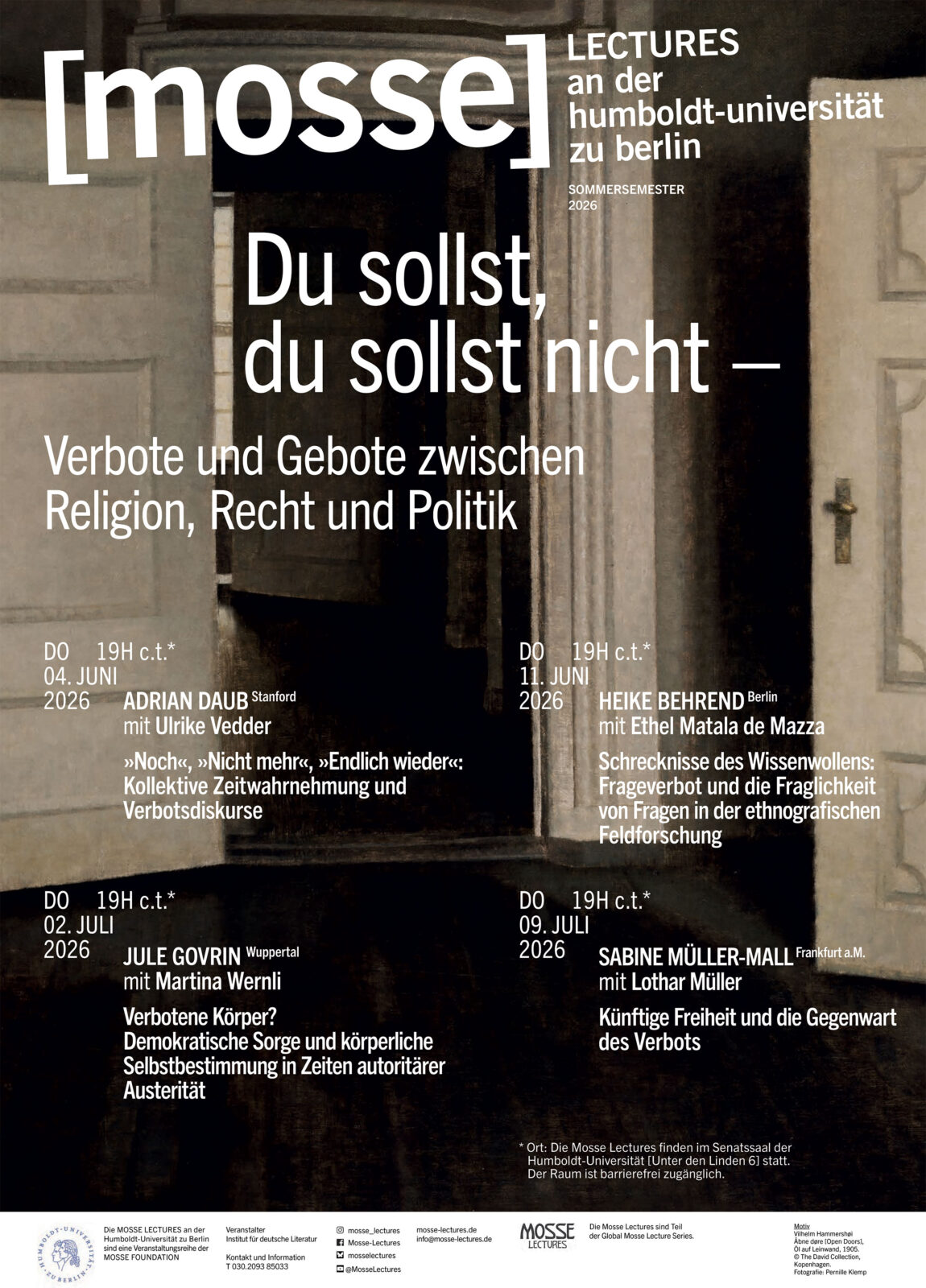
Senatssaal of Humboldt University
Unter den Linden 6
10117 Berlin
GERMANY
Sponsored by:
[mosse] LECTURES an der humboldt-universität zu berlin
The Mosse Foundation
Global Mosse Lecture Series
Institut für deutsche Literatur
Humboldt University
Moderator: Lothar Müller (Humboldt University)
Lecture Description: Struggles over the climate also unfold along the lines of rights and prohibitions, specifically in relation to the temporal dimensions of freedom. Politically, prohibition is portrayed as the antithesis of present-day freedom, while the preservation of future freedom is understood as a legal imperative. The German Federal Constitutional Court extends freedom temporally, into the future and back again to the present. In doing so, it balances the possibilities of future freedom with present freedoms. If – as in the case of the climate – the future becomes finite, temporal aspects of the relationship between law and politics come to the fore. How can legal forms take future freedom into account? How can we situate questions of freedom in relation to temporal dimensions? And why do such questions arise precisely in the context of concrete prohibitions in the present?
Lecture Series Theme: Du Sollst, du sollst nicht – Verbote und Gebote zwischen Religion, Recht und Politik/Thou shalt, thou shalt not. Prohibitions and Commandments between Religion, Law, and Politics
Lecture Series Description: Prohibitions and commandments are the pivots of religious and ethical ways of life, they stabilize social orders, protect against violence, and limit the abuse of power. Rights, including fundamental rights, are safeguarded by prohibitions. At the same time, prohibitions themselves are an expression of political, economic, and social power relations. Prohibiting others—or even oneself—from doing something means restricting scope for action and self-realization. The fact that this repressive function of prohibitions and taboos inherently possesses a culture-forming dimension accounts for the discontent that Sigmund Freud already attributed to civilization at the beginning of the 20th century. The productive power of prohibitions can also be traced etymologically: As far back as Old Low German, the verb »verbieten« [to forbid] [Middle Low German »vorbēden«] was closely related to the command, in the sense of an emphatic directive for action.
In the summer semester of 2026, the Mosse Lectures aim to shed light on the ambivalences of prohibitions from a historical and systematic perspective and to examine their relevance to contemporary social debates. For while criticism of prohibitions has seemed ubiquitous in many social spheres for some time now, and »destigmatization« carries positive connotations for good reasons, prohibitions are experiencing a renaissance in contexts where they become instruments of crisis management. For example, in the global discussions surrounding the necessity and legitimacy of a social media ban for children and adolescents. Or in current climate policy, which—under the banner of safeguarding intertemporal freedom—faces the task of recalibrating the relationship between intergenerational justice and a »culture of prohibition« and debating the current imperative for bans. The debates surrounding cancel culture, fake news, and digital privacy rights also revolve around the possibilities of prohibitive restrictions. The Mosse Lectures bring together perspectives from philosophy, cultural studies, ethnology, and legal studies to examine the conditions under which prohibitions appear legitimate, their cultural foundations and political functions, and, not least, the power that is constituted in the very act of prohibiting.
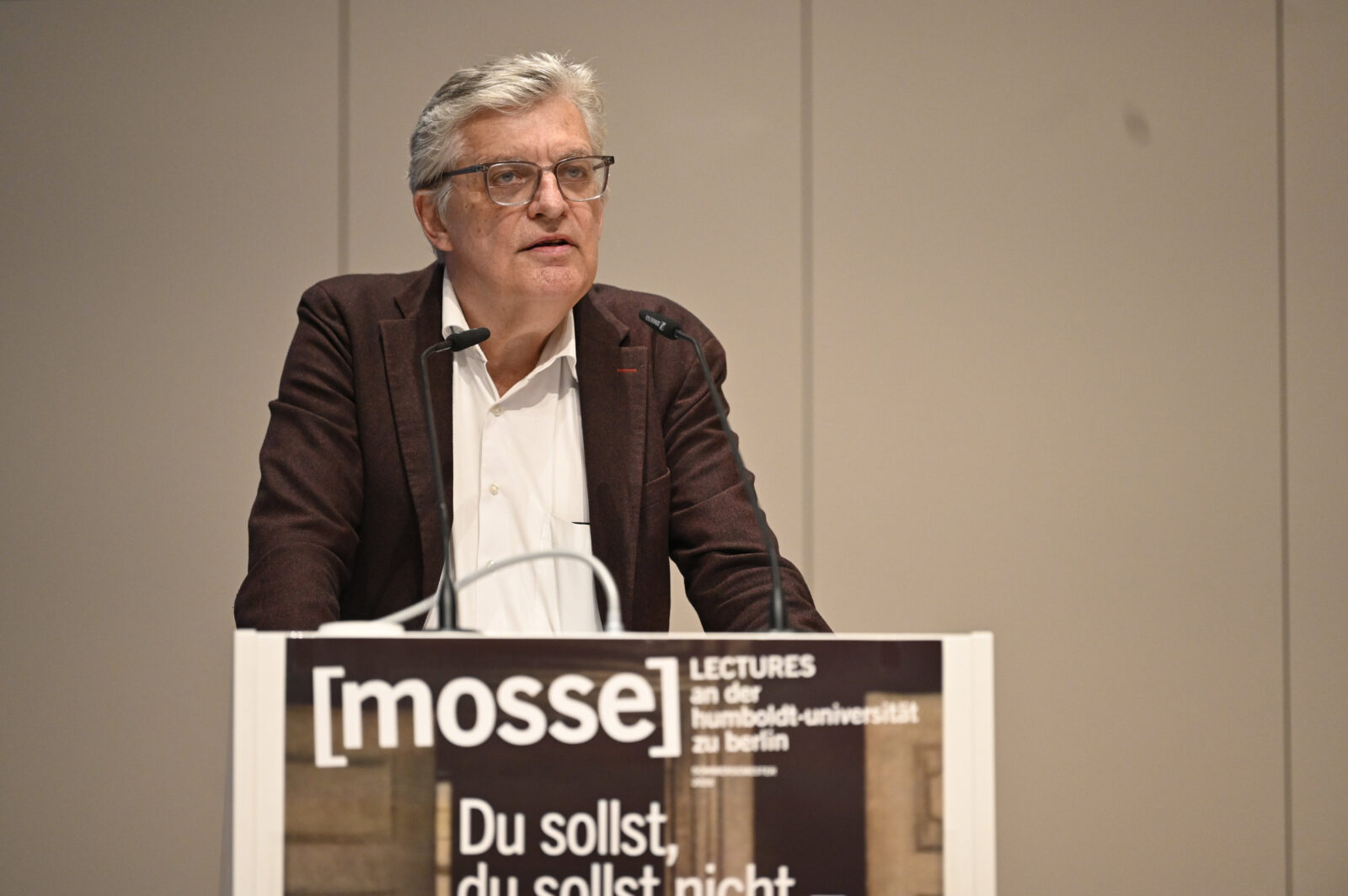
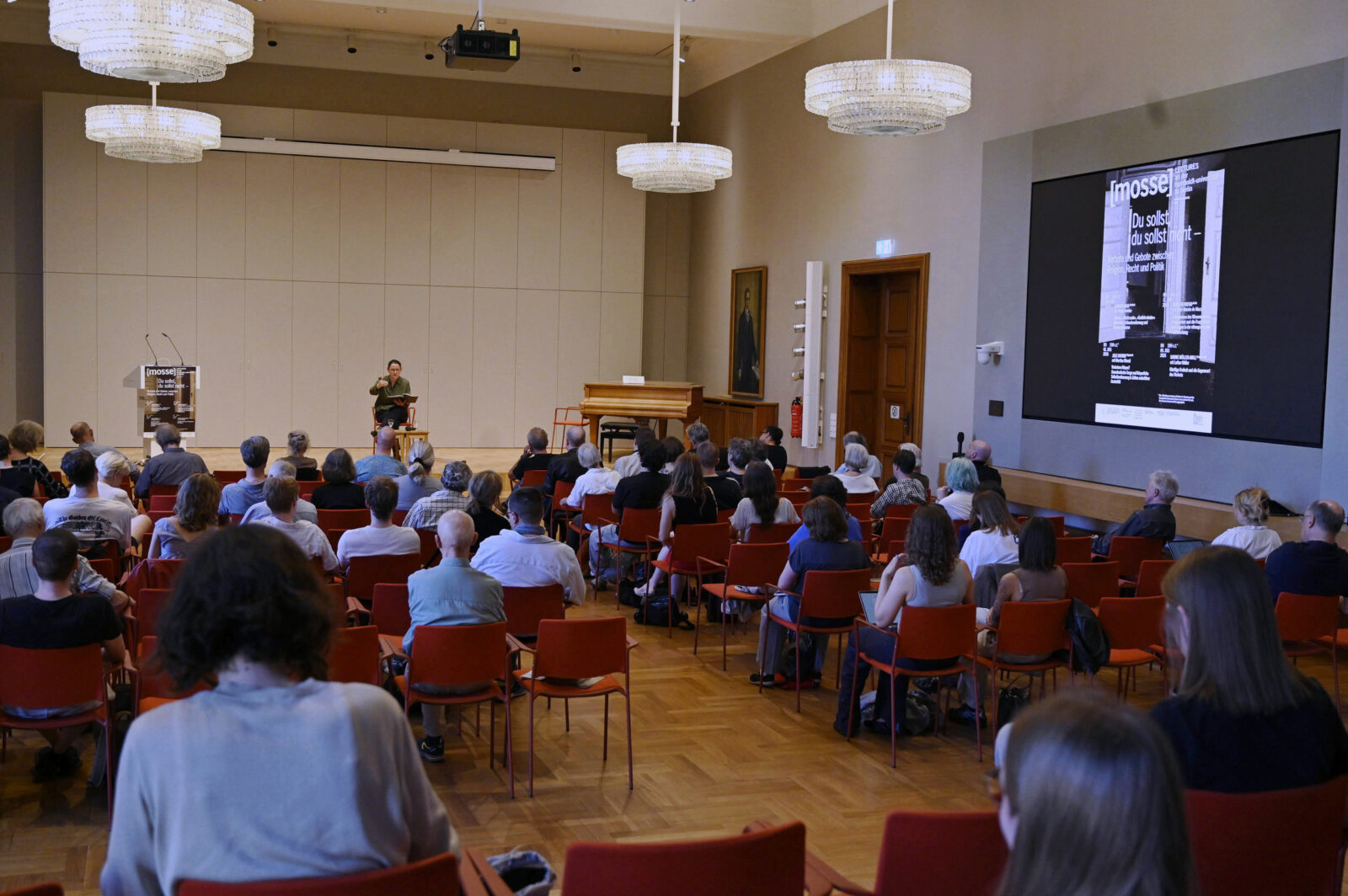
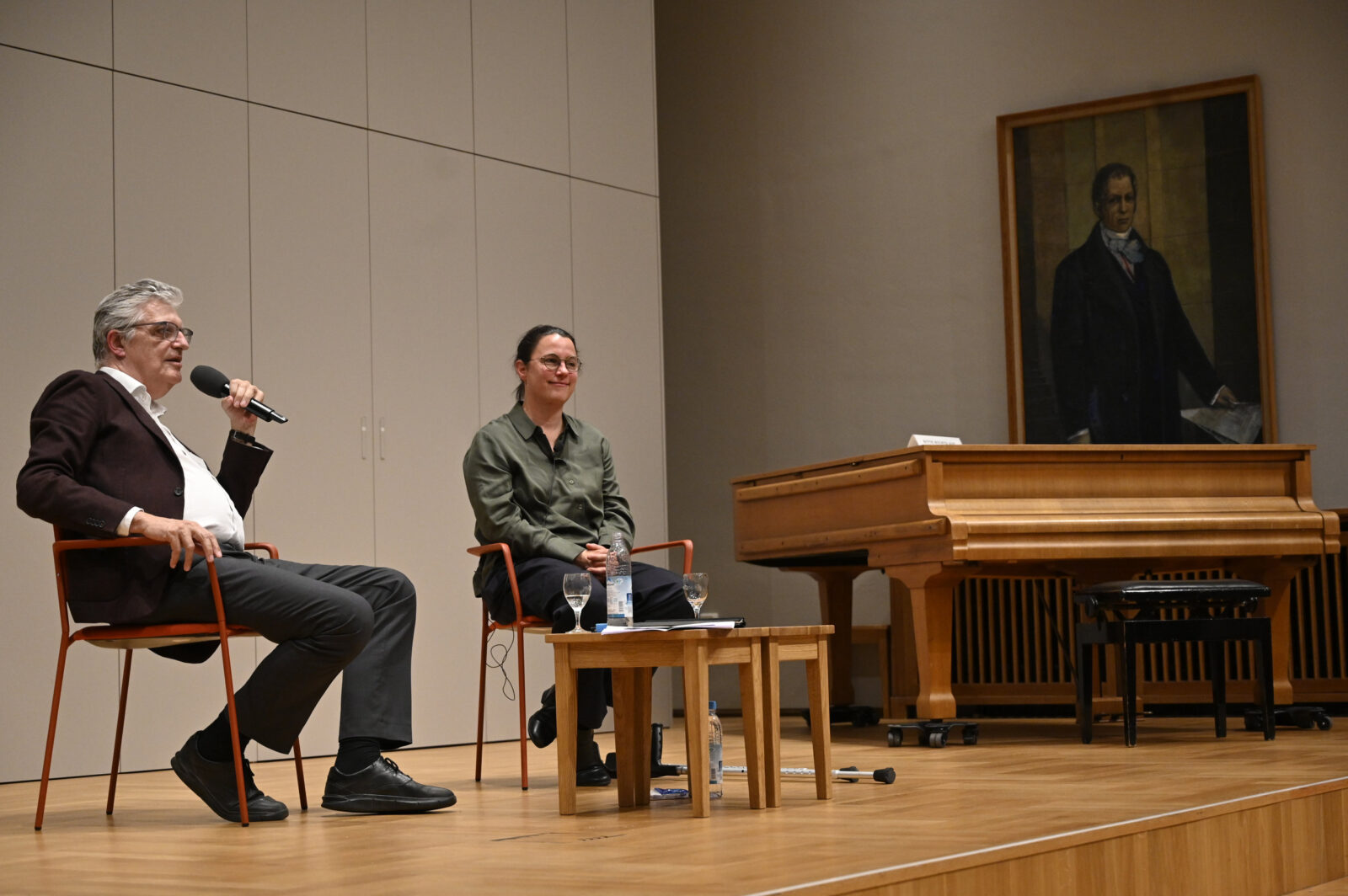
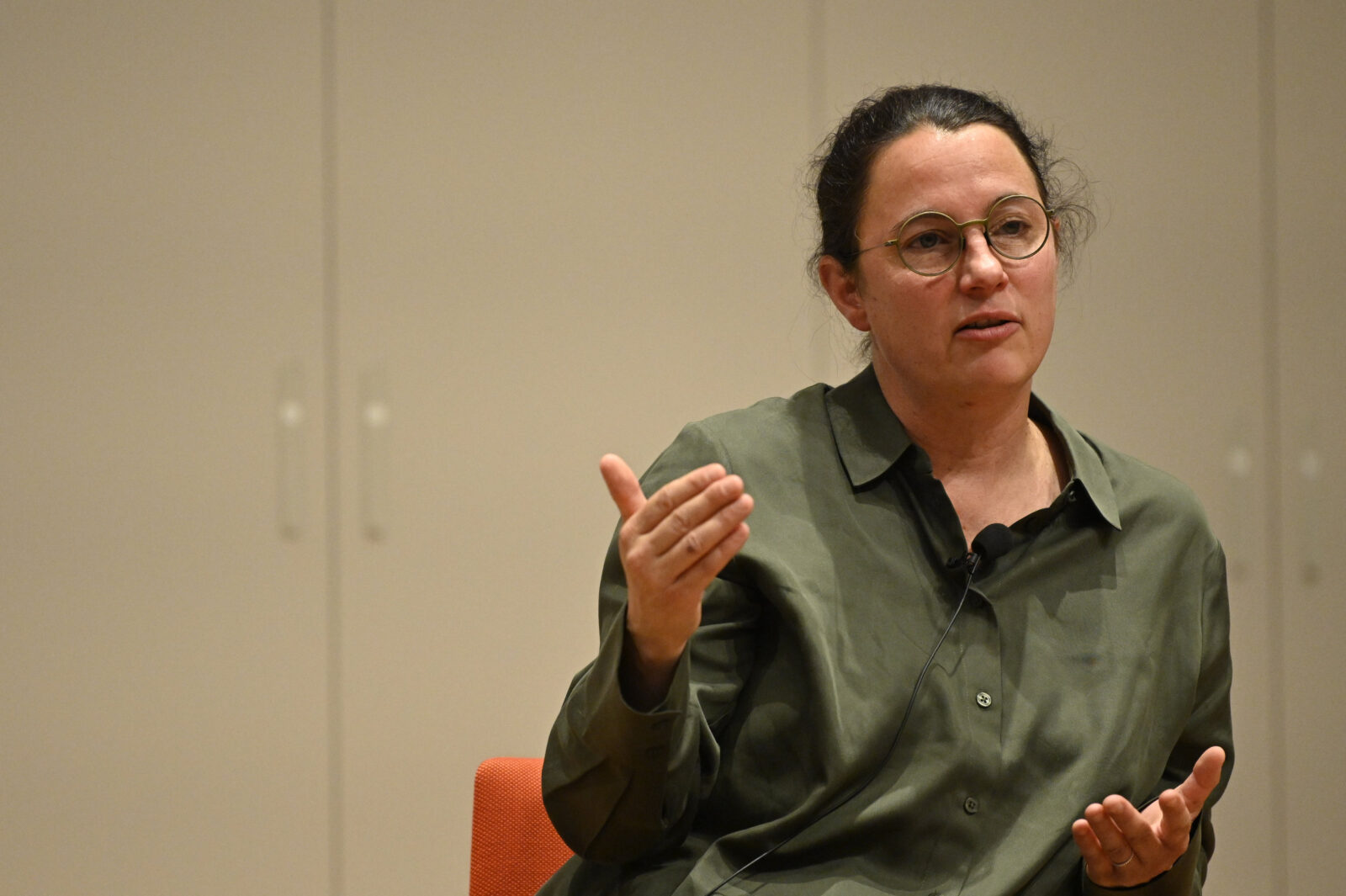
Sabine Müller-Mall: Legal philosopher; Professor of Law and Philosophy at the Center for Critical Computational Studies at Goethe-Universität Frankfurt am Main. Her research interests include the philosophy of law, constitutional theory, and constitutional law. She is currently conducting research, in particular, on legal normativity, the theory of judgment, and the relationship between law and aesthetics, as well as on fundamental legal and political questions arising from the use of computer-based technologies. In 2020, the book Freiheit und Kalkül. Die Politik der Algorithmen was published by Reclam. Her most recent book, in which she examines the influence of court rulings on constitutional developments, was published in 2023 by Suhrkamp under the title Verfassende Urteile. Eine Theorie des Rechts.
Lothar Müller has worked as an editor for the Frankfurter Allgemeine Zeitung and the Süddeutsche Zeitung, and lectured at the Institute for Comparative Literature at the Free University. Since 2010, he has served as Honorary Professor in the Institute for German Literature at the Humboldt University Berlin. He is the author of numerous publications, including Adrien Proust und sein Sohn Marcel. Beobachter der erkrankten Welt (2021) and Weiße Magie. Die Epoche des Papiers (2012). He was awarded the Berlin Prize for Literary Criticism in 2013.
