2022: Celia Applegate, “Music and Work 01, Working at Music: The ‘Work-Play Dilemma’ in Modern German Musical Culture”
Celia Applegate, “Music and Work 01, Working at Music: The ‘Work-Play Dilemma’ in Modern German Musical Culture”
George L. Mosse Distinguished Lectures
https://mosselectures.wisc.edu/program/
Monday, 5 December 2022, 18:00 IDT
This series of Jerusalem Mosse Lectures was originally scheduled for December 2020 but was postponed two years due to the COVID-19 global pandemic.
This lecture series was published as The Work of Music: Labor and Creativity in Germany’s Long Nineteenth Century (Madison: University of Wisconsin Madison, 2025).
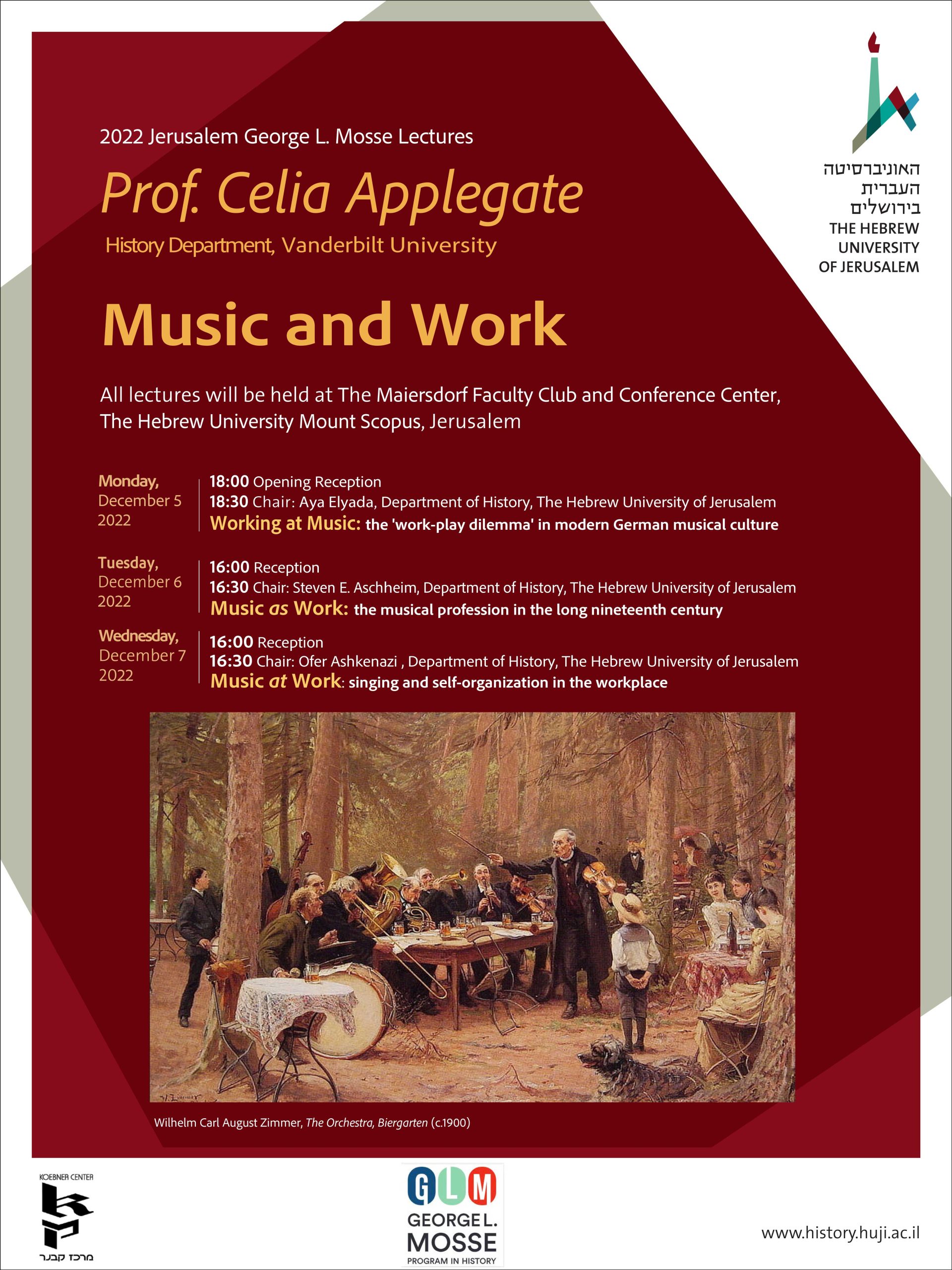
Maiersdorf Faculty Club and Conference Center
The Hebrew University of Jerusalem
Mount Scopus
Jerusalem 9190501
ISRAEL
Chair: Aya Elyada (Hebrew University of Jerusalem)
Sponsored by:
George L. Mosse Program in History
Global Mosse Lecture Series
Hebrew University Department of History
Koebner-Minerva Center for German History
Lecture Overview: Long before there was Muzak and AirPods, workers would often sing as they worked. This lecture will spread out from fields and factories and army barracks to the organized activities of workers in factory bands and workers’ festivals, and of soldiers at war. This was music not for listening but for playing and singing, accompanying work and after work. Rather than professional musicians, this lecture will focus on amateurs and their self-organization.
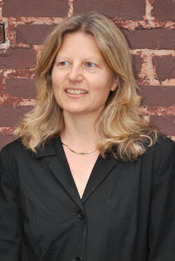
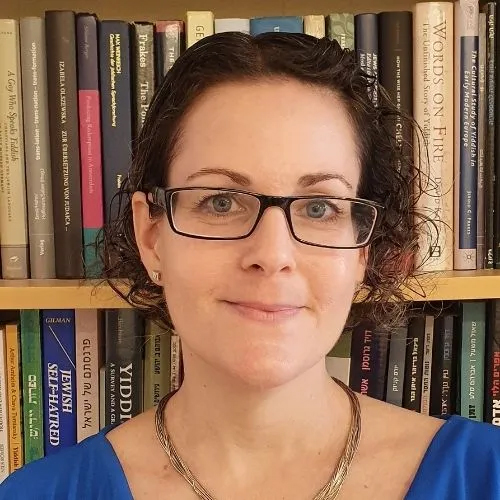
Her first book, A Goy Who Speaks Yiddish: Christians and the Jewish Language in Early Modern Germany, appeared in 2012 with Stanford University Press. The book explores the unique and unlikely phenomenon of “Christian Yiddishism” in early modern Germany, namely the Christian interest in and engagement with Yiddish language and literature from the beginning of the sixteenth century to the late eighteenth century.
Her second book, A Lingering Legacy: The Afterlife of Yiddish in German-Jewish Culture, 1818–1938, appeared in 2026 with Stanford University Press. The book explores a relatively unknown chapter in the German-Jewish “romance with the past,” namely the engagement of German-speaking Jewish authors, scholars, and intellectuals with their Yiddish literary heritage.