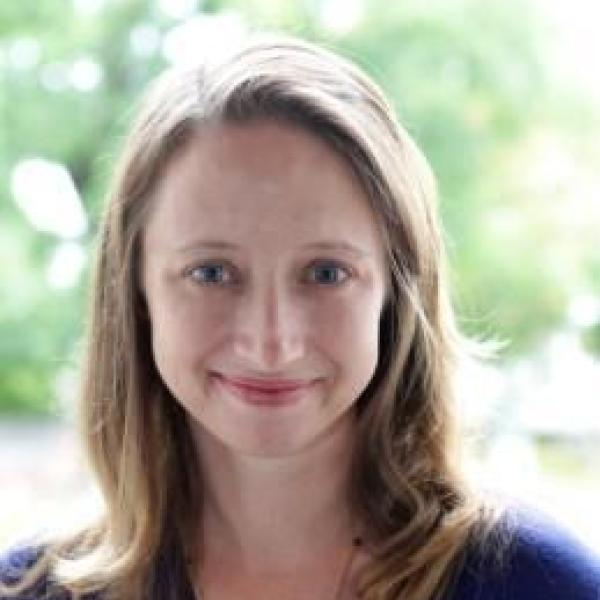
2019: Tara Zahra, “The Gallery of Vanished Husbands, Picture Brides, and Lost Children, How Migration Made the Modern Family 02: Single Women”
Tara Zahra, “The Gallery of Vanished Husbands, Picture Brides, and Lost Children, How Migration Made the Modern Family 02: Single Women”
George L. Mosse Distinguished Lectures
https://mosselectures.wisc.edu/program/
Wednesday, 18 September 2019, 15:30 CDT
Pyle Center
Vandeberg Auditorium
702 Langdon Street
Madison, WI 53706
Sponsored by:
George L. Mosse Program in History
University of Wisconsin–Madison Department of History
University of Wisconsin–Madison Center for German and European Studies
Chair: Kathryn Ciancia (University of Wisconsin–Madison)
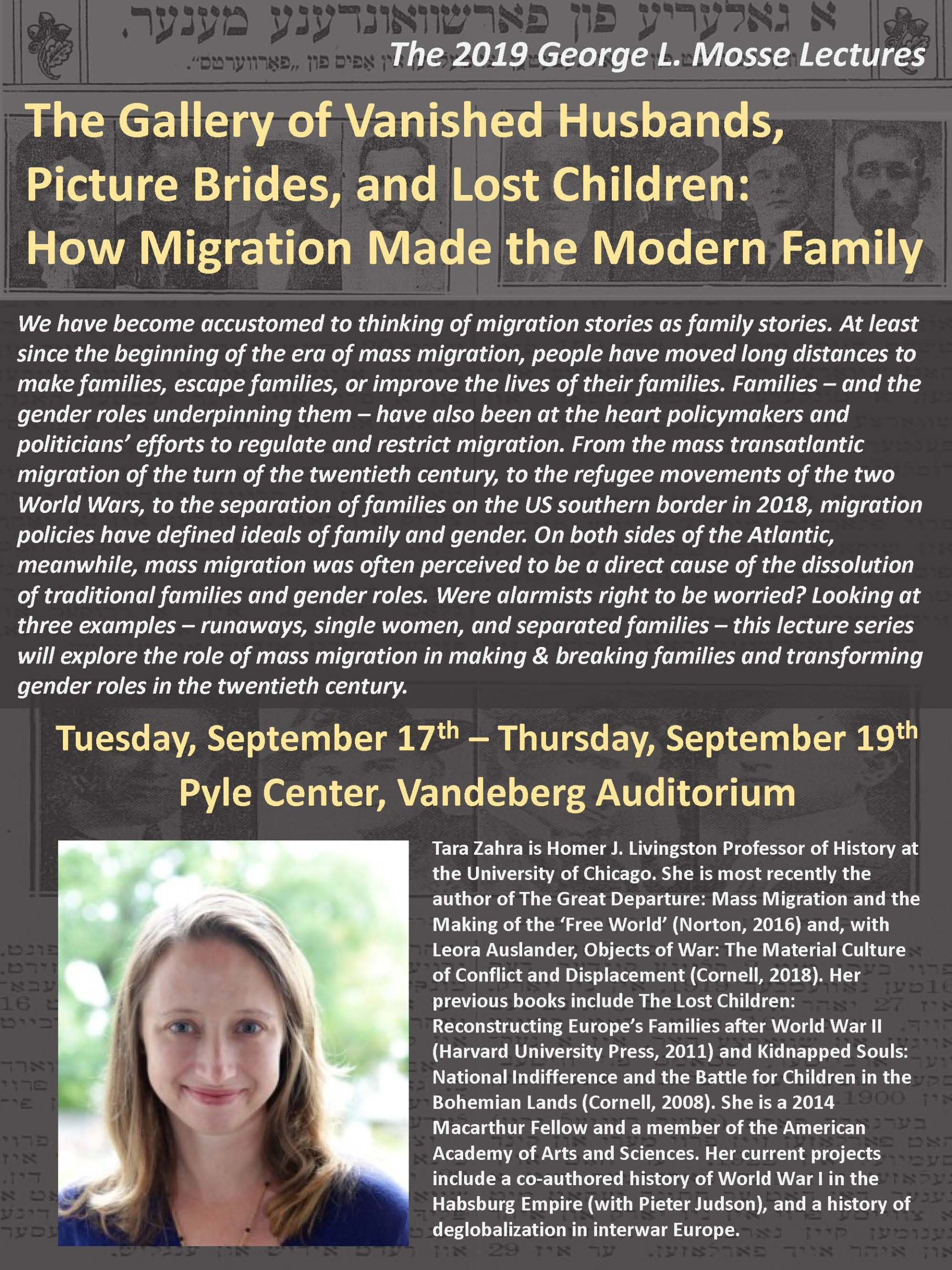
Lecture Series Overview: We have become accustomed to thinking of migration stories as family stories. At least since the beginning of the era of mass migration, people have moved long distances to make families, escape families, or improve the lives of their families. Families – and the gender roles underpinning them – have also been at the heart of policymakers and politicians’ efforts to regulate and restrict migration. From the mass transatlantic migration of the turn of the twentieth century, to the refugee movements of the two World Wars, to the separation of families on the US southern border in 2018, migration policies have defined ideals of family and gender. On both sides of the Atlantic, meanwhile, mass migration was often perceived to be a direct cause of the dissolution of traditional families and gender roles. Were alarmists right to be worried? Looking at three examples – runaways, single women, and separated families – this lecture series will explore the role of mass migration in making & breaking families and transforming gender roles in the twentieth century.

In her first book, On Civilization’s Edge: A Polish Borderland in the Interwar World (Oxford University Press, 2020), Ciancia explored how, after the end of the First World War, an eclectic group of Polish men and women—from border guards and urban planners to teachers and military settlers—attempted to modernize a poor, war-torn, and multiethnic eastern province. In their daily encounters with Jews, Ukrainians, Poles, and other populations in what had, until recently, been part of the Russian empire, they competed to define what it meant to be “civilized” within shifting local, national, and global contexts. Despite their ostensible appeals to national tolerance and inclusivity (which always featured exclusions of their own), the book shows how Polish “civilizers” developed increasingly radical demographic experiments prior to the Second World War.
Her current book project, Sites of Sovereignty: Law, Citizenship, and Lives on the Margins in Poland’s Long World War II, stitches together the stories of thousands of individuals—from Argentina to China and from Morocco to Mexico City—to reveal a bigger story about how wartime “state-ness” operated through quotidian interactions across the globe. As they fled Central Europe and arrived in their London-based exile, Polish state officials confronted an existential question: How could “state-ness” be maintained in the absence of territory? They answered it by activating a multitude of wide-ranging and non-territorially based legal mechanisms in far-flung locations: they arbitrated citizenship claims via a skeletal consular system; set up legally innovative maritime courts to enforce conscription and discipline in ports and on the high seas; and policed gendered social norms by prosecuting Polish women for prostitution. The book thus explores how the contingent rise of non-territorial European statehood intersected with coterminous questions about colonialism, imagined post-colonial futures, and the meaning of statehood in the international system.