2010: Mary Gluck, “The Invisible Jewish Budapest 03, Parvenues and Pariahs: The Scandal of the Budapest Orpheum”
Mary Gluck, “The Invisible Jewish Budapest 03, Parvenues and Pariahs: The Scandal of the Budapest Orpheum”
George L. Mosse Distinguished Lectures
https://mosselectures.wisc.edu/program/
Thursday, 16 September 2010, 16:00 CST
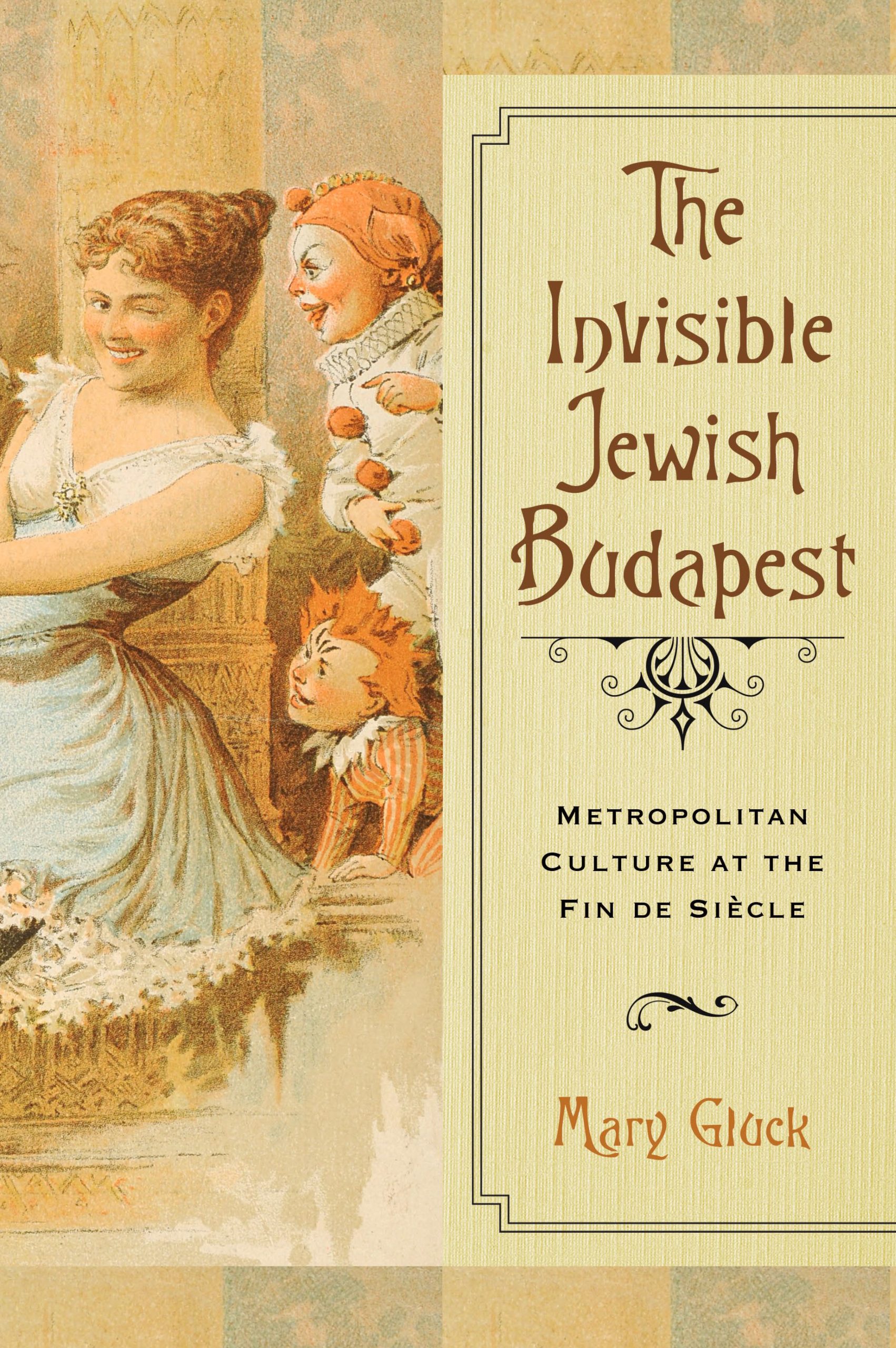
This lecture series was published as The Invisible Jewish Budapest: Metropolitan Culture at the Fin de Siècle (Madison: University of Wisconsin Madison, 2016).
University of Wisconsin–Madison
Conrad A. Elvehjem Building
Room L140
800 University Avenue
Madison, WI 53706
Sponsored by:
George L. Mosse Program in History
Global Mosse Lecture Series
University of Wisconsin–Madison History Department
Chair: David McDonald (University of Wisconsin–Madison)
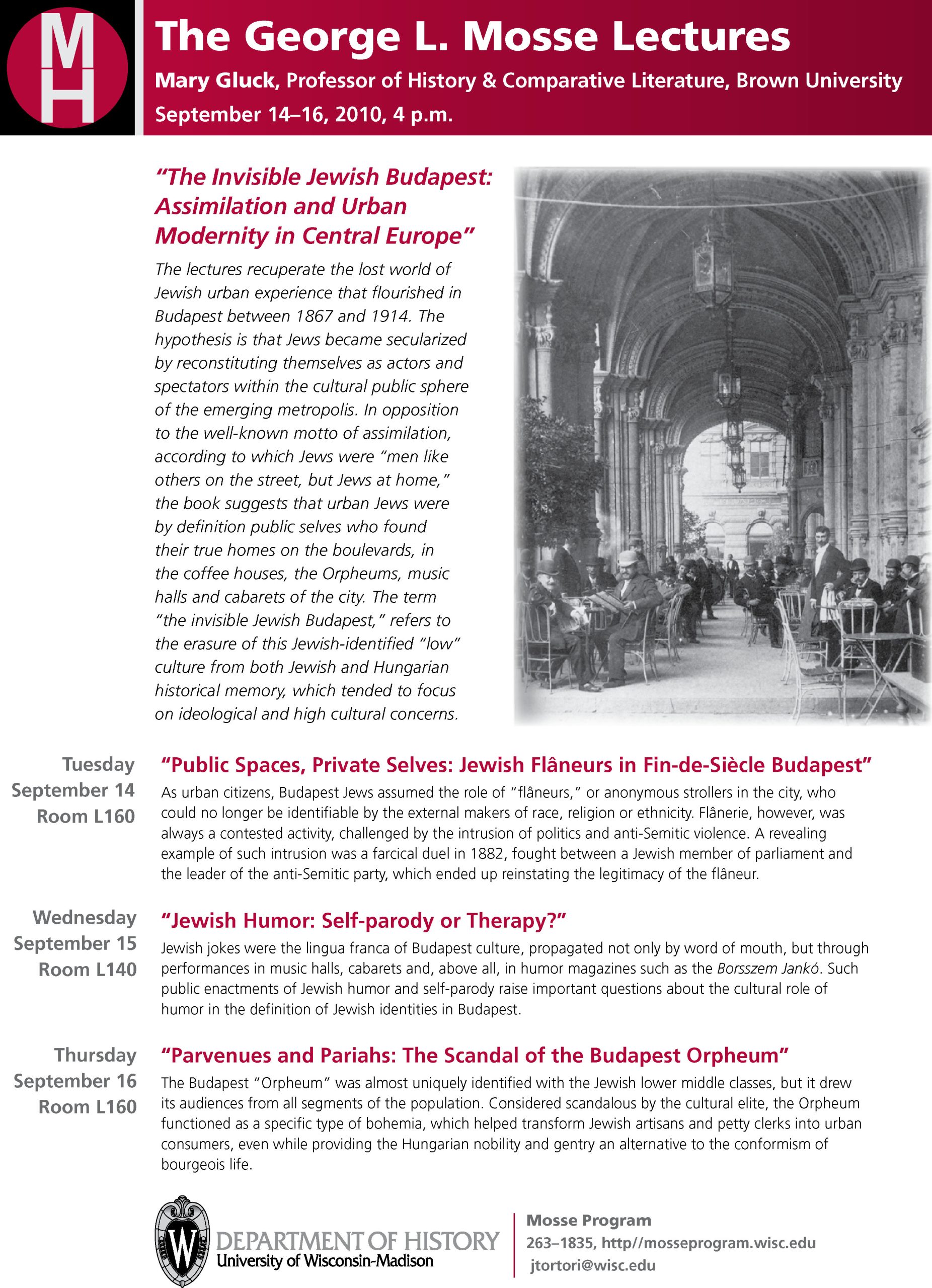
Lecture description: The Budapest “Orpheum” was almost uniquely identified with the Jewish lower middle classes, but it drew its audiences from all segments of the population. Considered scandalous by the cultural elite, the Orpheum functioned as a specific type of bohemia, which helped transform Jewish artisans and petty clerks into urban consumers, even while providing the Hungarian nobility and gentry an alternative to the conformism of bourgeois life.
Lecture series description: The projected book from which these lectures are taken attempts to recuperate the lost world of Jewish urban experience that flourished in Budapest between 1867 and 1914. Its hypothesis is that Jews became secularized by reconstituting themselves as actors and spectators within the cultural public sphere of the emerging metropolis. In opposition to the well-known motto of assimilation, according to which Jews were “men like others on the street, but Jews at home,” the book suggests that urban Jews were by definition public selves who found their true homes on the boulevards, in the coffee houses, the Orpheums, music halls and cabarets of the city. The term “the invisible Jewish Budapest,” refers to the erasure of this Jewish-identified “low” culture from both Jewish and Hungarian historical memory, which tended to focus on ideological and high cultural concerns.