2010: Stephan Sanders, “Homoseksualiteit en het Goede Leven. Over homoseksueel denken, doen en zijn” / “Homosexuality and the Good Life: About Homosexual Thinking, Doing, and Being”
Stephan Sanders, “Homoseksualiteit & het Goede Leven. Over homoseksueel denken, doen en zijn” / “Homosexuality & the Good Life: About Homosexual Thinking, Doing, and Being”
Amsterdam Mosse Lecture
https://mosselectures.wisc.edu/amsterdam/
Wednesday, 15 September 2010, 17:00 CST
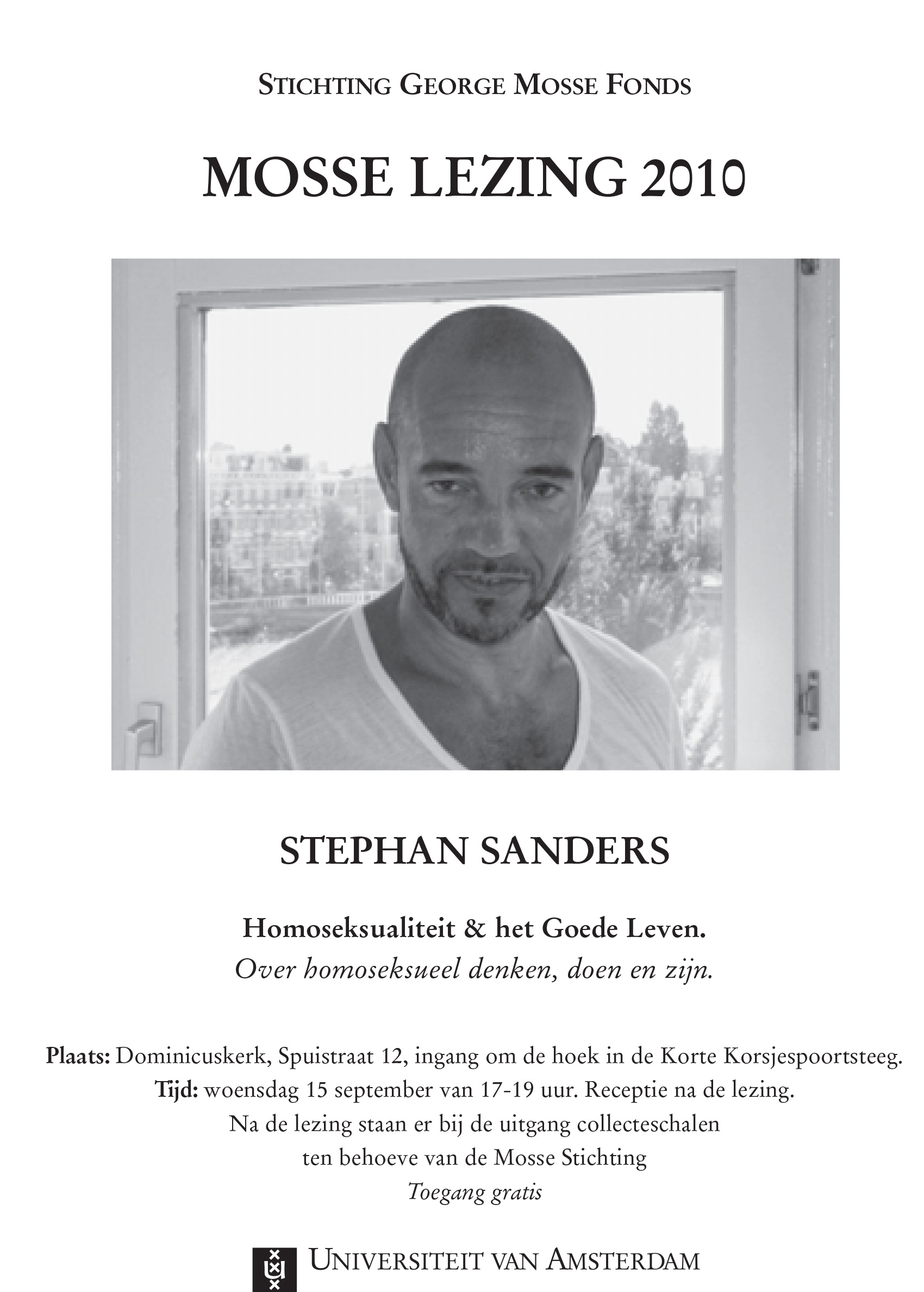
Dominicuskerk, Spuistraat 12
ingang om de hoek in de Korte Korsjespoortsteeg
1012 TS
Amsterdam
Sponsored by:
Stichting George Mosse Fonds
Universiteit van Amsterdam
Global Mosse Lecture Series
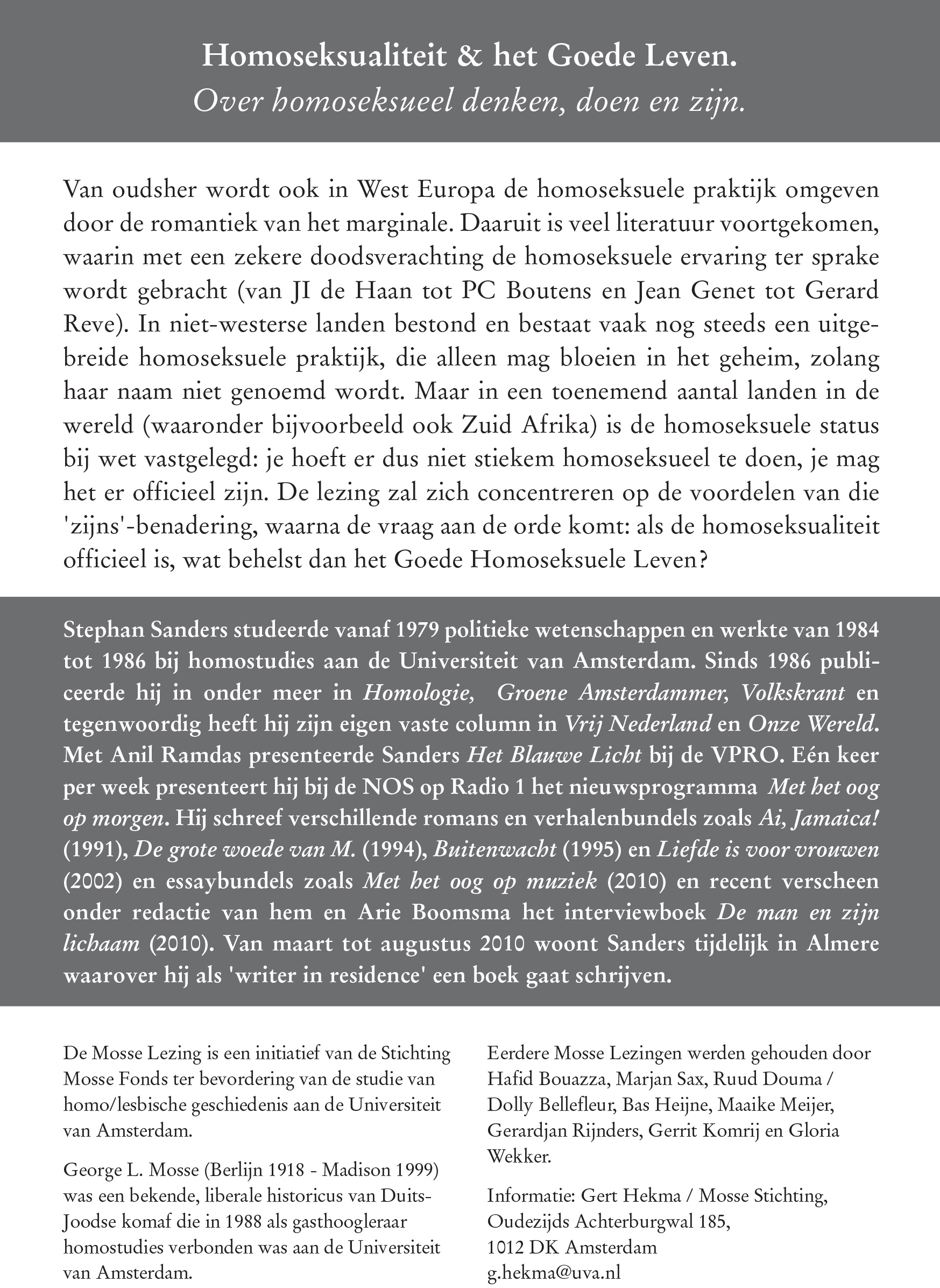
Lecture Description: Van oudsher wordt ook in West Europa de homoseksuele praktijk omgeven door de romantiek van het marginale. Daaruit is veel literatuur voortgekomen, waarin met een zekere doodsverachting de homoseksuele ervaring ter sprake wordt gebracht (van JI de Haan tot PC Boutens en Jean Genet tot Gerard Reve). In niet-westerse landen bestond en bestaat vaak nog steeds een uitge- breide homoseksuele praktijk, die alleen mag bloeien in het geheim, zolang haar naam niet genoemd wordt. Maar in een toenemend aantal landen in de wereld (waaronder bijvoorbeeld ook Zuid Afrika) is de homoseksuele status bij wet vastgelegd: je hoeft er dus niet stiekem homoseksueel te doen, je mag het er officieel zijn. De lezing zal zich concentreren op de voordelen van die ‘zijns’-benadering, waarna de vraag aan de orde komt: als de homoseksualiteit officieel is, wat behelst dan het Goede Homoseksuele Leven?
Historically, in Western Europe as well, homosexuality has been surrounded by the Romanticism of the marginal. This has given rise to much literature in which the homosexual experience is discussed with a certain disregard for death (from J.I. de Haan to PC Boutens and Jean Genet to Gerard Reve). In non-Western countries, there existed—and often still exists—an extensive homosexual practice that is only allowed to flourish in secret, as long as its name is not mentioned. However, in an increasing number of countries around the world (including South Africa, for example), homosexual status is established by law: one does not have to act homosexual secretly there; one is allowed to be one officially. The lecture will focus on the advantages of this ‘being’ approach, after which the question will be addressed: if homosexuality is official, what does the Good Homosexual Life entail?
Lecture Series Description: The annual Mosse lecture is an initiative of the George L. Mosse Fonds to promote the study of gay/lesbian history at the University of Amsterdam (UvA). It is organized in collaboration with IHLIA LGBTI Heritage. Mosse Lectures have been given by Hafid Bouazza, Marjan Sax, Ruud Douma aka Dolly Bellefleur, Bas Heijne, Maaike Meijer, Gerardjan Rijnders, Gerrit Komrij, Gloria Wekker, Stephan Sanders, M. Februari, Ted van Lieshout, Jet Bussemaker, Mohammed Benzakour, Hedy d’Ancona, Simon(e) van Saarloos, Gert Hekma, Karin Spaink, Joke Swiebel, and David Weissman.
Stephan Sanders studeerde vanaf 1979 politieke wetenschappen en werkte van 1984 tot 1986 bij homostudies aan de Universiteit van Amsterdam. Sinds 1986 publi- ceerde hij in onder meer in Homologie, Groene Amsterdammer, Volkskrant en tegenwoordig heeft hij zijn eigen vaste column in Vrij Nederland en Onze Wereld. Met Anil Ramdas presenteerde Sanders Het Blauwe Licht bij de VPRO. Eén keer per week presenteert hij bij de NOS op Radio 1 het nieuwsprogramma Met het oog op morgen. Hij schreef verschillende romans en verhalenbundels zoals Ai, Jamaica! (1991), De grote woede van M. (1994), Buitenwacht (1995) en Liefde is voor vrouwen (2002) en essaybundels zoals Met het oog op muziek (2010) en recent verscheen onder redactie van hem en Arie Boomsma het interviewboek De man en zijn lichaam (2010). Van maart tot augustus 2010 woont Sanders tijdelijk in Almere waarover hij als ‘writer in residence’ een boek gaat schrijven.
Stephan Sanders studied political science starting in 1979 and worked from 1984 to 1986 in the field of gay studies at the University of Amsterdam (UvA). Since 1986, he has contributed to various publications, including Homologie, Groene Amsterdammer, and Volkskrant. He currently writes a regular column for Vrij Nederland and Onze Wereld. Sanders co-hosted the program Het Blauwe Licht [The Blue Light] on VPRO with Anil Ramdas. Once a week, he presents the news program Met het oog op morgen [With an Eye on Tomorrow] on Radio 1 at NOS. He has authored several novels and short story collections, including Ai, Jamaica! [Oh, Jamaica!] (1991), De grote woede van M. [The Great Anger of M.] (1994), Buitenwacht [Outside Watch] (1995), and Liefde is voor vrouwen [Love is for Women] (2002), as well as essay collections like Met het oog op muziek [With an Eye on Music] (2010). Recently, he edited De man en zijn lichaam [The Man and His Body] (2010), an interview book with Arie Boomsma. From March to August 2010, Sanders lived temporarily in Almere, where he worked on a book as part of a writer in residence program.
Stichting George Mosse Fonds
De Mosse Lezing is een initiatief van de Stich- ting George Mosse Fonds ter bevordering van de studie van homo/lesbische geschiedenis aan de Universiteit van Amsterdam.
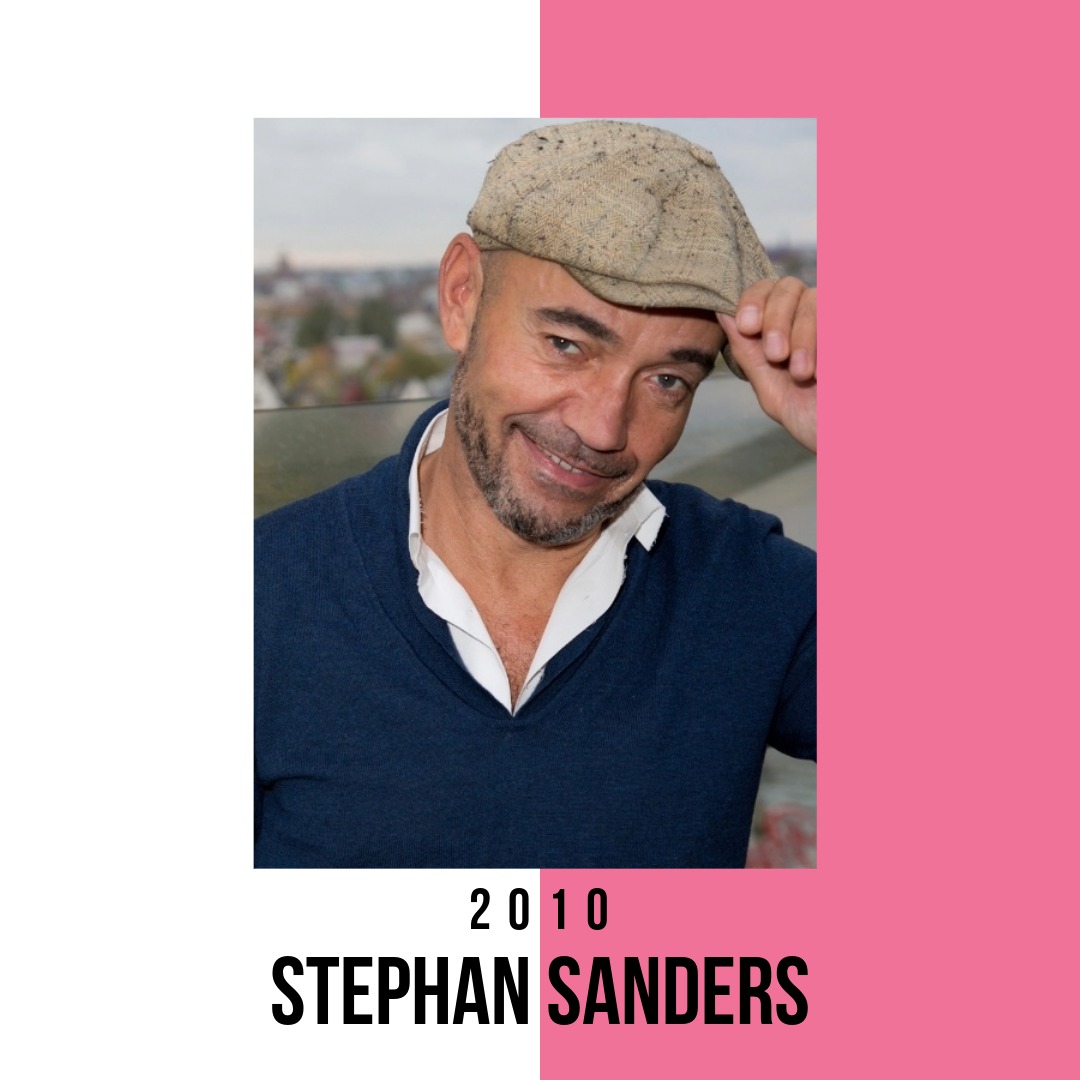
Sanders plaatste de homo niet alleen tegenover de samenleving, maar midden in de vraag hoe mensen willen leven.
The 2010 Mosse Lecture asked how homosexual experience opens a conversation about freedom and responsibility. Sanders placed the homosexual not only opposite society, but at the center of the question of how people want to live.
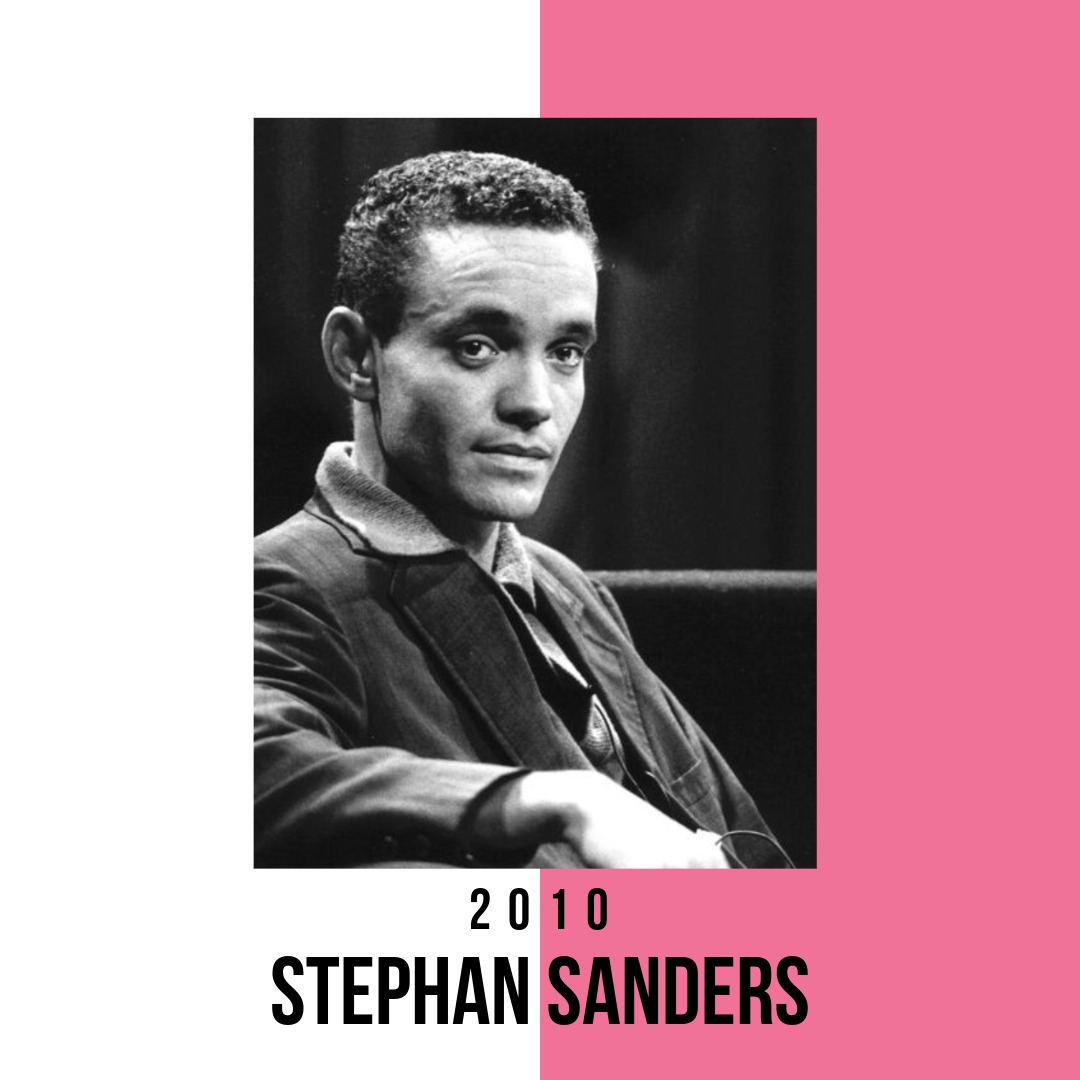
Zijn titel verbond denken, doen en zijn. Daarmee verschoof de aandacht van rechten naar dagelijks leven en zelfvorming.
Sanders considered homosexuality not only as a political issue, but also as a way of life. His title connected thinking, doing, and being. In doing so, the focus shifted from rights to everyday life and self-formation.
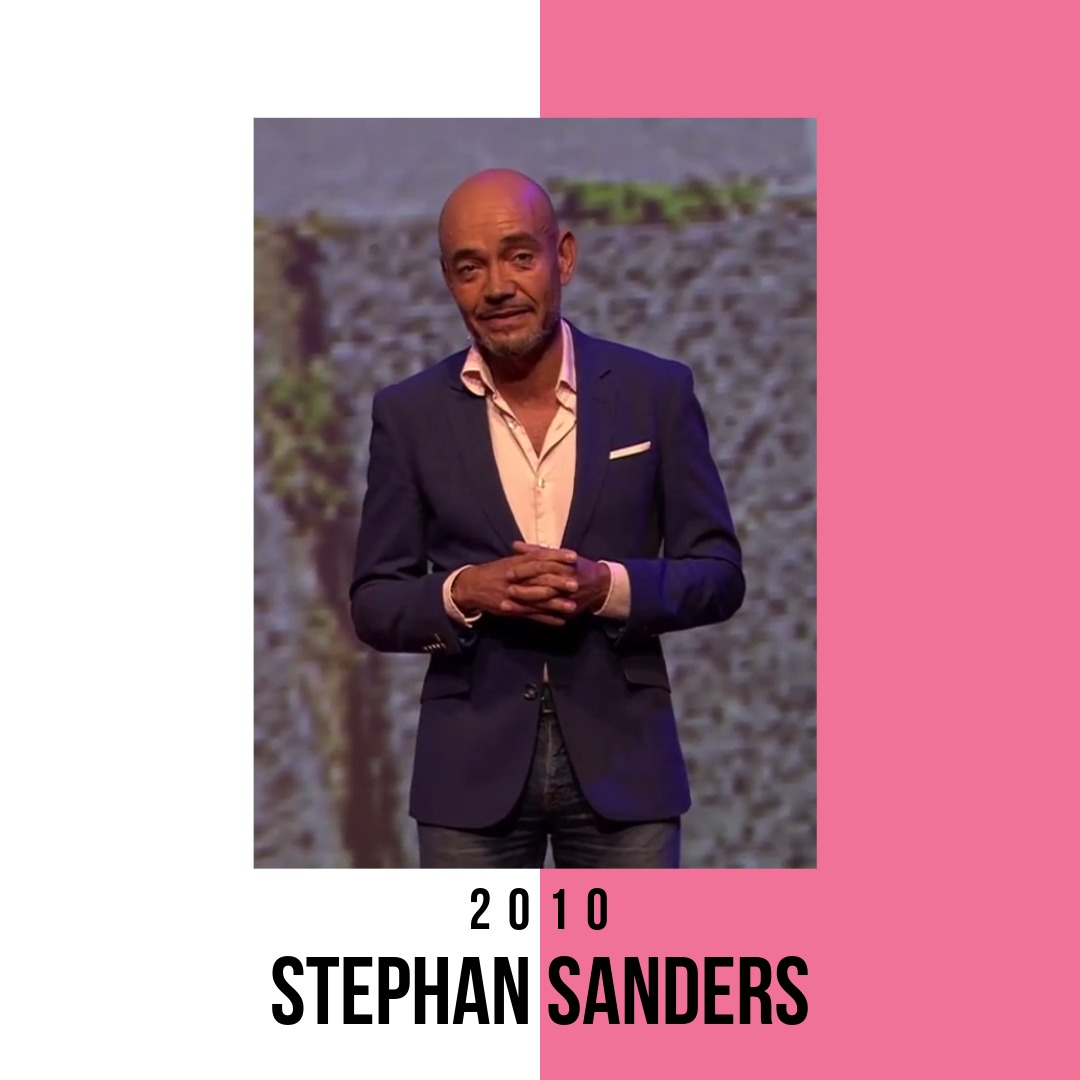
De lezing stelde een brede vraag: wat betekent een goed leven wanneer homoseksualiteit meer is dan identiteit alleen?
In 2010, writer and essayist Stephan Sanders delivered the Mosse Lecture under the title “Homosexuality and the Good Life: On Homosexual Thinking, Doing, and Being.” The lecture posed a broad question: what does a good life mean when homosexuality is more than identity alone?