
2010: Günter Gebauer, Ines Geipel, and Wolfgang Schild, “Forum: Korruption im Sport”/”Forum: Corruption in Sports”
Günter Gebauer, Ines Geipel, and Wolfgang Schild, “Forum: Korruption im Sport”/”Forum: Corruption in Sports”
Berlin Mosse Lecture
https://mosselectures.wisc.edu/berlin/
Thursday, 1 July 2010, 19:00 CET
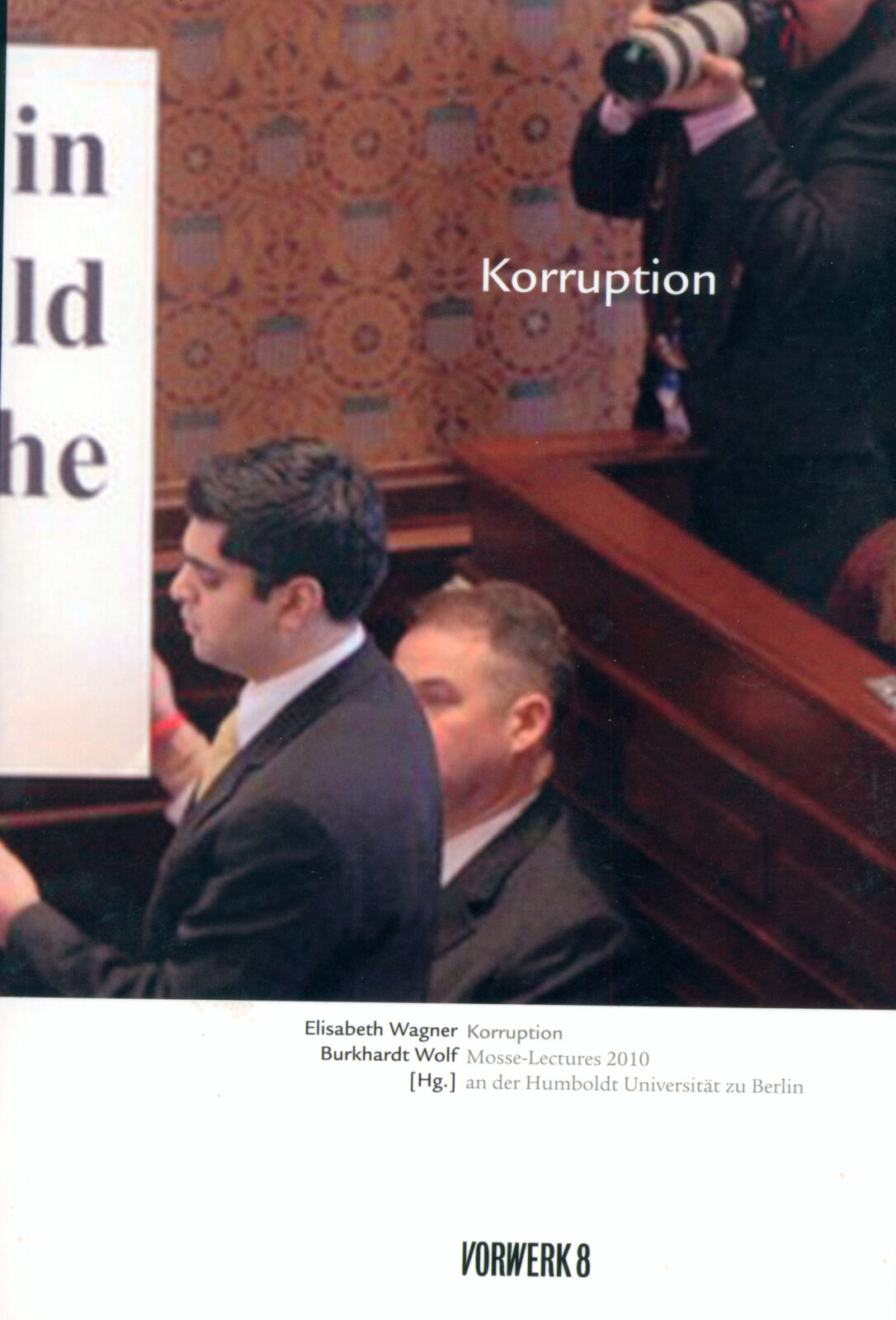
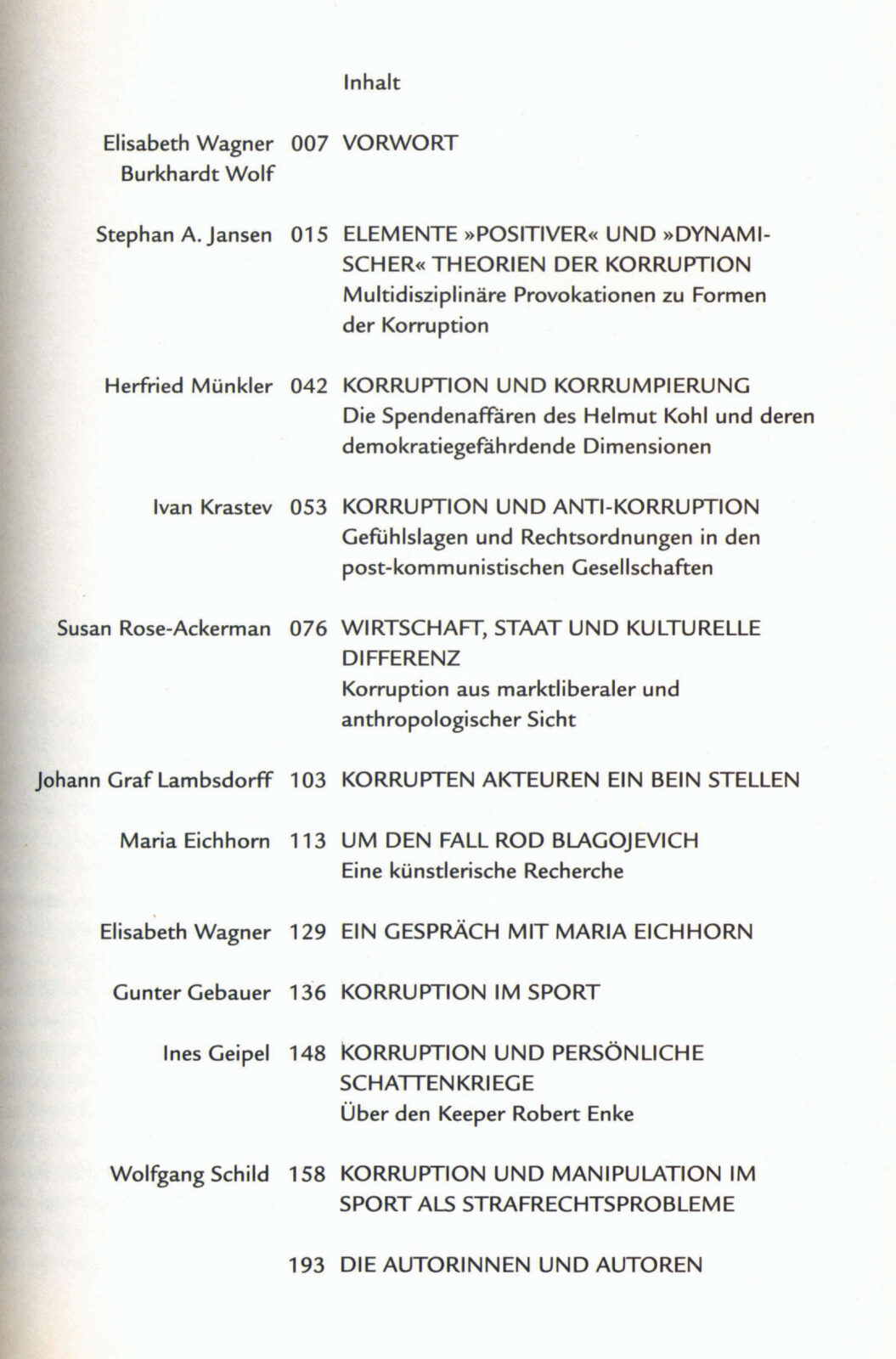
A version of these lectures was published in Elisabeth Wagner, Burkhardt Wolf, ed. Korruption. Mosse-Lectures 2010 (Berlin: Humboldt Universität zu Berlin, 2011), 136-147, 148-157, 158-192. See table of contents below.
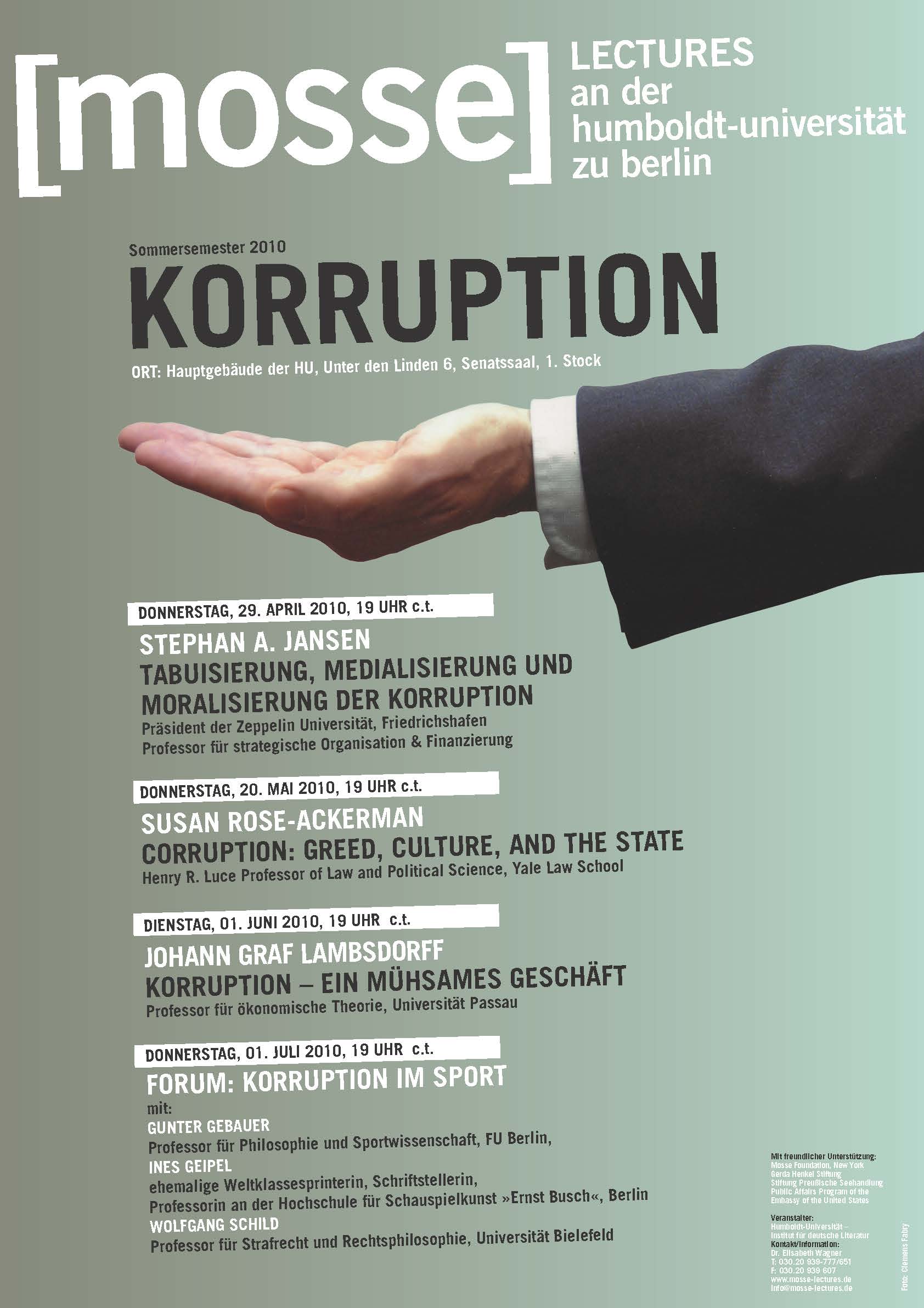
Senatssaal of Humboldt University
Unter den Linden 6
1. Stock
10117 Berlin
GERMANY
Sponsored by:
[mosse] LECTURES an der humboldt-universität zu berlin
The Mosse Foundation
Global Mosse Lecture Series
Fritz Thyssen Stiftung
Gerda Henkel Stiftung
Institut für deutsche Literatur
Humboldt University
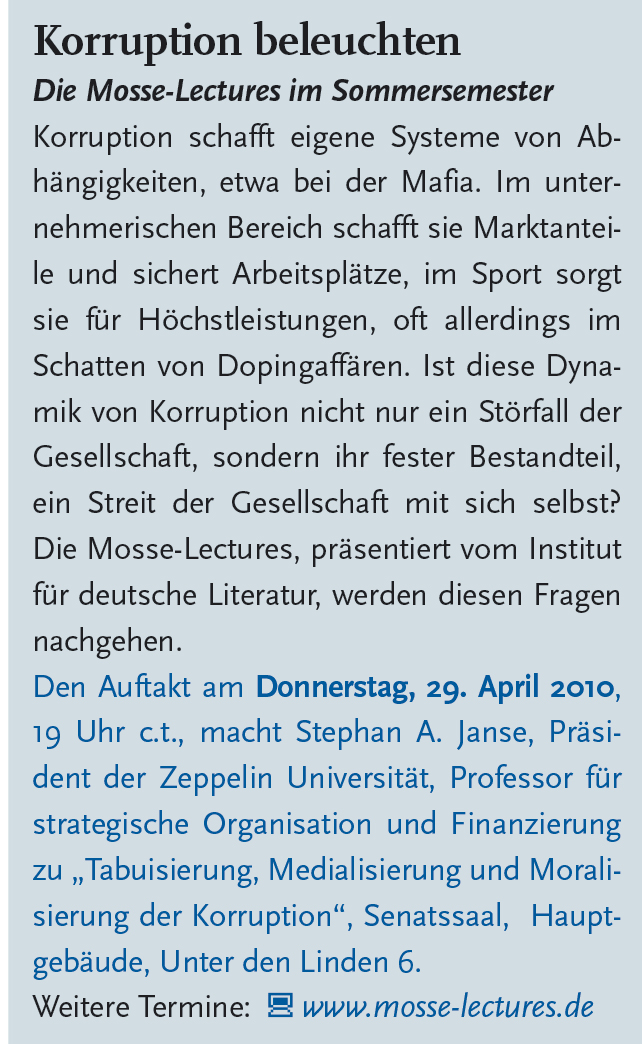
Lecture Description: Korruption wird wahrgenommen als eine „Störung“ des als „normal“ angenommenen Gemeinsinns. Die moralische Empörung ist groß, was aber zur Vereinfachung eines komplexen gesellschaftlichen Zusammenhangs führt. Nicht zuletzt in der Welt des Sports, wo von der „Korruptionswährung“ des Doping zwangsläufig die Rede ist bevor das Spiel beginnt. Die durch Professionalisierung und Kommerzialisierung selbstentfremdete Sportwelt – wie weit ist sie entfernt von dem, was der Surrealist Roger Caillois einst in seinem Buch „Die Spiele und die Menschen“ ausgedacht hat: vom rauschhaften Erlebnis ohne Zweck und Nutzen, mit eigenen Regeln bei ungewissem Ausgang? Das Doping ist nur ein Effekt im System einer organisierten Unverantwortlichkeit, das Heroen an Leistung und Ruhm hervorbringt und nur allzu oft körperlich und seelisch kranke Menschen hinterlässt. Wie kann gegen den von der Gesellschaft zu verantwortenden Missbrauch mit den Kontrollen und Selbstkontrollen der Zivilgesellschaft und mit strafrechtlichen Verfahren vorgegangen werden? Kann es eine Völkerverständigung über die zulässigen Praktiken des völkerverbindenden Sports geben? Peter Sloterdijk hat schon einmal gefragt, warum die chinesische Regierung „den Dalai Lama fürchtet, und warum sie nicht Ines Geipel fürchtet“.
Lecture Series Description: Public opinion regarding the current financial crisis has underlined the doubts about the competence and integrity of politicians and managers and their self-imposed adherence to corporate governance guidelines. Corruption, – understood in a political sense as damage caused to the bonum commune through particular interests and acceptance of benefits, and economically defined as corporate activities in a grey zone between legitimacy and legality – is in the media generally condemned as moral misconduct. But this is very little help in the operative control of corruption as ‘structural interlinking’ (Luhmann) of economic, political, social-psychological and criminological realities. Effective in the media, but not counterproductive with respect to the elucidation and abatement of corruption, is a certain fascination with the ‘scandal’, the unknown figures, black holes and slush funds. The intrinsic ‚incommunicability‘ of corruption (the keeping quiet about the exertion of influence on administrative and legislative processes, on trade agreements and investment plans) is always fuel for more conspiracy theories in your local bar, in the thriller on TV or in the talk shows. ‘Our spontaneous moral outrage about cases of corruption is quite obviously an argument of society with itself’, writes the sociologist Dirk Baecker. Corruption is perceived as a ‘dysfunction’ of the ‘normal’ societal reproduction.
The Mosse-Lectures are considering geo-political, historical and media-research aspects to further explore this ‘phenomenon of an unenlightened capitalism’. It’s about grasping the peculiar functionality and dynamic of corruption in specific areas of activity: for example in a corporation (the fight for market share and jobs legitimizes the break with the company’s own anti-corruption policies), in administration (the paradoxes of inclusion and exclusion in the decision about investments), in the specific cultural environment (the very own ‘currency of corruption’ that insider teams and the mafia appear to have: reciprocal support, social affiliation, complex personal and collective dependencies). Even the activities of anti-corruption organizations such as Transparency International with its strategy of enlightenment (not ‘confrontational’ but ‘consensual’) move within the institutional stress field of functionality and dynamic. Supporting international corporations which it is observing, Transparency often has to endure allegations by NGOs of being system-immanent itself.
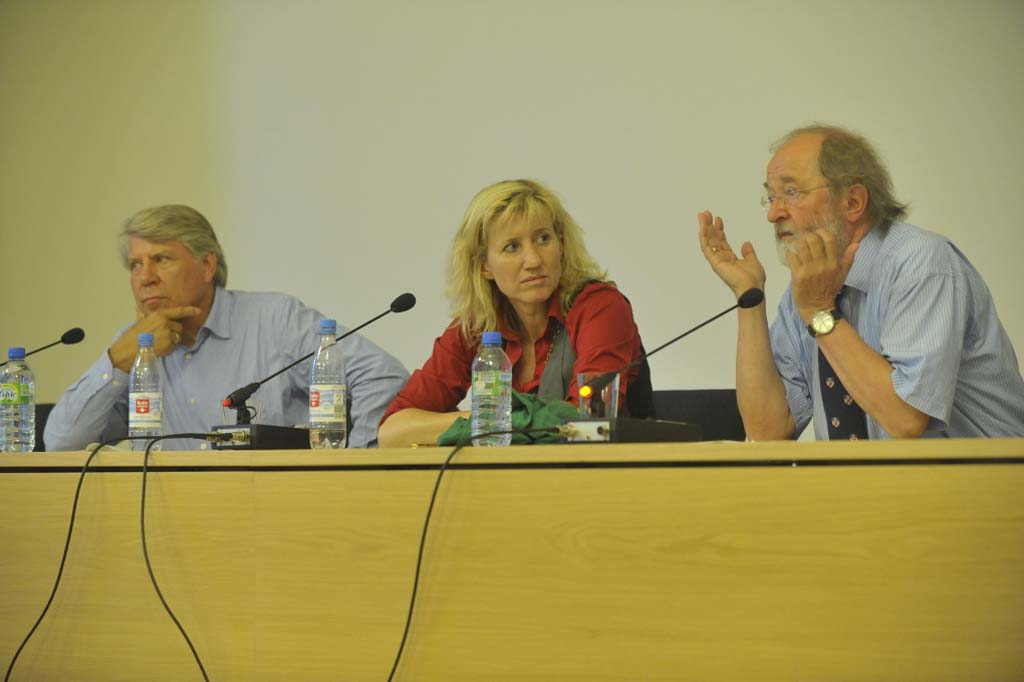
Photo Credit: Niels Leiser for the Mosse Lectures
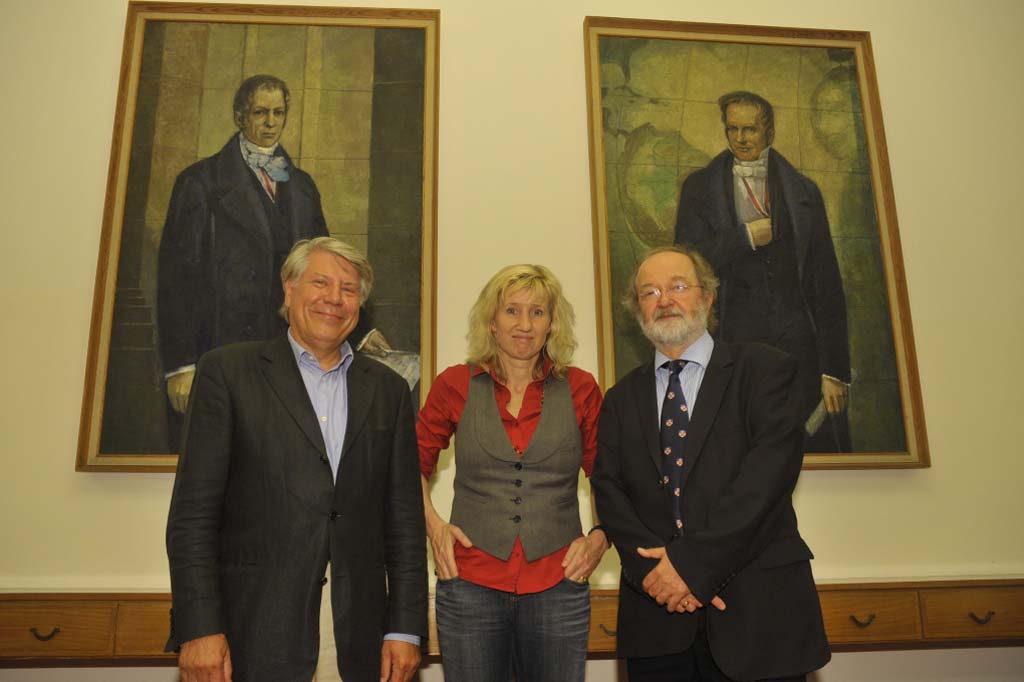
Photo Credit: Niels Leiser for the Mosse Lectures
Günter Gebauer: Professor für Philosophie und Sportwissenschaft, FU Berlin, Arbeiten zur Sprachphilosophie, Ästhetik, Wissenschaftstheorie, Anthropologie des Körperverhältnisses. Veröffentlichungen u.a.: Sport, Eros, Tod (1986), Die andere Utopie der Moderne. Olympias Weg von der Religion zur Droge (1996), Poetik des Fußballs (2006), Wittgensteins anthropologisches Denken (2009).
Ines Geipel: Professorin an der Hochschule für Schauspielkunst Ernst Busch in Berlin, ehemalige Leistungssportlerin der DDR, Autorin von Romanen, literarischen und politischen Dokumentationen. Inge Müller – Die Biographie (2002), Journal eines Doping-Prozesses (2001), Heimspiel. Roman (2005), No Limit. Wie viel Doping verträgt die Gesellschaft? (2008).
Wolfgang Schild: Professor für Strafrecht und Rechtsphilosophie, Universität Bielefeld, Arbeiten zur Rechtsstaatlichkeit, zur Rechtsgeschichte im Mittelalter und der Frühen Neuzeit (Hexenverfolgungen), Sportstrafrecht (2002), Leben in Mittelalter und Moderne (2003), Dimensionen der Schuldunfähigkeit (2009), Tatherrschaftslehre (2009), Folter, Pranger, Scheiterhaufen (im Erscheinen 2010).
