
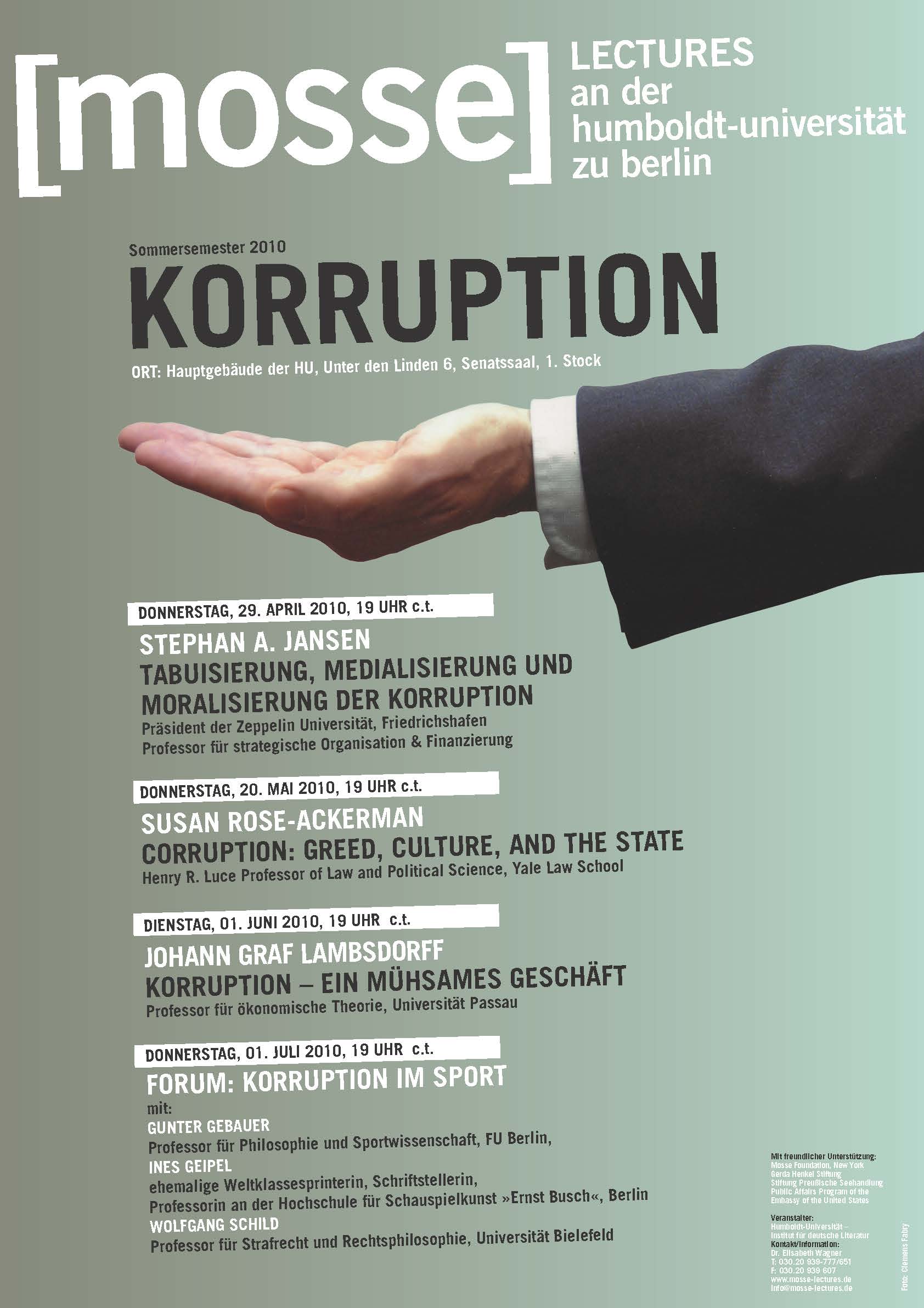
2010: Johann Graf Lambsdorff, “Korruption – Ein mühsames Geschäft”/”Corruption: A Difficult Business”
Johann Graf Lambsdorff, “Korruption – Ein mühsames Geschäft”/”Corruption: A Difficult Business”
Berlin Mosse Lecture
https://mosselectures.wisc.edu/berlin/
Tuesday, 1 June 2010, 19:00 CET
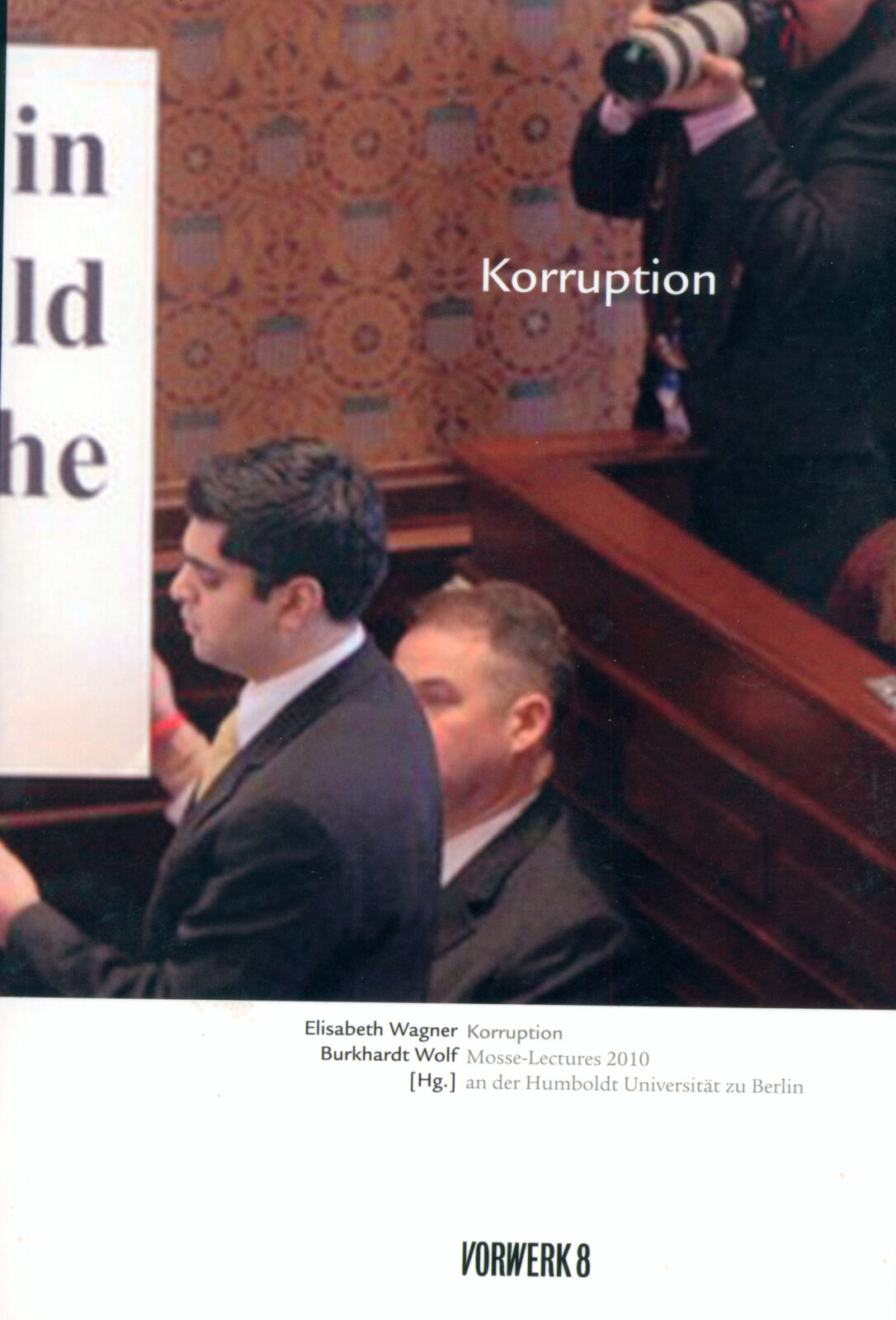
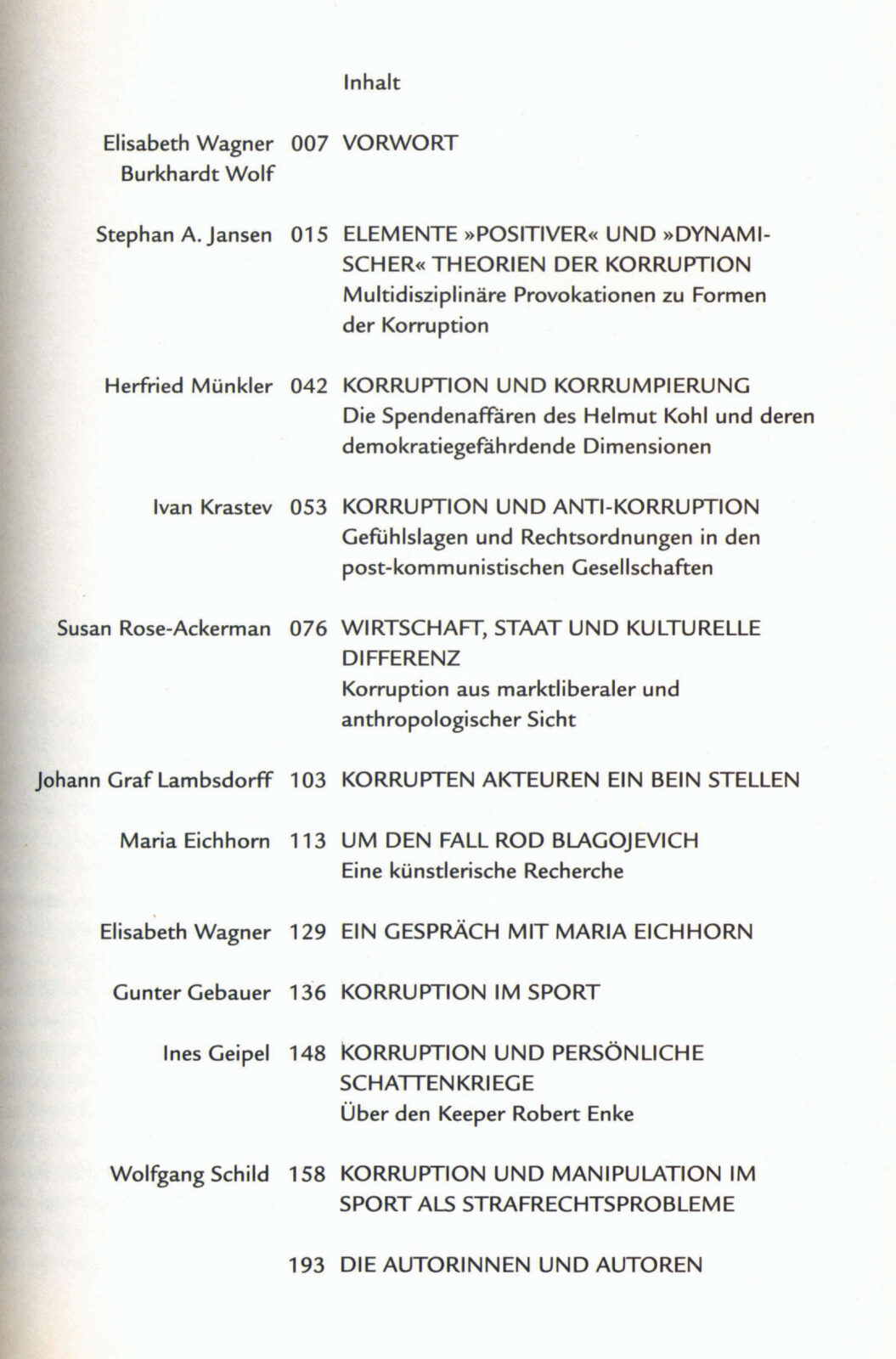
A version of this lecture was published in Elisabeth Wagner, Burkhardt Wolf, ed. Korruption. Mosse-Lectures 2010 (Berlin: Humboldt Universität zu Berlin, 2011), 103-112. See table of contents below.
Senatssaal of Humboldt University
Unter den Linden 6
1. Stock
10117 Berlin
GERMANY
Sponsored by:
[mosse] LECTURES an der humboldt-universität zu berlin
The Mosse Foundation
Global Mosse Lecture Series
Fritz Thyssen Stiftung
Gerda Henkel Stiftung
Institut für deutsche Literatur
Humboldt University
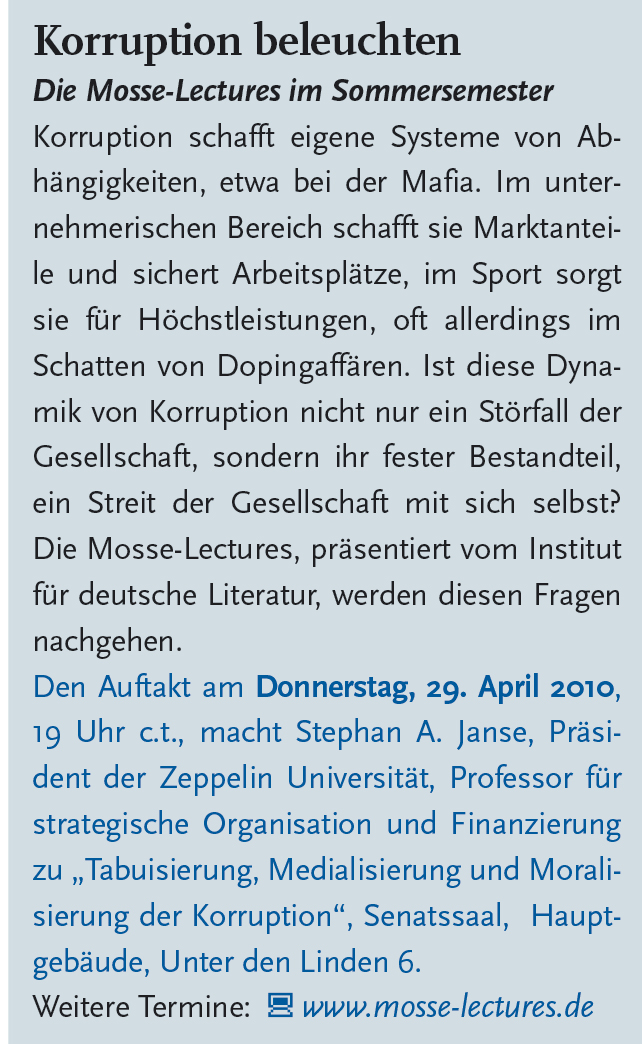
Lecture Description: Moral ist ein knappes Gut, zumeist zu knapp um hiermit die Korruption wirksam zu bekämpfen. Glücklicherweise ist Korruption aber ein mühsames Geschäft, ertragreich nur für den, der die Kunst der Bestechung beherrscht. Mehr als mögliche Strafen fürchten korrupte Akteure von ihren Partnern betrogen zu werden oder ihre Reputation der Verlässlichkeit zu verlieren. Erfolgreiche Korruptionsbekämpfung setzt hier an. Der Vortrag liefert hierzu empirische und experimentelle Evidenz und beschreibt beispielhafte Reformansätze.
Lecture Series Description: Public opinion regarding the current financial crisis has underlined the doubts about the competence and integrity of politicians and managers and their self-imposed adherence to corporate governance guidelines. Corruption, – understood in a political sense as damage caused to the bonum commune through particular interests and acceptance of benefits, and economically defined as corporate activities in a grey zone between legitimacy and legality – is in the media generally condemned as moral misconduct. But this is very little help in the operative control of corruption as ‘structural interlinking’ (Luhmann) of economic, political, social-psychological and criminological realities. Effective in the media, but not counterproductive with respect to the elucidation and abatement of corruption, is a certain fascination with the ‘scandal’, the unknown figures, black holes and slush funds. The intrinsic ‚incommunicability‘ of corruption (the keeping quiet about the exertion of influence on administrative and legislative processes, on trade agreements and investment plans) is always fuel for more conspiracy theories in your local bar, in the thriller on TV or in the talk shows. ‘Our spontaneous moral outrage about cases of corruption is quite obviously an argument of society with itself’, writes the sociologist Dirk Baecker. Corruption is perceived as a ‘dysfunction’ of the ‘normal’ societal reproduction.
The Mosse-Lectures are considering geo-political, historical and media-research aspects to further explore this ‘phenomenon of an unenlightened capitalism’. It’s about grasping the peculiar functionality and dynamic of corruption in specific areas of activity: for example in a corporation (the fight for market share and jobs legitimizes the break with the company’s own anti-corruption policies), in administration (the paradoxes of inclusion and exclusion in the decision about investments), in the specific cultural environment (the very own ‘currency of corruption’ that insider teams and the mafia appear to have: reciprocal support, social affiliation, complex personal and collective dependencies). Even the activities of anti-corruption organizations such as Transparency International with its strategy of enlightenment (not ‘confrontational’ but ‘consensual’) move within the institutional stress field of functionality and dynamic. Supporting international corporations which it is observing, Transparency often has to endure allegations by NGOs of being system-immanent itself.
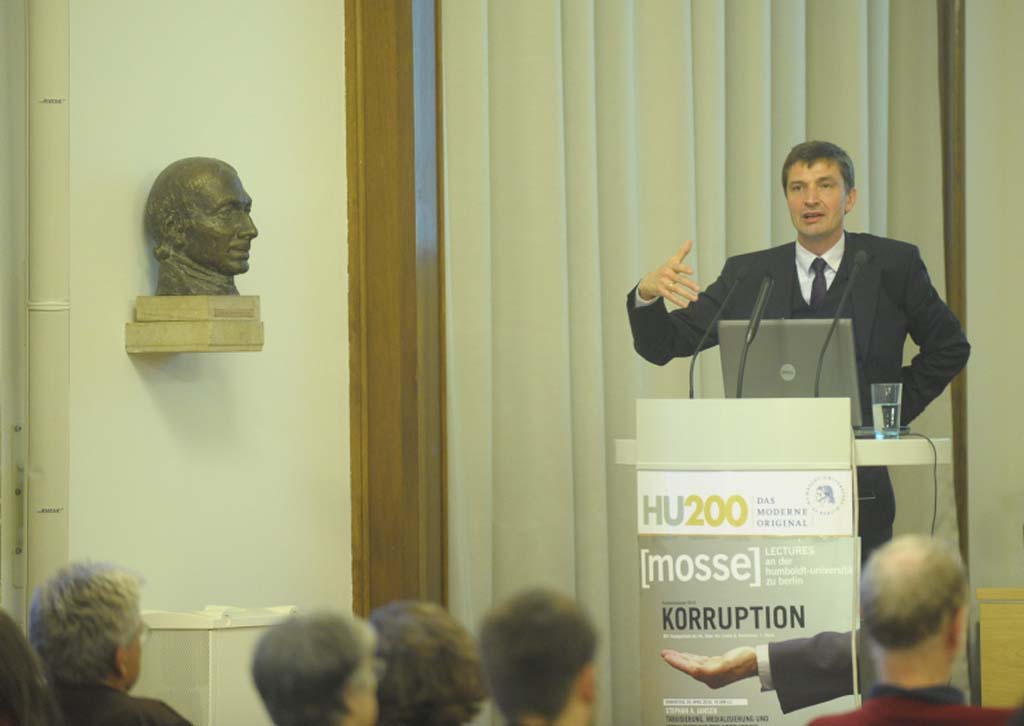
Photo Credit: Niels Leiser for the Mosse Lectures
Johann Graf Lambsdorff ist Inhaber des Lehrstuhls für Volkswirtschaftstheorie an der Universität Passau. Er ist der „Vater“ des Korruptionsindex, den er von 1995 bis 2008 für Transparency International erstellte. Er studierte Volkswirtschaftslehre, Mathematik und Soziologie in Frankfurt am Main und Göttingen. Er promovierte 1994 und wurde im Jahre 2000 habilitiert mit einer Arbeit zu dem Thema Corruption in Global Perspective – an Economic Investigation (Cambridge University Press). In Vorlesungen und Veröffentlichungen liefert er weltweit beachtete Ansatzpunkte zur Korruptionsbekämpfung. Er hat in führenden internationalen Zeitschriften zur monetären Ökonomik, Institutionenökonomik und der Ökonomik der Korruption veröffentlicht wie dem Journal of International Economics, Journal of Economic Psychology, Economics of Governance, Kyklos, Public Choice, Journal of Economic Behavior and Organization.
