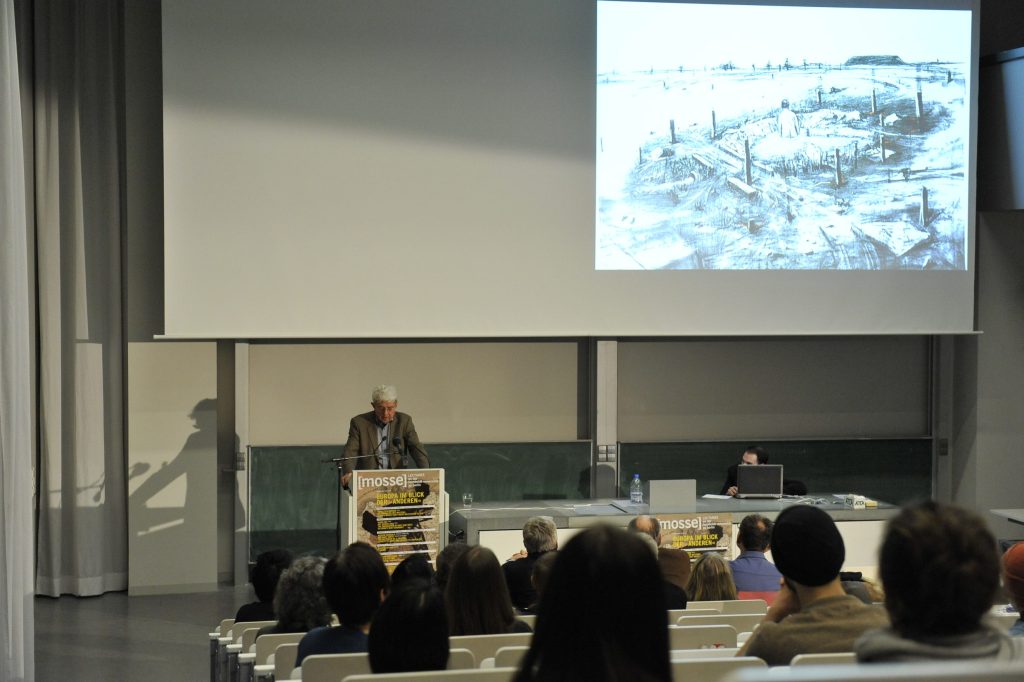
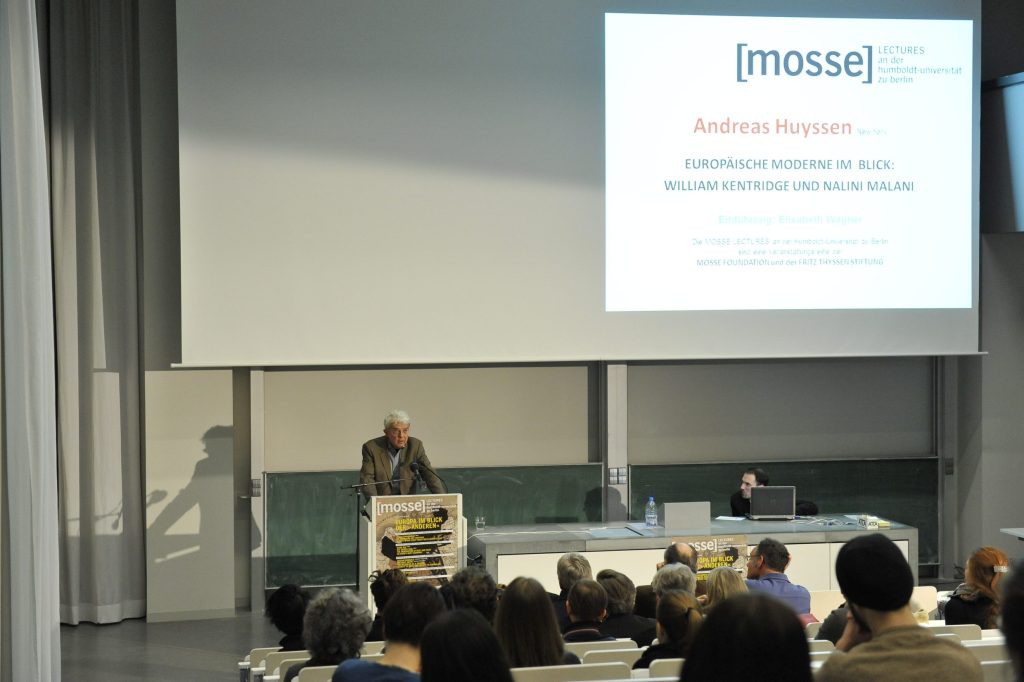
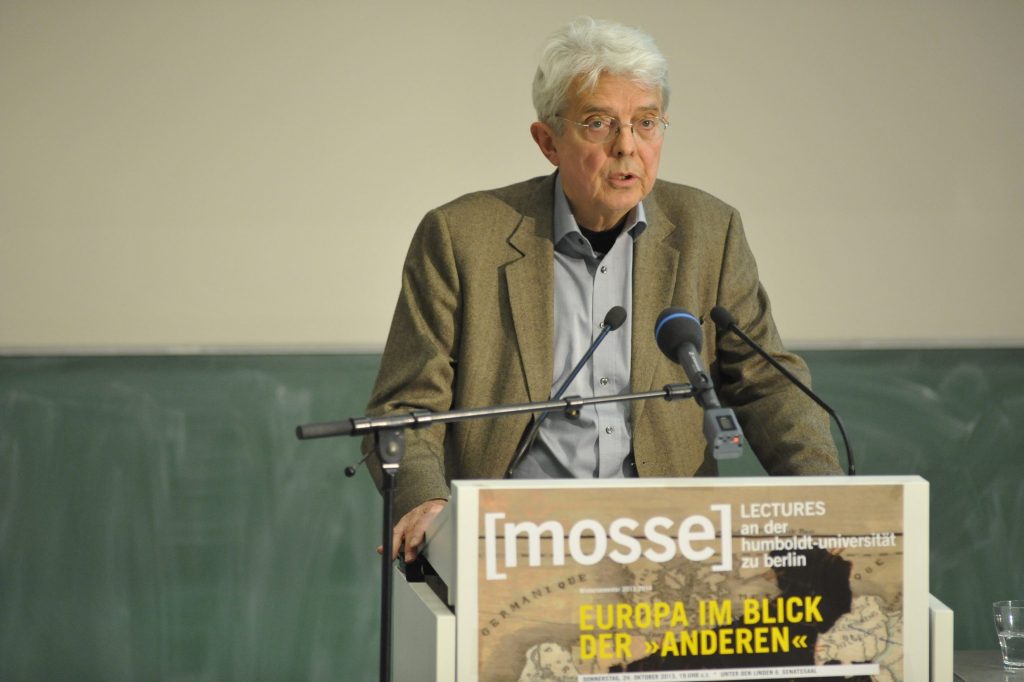
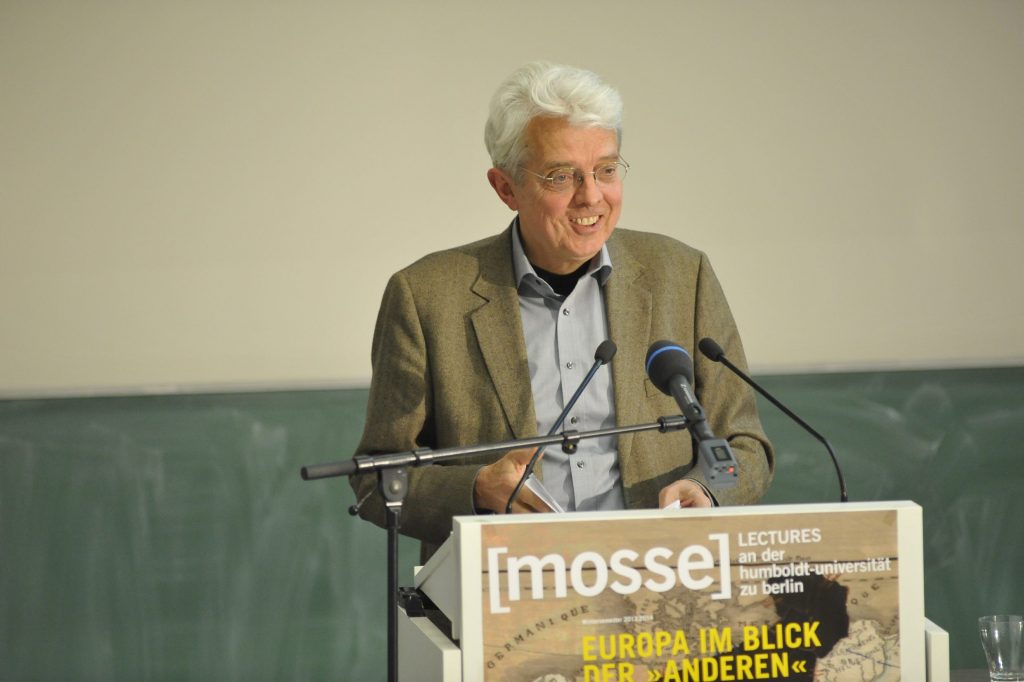
2014: Andreas Huyssen, “Europäische Moderne im Blick: William Kentridge und Nalini Malani” / “European Modernity in View: William Kentridge and Nalini Malani”
Andreas Huyssen, “Europäische Moderne im Blick: William Kentridge und Nalini Malani” / “European Modernity in View: William Kentridge and Nalini Malani”
Berlin Mosse Lecture
https://mosselectures.wisc.edu/berlin/
Thursday, 2 February 2014, 19:00 CET
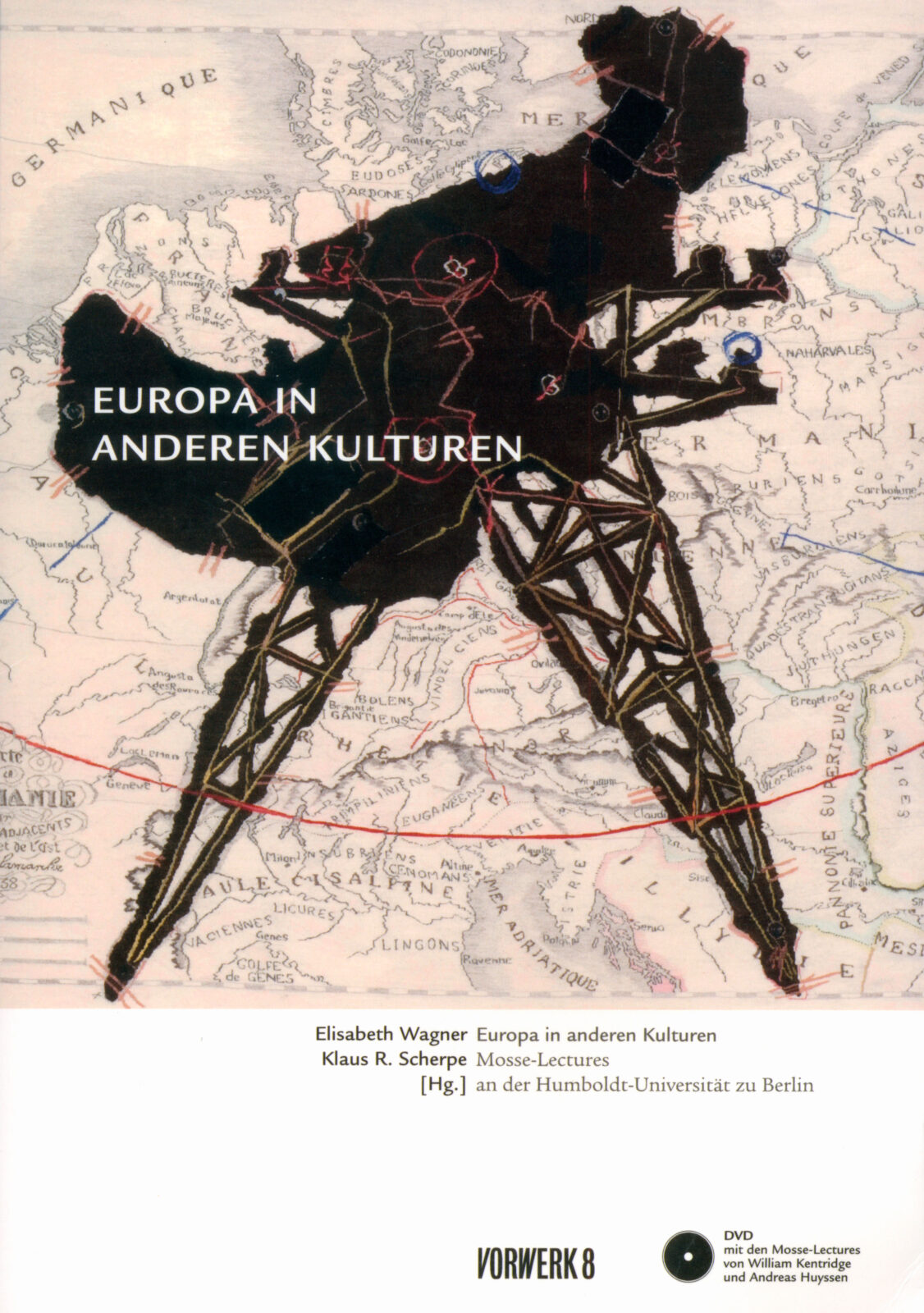
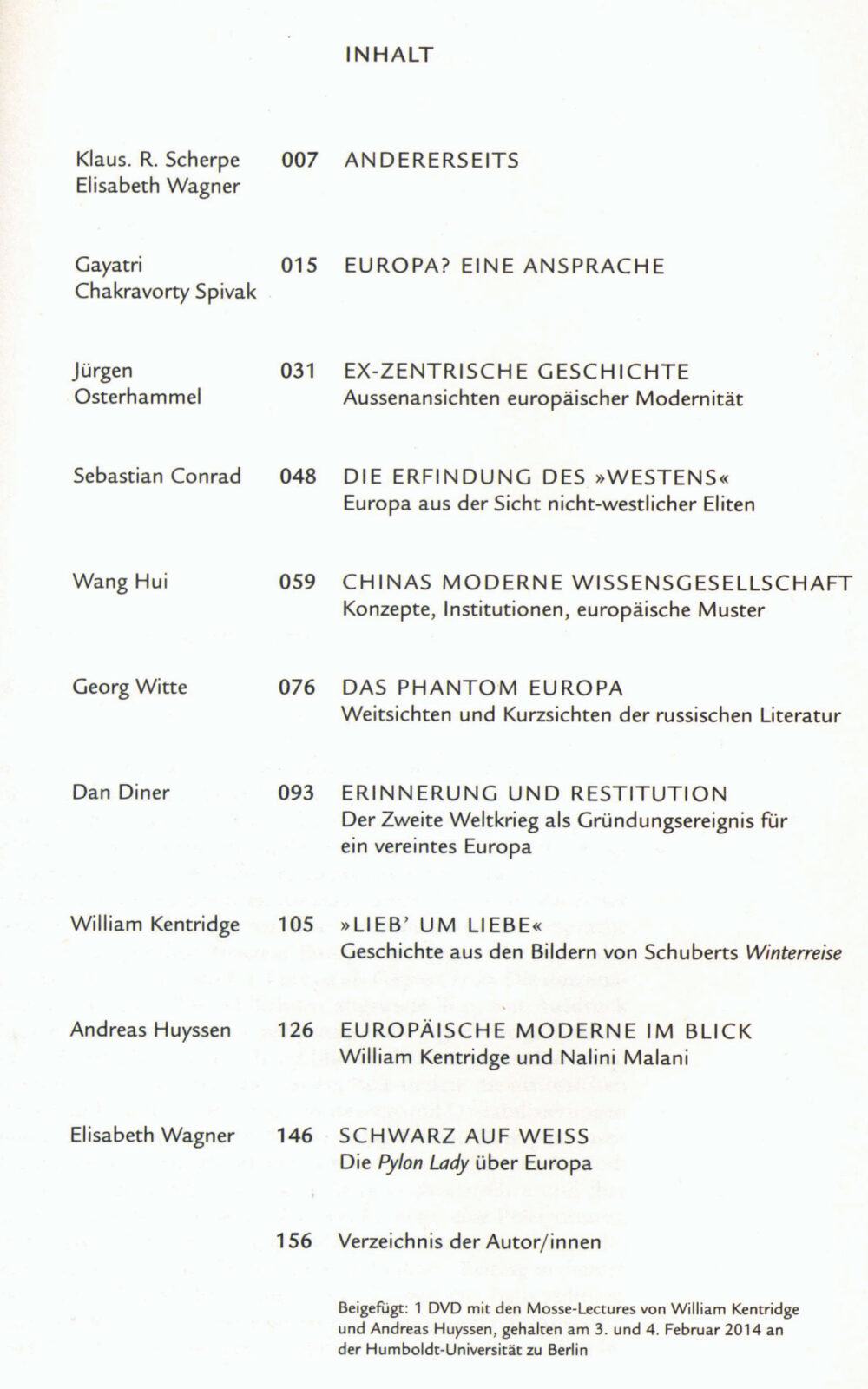
A version of this lecture was published in Elisabeth Wagner, Klaus R. Scherpe, ed. Europa in Anderen Kulturen. Mosse-Lectures an der Humboldt-Universität zu Berlin (Berlin: Vorwerk 8, 2015), 126-145. See table of contents below.
Dorotheenstrasse 24, HS 1.101
Unter den Linden 6
10117 Berlin
GERMANY
Sponsored by:
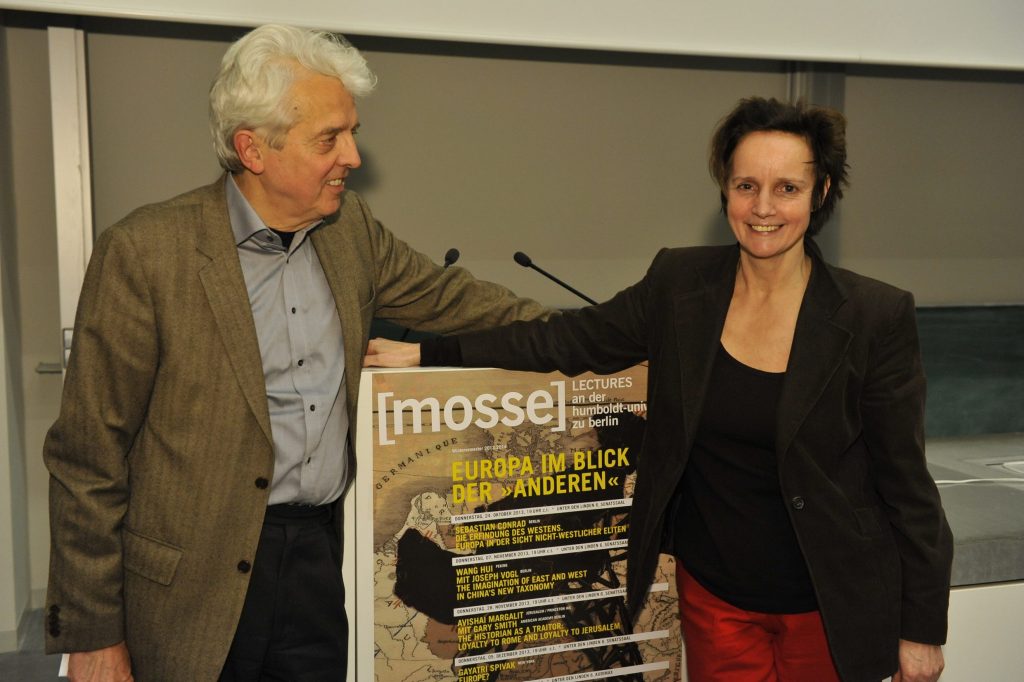
[mosse] LECTURES an der humboldt-universität zu berlin
The Mosse Foundation
Global Mosse Lecture Series
Fritz Thyssen Stiftung
Institut für deutsche Literatur
Humboldt University
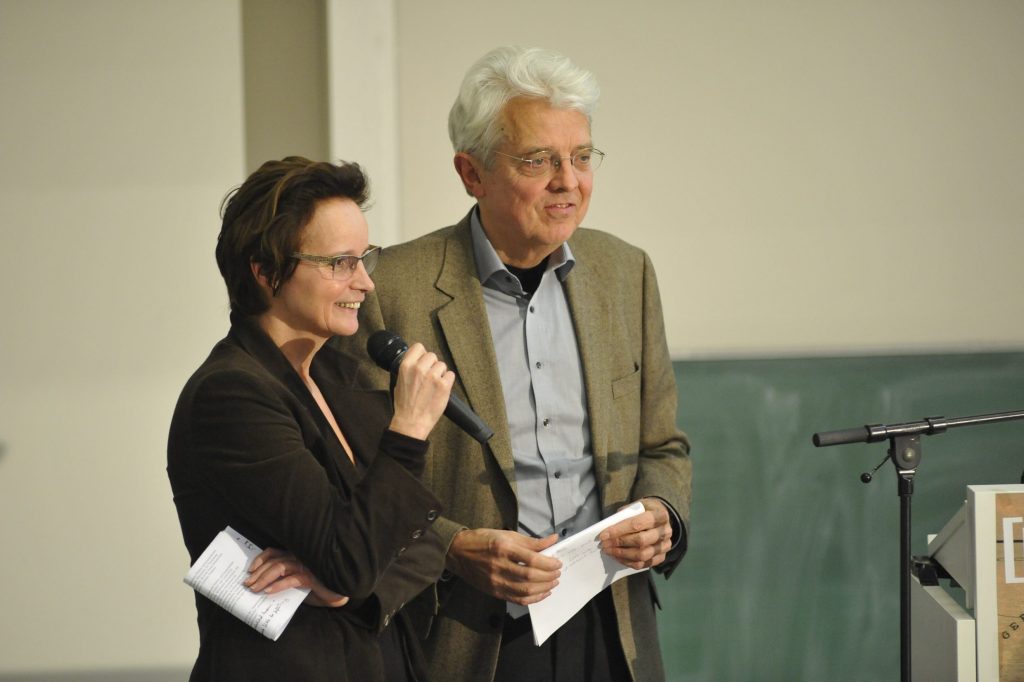
Introduction: Elisabeth Wagner (Humboldt University)
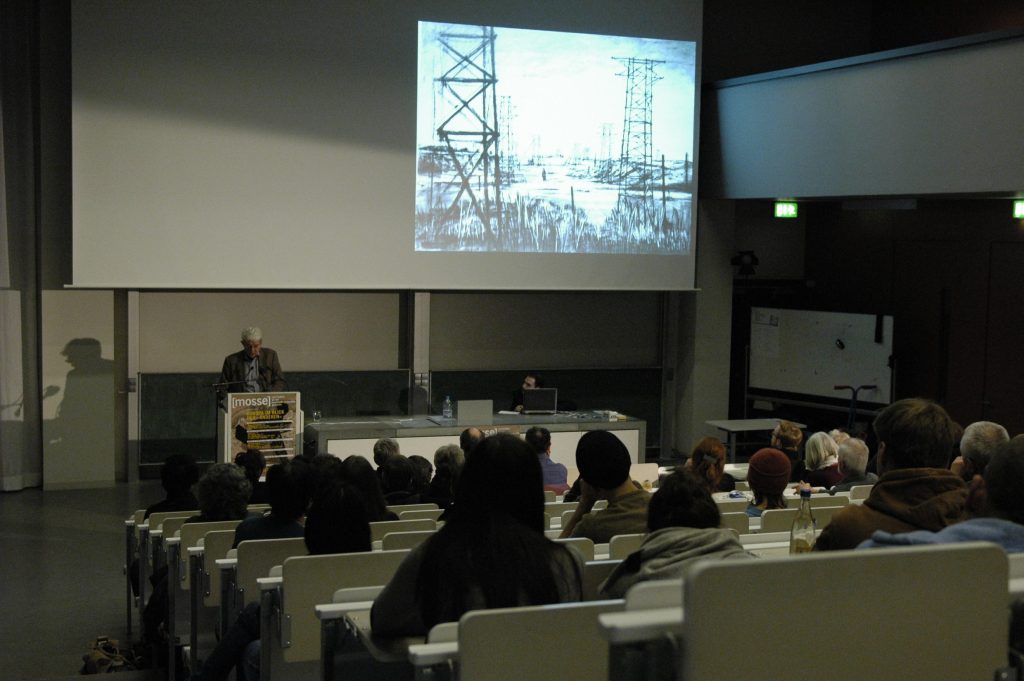
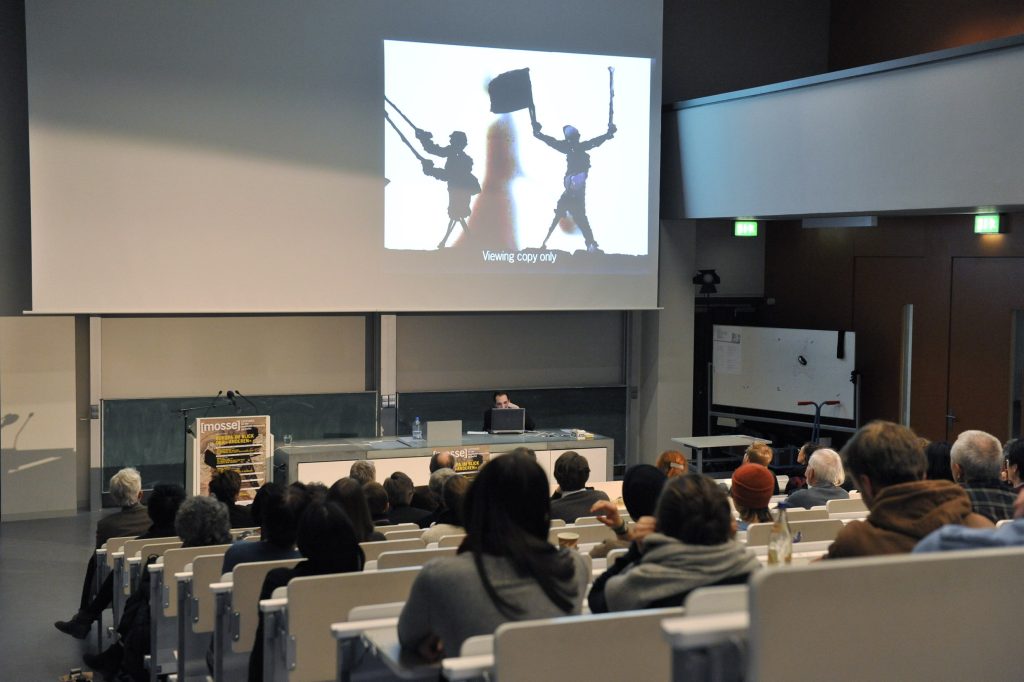
Lecture Description: Mit William Kentridge und Nalini Malani behandelt der Vortrag Arbeiten von zwei Künstlern, die einen kolonial-postkolonialen Blick auf westliche Kunstpraktiken der Moderne nutzen, um kritisch mit der politischen Geschichte ihrer Länder—Südafrika und Indien—umzugehen. Beide mobilisieren in unterschiedlicher Form überkommene Animations- und Schattenspieltechniken, um die Verwerfungen traumatischer Erinnerung in Szene zu setzen. Bei beiden Künstlern erleben wir eine Verdichtung politischer und ästhetischer Praktiken, wie sie in der gegenwärtigen westlichen Kunstszene kaum mehr anzutreffen sind. Ihre wichtigsten neueren Arbeiten wurden zuerst auf der 13. Kasseler Documenta gezeigt: Kentridges Refusal of Time und Malanis InSearch of Vanished Blood.
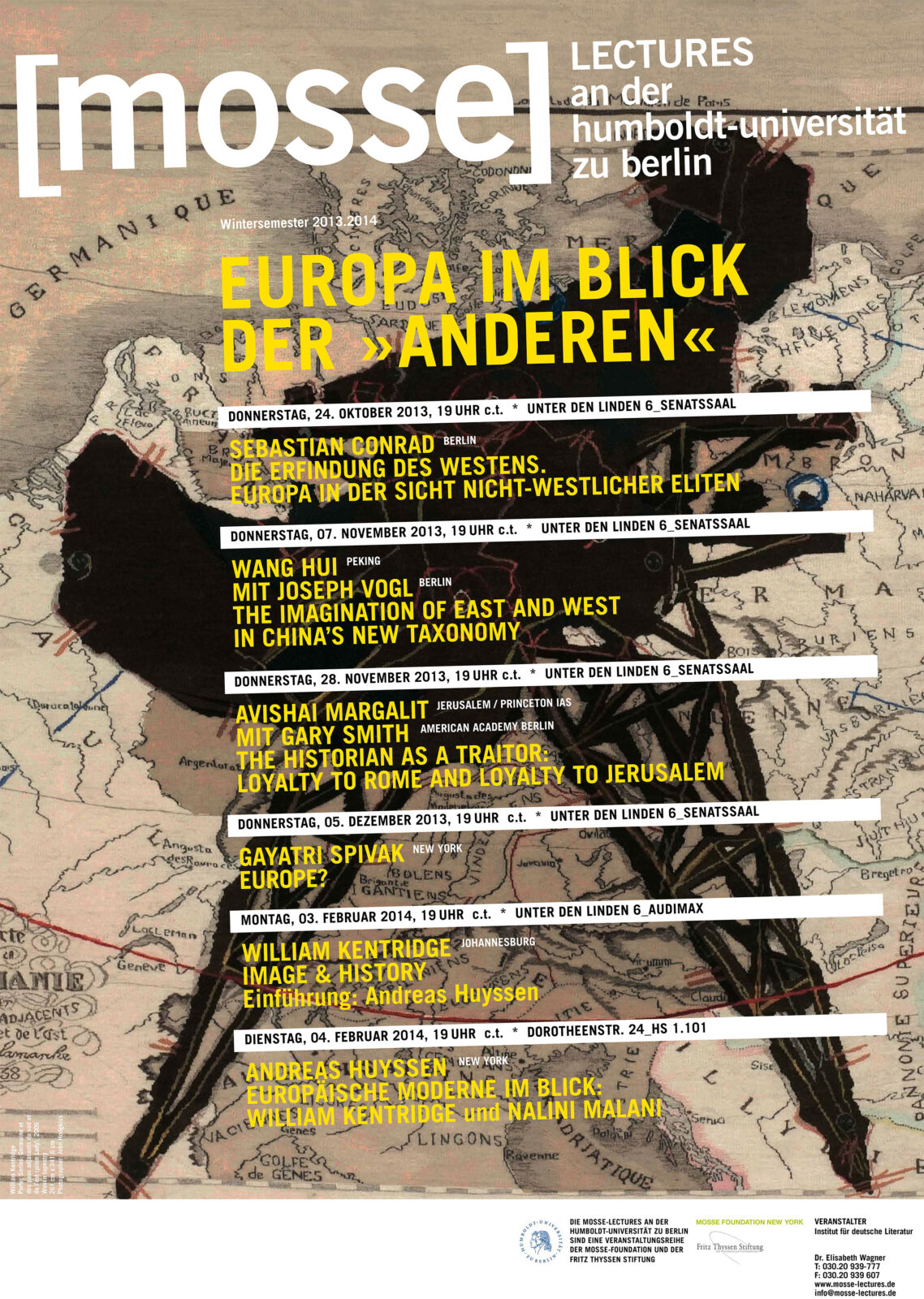
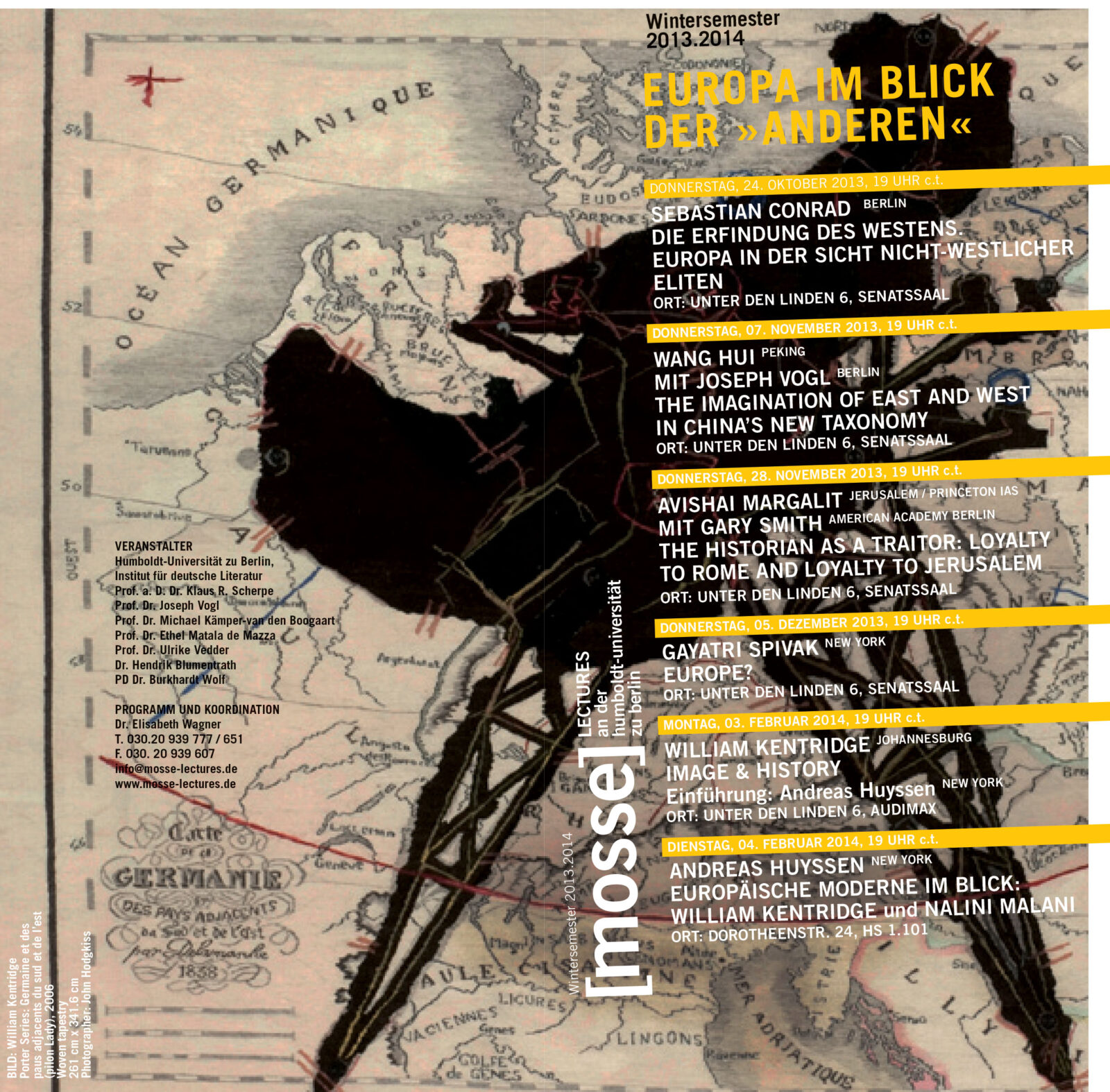
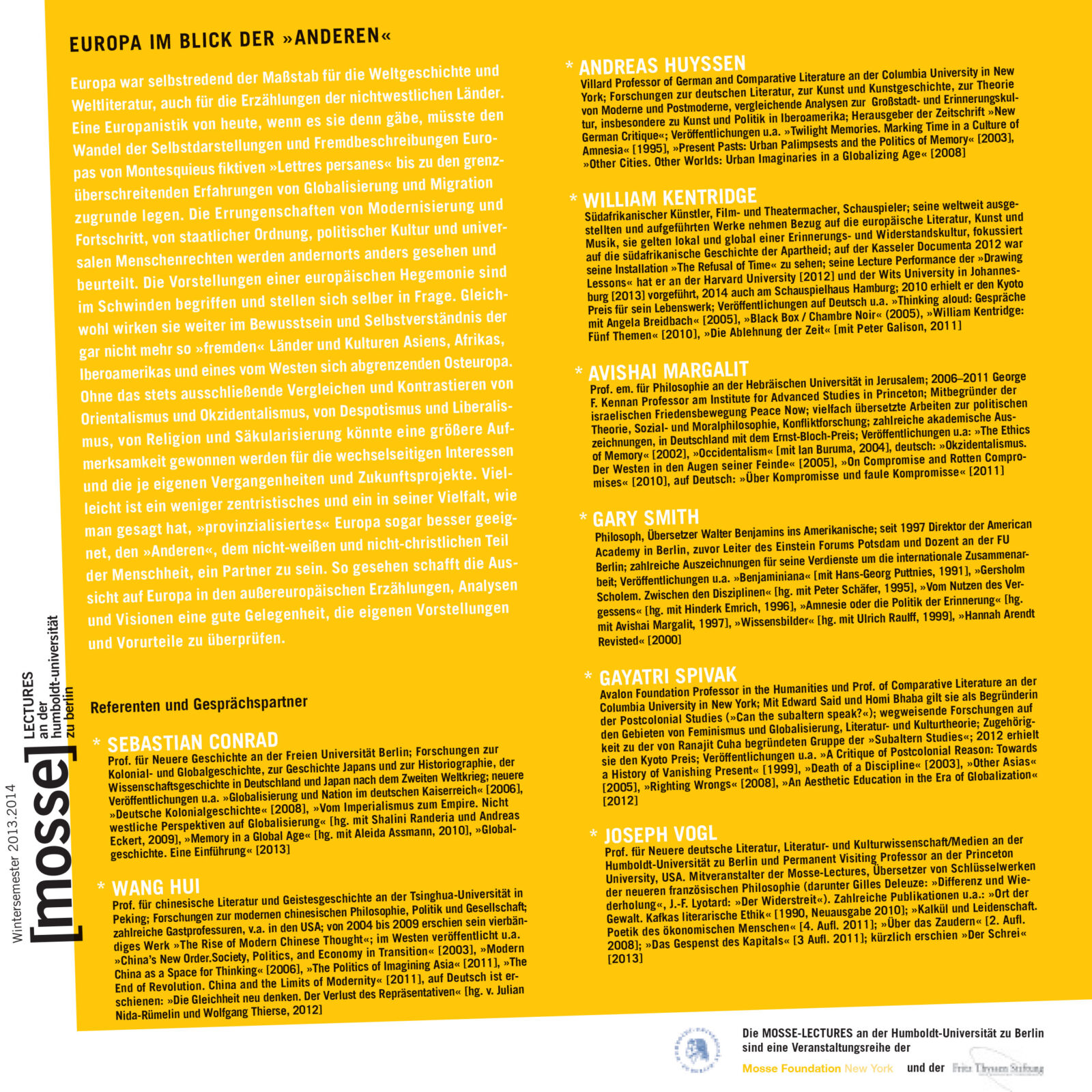
Lecture Series Description: It is taken for granted that Europe has been the measure of world history and world literature. It even appears as such in the narratives of non-Western countries. Any comprehensive study of Europe today would have to ground itself in the transformations of Europe’s self-representations and descriptions in the eyes of the “others” from Montesquieu’s fiction of the “Lettres persanes” up to the present day realities of border crossing globalization and migration. Key European ideas such as modernization and progress, democratic institutions, nation state regimes, political culture and human rights are viewed differently in other places. An overpowering European hegemony has waned in the wake of self-doubt and criticism, but it continues to have an effect on the consciousness and self-conception of other, nowadays perhaps less “alien” countries and cultures in Asia, Africa, Latin America, and an Eastern Europe that insists on its differences from the West. If we could avoid the usual exclusionary comparisons and hostile characterizations – orientalism versus occidentalism, despotism versus liberalism, religion versus secularization – a greater respect for mutual interests and for the very different understandings of the past and the divergent prospects of the future could be gained. Maybe a less Eurocentric and “provincialized” Europe would be more inclined to cooperate with the “others”, the non-white and non- Christian part of mankind. Thus the view of Europe in non-European narratives, analyses and visions will give us ample opportunities to revise our own beliefs and prejudices.
Andreas Huyssen: Professor für deutsche und vergleichende Literatur, Gründungsdirektor des Institute of Comparative Literature and Society an der Columbia University in New York. Mitbegründer und Herausgeber der Zeitschrift New German Critique. Zu seinen wichtigsten Publikationen gehören: After the Great Divide: Modernism, Mass Culture, Postmodernism (1986); Twilight Memories: Marking Time in a Culture of Amnesia (1995); Present Pasts: Urban Palimpsests and the Politics of Memory (2003); Other Cities, Other Worlds: Urban Imaginaries in a Globalizing World (Hg., 2008); William Kentridge and Nalini Malani: The Shadowplay as Medium of Memory (2013).
Elisabeth Wagner completed her PhD in Art History at the Free University of Berlin in 1997, the same year she co-founded the Mosse Lectures at Humboldt University. She is the author of Die Mosse-Frauen: Deutsch-Jüdische Lebensgeschichten (2024) and is active as a research associate at Humboldt University.