
2014: Reinhard Jirgl, “Alfred Döblin: Autor der Unruhe” / “Alfred Döblin: Author of Unrest”
Reinhard Jirgl, “Alfred Döblin: Autor der Unruhe” / “Alfred Döblin: Author of Unrest”
Berlin Mosse Lecture
https://mosselectures.wisc.edu/berlin/
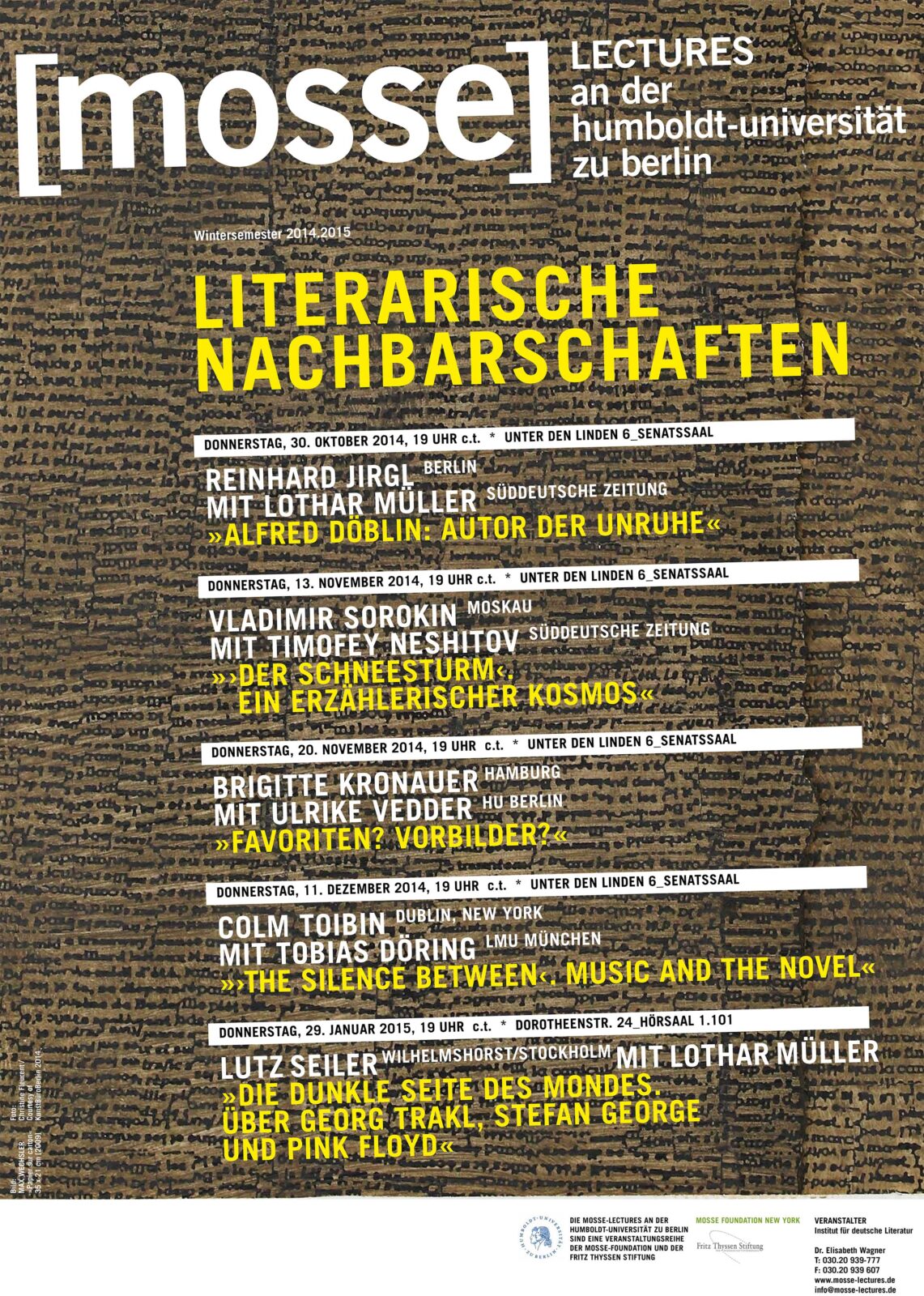
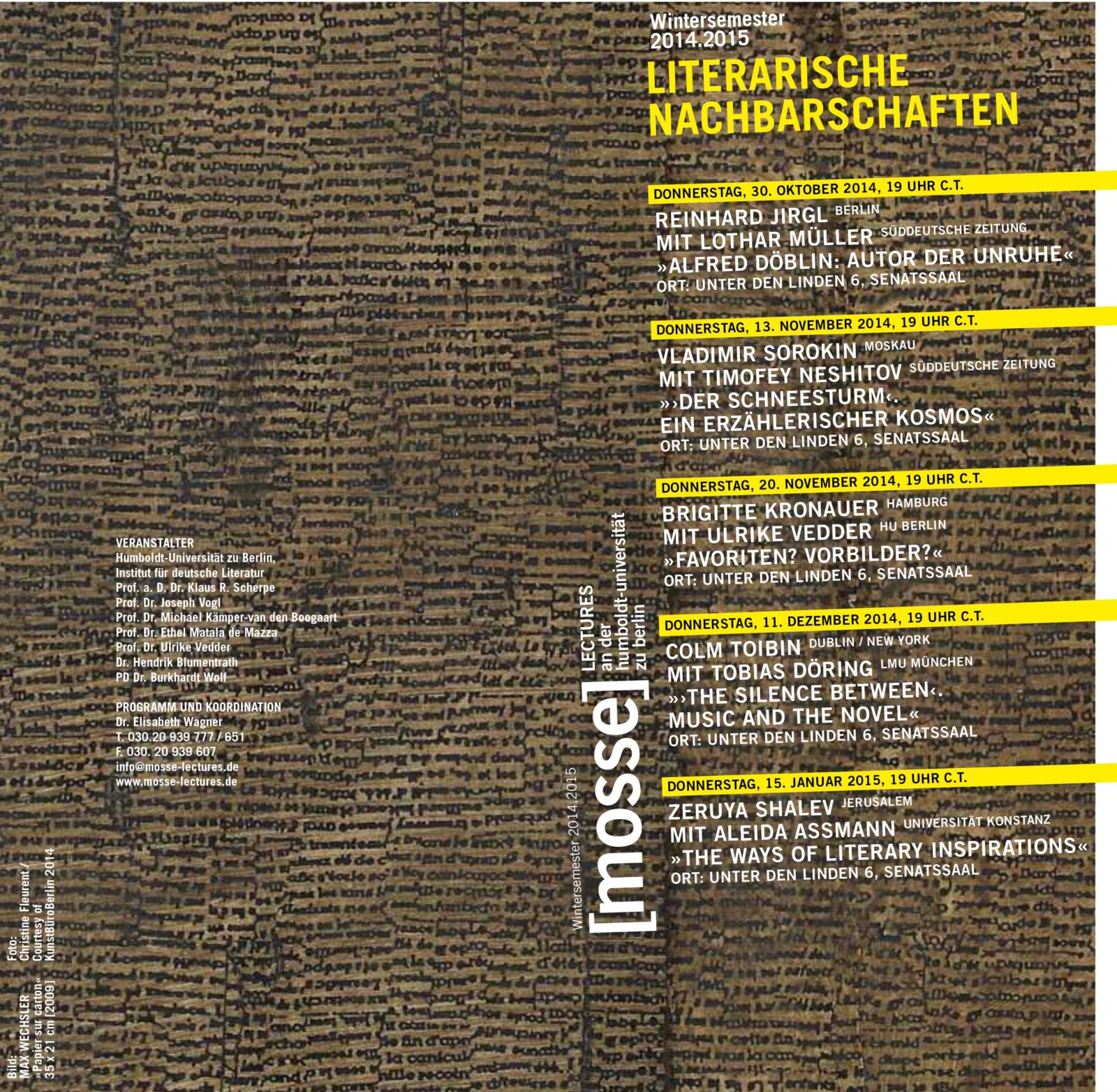
Thursday, 30 October 2014, 19:00 CET
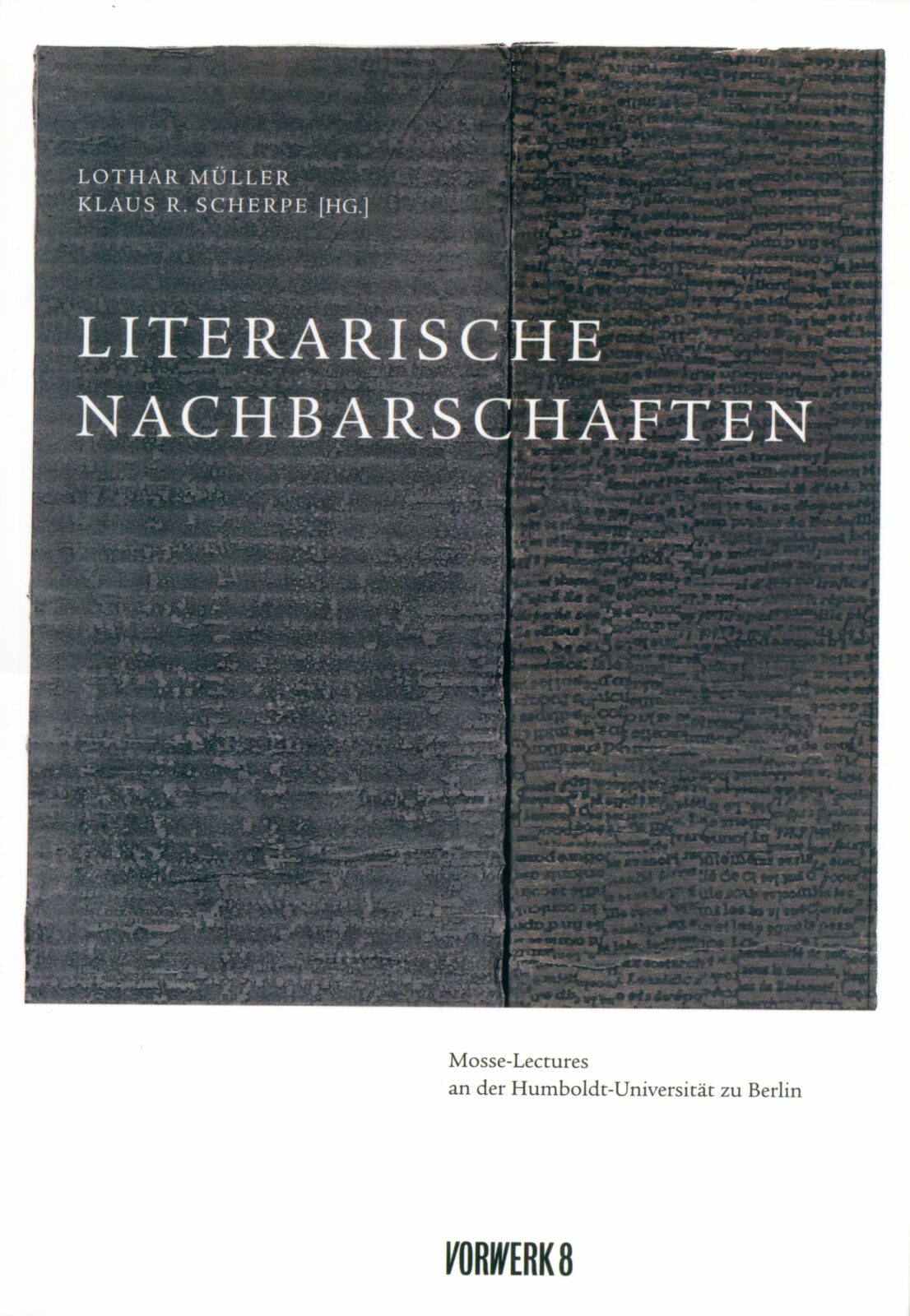
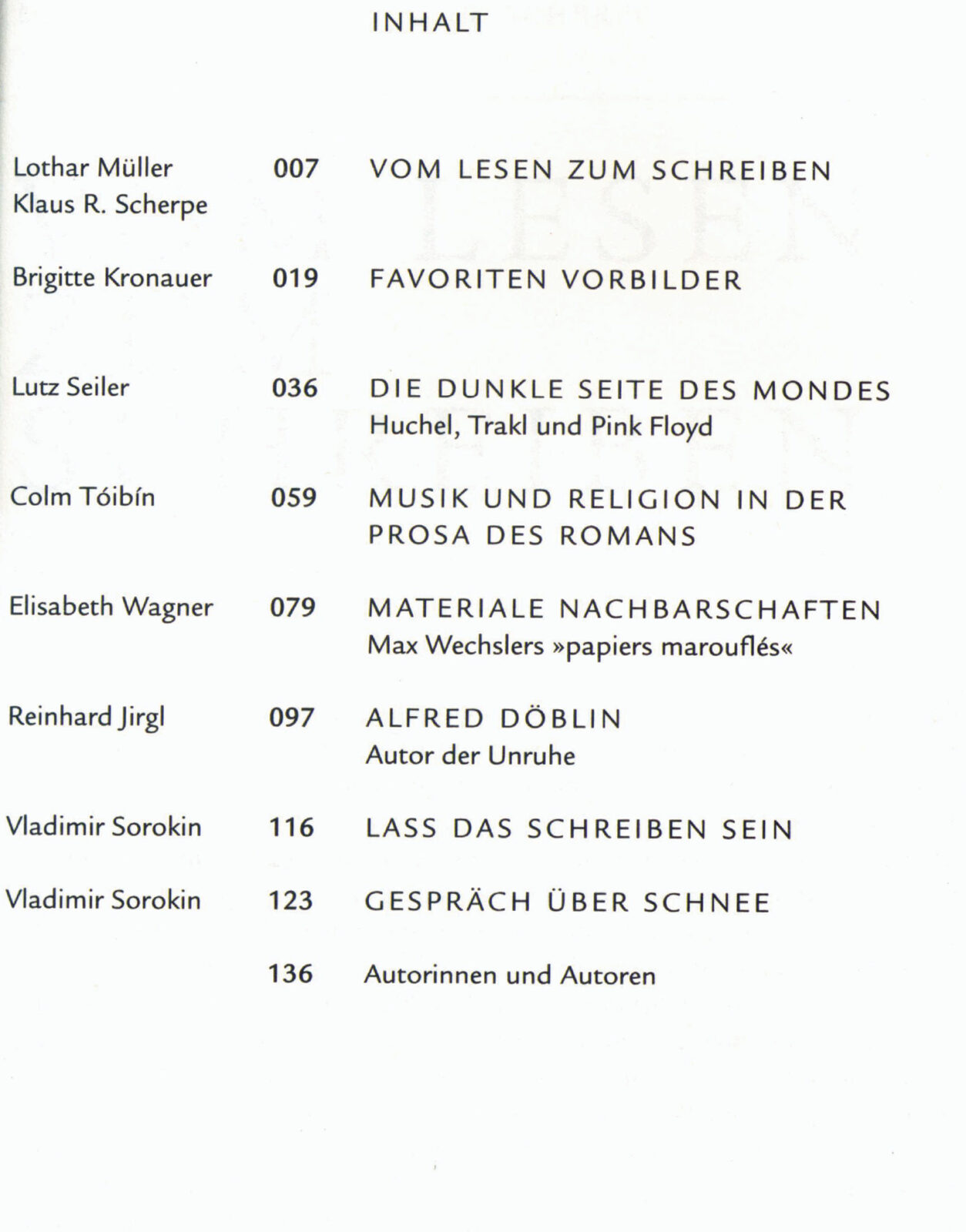
A version of this lecture was published in Lothar Müller, Klaus R. Scherpe, ed. Literarische Nachbarschaften. Mosse-Lectures an der Humboldt-Universität zu Berlin (Berlin: Vorwerk 8, 2016), 97-115. See table of contents below.
Senatssaal of Humboldt University
Under den Linden 6
1. Stock
10117 Berlin
GERMANY
Sponsored by:
[mosse] LECTURES an der humboldt-universität zu berlin
The Mosse Foundation
Global Mosse Lecture Series
Fritz Thyssen Stiftung
Institut für deutsche Literatur
Humboldt University
Moderator: Lothar Müller (Humboldt University)
Lecture Description: In zahlreichen Essays forderte Alfred Döblin die Dichter näher heran ans Leben, in die Prozesse des Gegenwartsgeschehens sich einzumischen. Er polemisierte gegen ästhetisierende Abstinenz jener Künstler, die »von Homer einzig die Blindheit erbten«. Stetes Anliegen: die Künste nicht zu trennen vom Alltagserleben, sie als Darstellung »einer lebennachbildenden Handlung« des ganzheitlichen Menschen in einer entseelten Realität zu begreifen. – Naturalismus, Tatsachenfantasie, das Ich und die Gesellschaft, dies waren für Döblin drei Hauptinstrumente, um neue Wirklichkeiten literarisch zu erschließen. Das provozierte, weil es Unruhe schuf. Wie ist es bestellt um dieses Instrumentarium für die Arbeit eines Schriftstellers, dessen Lebens- und Gedankenräume sich im Hier und Heute mit der Gegenwart eines neuen Biedermeier auseinandersetzen?
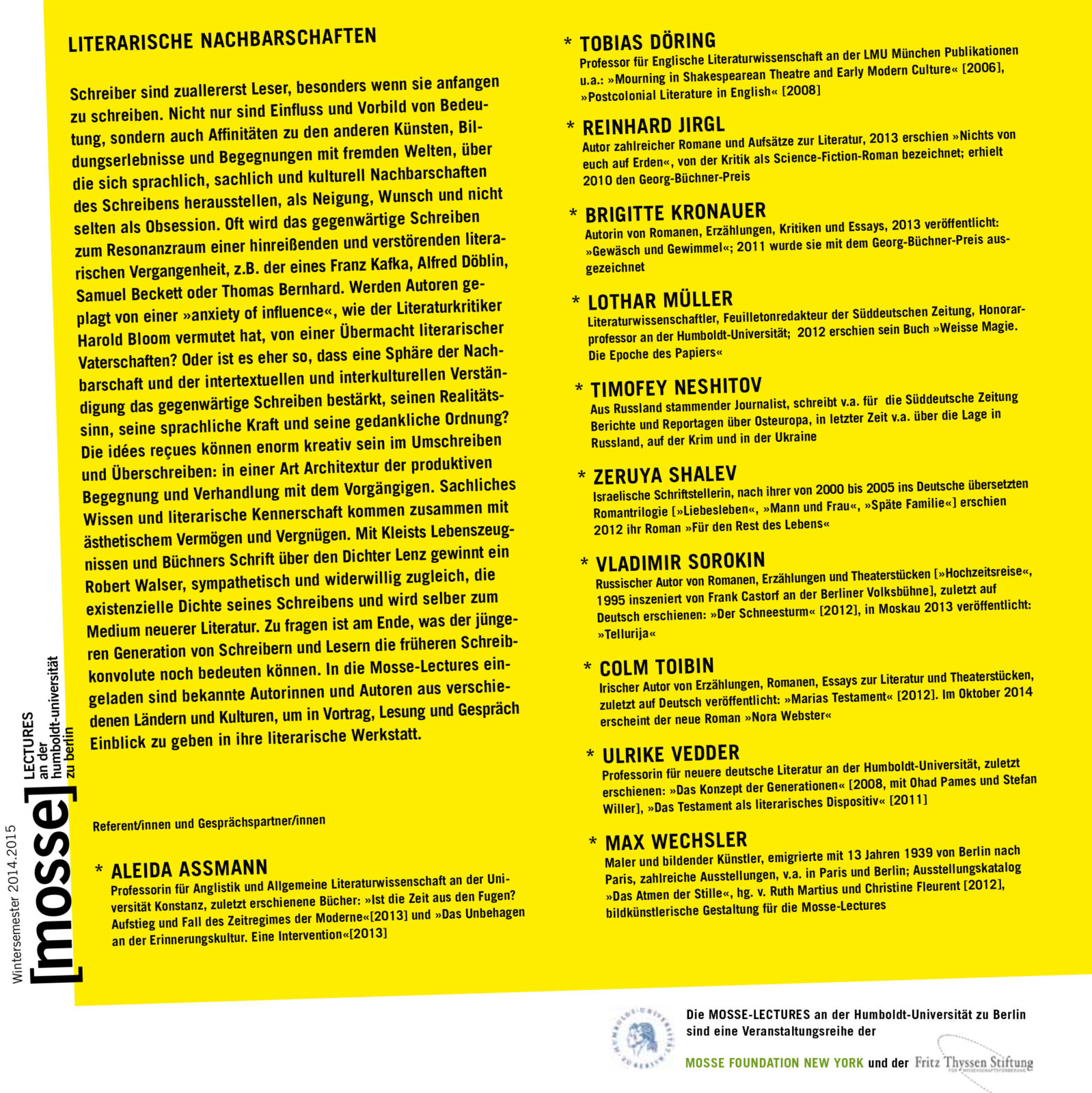
Lecture Series Description: First of all writers are readers, as J.M. Coetzee puts it, especially as they begin to write. Influences and models come into play, but then there is that visceral relationship that shapes matters of language, style and rhythm, creating adjacencies of writing, via affections, desires, often enough obsessions. The deep imprint former writers leave on texts may resonate as a kind of ghostwriting: the literary experience of a disturbing fictional past in the works of a Franz Kafka, Samuel Beckett or Thomas Bernhard. Worldly knowledge and literary appreciation quite often merge with an aesthetic sensibility and pleasure. Are writers, as literary critic Harold Bloom has asserted, haunted by an “anxiety of influence”? Are they overcome by literary paternities? Should we not rather suppose that literary proximity and intertextual understanding will strengthen and encourage a writer’s sense of reality, power of language, and order of ideas? The idées reçues of literature can be immensely creative in rewriting and overwriting. They may create a kind of architexture, negotiating and re-presenting the previous work. Robert Walser for example generates the existential density of his writing receiving inspirations from the scripts of Kleist and Büchner that make him a medium of a radically new literature. Or Vladimir Sorokin’s fiction where a kind of reproductive cloning of the classical writers of Russian literature takes hold of the imagination. Finally it is a matter of conjecture what, nowadays, the bulk of previous writings can mean to the younger generations of writers and readers. Well known authors from different countries and cultures are invited to the Mosse-Lectures to present and comment on the literary condition and constituting elements of their work.
Reinhard Jirgl: Autor zahlreicher Romane und Aufsätze zur Literatur; mehrere in den 1980er Jahren noch in der DDR entstandene Texte erschienen erst nach der Wende von 1989, so der »Mutter Vater Roman« (1990) und die Trilogie „Genealogie des Tötens (2002); weitere Werke u.a. »Abschied von den Feinden« (1995), »Abtrünnig« (2005), »Die Stille« (2009) und der Essayband »Land und Beute« (2008), 2013 erschien »Nichts von euch auf Erden«, von der Kritik als Science-Fiction-Roman bezeichnet, 2010 erhielt er den Georg-Büchner-Preis.
Lothar Müller has worked as an editor for the Frankfurter Allgemeine Zeitung and the Süddeutsche Zeitung, and lectured at the Institute for Comparative Literature at the Free University. Since 2010, he has served as Honorary Professor in the Institute for German Literature at the Humboldt University Berlin. He is the author of numerous publications, including Adrien Proust und sein Sohn Marcel. Beobachter der erkrankten Welt (2021) and Weiße Magie. Die Epoche des Papiers (2012). He was awarded the Berlin Prize for Literary Criticism in 2013.
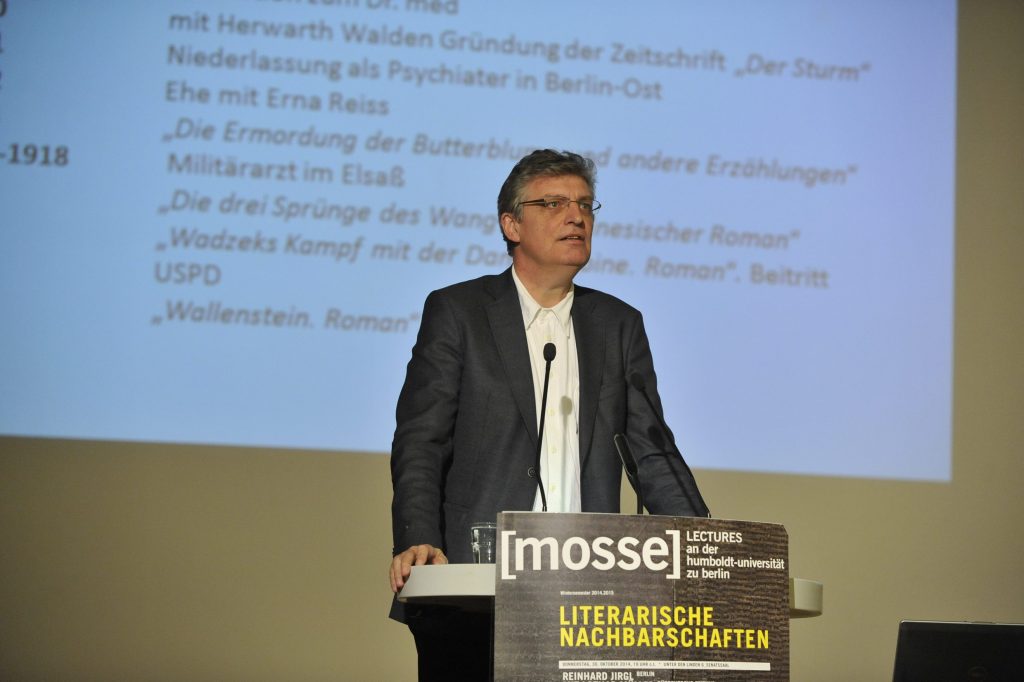
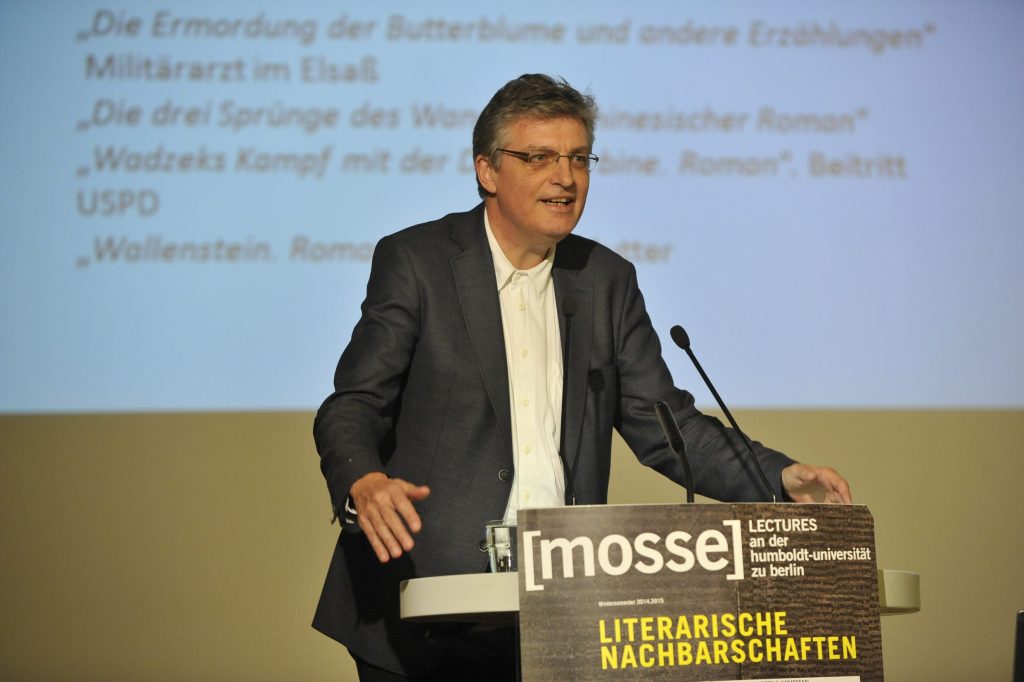
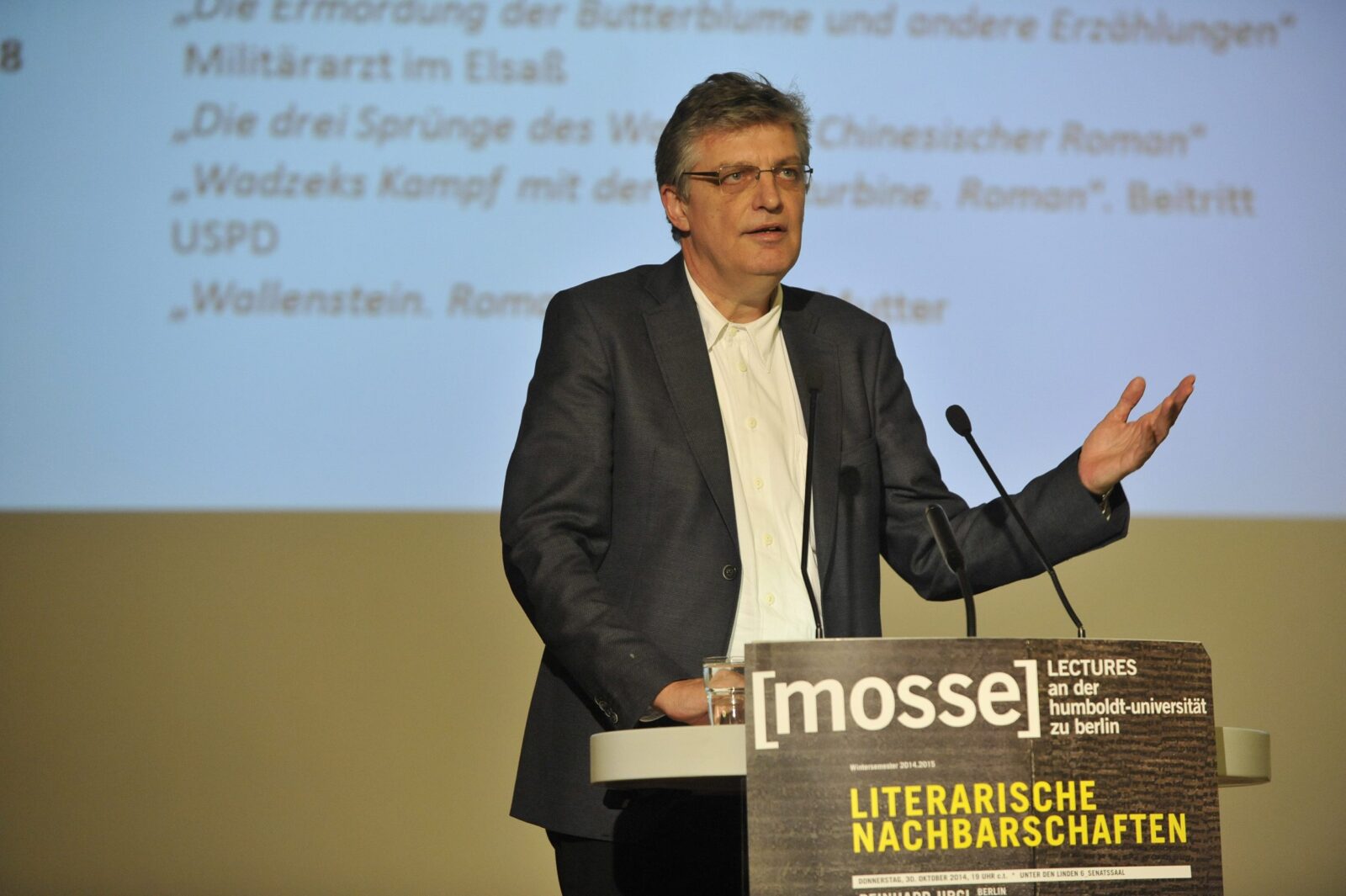
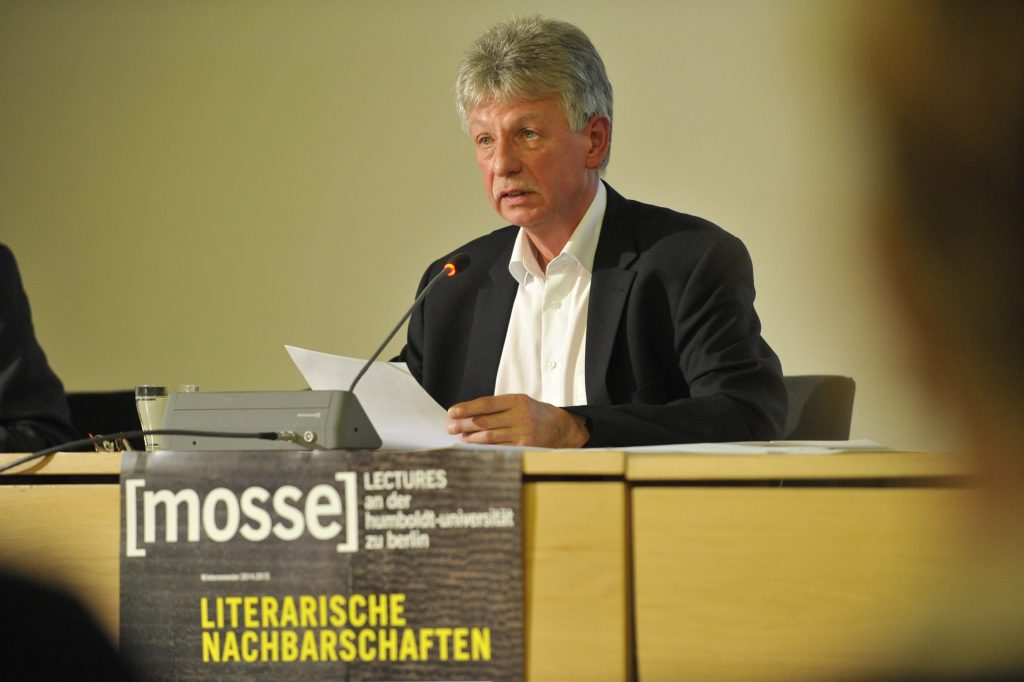
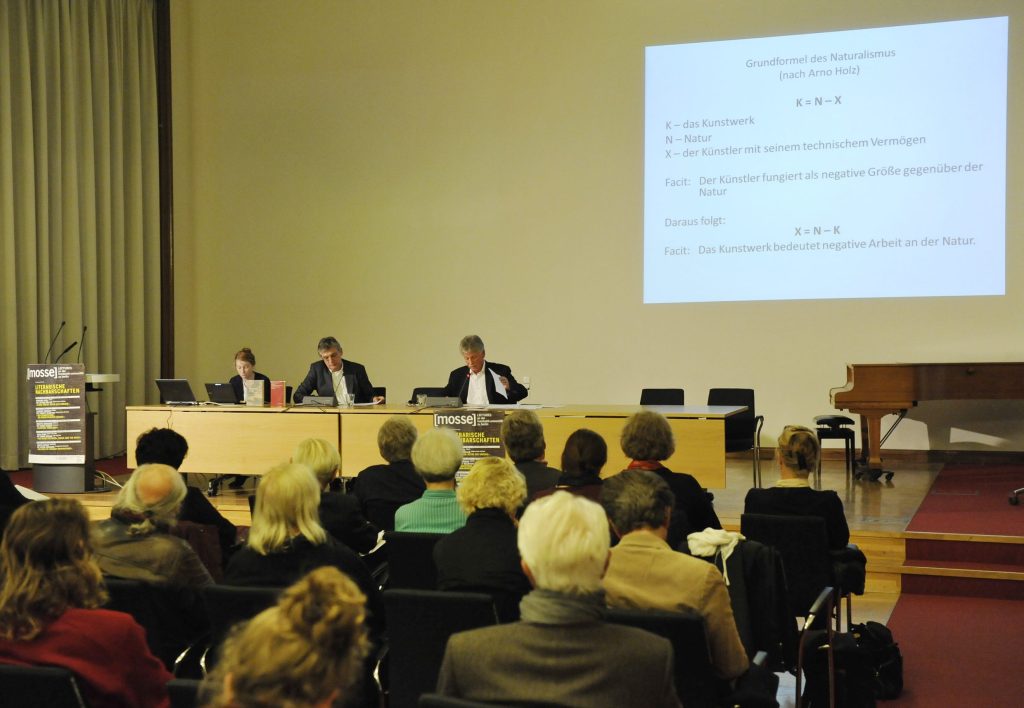
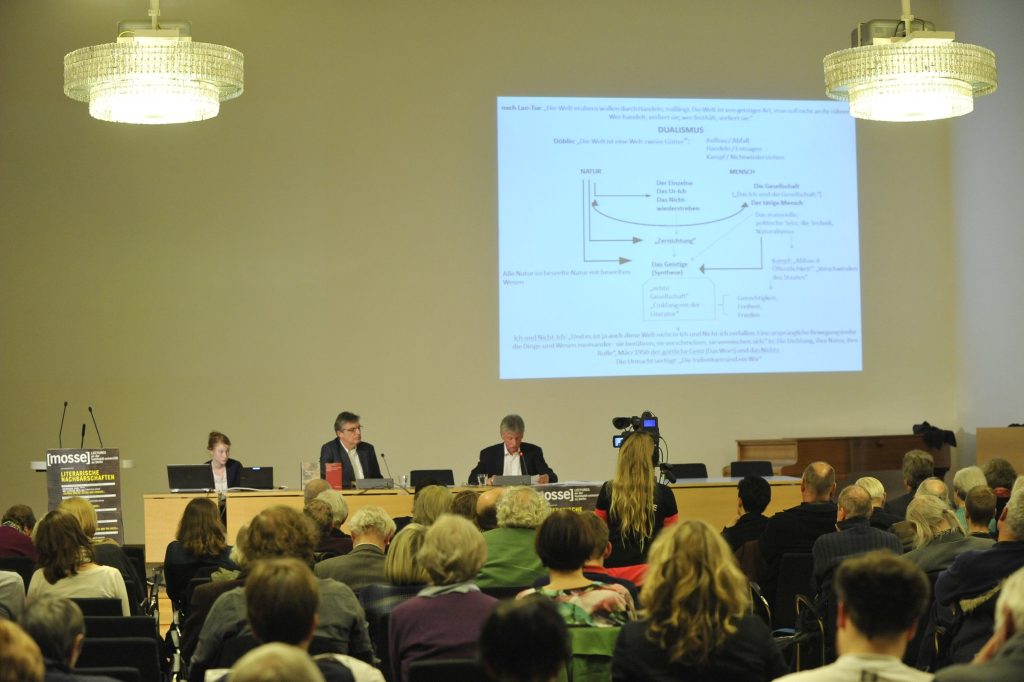
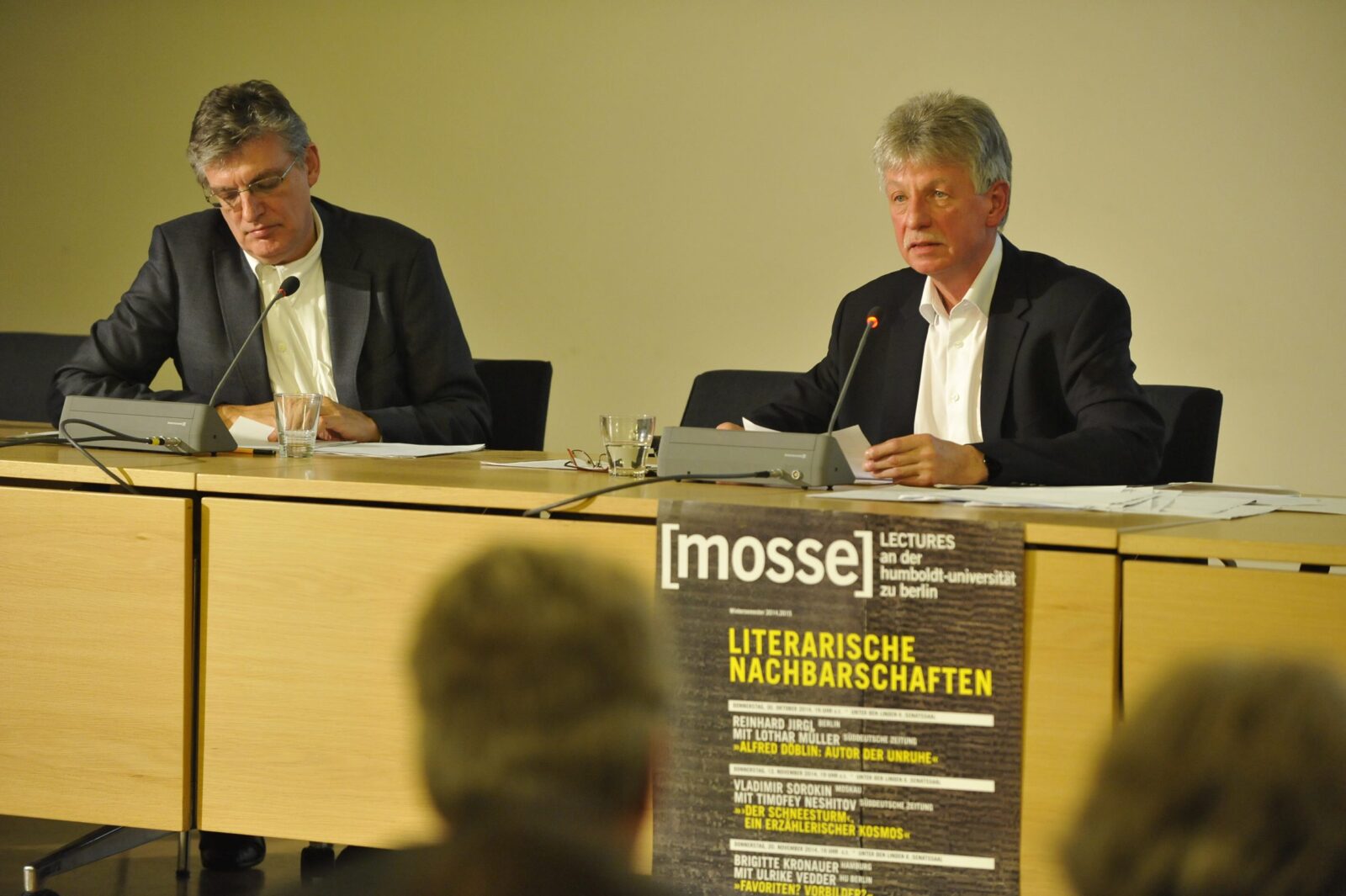
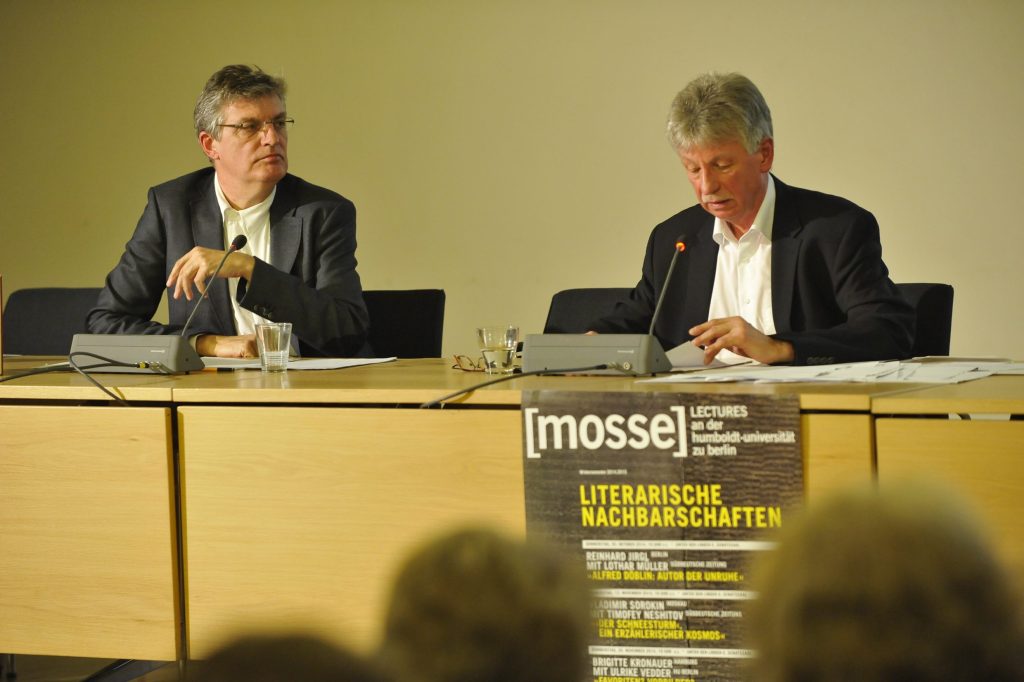
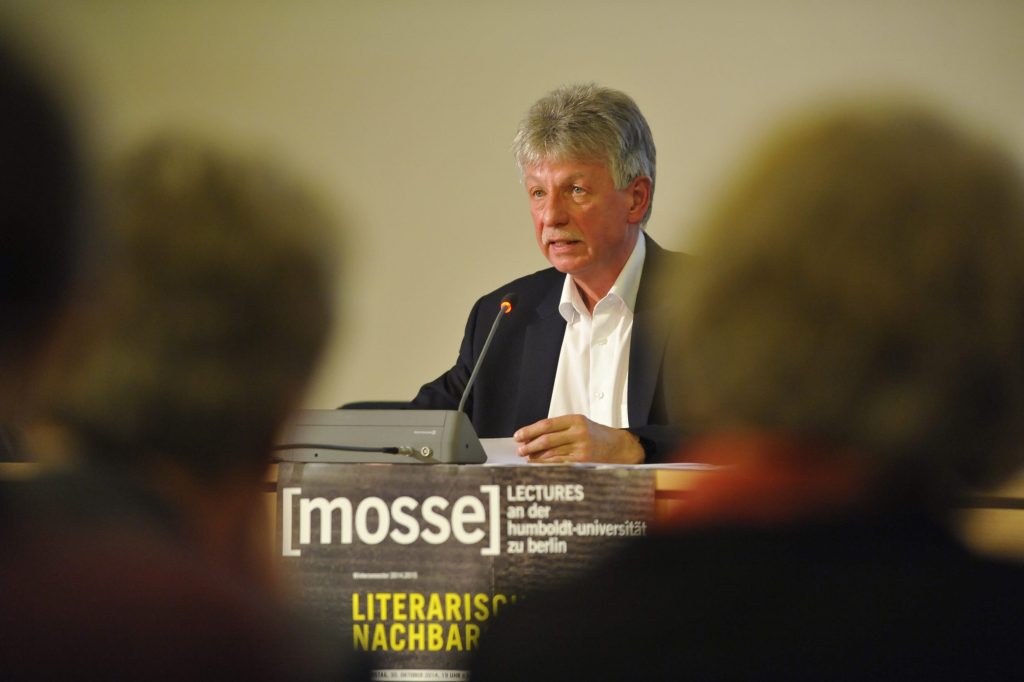
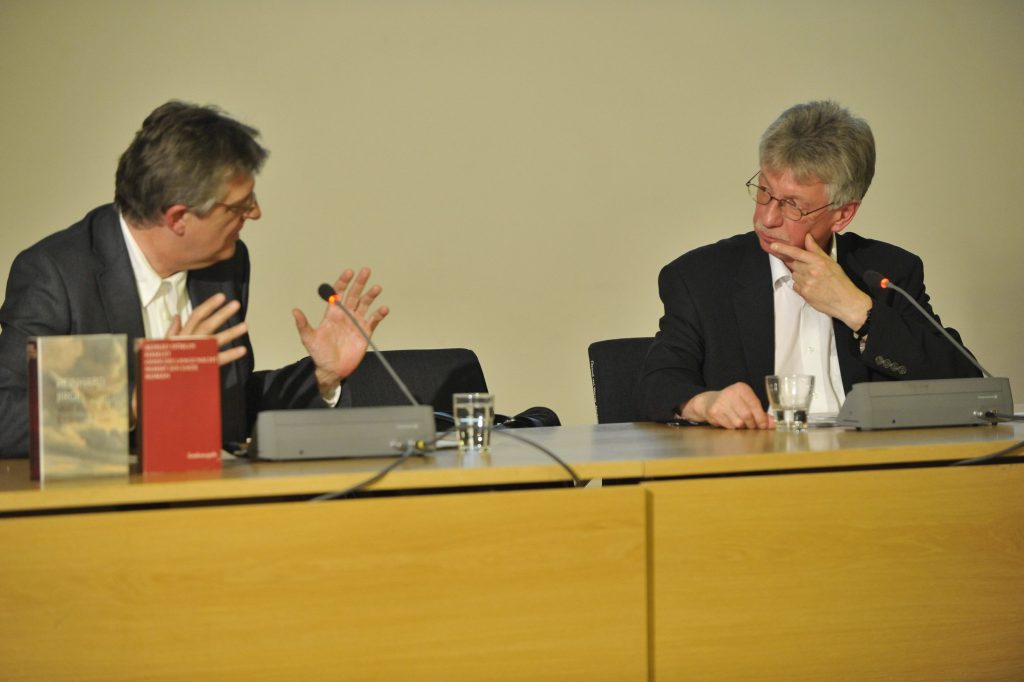
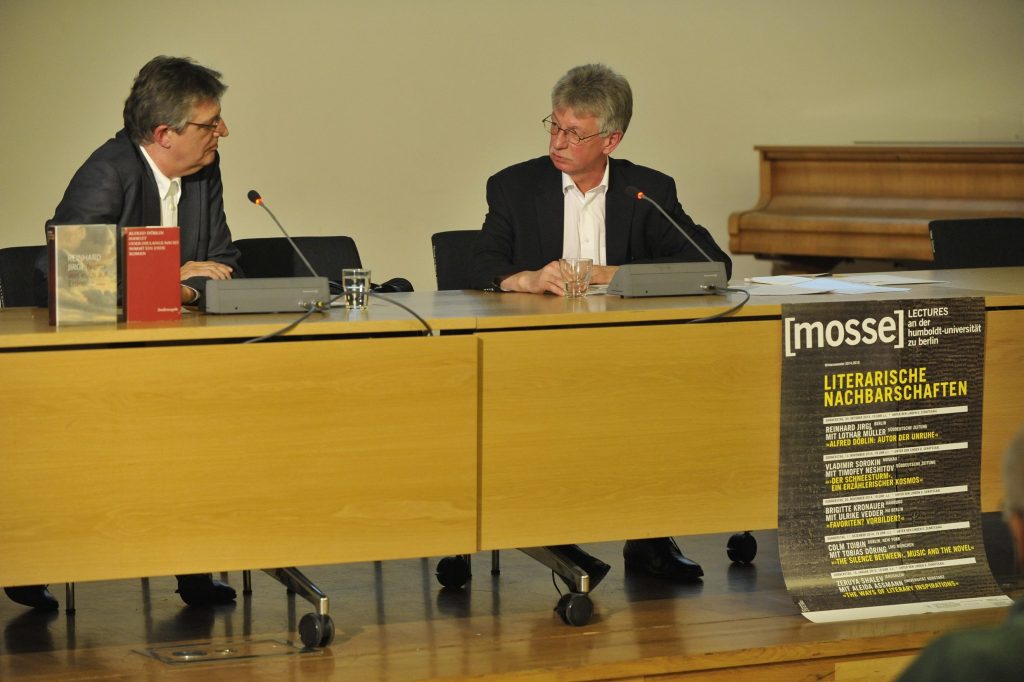
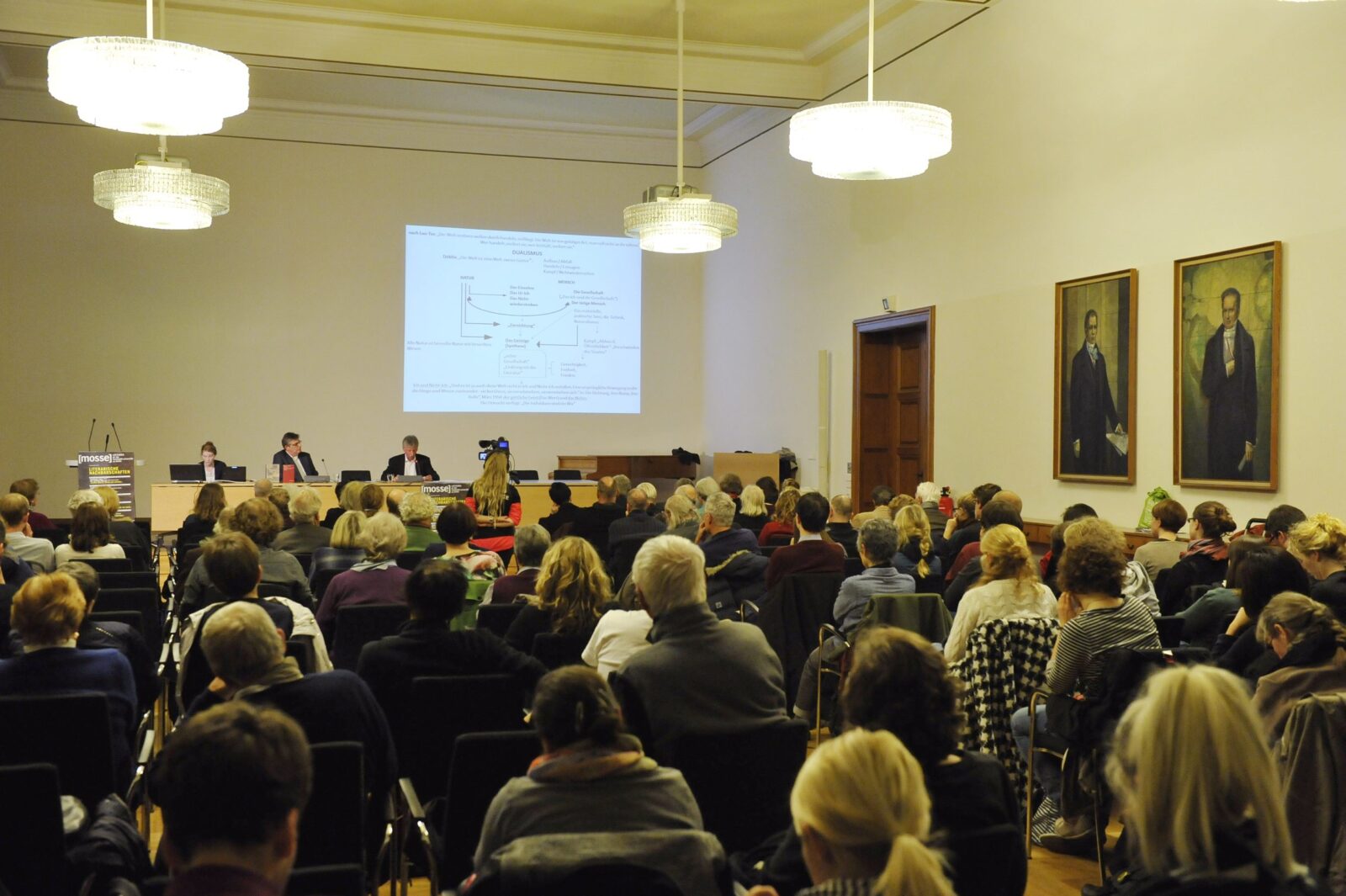
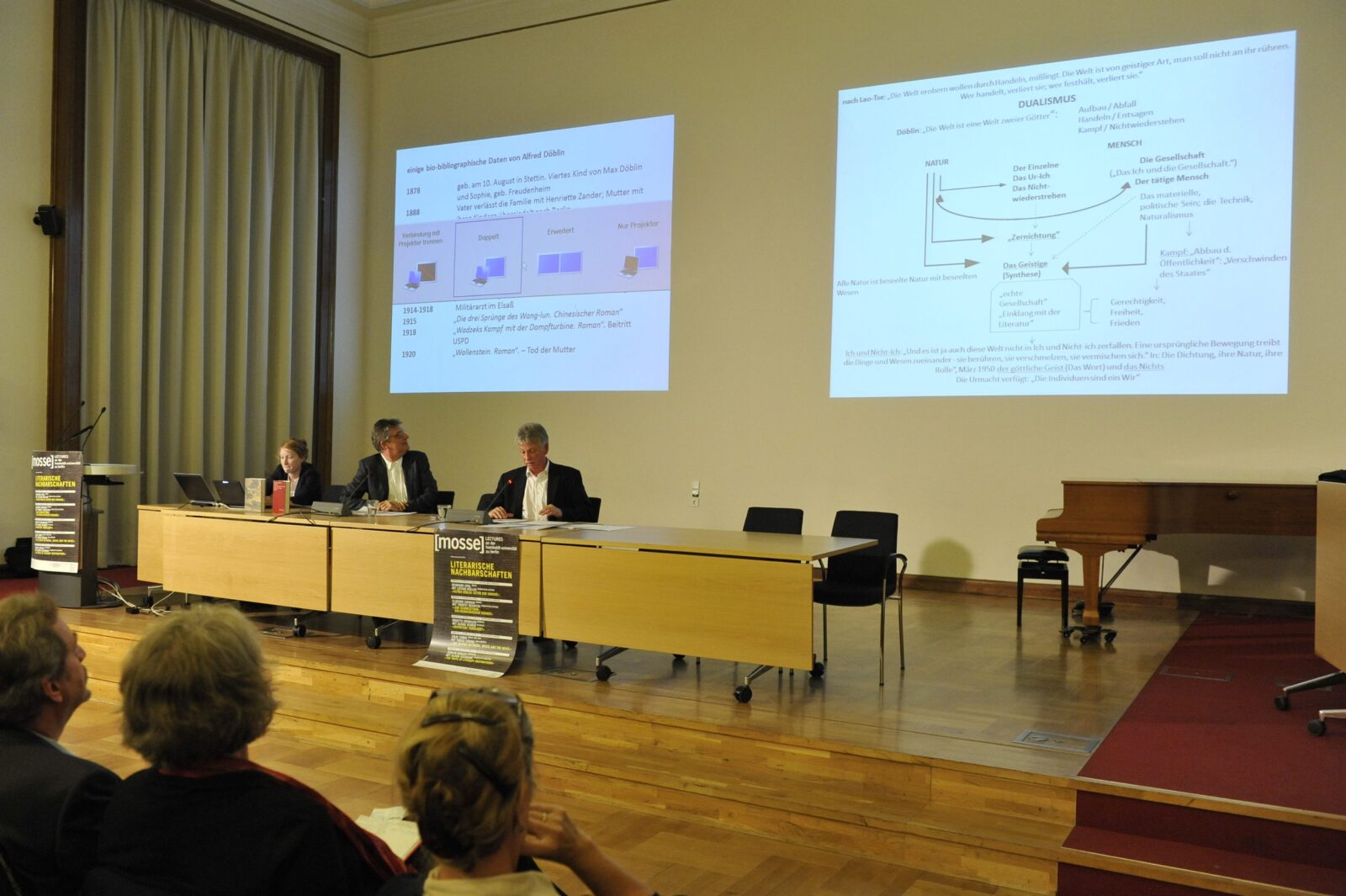
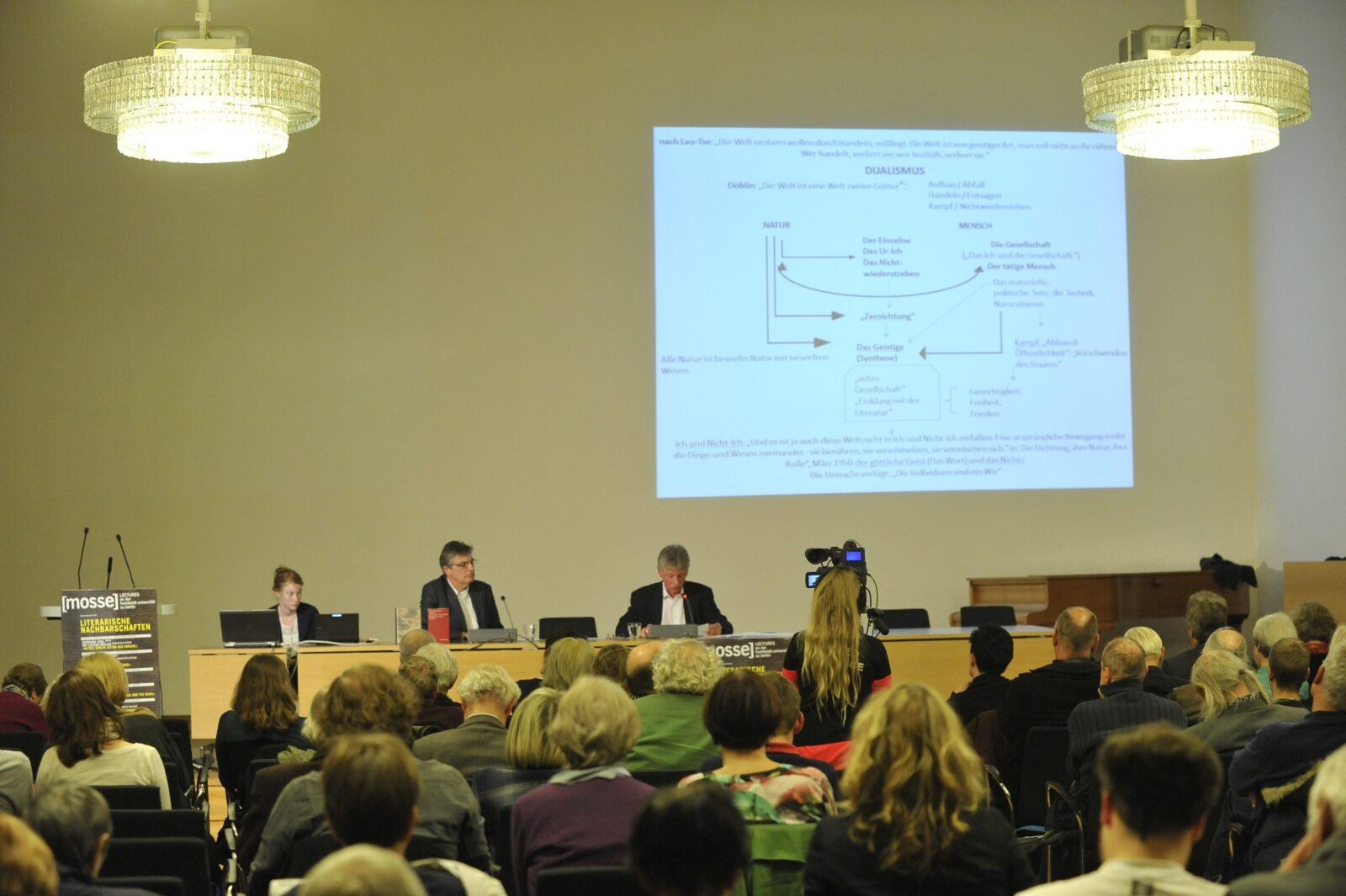
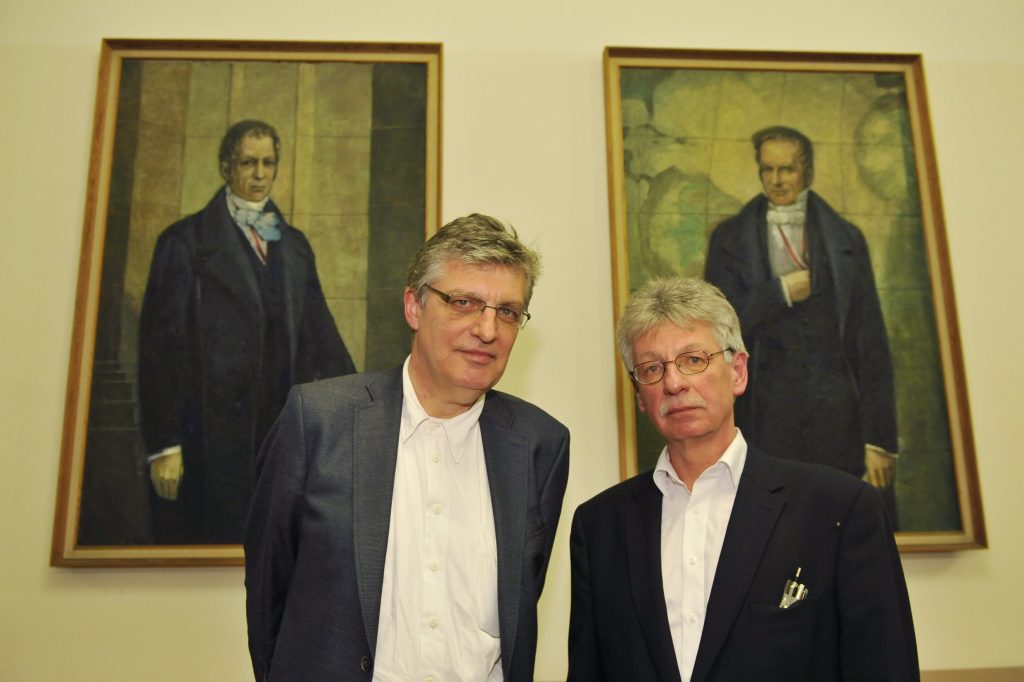
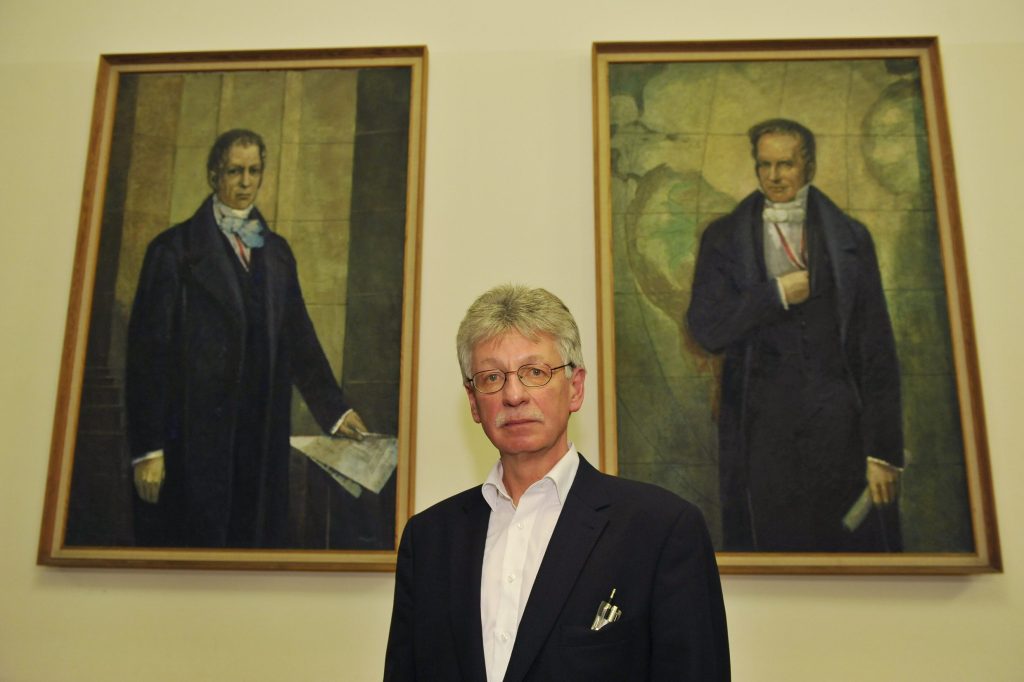
Photo credit: Niels Leiser for the Mosse Lectures
