
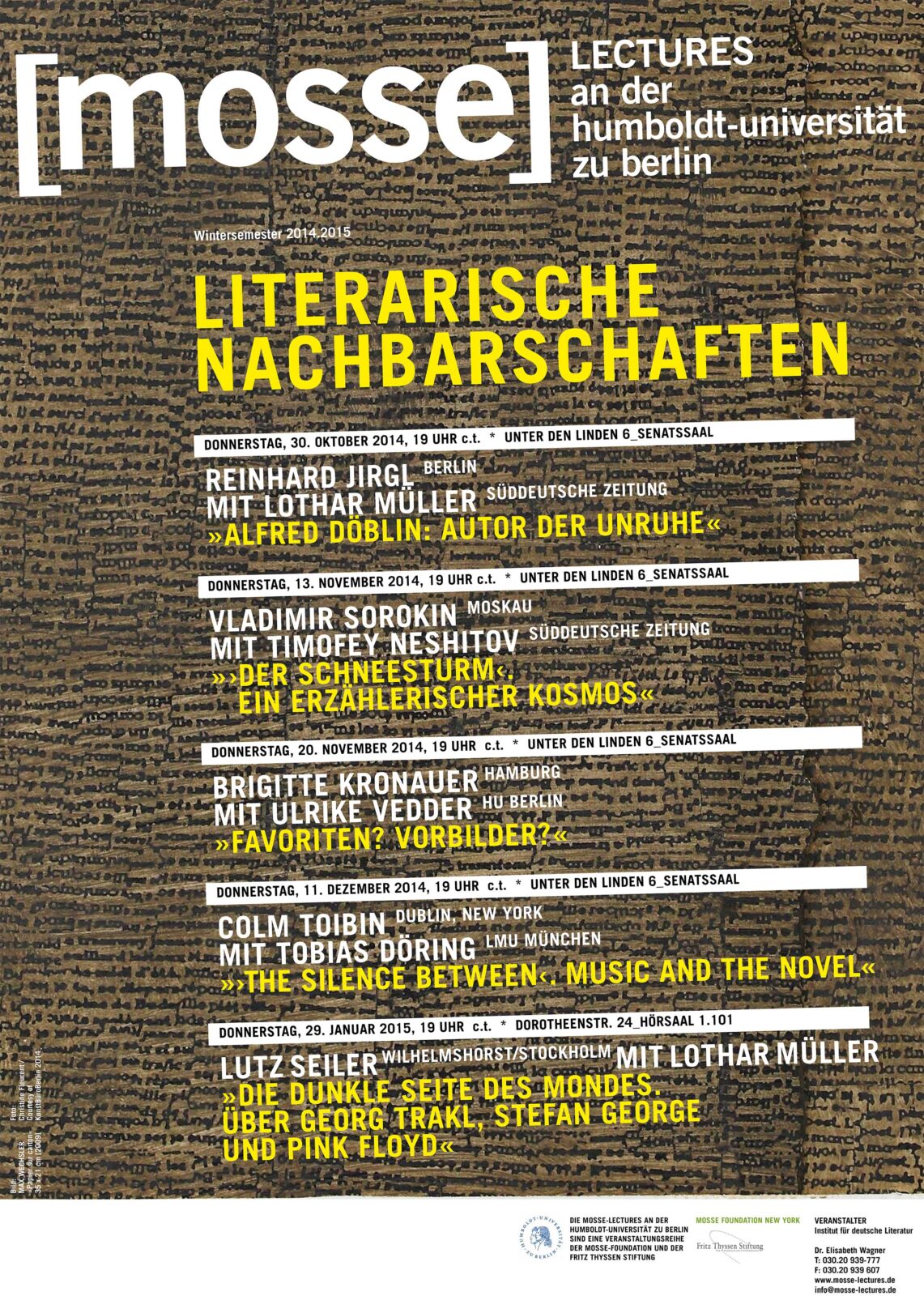
2014: Vladimir Sorokin, “‘Der Schneesturm.’ Ein Erzählerischer Kosmos” / “‘The Blizzard’: A Narrative Cosmos”
Vladimir Sorokin, “‘Der Schneesturm.’ Ein Erzählerischer Kosmos” / “‘The Blizzard’: A Narrative Cosmos”
Berlin Mosse Lecture
https://mosselectures.wisc.edu/berlin/
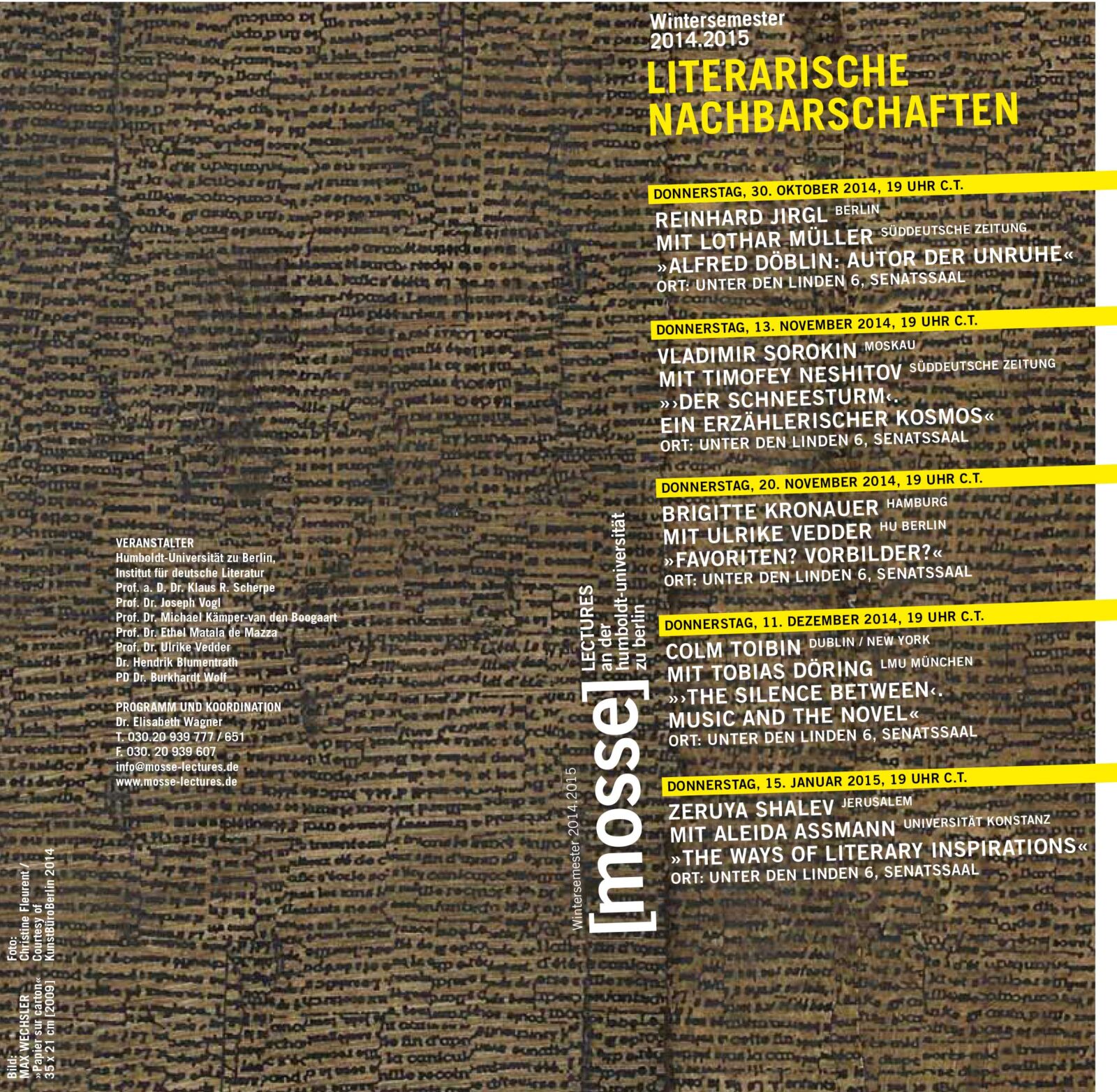
Thursday, 13 November 2014, 19:00 CET
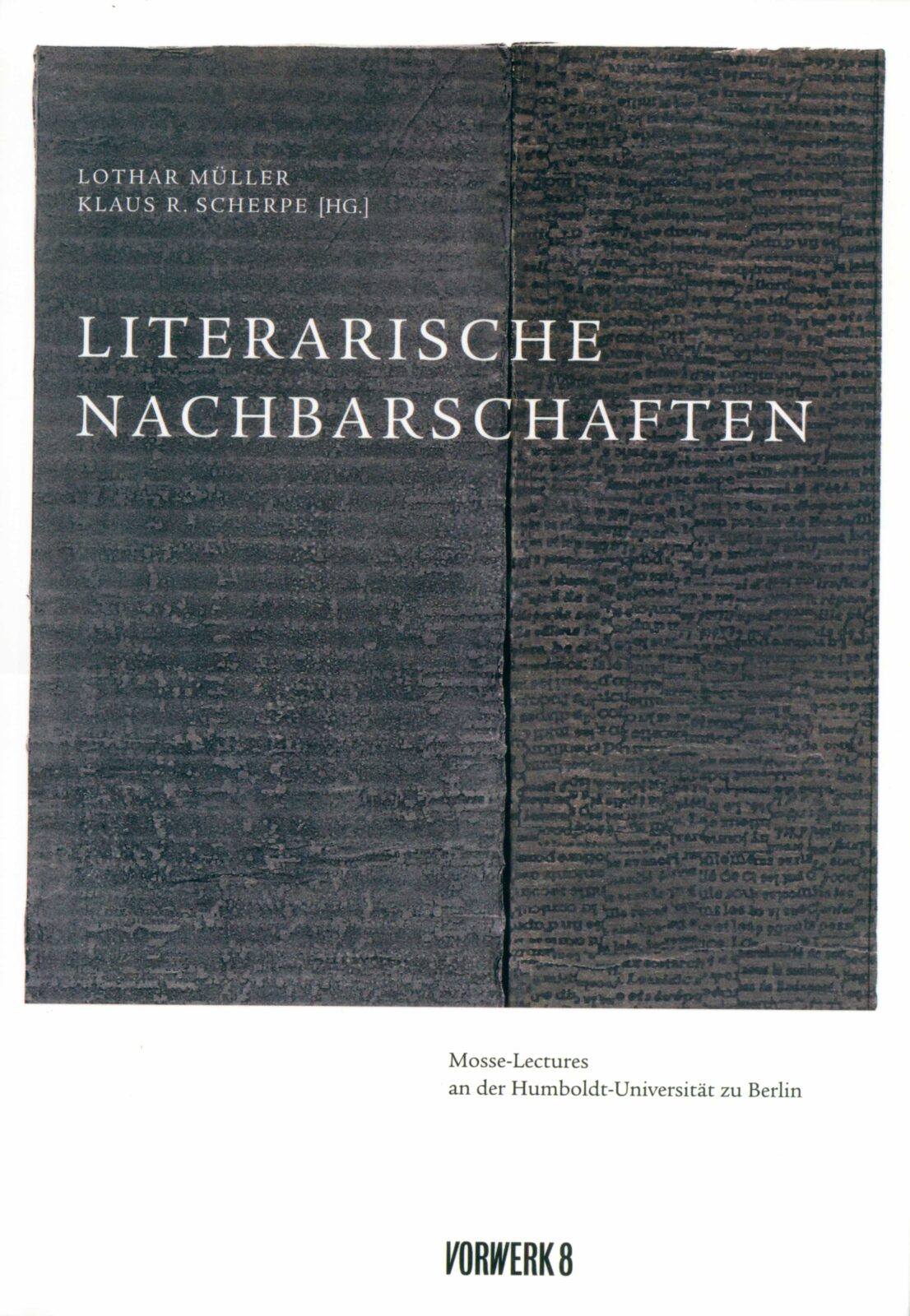
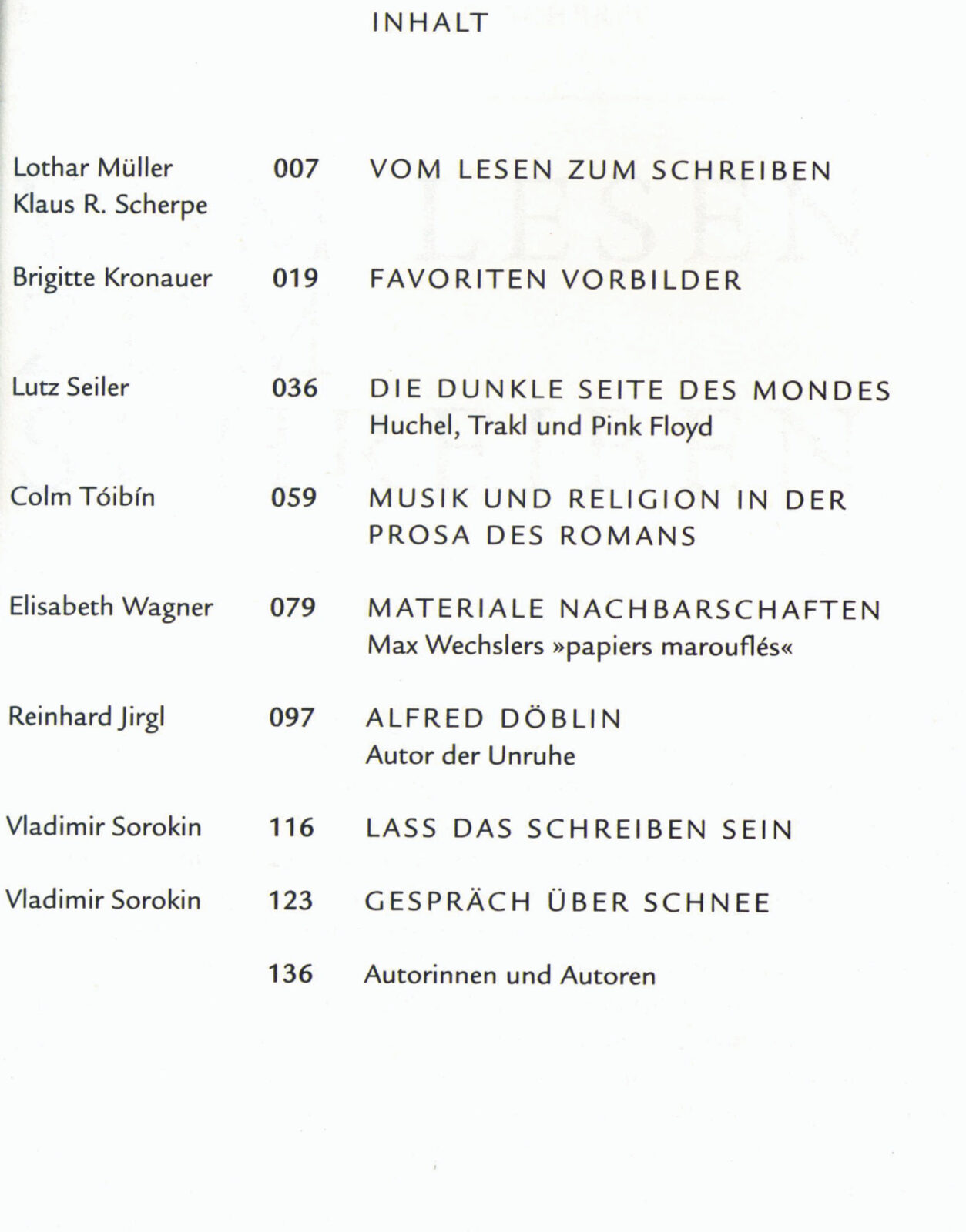
A version of this lecture was published in Lothar Müller, Klaus R. Scherpe, ed. Literarische Nachbarschaften. Mosse-Lectures an der Humboldt-Universität zu Berlin (Berlin: Vorwerk 8, 2016), 116-135. See table of contents below.
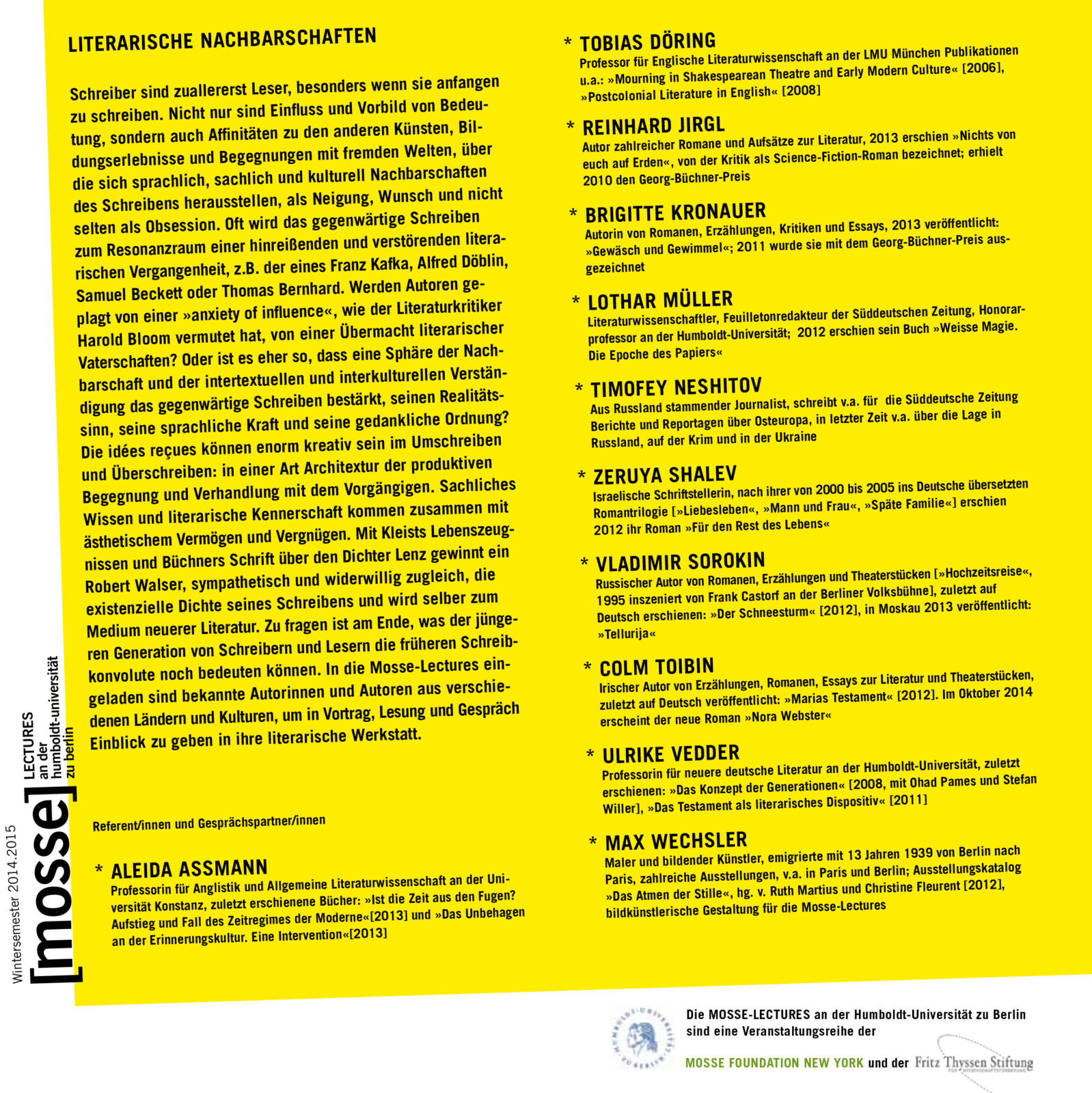
Senatssaal of Humboldt University
Under den Linden 6
1. Stock
10117 Berlin
GERMANY
Sponsored by:
[mosse] LECTURES an der humboldt-universität zu berlin
The Mosse Foundation
Global Mosse Lecture Series
Fritz Thyssen Stiftung
Institut für deutsche Literatur
Humboldt University
Introduction: Joseph Vogl (Humboldt University)
Moderator: Timofey Neshitov (Süddeutsche Zeitung)
Reader: Nina Herting (Actress)
Lecture Description: Die russische Literaturgeschichte, die Beziehung Russlands zum »Westen« und seine politische und kulturelle Ausrichtung nach dem Ende der Sowjetunion haben in den Erzählwerken Vladimir Sorokins tiefe Spuren hinterlassen. In seinen neueren Romanen entwickelt er in einer Art Retro-Science-Fiction die politpoetische Vision einer imaginären Landschaft, in der sich Selbstverständnis und Kritik Russlands auf eigentümliche und provokante Art und Weise miteinander verbinden, so vor allem in seiner in Moskau 2013 erschienenen, noch nicht übersetzten Dystopie einer Republik namens »Tellurija«. Sorokin wird aus seinem nicht zuletzt an Kafkas »Landarzt« erinnernden Roman »Der Schneesturm« lesen und anschließend mit Timofey Neshitov diskutieren.
Bitte lesen Sie auch dazu das Gespräch über Schnee mit Vladimir Sorokin im Literaturportal novinki
http://www.novinki.de/sasse-sylvia-gespraech-ueber-schnee/
Lecture Series Description: First of all writers are readers, as J.M. Coetzee puts it, especially as they begin to write. Influences and models come into play, but then there is that visceral relationship that shapes matters of language, style and rhythm, creating adjacencies of writing, via affections, desires, often enough obsessions. The deep imprint former writers leave on texts may resonate as a kind of ghostwriting: the literary experience of a disturbing fictional past in the works of a Franz Kafka, Samuel Beckett or Thomas Bernhard. Worldly knowledge and literary appreciation quite often merge with an aesthetic sensibility and pleasure. Are writers, as literary critic Harold Bloom has asserted, haunted by an “anxiety of influence”? Are they overcome by literary paternities? Should we not rather suppose that literary proximity and intertextual understanding will strengthen and encourage a writer’s sense of reality, power of language, and order of ideas? The idées reçues of literature can be immensely creative in rewriting and overwriting. They may create a kind of architexture, negotiating and re-presenting the previous work. Robert Walser for example generates the existential density of his writing receiving inspirations from the scripts of Kleist and Büchner that make him a medium of a radically new literature. Or Vladimir Sorokin’s fiction where a kind of reproductive cloning of the classical writers of Russian literature takes hold of the imagination. Finally it is a matter of conjecture what, nowadays, the bulk of previous writings can mean to the younger generations of writers and readers. Well known authors from different countries and cultures are invited to the Mosse-Lectures to present and comment on the literary condition and constituting elements of their work.
Vladimir Sorokin: Russischer Schriftsteller; nach der Beschäftigung mit der Malerei, Konzeptkunst und Buchillustrationen seit den 1980er Jahren Veröffentlichung von Erzählungen und Essays, zunächst im Ausland; es folgten zahlreiche Drehbücher, Theaterstücke und zumeist systemkritische Romane; in Deutschland uraufgeführt u.a. »Hochzeitsreise« von Frank Castorf an der Berliner Volksbühne und »Ein Monat Dachau« von Dimiter Gotscheff am Düsseldorfer Schauspielhaus; in deutscher Übersetzung veröffentlichte Romane u.a. »Ljod. Das Eis« (2003), »Der Tag des Opritschniks« (2008), »23000« (2010), »Zucker-Kreml« (2010), »Der Schneesturm« (2012). 2013 erschien in Moskau sein neuer Roman »Telluria«.
Timofey Neshitov: ist gebürtiger Russe und russischer Staatsbürger; nach einem Studium in Petersburg und an der Deutschen Journalistenschule in München Deutschlandkorrespondent einer türkischen Zeitung und Mitarbeiter der taz und des Bayerischen Rundfunks; hauptsächlich schreibt er für die Süddeutsche Zeitung Berichte und Reportagen über Osteuropa, in letzter Zeit v.a. über den Zustand der russischen Gesellschaft und die Lage auf der Krim und in der Ukraine.
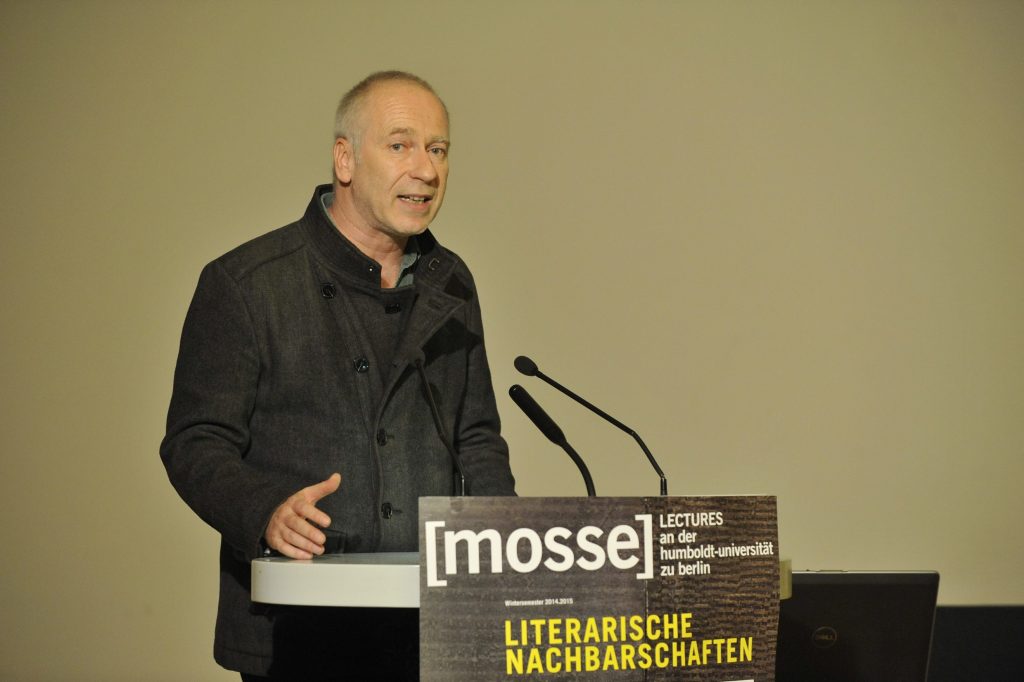
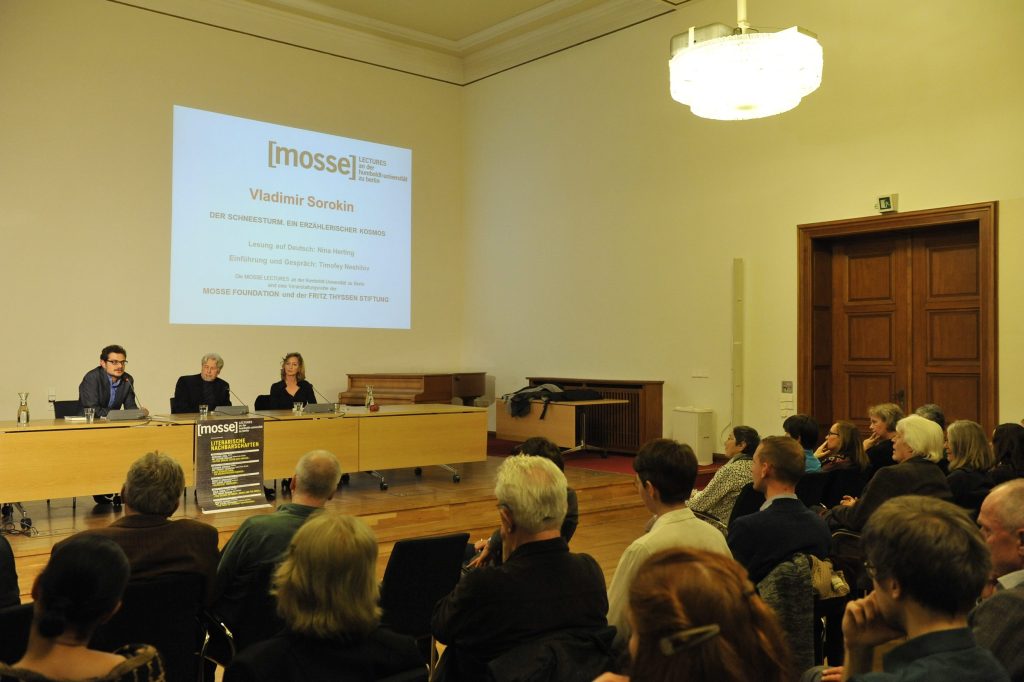
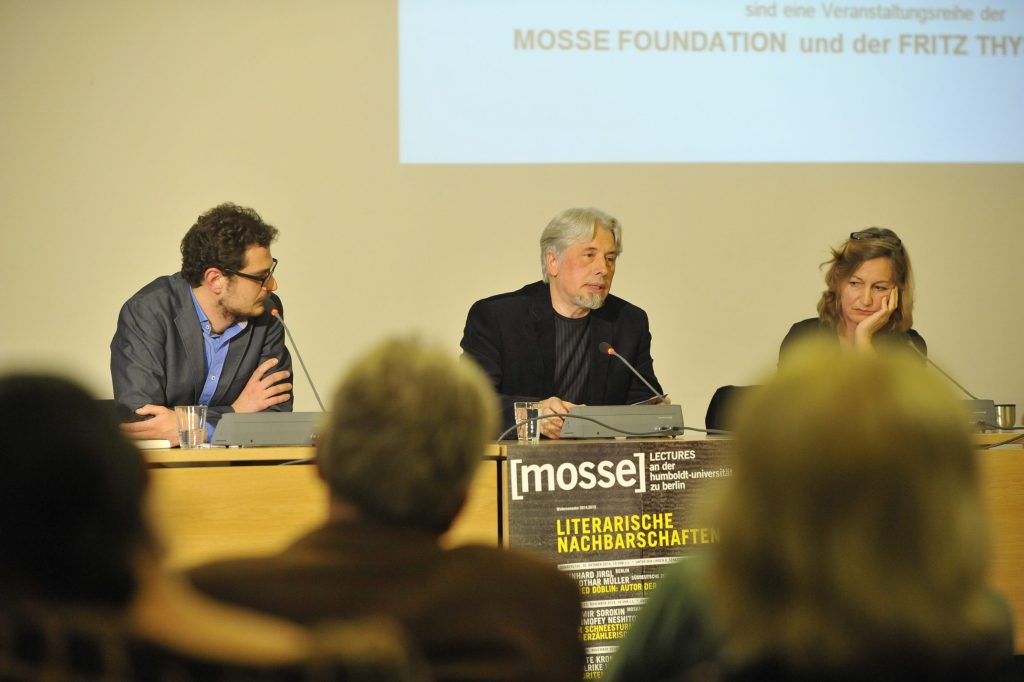
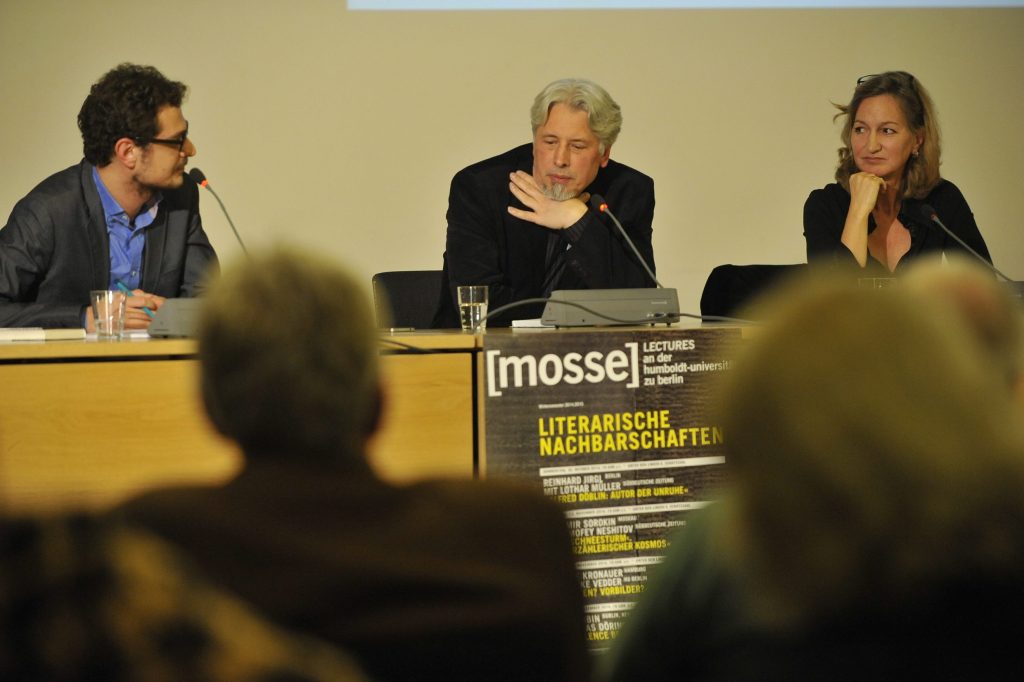
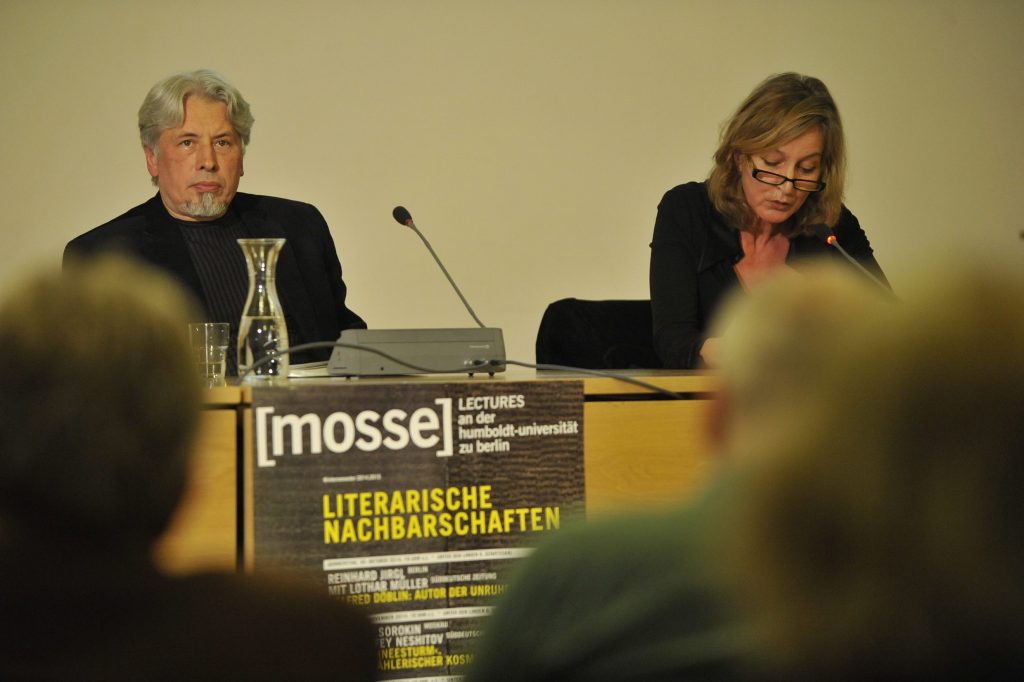
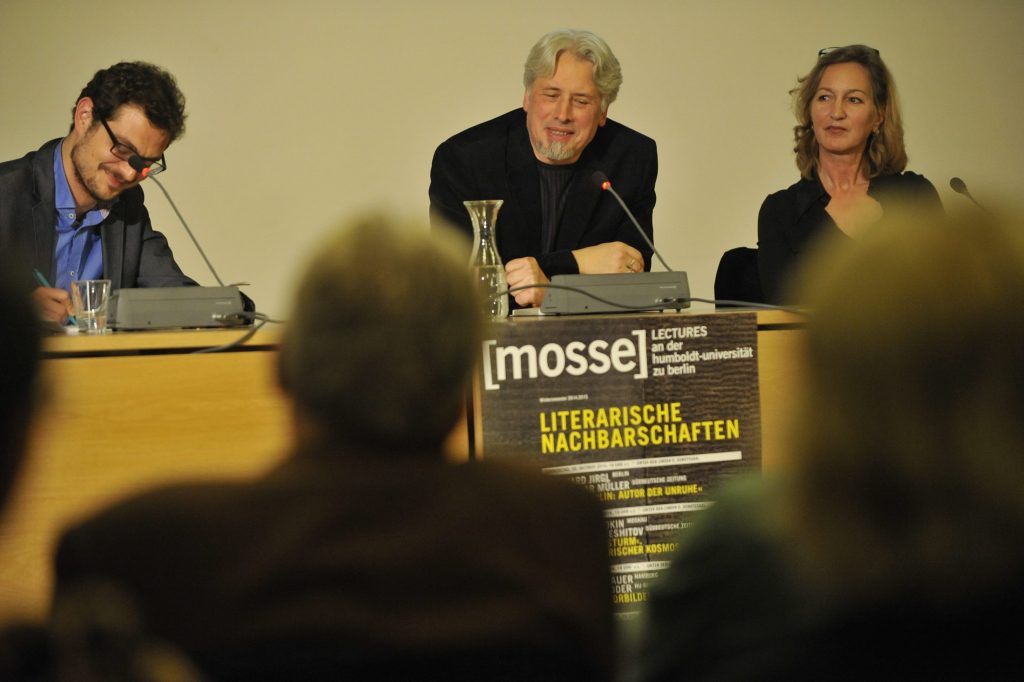
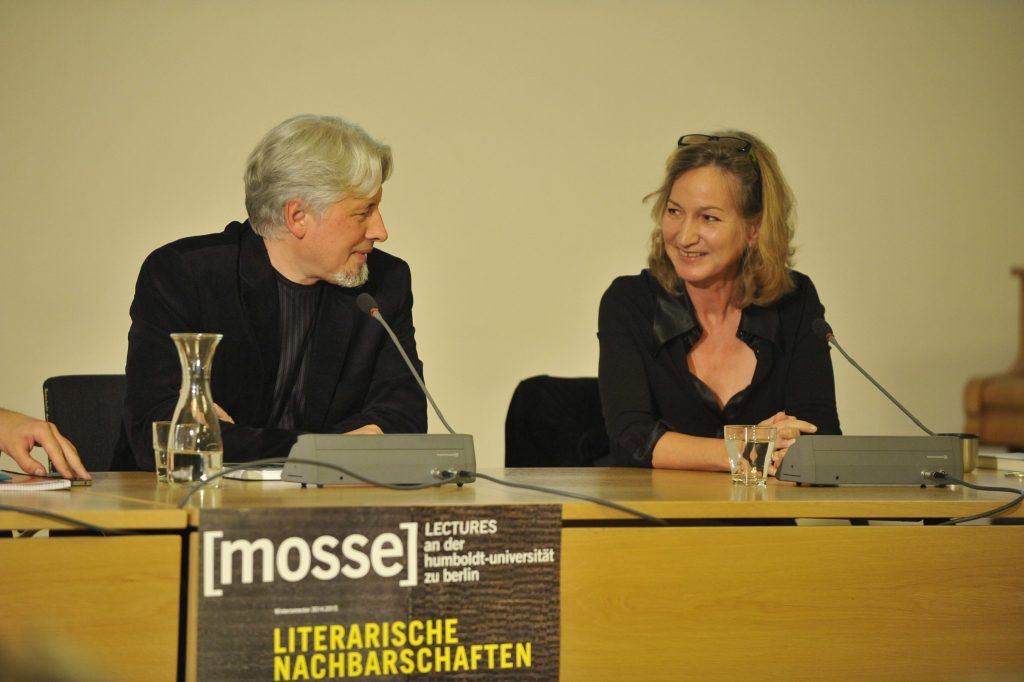
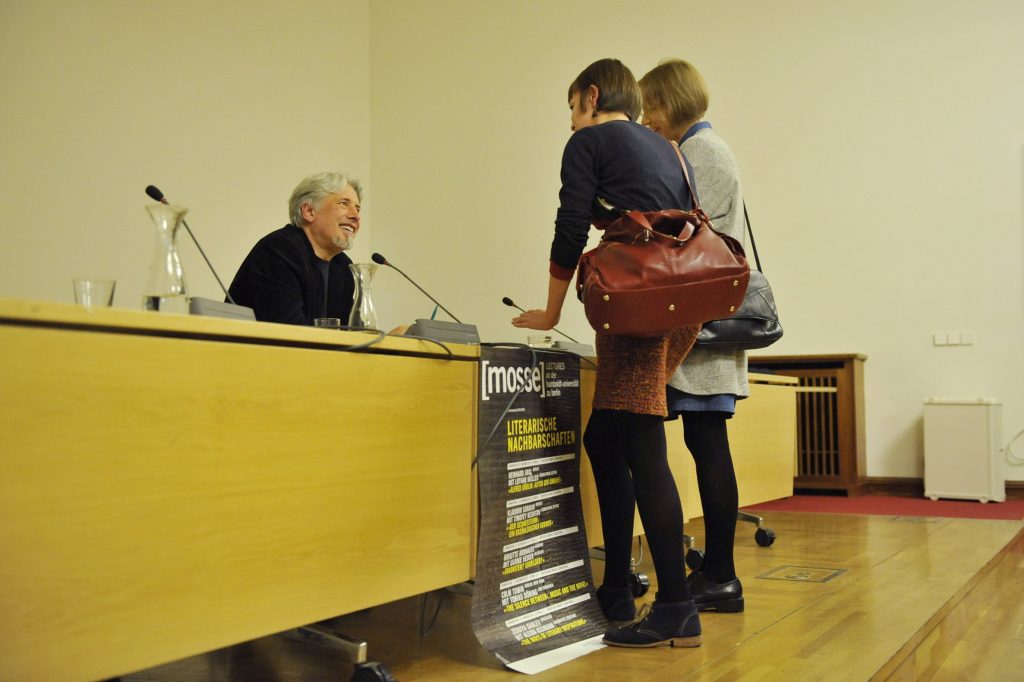
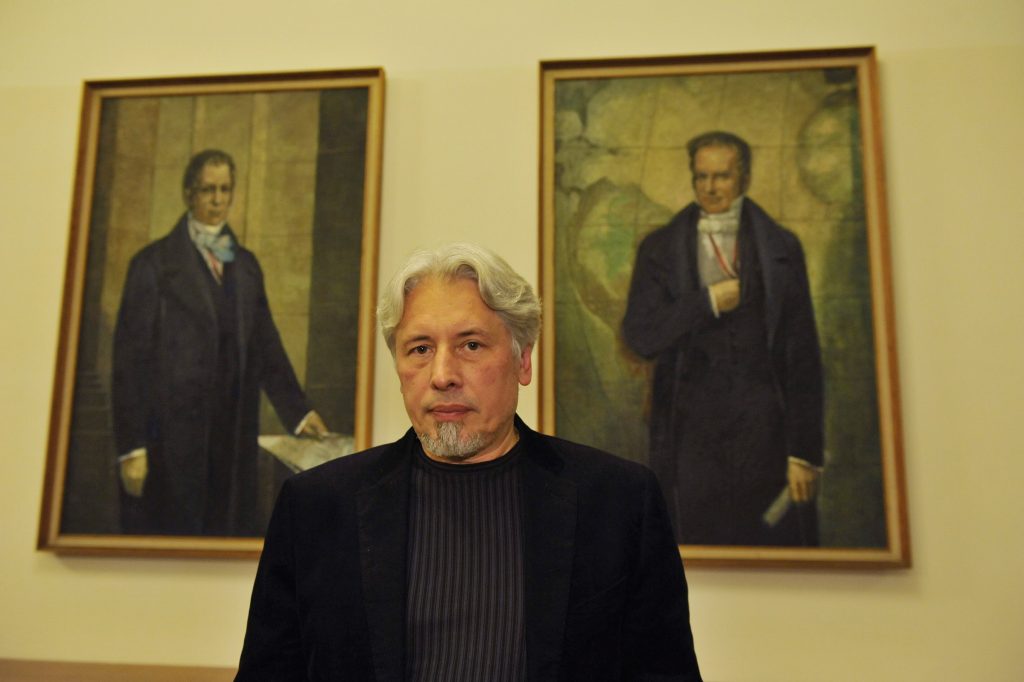
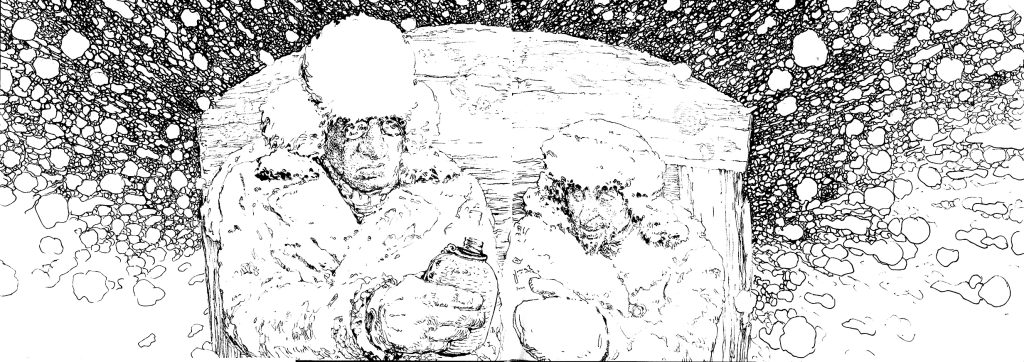
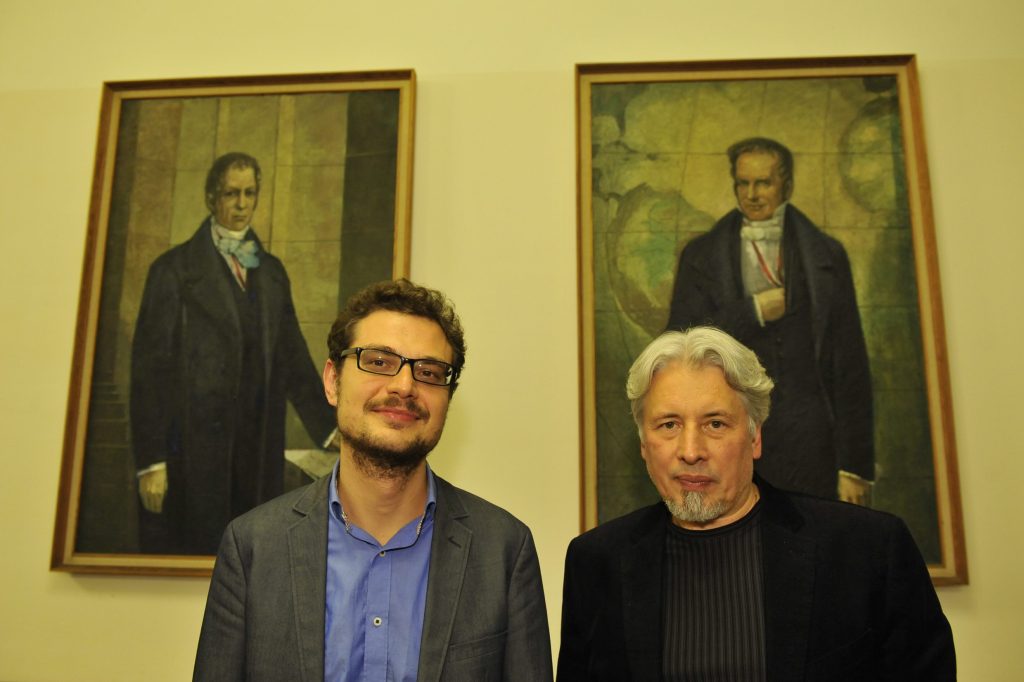
Photo credit: Niels Leiser for the Mosse Lectures
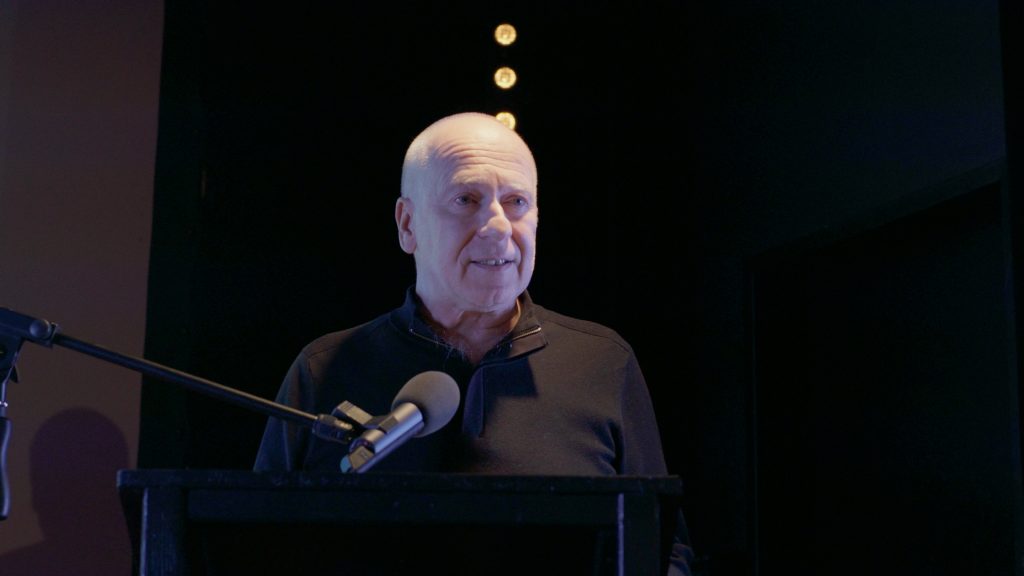
His research and teaching comprises literature from the eighteenth to the twentieth century, media and aesthetics, cultural and political theory. Recent research focuses on the history of financial economy, literature and economics, and the “poetics of knowledge” – the study of the relationships and interactions between forms of knowledge and poetic or aesthetic figures. He is the director or principal investigator of a range of research projects including “The Knowledge of Literature” (PhD-Net), “Small Forms in the History of Literature and Sciences” (Research Training Group), and “Matters of Activity: Image Space Material” (Cluster of Excellence).
Joseph Vogl published more than a hundred articles and book chapters, as well as numerous books and monographs. Among his most important written works are the monographs Ort der Gewalt. Kafkas literarische Ethik (1990); Kalkül und Leidenschaft. Poetik des ökonomischen Menschen (2002); Über das Zaudern (2007; On Tarrying, 2011). Besides his research in literature, cultural and media studies, he is well known for his intensive work on modern and present-day finance and economics, analyzing finance theories from the perspective of cultural history. This work culminated in his books Das Gespenst des Kapitals (2010; The Specter of Capital, 2014), Der Souveränitätseffekt (2015; The Ascendancy of Finance, 2017) and Kapital und Ressentiment. Eine kurze Theorie der Gegenwart (2021; Capital and Ressentiment: A Brief Theory of the Present, 2022), which received wide recognition in the fields of cultural studies as well as economics, and initiated a public debate. Further workings include translations from French to German (Deleuze, Lévi-Strauss, Lyotard) and numerous interviews on TV with Alexander Kluge (see Soll und Haben. Fernsehgespräche, 2009; Senkblei der Geschichten. Gespräche, 2020).
He was awarded the Günther Anders Prize for Critical Thinking (2022). For his book Der Souveränitätseffekt (The Ascendancy of Finance) Vogl was on the shortlist for the Leipzig Book Fair Prize 2015 in the category of non-fiction. In 1988 he received the Translation Prize for the Promotion of Franco-German Relations (DVA Foundation) for his translations of key works of modern French philosophy.
