
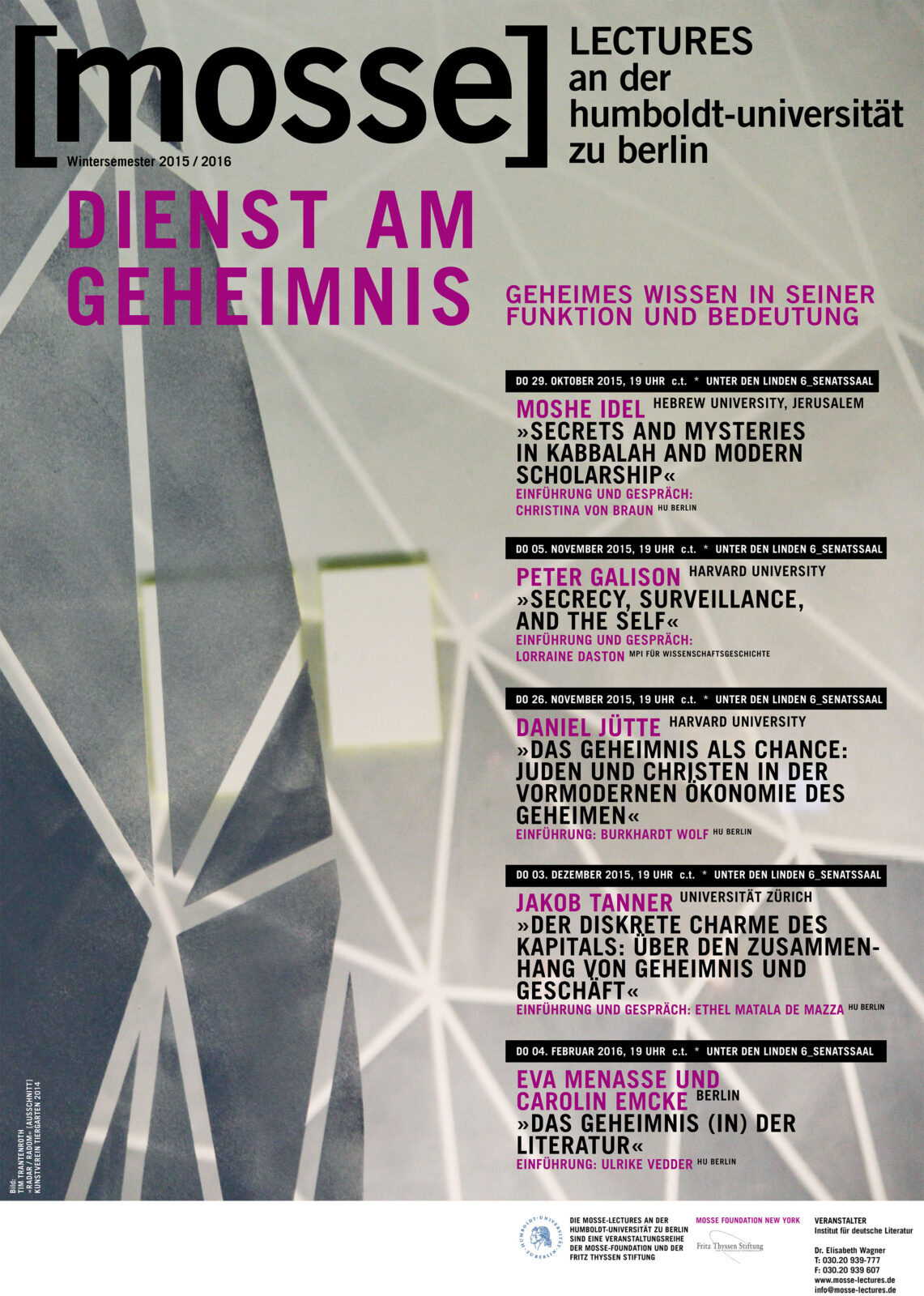
2015: Jakob Tanner, “Der diskrete Charme des Kapitals: Über den Zusammenhang von Geheimnis und Geschäft” / “The Discreet Charm of Capital: On the Connection Between Secret and Business”
Jakob Tanner, “Der diskrete Charme des Kapitals: Über den Zusammenhang von Geheimnis und Geschäft” / “The Discreet Charm of Capital: On the Connection Between Secret and Business”
Berlin Mosse Lecture
https://mosselectures.wisc.edu/berlin/
Thursday, 3 December 2015, 19:00 CET
Senatssaal of Humboldt University
Unter den Linden 6
1. Stock
10117 Berlin
GERMANY
Sponsored by:
[mosse] LECTURES an der humboldt-universität zu berlin
The Mosse Foundation
Global Mosse Lecture Series
Fritz Thyssen Stiftung
Institut für deutsche Literatur
Humboldt University
Moderator: Ethel Matala de Mazza (Humboldt University)
Lecture Description: Die moderne Demokratie trat mit einem Öffentlichkeits- und Transparenzversprechen gegen das Arkanum des Ancien Régimes an. Dennoch ist das Geheimnis bis heute eine zentrale Betriebsgrundlage politischer Herrschaft geblieben und verbindet sich – als Geschäfts- und Bankgeheimnis – mit der Akkumulation von Kapital und der Produktion von Reichtum. Gerade im wirtschaftlich-Finanziellen zeigt sich das Spannungsmoment zwischen medialer Fiktionalisierung und wissensbasierter Macht. Mittels der Patentgesetzgebung sollte die Offenbarung von Produktionsgeheimnissen und die Zirkulation von Wissen gefördert werden. Gleichzeitig stellen das Verbergen von Vermögen und der Einsatz sensitiver Informationen durch Insider wichtige strategische Verhaltensmuster im internationalen Steuerwettbewerb und in Finanzmarkttransaktionen dar. Beides ist inkriminiert, beides wird praktiziert. Anhand der Schweiz, die als globales Paradigma dechiffriert wird, lässt sich zeigen, wie eine nationale Kultur der Diskretion mit einer transnationalen Moral interferiert und welche paradoxen Effekte aus dem Kampf gegen eine Blackbox resultieren.
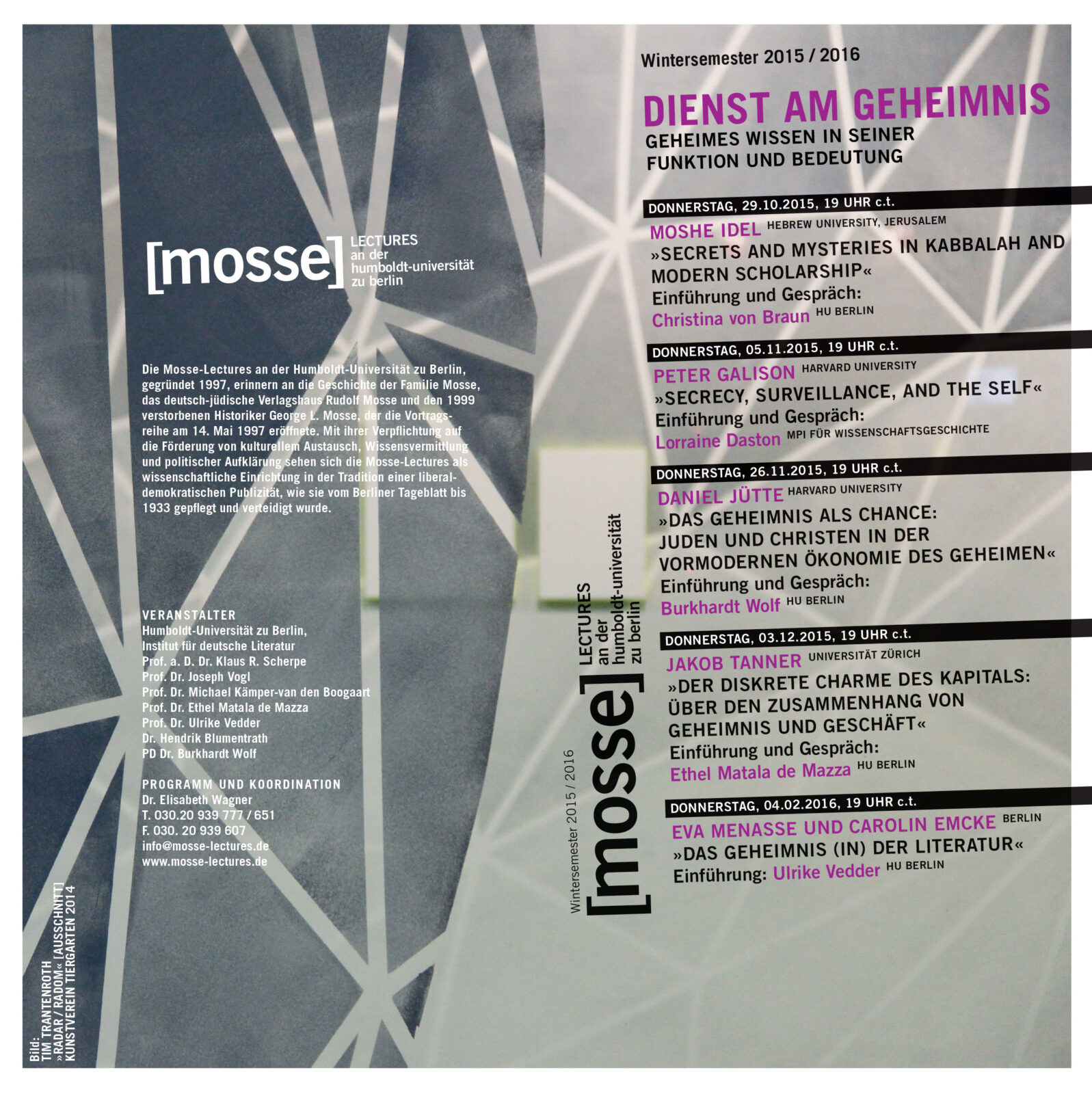
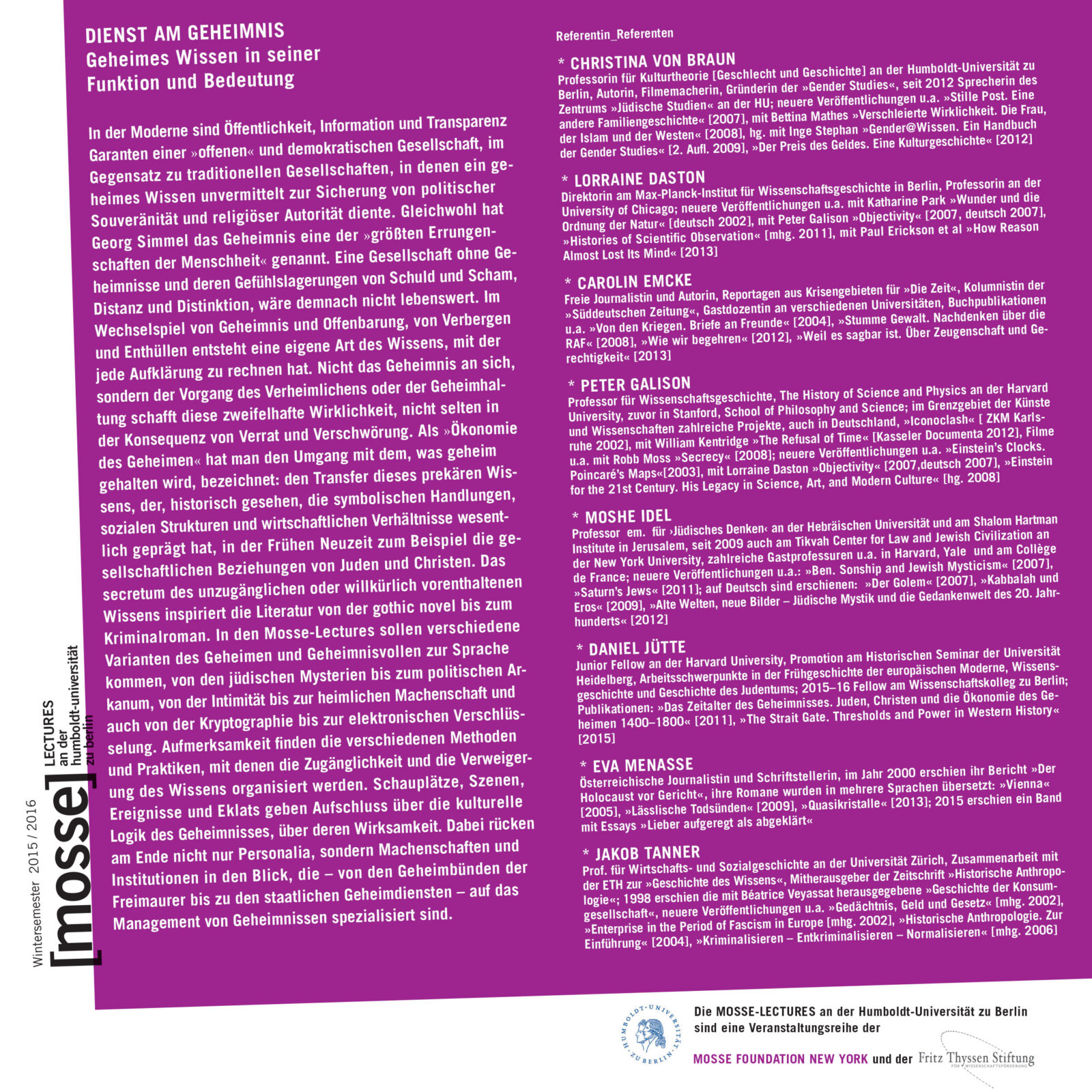
Lecture Series Description: In modernity, “open” and democratic societies guarantee public participation, information and transparency, contrary to traditional societies, where secrecy served to constitute political sovereignty and religious authority. Georg Simmel, however, has argued that to “maintain secrecy is one of the greatest achievements of mankind”, considering that a society without secrets, normally associated with guilt and shame, distance and distinction, would not be worth living in. Any discourse of enlightenment has to take into account this peculiar kind of knowledge which emerges from the interaction of secrecy and revelation, of concealing and unveiling. It is not the secret as such, but the process of keeping something secret or binding somebody in secrecy that creates this dubious reality, frequently resulting in an act of betrayal or conspiracy. Historically we can speak of an “economy of secrecy” when symbolic actions, social structures and corporate relationships are affected by this precarious knowledge, as for instance in the Early Modern Age in the social relationship between Christians and Jews. In literature, gothic novels as well as detective stories are inspired by such hidden knowledge and deliberately obscured meaning. The Mosse-Lectures will deal with multiple forms of the secretum, the making of secretive knowledge, from the mysteries of Judaism to the practices of the political Arcanum; issues of intimacy as well as political power plays of secrecy will be discussed, not to forget modes of coding, reaching from ancient cryptography to electronic encryption. Methods and practices of granting and refusing access will be observed, giving evidence of the cultural logic and effects of secret events, their staging and the eruptions of scandal. The lectures will focus on the mechanisms of the institutions of secrecy, from Freemasonry to the secret services and intelligence apparatuses of our days which specialize in the management of secrecy.
Jakob Tanner: ist Professor em. für Geschichte der Neuzeit an der Forschungsstelle für Sozial- und Wirtschaftsgeschichte und am Historischen Seminar der Universität Zürich. Forschungsschwerpunkte: Geschichtstheorie, Geschichte der Schweiz, Wirtschafts-, Finanz- und Unternehmensgeschichte, Wissenschafts-, Körper-, Ernährungs- und Medizingeschichte. 1996-2001 Mitglied der Unabhängigen Expertenkommission Schweiz-Zweiter Weltkrieg. Mitherausgeber verschiedener historischer Zeitschriften, u.a. »Historische Anthropologie«. Ehrendoktor der Universität Luzern.
Ethel Matala de Mazza has been professor of modern German literature at Humboldt University since 2010. She is the author of three monographs, including Der populäre Pakt. Verhandlungen der Moderne zwischen Operette und Feuilleton (Fischer, 2018) and Der verfaßte Körper. Zum Projekt einer organischen Gemeinschaft in der Politischen Romantik (Rombach, 1999). She has served as a visiting professor at Johns Hopkins University, the University of Indiana, Bloomington, and the University of California, Berkeley, Harvard University, and the University of Chicago. She received her terminal degree in German literature at the University of Munich in 2007.
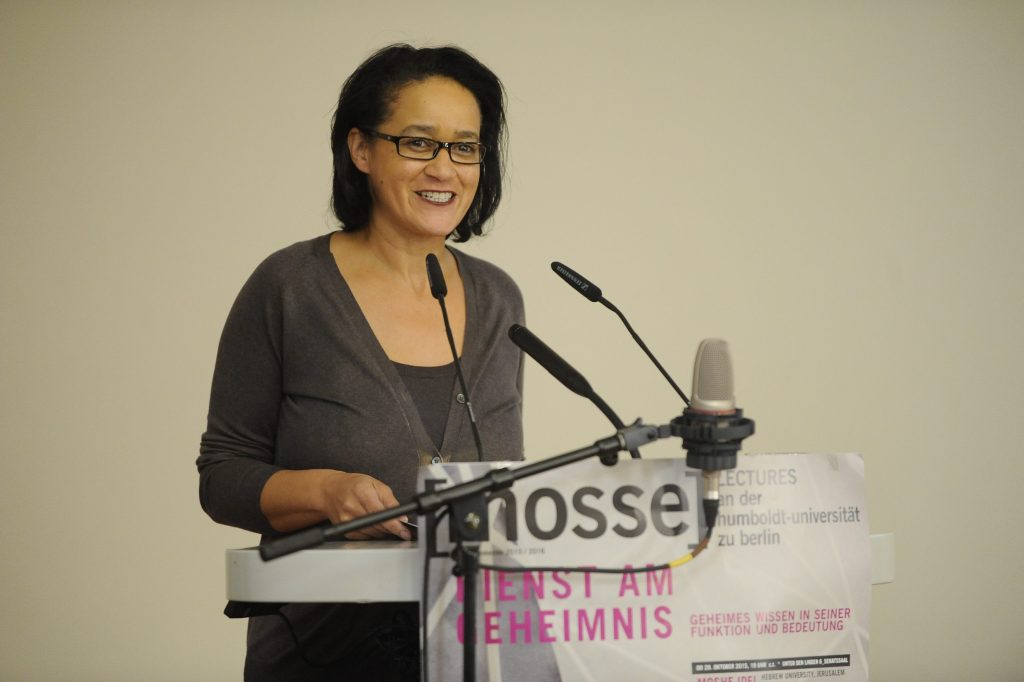
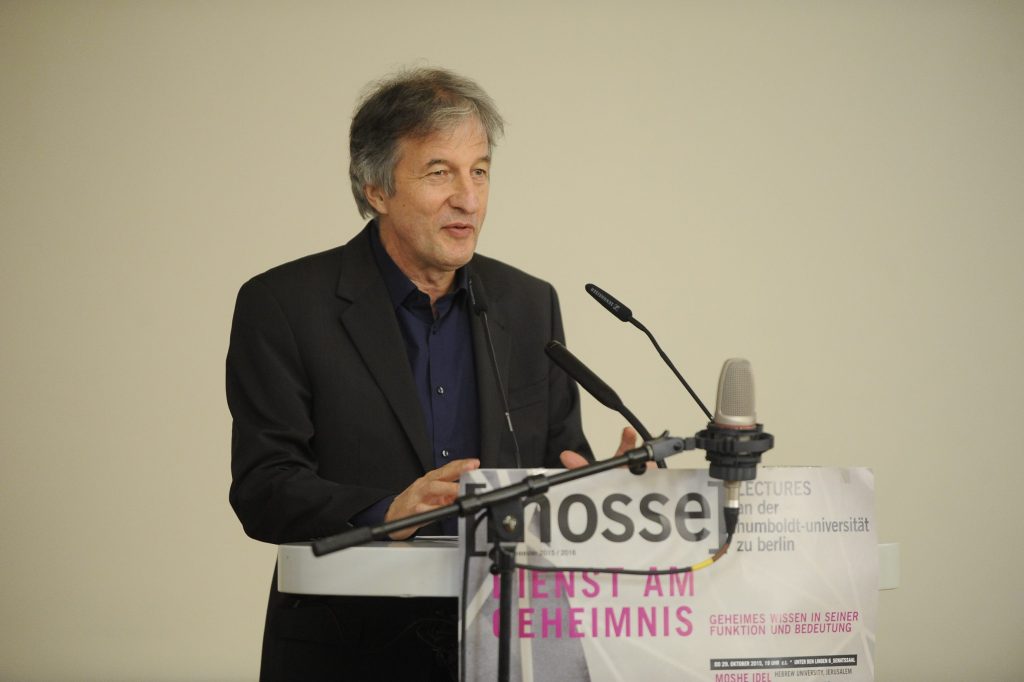
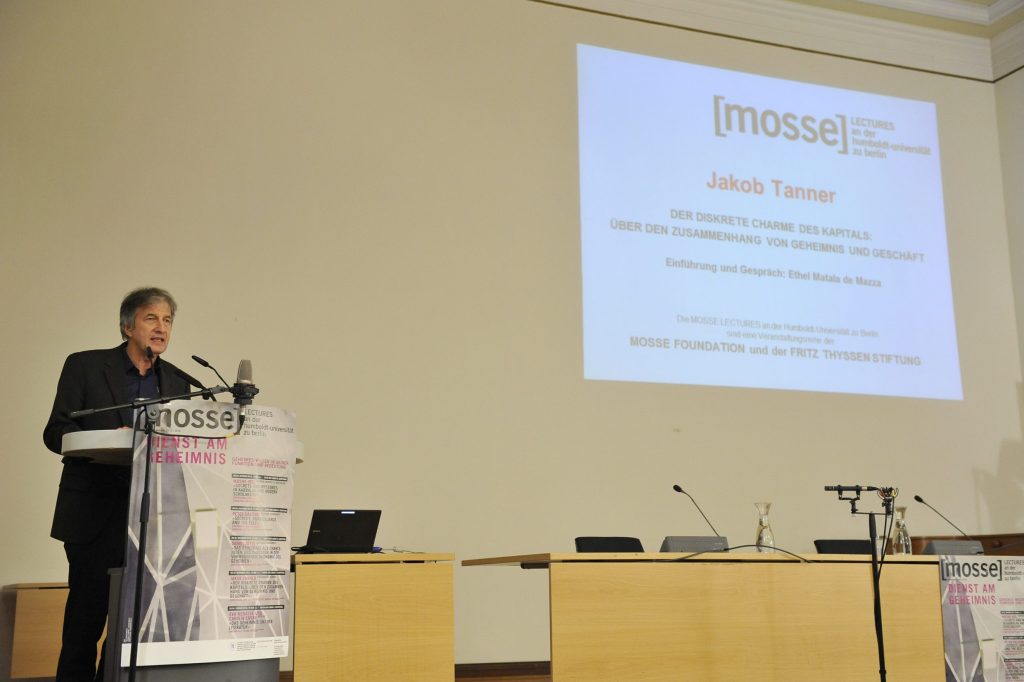
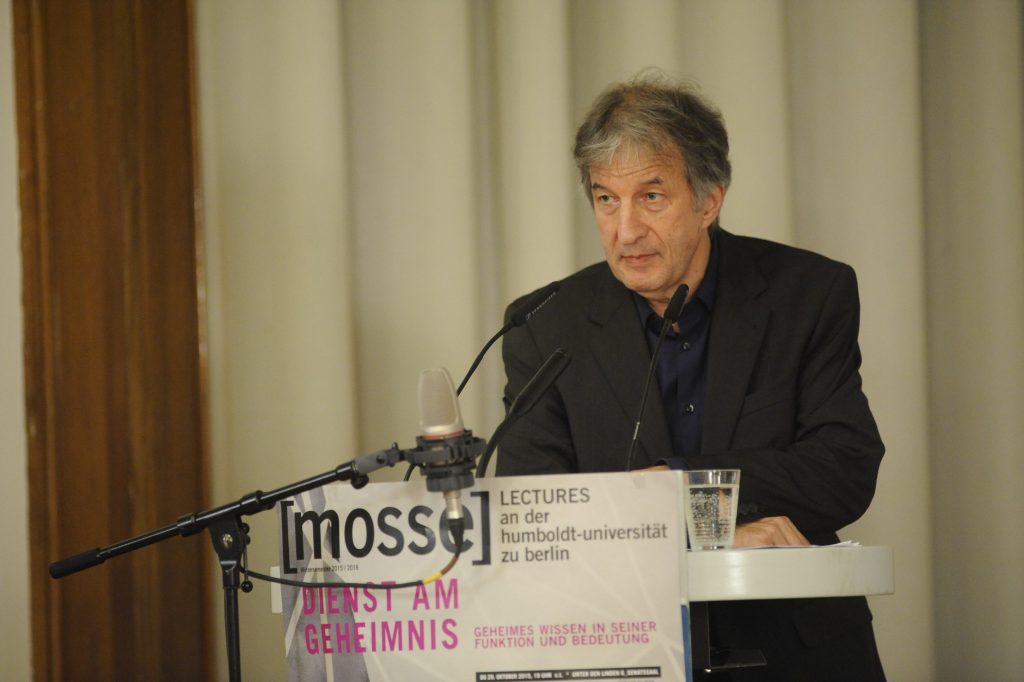
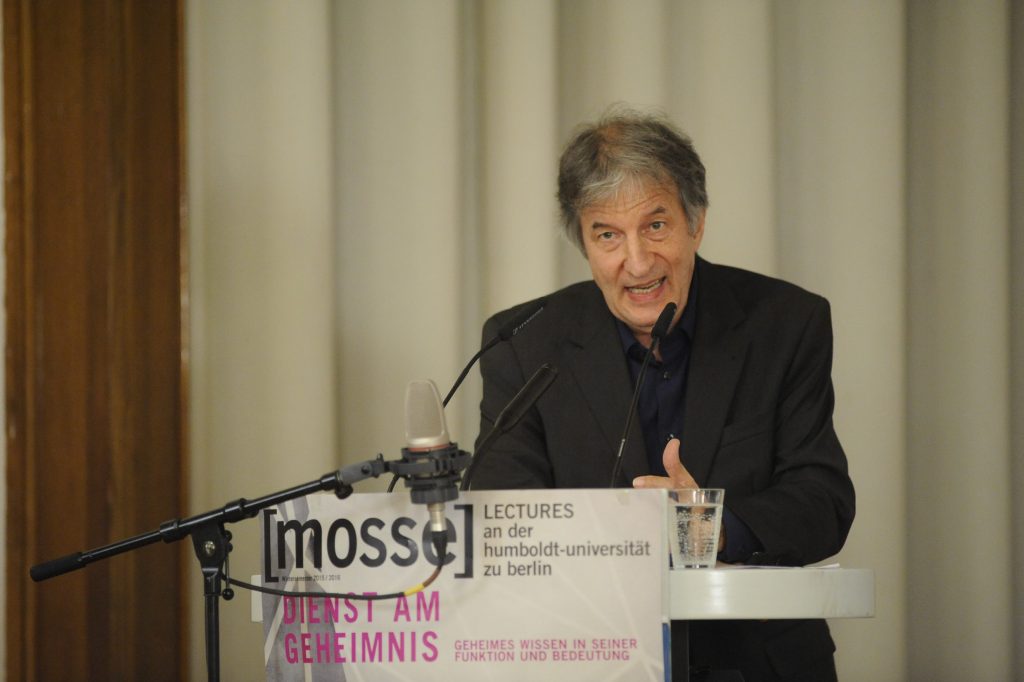
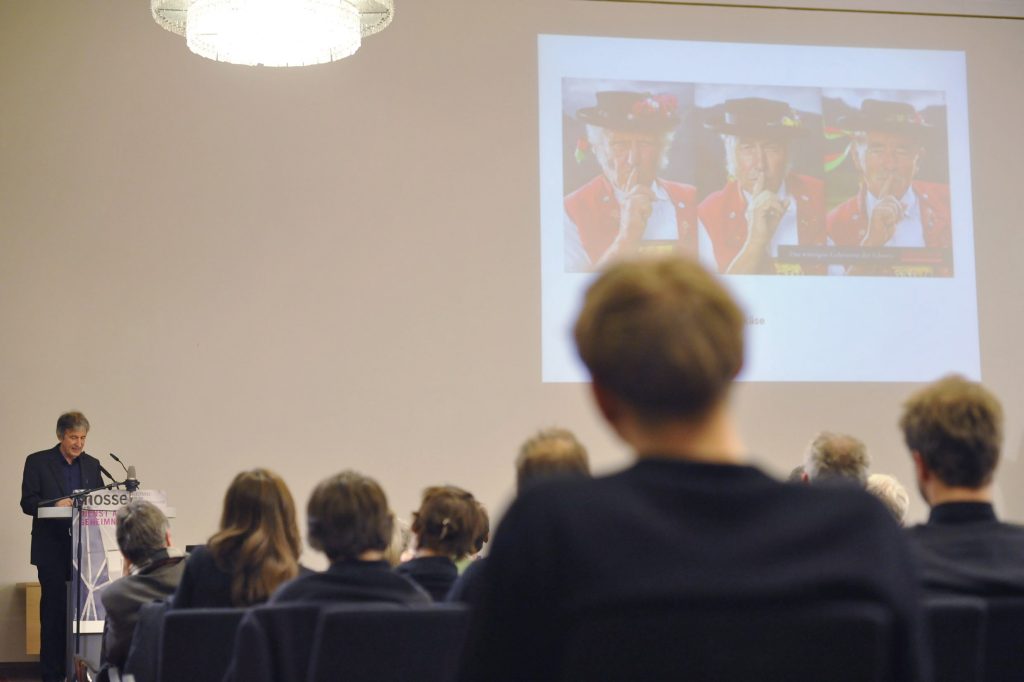
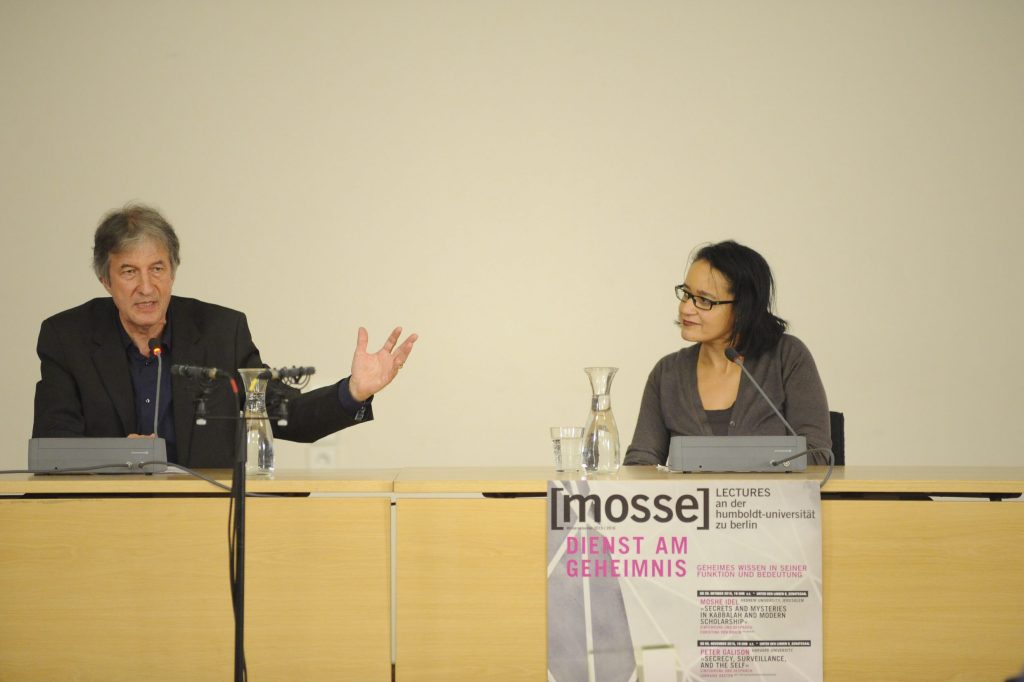
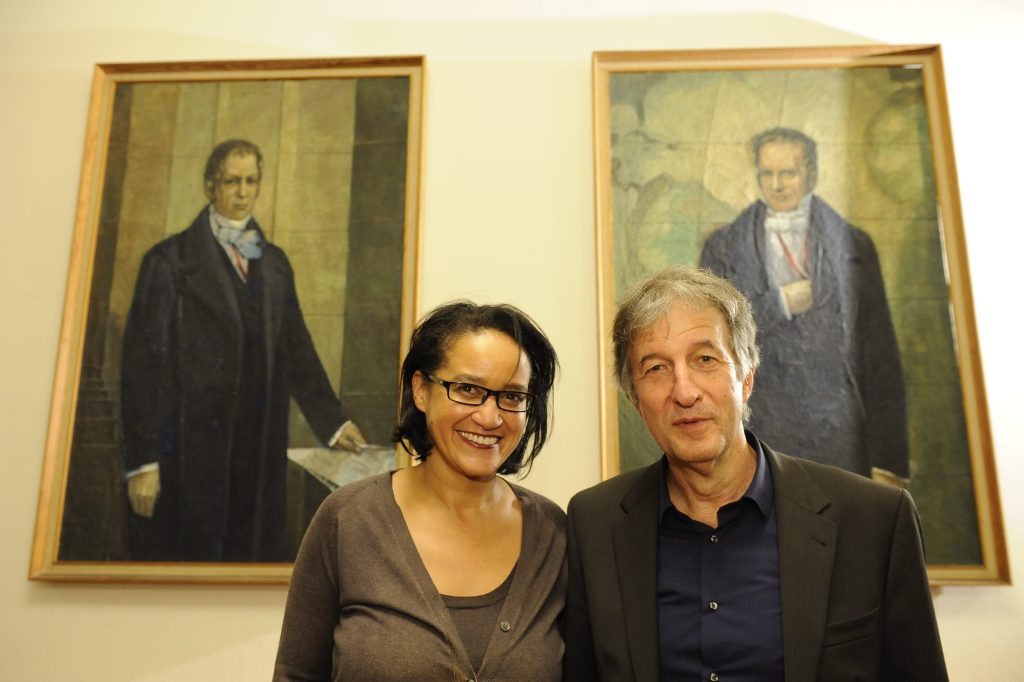
Photo credit: Niels Leiser for the Mosse Lectures
