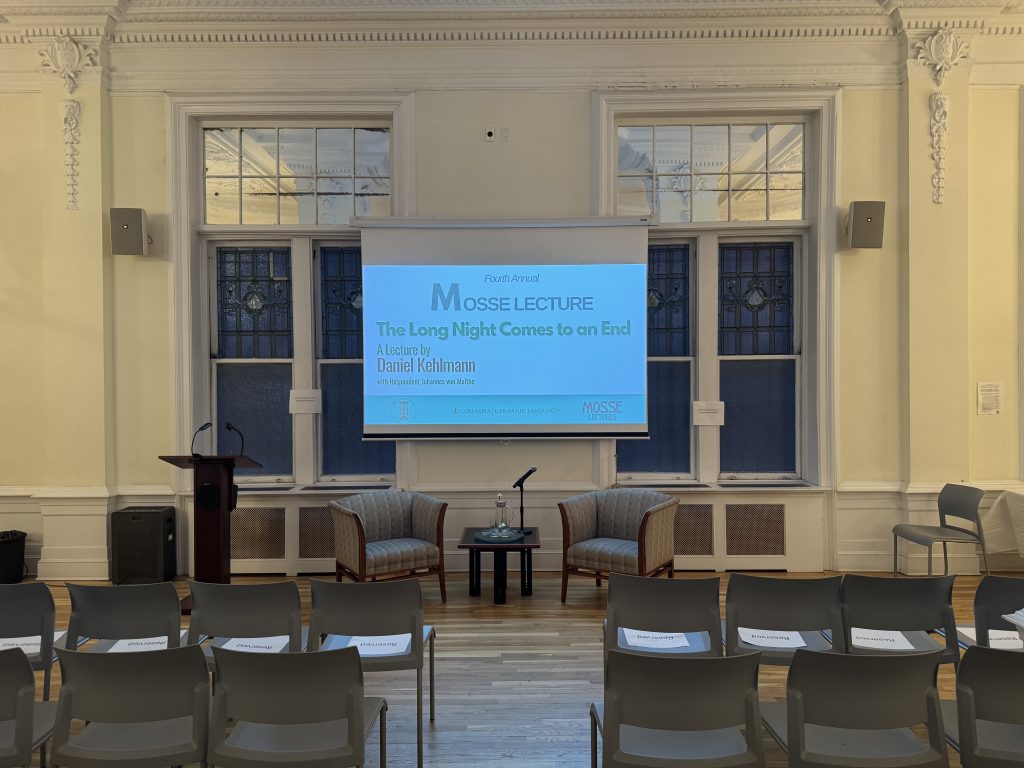
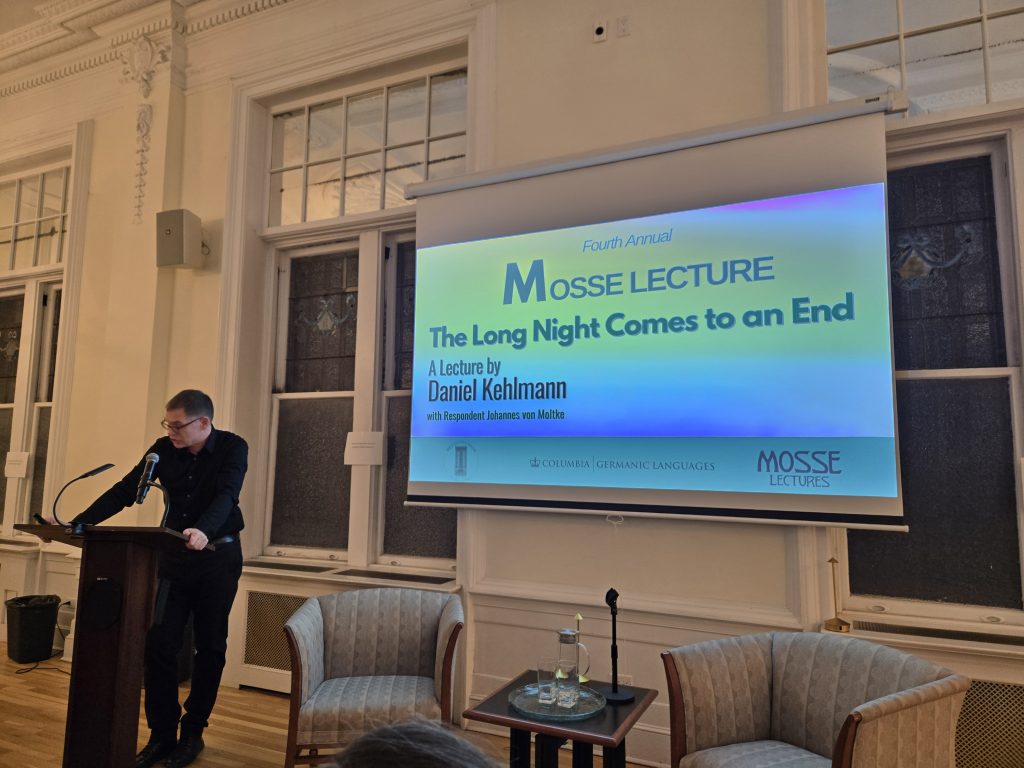
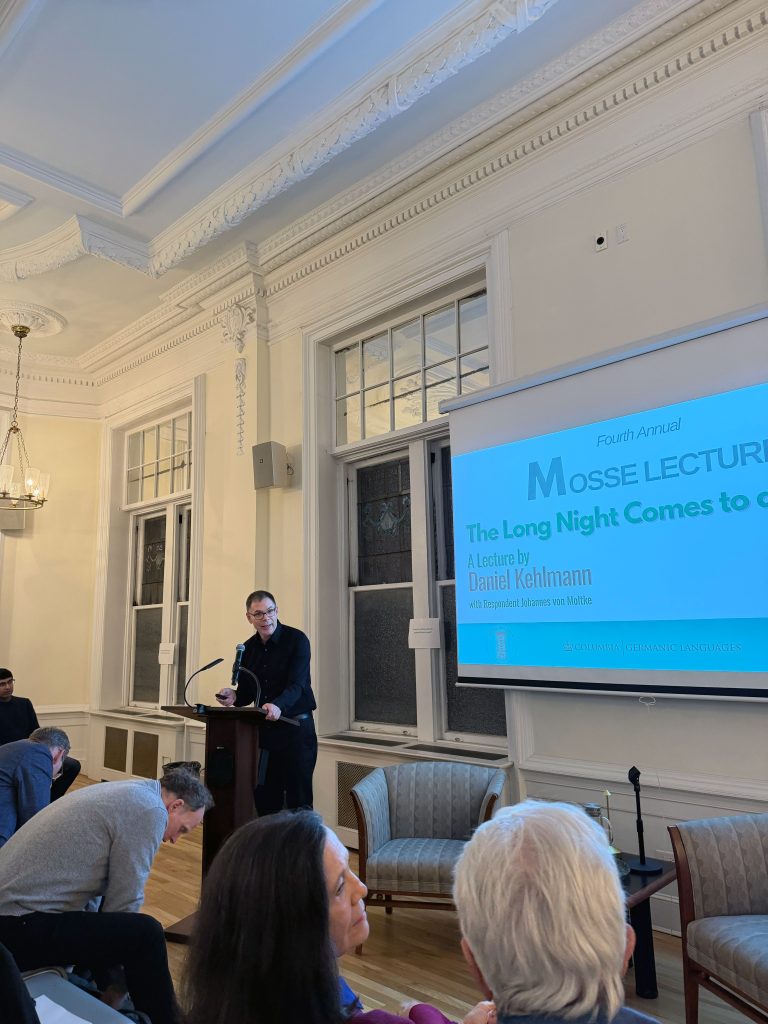
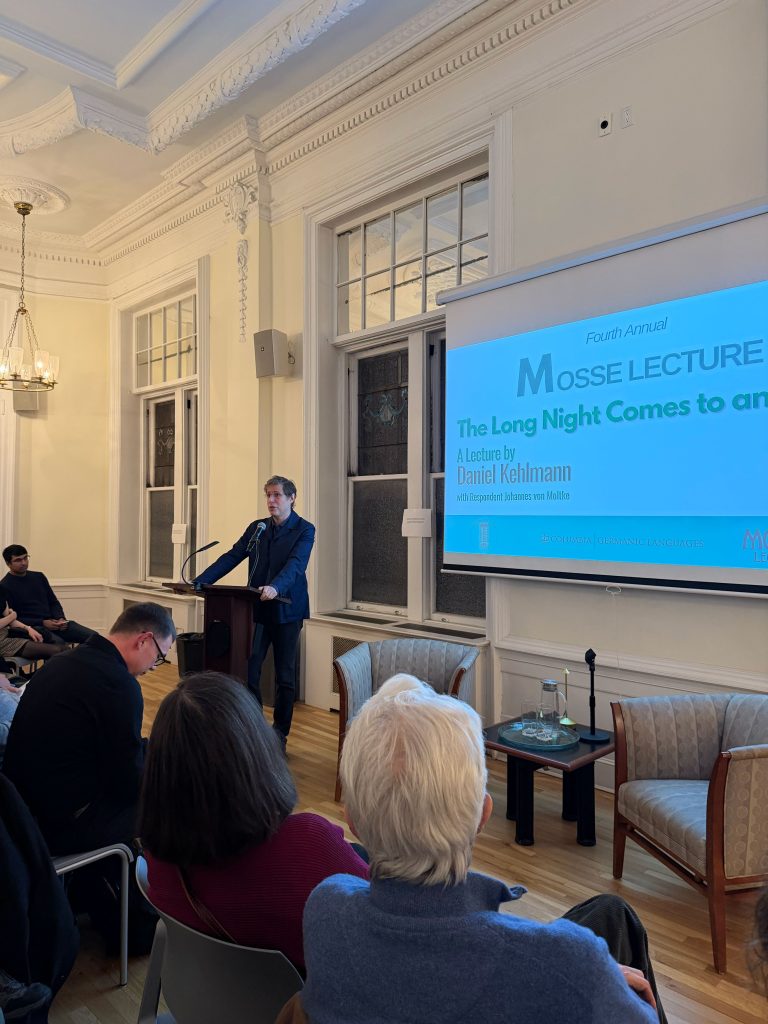
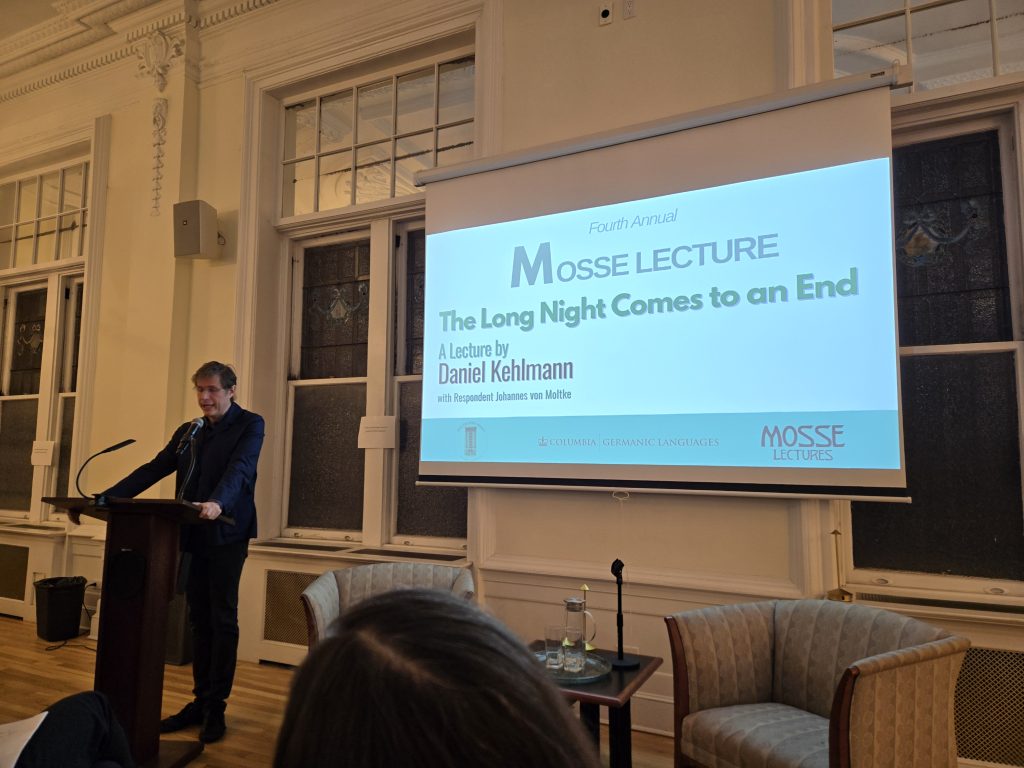
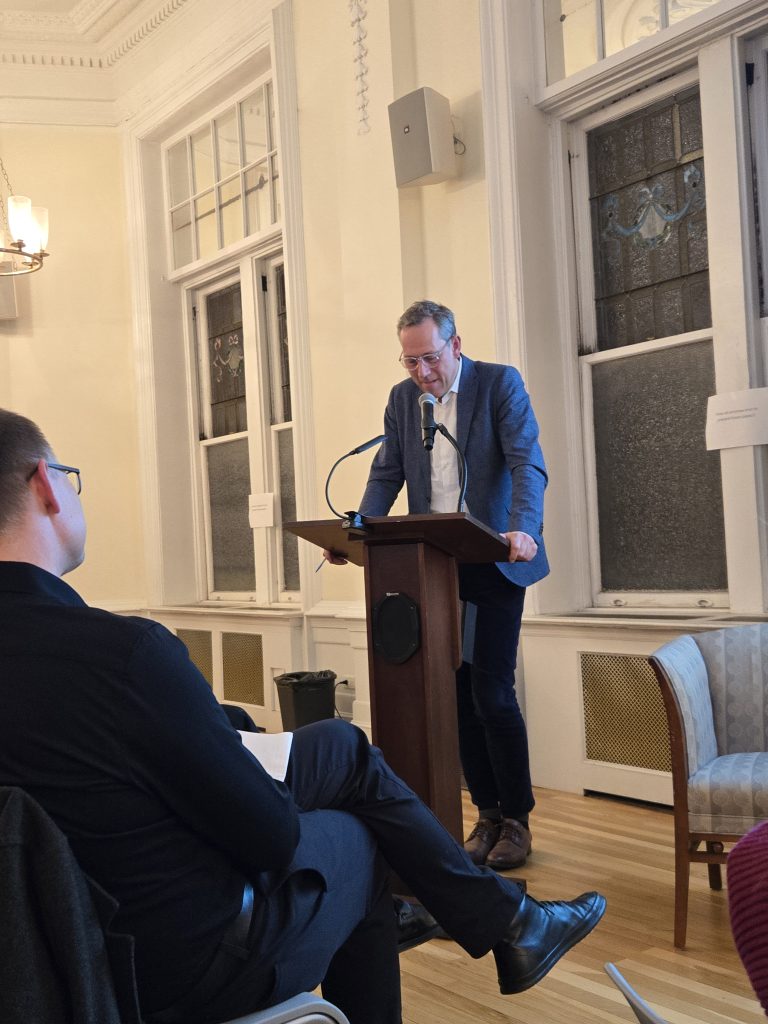
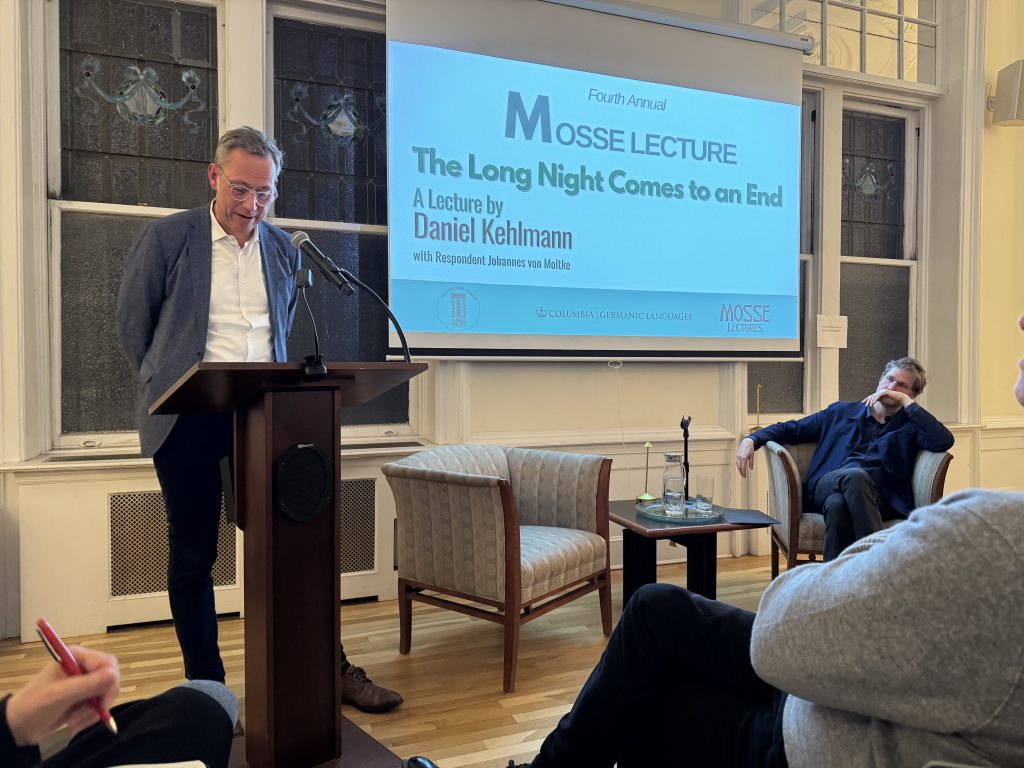
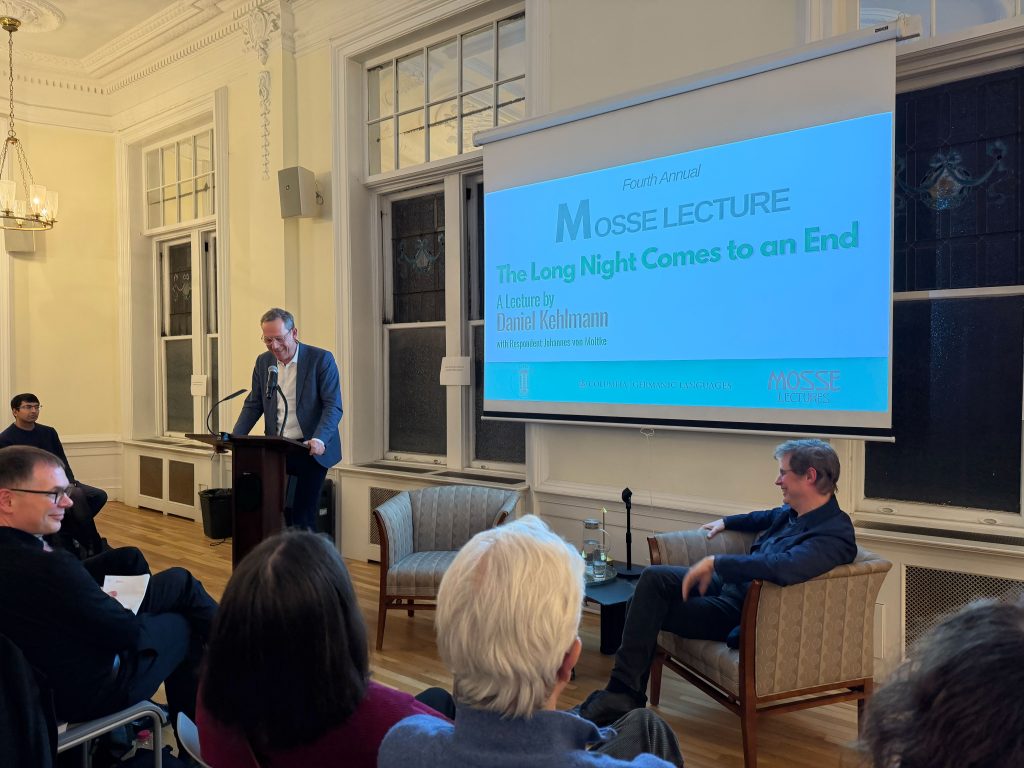
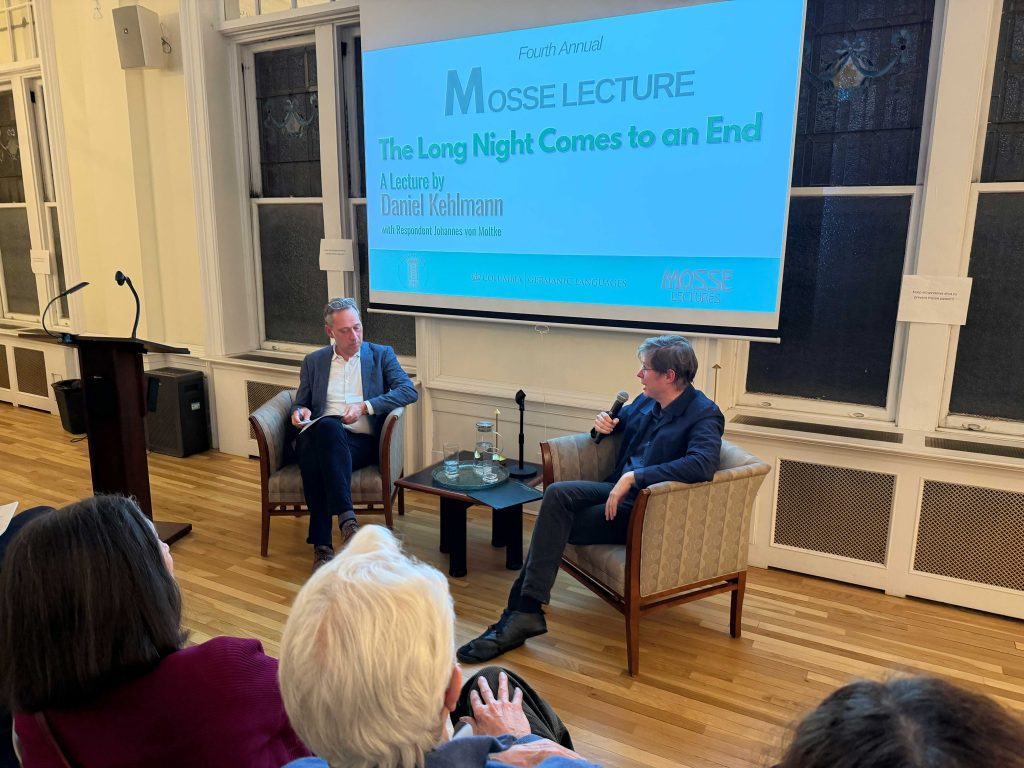
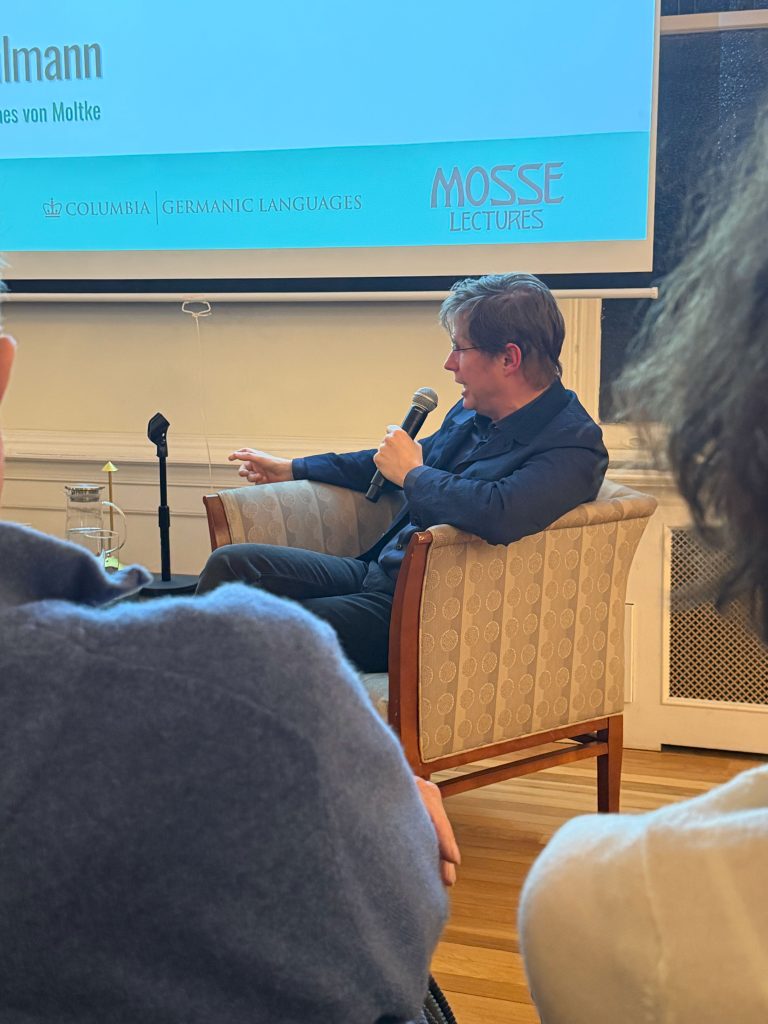
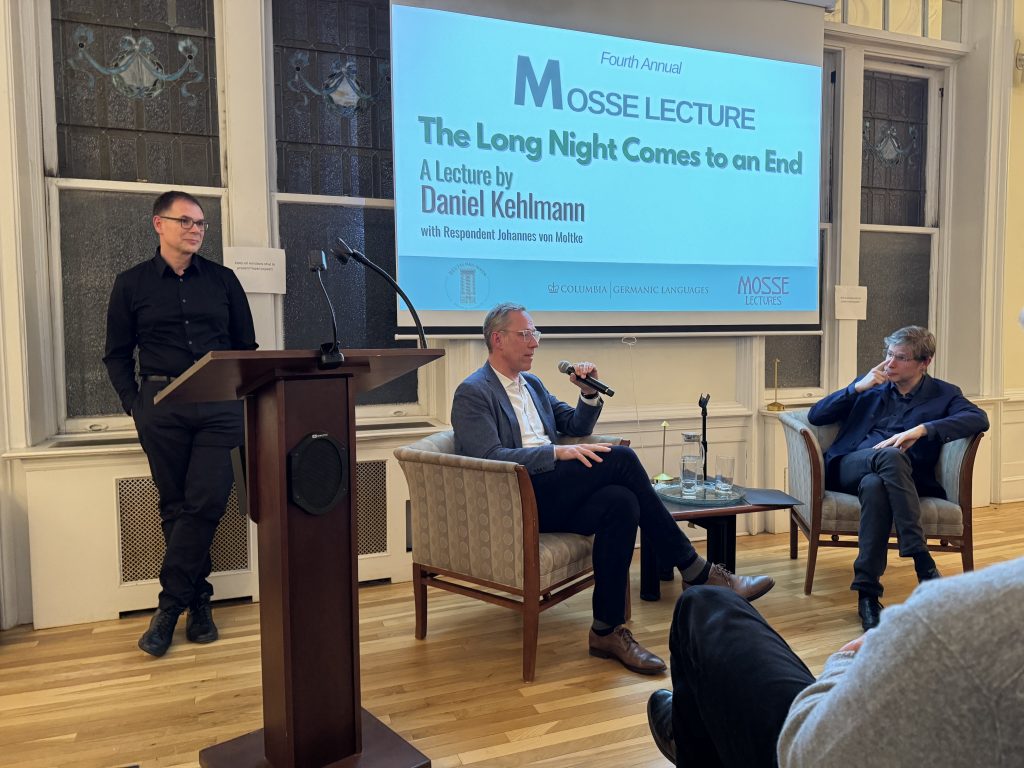
Daniel Kehlmann, “The Long Night Comes to an End”
Thursday, 5 March 2026
Chaired by: Oliver Simons
Comment by: Johannes von Moltke
Sponsored by:
Global Mosse Lecture Series
Columbia University Department of Germanic Languages
Deutsches Haus at Columbia
mosselectures.wisc.edu/columbia
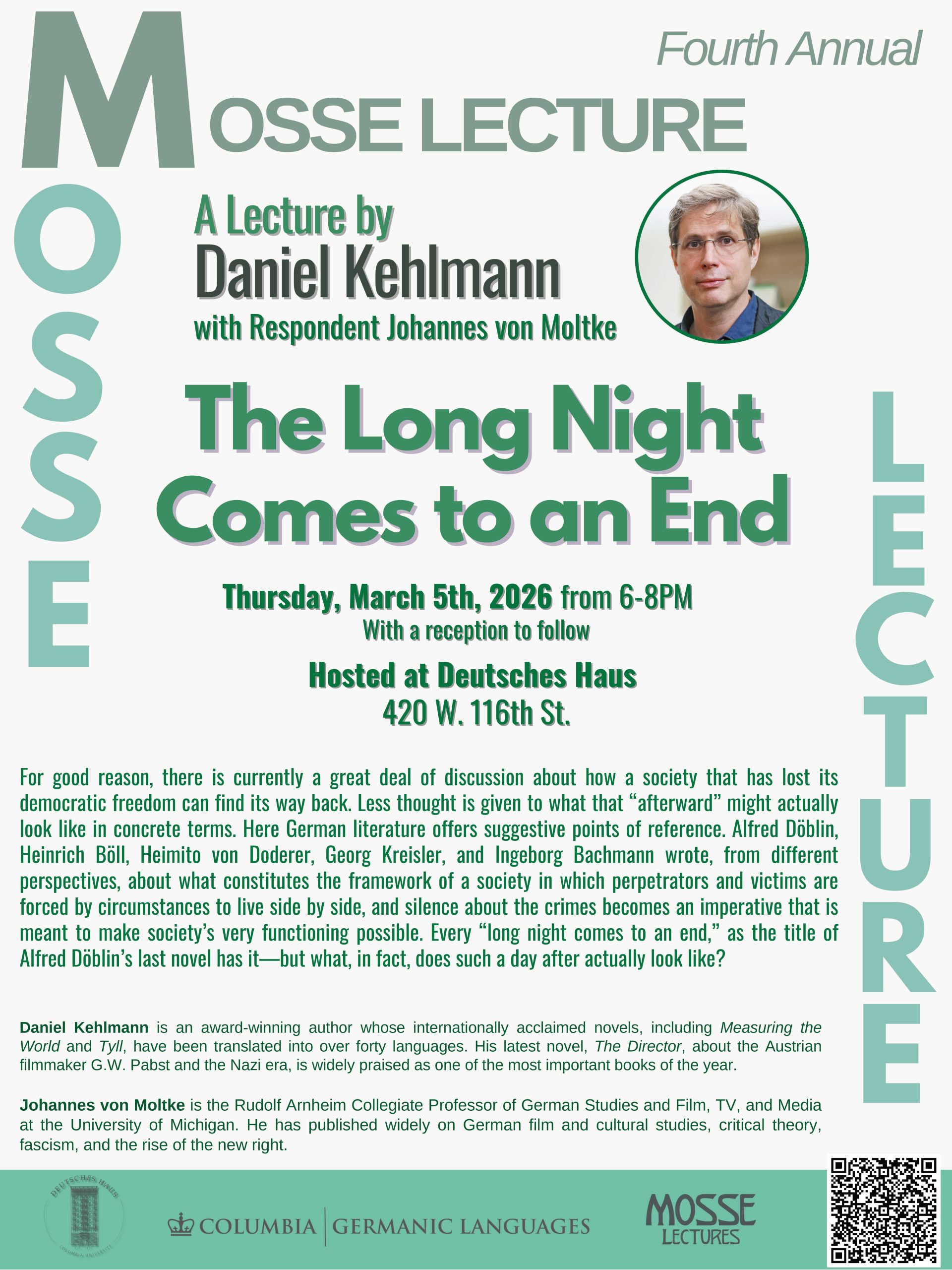
For good reason, there is currently a great deal of discussion about how a society that has lost its democratic freedom can find its way back. Less thought is given to what that “afterward” might actually look like in concrete terms. Here German literature offers suggestive points of reference. Alfred Döblin, Heinrich Böll, Heimito von Doderer, Georg Kreisler, and Ingeborg Bachmann wrote, from different perspectives, about what constitutes the framework of a society in which perpetrators and victims are forced by circumstances to live side by side, and silence about the crimes becomes an imperative that is meant to make society’s very functioning possible. Every “long night comes to an end, ” as the title of Alfred Döblin’s last novel has it—but what, in fact, does such a day after actually look like?
Daniel Kehlmann is an award-winning author whose internationally acclaimed novels, including Measuring the World and Tyll, have been translated into over forty languages. His latest novel, The Director, about the Austrian filmmaker G.W. Pabst and the Nazi era, is widely praised as one of the most important books of the year.
Johannes von Moltke is the Rudolf Arnheim Collegiate Professor of German Studies and Film, TV, and Media at the University of Michigan. He has published widely on German film and cultural studies, critical theory, fascism, and the rise of the new right.
Oliver Simons studied German literature, cultural studies, and philosophy at Humboldt-University in Berlin, where he received his Dr.phil. in 2005. His teaching and research interests focus on literature and science, post-colonial studies, the “end” around 1800, and literary theories. His first book, a comparative study on spatial concepts in philosophy, empirical psychology, art history, and literature around 1900, appeared in 2007: Raumgeschichten: Topographien der Moderne in Philosophie, Wissenschaft und Literatur (Wilhelm Fink Verlag). His second monograph, a book on literary theories, was published in 2009 (Literaturtheorien zur Einführung, Junius Verlag). He has co-edited volumes on German colonialism (Francke Verlag 2002), Kafkas Institutionen (2007), Ingeborg Bachmann and the media (2008), and The Oxford Handbook of Carl Schmitt (2017). His most recent book, Literary Conclusions: The Poetics of Ending in Lessing, Goethe, and Kleist examines how textual endings around 1800 correspond with theories of causality and conclusion. He is currently completing two monographs, Reading as Method and Understanding Theory. Oliver is also the editor of the peer-reviewed journal The Germanic Review: Literature, Culture, Theory.