
2018: Karl Schlögel, “Russland-Versteher – Wenn es doch welche gäbe! Über eine neue Wirklichkeit und alt gewordene Kategorien” / “Russia Understanders – If Only There were Some! About a New Reality and Categories that Have Become Old”
Karl Schlögel, “Russland-Versteher – Wenn es doch welche gäbe! Über eine neue Wirklichkeit und alt gewordene Kategorien” / “Russia Understanders – If Only There were Some! About a New Reality and Categories that Have Become Old”
Berlin Mosse Lecture
https://mosselectures.wisc.edu/berlin/
Thursday, 22 November 2018, 19:15 CET
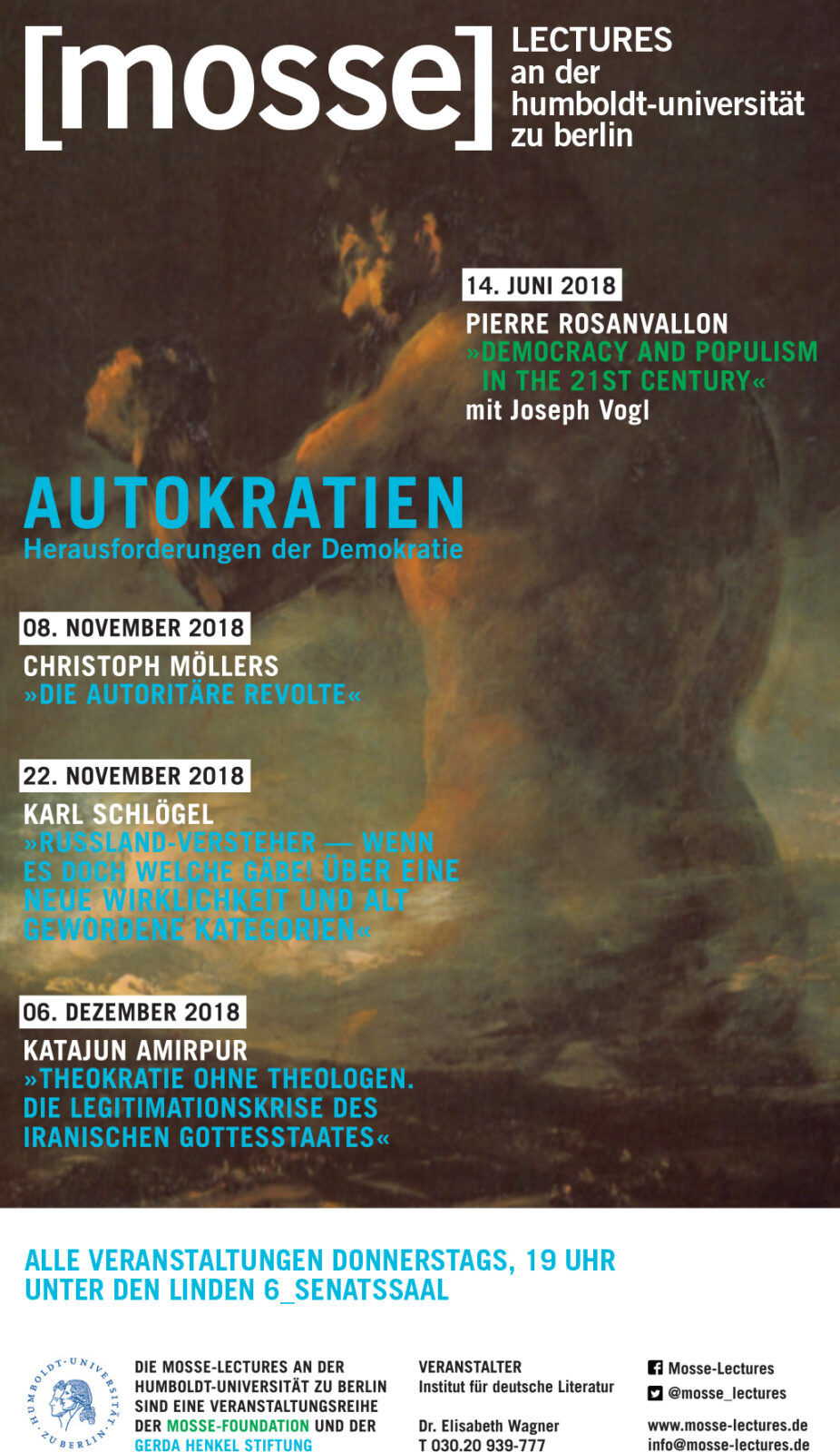
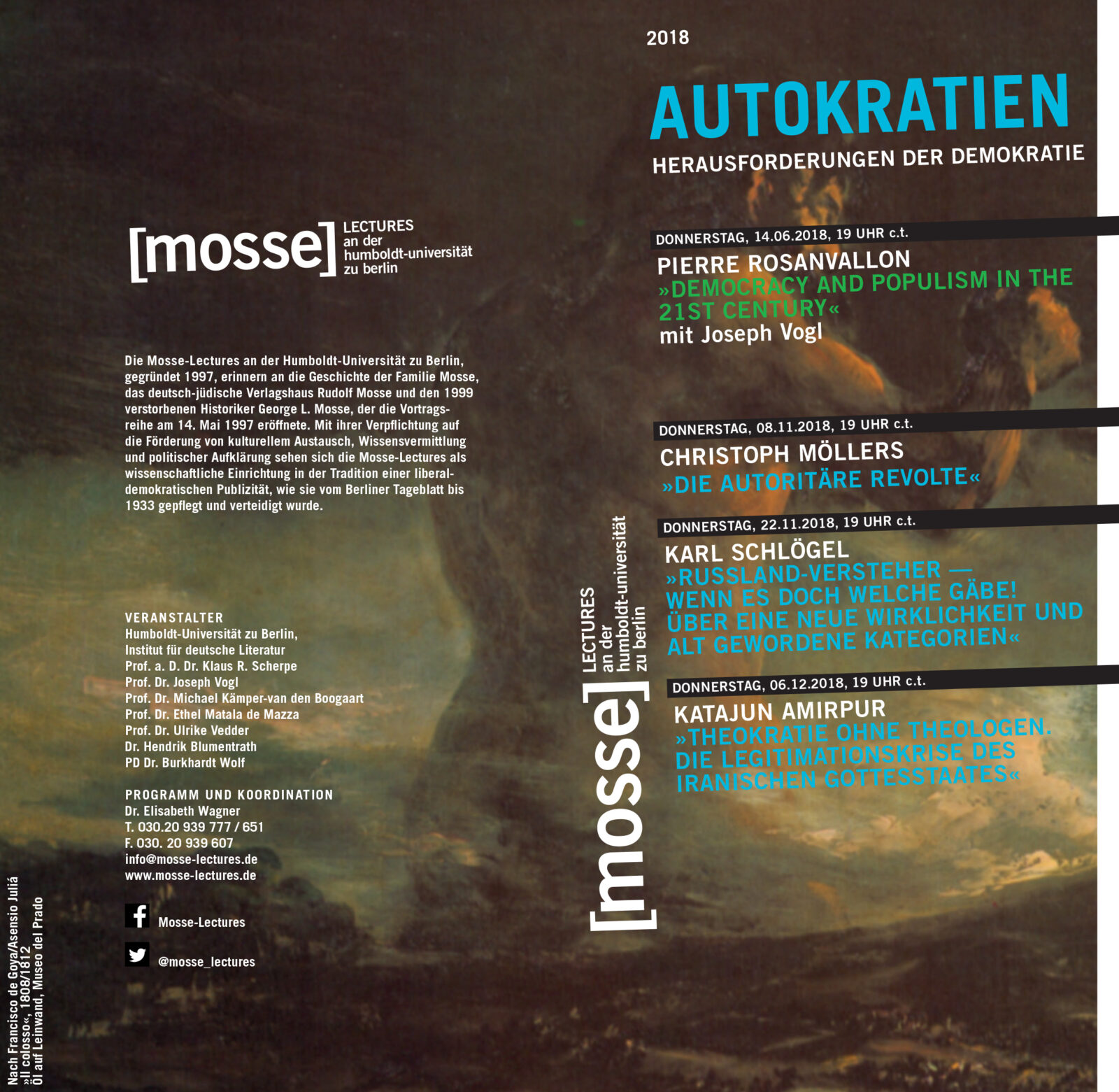
Senatssaal of Humboldt University
Unter den Linden 6
1. Stock
10117 Berlin
GERMANY
Sponsored by:
[mosse] LECTURES an der humboldt-universität zu berlin
The Mosse Foundation
Global Mosse Lecture Series
Gerda Henkel Stiftung
Institut für deutsche Literatur
Humboldt University
Moderator: Lothar Müller (Humboldt University)
Respondent: Ulrich Schmid (Universität St. Gallen)
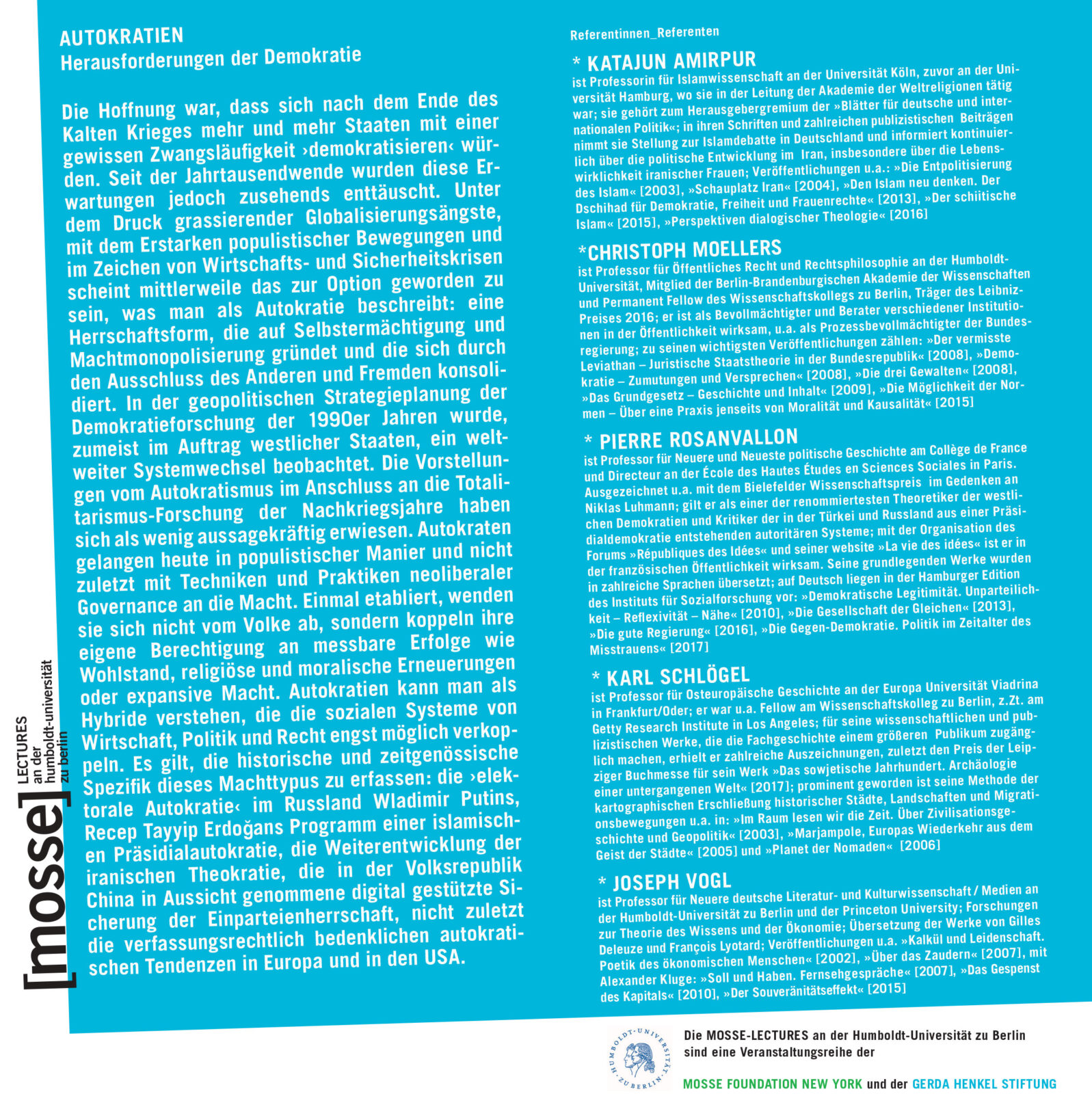
Lecture Description: 1989 hieß es: Nichts bleibt, wie es war. Und alle stimmten dem spontan zu. Dass dem aber wirklich so ist, ist er jetzt, ein Vierteljahrhundert später, wirklich angekommen. Die Redewendung, die dem Rechnung trägt, lautet: Die Welt ist aus den Fugen. In der großen Verwirrung, die auch Russland und unser Bild von Russland erfasst hat, ist ein Kampf um Deutungshoheit entbrannt, in dem es um nicht weniger als um »Verstehen« geht. Kein geringer Anspruch, wo es vielleicht zunächst um etwas anderes geht. Genau hinsehen.
Lecture Series Description: After the end of the Cold War great hopes had been placed that necessarily more and more states would ‘democratize’, more or less. However, since the turn of the century these expectations were disenchanted rapidly. Under the pressure of widely spread fears of globalization, the growing influence of populist movements, and marked by economic and security risks, autocracy has become a political option: a form of government based on self-empowerment, monopolization, and strengthening itself by excluding the ‘others’. In the 1990ies, in its geopolitical strategies, the research of democracy, mandated mostly by western states, was convinced that a worldwide change of system could be observed. In this context conceptions of autocracy leading back to the studies on totalitarianism of the postwar period were largely misleading. In our days autocrats gain power in the manner of populism, and last but not least, executing techniques and practices of neoliberal governance. Once in power they pretend to serve ‘the people’, gaining authority with promises of prosperity, religious and moral renewal, forceful expansion. Autocracies can best be understood as hybrid forms of executing power, brusquely interweaving the social systems of economy, politics and law. In this series of the Mosse-Lectures the principal task will be to identify, historically and presently, the specifics of this type of power: the ‘electorate autocracy’ in Vladimir Putin’s Russia, Recep Erdogan’s conception of an Islamic presidential autocracy, the progression of Iran’s theocracy, the digitally supported backup of the one-parts-rule projected in China, not to forget the autocratic tendencies in Europe and the United States, questionable in terms of constitutional law.
Karl Schlögel: Karl Schlögel, Professor emeritus, zuletzt Lehrstuhl für Osteuropäische Geschichte an der Europa Universität Viadrina in Frankfurt an der Oder. Schwerpunkte seiner Forschung: Russland im 19. und 20. Jahrhundert, Zwangsmigration und Diaspora, Stadtkulturen in Osteuropa, Raum und Zeit als Probleme der Histographie. Zu seinen Veröffentlichungen zählen: »Im Raume lesen wir die Zeit« (2003), »Petersburg 1909-1921. Laboratorium der Moderne« (1986), »Das russische Berlin« (2007), »Terror und Traum. Moskau 1937« (2008), »Das sowjetische Jahrhundert. Archäologie einer untergegangenen Welt« (2017).
Ulrich Schmid ist außerordentlicher Professor für Kultur und Gesellschaft Russlands an der Universität St. Gallen, zudem ständiger freier Mitarbeiter im Feulleton der Neuen Zürcher Zeitung. Zuletzt erschien: »Technologien der Seele. Vom Verfertigen der Wahrheit in der russischen Gegenwartskultur« (2015) und »De profundis. Vom Scheitern der russischen Revolution« (2017).
Lothar Müller has worked as an editor for the Frankfurter Allgemeine Zeitung and the Süddeutsche Zeitung, and lectured at the Institute for Comparative Literature at the Free University. Since 2010, he has served as Honorary Professor in the Institute for German Literature at the Humboldt University Berlin. He is the author of numerous publications, including Adrien Proust und sein Sohn Marcel. Beobachter der erkrankten Welt (2021) and Weiße Magie. Die Epoche des Papiers (2012). He was awarded the Berlin Prize for Literary Criticism in 2013.
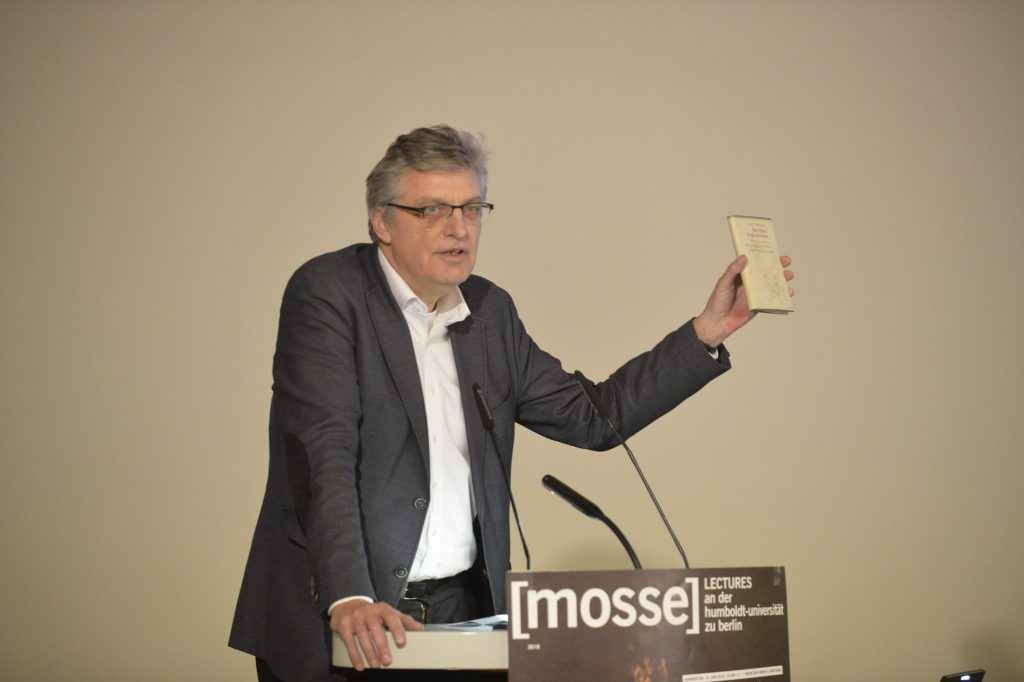
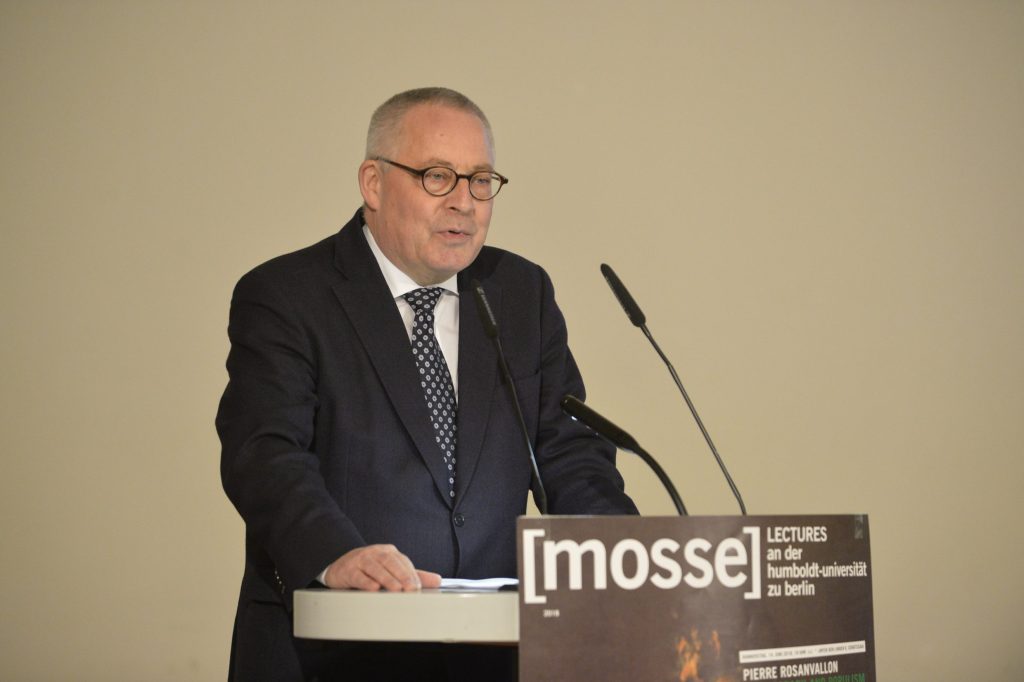
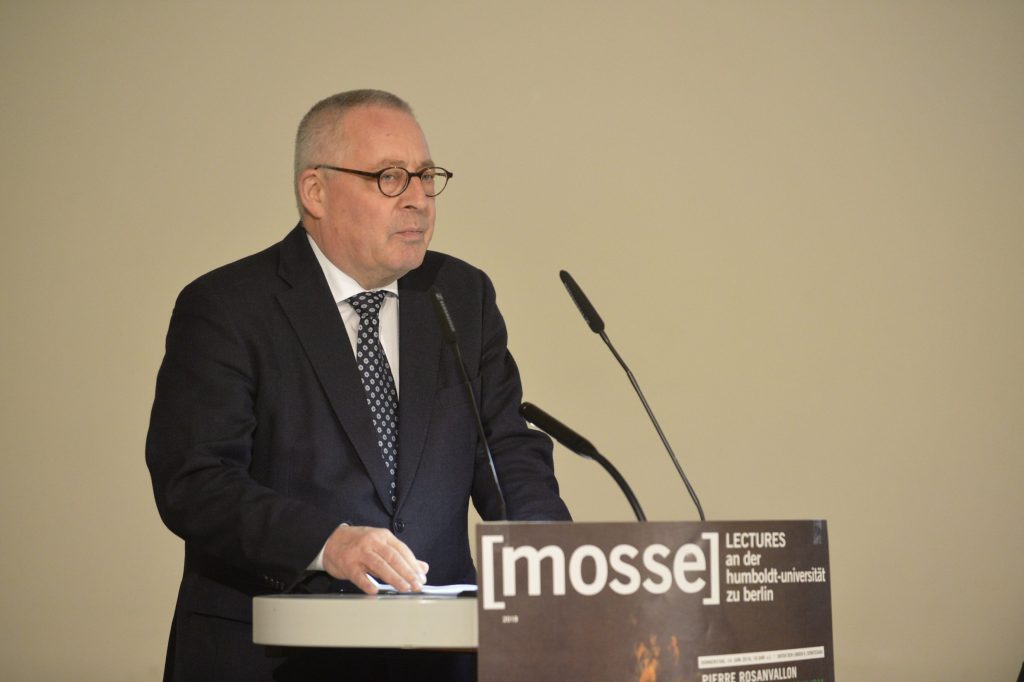
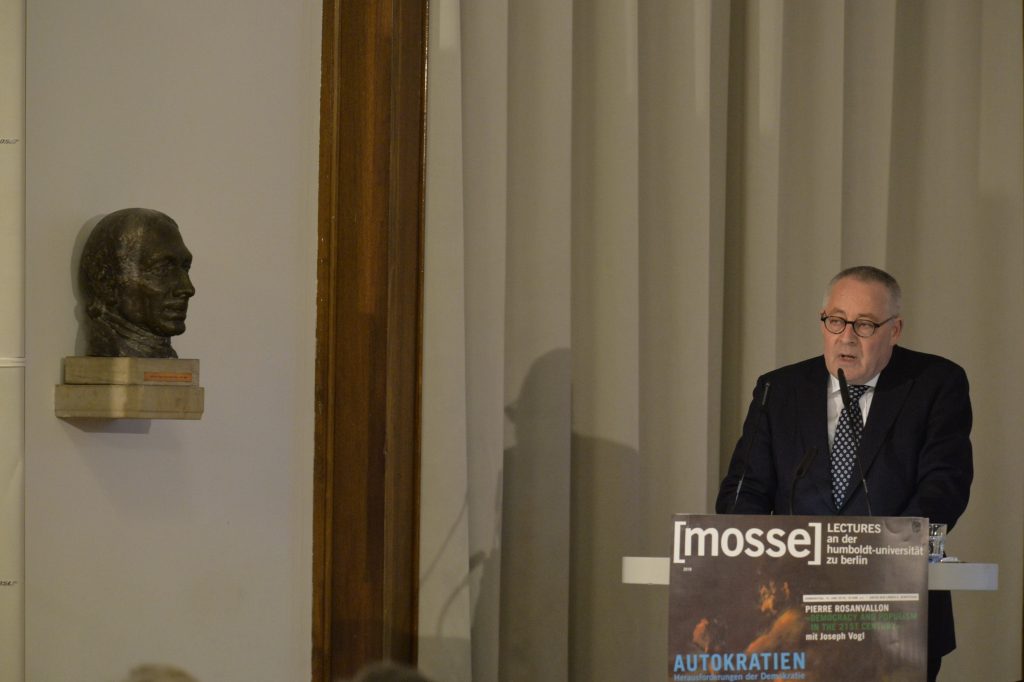
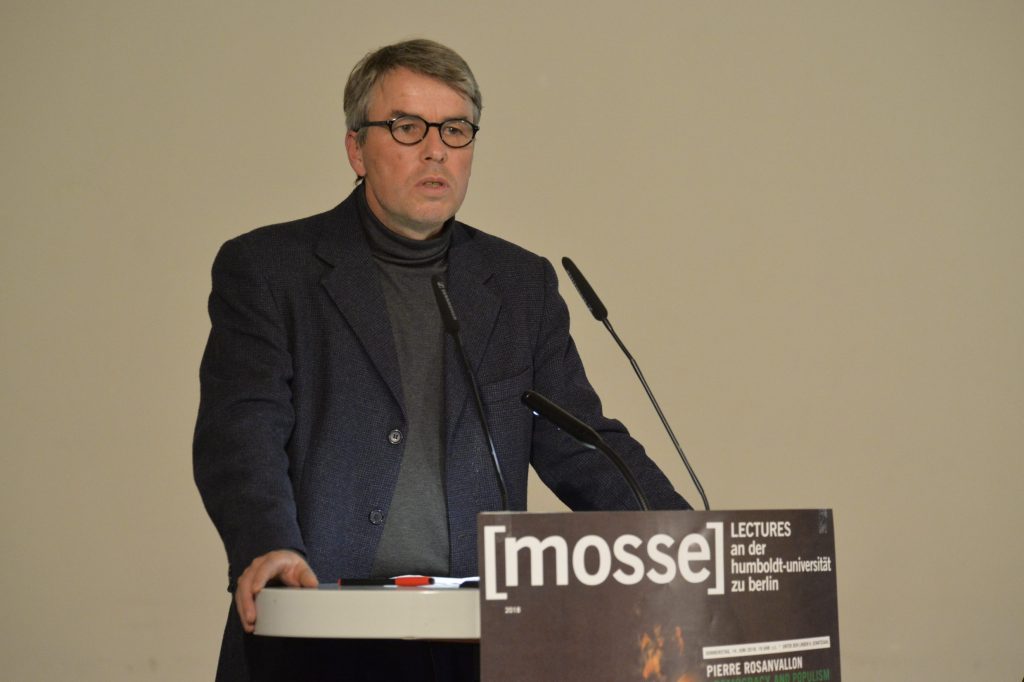
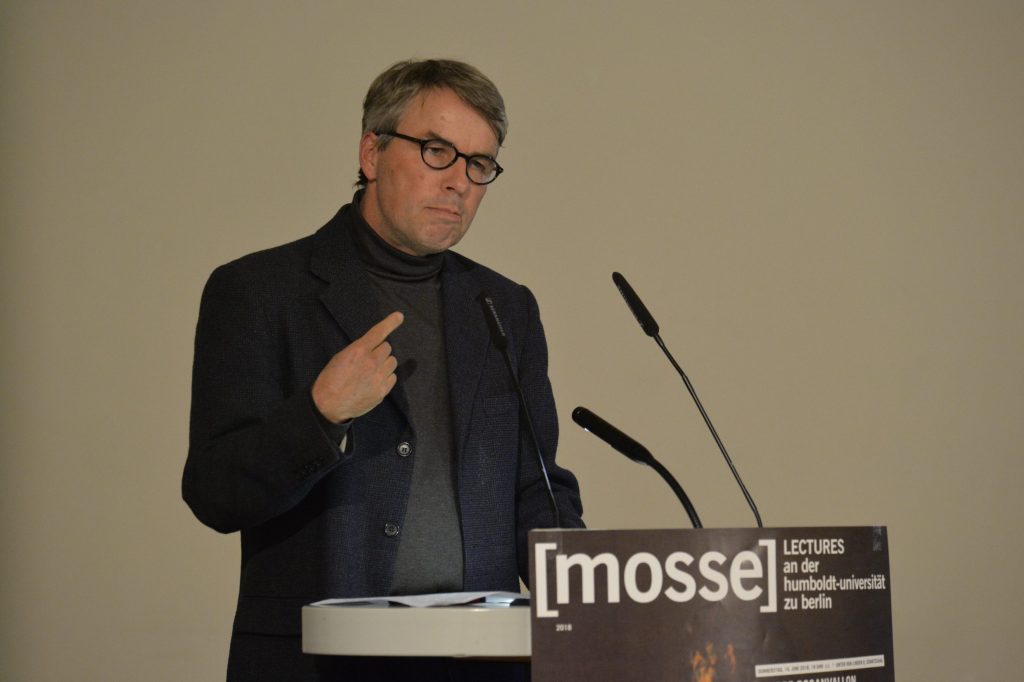
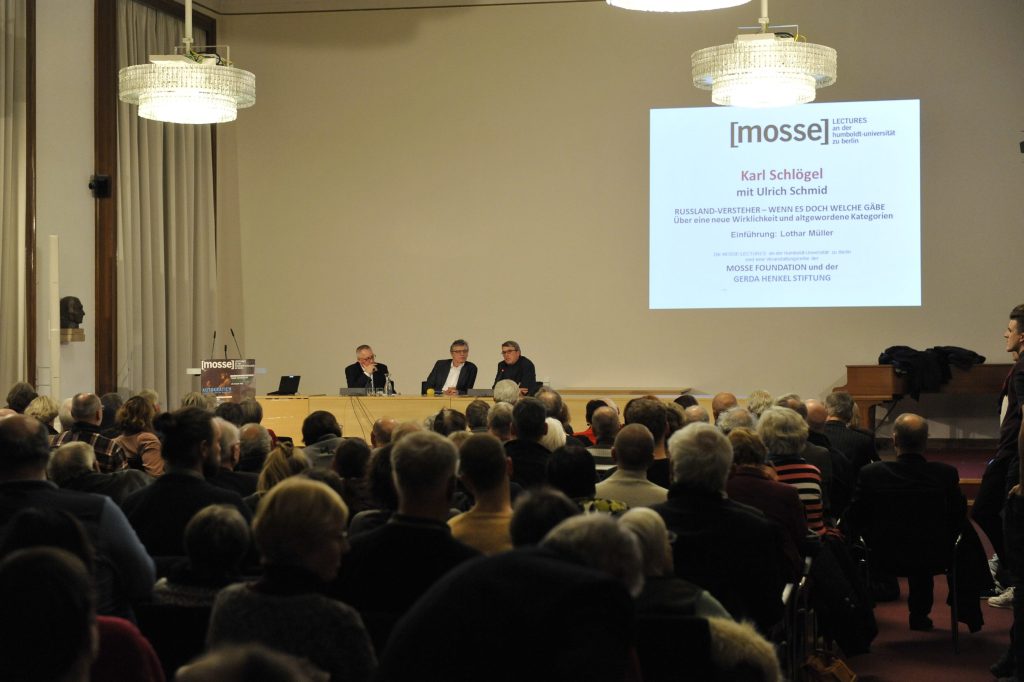
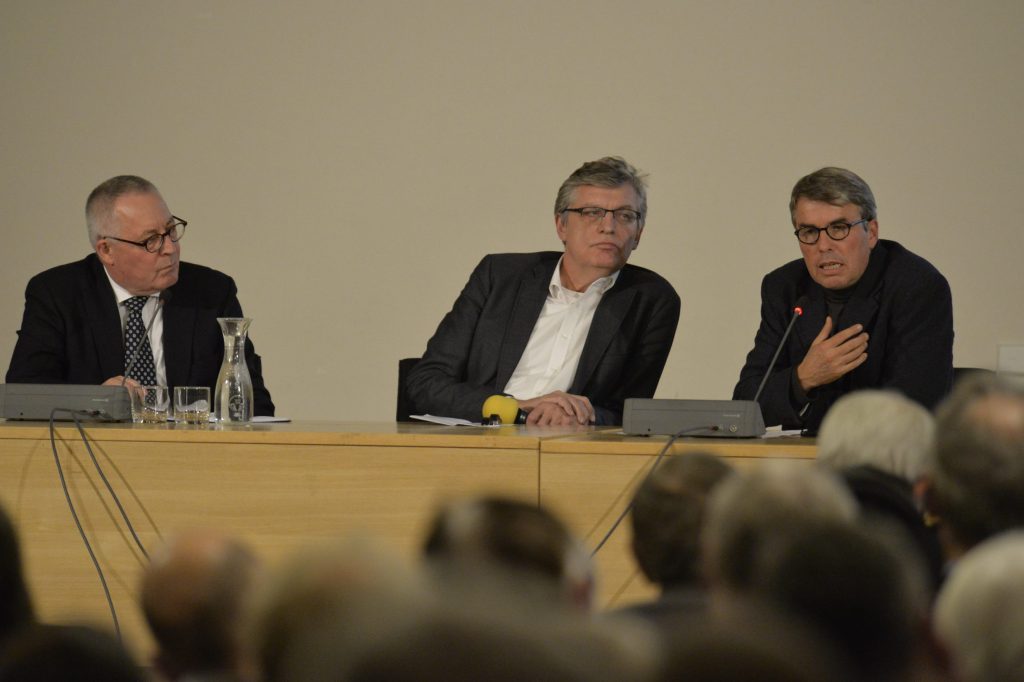
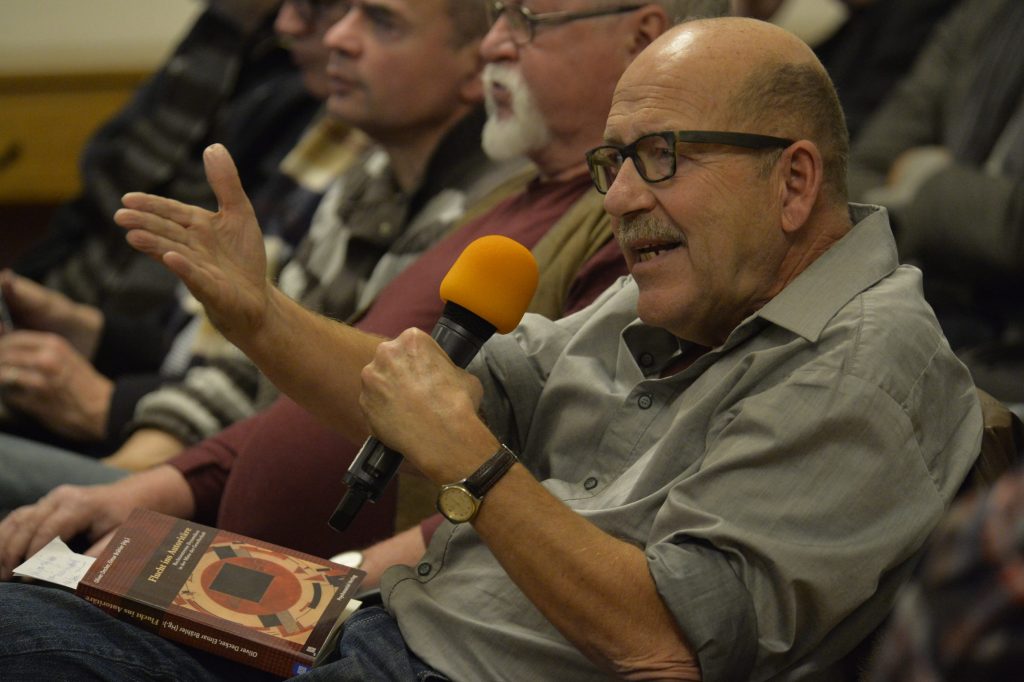
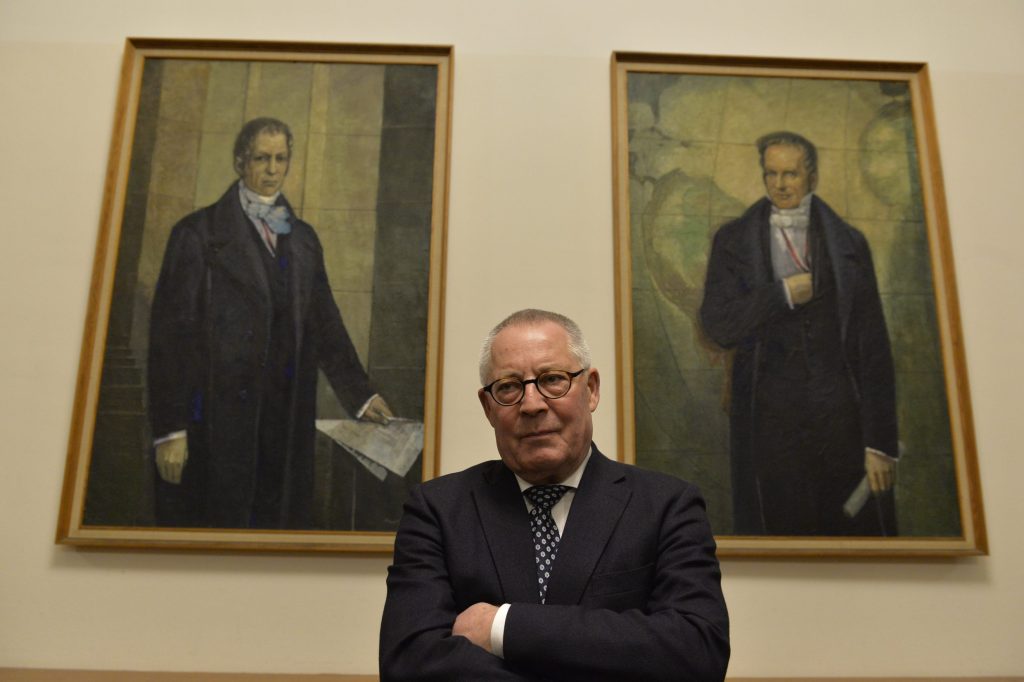
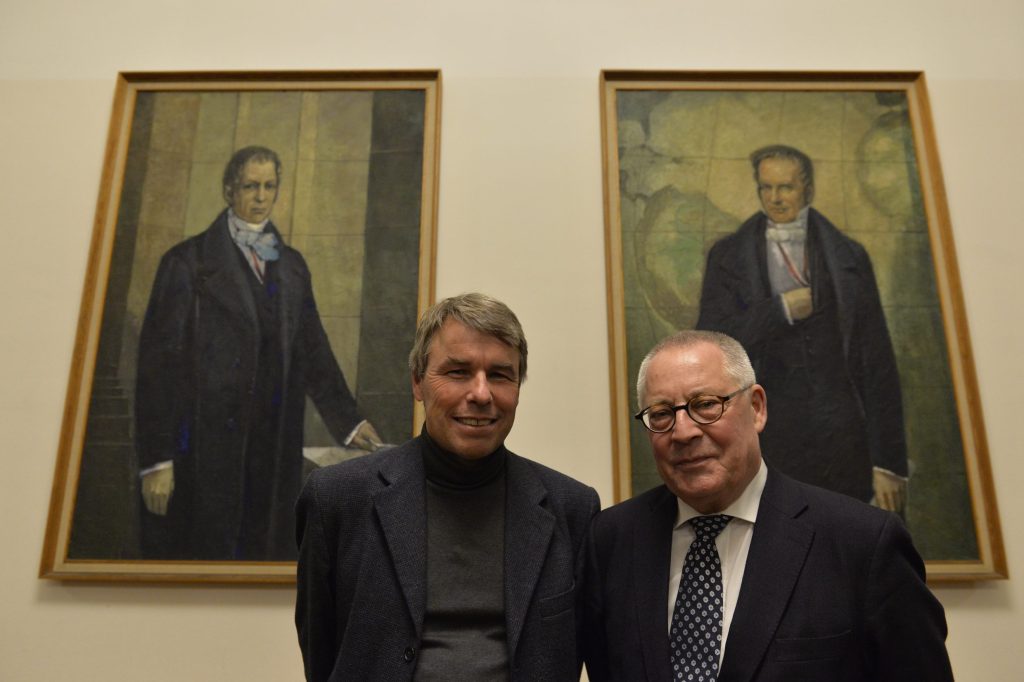
Photo credit: Niels Leiser for the Mosse Lectures
