
2015: Peter Galison, “Secrecy, Surveillance, and the Self”
Peter Galison, “Secrecy, Surveillance, and the Self”
Berlin Mosse Lecture
https://mosselectures.wisc.edu/berlin/
Thursday, 5 November 2015, 19:00 CET
Senatssaal of Humboldt University
Unter den Linden 6
1. Stock
10117 Berlin
GERMANY
Sponsored by:
[mosse] LECTURES an der humboldt-universität zu berlin
The Mosse Foundation
Global Mosse Lecture Series
Fritz Thyssen Stiftung
Institut für deutsche Literatur
Humboldt University
Moderator: Lorraine Daston (Max Planck Institute for the History of Science, Berlin)
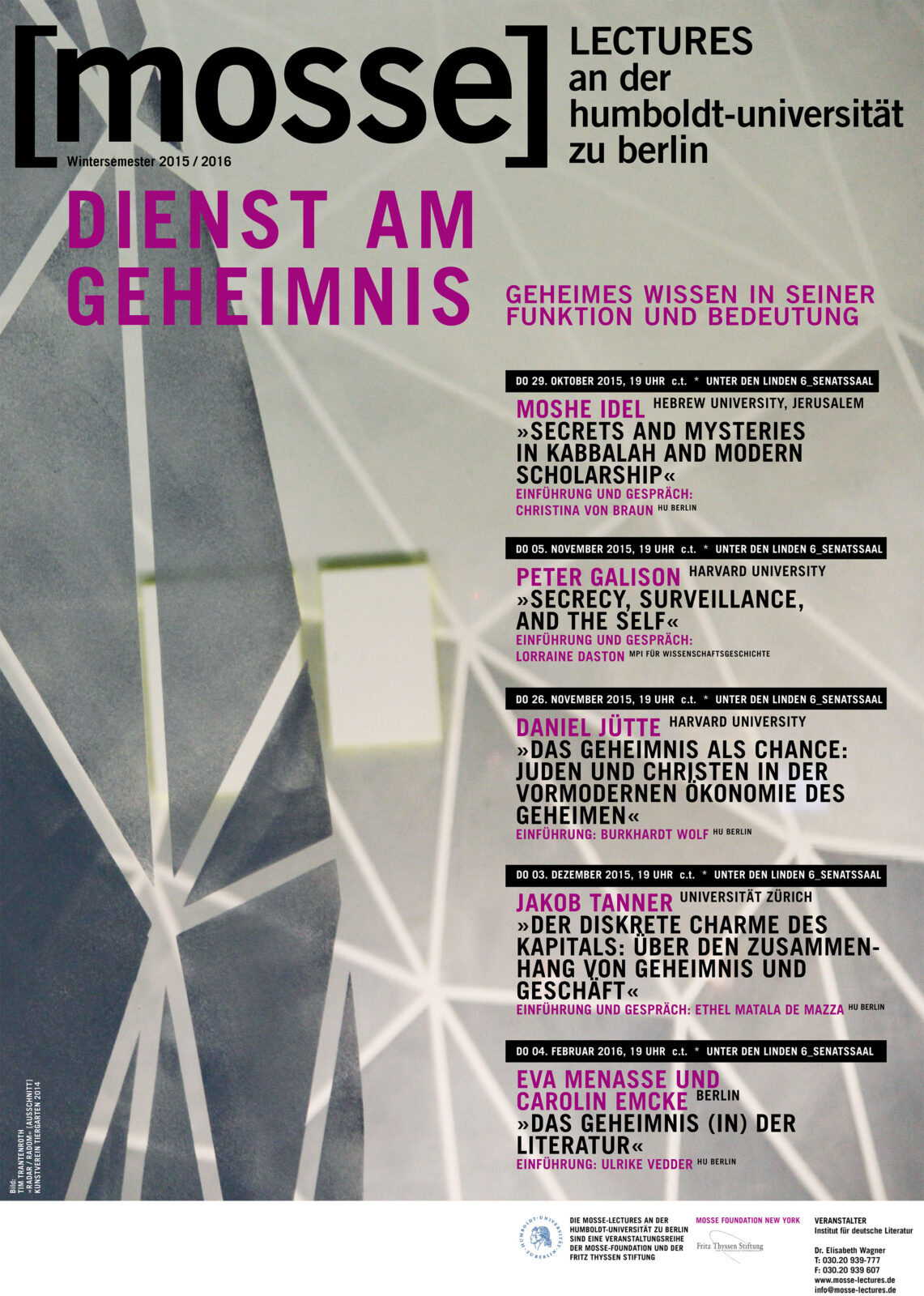
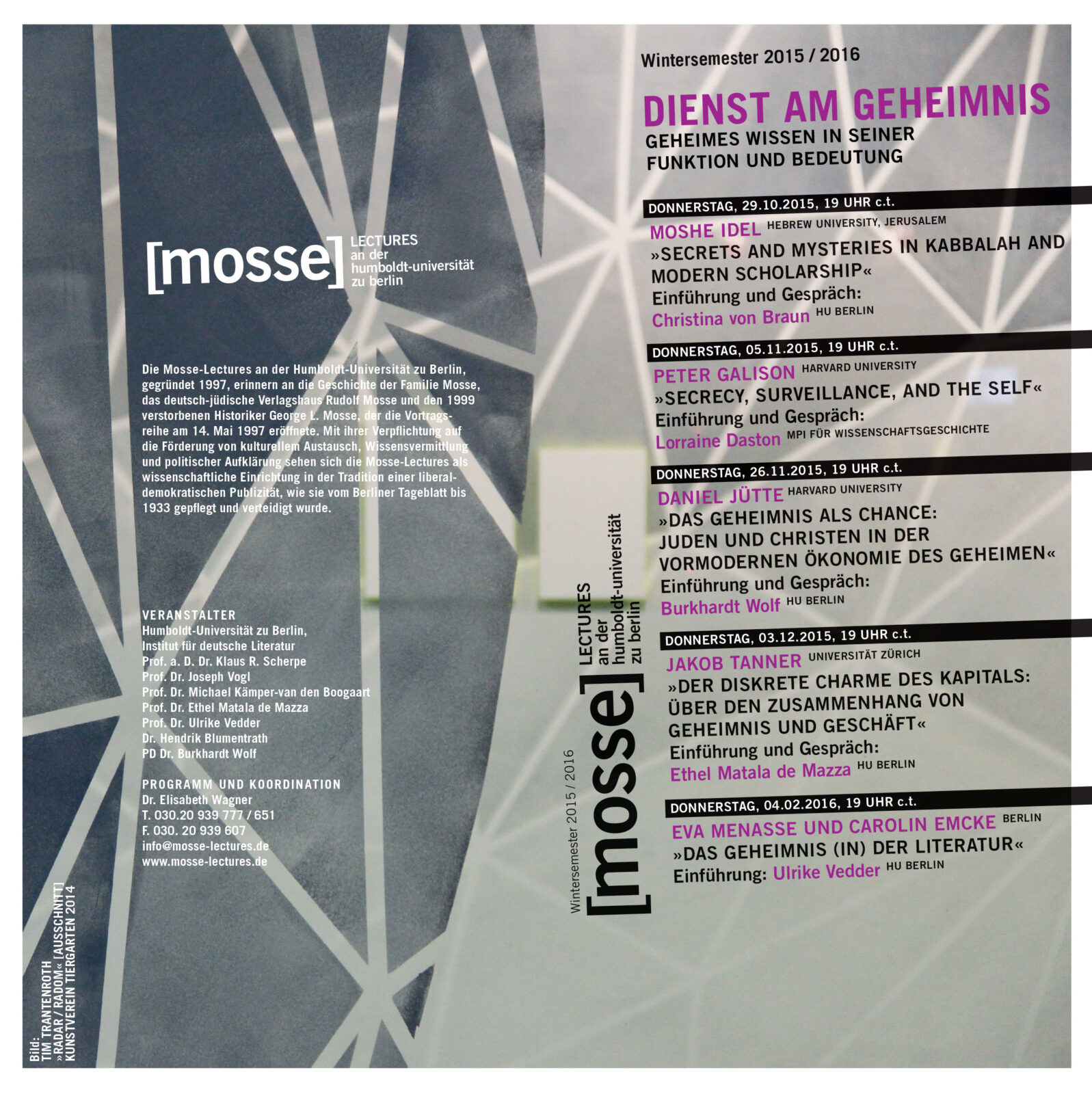
Lecture Description: Wie verändert sich unser Bewusstsein, wenn wir wissen, dass jede unserer physischen Bewegungen endlos archiviert werden kann, für lange Zeit auffindbar und abrufbar ist? Welche psychischen und physiologischen Auswirkungen hat die über die digitalen Medien jederzeit mögliche Datenspeicherung und Überwachung? Zur Beantwortung dieser Fragen rekurriert der Wissenschaftshistoriker Peter Galison auf das Wissen der Psychoanalyse, auf die in der »Traumdeutung« analysierten Verdrängungsmechanismen, die Sigmund Freud »Zensur« nannte: in Analogie zu den im Ersten Weltkrieg gängigen Praktiken der Überwachung und Geheimhaltung. In unserem Zeitalter der Vorherrschaft elektronischer Kommunikationsmittel hat diese »Selbstzensur« eine andere Dimension angenommen. Wir wissen: Staatliche Geheimdienste, Sicherheitsunternehmen, Kommunikationsplattformen und auch soziale Netzwerke sind in der Lage, »digitale Identitäten« zu identifizieren und individuelle Verhaltensweisen zu prognostizieren. Was wir nicht genau wissen: wie sich künftig die von Freud seinerzeit analysierten Strategien der Verdrängung und Selbstzensur unter den Bedingungen von Big Data auf unser kommunikatives Denken und Empfinden auswirken werden. Wird sich ein anderes »Selbst« formieren? Wird es ein Aufbegehren des Verschwiegenen und Unterdrückten geben?
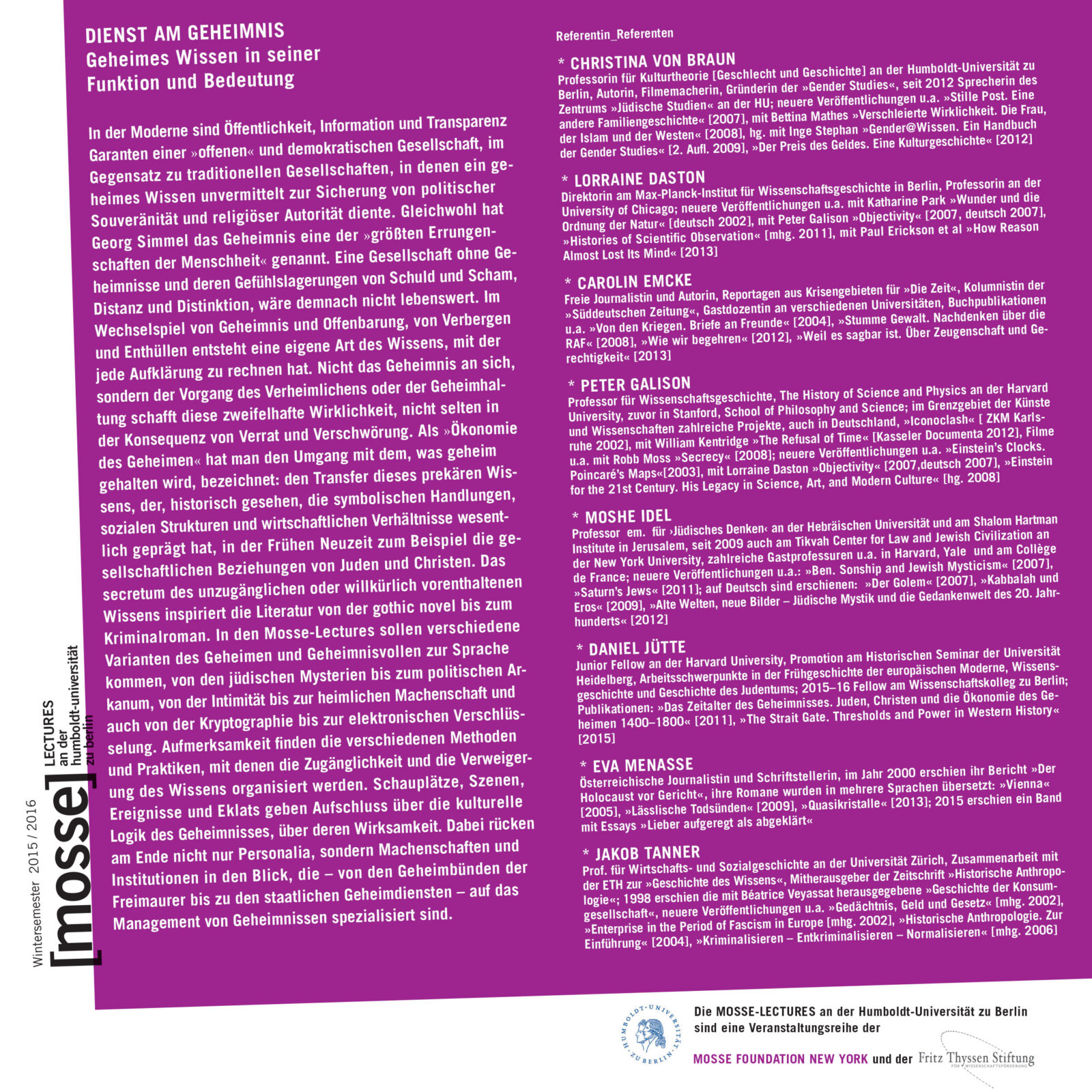
Lecture Series Description: In modernity, “open” and democratic societies guarantee public participation, information and transparency, contrary to traditional societies, where secrecy served to constitute political sovereignty and religious authority. Georg Simmel, however, has argued that to “maintain secrecy is one of the greatest achievements of mankind”, considering that a society without secrets, normally associated with guilt and shame, distance and distinction, would not be worth living in. Any discourse of enlightenment has to take into account this peculiar kind of knowledge which emerges from the interaction of secrecy and revelation, of concealing and unveiling. It is not the secret as such, but the process of keeping something secret or binding somebody in secrecy that creates this dubious reality, frequently resulting in an act of betrayal or conspiracy. Historically we can speak of an “economy of secrecy” when symbolic actions, social structures and corporate relationships are affected by this precarious knowledge, as for instance in the Early Modern Age in the social relationship between Christians and Jews. In literature, gothic novels as well as detective stories are inspired by such hidden knowledge and deliberately obscured meaning. The Mosse-Lectures will deal with multiple forms of the secretum, the making of secretive knowledge, from the mysteries of Judaism to the practices of the political Arcanum; issues of intimacy as well as political power plays of secrecy will be discussed, not to forget modes of coding, reaching from ancient cryptography to electronic encryption. Methods and practices of granting and refusing access will be observed, giving evidence of the cultural logic and effects of secret events, their staging and the eruptions of scandal. The lectures will focus on the mechanisms of the institutions of secrecy, from Freemasonry to the secret services and intelligence apparatuses of our days which specialize in the management of secrecy.
Peter Galison: Professor für Wissenschaftsgeschichte und Physik an der Harvard University, zuvor in Stanford, School of Philosophy and Science; im Grenzgebiet der Künste und Wissenschaften zahlreiche Projekte, auch in Deutschland, »Iconoclash« ( ZKM Karlsruhe 2002), mit William Kentridge »The Refusal of Time« (Kasseler Documenta 2012), Filme u. a mit Robb Moss »Secrecy« (2008); neuere Veröffentlichungen u.a. »Einstein’s Clocks. Poincaré’s Maps« (2003), mit Lorraine Daston »Objectivity« (deutsch 2007), »Einstein for the 21st Century. His Legacy in Science, Art, and Modern Culture« (hg. 2008).
Lorraine Daston ist Professorin und Direktorin am Max-Planck-Institut für Wissenschaftsgeschichte in Berlin, als Gast-dozentin war und ist sie tätig u.a. an der Harvard University, Stanford University, University of Oxford und der Humboldt Universität. Sie ist Fellow der American Academy of Arts und Mitglied der Berlin-Brandenburgischen Akademie. Veröffentlichungen u.a.: Mit Katharine Park: Wonders and the Order of Nature 1150-1750 (1998); Classical Probability in the Enlightenment (1998); Wunder, Beweise und Tatsachen. Zur Geschichte der Rationalität (2001); mit Peter Galison: Objectivity (2007); mit Michael Stolleis (Hg.) Natural Law and Laws of Nature in Early Modern Europe (2000).
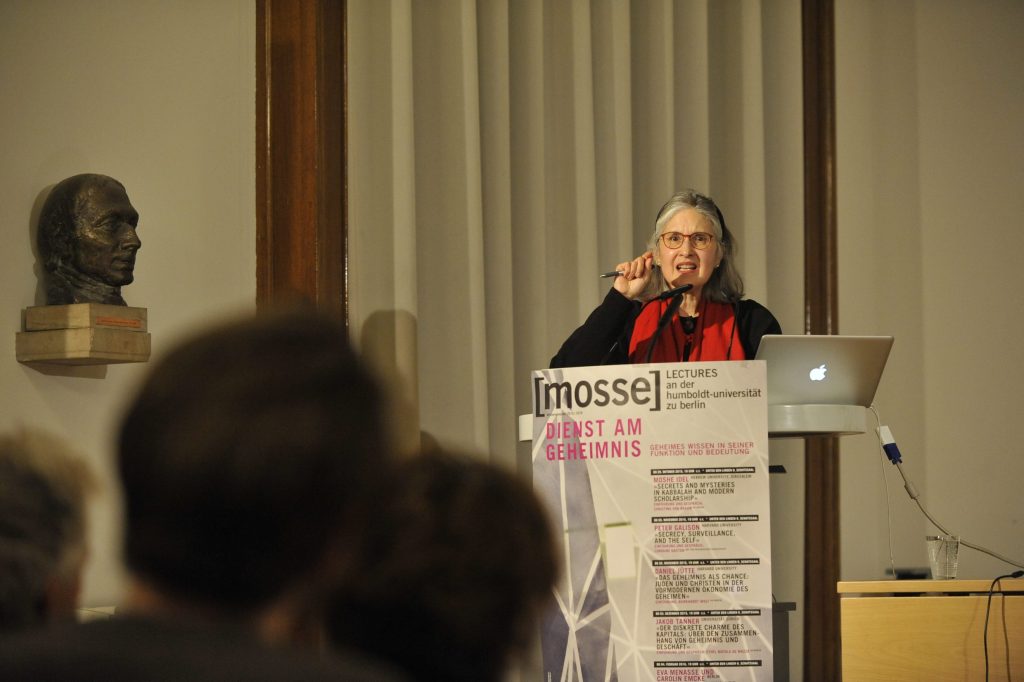
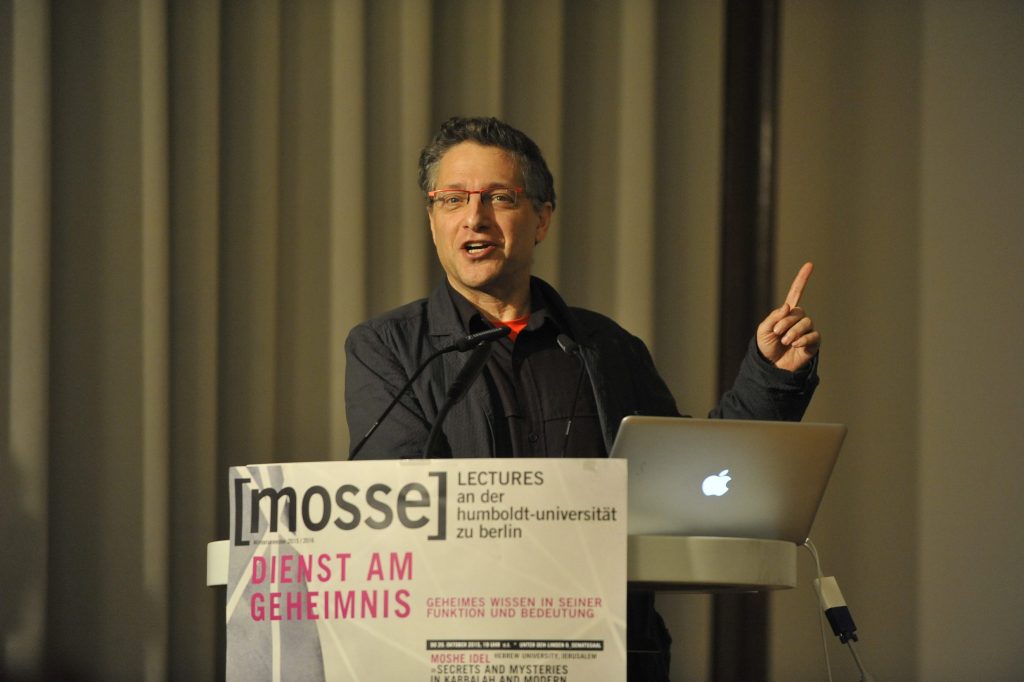
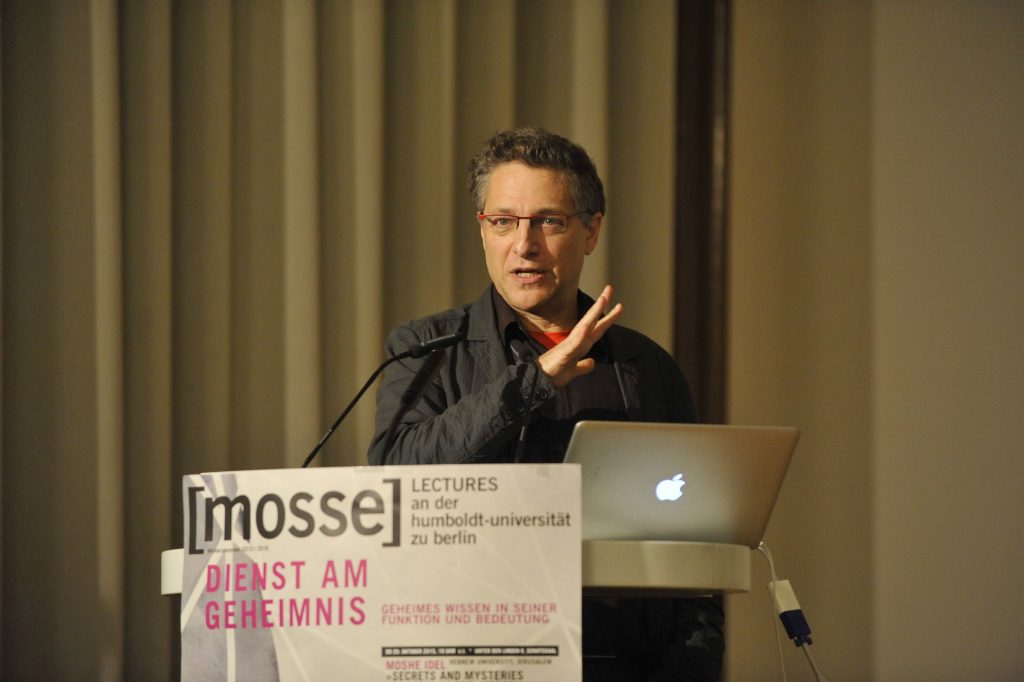
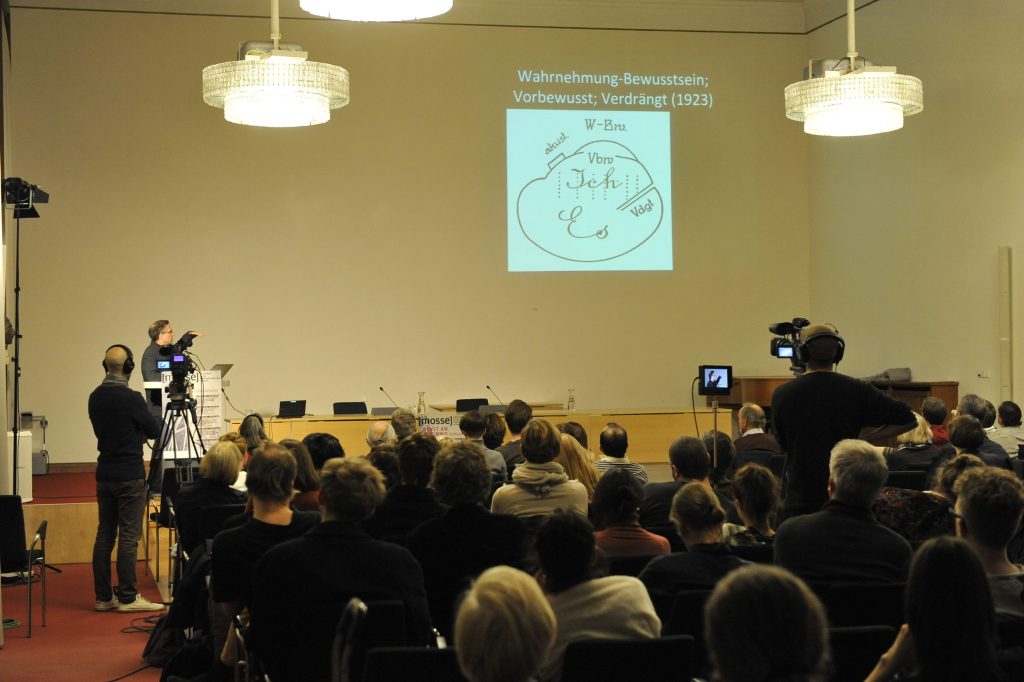
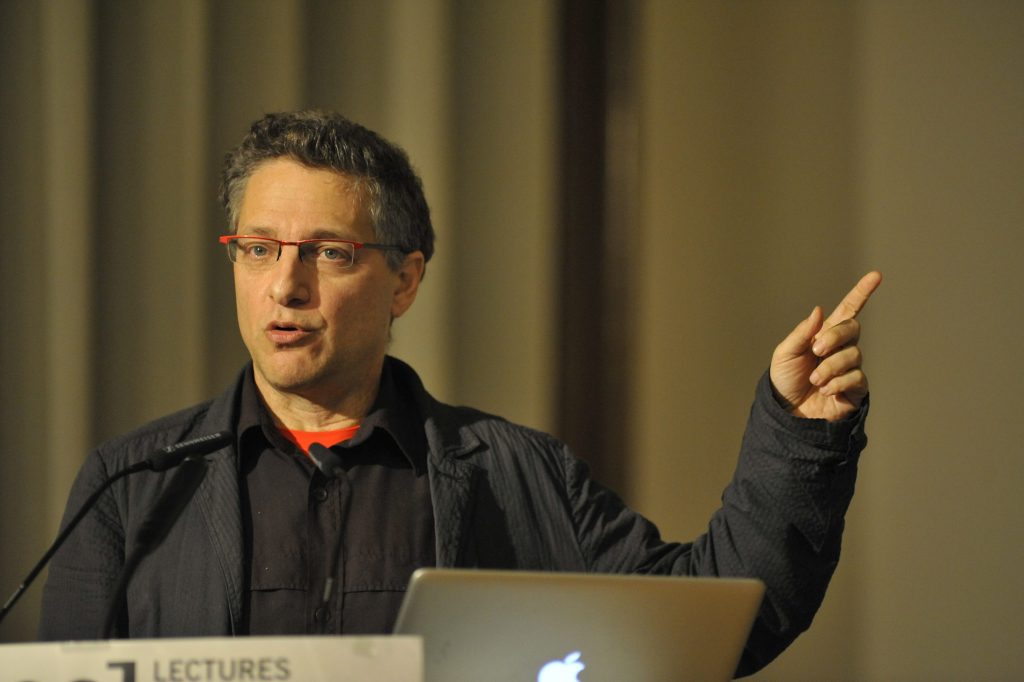
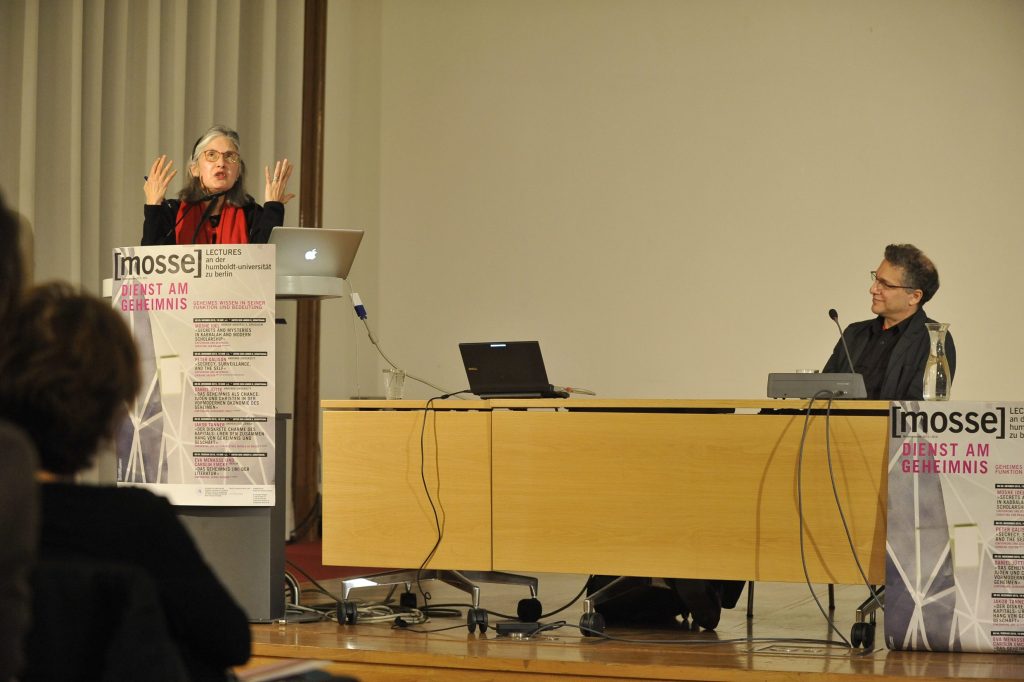
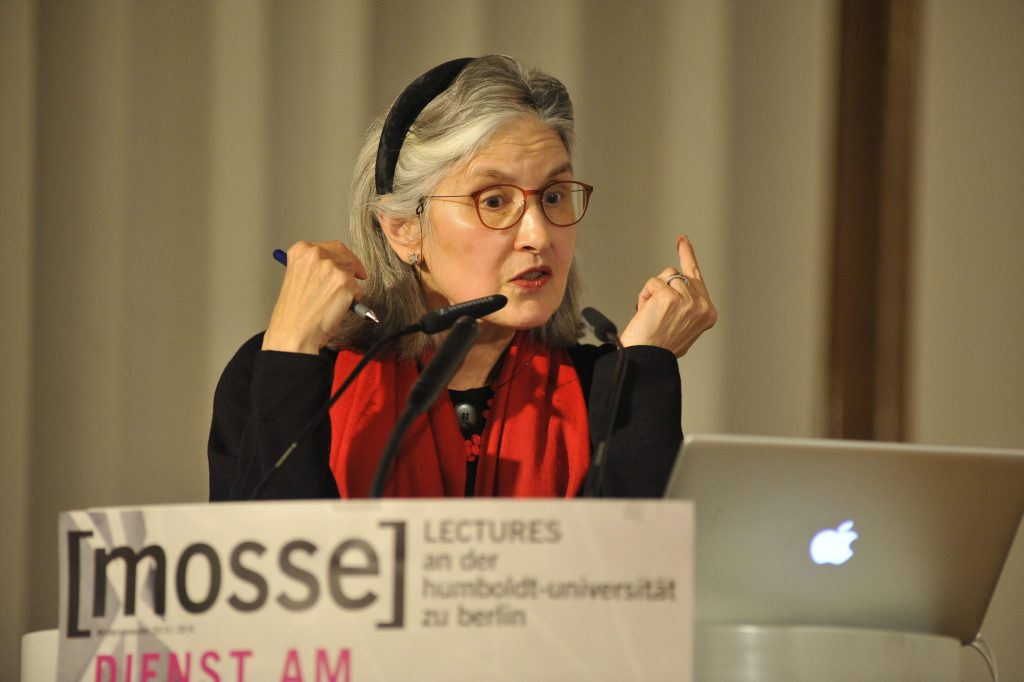
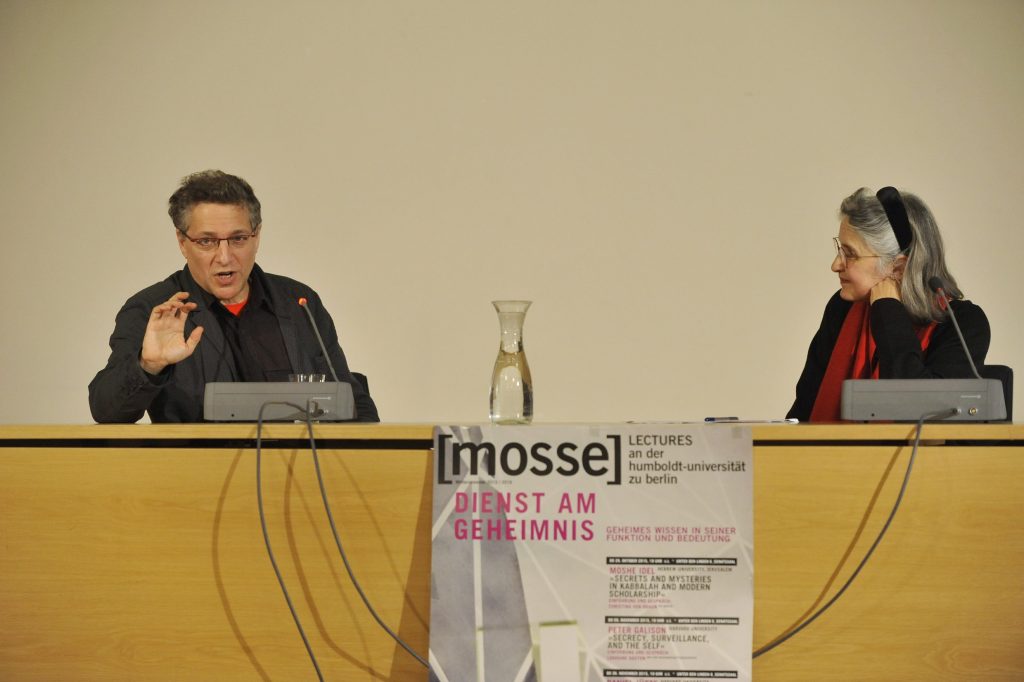
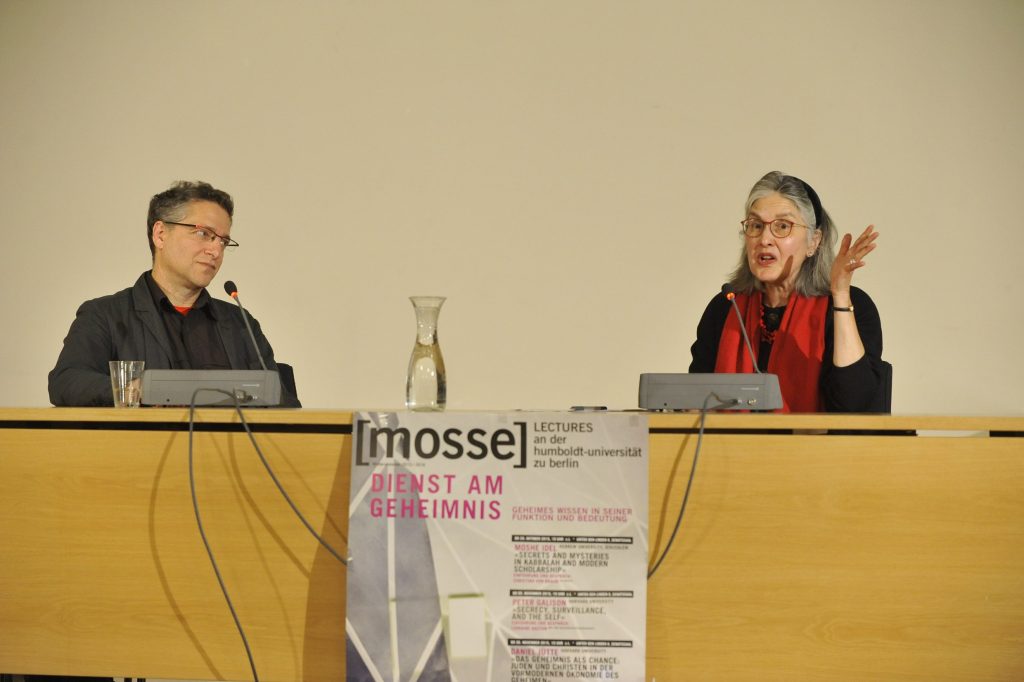
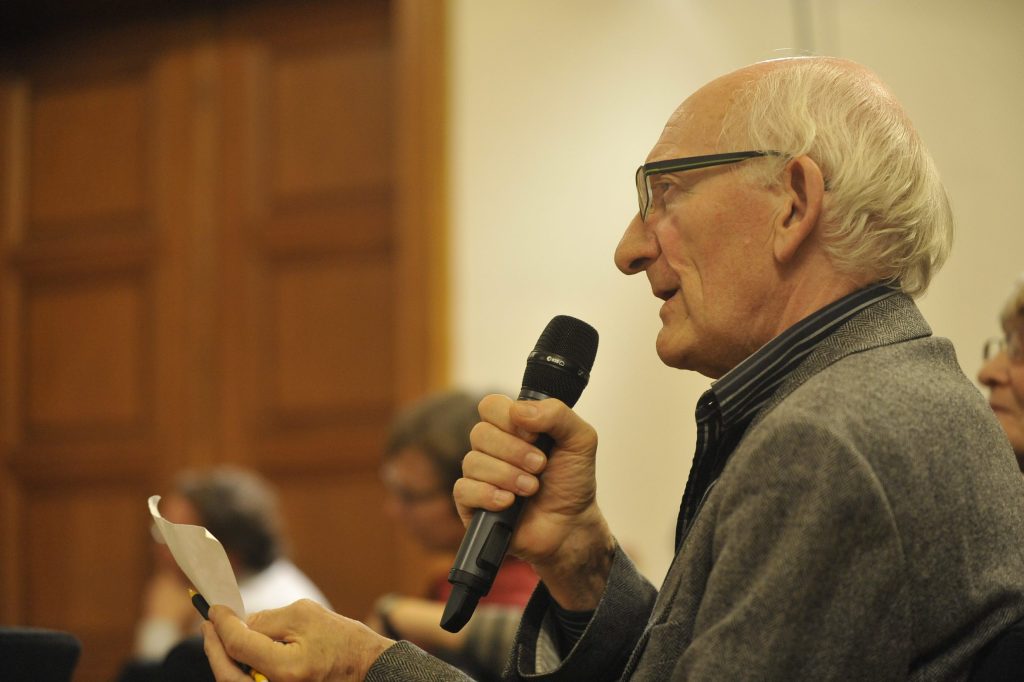
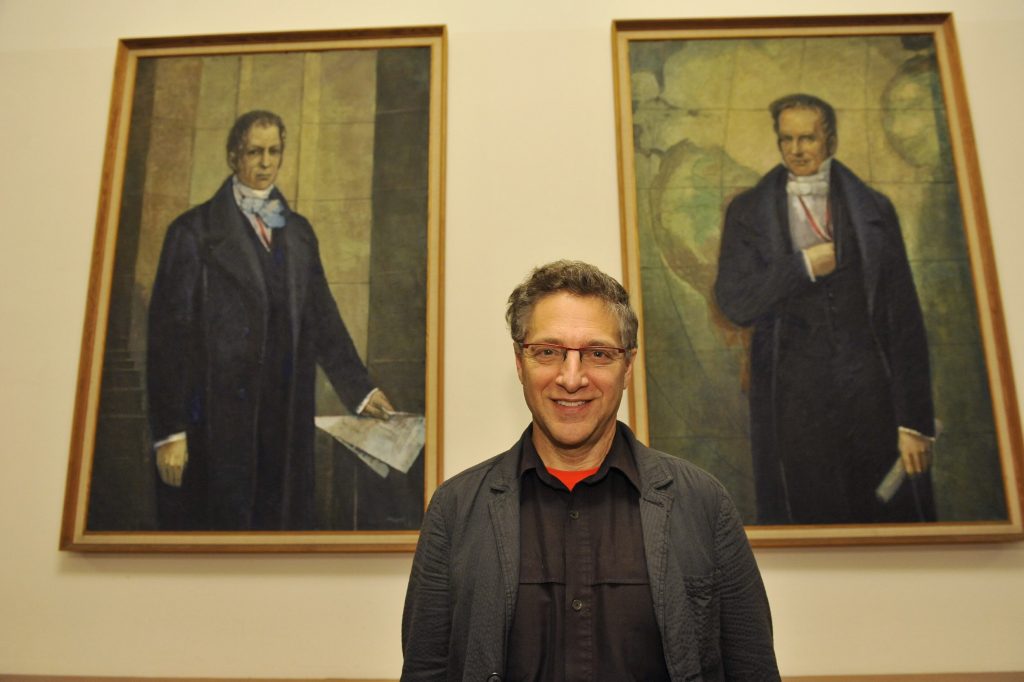
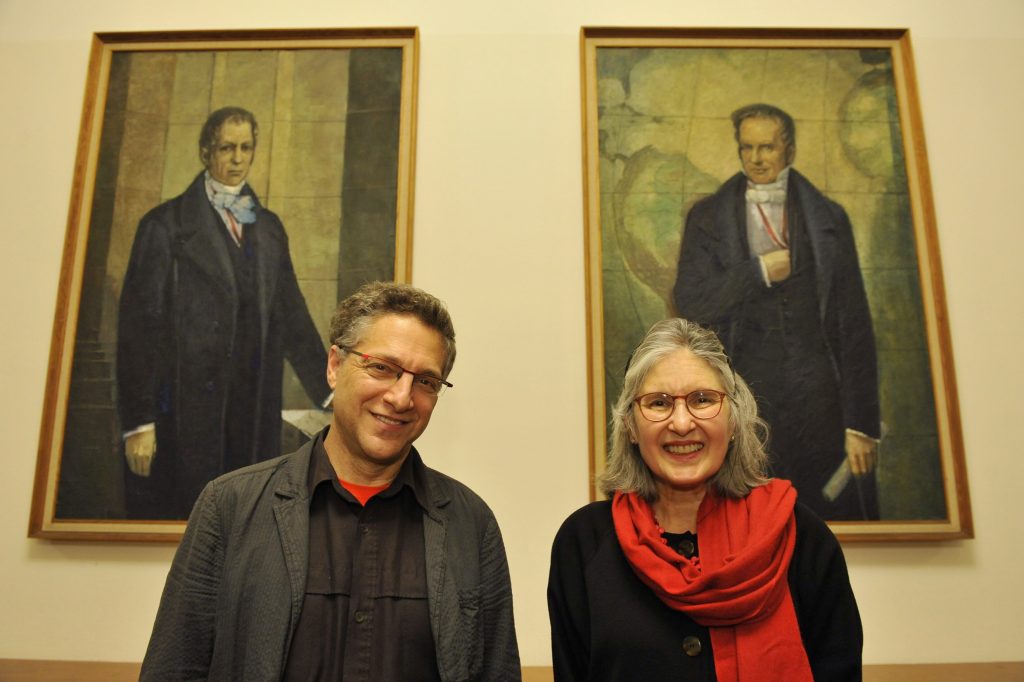
Photo credit: Niels Leiser for the Mosse Lectures
