
2015: Stephen Greenblatt, “Augustine in the Garden”
Note: there are two parts to the lecture recording
Stephen Greenblatt, “Augustine in the Garden”
Berlin Mosse Lecture
https://mosselectures.wisc.edu/berlin/
Thursday, 18 May 2015, 19:00 CET
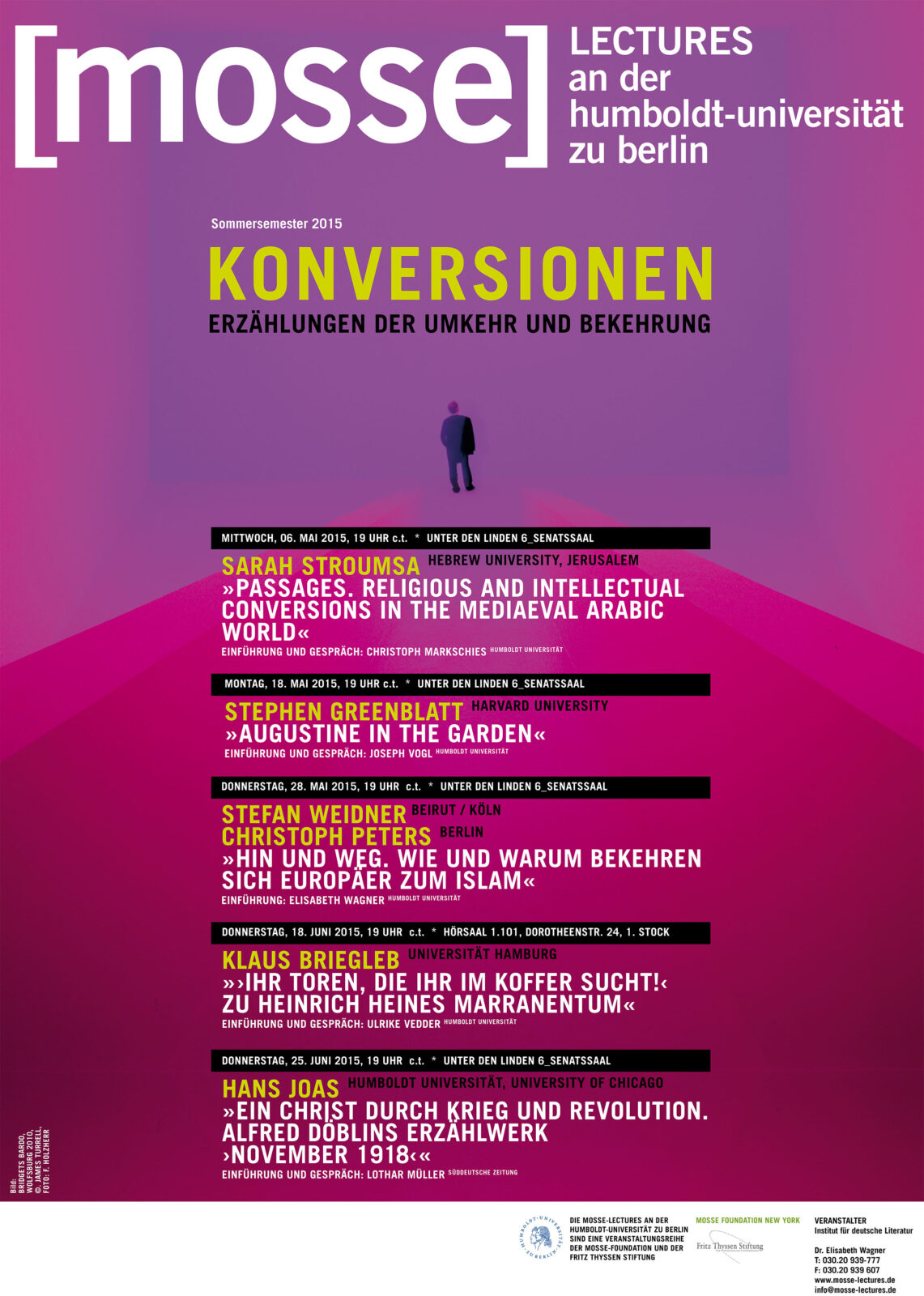
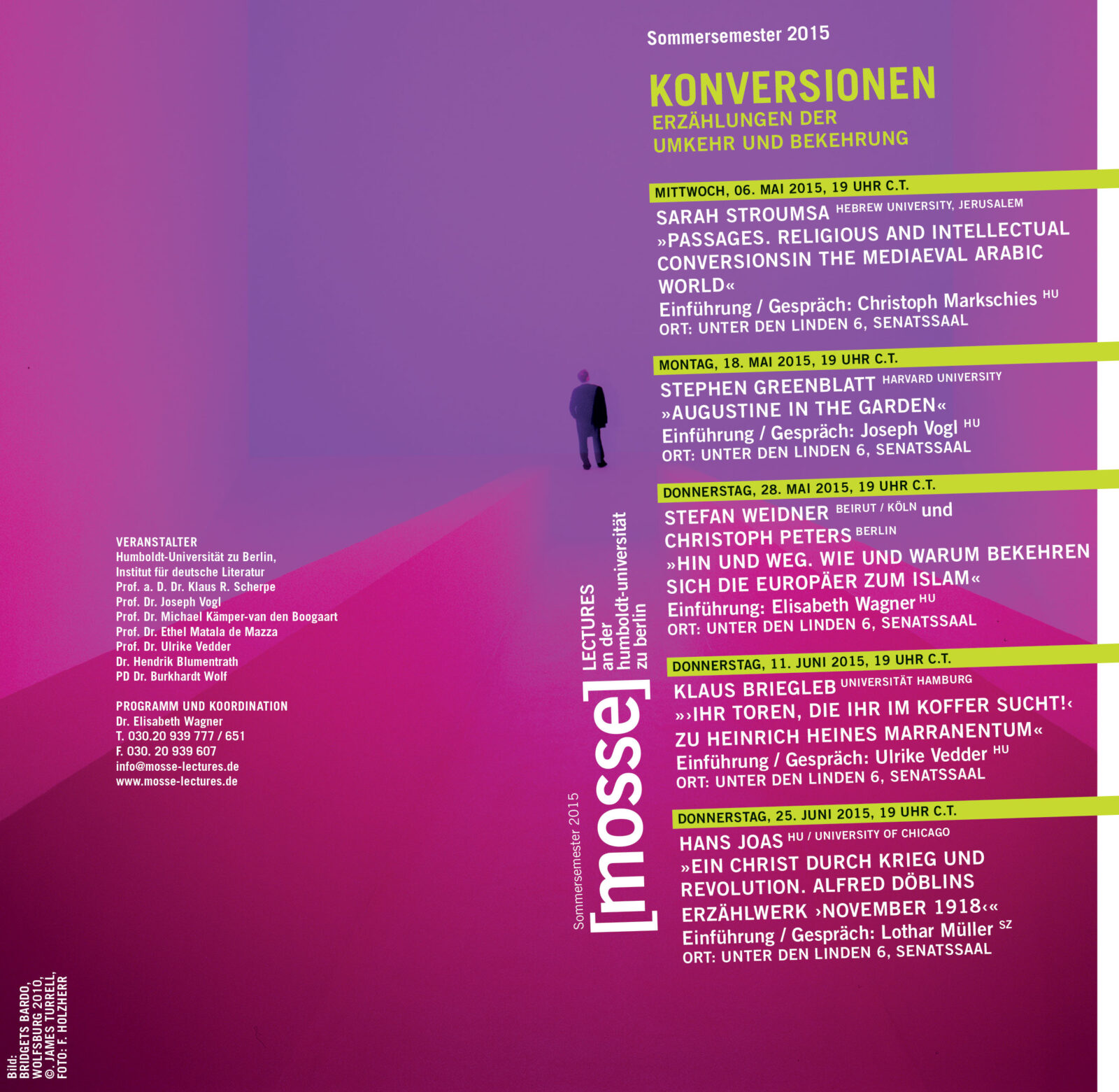
Senatssaal of Humboldt University
Unter den Linden 6
1. Stock
10117 Berlin
GERMANY
Sponsored by:
[mosse] LECTURES an der humboldt-universität zu berlin
The Mosse Foundation
Global Mosse Lecture Series
Fritz Thyssen Stiftung
Institut für deutsche Literatur
Humboldt University
Moderator: Joseph Vogl (Humboldt University)
Lecture Description: Der Vortrag beschäftigt sich mit zwei bekannten Erzählungen der Konversion. Die erste, die ich aufrufen möchte, ist die hochberühmte Konversion des Augustinus, die sich im Jahre 386 ereignete, eine Geschichte seiner Rettung und Erlösung. Eine andere ist natürlich die Konversionserzählung von Adam und Eva, zu datieren auf das Jahr 1, eine Geschichte, die mit ihrem Tode enden sollte: der Sterblichkeit der gesamten Menschheit. Selbstverständlich sind diese beiden Konversionserzählungen eng miteinander verbunden. Denn ohne die Konversion unserer Ureltern von Unschuld zu Schuld hätte es niemals einen Anlass für die Konversion des Augustinus aus der Sünde zum Seelenheil gegeben. Zu entdecken ist der Zusammenhang dieser beiden Erzählungen, dem Augustinus in seinem unvollendeten Kommentar »Über den Wortlaut der Genesis« nachsinnt.
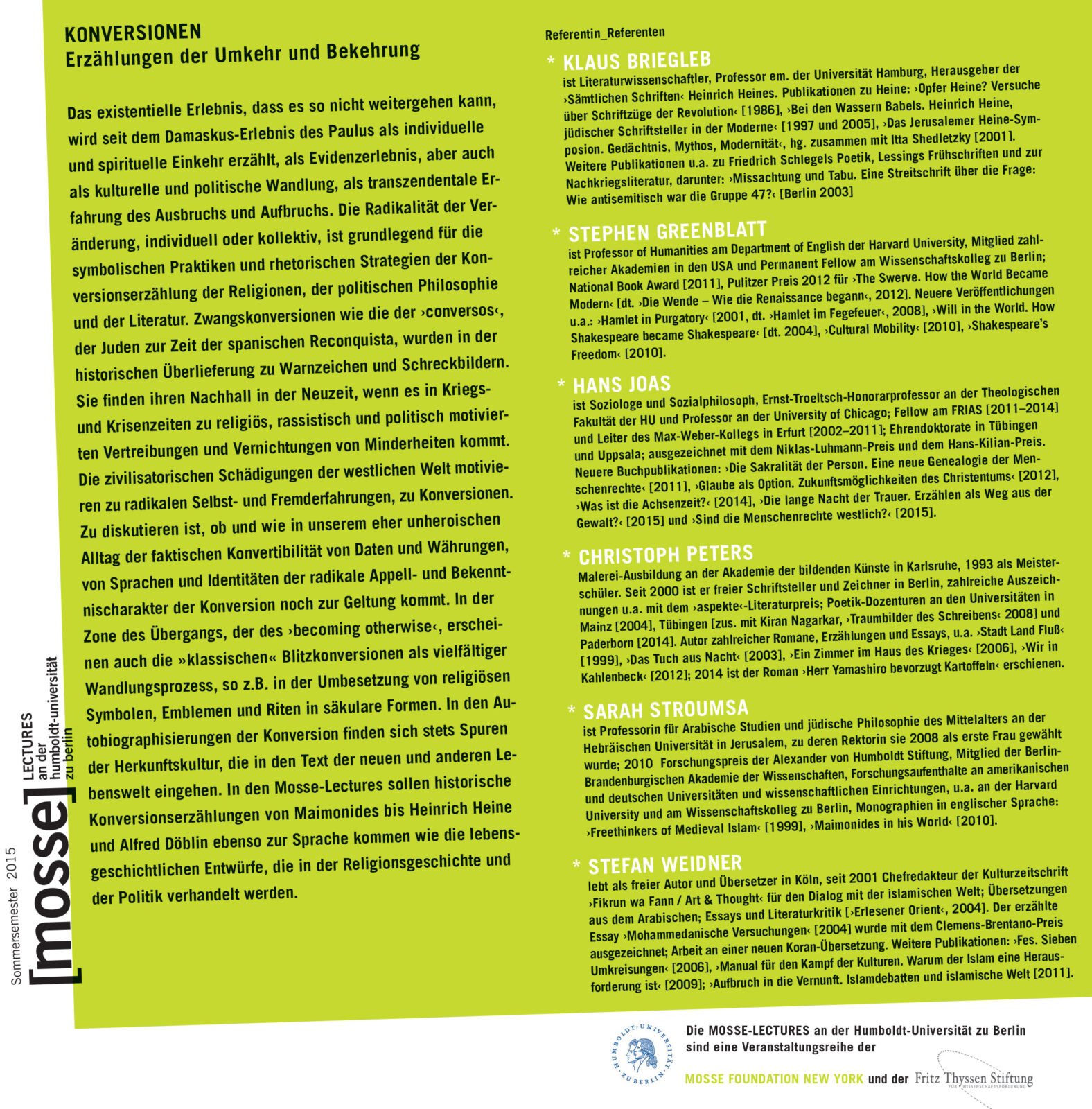
Lecture Series Description: Since the experience of Paulus on the road to Damascus, the profound inspiration that ›things cannot go on this way‹, has been told as individual and spiritual affair, as an evi-dential experience, but also as a narrative of cultural and political change, a transcenden-tal evocation of breakup and outbreak. Radical transition, individual or collective, consti-tutes the symbolical practice and rhetorical strategies of religious, philosophical, political and literary conversion narratives. Since the bitter fate of the conversos, the Jews at the time of the Spanish Reconquista, historical tradition has forced conversions as warning signs of violence and genocide, in modernity the racially, politically und religiously motivated expulsion and annihilation of minorities. How can possibly the radical appeal of confession and conversion be experienced, less dramatic and heroic, when practical everything is ›convertible‹, records of data and information, currencies, languages and identities? In retrospect, referring to the zone of transition, the »becoming otherwise«, the classical examples of a ›blitzconversion‹ might also reveal as a long term, manifold process of transformation, remembering e.g. the implementation of religious symbols, emblems and rites in secular forms. In the autobiographical narrations of conversion we will definitely find traces of the original culture in the text of the newly acquired living. In the program of the Mosse-Lectures the narratives of conversion from Maimonides to Heinrich Heine will be negotiated, as well as the concepts of conversion in the historical writings of religion, political philosophy, literature and anthropology.
Stephen Greenblatt: ist Professor of Humanities am Department of English der Harvard University, Mitglied zahlreicher Akademien in den USA und Permanent Fellow am Wissenschaftskolleg zu Berlin; National Book Award (2011), Pulitzer Preis 2012 für The Swerve. How the World Became Modern (dt. Die Wende – Wie die Renaissance begann, 2012). Neuere Veröffentlichungen u.a.: Hamlet in Purgatory (2001, dt. 2008), Will in the World. How Shakespeare became Shakespeare (2005, dt. 2006), Cultural Mobility (2010), Shakespeare’s Freedom (2010).
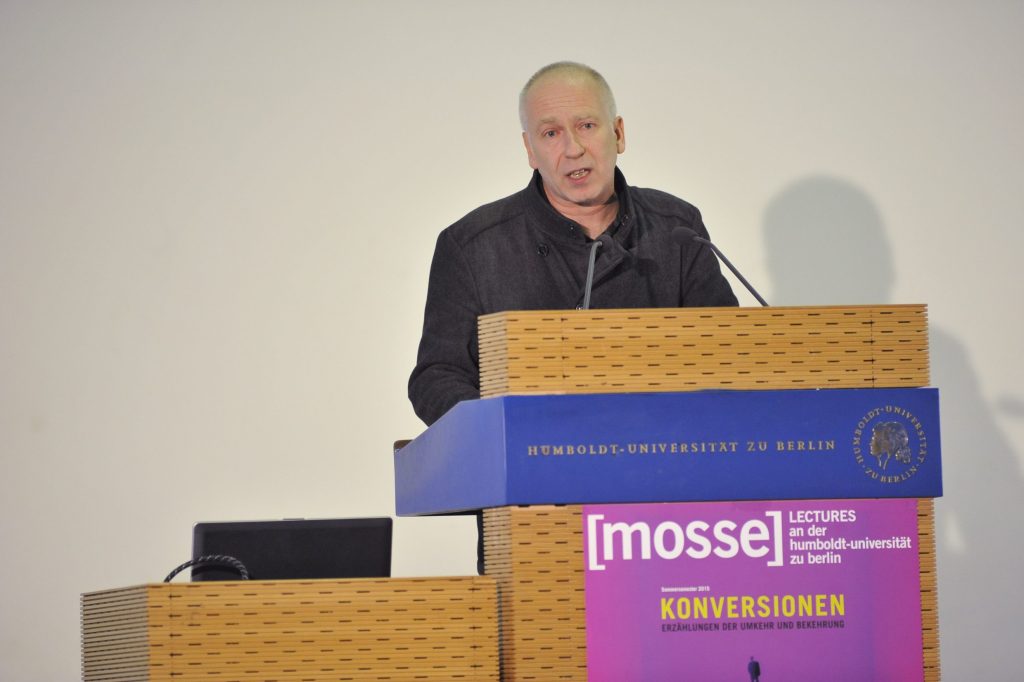
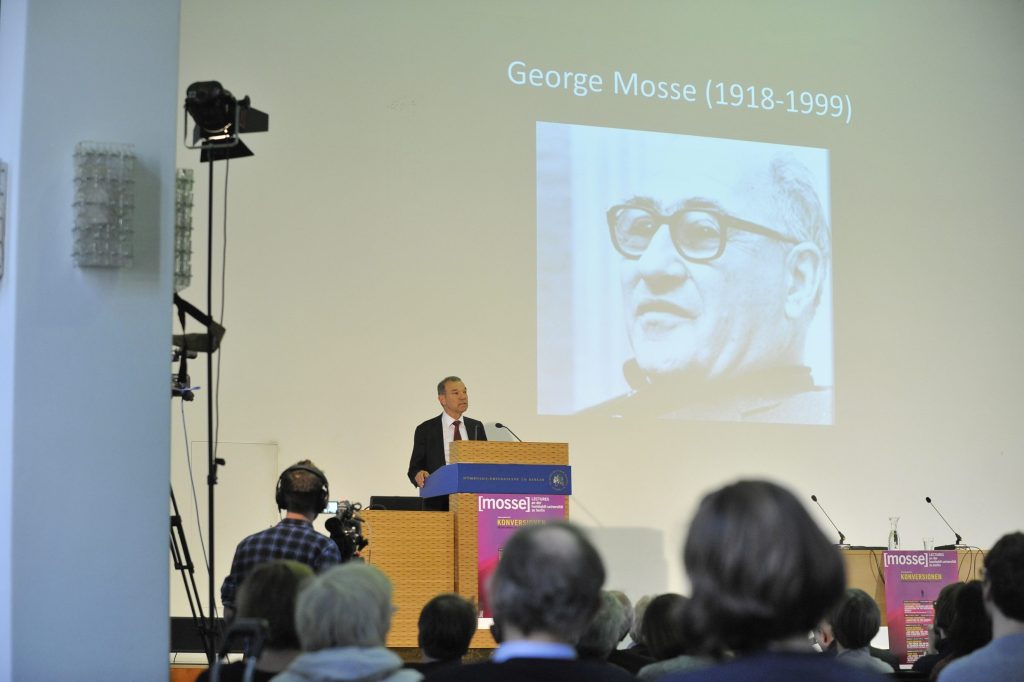
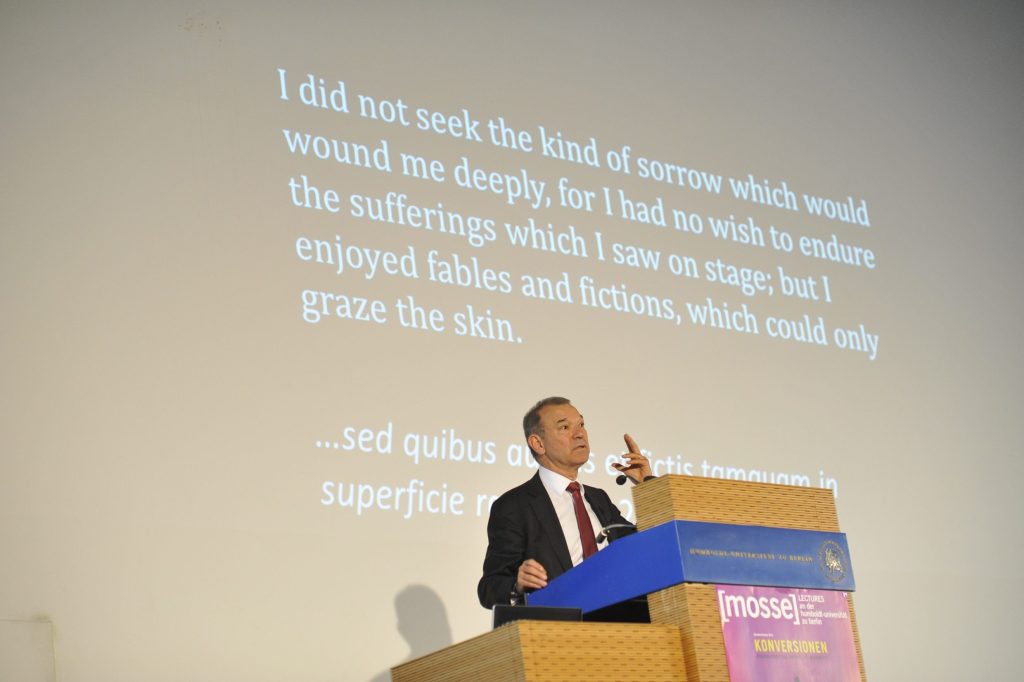
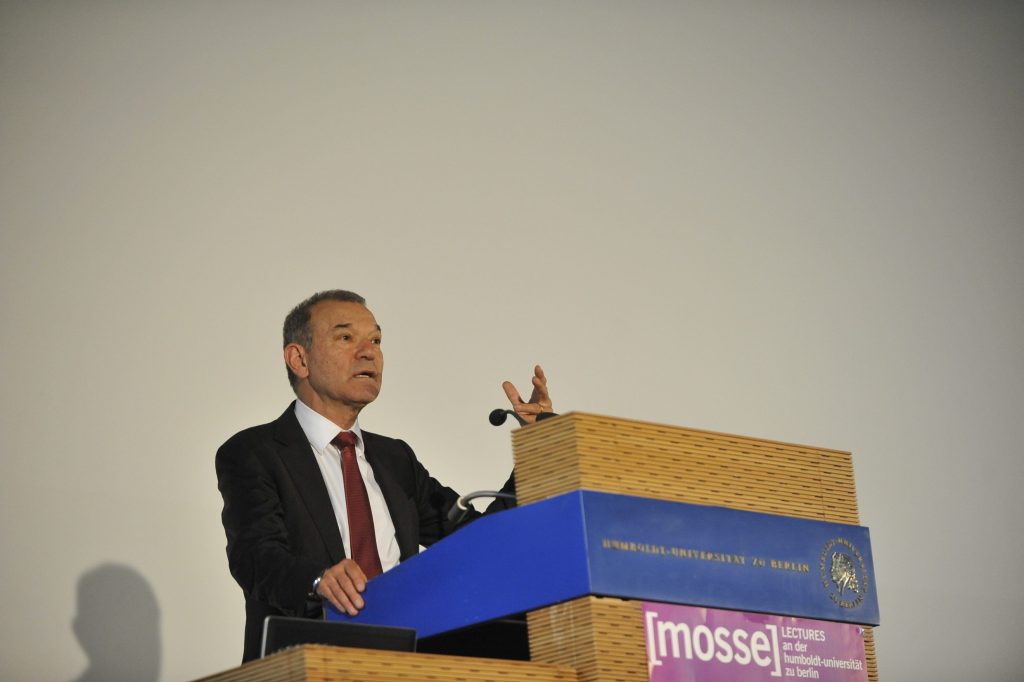
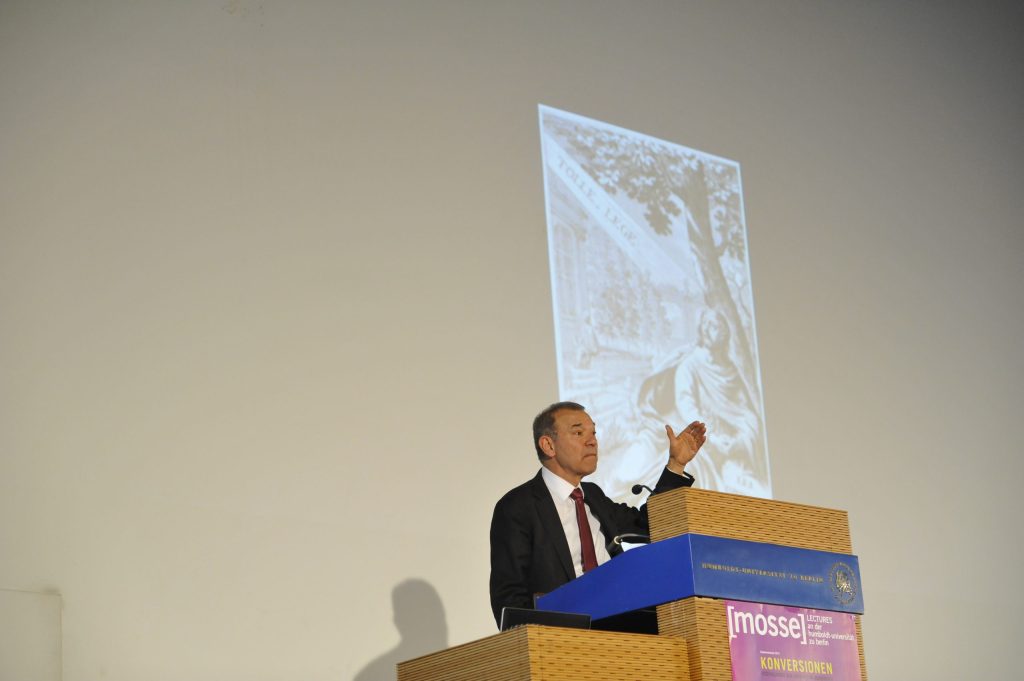
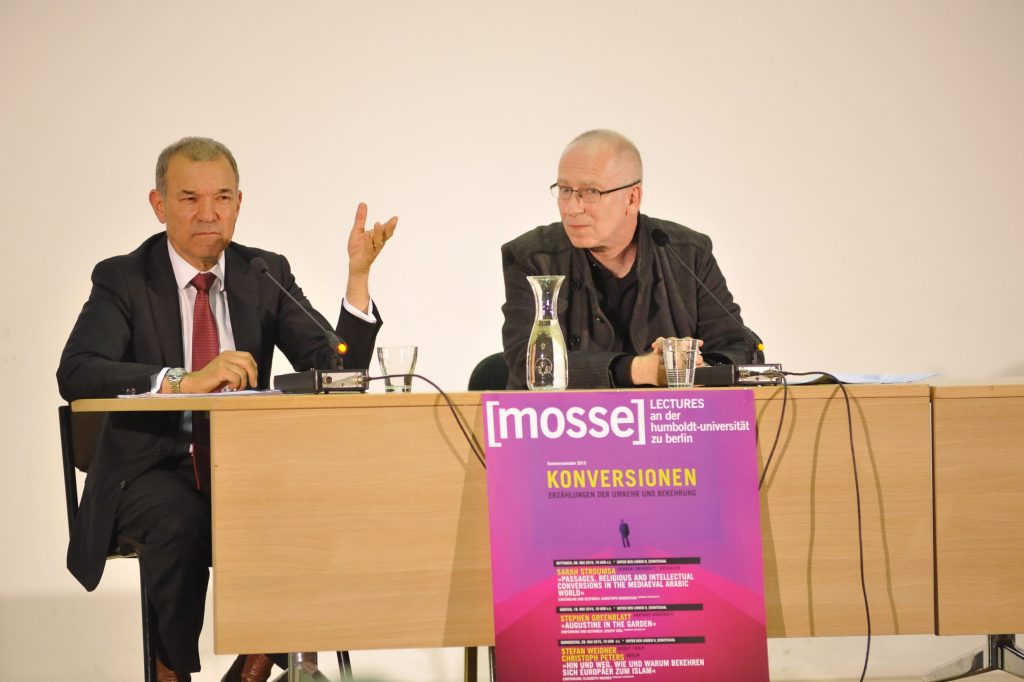
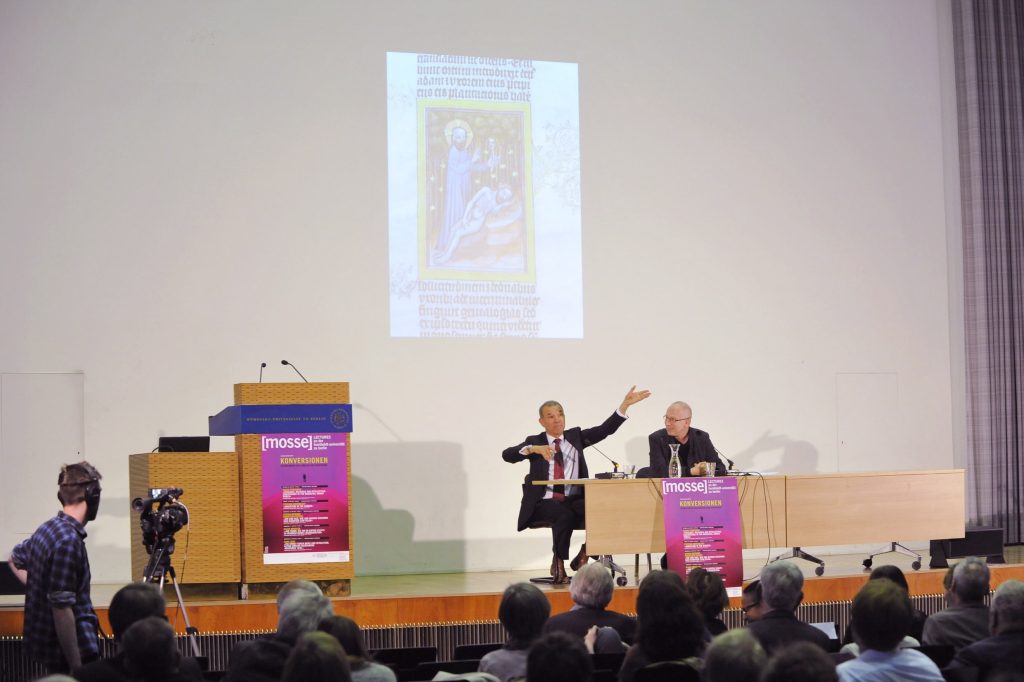
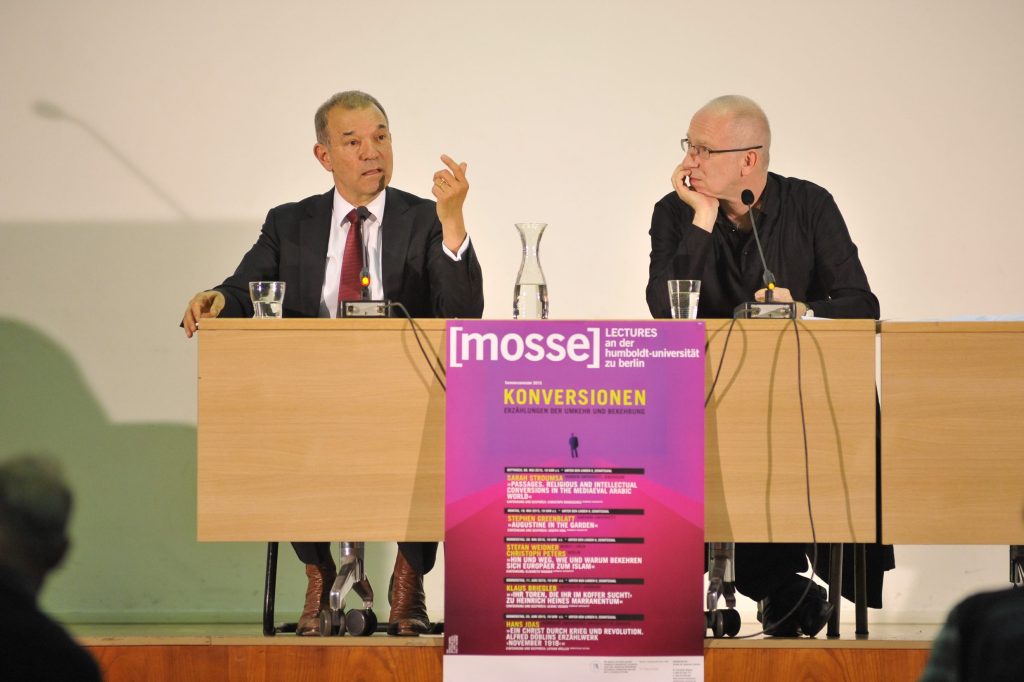
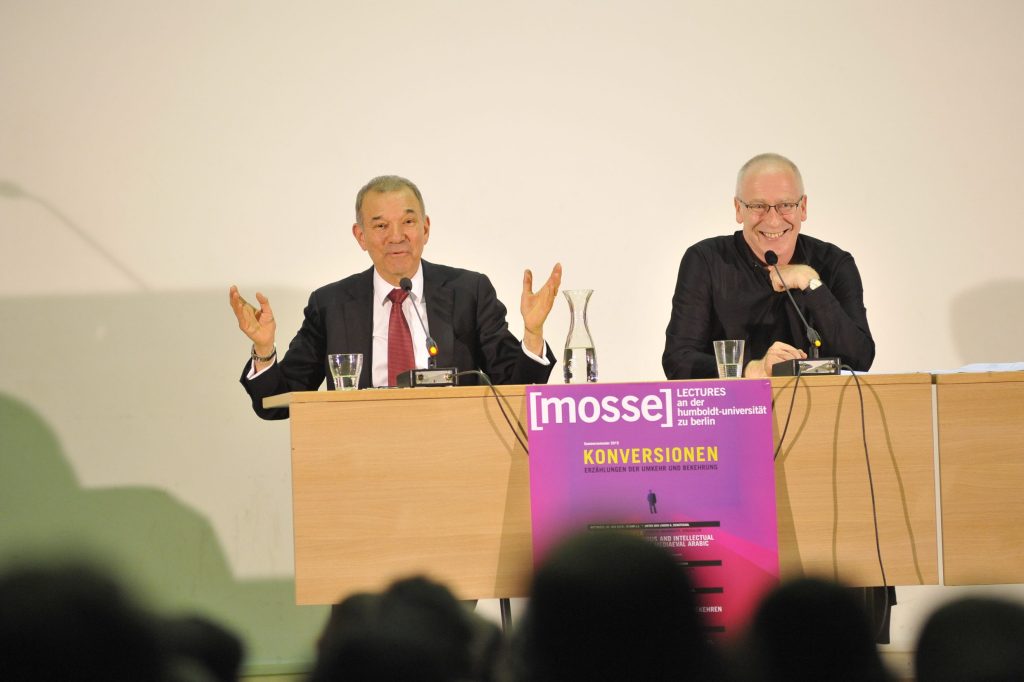
Photo credit: Niels Leiser for the Mosse Lectures
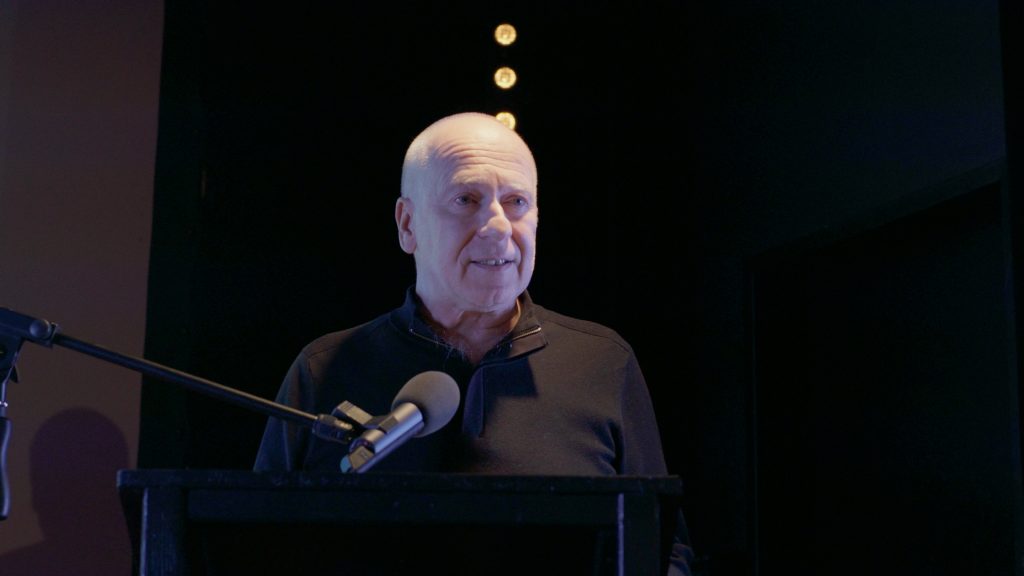
His research and teaching comprises literature from the eighteenth to the twentieth century, media and aesthetics, cultural and political theory. Recent research focuses on the history of financial economy, literature and economics, and the “poetics of knowledge” – the study of the relationships and interactions between forms of knowledge and poetic or aesthetic figures. He is the director or principal investigator of a range of research projects including “The Knowledge of Literature” (PhD-Net), “Small Forms in the History of Literature and Sciences” (Research Training Group), and “Matters of Activity: Image Space Material” (Cluster of Excellence).
Joseph Vogl published more than a hundred articles and book chapters, as well as numerous books and monographs. Among his most important written works are the monographs Ort der Gewalt. Kafkas literarische Ethik (1990); Kalkül und Leidenschaft. Poetik des ökonomischen Menschen (2002); Über das Zaudern (2007; On Tarrying, 2011). Besides his research in literature, cultural and media studies, he is well known for his intensive work on modern and present-day finance and economics, analyzing finance theories from the perspective of cultural history. This work culminated in his books Das Gespenst des Kapitals (2010; The Specter of Capital, 2014), Der Souveränitätseffekt (2015; The Ascendancy of Finance, 2017) and Kapital und Ressentiment. Eine kurze Theorie der Gegenwart (2021; Capital and Ressentiment: A Brief Theory of the Present, 2022), which received wide recognition in the fields of cultural studies as well as economics, and initiated a public debate. Further workings include translations from French to German (Deleuze, Lévi-Strauss, Lyotard) and numerous interviews on TV with Alexander Kluge (see Soll und Haben. Fernsehgespräche, 2009; Senkblei der Geschichten. Gespräche, 2020).
He was awarded the Günther Anders Prize for Critical Thinking (2022). For his book Der Souveränitätseffekt (The Ascendancy of Finance) Vogl was on the shortlist for the Leipzig Book Fair Prize 2015 in the category of non-fiction. In 1988 he received the Translation Prize for the Promotion of Franco-German Relations (DVA Foundation) for his translations of key works of modern French philosophy.
