
2014, Judith Jamison, “On Dance and Choreography: A Conversation with Judith Jamison”
Judith Jamison, “On Dance and Choreography: A Conversation with Judith Jamison”
Strauch-Mosse Visiting Artist Lecture Series at Lesley University
https://mosselectures.wisc.edu/boston/
Wednesday, 5 March 2014, 19:00 EST

Sponsored by:
Global Mosse Lecture Series
The Mosse Foundation
Lesley University
Lesley University
Marran Theater
47 Oxford Street
Cambridge, MA 02138
Introduction: Stefanie Belnavis
Moderators: Martha McKenna, Nancy Beardall
Dance tribute: Ayako Takahashi
Lecture Summary: Judith Jamison cast a spell over audiences from her first appearance with the Alvin Ailey American Dance Theater in 1965. Trained in classical ballet, Jamison appeared with ballet companies all over the world, starred on Broadway, and founded The Jamison Project.
She returned to the Ailey company as artistic director in 1989, choreographing dances that speak to the African American spirit and the human experience. Along the way, she earned numerous awards, including a Kennedy Center Honor and a National Medal of Arts.
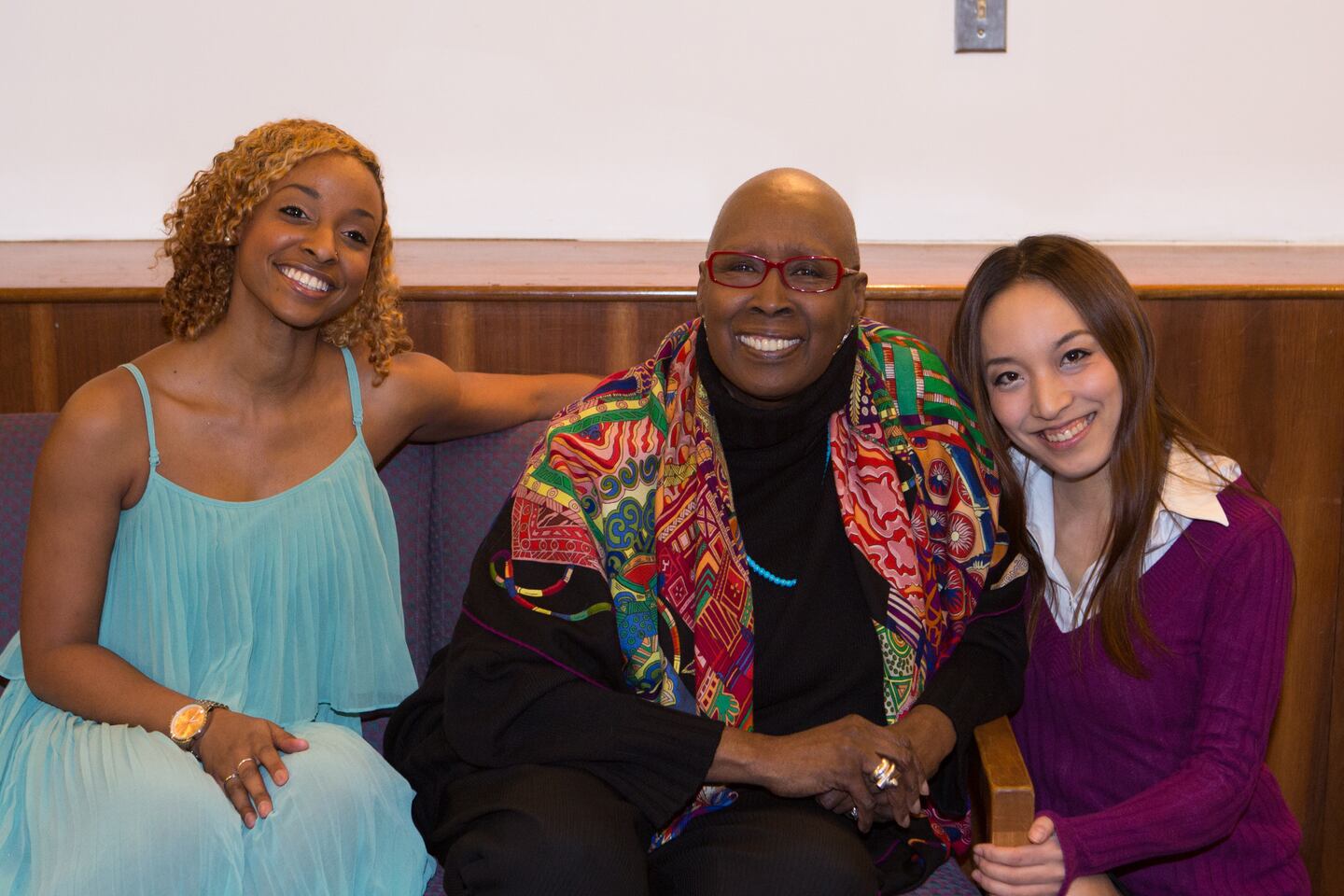
Photo: Lesley University
Lesley University press release summary of the event:
Judith Jamison: ‘The arts are key to changing people’s minds’
Alvin Ailey Dance Theater legend championed the power of the arts during Lesley’s Strauch-Mosse Visiting Artist Lecture Series.
Friday, March 07, 2014
The first time she performed Alvin Ailey’s signature solo “Cry,” Judith Jamison didn’t get a run-through and had to abandon a rigid and uncomfortable costume at the last minute to be sewn into a makeshift ensemble.
By the third movement of the piece — which Ailey had created as a birthday present for his mother and an homage to all Black women — Jamison couldn’t feel anything from the waist down. She credits her faith with enabling her body to finish the grueling performance.
“It was a shock to me and to Alvin when the curtain went down and there was this roar coming from the audience,” she recalled, speaking of a famed 20-minute ovation she received.
Since captivating the world with the Alvin Ailey American Dance Theater in the 1960s and 1970s, Judith Jamison has continuously expressed the African-American spirit and human experience in ways that have shaped the modern dance world and beyond. The iconic dancer and choreographer, whose awards include a Kennedy Center Honor and a National Medal of Arts, visited Lesley on Wednesday evening and drew a packed house in Washburn Auditorium as she shared her wisdom, candor and accomplishments with an awestruck audience.
Jamison’s messages resonated deeply with the Lesley community as she spoke about the importance of the arts in education, community outreach, and the need to be inspired and mentored.
“The arts are key to changing people’s minds,” she said. Jamison believes dance can speak louder than words as a means of peacemaking and cultural diplomacy. She recalled performing in war zones, during the Cold War, in Iran, and at the end of the Six-Day War in Israel. “Dance, because (you) don’t have to say anything,” explained. “It changes minds.”
She urged the audience to know what came before and honor the past in order to live life well and create a brighter future. She paid tribute to many people of color who influenced her, including performers Carmen De Lavallade, Geoffrey Holder, Pearl Primus, Katherine Dunham and many others.
“You need mentors,” said Jamison, artistic director emerita of Alvin Ailey. “You have to have them all your life. Even at my age I still have mentors.”
Her visit to Lesley was made possible by the Strauch-Mosse Visiting Artist Lecture Series, which was established in 2009 through a $1 million gift from Hans Strauch, vice chair of the Lesley Board of Trustees. Through the series, Lesley welcomes luminaries to campus twice annually to further the university’s mission of promoting cultural and artistic literacy and to celebrate the arts as the foundation of all learning.
The conversation was facilitated by professors Martha McKenna, director of Lesley’s Creativity Commons, and Nancy Beardall, coordinator of Lesley’s Dance/Movement Therapy program, who thanked Jamison for sharing her “dancing spirit and light throughout the world” for many decades.
During her talk, Jamison conveyed the drive and resilience it took to accomplish years of demanding and groundbreaking performances, and she modestly reflected that her unparalleled career is “nothing short of a miracle.”
“The first thing that has to happen is love: an overwhelming love for what you’re doing,” she advised. She described the reciprocal love between the performer and the audience. “It becomes a spiritual reciprocity. You get so much love back. …Dance is always about, Who are you giving it to? Who are you servicing? It’s so important.”
Jamison also spoke about the importance of community service and outreach, something the Alvin Ailey Company exemplifies in schools and camps around the country, she said.
“Before outreach became a buzzword, we were doing it. We were already in the communities we served. We were up the next morning — after a late-night performance — at 5, 6 or 7 to get into the schools or to do workshops at community centers, to talk with children to spread the word of dance,” she recalled.
At the start of her talk, Jamison was welcomed by Lesley dance therapy graduate student Stefanie Belnavis, who is from Jamaica and recalled the hope and inspiration evoked in her as a girl when she saw a striking photograph of Judith Jamison from “Cry,” draped in white and reaching up to the heavens. Jamison drew a standing ovation from the audience, and at the conclusion of the program, Ayako Takahashi, also a dance therapy student, performed a riveting dance tribute to Jamison.