
2010: Orhan Pamuk, “‘What Happens to us as We Read Novels’: Kommentar und Gespräch: Andreas Huyssen”/”Reading and Conversation with Andreas Huyssen”
Orhan Pamuk, “‘What Happens to us as We Read Novels’: Kommentar und Gespräch: Andreas Huyssen”/”Reading and Conversation with Andreas Huyssen”
Berlin Mosse Lecture
https://mosselectures.wisc.edu/berlin/
Thursday, 14 January 2010, 19:00 CET
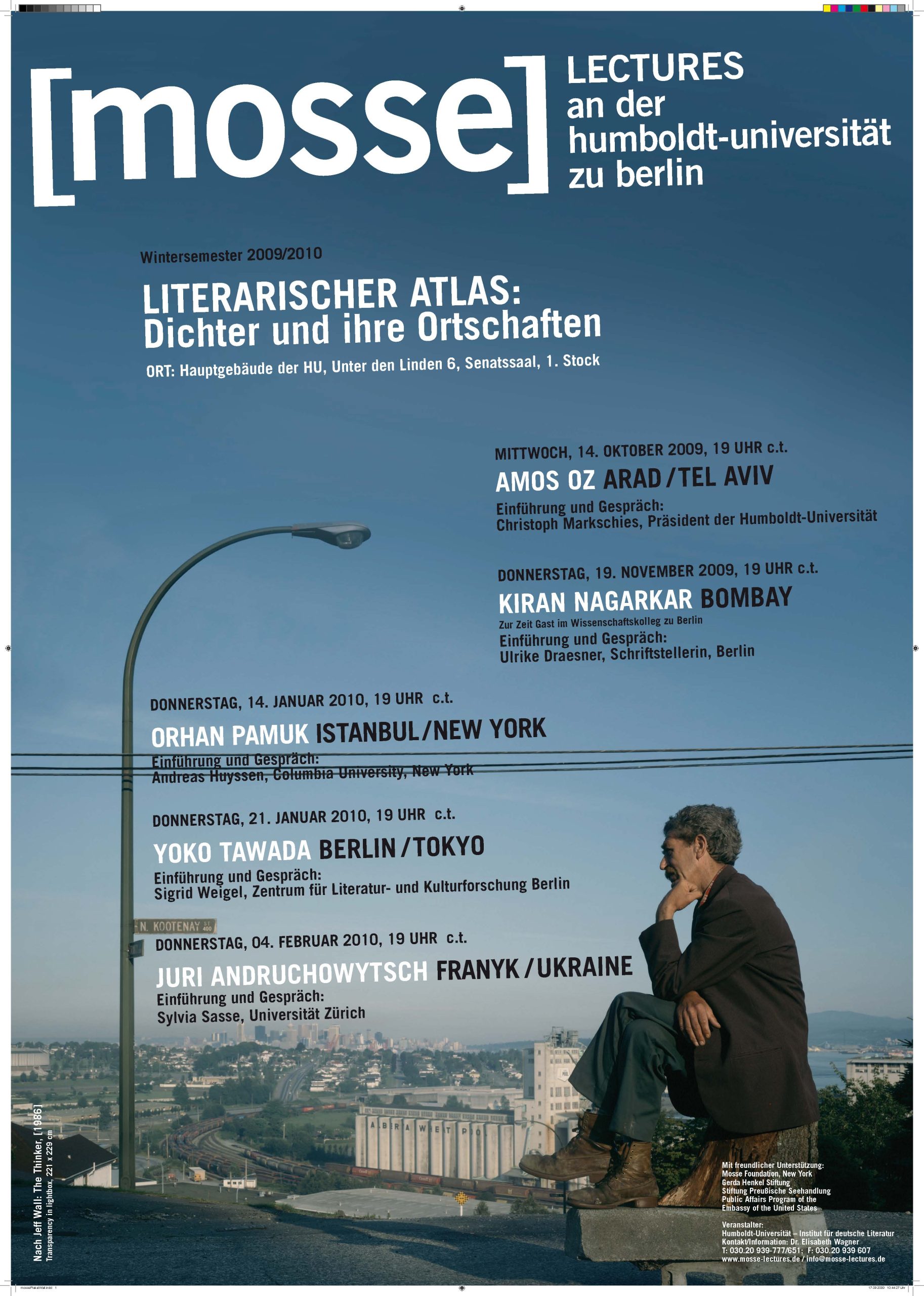
Audimax of Humboldt University
Unter den Linden 6
1. Stock
10117 Berlin
GERMANY
Sponsored by:
The Mosse Foundation
Global Mosse Lecture Series
Gerda Henkel Stiftung
Stiftung Preußische Seehandlung
Humboldt University
Humboldt University Institut für deutsche Literatur
Public Affairs Program of the Embassy of the United States
Moderator: Andreas Huyssen (Columbia University)
Lecture Description: Ausgehend von Friedrich Schillers Abhandlung »Über naive und sentimentalische Dichtung« von 1795/96 widmet sich Orhan Pamuks Vortrag Fragen des Lesens und Schreibens des Romans: Der Wunsch nach einem direkten Zugang zur Wirklichkeit gerät in Widerspruch zur Reflexion über die schreibende und lesende Tätigkeit. Genau dieser Widerspruch allerdings macht den Reiz und den Reichtum dieser Form der Literatur aus. Gefühle und Gedanken prägen die Bilderwelt des Romans, die der Autor in Sprache übersetzt, so Orhan Pamuk, der malte, bevor er anfing, seine Bilder in Erzählungen umzusetzen. Wie kann es sein, dass der Leser eines Romans die ihm oft fremde Romanwelt als die eigene begreift, wie Anna Karenina, als sie im Zug von Moskau nach Sankt Petersburg aus dem Fenster blickend einen englischen Roman liest? Was suchen wir Leser in diesen Fiktionen? Ist der Roman nicht wie ein Museum voller Erzählungen, das unsere geheimen Sehnsüchte und Wünsche vergegenständlicht? »Ist der Autor vielleicht ein Chamäleon? « so fragte der Anthropologe Homi Bhabha nach, als Orhan Pamuk in den berühmten Norton Lectures der Harvard University sprach. Wie sei es möglich, dass der Autor in der Vielfalt der erfundenen Stimmen und Figuren seines Romans dennoch seine »biographische Präsenz« bewahren könne?
Lecture Series Description: Organized by the Institute for German Literature, the Mosse-Lectures have since their establishment in 1997 developed into an important forum for scientific exchange and transfer of knowledge, and have attracted numerous renowned international speakers to Berlin. For the occasion of the 200th anniversary of the Humboldt University, the Mosse lectures are staging a series of events under the title of ‘A Literary World Map: Poets and their Places’ („Literarischer Atlas: Dichter und ihre Ortschaften“). Guests will include authors from five different countries and cultures, for speeches, readings and talks with German partners.
‘Elsewhere, Perhaps’ is the title of Amos Oz’ 1966 debut novel about the kibbutz in northern Israel in which he lived until 1986, a place ‘more radical than Tel Aviv’. He picks up this thread in his great novel ‘A Tale of Love and Darkness’ (2003): a localized fiction, which discovers a universe of storytelling within a small and enclosed environment. Christoph Markschies, President of the Humboldt University, will welcome the Israeli author and host the event. Kiran Nagarkar, one of the most relevant and controversial authors on the Indian subcontinent, has lived for a longer period of time (and continues to do so) as a guest of the DAAD and the Institute for Advanced Study in Berlin. He will speak about the culture and literature of his hometown of Bombay (Mumbai) and will have a discussion with the German writer Ulrike Draesner. Istanbul is the environment of the novels of the 2006 Nobel Prize winner Orhan Pamuk: at the border to western culture (and crossing that border), accompanied by Andreas Huyssen, literary scholar and art critic at the Columbia University in New York. ‘A language that I don’t understand tells me something’, writes Yoko Tawada from Japan, who most loves the harbor towns among the large cities, and who understands literature as creative translations into different languages, as described in her book, ‘Überseezungen’ (2002). (Reading and discussion with Sigrid Weigel). Juri Andruchowytsch from Franyk/the Ukraine, whose novels and essays have been translated into German, has in his new book project ‘Encyclopedia of my Cities’ developed a form of geo-poetics a mixture of literature and geography (Reading and discussion with Sylvia Sasse, University of Zurich).
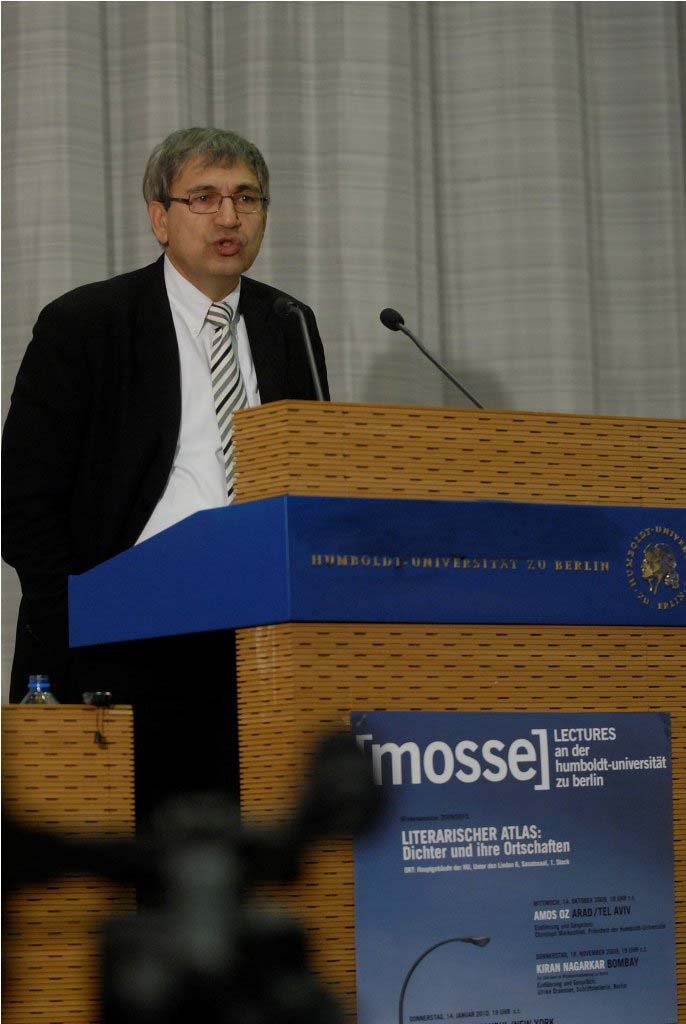
Deutsche Webseite von Orhan Pamuk. Photo Credit: Niels Leiser for the Mosse Lectures.
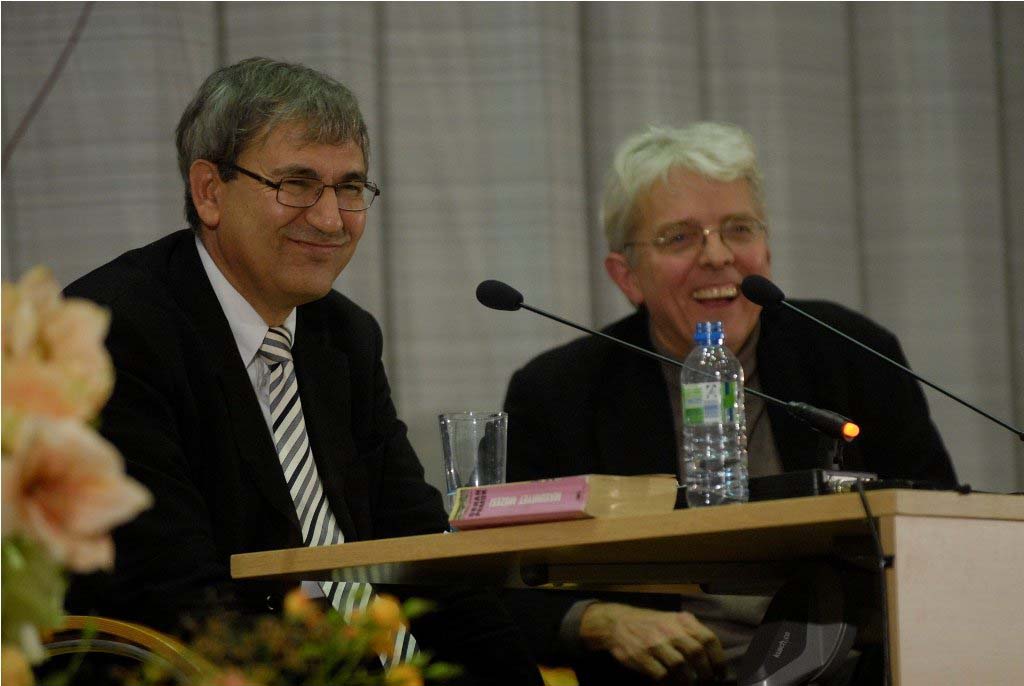
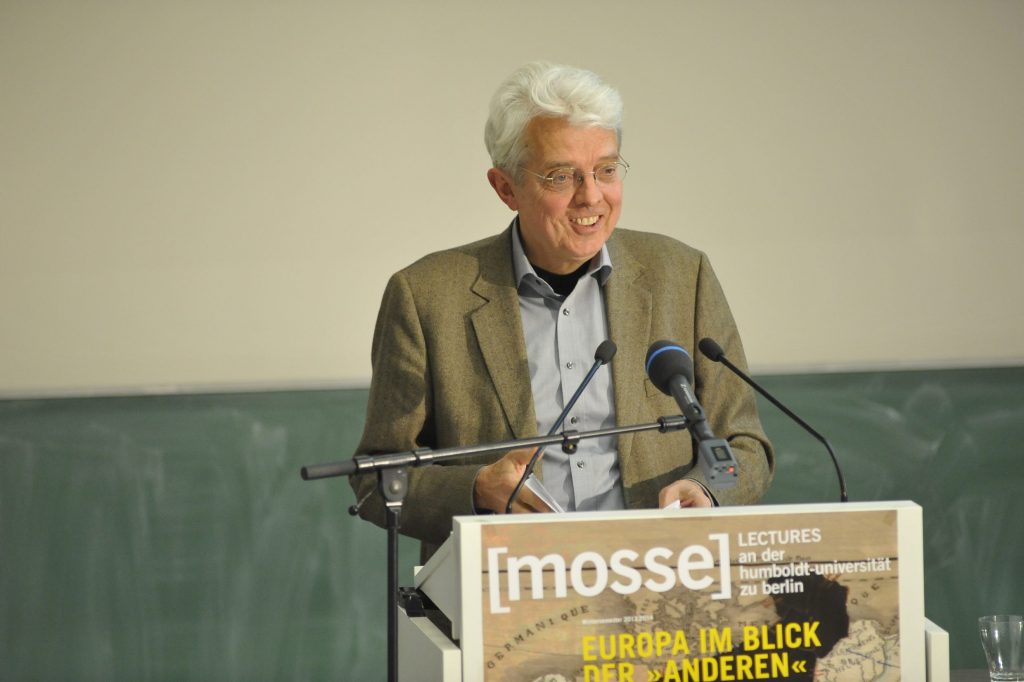
His books include Drama des Sturm und Drang (1980), After the Great Divide: Modernism, Mass Culture, Postmodernism (1986), Postmoderne: Zeichen eines kulturellen Wandels (ed. with Klaus Scherpe, 1986), Modernity and the Text: Revisions of German Modernism (ed. with David Bathrick, 1989), Twilight Memories: Marking Time in a Culture of Amnesia (1995), Present Pasts: Urban Palimpsests and the Politics of Memory (2003), the edited volume on the culture of non-Western cities entitled Other Cities, Other Worlds: Urban Imaginaries in a Globalizing World (2008) and Modernismo después de la posmodernidad (Gedisa, 2010), a book of essays on art and literature so far only available in Spanish. His most recent books are William Kentridge, Nalini Malani: The Shadowplay as Medium of Memory (2013), Miniature Metropolis: Literature in an Age of Photography and Film (2015) and Memory Art in the Contemporary World: Confronting Violence in the Global South (2022).
