
2009: Amos Oz, “Einführung und Gespräch: Christoph Markschies”/”Reading and conversation with Christoph Markschies”
Amos Oz, “Einführung und Gespräch: Christoph Markschies”/”Reading and conversation with Christoph Markschies”
Berlin Mosse Lecture
https://mosselectures.wisc.edu/berlin/
Wednesday, 14 October, 19:00 CET
Audimax of Humboldt University
Unter den Linden 6
1. Stock
10117 Berlin
GERMANY
Sponsored by:
The Mosse Foundation
Global Mosse Lecture Series
Gerda Henkel Stiftung
Stiftung Preußische Seehandlung
Humboldt University
Humboldt University Institut für deutsche Literatur
Public Affairs Program of the Embassy of the United States
Moderator: Christoph Markschies (Humboldt University)
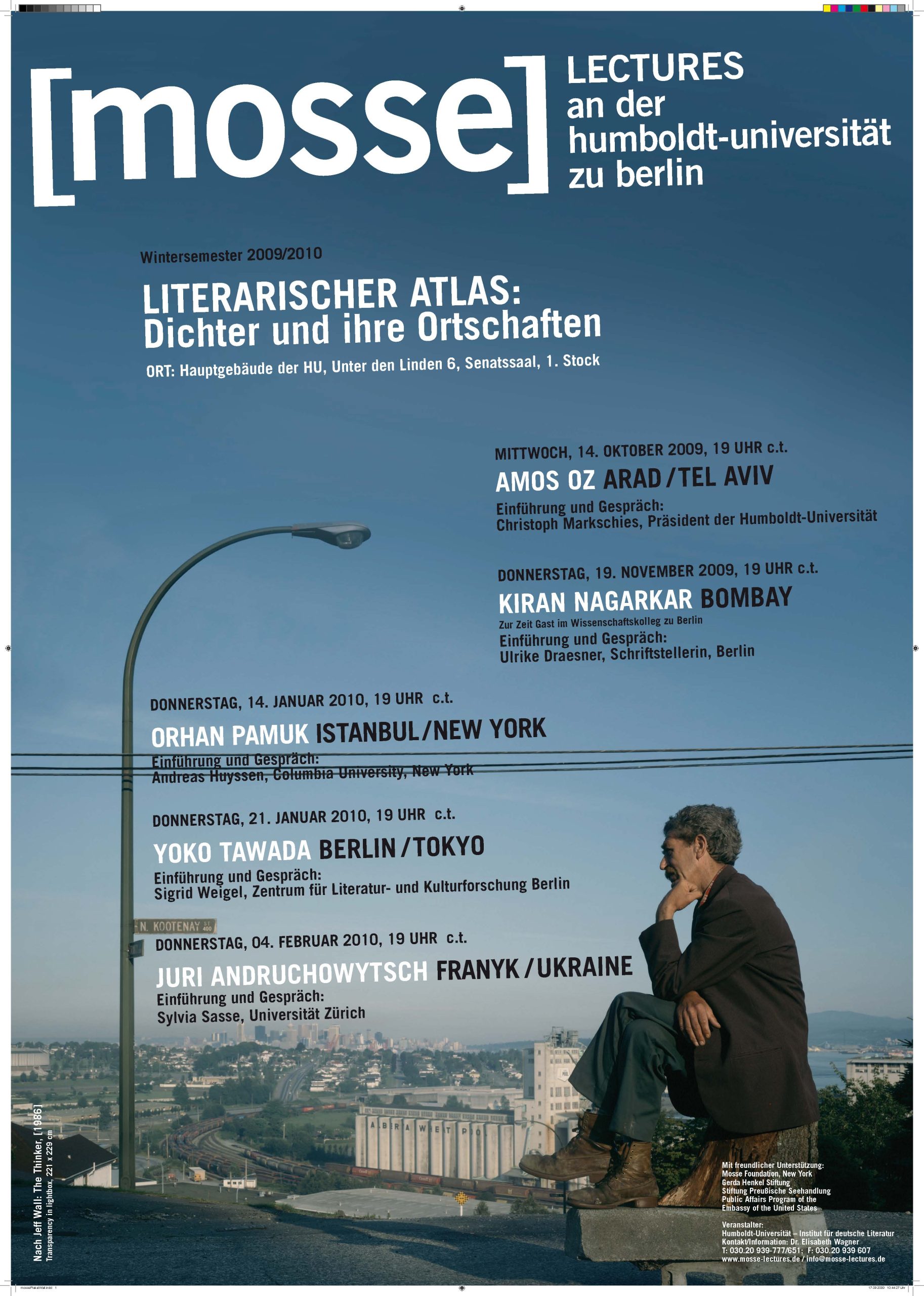
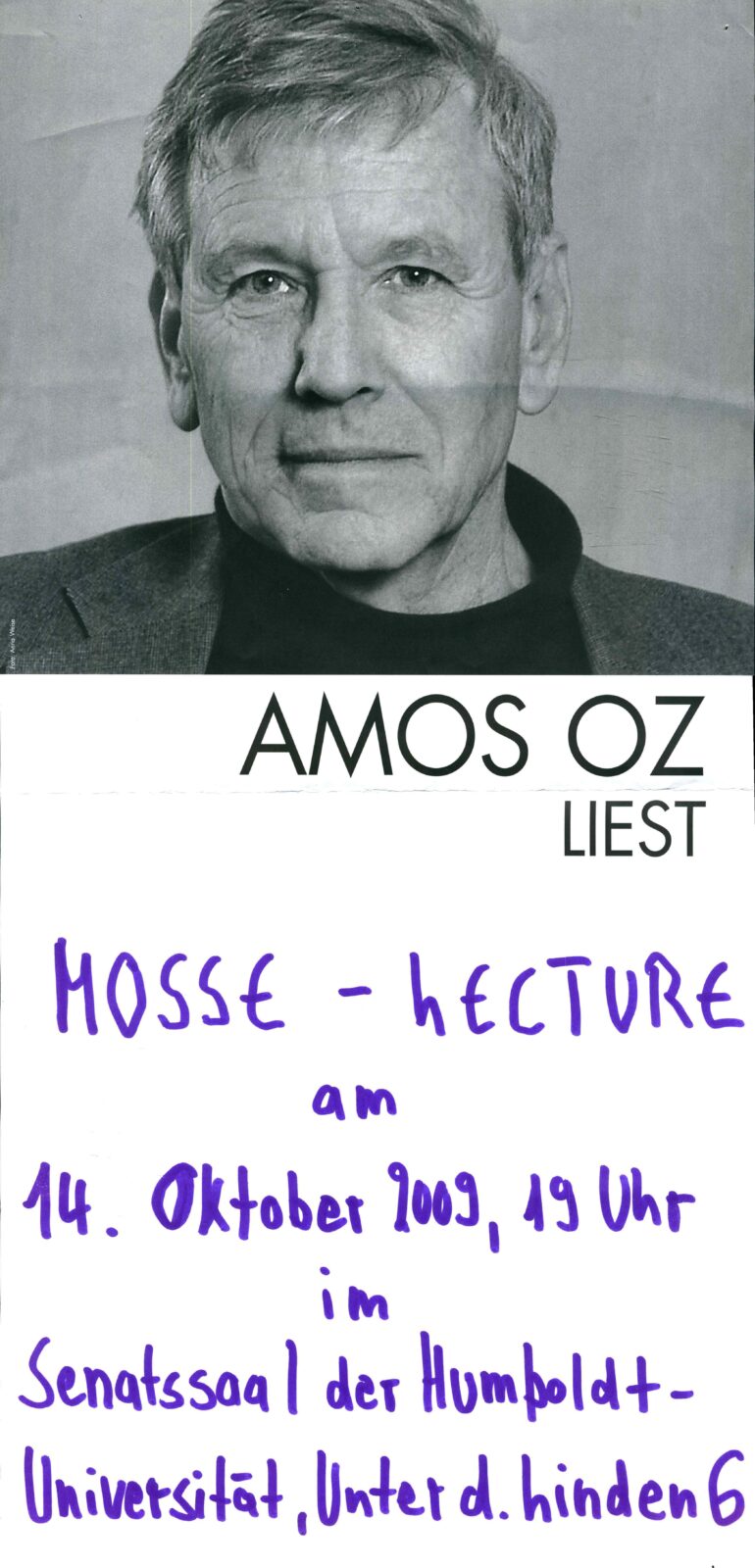
Lecture Description: »Ein anderer Ort« nannte Amos Oz 1966 seinen ersten Roman über den Kibbuz Hulda im nördlichen Israel, in dem er bis 1986 lebte: »ein Ort radikaler als Tel Aviv.« Sein großer autobiographischer Roman »Eine Geschichte von Liebe und Finsternis« (dt. 2004) ebenso wie die gerade in deutscher Übersetzung erschienenen »Geschichten als Tel Ilan« nehmen diesen Gedanken auf. Vor Ort, auf engstem Raum, ist das Leben keineswegs friedlich, zwischen Pionieren und Propheten, die die gemeinsame Sache immer anders sehen.»Wenn du Israel verstehen willst«, so hat Amos Oz zu seinem Freund Siegfried Lenz gesagt, so bleibe in den Strassen still stehen in der Hitze der Nacht, wenn die Menschen auf dem Balkon schlafen. Man »hört sie in ihren Angstträumen seufzen und stöhnen und wimmern, sie träumen in mehreren Sprachen, überwältigt von Vergangenheiten, die nicht aufhören wollen.«
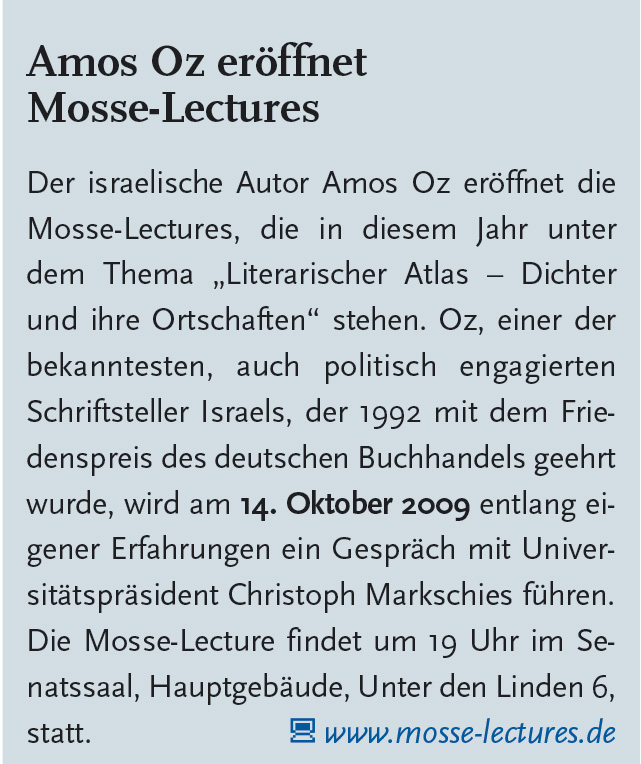
Amos Oz liest aus diesen beiden Werken in hebräischer Sprache. Die deutsche Übersetzung trägt die Schauspielerin Nina Herting vor. Der Präsident der Humboldt-Universität, Professor Dr. Dr. h.c. Christoph Markschies wird den Autor begrüßen und ein Gespräch mit ihm führen.
Lecture Series Description: Organized by the Institute for German Literature, the Mosse-Lectures have since their establishment in 1997 developed into an important forum for scientific exchange and transfer of knowledge, and have attracted numerous renowned international speakers to Berlin. For the occasion of the 200th anniversary of the Humboldt University, the Mosse lectures are staging a series of events under the title of ‘A Literary World Map: Poets and their Places’ („Literarischer Atlas: Dichter und ihre Ortschaften“). Guests will include authors from five different countries and cultures, for speeches, readings and talks with German partners.
‘Elsewhere, Perhaps’ is the title of Amos Oz’ 1966 debut novel about the kibbutz in northern Israel in which he lived until 1986, a place ‘more radical than Tel Aviv’. He picks up this thread in his great novel ‘A Tale of Love and Darkness’ (2003): a localized fiction, which discovers a universe of storytelling within a small and enclosed environment. Christoph Markschies, President of the Humboldt University, will welcome the Israeli author and host the event. Kiran Nagarkar, one of the most relevant and controversial authors on the Indian subcontinent, has lived for a longer period of time (and continues to do so) as a guest of the DAAD and the Institute for Advanced Study in Berlin. He will speak about the culture and literature of his hometown of Bombay (Mumbai) and will have a discussion with the German writer Ulrike Draesner. Istanbul is the environment of the novels of the 2006 Nobel Prize winner Orhan Pamuk: at the border to western culture (and crossing that border), accompanied by Andreas Huyssen, literary scholar and art critic at the Columbia University in New York. ‘A language that I don’t understand tells me something’, writes Yoko Tawada from Japan, who most loves the harbor towns among the large cities, and who understands literature as creative translations into different languages, as described in her book, ‘Überseezungen’ (2002). (Reading and discussion with Sigrid Weigel). Juri Andruchowytsch from Franyk/the Ukraine, whose novels and essays have been translated into German, has in his new book project ‘Encyclopedia of my Cities’ developed a form of geo-poetics a mixture of literature and geography (Reading and discussion with Sylvia Sasse, University of Zurich).
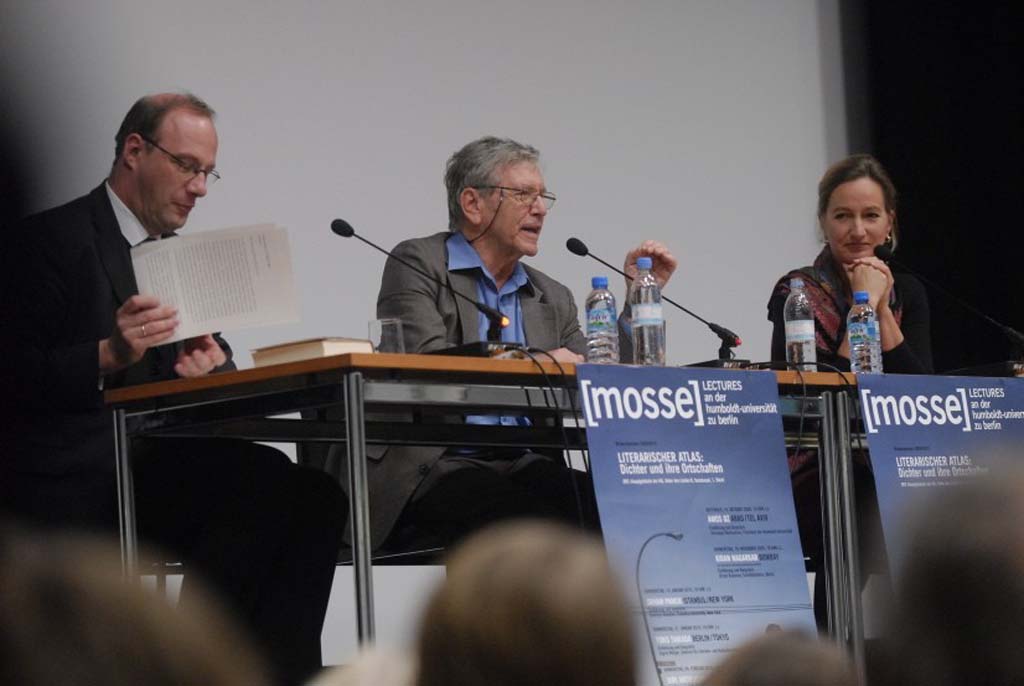
Photo Credit: Niels Leiser for the Mosse Lectures
