2022: Celia Applegate, “Music and Work 02, Working as Work: The Musical Profession in the Long Nineteenth Century”
Celia Applegate, “Music and Work 02, Working as Work: The Musical Profession in the Long Nineteenth Century”
George L. Mosse Distinguished Lectures
https://mosselectures.wisc.edu/program/
Tuesday, 6 December 2022, 16:00 IDT
This series of Jerusalem Mosse Lectures was originally scheduled for December 2020 but was postponed two years due to the COVID-19 global pandemic.
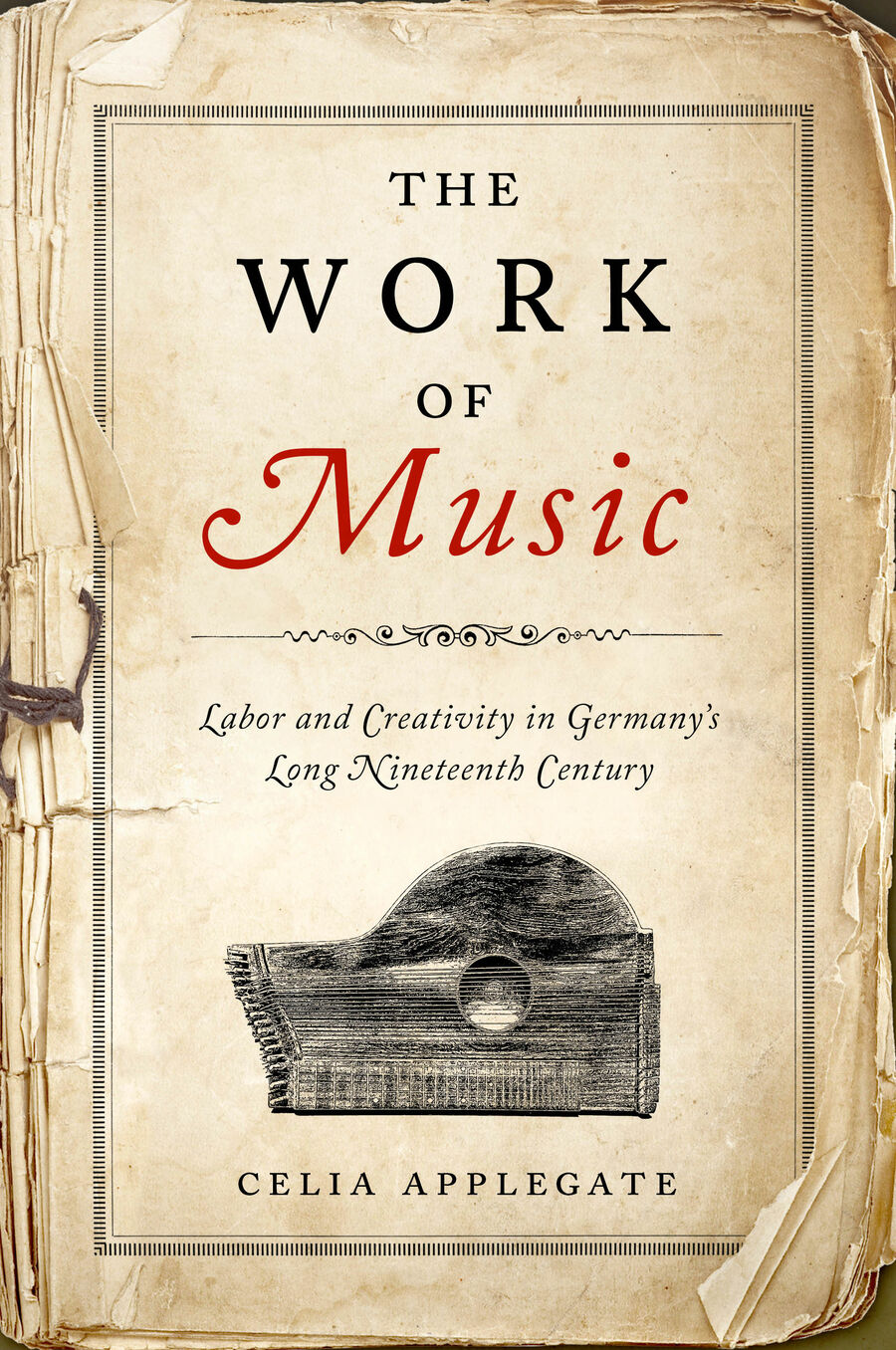
This lecture series was published as The Work of Music: Labor and Creativity in Germany’s Long Nineteenth Century (Madison: University of Wisconsin Madison, 2025).
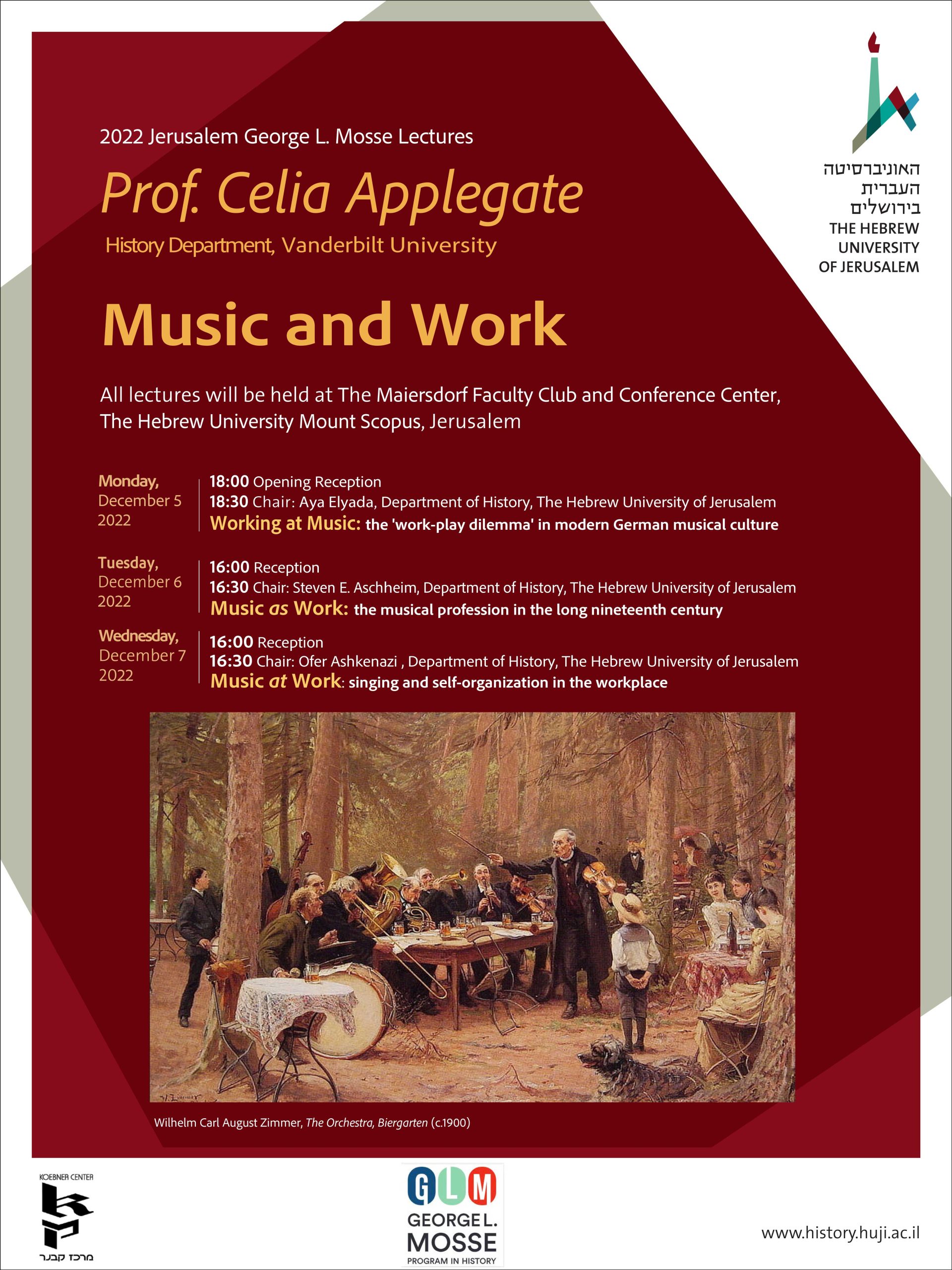
Maiersdorf Faculty Club and Conference Center
The Hebrew University of Jerusalem
Mount Scopus
Jerusalem 9190501
ISRAEL
Sponsored by:
George L. Mosse Program in History
Global Mosse Lecture Series
Hebrew University Department of History
Koebner-Minerva Center for German History
Chair: Steven E. Aschheim (Hebrew University of Jerusalem)
Lecture Overview: Long before there was Muzak and AirPods, workers would often sing as they worked. This lecture will spread out from fields and factories and army barracks to the organized activities of workers in factory bands and workers’ festivals, and of soldiers at war. This was music not for listening but for playing and singing, accompanying work and after work. Rather than professional musicians, this lecture will focus on amateurs and their self-organization.
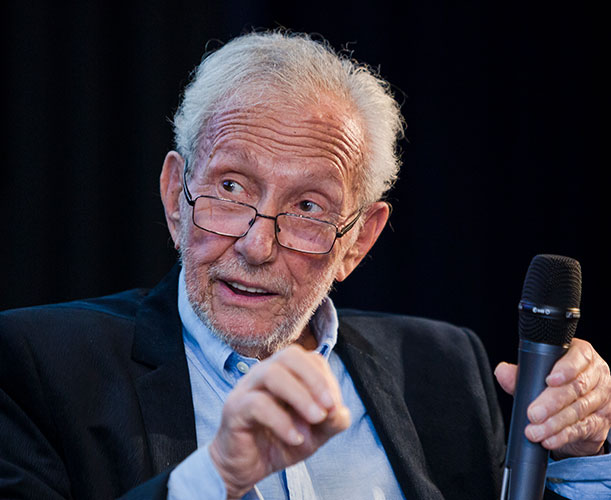
He has spent sabbaticals at the Graduate Theological Union in Berkeley, the Institute of Advanced Study at Princeton and in 2002-3 was the first Mosse Exchange Professor at the University of Wisconsin, Madison. During September-October 2005 he taught at Columbia University as the Max Kade Distinguished Visiting Scholar of German Studies. He has also taught at the University of Maryland, Reed College, the Free University in Berlin and the Central European University in Budapest. He taught at the University of Toronto in 0ctober 2008 and at the University of Michigan, Ann Arbor from September-December 2009. He served as a Research Fellow at the Hamburg Institute for Social Research in the summer of 2010 and in March-April 2011 was the Stan Gold Visiting Professor of Jewish History at Trinity College, Dublin. In 2013-2014 he was a Fellow of the Straus Institute for the Advanced Study of Law & Justice at New York University School of Law. In April 2016 he was a Fellow at the Dubnow Institute, Leipzig and in November 2016 was a Fellow at the Institute for Advanced Studies at the University of Warwick. In 2017 (September-October), he held the first Menasseh Ben Israel Institute Chair in Jewish Studies at the University of Amsterdam, and also taught at the University of Antwerp. He is married, has three children – and five grand-daughters and two grandsons.
He is the author of Brothers and Strangers: The East European Jew in German and German-Jewish Consciousness, 1800-1923 (Madison: University of Wisconsin Press, 1982); The Nietzsche Legacy in Germany, 1890-1990 (Berkeley: University of California Press, 1992) which has been translated into German and Hebrew; Culture and Catastrophe: German and Jewish Confrontations with National Socialism and Other Crises (New York: New York University Press, 1996); In Times of Crisis: Essays on European Culture, Germans and Jews (Madison: University of Wisconsin Press, 2001); Scholem, Arendt, Klemperer: Intimate Chronicles in Turbulent Times (Bloomington: Indiana University Press, 2001), which has also appeared in Italian, and presently being translated into German, and Beyond the Border: The German-Jewish Legacy Abroad (Princeton University Press, 2007). He is the editor of the conference volume, Hannah Arendt in Jerusalem (Berkeley: University of California Press, 2001), also translated into Hebrew. His At the Edges of Liberalism: Junctions of European, German and Jewish History (Palgrave Macmillan) appeared in June 2012. A volume, co-edited with Vivian Liska, entitled The German-Jewish Experience Revisited (Berlin, De Gruyter) appeared in 2015. His volume entitled Fragile Spaces: Forays into Jewish Memory, European History and Complex Identities appeared in 2018.