Gerrit Komrij, “Waarom zijn Nederlanders zo dol op homoseksuelen?” “Why are the Dutch so Fond of Homosexuals?”
Gerrit Komrij, “Waarom zijn Nederlanders zo dol op homoseksuelen?” “Why are the Dutch so Fond of Homosexuals?”
Amsterdam Mosse Lecture
https://mosselectures.wisc.edu/amsterdam/
Wednesday, 17 September 2008
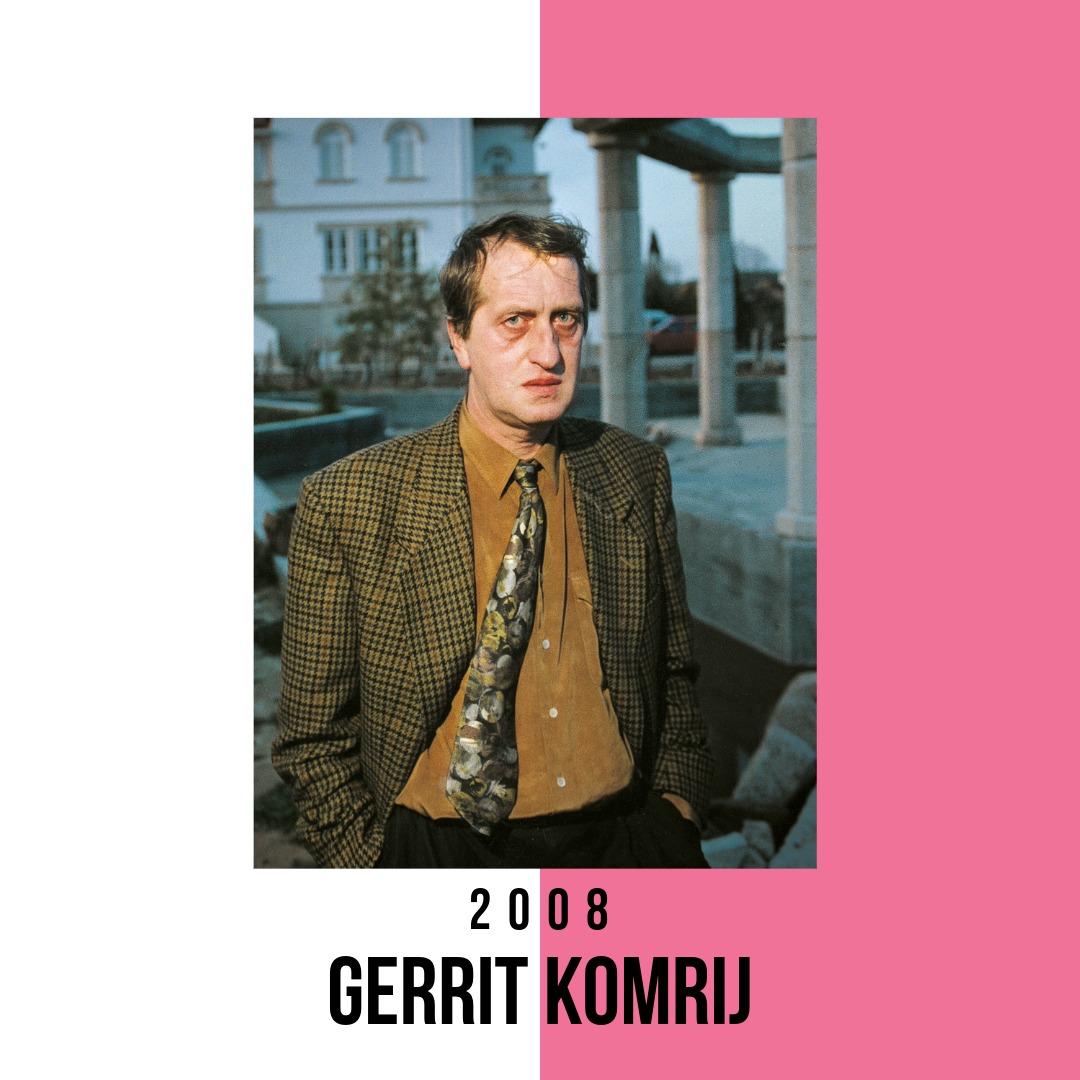
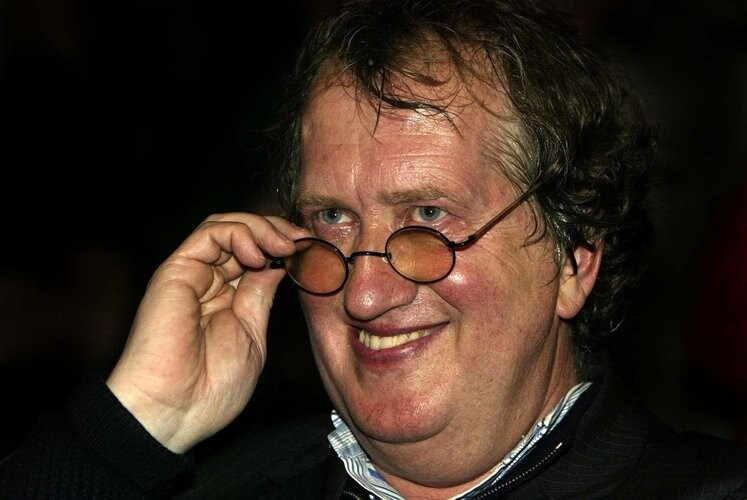
Komrij maakte ruimte voor een ongemakkelijke vraag: wanneer wordt acceptatie een manier om homoseksuelen opnieuw vast te zetten?
Foto: Michiel Hendryckx
The 2008 Mosse Lecture remains relevant because it distrusts the language of tolerance. Komrij made space for an uncomfortable question: when does acceptance become a way of fixing homosexuals in place once again? Photo: Michiel Hendryckx
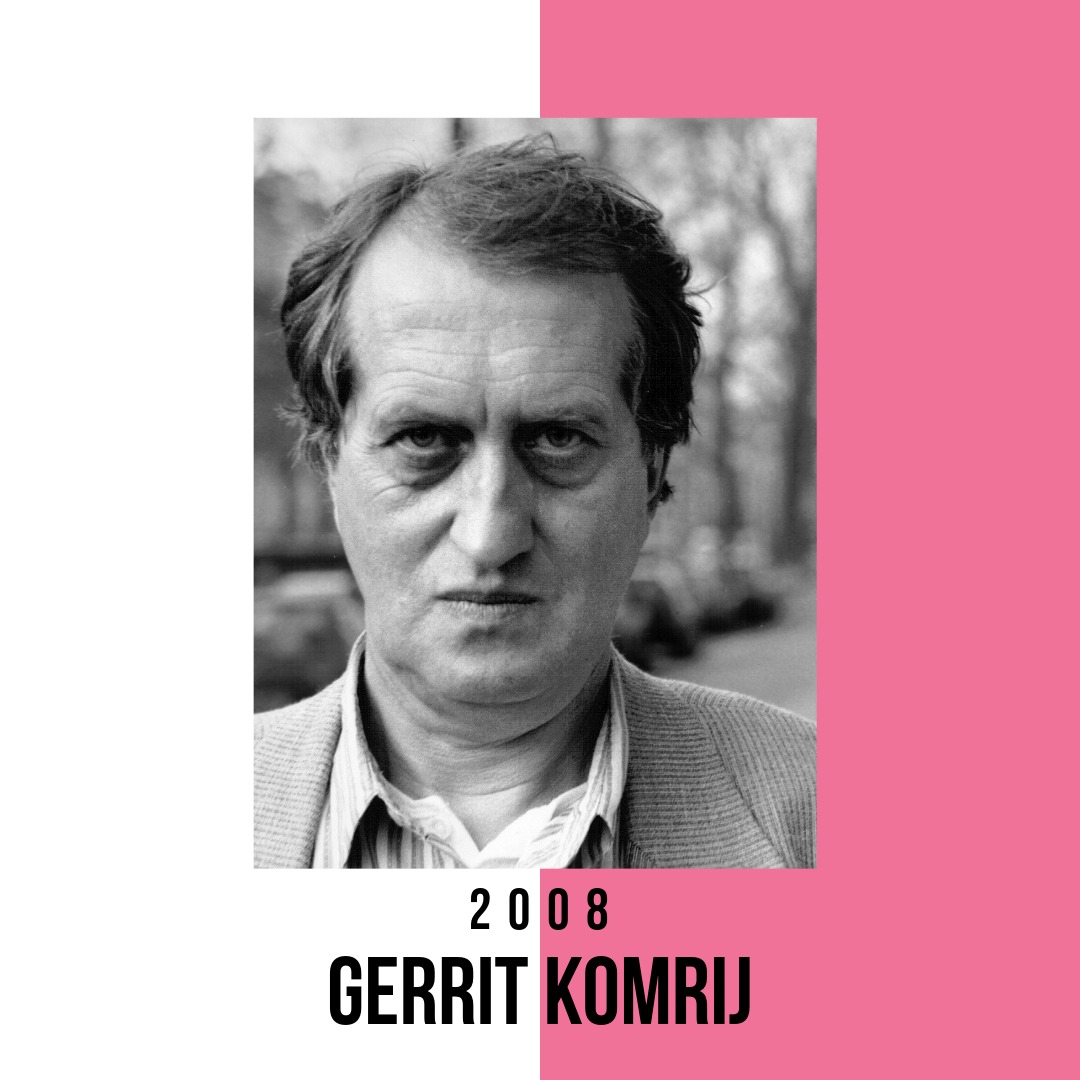
Zijn lezing vroeg wat er schuilgaat achter de liefde voor “de homoseksueel” als nationaal symbool van beschaving en moderniteit.
foto: Anna Ietswaart
Komrij looked with irony at the Dutch self-image. His lecture asked what lies behind the love for “the homosexual” as a national symbol of civilization and modernity.
Photo: Anna Ietswaart
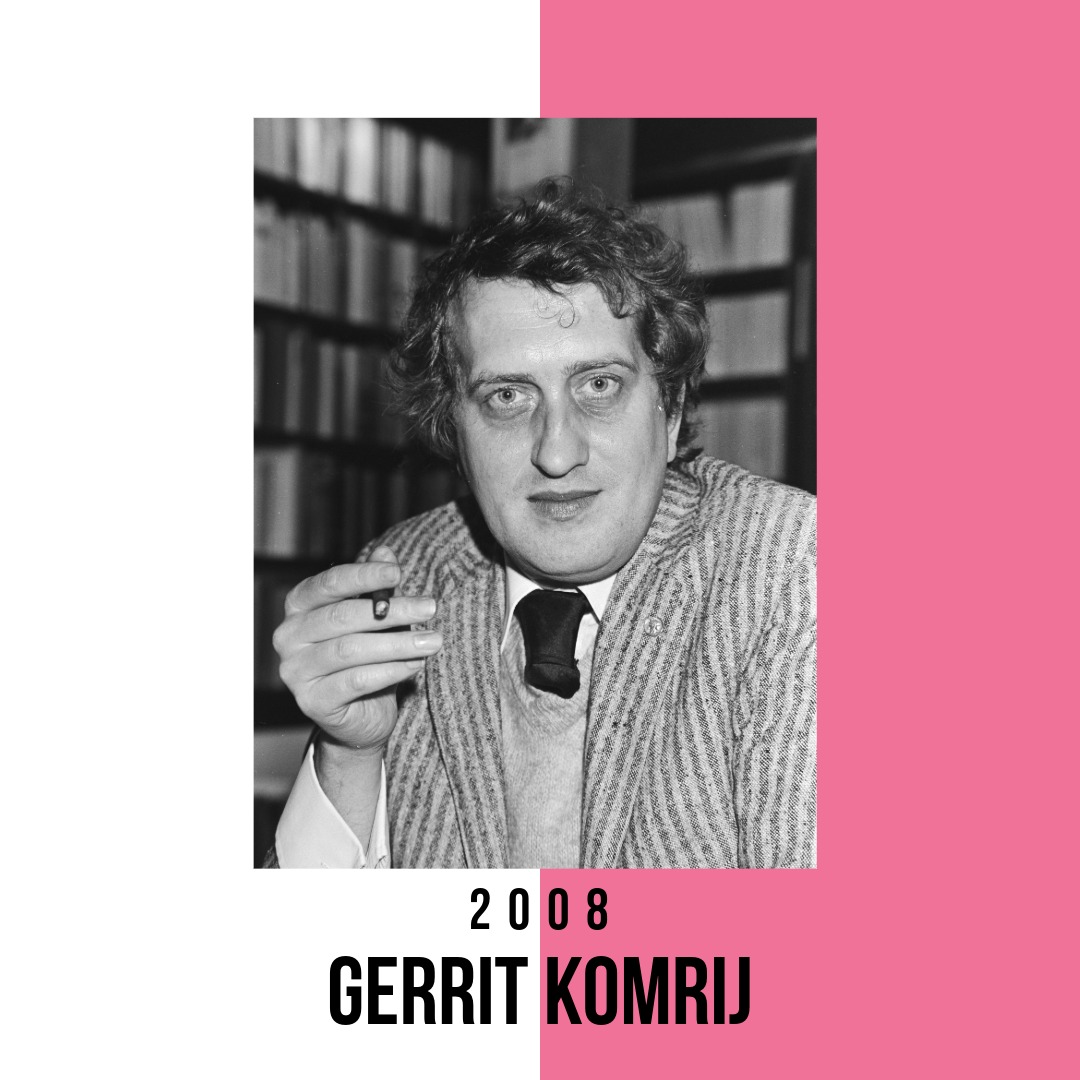
Wat betekent acceptatie wanneer homoseksualiteit vooral dient als bewijs van Nederlandse tolerantie?
Foto: Hans van Dijk
In 2008, poet and writer Gerrit Komrij delivered the Mosse Lecture under the title “Why Are the Dutch So Fond of Homosexuals?” What does acceptance mean when homosexuality primarily serves as proof of Dutch tolerance?
Photo: Hans van Dijk
Lecture Series Description: The annual Mosse lecture is an initiative of the George L. Mosse Fonds to promote the study of gay/lesbian history at the University of Amsterdam (UvA). It is organized in collaboration with IHLIA LGBTI Heritage. Mosse Lectures have been given by Hafid Bouazza, Marjan Sax, Ruud Douma aka Dolly Bellefleur, Bas Heijne, Maaike Meijer, Gerardjan Rijnders, Gerrit Komrij, Gloria Wekker, Stephan Sanders, M. Februari, Ted van Lieshout, Jet Bussemaker, Mohammed Benzakour, Hedy d’Ancona, Simon(e) van Saarloos, Gert Hekma, Karin Spaink, Joke Swiebel, and David Weissman.
Komrij Condemns the “Domestication” of Gay Culture
Gerrit Komrij (Het Parool)
Dutch language version follows. Cross-posted with permission.
https://www.parool.nl/cs-b1fd5720/
September 18, 2008, 11:07 AM
AMSTERDAM – Writer Gerrit Komrij no longer feels any affinity with the Dutch gay community. The winner of the P.C. Hooft Prize and former Dutch Poet Laureate does not even want to belong to it anymore. According to Komrij, there is a direct line from the Gay Parade to the Paralympics.
Yesterday, in front of an audience consisting primarily of white, middle-aged gay men, he delivered the annual Mosse Lecture at Amsterdam’s Public Library. The lecture is an initiative of the George Mosse Fund, a foundation established to support gay and lesbian studies. As a young man, Komrij regarded gay people as inhabiting a remarkable world: “Two-legged monsters, with a sexual component and a mysterious component. You were part of a secret society. You had to pretend and deceive the outside world.”
It was the mysterious side that sustained him during his student years: the side associated with decadence, aesthetics, and martyrdom—with Shakespeare, Plato, and Michelangelo.
Komrij said: “The fact that you stood outside reproduction was already a miracle. You interpreted it as a delightful rejection of everything that made ordinary people so ordinary.”
He soon discovered, however, that there were men for whom only the sexual component mattered: “It was a shock when I met my first gay road paver. Hairdressers still had something artistic about them. But what did a tram driver know about Proust? What did a road paver know about De Profundis?”
From the Gay Bar to the Provinces [Like the article’s main title, translating this header word by word sounds a bit awkward, so I translated it in a way that would maintain the meaning]
The working-class underworld turned out to be an essential part of the mystery. In those days, every neighborhood café in Amsterdam’s Jordaan district had its own resident queer. Komrij said: “He was the person everyone doted on, not the scapegoat.”
According to Komrij, however, the gay man of the café became the gay man of the neighborhood, the region, and eventually the nation: “Approved by the Dutch Housewives’ Association.” Within two decades, high culture was replaced by low culture: “The debate is now dominated by entertainers, the new masters of ceremonies. They have kidnapped my homosexuality and reshaped it in their own image.”
He referred to entertainers such as Gordon and Paul de Leeuw, whom he described as interchangeable figureheads of conviviality: “The queer has been transplanted from the café into the living room. They are quick-witted and so catty that you do not even need to feel offended. And they think they are doing tremendously groundbreaking work.”
Gay people themselves have also worked to remove the uncomfortable aspects of their sexual orientation, Komrij said. “The gay man had to become more acceptable than acceptable. He began getting married and having children.”
Komrij supports equal rights, including same-sex marriage: “But when I see all those horse-drawn carriages, my gay courage sinks into my gay shoes. Perhaps there is little in life more tragic than the absence of children. But when I called myself gay, I knew I had entered a barren region.”
Distrust Those Who Embrace You [Same with this header]
Against this stood the mysterious and delightful quality of his homosexuality. Komrij said: “The current version is a traitorous version. There is an unwillingness to accept the sour along with the sweet. The domestication of homosexuality has exploded in the Netherlands like a bomb.”
Komrij then turned to politics. Pim Fortuyn won the admiration of the public both as a flamboyant gay man and as a politician. Rita Verdonk recruited Gordon and Gerard Joling for her election campaign, while Minister Ronald Plasterk participated in the Gay Parade: “We should be suspicious of politicians who embrace gay people. Politics has regulated homosexuality in the same way it has regulated cannabis—with tolerated zones and official arrangements.”
The Anti-Bourgeois Becomes Bourgeois
Komrij called the Gay Parade the culmination of this populism: “The fitness club sways along in a conga line, with the people cheering from the sidelines. A kind of Paralympics. Every fragile and rebellious element is absent. We are living through the bourgeoisification of the anti-bourgeois.”
Komrij also issued a warning. After the Paralympics, signs saying “wheelchairs prohibited” would once again appear in Beijing: “Gay people will be in for a rude awakening when they no longer satisfy the demand that they be lovable and cuddly.” (Frans Bosman)
Komrij hekelt homovertrutting
AMSTERDAM – Schrijver Gerrit Komrij voelt zich niet langer verwant met de Nederlandse homogemeenschap. De PC Hooftprijs-winnaar en voormalig Dichter des Vaderlands wil er zelfs niet meer bíj horen. Volgens Komrij loopt een directe lijn van de Gay Parade naar de Paralympics.
Voor een zaal met voornamelijk witte homoseksuelen van middelbare leeftijd hield hij gisteren in de Openbare Bibliotheek de jaarlijkse Mosselezing. Een initiatief van de stichting George Mosse Fonds, opgericht ter ondersteuning van homostudies.
Als jongeman beschouwde Komrij homo’s als bijzondere mensen in een bijzondere wereld. ”Tweepotige monsters, met een seksuele component en een mysterieuze component. Je maakte deel uit van een geheim genootschap. Je moest veinzen en de buitenwereld voor de gek houden.”
Het was de mysterieuze poot die hem tijdens zijn studentenjaren overeindhield. De poot van het decadente, esthetische, het martelarendom. Van Shakespeare, Plato en Michelangelo.
Komrij: ”Dat je buiten de voortplanting stond, was al een mirakel. Je interpreteerde dat als een verrukkelijke negatie van alles wat gewone mensen zo gewoontjes maakte.”
Al snel ontdekte hij dat er mannen waren die het alleen bij de seksuele poot hielden. ”Het was een schok toen ik mijn eerste homoseksuele stratenmaker ontmoette. Kappers hadden nog iets kunstzinnigs. Maar wat wist een trambestuurder van Proust? Wat wist een stratenmaker van De profundis?”
Caféhomo werd streekhomo
De volkse onderwereld bleek een essentieel onderdeel van het mysterie te zijn. Elk Jordaancafé had in die jaren een eigen huisnicht. Komrij: ”Hij was de knuffel, niet de zondebok.”
Maar de caféhomo werd volgens Komrij buurt-, streek- en nationale homo. ”Goedgekeurd door de Nederlandse bond van Huisvrouwen.” In twee decennia werd de hogere cultuur vervangen door de lagere. ”Het debat wordt nu gedomineerd door entertainers, de nieuwe ceremoniemeesters. Ze hebben mijn homoseksualiteit gekidnapt en naar hun beeld geboetseerd.”
De Gordons en Paul de Leeuwen. Komrij noemt hen inwisselbare boegbeelden van gezelligheid. ”De nicht is van het café overgeplant naar de huiskamer. Ze zijn ad rem en zó vals dat je je niet beledigd hoeft te voelen. En ze denken dat ze deksels baanbrekend werk verzetten.”
De homo’s zaten zelf ook niet stil om hun geaardheid van de ongemakkelijke kantjes te ontdoen, zegt Komrij. ”De homo moest en zou acceptabeler worden dan acceptabel. Hij ging trouwen en kindertjes krijgen.”
Komrij is voor gelijke rechten, zoals het homohuwelijk. ”Maar als ik al die koetsjes zie, zakt me de homoseksuele moed in de homoseksuele schoenen. Misschien is er weinig dramatischer in het leven dan het gemis aan kinderen. Maar toen ik mezelf homo noemde, wist ik dat ik in een onvruchtbare windstreek was beland.”
Knuffelaars wantrouwen
Daar stond het geheimzinnige en verrukkelijke van zijn homoseksualiteit tegenover. Komrij: ”De huidige variant is een verradersvariant. Er is onwil om naast het zoet ook het zuur te nemen. De homovertrutting is in Nederland als een bom ingeslagen.”
En zo kwam Komrij bij de politiek uit. Pim Fortuyn kreeg als relnicht en politicus het volk aan zijn voeten. Rita Verdonk liet Gordon en Jolink voor haar campagne opdraven. En minister Ronald Plasterk deed mee aan de Gay Parade. ”We moeten argwaan hebben tegen politici die homo’s knuffelen. De politiek heeft homoseks geregeld zoals cannabis. Met gedoogzones en regelingen.”
Het antiburgerlijke verburgerlijkt
De Gay Parade noemt Komrij de apotheose van dat populisme. ”De sportschool deint de polonaise. Met het volk juichend langs de kant. Een soort Paralympics. Elk breekbaar, tegendraads element ontbreekt. We leven onder de verburgerlijking van het antiburgerlijke.”
Komrij waarschuwde ook. Na de Paralympics zullen in Peking weer de bordjes ‘verboden voor rolstoelen’ verschijnen. ”Er zwaait wat voor de homoseksuelen als ze niet langer aan de eis van knuffelbaarheid voldoen.” (FRANS BOSMAN)