
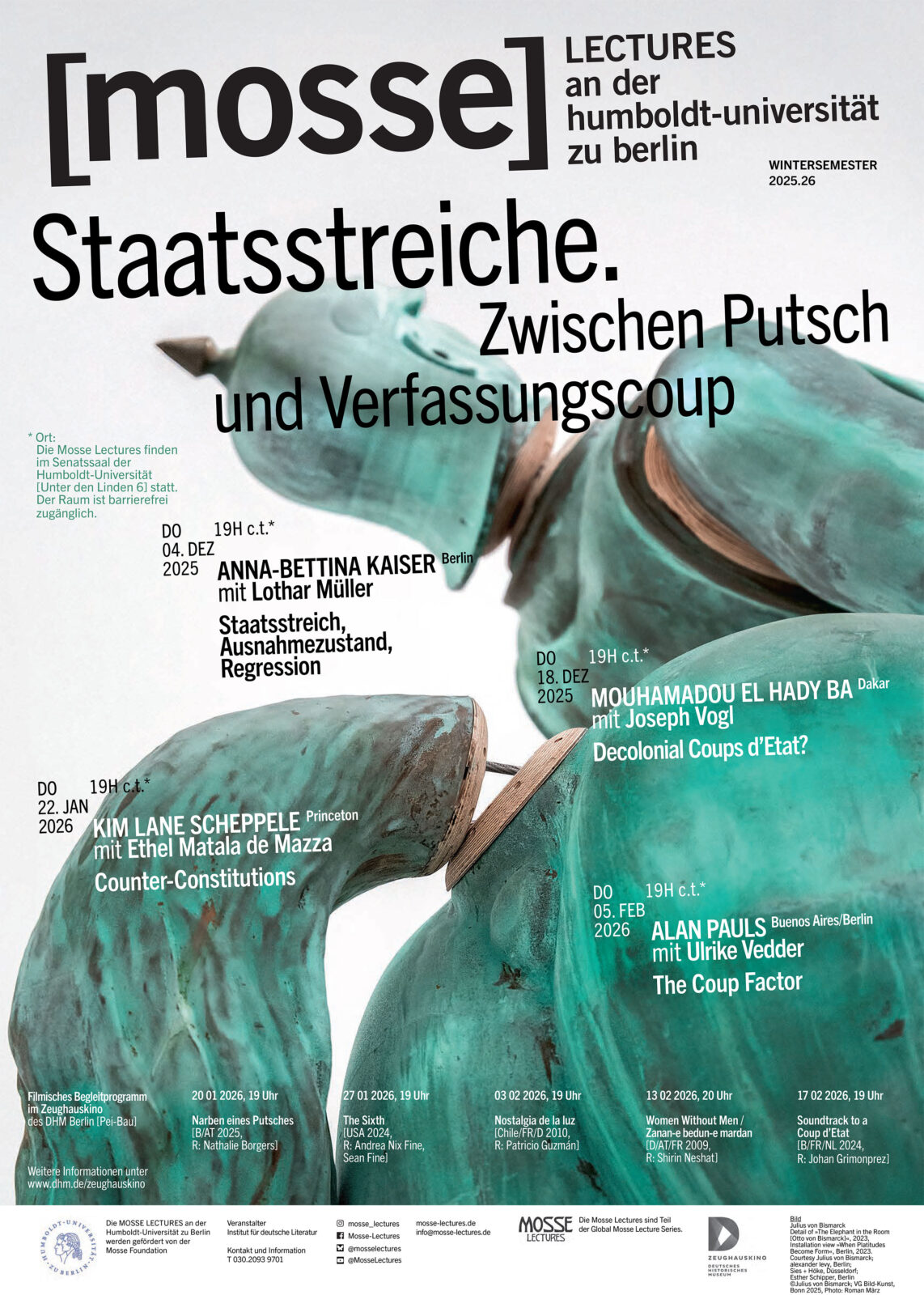
2026: Kim Lane Scheppele, “Counter-Constitutions: On Being the Object of a Coup”
Kim Lane Scheppele, “Counter-Constitutions: On Being the Object of a Coup”
Humboldt University Berlin Mosse Lecture
mosselectures.wisc.edu/berlin/
Thursday, 22 January 2026, 19:15 CET
Senatssaal of Humboldt University
Unter den Linden 6
10117 Berlin
GERMANY
Sponsored by:
[mosse] LECTURES an der humboldt-universität zu berlin
The Mosse Foundation
Global Mosse Lecture Series
Institut für deutsche Literatur
Humboldt University
ZeughausKino
Deutsches Historisches Museum
Moderator: Ethel Matala de Mazza (Humboldt University)
Lecture Description: Many of us believed Donald J. Trump when he said that he would be a dictator on day one. But many American voters did not – and they elected him to an office that the US Supreme Court had just said would make its occupant immune from criminal prosecution. In one year, Donald Trump has transformed the US Constitution into its opposite. He and his »MAGA« team have neutralized the congress, ignored the courts and created the largest police force in the world. This police force rolls into cities and displaces their local authorities, snatching people off the streets and out of their homes, ignoring constitutional requirements. This police force kills, maims and tortures without conscience because the prosecution service prosecutes only critics of this president and not those who commit crimes in his name. Constitutional rights in America – from basic liberty to free speech to equality before the law – have been turned upside down. Violence does not stop at the border. Trump has bombed multiple countries, killed people in small boats who are not part of any armed conflict, authorized a military operation to kidnap a head of state and appropriate its natural resources – and now threatens to annex by force territory belonging to an ally. In this last year, America has experienced a coup, brought about by an election, aided and abetted by a packed Supreme Court and now held in place by open violence. In this lecture, I will discuss the counter constitution under which Americans now live – and what hope there may be for democratic recovery.
Lecture Series Theme: Coups d’état: Zwischen Putsch und Verfassungscoup [Between military Coups and Constitutional Captures]
Lecture Series Description: Writing at the beginning of the 20th century, Max Weber observed that, owing to its internally rationalized structure, the modern bureaucratic state apparatus has replaced »revolutions« with »coups d’état.« This observation remains as relevant today as it was at the time. Moreover, we are currently witnessing another significant change. In Europe and the United States, the classic coup d’état is being replaced by the gradual transformation of the constitution, characterized by its erosion from within and the dynamic breakdown of the rule of law and the separation of powers, driven by elected governments. »Democratic backsliding today begins at the ballot box,« write Steven Levitsky and Daniel Ziblatt in ›How Democracies Die‹ [2018]. At the same time, there are still military coups, as seen in West Africa. The Mosse Lectures aim to shed light on the forms of coups d’état in historical and systematic terms, examining the accompanying cultural shifts in power. What significance does the coup d’état have in times of a general »return to authoritarianism« and a re-emergence of traditional masculinity? What role does the rise of the tech elite play in the weakening of democratic institutions? What new insights can a postcolonial perspective on coups d’état offer? Can the undermining of democracies be curbed in time by identifying and visualising patterns? The Mosse Lectures address these questions, focusing on Europe, the United States, West Africa, and South America.
The complex interplay of visibility in politics can be part of the performance of coups d’état, which, as acts of seizing power, exhibit a unique form of theatricality. From coups captured on camera to the exploitation of social media to undermine the separation of powers, autocratic takeovers frequently resemble political spectacles. It is therefore unsurprising that they have been recounted and filmed so often. This semester’s Mosse Lectures will be complemented by an accompanying program on coups in film, which will be shown on five evenings in January and February 2026, in collaboration with the Zeughauskino at Deutsches Historisches Museum in Berlin.
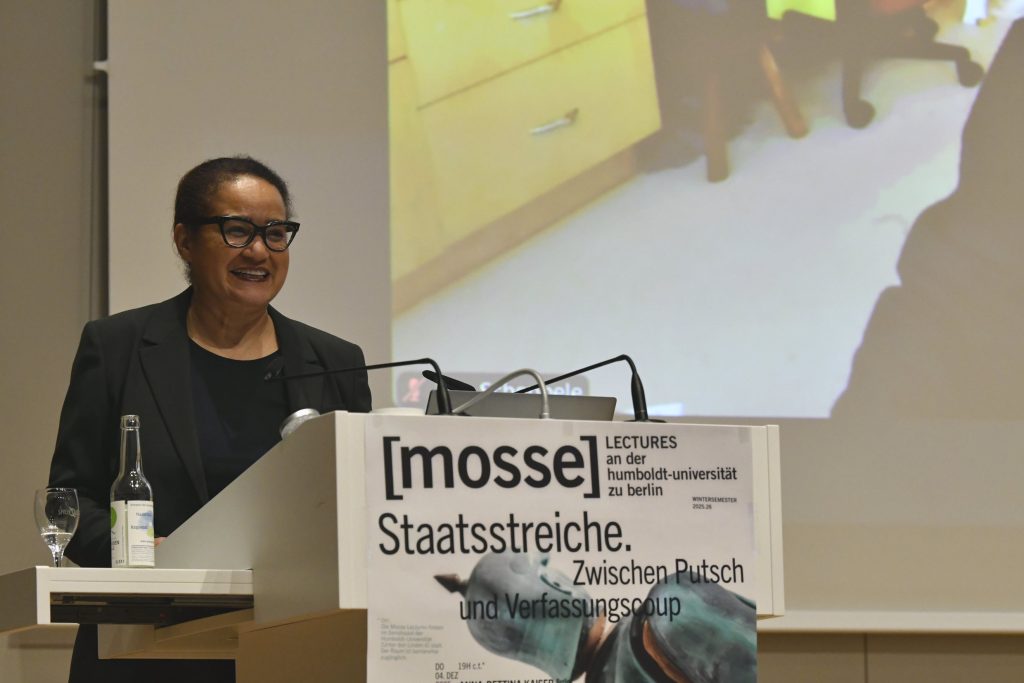
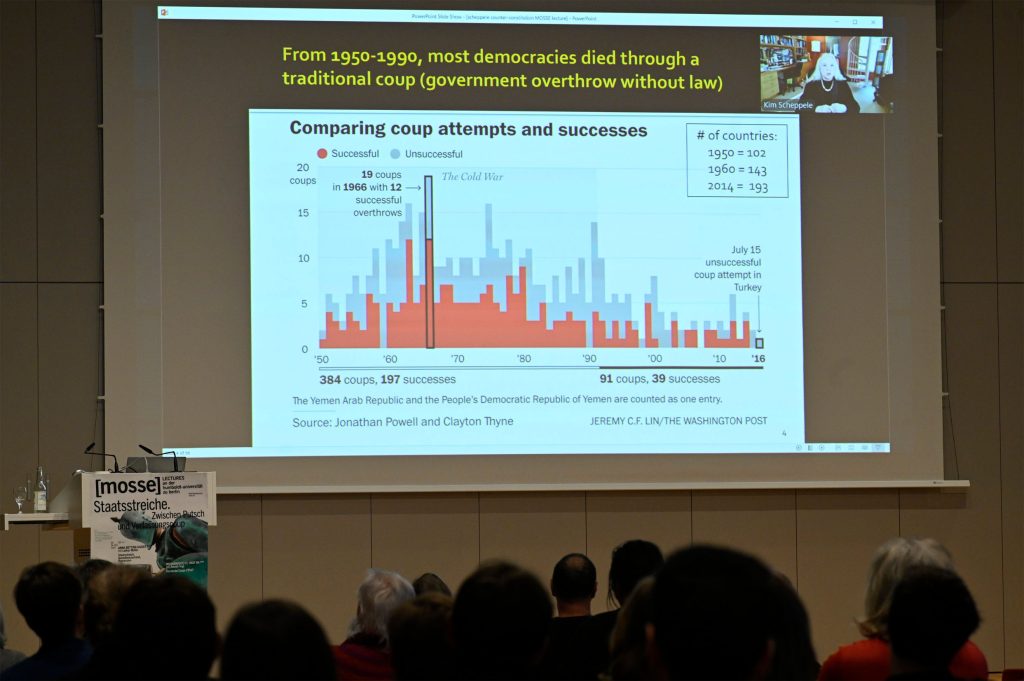
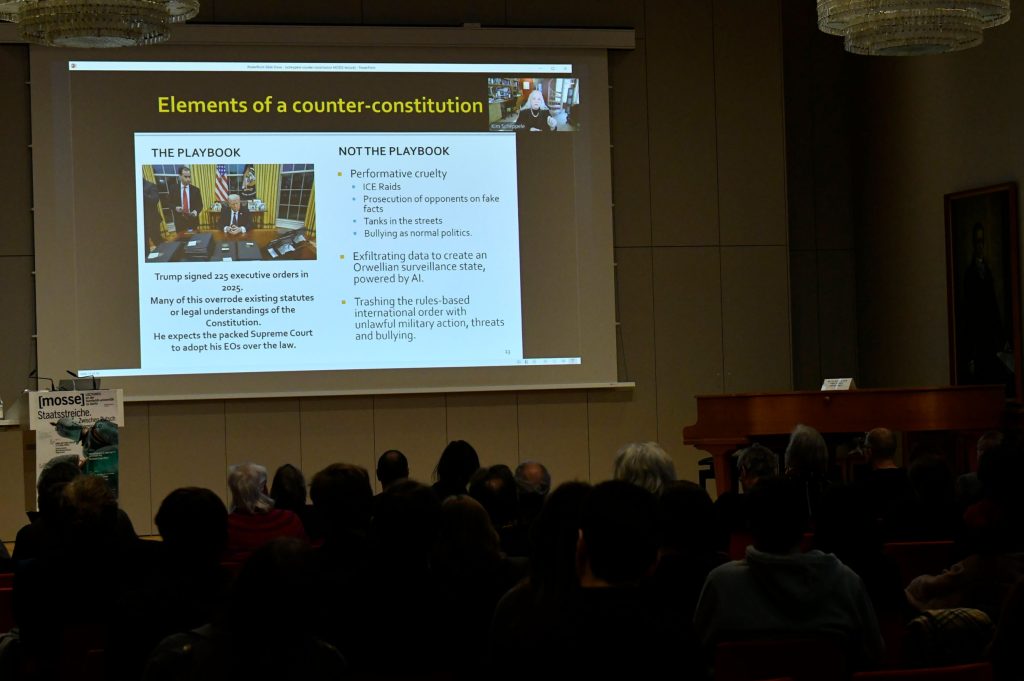
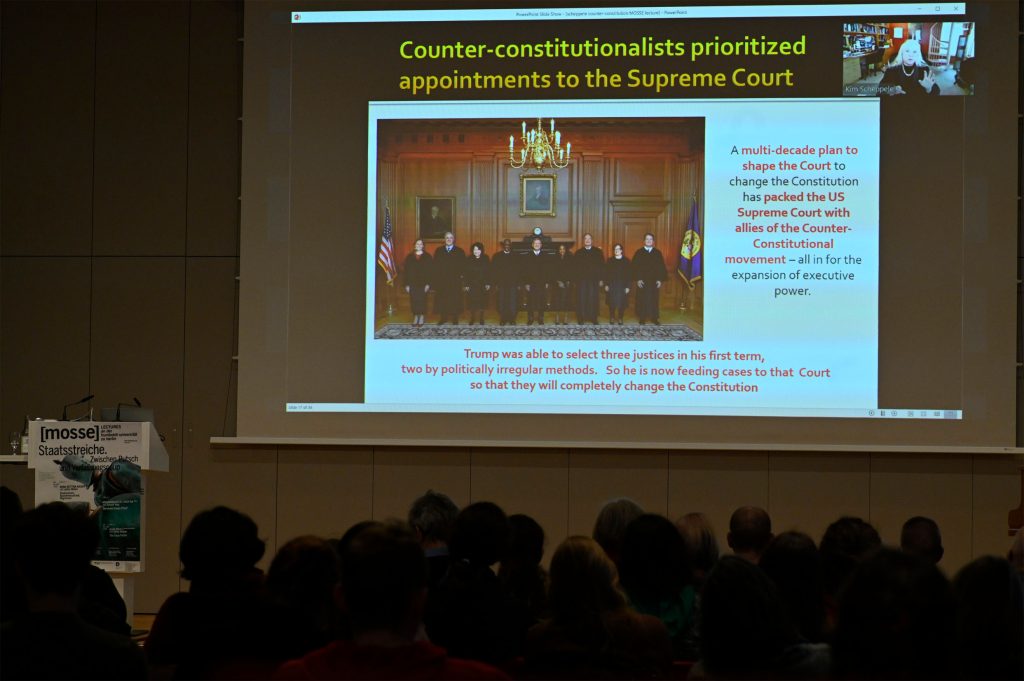
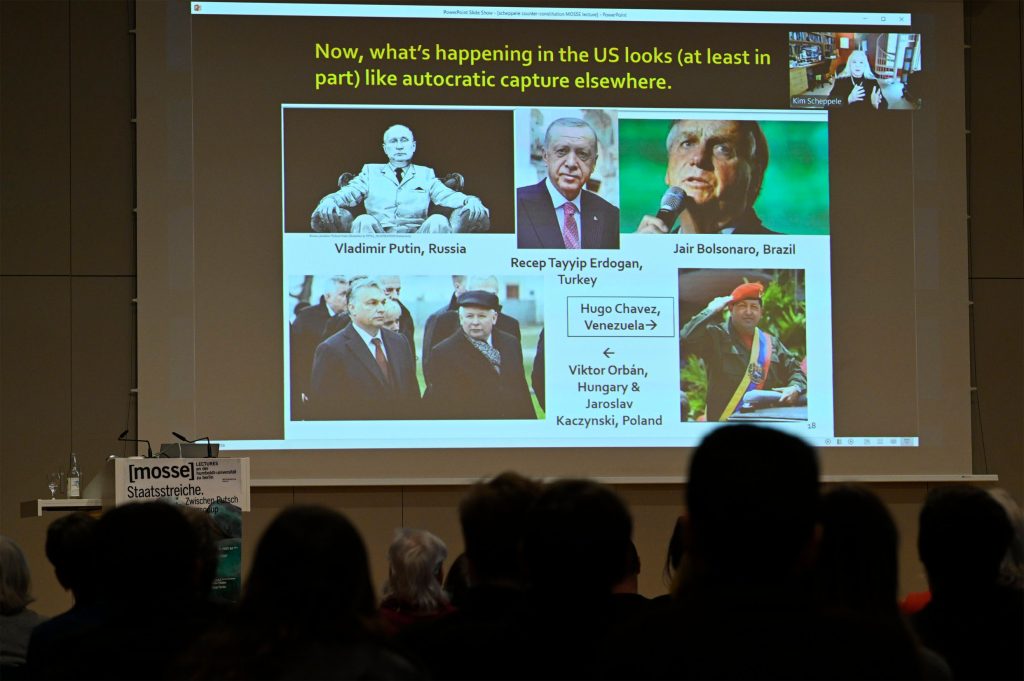
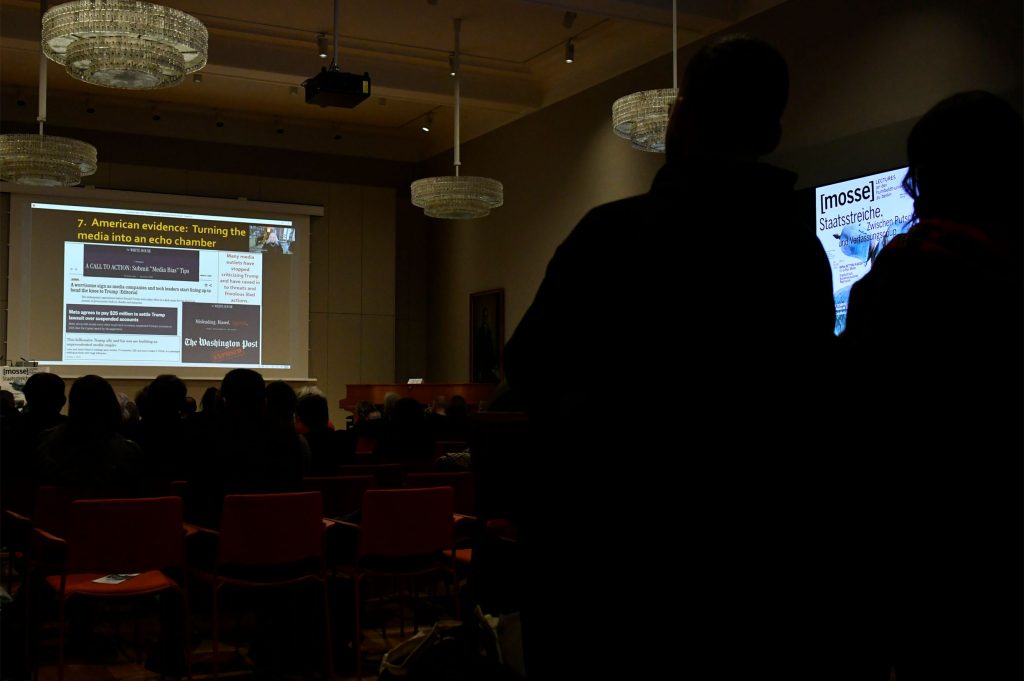
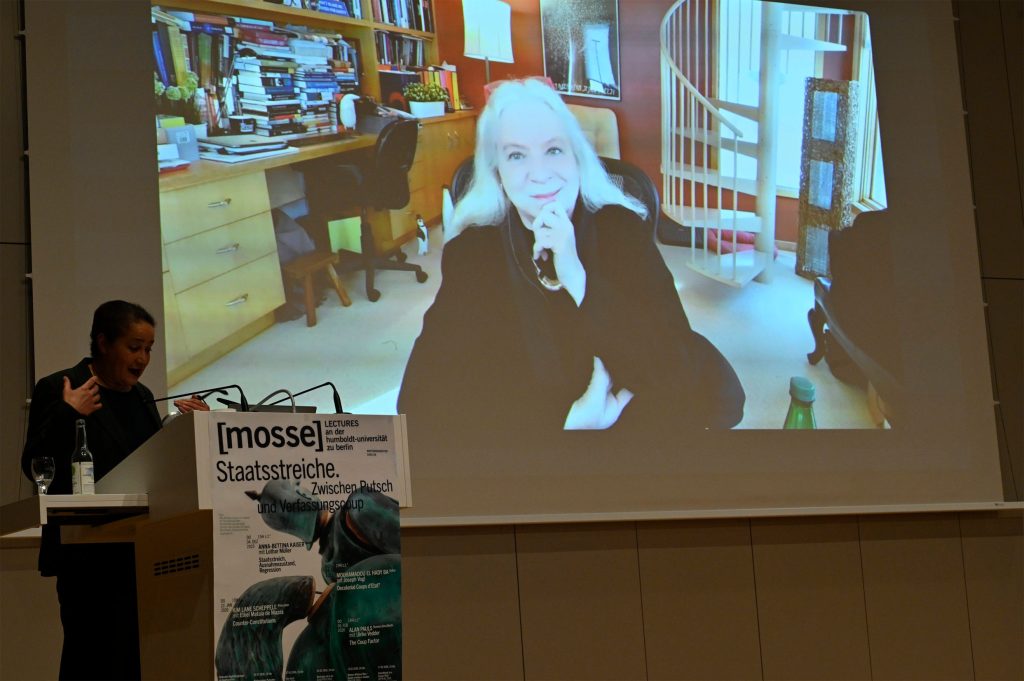
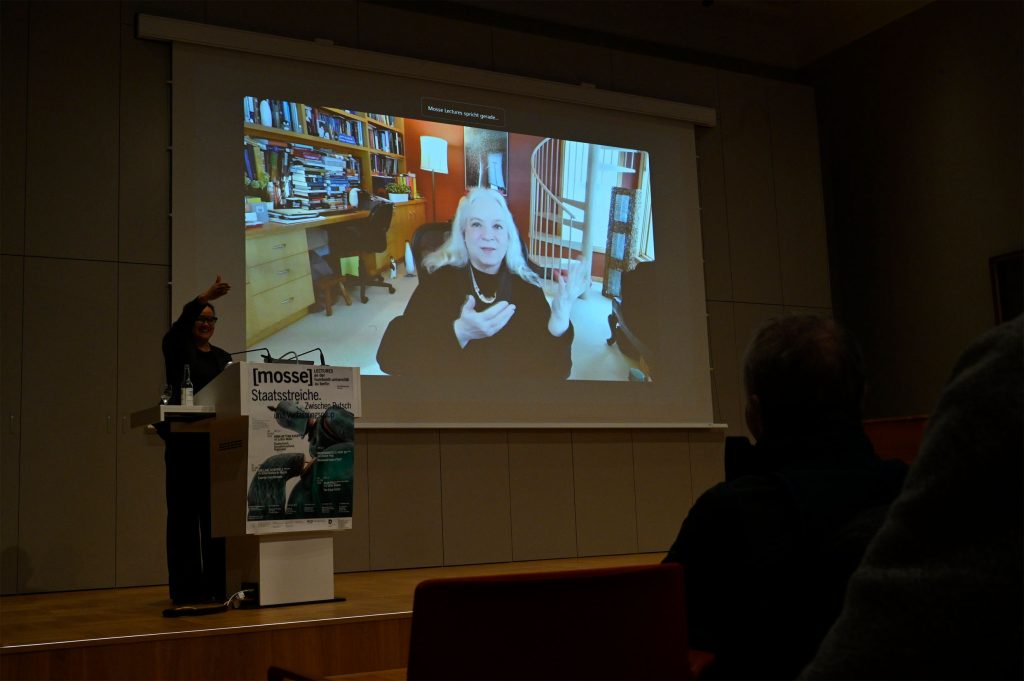
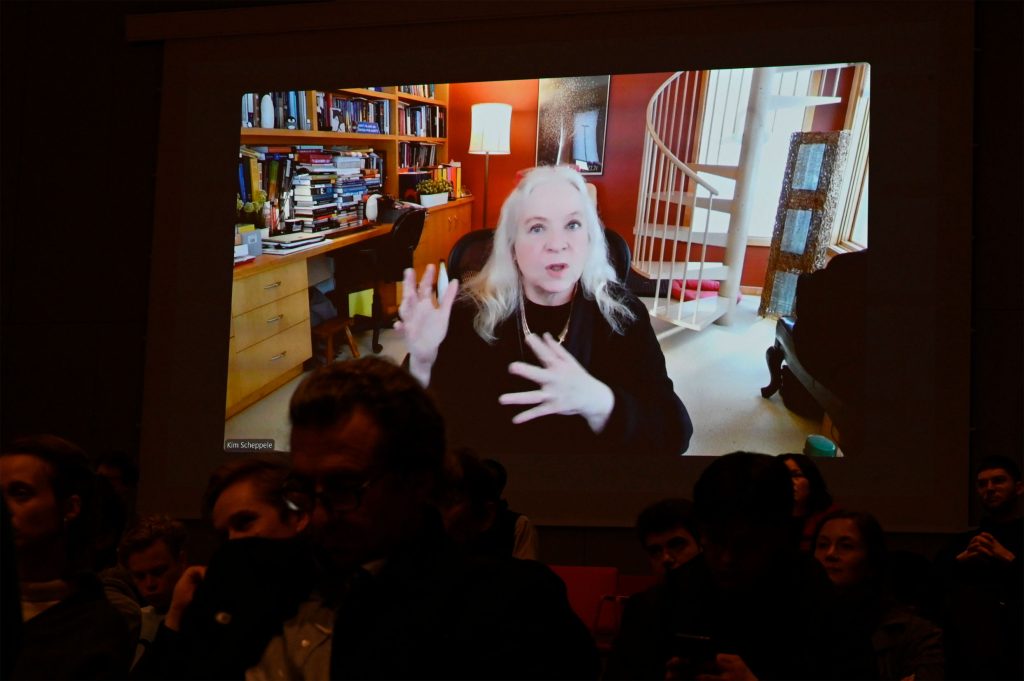
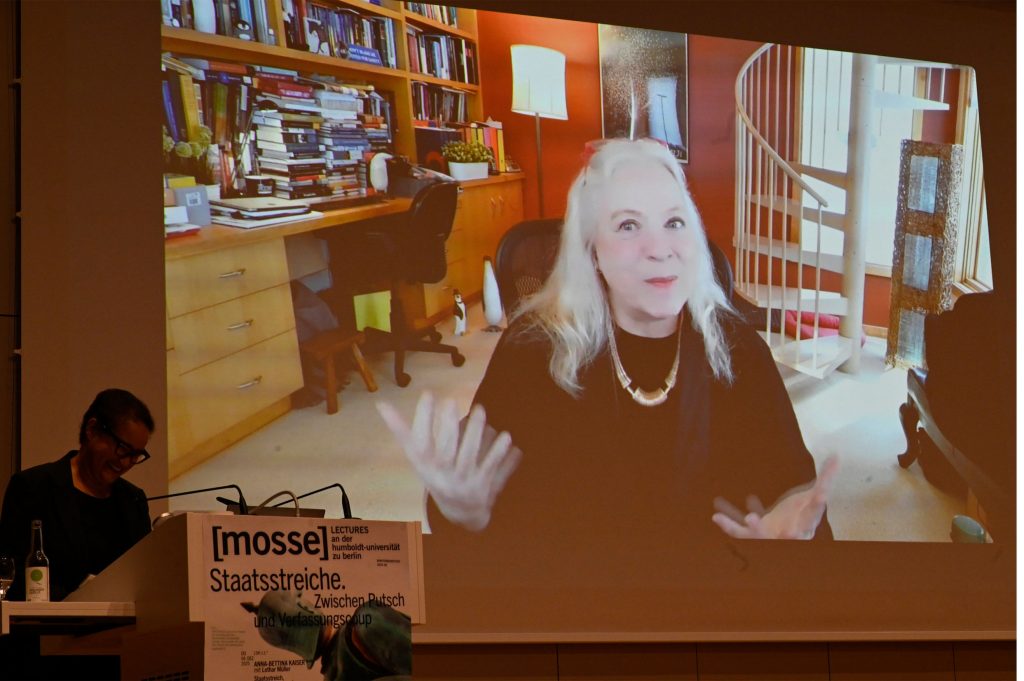
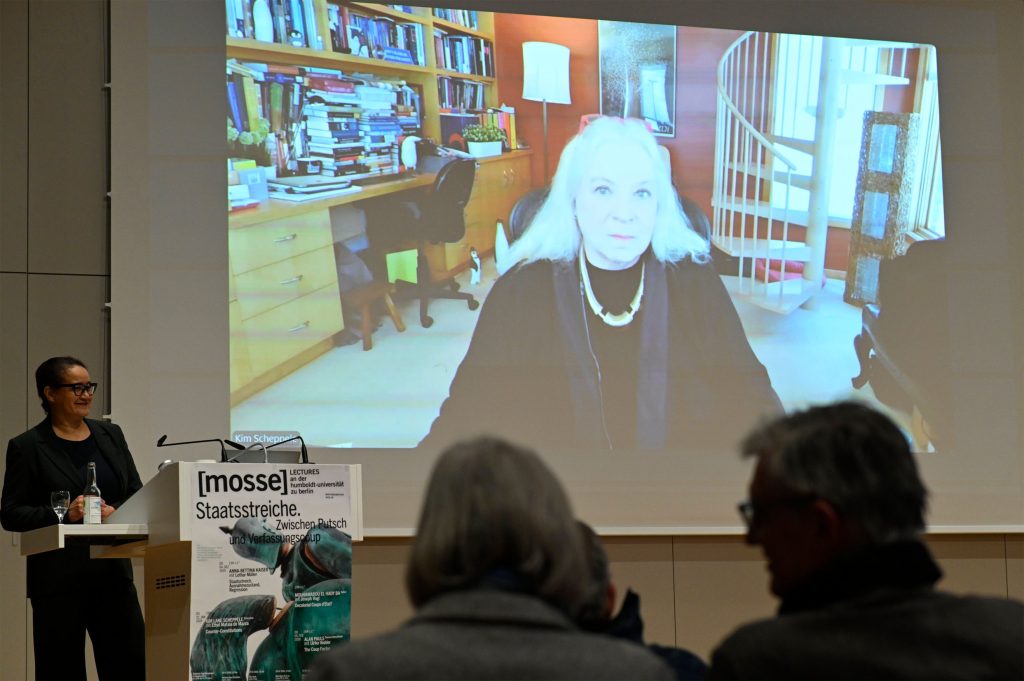
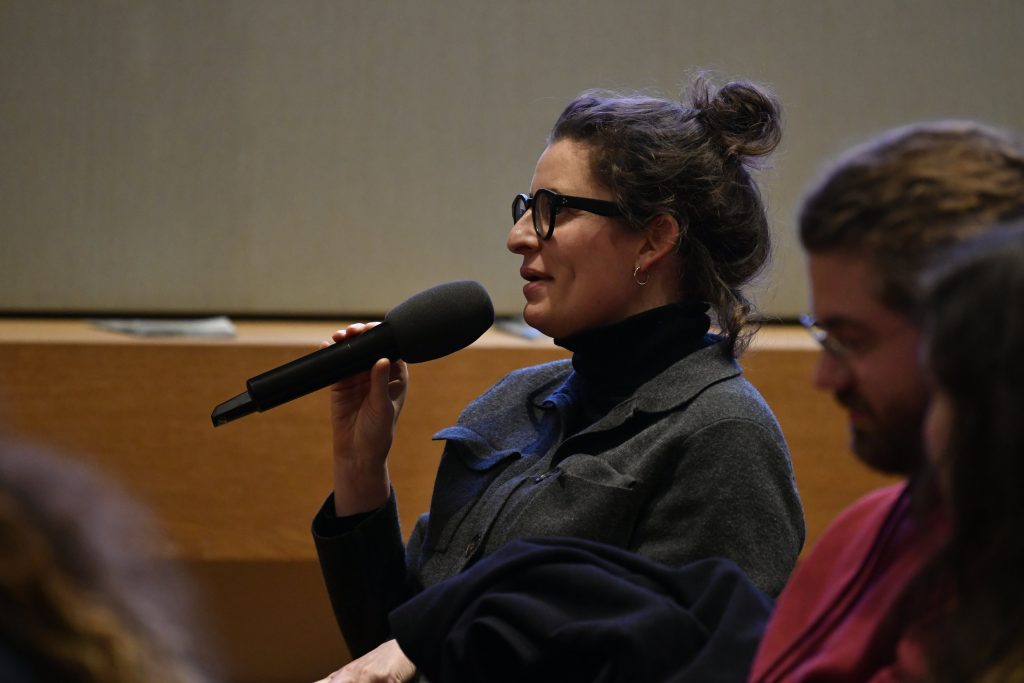
Photo Credit: Niels Leiser for the Mosse Lectures
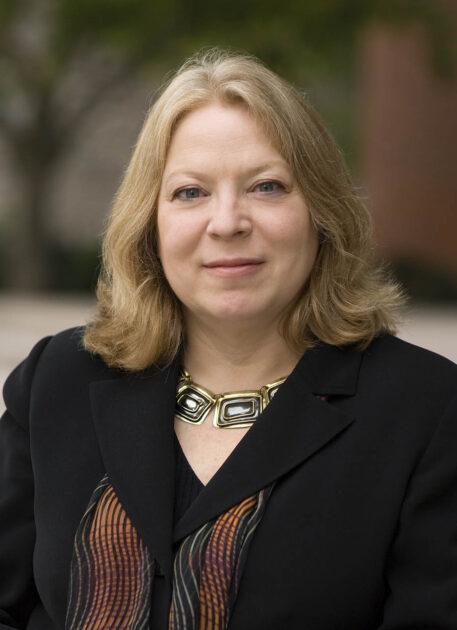
Kim Lane Scheppele: Sociologist; Laurance S. Rockefeller Professor of Sociology and International Affairs at the Princeton School of Public and International Affairs and at the University Center for Human Values at Princeton University. Her research focuses on the rise and fall of constitutional governments, including developments in Hungary and Russia as well as in the US, the EU, and beyond. In addition to extensive publications in social science and law journals, Scheppele also publishes guest essays in the New York Times and regularly writes for the Verfassungsblog. She has been a visiting professor of law at Humboldt-Universität, Erasmus Universiteit Rotterdam, and Yale and Harvard Law Schools.
Soziologin; Laurance S. Rockefeller Professorin für Soziologie und internationale Angelegenheiten an der Princeton School of Public and International Affairs sowie am University Center for Human Values der Princeton University. Zu ihren Forschungsinteressen gehören der Aufstieg und Fall konstitutioneller Regierungen, wobei sie zu Entwicklungen in Ungarn und Russland ebenso wie in den USA, der EU und darüber hinaus geforscht hat. Neben umfangreichen Publikationen in sozial- und rechtswissenschaftlichen Fachzeitschriften veröffentlicht Scheppele auch Gastbeiträge in der New York Times und schreibt regelmäßig für den Verfassungsblog. Sie war Gastprofessorin für Rechtswissenschaften an der Humboldt-Universität, der Erasmus Universiteit Rotterdam sowie an den Law Schools von Yale und Harvard.
Ethel Matala de Mazza has been professor of modern German literature at Humboldt University since 2010. She is the author of three monographs, including Der populäre Pakt. Verhandlungen der Moderne zwischen Operette und Feuilleton (Fischer, 2018) and Der verfaßte Körper. Zum Projekt einer organischen Gemeinschaft in der Politischen Romantik (Rombach, 1999). She has served as a visiting professor at Johns Hopkins University, the University of Indiana, Bloomington, and the University of California, Berkeley, Harvard University, and the University of Chicago. She received her terminal degree in German literature at the University of Munich in 2007.
In the Media:
This lecture series was covered by Torsten Flüh on Night Out @ Berlin: “Das Homogenität-Versprechen des Staatsstreichs“
