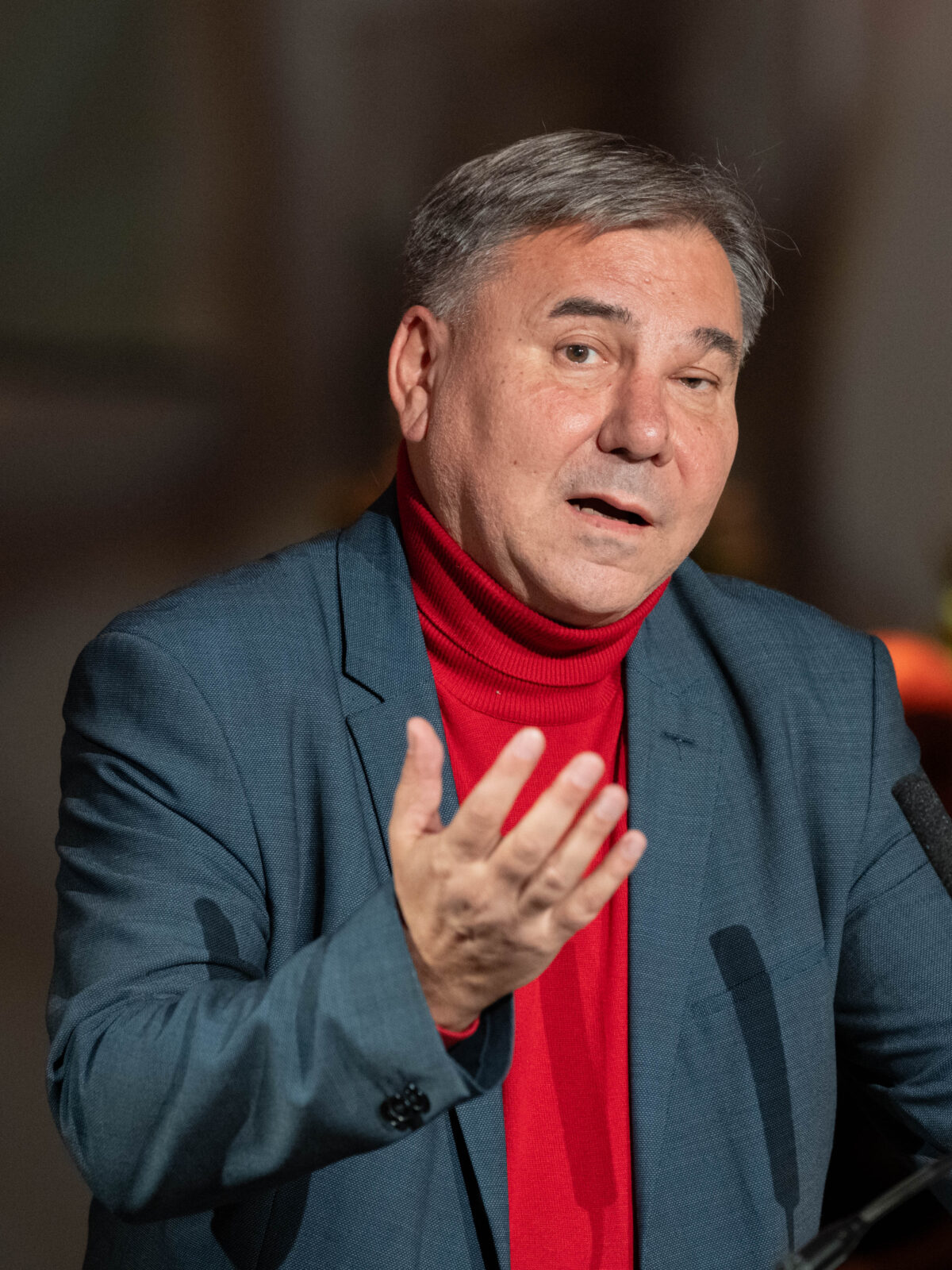
2008: Ivan Krastev, “The Rise of Popularism in Europe”
Ivan Krastev, “The Rise of Popularism in Europe”
Berlin Mosse Lecture
https://mosselectures.wisc.edu/berlin/
Thursday, 6 December 2007, 19:00 CET
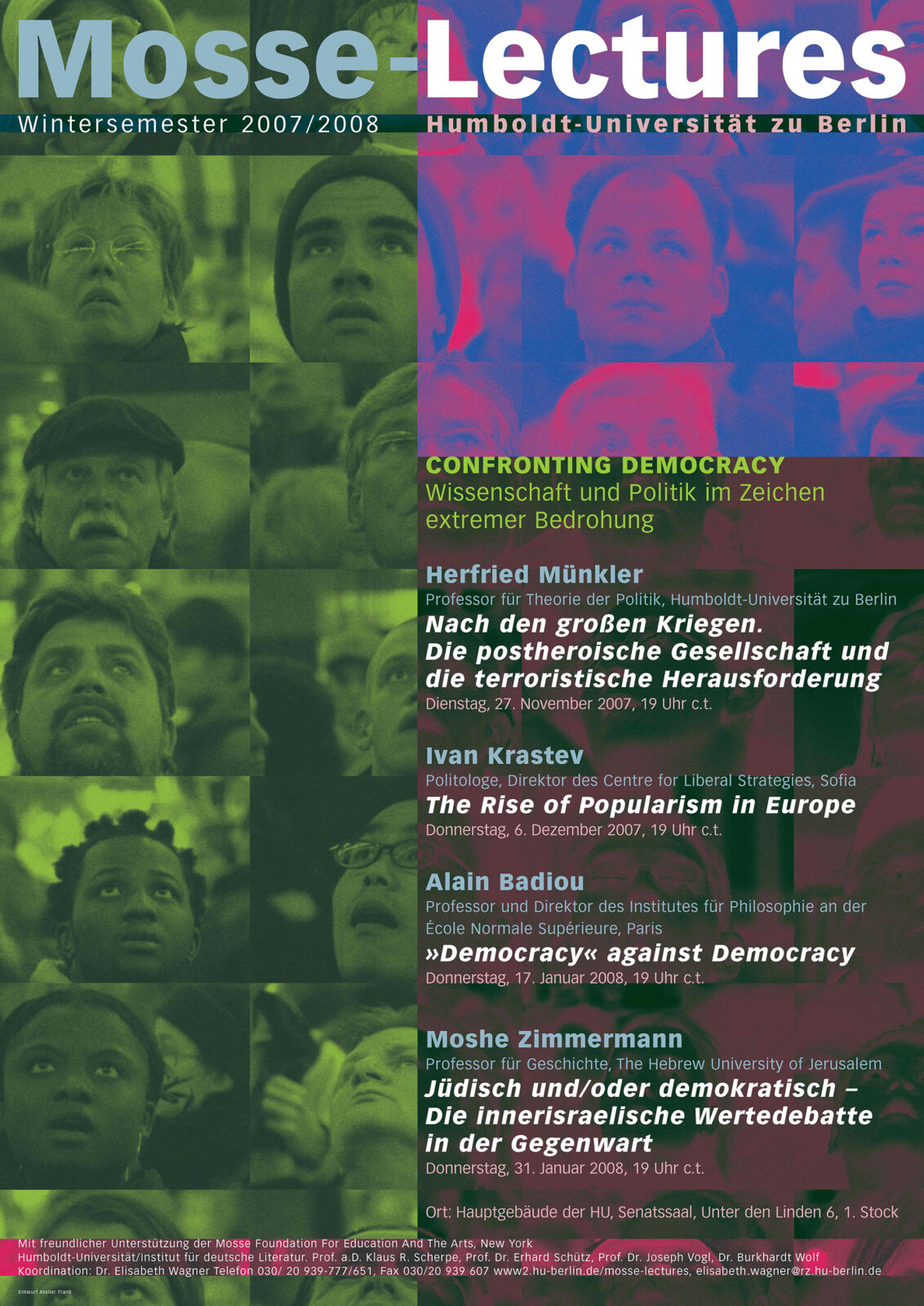
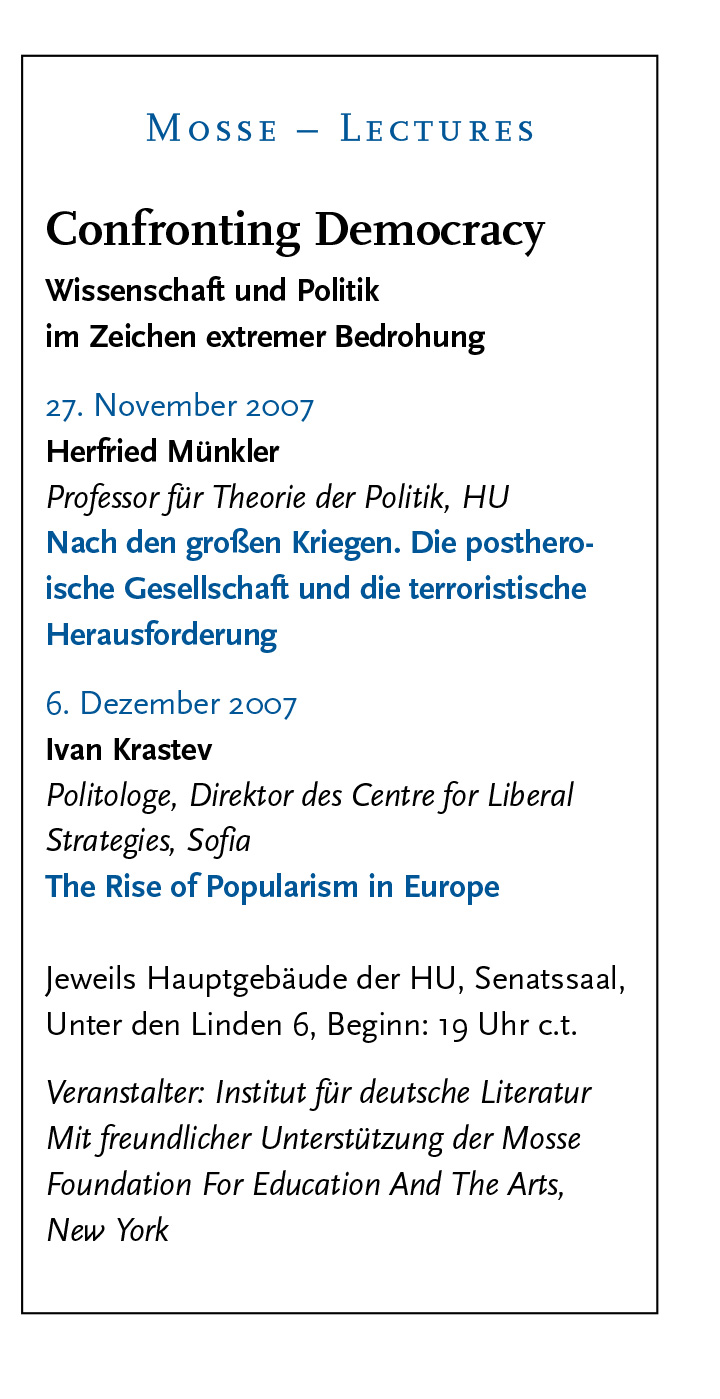
Senatssaal of Humboldt University
1. Stock
Unter den Linden 6
10117 Berlin
GERMANY
Sponsored by:
The Mosse Foundation
Global Mosse Lecture Series
Daimler-Fonds im Stifterverband für die deutsche Wissenschaft
Preussische Seehandlung
Humboldt University
Institut für deutsche Literatur
Lecture Series Description: Totalitarianism, fundamentalism and terrorism, but also nationalism and racism are known to be extreme threats to western democracies with their principles of political freedom, rule of law and human rights. In times of danger, the confrontation with national and cultural entities outside the western sphere of influence intensifies, especially if their development of democracy appears very contrary to our general beliefs of how that development ought to proceed. The geo-political and global economic objectives formulated by the world’s only remaining superpower, the USA and her allies, as well as the option of military intervention are at the same time underlining a hegemonic understanding of democracy.
The West itself seems to have brought on this crisis of legitimacy for democracy, its axiom of inviolate human rights and their recognition by international law, and seems therefore to have further worsened current conflict situations. The both expansionist and integrative process of globalisation is on one hand referring to western culture as the guiding principle, but is on the other hand accompanied by the fear that our own democratic value system may become overtaxed: where cultural diversity and religious freedom should reign, a scary monster of cultural relativism is instead created. The topic of these Mosse-Lectures are the tangible as well as the imaginary threats to democracy, the real or even just the „felt“ threat through hostile warriors and nations, through a liberalised global trade and unrestrained migration.
Rooted in these threatening scenarios are politics of fear, a programme of continuously tightened security measures intended to contain the new „volatile situations“ (created by anything from left/right-wing extremists to religious fanatics, islamist fundamentalists, „sleepers“, etc.), but which in turn is becoming a very hard test for the ideals of a liberal and judicious democracy. The western democracy is therefore not only being confronted with contrary forms of developing societies, with national institutionalisation and cultural identities outside itself, but also with anti-democratic tendencies in its own ranks. Not only will the clash ofcultures be seen as an extreme threat accompanying globalisation, but also the clash within cultures. New confrontations and scenarios of extreme threat are foreseeable: not just through hostile border violations, but as well through the staking of new internal claims for power, new sets of values and demanded rights.