
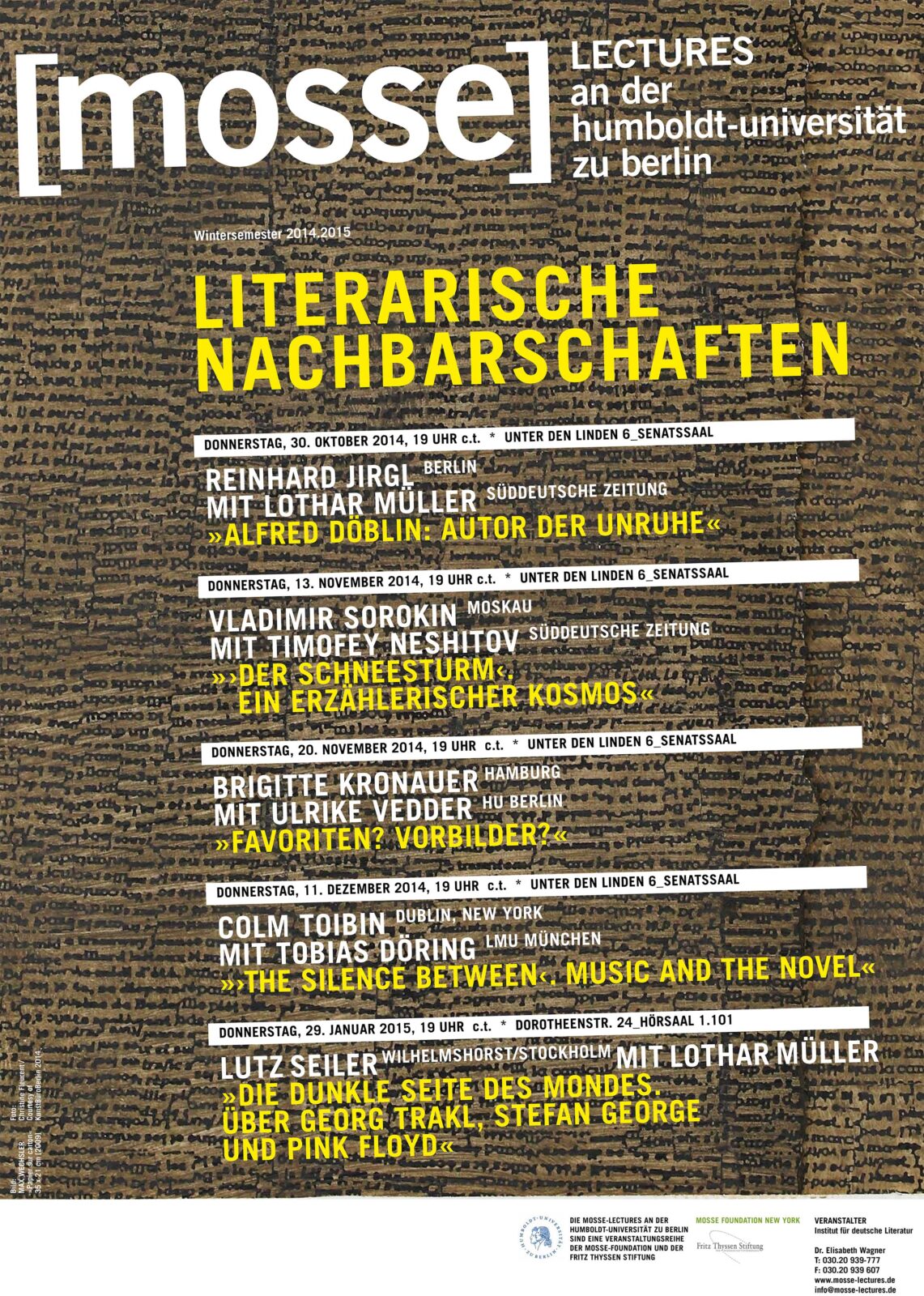
2014: Brigitte Kronauer, “Favoriten? Vorbilder?” / “Favorites? Role models?”
Note: there are multiple parts to the lecture recording
Brigitte Kronauer, “Favoriten? Vorbilder?” / “Favorites? Role models?”
Berlin Mosse Lecture
https://mosselectures.wisc.edu/berlin/
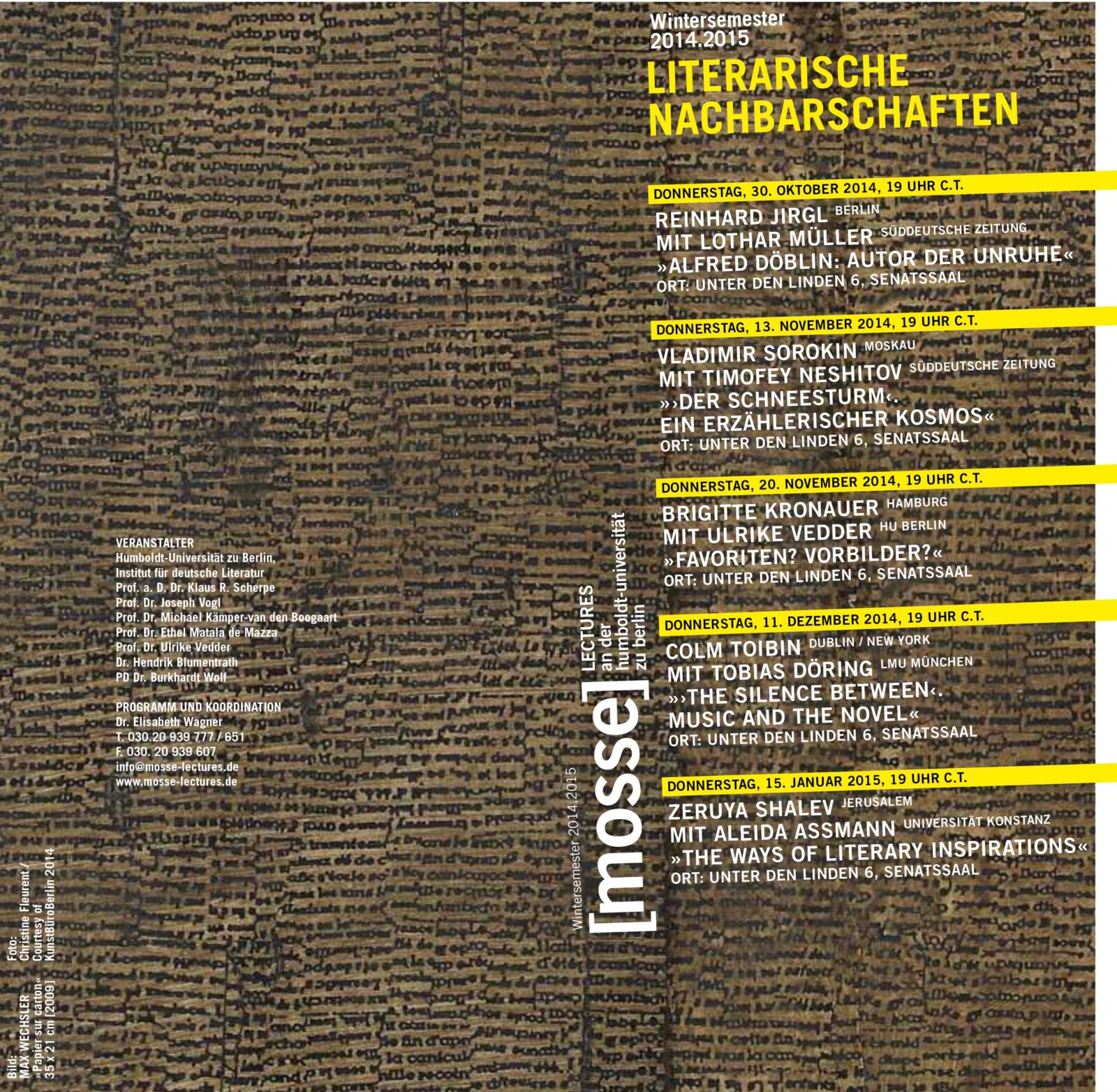
Thursday, 20 November 2014, 19:00 CET
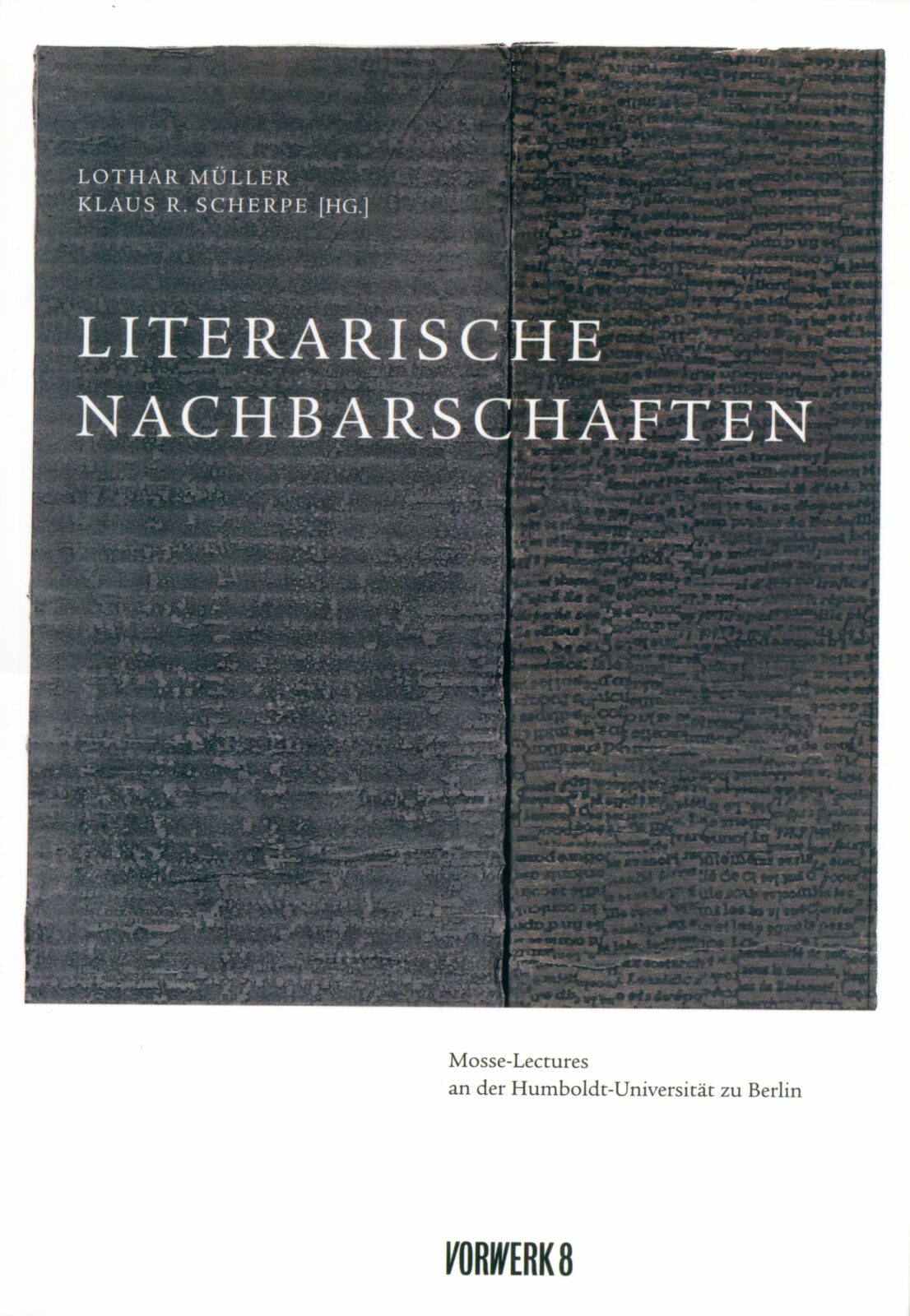
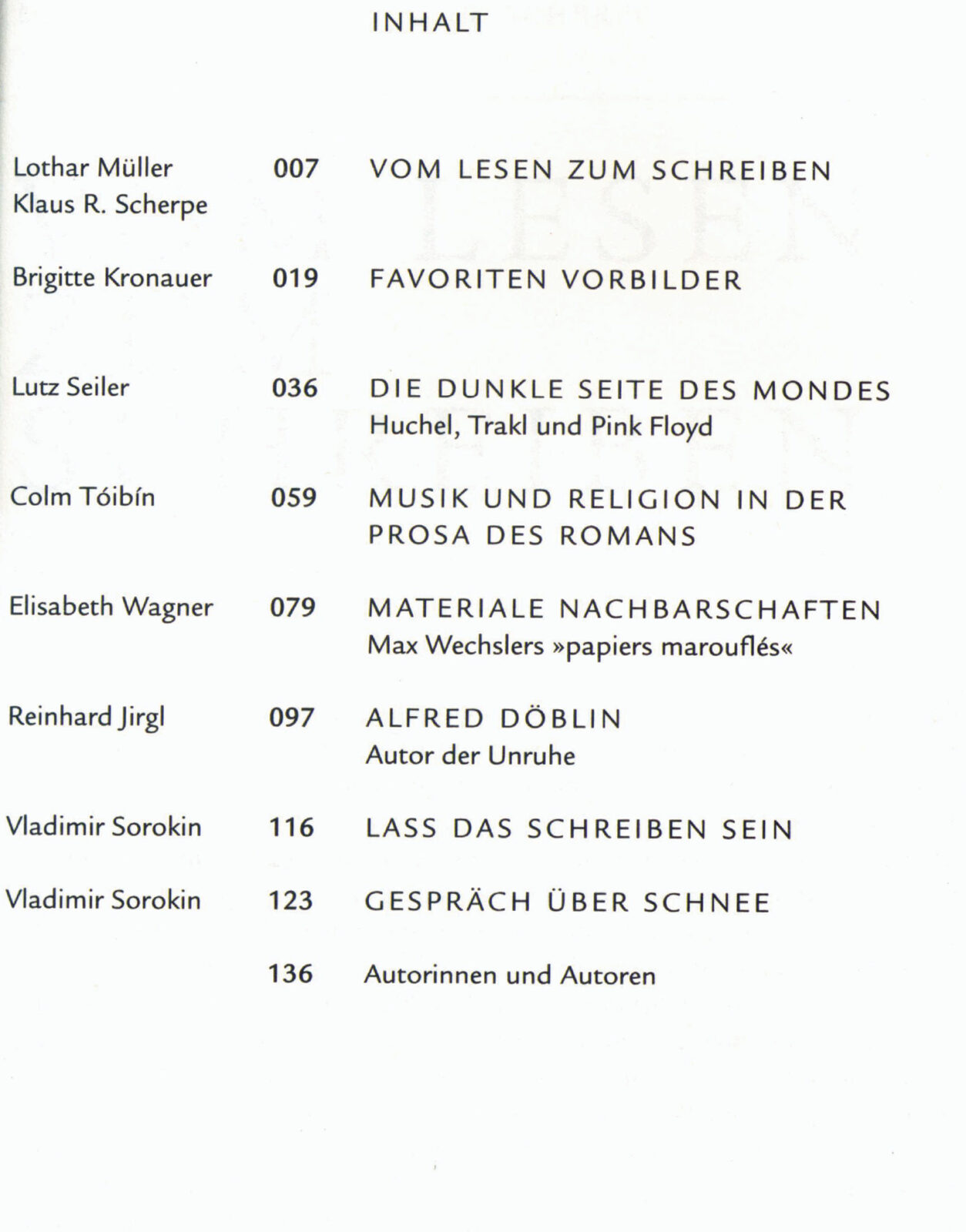
A version of this lecture was published in Lothar Müller, Klaus R. Scherpe, ed. Literarische Nachbarschaften. Mosse-Lectures an der Humboldt-Universität zu Berlin (Berlin: Vorwerk 8, 2016), 19-35. See table of contents below.
Senatssaal of Humboldt University
Under den Linden 6
1. Stock
10117 Berlin
GERMANY
Sponsored by:
[mosse] LECTURES an der humboldt-universität zu berlin
The Mosse Foundation
Global Mosse Lecture Series
Fritz Thyssen Stiftung
Institut für deutsche Literatur
Humboldt University
Moderator: Ulrike Vedder (Humboldt University)
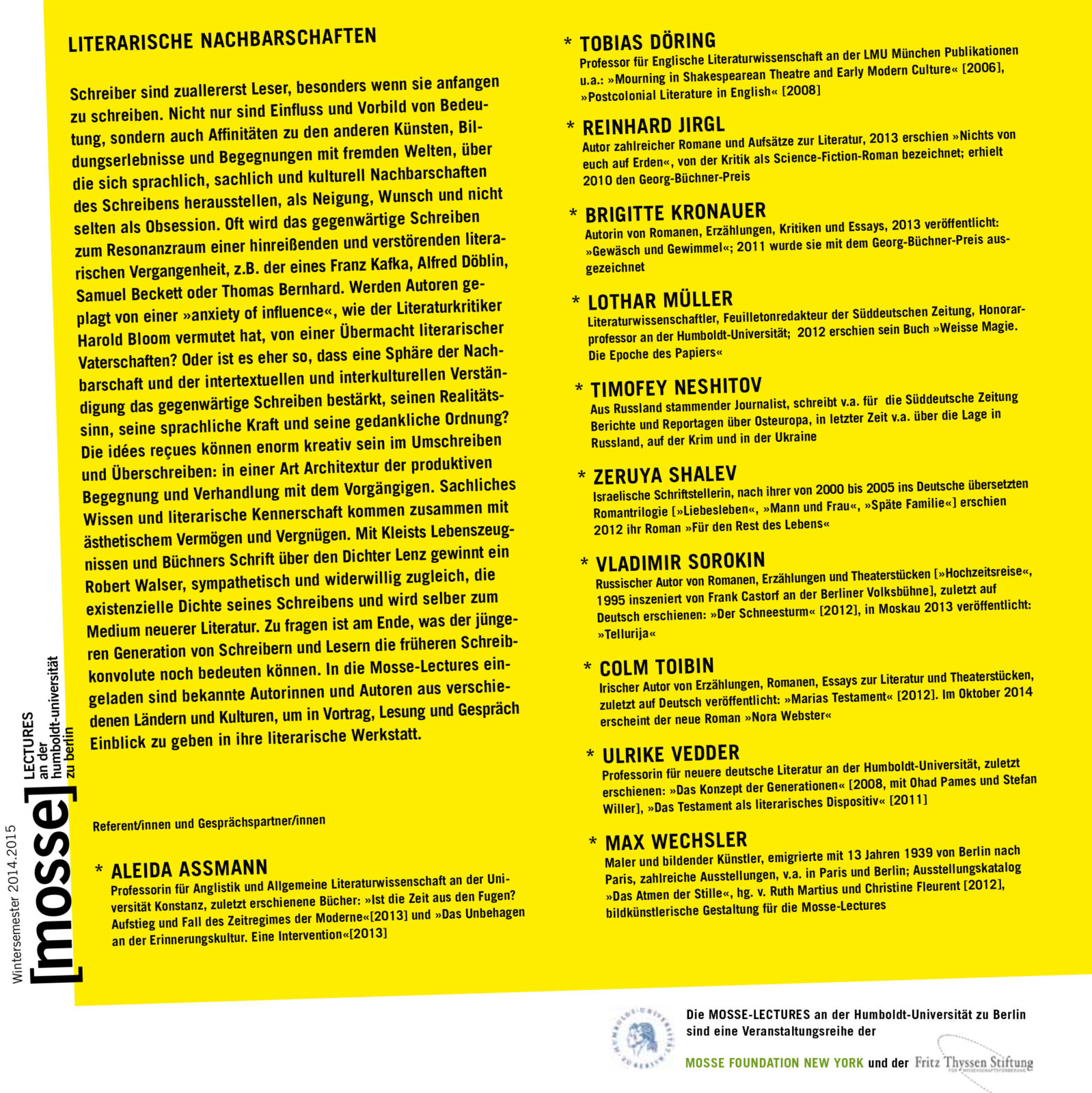
Lecture Description: Brigitte Kronauers Vielfalt des Schreibens ist frei von jener Vorherrschaft des Geschriebenen über das Schreiben, vor der die Literaturkritik in Erwartung des neuen und anderen Werkes gelegentlich warnt. Allein eine gewisse »Wirksamkeit auf der Zunge« bemerkt sie, wenn sie von ihrem Lesen quer durch die Literaturgeschichten berichtet. Auf die Frage, worüber sie in ihrer Mosse-Lecture sprechen wird antwortet Brigitte Kronauer: »Über die Schädlichkeit von Vorbildern und den Nutzen von Favoriten. Ein organisierter Streifzug durch das Dickicht kurzzeitig und lebenslang von der Autorin bevorzugter Lektüren. Zugleich der Versuch einer sehr persönlichen literarischen Entwicklungsgeschichte in großen Sprüngen am Beispiel von Wendepunkten, bei denen auf dem Weg zum schriftstellerischen Selbst aus Favoriten Geburtshelfer und entscheidende Lehrer wurden: Ror Wolf, Joseph Conrad, Jean Paul.«
Lecture Series Description: First of all writers are readers, as J.M. Coetzee puts it, especially as they begin to write. Influences and models come into play, but then there is that visceral relationship that shapes matters of language, style and rhythm, creating adjacencies of writing, via affections, desires, often enough obsessions. The deep imprint former writers leave on texts may resonate as a kind of ghostwriting: the literary experience of a disturbing fictional past in the works of a Franz Kafka, Samuel Beckett or Thomas Bernhard. Worldly knowledge and literary appreciation quite often merge with an aesthetic sensibility and pleasure. Are writers, as literary critic Harold Bloom has asserted, haunted by an “anxiety of influence”? Are they overcome by literary paternities? Should we not rather suppose that literary proximity and intertextual understanding will strengthen and encourage a writer’s sense of reality, power of language, and order of ideas? The idées reçues of literature can be immensely creative in rewriting and overwriting. They may create a kind of architexture, negotiating and re-presenting the previous work. Robert Walser for example generates the existential density of his writing receiving inspirations from the scripts of Kleist and Büchner that make him a medium of a radically new literature. Or Vladimir Sorokin’s fiction where a kind of reproductive cloning of the classical writers of Russian literature takes hold of the imagination. Finally it is a matter of conjecture what, nowadays, the bulk of previous writings can mean to the younger generations of writers and readers. Well known authors from different countries and cultures are invited to the Mosse-Lectures to present and comment on the literary condition and constituting elements of their work.
Brigitte Kronauer: mit ihren zahlreichen Romanen, Erzählungen, Kritiken, Essays und Vorträgen gilt sie als eine poetologisch, kunsthistorisch und medienkritisch besonders kundige Autorin; in den letzten Jahren erschienen u.a. »Errötende Mörder« (2007), »Zwei schwarze Jäger« (2008), »Favoriten. Aufsätze zur Literatur« (2011), »Gewäsch und Gewimmel« (2013); 2014 veröffentlichte sie einen Sammelband mit von ihr ausgewählten und kommentierten Balladen; Poetik-Vorlesungen und Poetik-Dozenturen u.a. in Tübingen, Zürich, Leipzig und Wien; zahlreiche Preisverleihungen u.a. Büchner-Preis (2005) und Jean-Paul-Preis (2011).
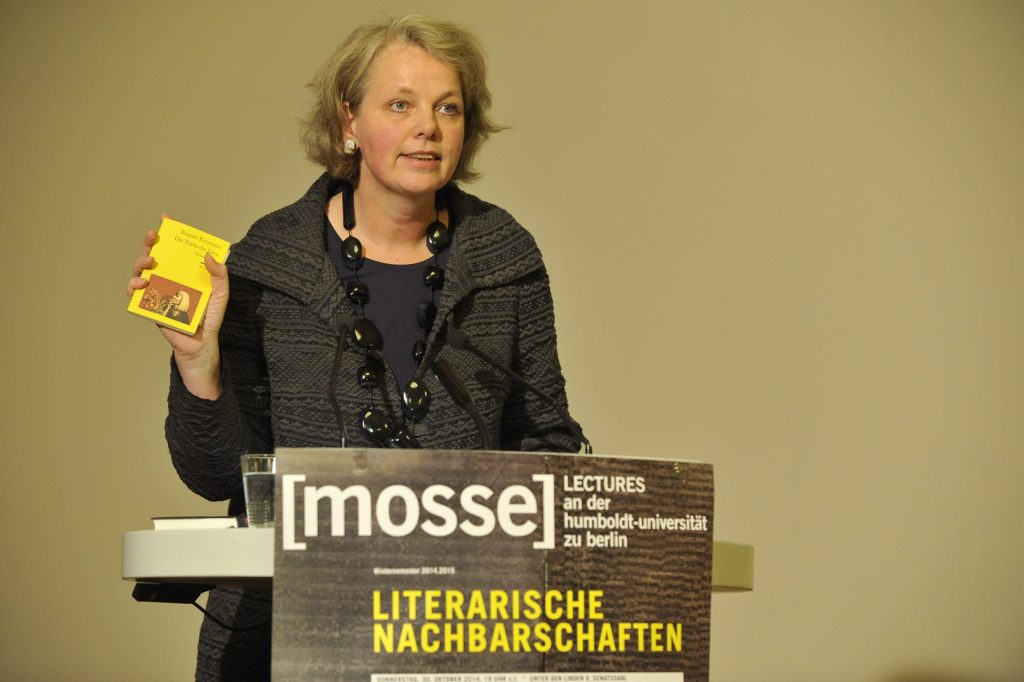
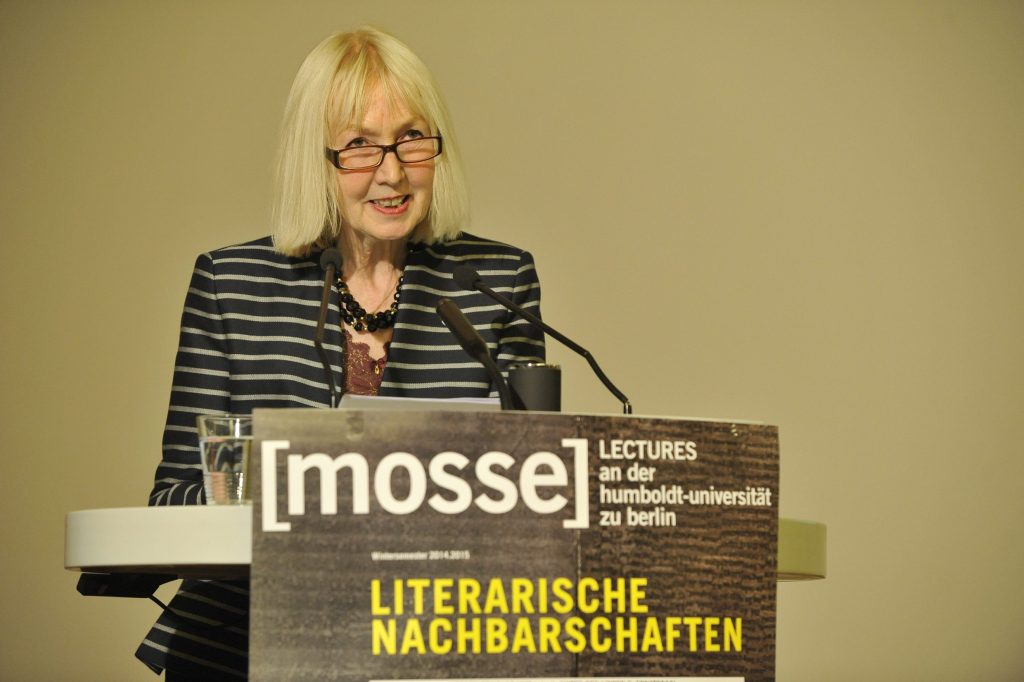
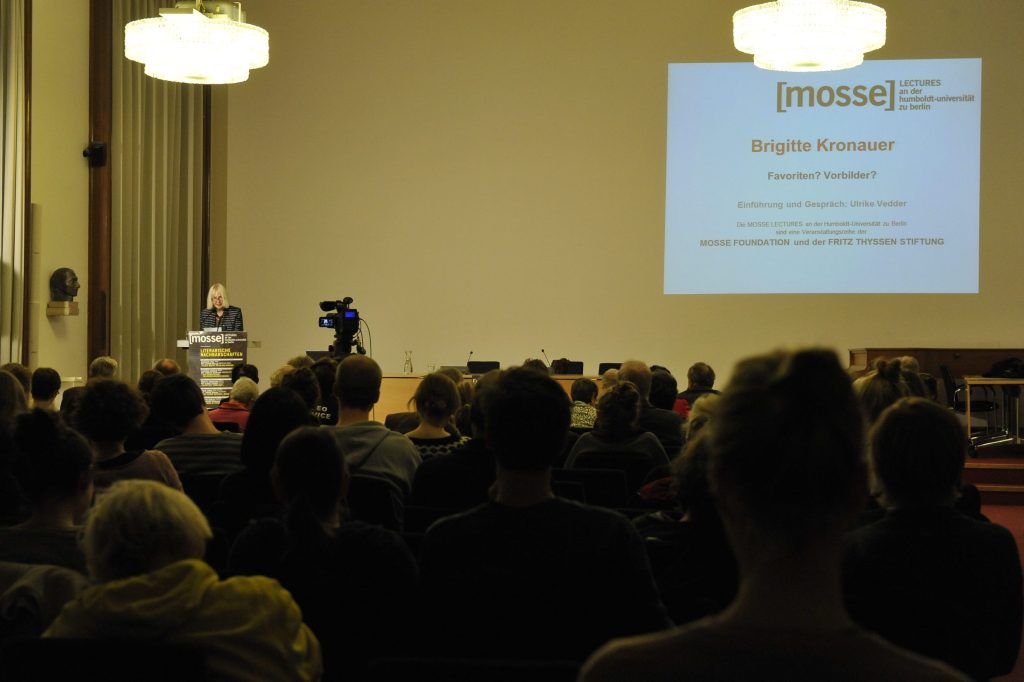
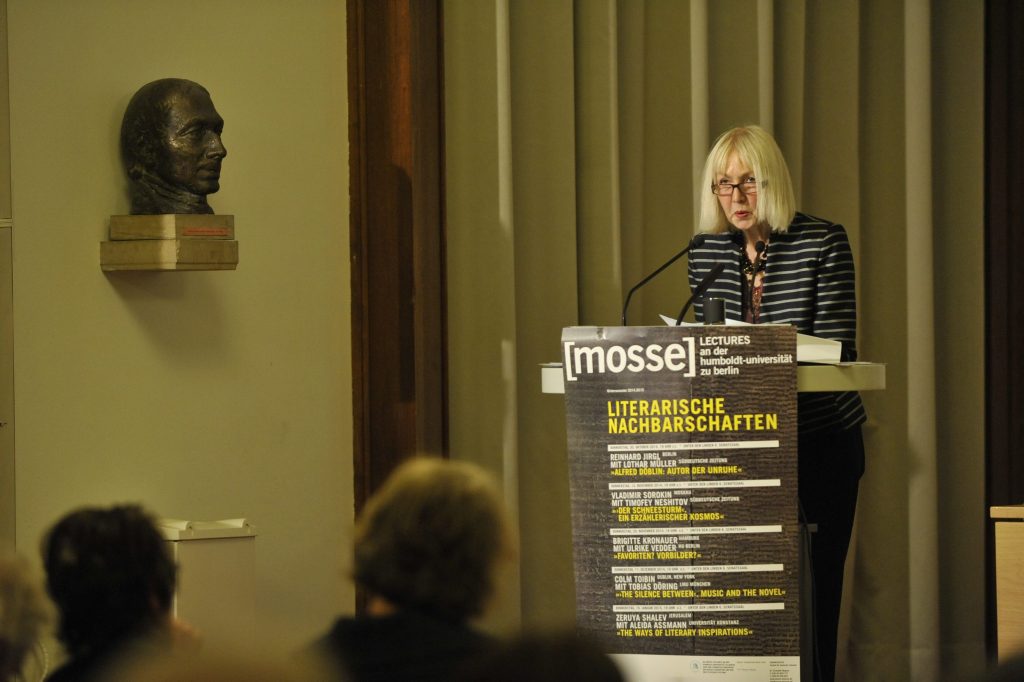
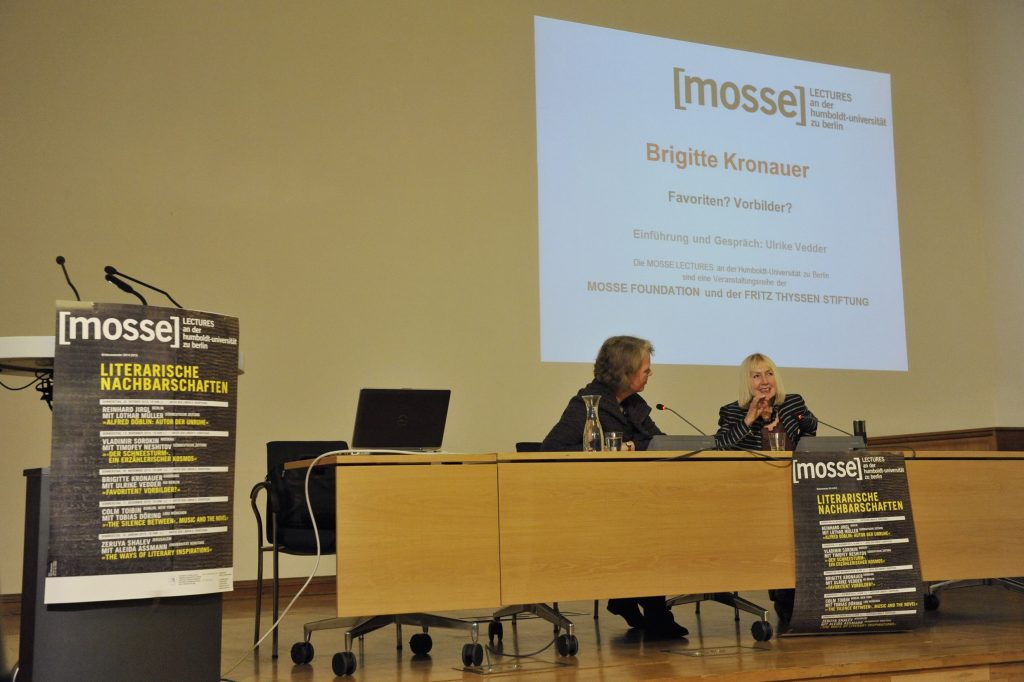
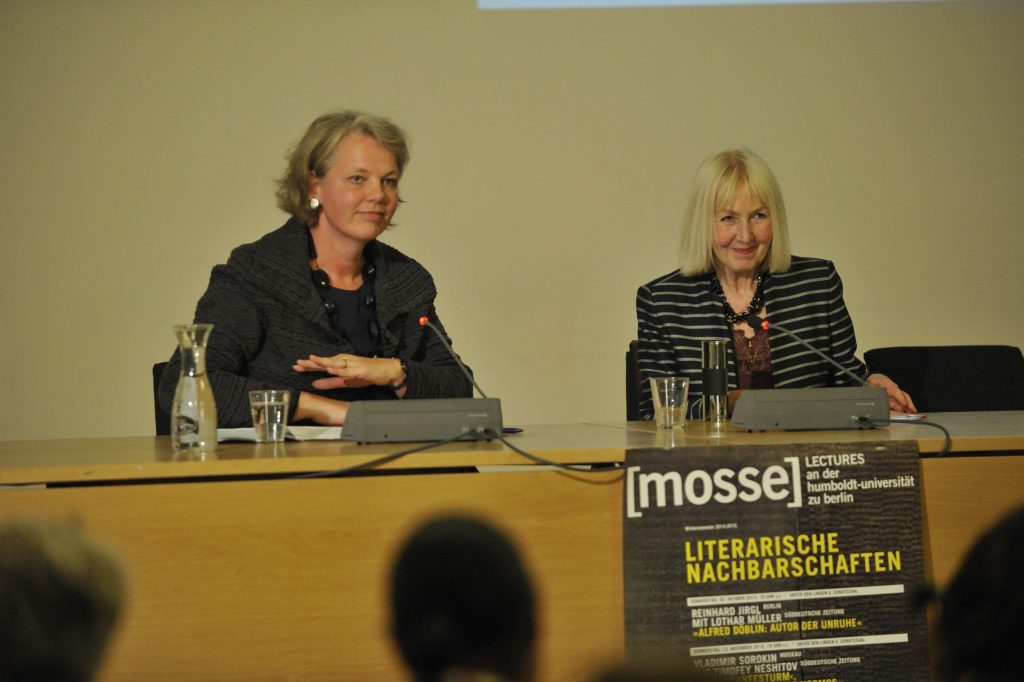
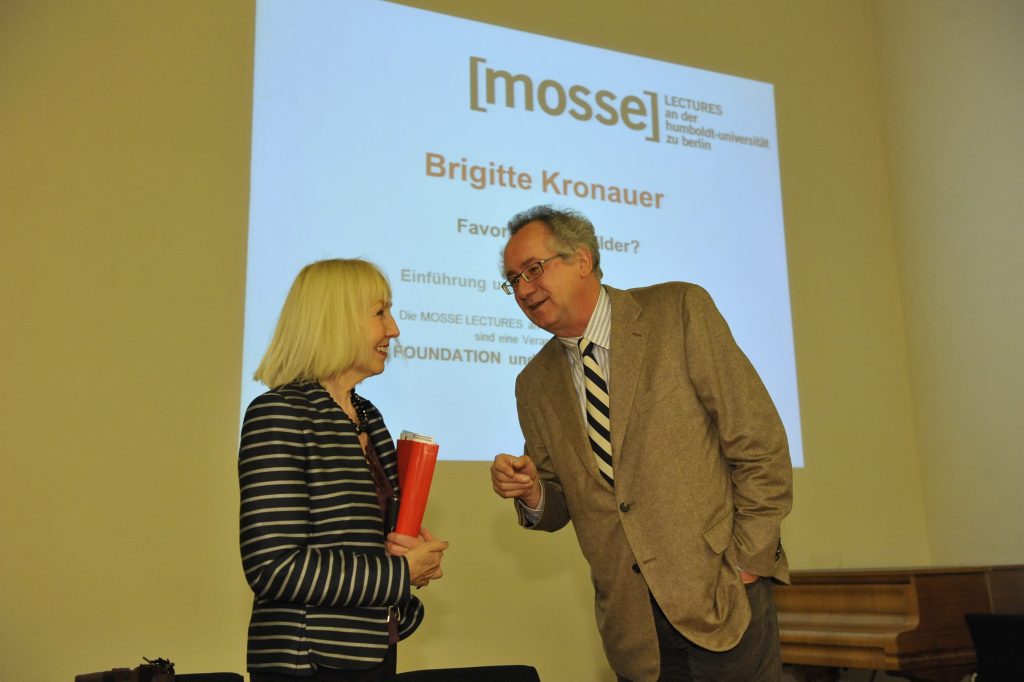
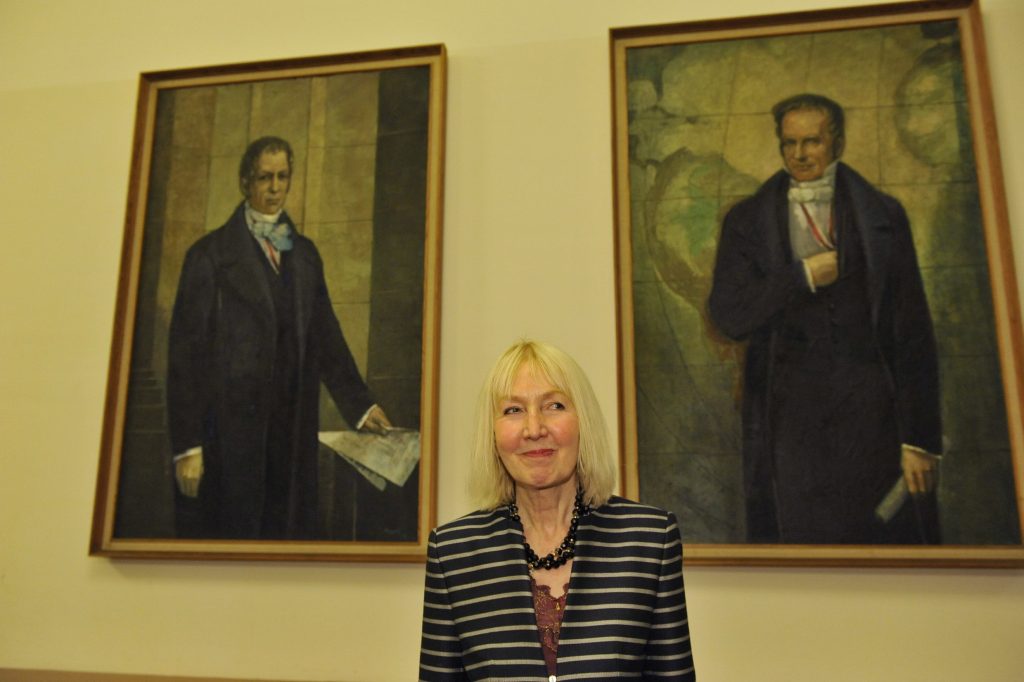
Photo credit: Niels Leiser for the Mosse Lectures
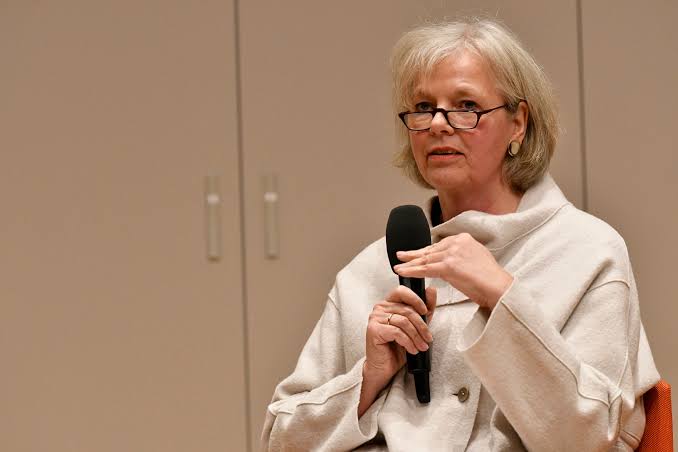
Her research focuses on literature and material culture (museum narratives, literary thing culture, poetics of collecting); literary and cultural history of genealogy, generation, heritage; gender studies in literary studies; narratives of liminality (death narratives, coma, old age, dementia, care, poetics of the afterlife).
She is part of the interdisciplinary project team of „Liminality and Transfer“ (funded by the Einstein Foundation Berlin, 2023-2027) and the Collège doctoral „Littérature et savoirs, XVIe – XXIe siècles“ (in cooperation with Sorbonne nouvelle).
