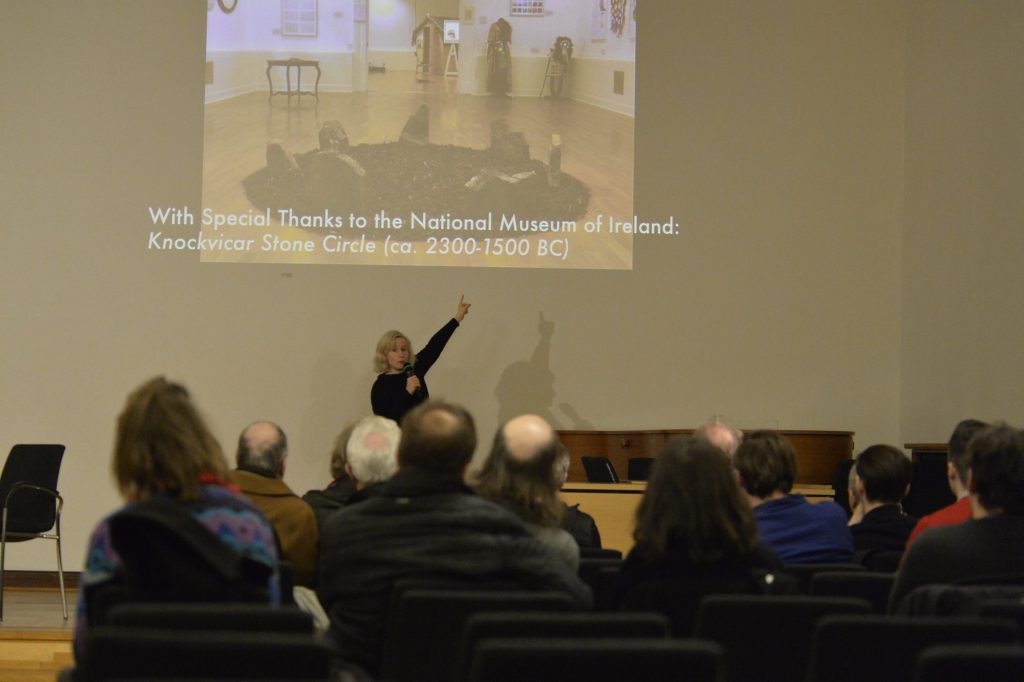
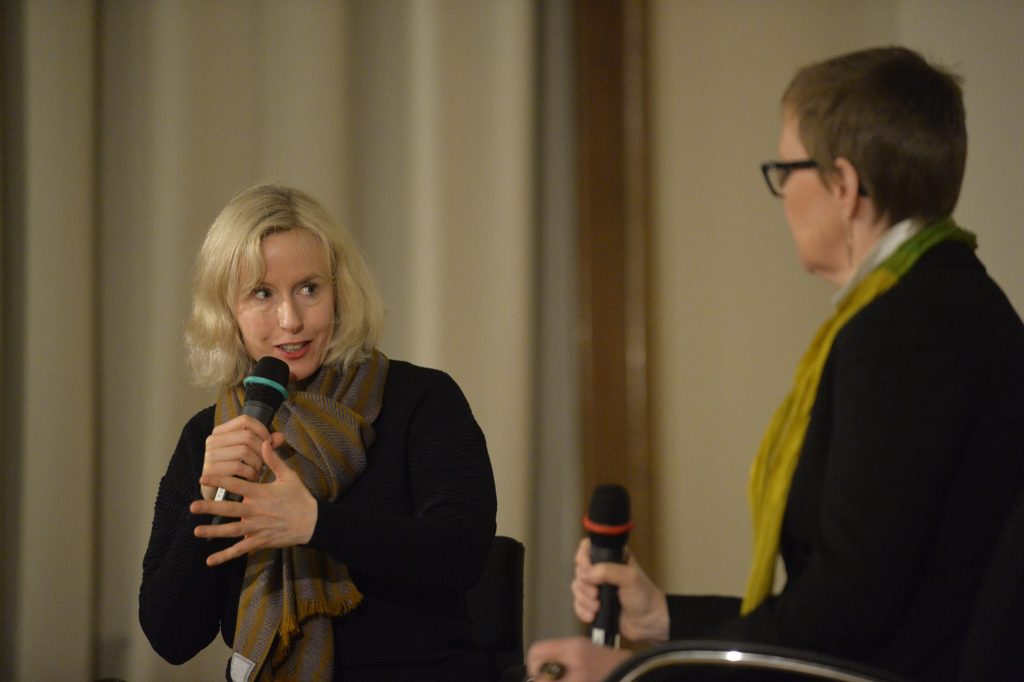
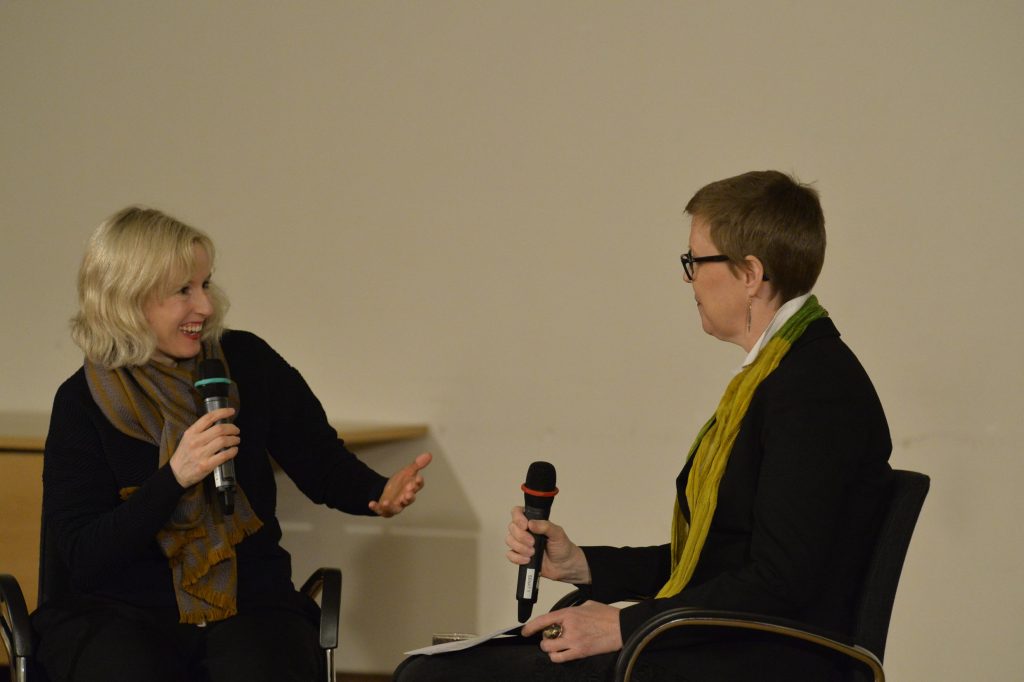
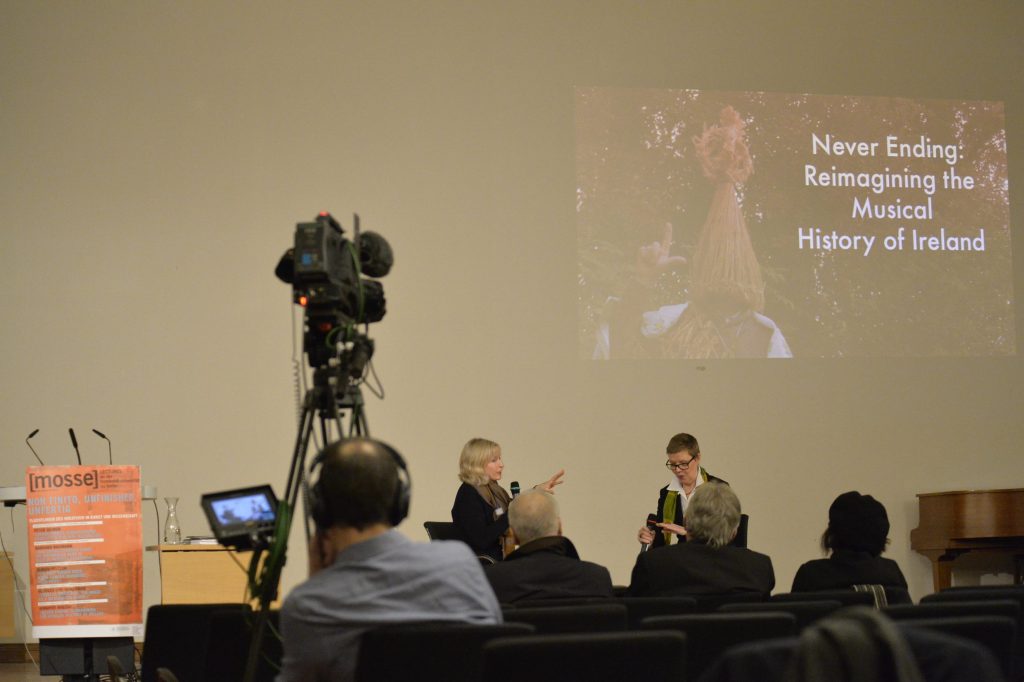
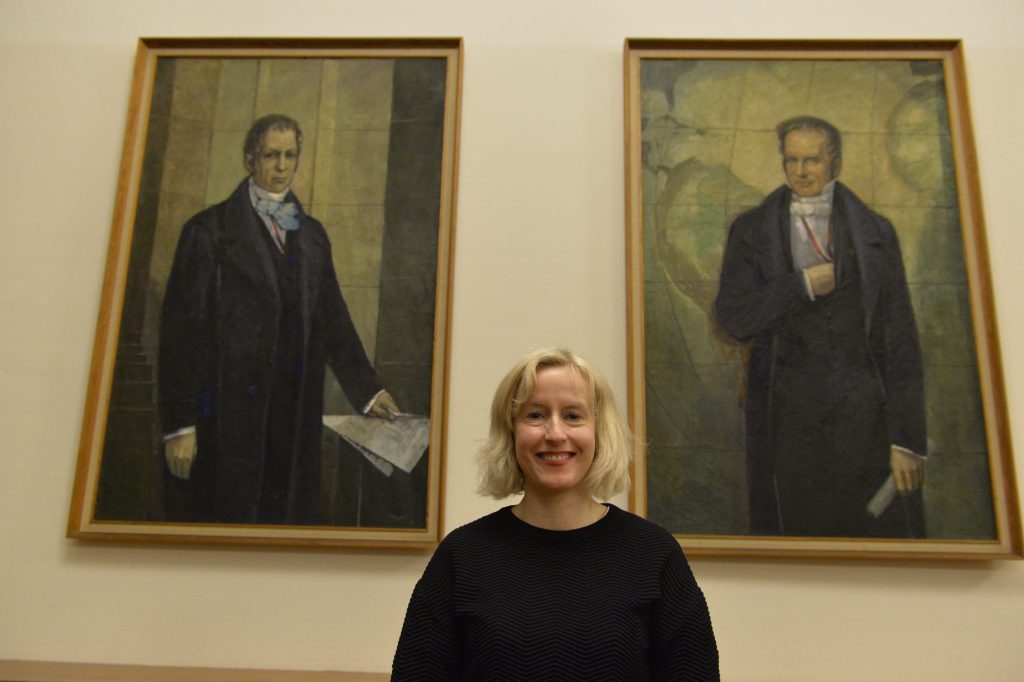
2018: Jennifer Walshe, “Never Ending. Reimagining the Musical History of Ireland”
Jennifer Walshe, “Never Ending. Reimagining the Musical History of Ireland”
Berlin Mosse Lecture
https://mosselectures.wisc.edu/berlin/
Thursday, 11 January 2018, 19:00 CET
Senatssaal of Humboldt University
Unter den Linden 6
1. Stock
10117 Berlin
GERMANY
Sponsored by:
[mosse] LECTURES an der humboldt-universität zu berlin
The Mosse Foundation
Global Mosse Lecture Series
Institut für deutsche Literatur
Humboldt University
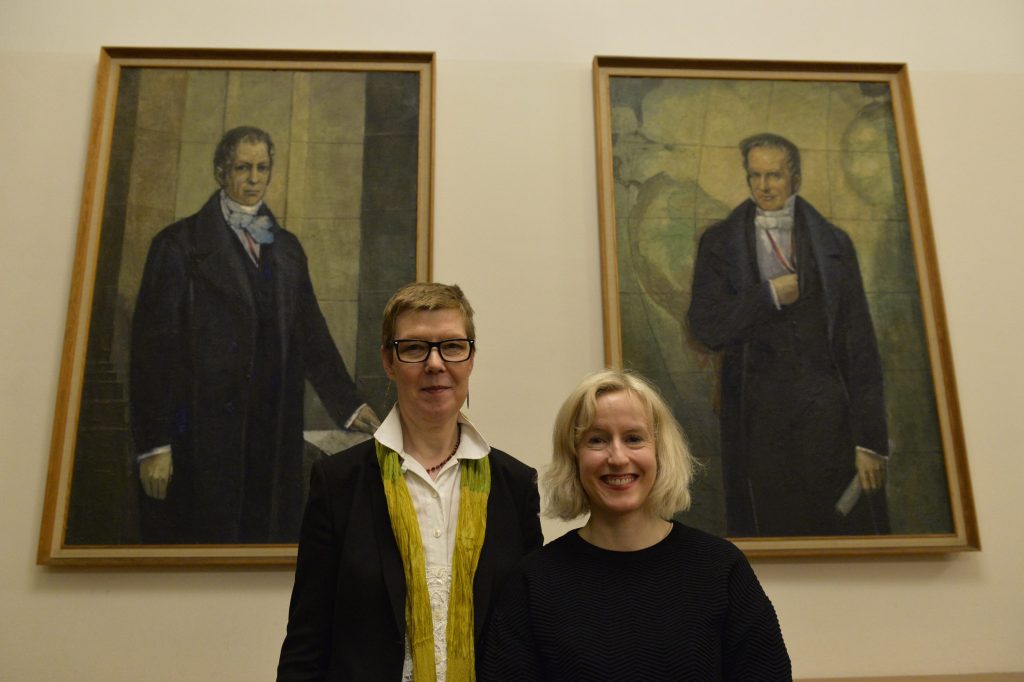
Introduction: Elisabeth Wagner (Humboldt University)
Respondent: Margarete Zander (Journalist)
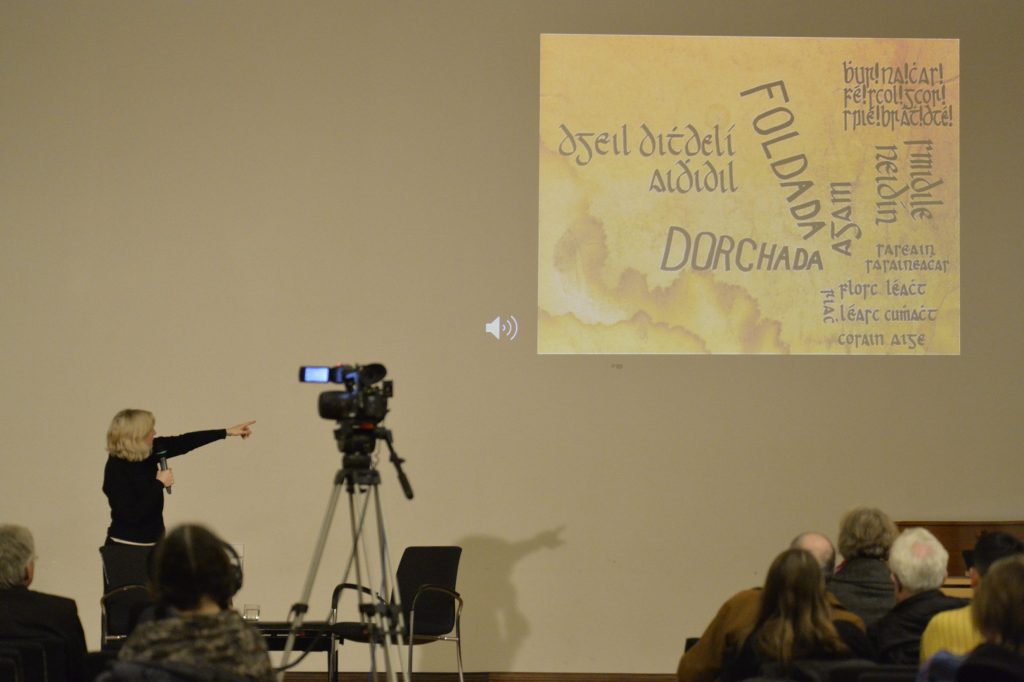
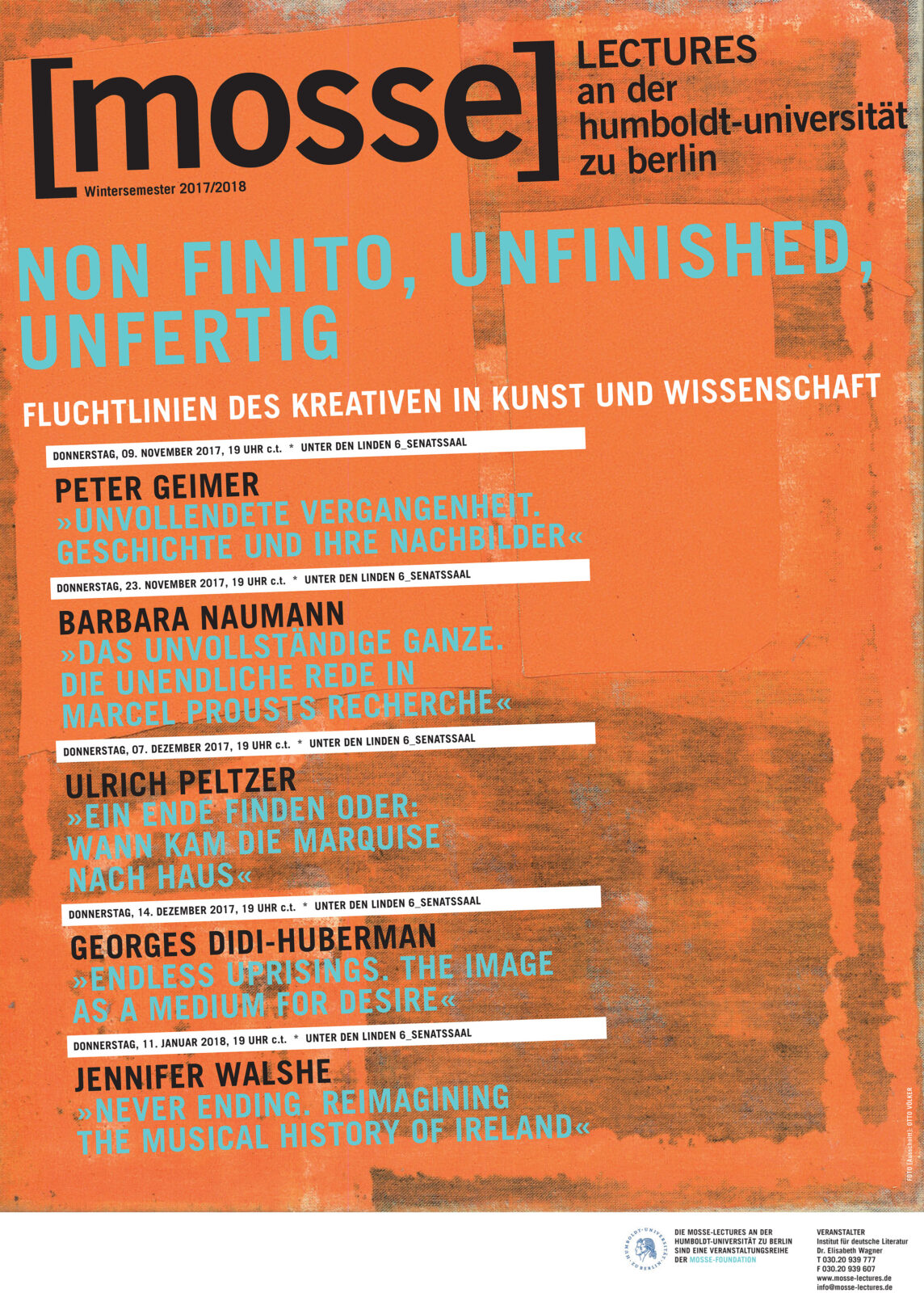
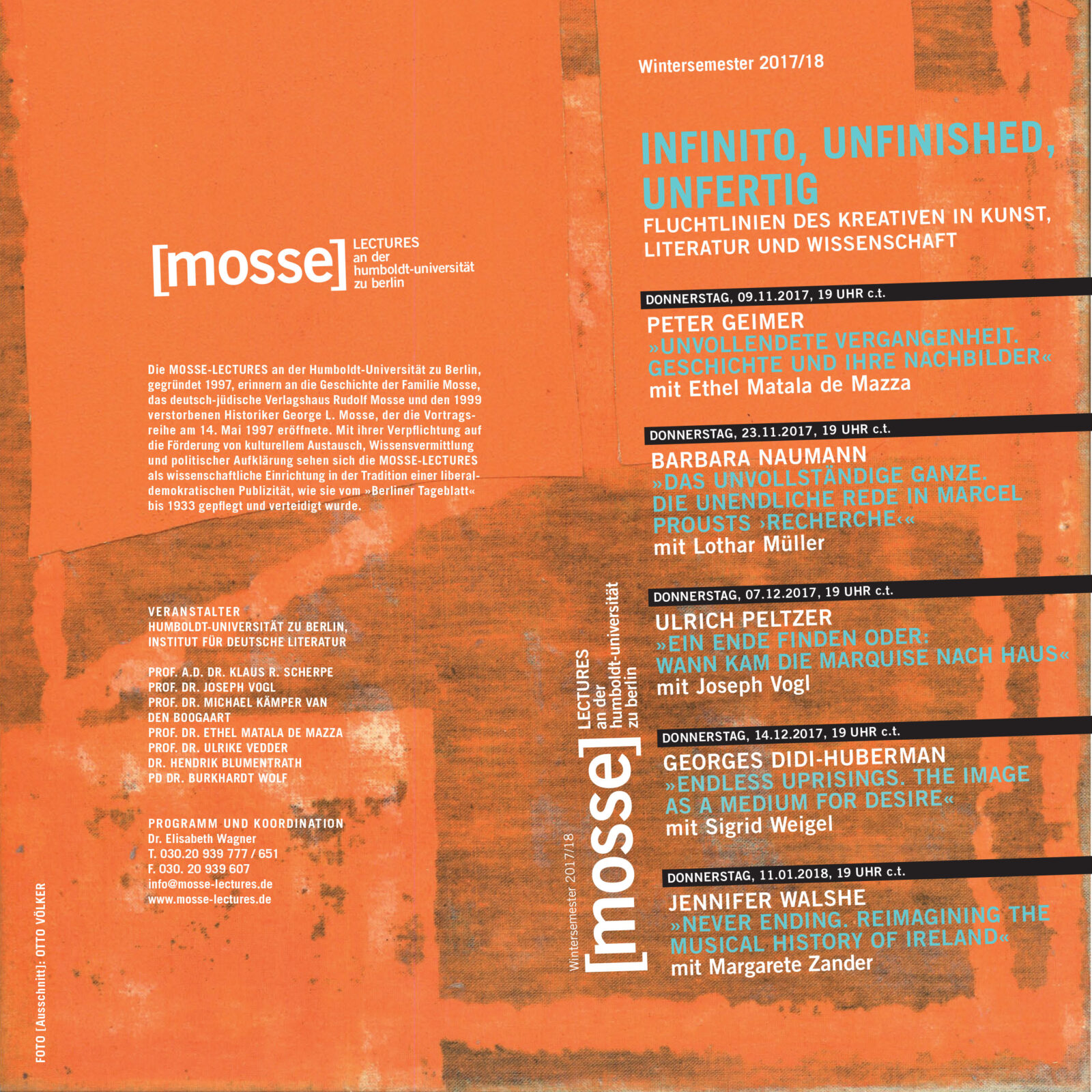
Lecture Description: Haben Sie schon einmal von dem Guinness Dadaisten gehört, der in der berühmten Dubliner Brauerei tagsüber arbeitete und nachts kraftvolle Gedichte verfasste? Oder von Sr Anselme, der Nonne, die in einem Kloster in Galway lebte und dort eintönige Kompositionen für die Orgel schrieb? Vielleicht haben Sie ja auch die Filme von Caoimhin Breathnach gesehen, einem irischen Außenseiter unter den Künstlern, der Tonbänder und Filme beerdigte, mit Seewasser besprühte und dann mit Moos bedeckte? All diese Figuren kommen in dem Projekt vor, das Jennifer Walshe vorstellen wird als “Historical Documents of the irish Avantgarde”. Es ist entstanden aus der Zusammenarbeit mit ganz verschiedenen Leuten. Entstanden ist das, was sie eine “ganz und gar fiktive Geschichte der irischen Musik” nennt. In einer Zeit in der Fake News und Filter Bubbles unsere Wahrnehmung der Welt beherrschen, setzt Jennifer Walshe auf neue spielerische Inszenierungen der alten Vergangenheit, auf Parallelgeschichte und alternative Erzählungen: um uns vor Augen zu führen, wie es auch anders geht, wenn wir uns für eine andere Zukunft ins Zeug legen, die niemand und nichts ausschließt.
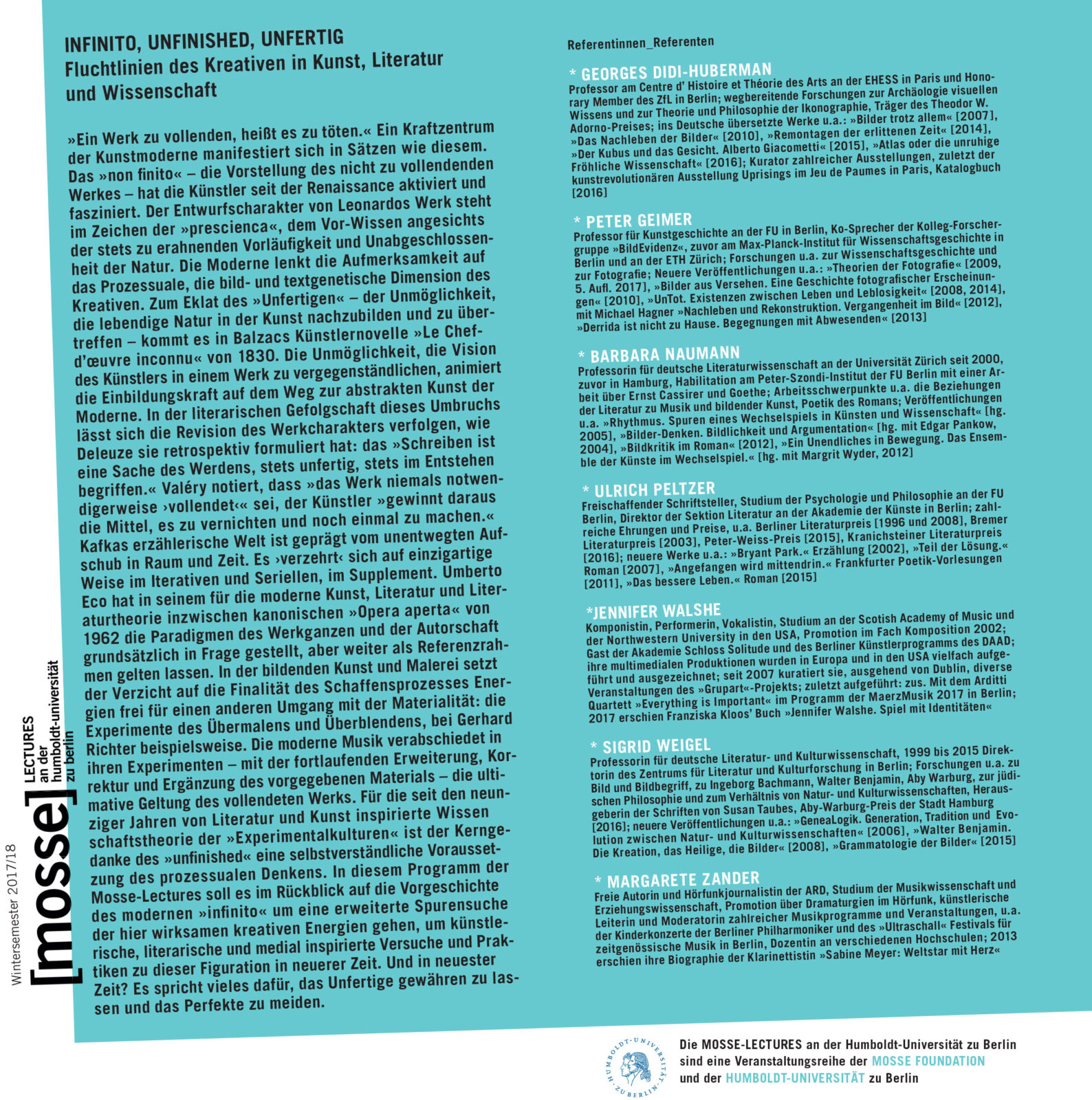
Lecture Series Description: “To complete a work means to kill it.” Manifestos of modern art have their center of energy in such sayings. The non finito – the idea of a work not to be completed – has fascinated artists since the Renaissance. The prospective design of Leonardo’s work acknowledges prescienza: the provisional and unfinished nature of creative work. In modernity process becomes dominant, thus emphasizing the genetic production of texts and images, all the way to the dissolution of the medium of representation itself. The scandal of the unfinished – the sheer impossibility to reproduce and surpass living nature in a work of art – erupts in Balzac’s “Le Chef-d’oeuvre inconnu”, published in 1830. The impossibility to fully materialize the artist’s vision can further be traced in the concept of aesthetic autonomy as it leads to modernist abstraction. In literature, too, we can observe how the original concept of the work as a whole is revised, when Deleuze states retrospectively: “writing is a thing of becoming, always unfinished, always in the making.” Valéry has noted that “by necessity, the work can never be completed”; the writer thus “gains a means to destroy it and make it anew.” Kafka’s narrative world is shaped by a permanent deferral in time and space; it ‘consumes’ itself in its modes of iteration, seriality, and supplementation. In his “Opera aperta” of 1962, canonical by now in literature, literary criticism and art studies, Umberto Eco has questioned the paradigms of authorship and the work as a whole, though still accepting them as an inevitable frame of reference. As the visual arts renounce the finality of the creative process, energies are set free to deal with materiality differently: the cross media experiments of overpainting and superimposing. In their experiments of extending, supplementing and revising the musical material, composers have dismissed the previous validity of completion. In recent times, software supported computer art has explored new ways of unlimited. Since the nineties, the theory of science, creatively inspired by art and literature, has privileged so called “experimental cultures”, where the notion of the unfinished is front and center. This set of Mosse-Lectures will review the past history of the non finito, and search for marks and signs of the unfinished in present day cultural production. We hope to trace and probe the creative energies of this configuration in practical artistic work and in theory.
Jennifer Walshe: Jennifer Walshe, Komponistin, Performerin, Vokalistin, Studium an der Acottish Academy of Music und der Northwestern University in den USA, Promotion im Fach Komposition 2002; Gast der Akademie Schloss Solitude und des Berliner Künstlerprogrammes DAAD; ihre multimedialen Produktionen wurden in Europa und den USA vielfach aufgeführt und ausgezeichnet; seit 2007 kuratiert sie, ausgehend von Dublin, diverse Veranstaltungen des Grupart-Projekts; zuletzt aufgeführt: zus. mit dem Arditti Quartett Everything is Important im Programm der MaerzMusik 2017 in Berlin; 2017 erschien Franziska Kloos’ Buch: Jennifer Walshe. Spiel mit Identitäten.