
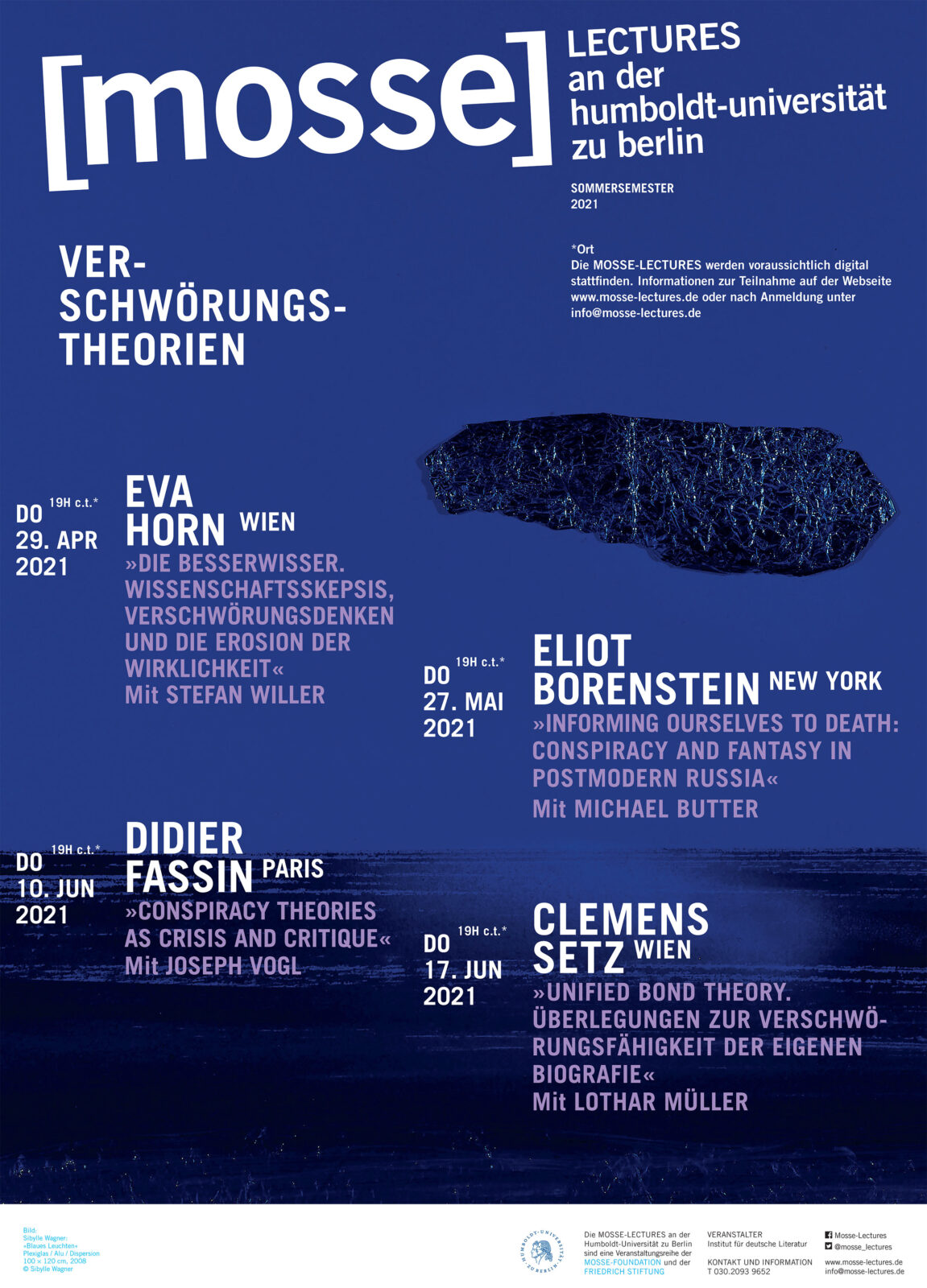
2021: Eva Horn, “Die Besserwisser. Wissenschaftsskepsis, Verschwörungsdenken und die Erosion der Wirklichkeit” / “The Know-It-All: Scientific Skepticism, Conspiracy Thinking and the Erosion of Reality”
Eva Horn, “Die Besserwisser. Wissenschaftsskepsis, Verschwörungsdenken und die Erosion der Wirklichkeit” / “The Know-It-All: Scientific Skepticism, Conspiracy Thinking and the Erosion of Reality“
Humboldt University Berlin Mosse Lecture
mosselectures.wisc.edu/berlin/
Thursday, 29 April 2021, 19:15 CET
Senatssaal of Humboldt University
Unter den Linden 6
1. Stock
10117 Berlin
GERMANY
Sponsored by:
[mosse] LECTURES an der humboldt-universität zu berlin
The Mosse Foundation
Global Mosse Lecture Series
Institut für deutsche Literatur
Humboldt University
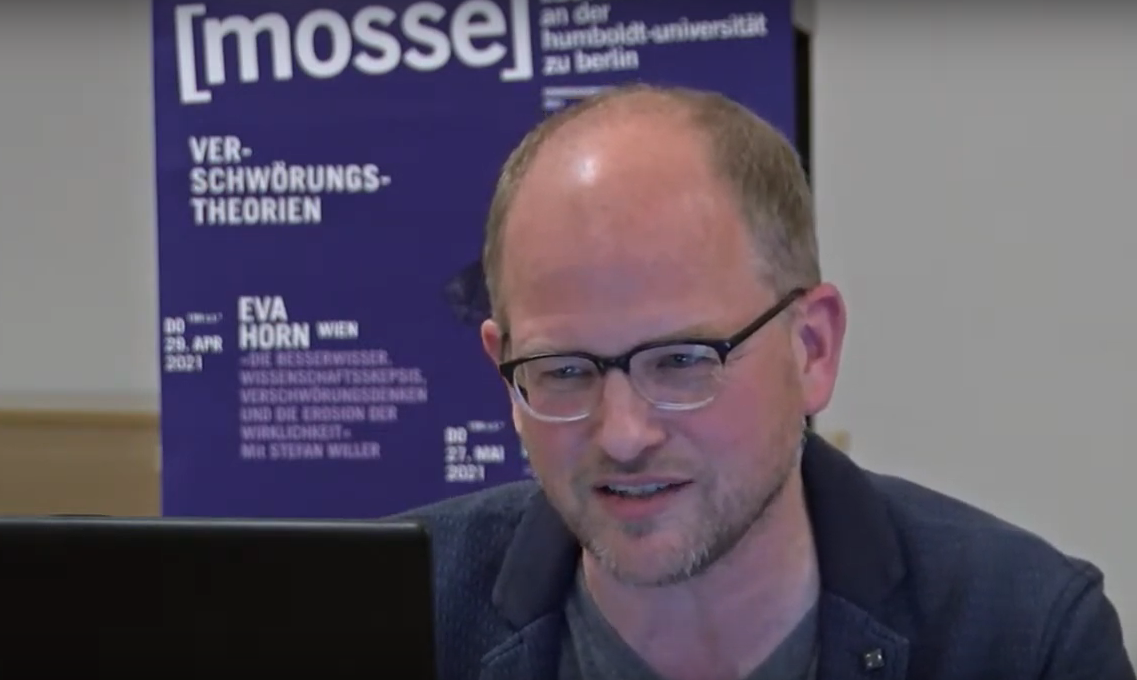
Moderator: Stefan Willer (Humboldt University)
Lecture Description: Die Gegenwart ist geprägt durch eine radikale Skepsis gegenüber offiziellen Narrativen: sei es mediale Berichterstattung, seien es Alltagskonsense, sei es das Wissen der Wissenschaft. Dabei treten selbsternannte Fachleute auf, deren Ziel es weniger ist, gegebenes Wissen zu modifizieren als es fundamental in Zweifel zu ziehen. Zu dieser Kakophonie der Experten kommen neuerdings Verschwörungstheorien, die eine geteilte Definition von Wirklichkeit als Basis jeder politischen Debatte in Frage stellen. Der Vortag wird die Logik und Geschichte dieser „Besserwisserei“ untersuchen und fragen, welche politischen Phantasien hier am Werk sind.
Lecture Series Theme: “Verschwörungstheorien”/”Conspiracy Theories”
Lecture Series Description: Verschwörungstheorien haben Konjunktur in Zeiten der Verunsicherung, von bedrohlichen Veränderungen, lebensgeschichtlich und politisch, eklatant in Zeiten von Krisen und Katastrophen. In ihnen wird ein Bedürfnis wirksam, komplexe Zusammenhänge auf einfache Sinngebungen zu reduzieren. Eine psychotische und kollektive Dynamik wird in Gang gesetzt. Es entsteht die bedenkenlose und widerspruchsresistente Logik eines konspirativen Diskurses: ein mitunter phantasiereiches und faszinierendes Amalgam, ein Netzwerk aus Erfahrungsmomenten und Wissenselementen, aus Vermutungen und Verdächtigungen, aus Fakten und Fiktionen. Derart aufgerüstet erzeugen Verschwörungstheorien, motiviert durch ein Gefühl von tatsächlicher oder auch nur empfundener Benachteiligung oder Unterlegenheit, Ängste: vor einer angeblichen Bedrohung durch ein Reich des Bösen in Gestalt einer geheimbündlerischen Subversion oder einer jüdischen Weltverschwörung. Da Verschwörungstheorien ihr Identifikationspotenzial aus realen oder als real vorstellbaren Vorgängen und Ereignissen schöpfen, sind sie strategisch und methodisch beteiligt an unzähligen alltäglichen, sozialen und politischen Konflikten und Konfliktbewältigungen. In diesem Programm der Mosse-Lectures wollen wir die historische und gegenwärtige Wirkungsmacht von Verschwörungstheorien erkunden: in der historisierenden und aktualisierenden Literatur (bei Umberto Eco zum Beispiel), in einer Analyse und Kritik von verschwörungstheoretisch wirksamen Informationstechnologien und Medien, mit der Problematisierung konspirativer Strategien in der Politik (im postsowjetischen Russland z.B.).
In times of uncertainty and looming threats changes, conspiracy theories have become extremely popular again, in life stories as well as in political propaganda. In times of crisis and catastrophe an urgent need to reduce complexities to simple meanings gains attention, thus producing psychotic and collective dynamics by projecting personal fears and privations onto unknown forces and secret powers. Conspirative thinking and feel-ing transforms causalities and contingencies into an asserted coherence. Conspirative discourse thus invents its own logic, careless of facts and consistent in itself, fascinating for many as an amalgamate of well-known elements of experience and knowledge abruptly brought together: a creative and inspirational panoply of phantasies, presump-tions and suspicions, facts and fiction. Emotionally charged with an uncertain feeling of one’s own real or suggested inferiority, a hostile superior force is imagined, which acts mysteriously and is in total control. An evil empire appears in manifold shapes: the subversive energy of secret societies, the Jewish or communist world conspiracy, the economic phantasm of the invisible hand of the market, and all kinds of conspirative strategies of agents and systems. Since theories of conspiracy draw their potential of identification from real or presumably real activities and happenings they are part of innumerable every day social and political conflicts and conflict managements, including even scientific research and technical solutions. Ultimately, of course, the agenda of conspiracy theory might become conspirative itself. Faced with the rise of a »paranoid style« of conspiracy, which is gaining the upper hand in internet fake news and cyberspace activities in national and world politics, this series of Mosse-Lectures intends to take a second look at the power and impact of conspiracy theories both in history and in our own time. We focus on the fictional conspirative plots of Umberto Eco, Thomas Pynchon, and other recent narratives, on an analysis und critique of populist strategies and the complicity of information politics and media entertainment, on the political effects of conspiracy theories in post-Soviet Russia and the Arabic world, and, last but not least, on the psychiatric evidence of the conspirative syndrome itself in everyday life and in public relations.
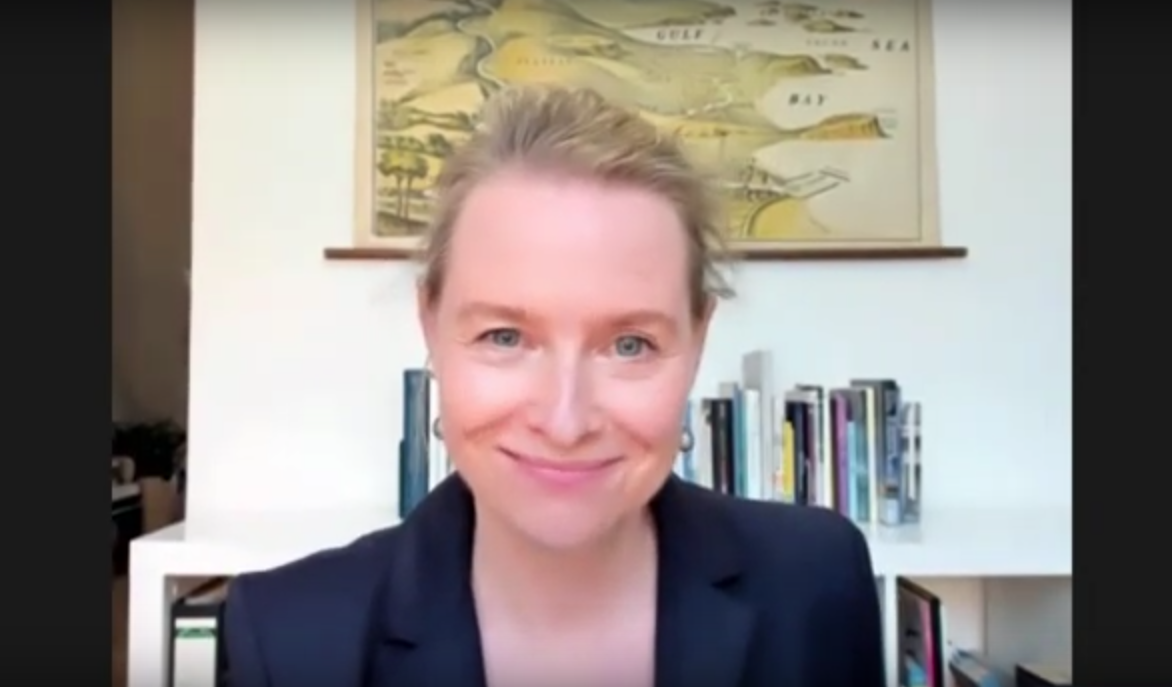
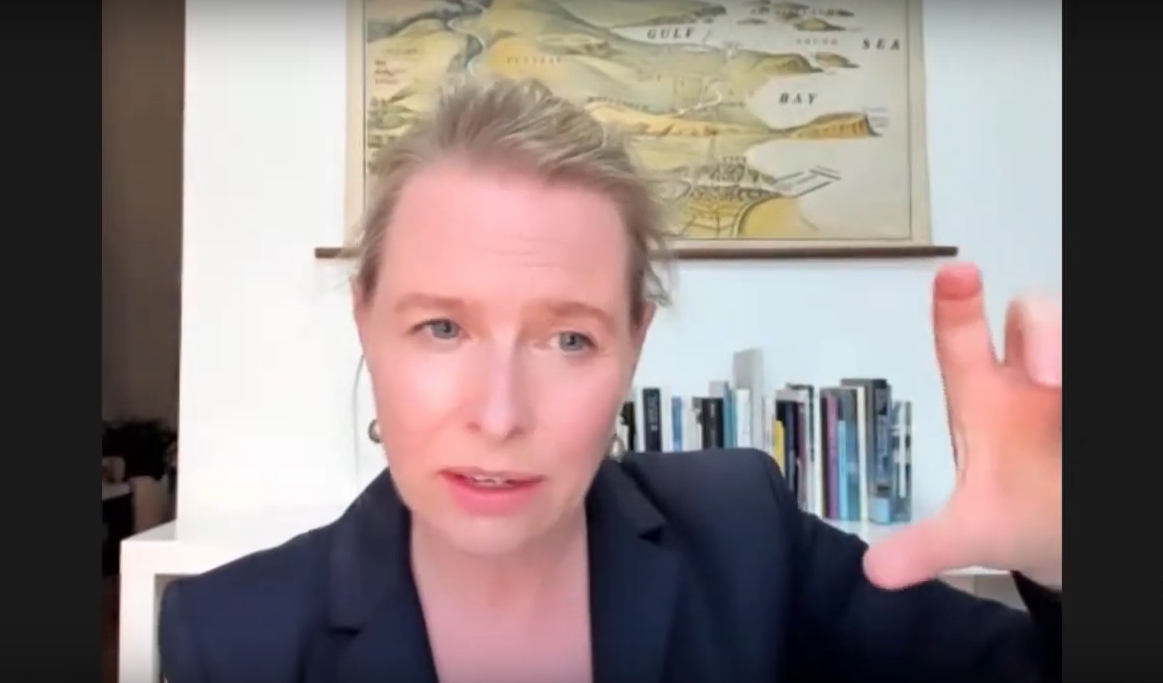
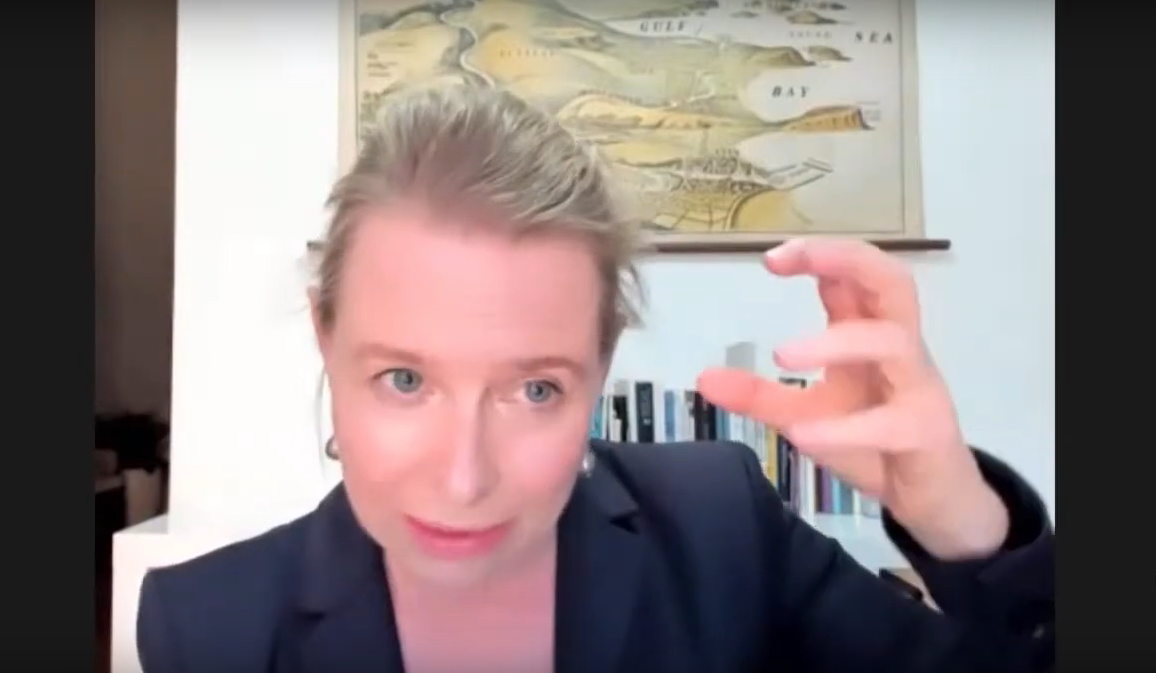
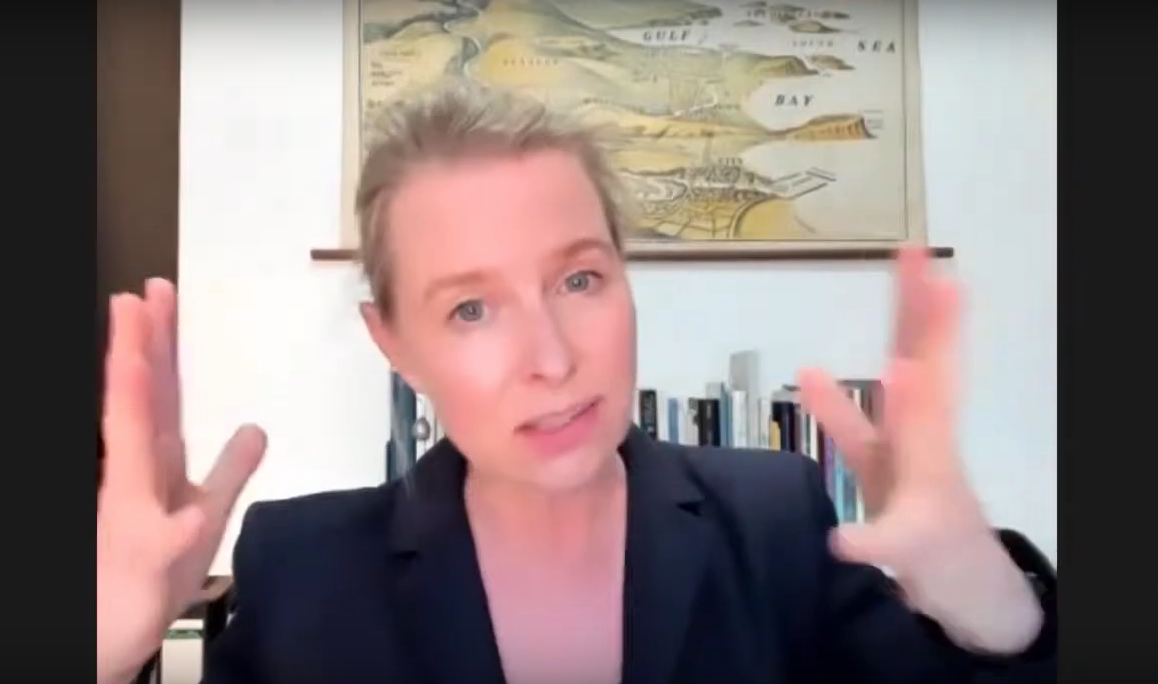

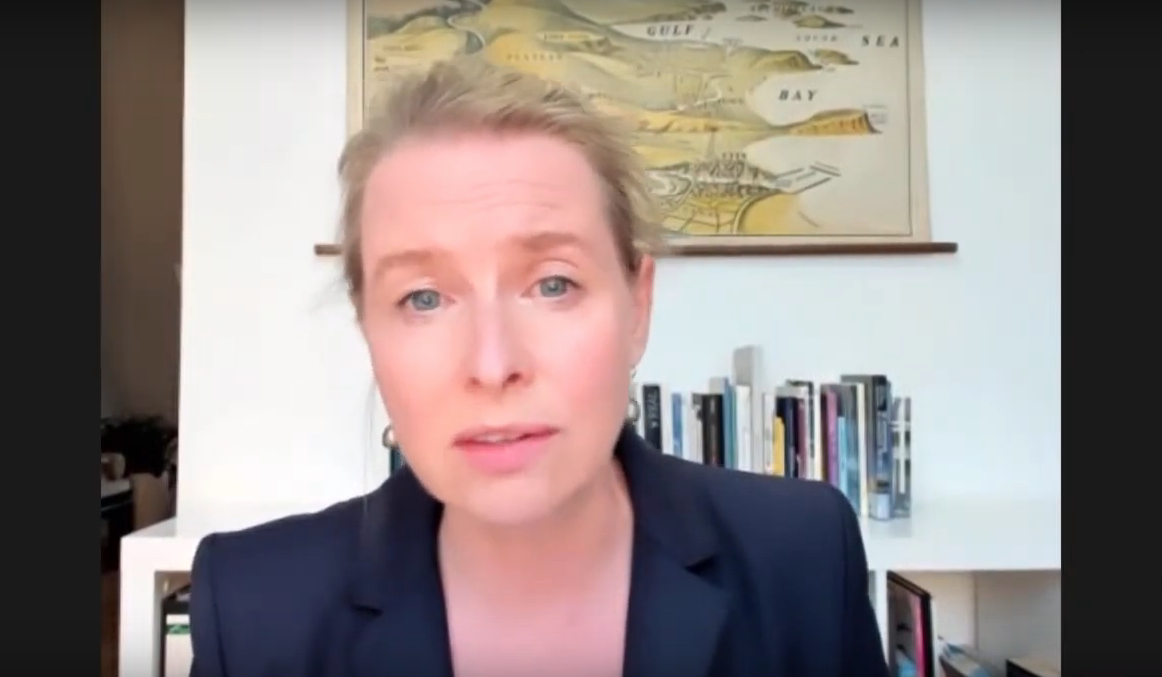
Eva Horn: Eva Horn ist seit 2009 Professorin für Neuere Deutsche Literatur an der Universität Wien, Forschungen zur Literatur und Kunst im Anthropozän, zu Narrativen der Katastrophe, Konzeptualisierungen des Klimas und zum politischen Geheimnis im 20. Jahrhundert, zahlreiche Publikationen, zu Verschwörungstheorien u. a. »Der geheime Krieg. Verrat, Spionage und moderne Fiktion« [2007], »Dark Powers. Conspiracies in History and Fiction« [2008] und »Die Fiktion von der jüdischen Weltverschwörung. Zu Text und Kontext der „Protokolle der Weisen von Zion“« [mit Michael Hagemeister, 2012], Beisitzerin im Vorstand des Gesprächskreises der Nachrichtendienste in Berlin.
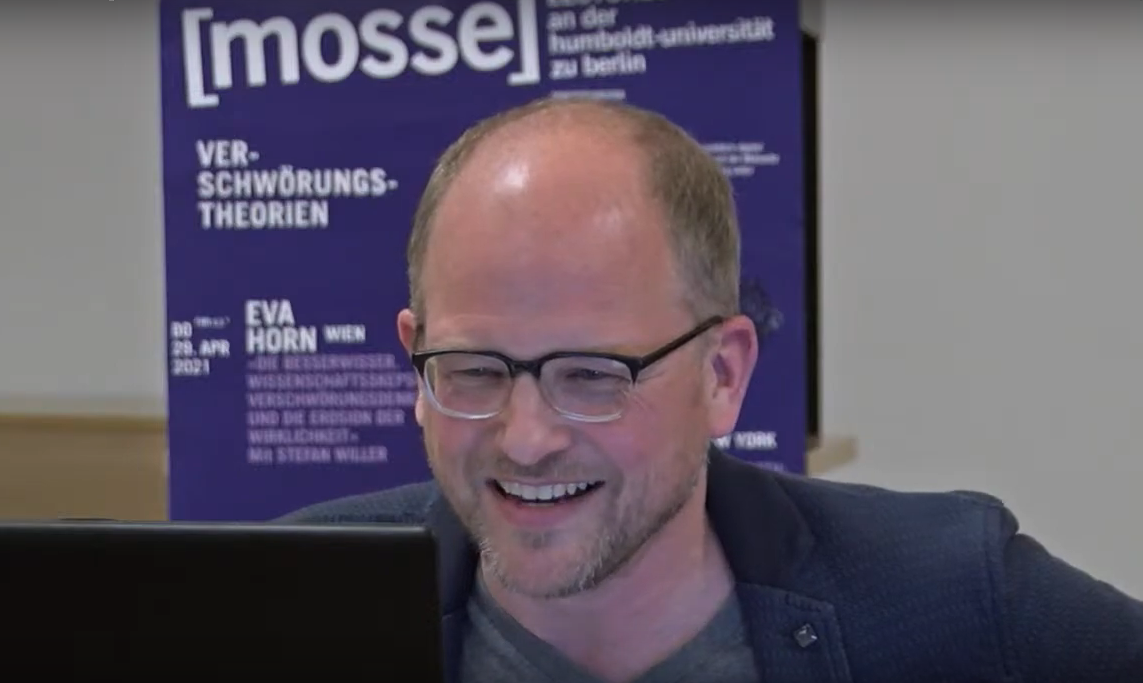
Stefan Willer is Professor of Modern German Literature at Humboldt-Universität zu Berlin. After studying German and Romance languages and literatures, and musicology, he earned his doctorate in 2001 from the University of Münster with a dissertation on Romantic linguistic theory. Between 2001 and 2018, he worked at the Leibniz Center for Literary and Cultural Research in Berlin, serving as deputy director since 2010. Also in 2010, he completed his habilitation at the Technical University of Berlin with a dissertation on the functions of inheritance and heritage in modern literary culture. Between 2014 and 2018, he held a special professorship at the Institute of Cultural History and Theory at Humboldt-Universität and moved to a chair at the Institute of German Literature in 2018. He has served as a visiting scholar and visiting professor at LMU Munich, the École des hautes études en sciences sociales in Paris, the National Autonomous University of Mexico, Stanford University, UC Santa Barbara, and Columbia University in New York City. His research focuses on the literary and intellectual history of generation, inheritance, and future, the interrelationships between literature and music, and theories of language and translation.
