
2021: Eliot Borenstein, “Informing Ourselves to Death: Conspiracy and Fantasy in Postmodern Russia”
Eliot Borenstein, “Informing Ourselves to Death: Conspiracy and Fantasy in Postmodern Russia“
Humboldt University Berlin Mosse Lecture
mosselectures.wisc.edu/berlin/
Thursday, 27 May 2021, 19:15 CET
Senatssaal of Humboldt University
Unter den Linden 6
1. Stock
10117 Berlin
GERMANY
Sponsored by:
[mosse] LECTURES an der humboldt-universität zu berlin
The Mosse Foundation
Global Mosse Lecture Series
Institut für deutsche Literatur
Humboldt University
Introduction: Ethel Matala de Mazza (Humboldt University)
Respondent: Michael Butter (Universität Tübingen)
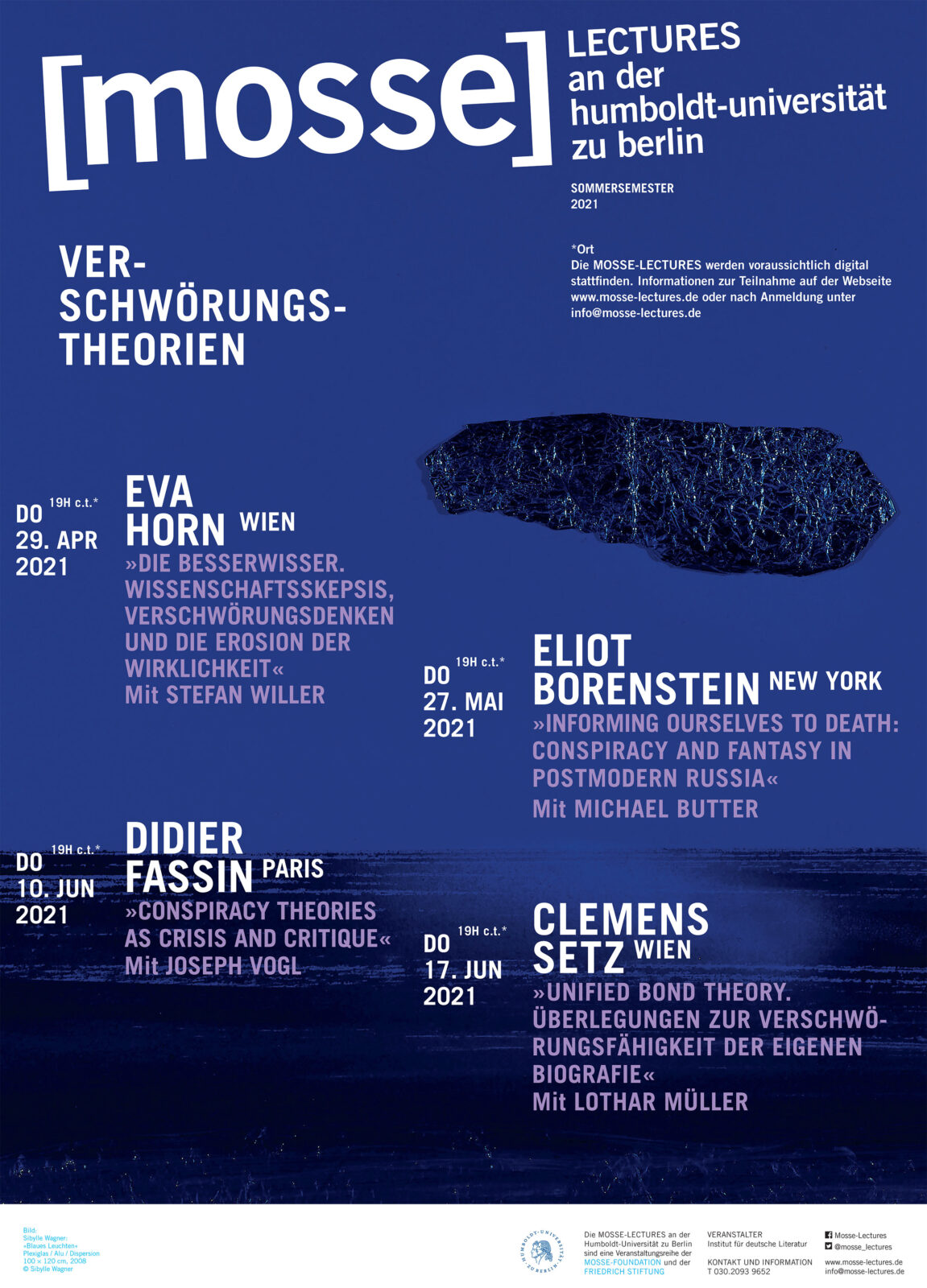
Lecture Description: In the USSR, information was a scarce resource shared only sparingly with the population at large; now Russians are awash in a flood of information. Yet each scenario proved conducive to unfettered suspicion and widespread conspiracy theorizing. Now the Russian media encourage viewers to believe they are surrounded by enemies who want to brainwash them with propaganda. Post-Soviet conspiracy theories peddle heroic fantasies of a victimized nation and contradictory messages about the nature of human subjectivity.
Lecture Series Theme: “Verschwörungstheorien”/”Conspiracy Theories”
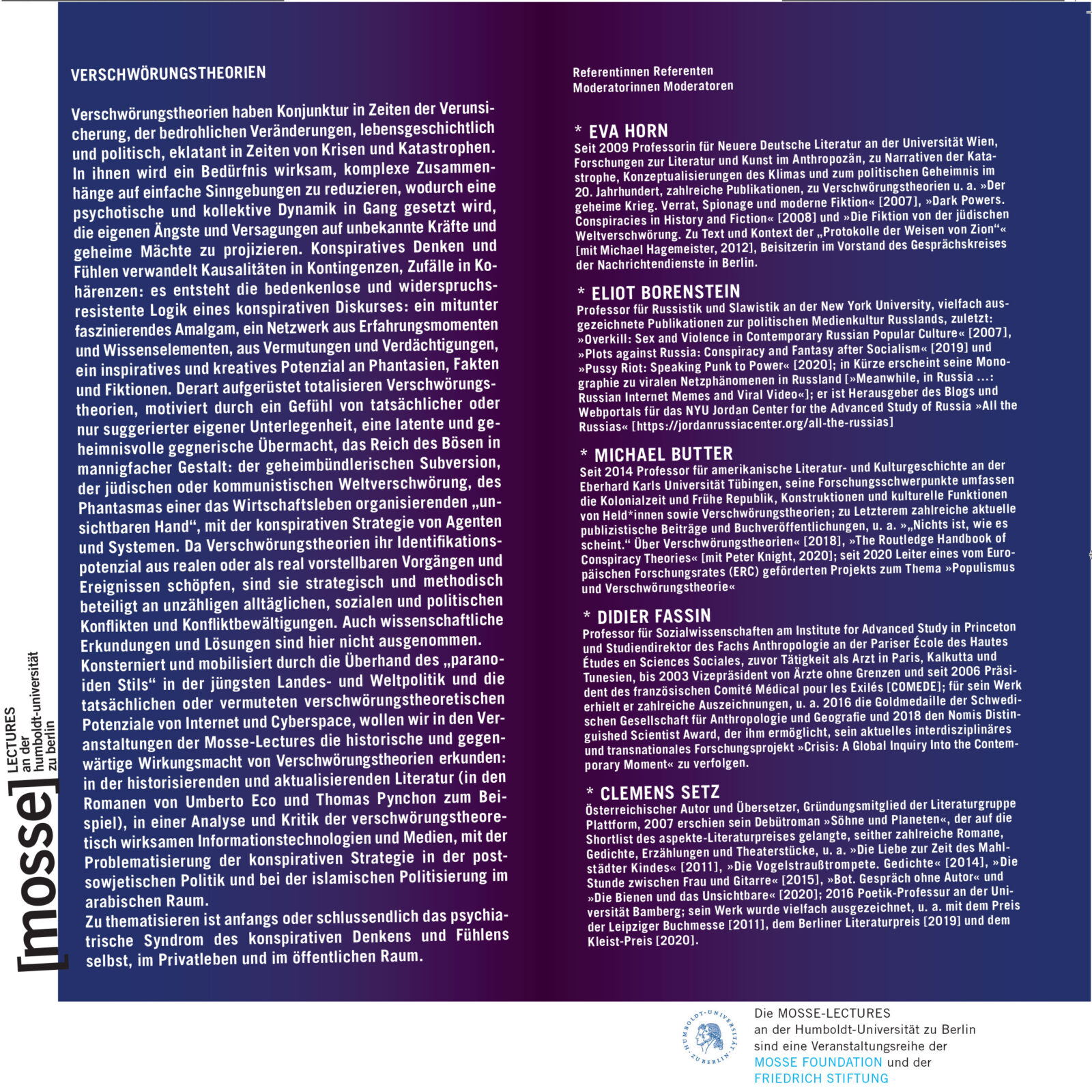
Lecture Series Description: Verschwörungstheorien haben Konjunktur in Zeiten der Verunsicherung, von bedrohlichen Veränderungen, lebensgeschichtlich und politisch, eklatant in Zeiten von Krisen und Katastrophen. In ihnen wird ein Bedürfnis wirksam, komplexe Zusammenhänge auf einfache Sinngebungen zu reduzieren. Eine psychotische und kollektive Dynamik wird in Gang gesetzt. Es entsteht die bedenkenlose und widerspruchsresistente Logik eines konspirativen Diskurses: ein mitunter phantasiereiches und faszinierendes Amalgam, ein Netzwerk aus Erfahrungsmomenten und Wissenselementen, aus Vermutungen und Verdächtigungen, aus Fakten und Fiktionen. Derart aufgerüstet erzeugen Verschwörungstheorien, motiviert durch ein Gefühl von tatsächlicher oder auch nur empfundener Benachteiligung oder Unterlegenheit, Ängste: vor einer angeblichen Bedrohung durch ein Reich des Bösen in Gestalt einer geheimbündlerischen Subversion oder einer jüdischen Weltverschwörung. Da Verschwörungstheorien ihr Identifikationspotenzial aus realen oder als real vorstellbaren Vorgängen und Ereignissen schöpfen, sind sie strategisch und methodisch beteiligt an unzähligen alltäglichen, sozialen und politischen Konflikten und Konfliktbewältigungen. In diesem Programm der Mosse-Lectures wollen wir die historische und gegenwärtige Wirkungsmacht von Verschwörungstheorien erkunden: in der historisierenden und aktualisierenden Literatur (bei Umberto Eco zum Beispiel), in einer Analyse und Kritik von verschwörungstheoretisch wirksamen Informationstechnologien und Medien, mit der Problematisierung konspirativer Strategien in der Politik (im postsowjetischen Russland z.B.).
In times of uncertainty and looming threats changes, conspiracy theories have become extremely popular again, in life stories as well as in political propaganda. In times of crisis and catastrophe an urgent need to reduce complexities to simple meanings gains attention, thus producing psychotic and collective dynamics by projecting personal fears and privations onto unknown forces and secret powers. Conspirative thinking and feel-ing transforms causalities and contingencies into an asserted coherence. Conspirative discourse thus invents its own logic, careless of facts and consistent in itself, fascinating for many as an amalgamate of well-known elements of experience and knowledge abruptly brought together: a creative and inspirational panoply of phantasies, presump-tions and suspicions, facts and fiction. Emotionally charged with an uncertain feeling of one’s own real or suggested inferiority, a hostile superior force is imagined, which acts mysteriously and is in total control. An evil empire appears in manifold shapes: the subversive energy of secret societies, the Jewish or communist world conspiracy, the economic phantasm of the invisible hand of the market, and all kinds of conspirative strategies of agents and systems. Since theories of conspiracy draw their potential of identification from real or presumably real activities and happenings they are part of innumerable every day social and political conflicts and conflict managements, including even scientific research and technical solutions. Ultimately, of course, the agenda of conspiracy theory might become conspirative itself. Faced with the rise of a »paranoid style« of conspiracy, which is gaining the upper hand in internet fake news and cyberspace activities in national and world politics, this series of Mosse-Lectures intends to take a second look at the power and impact of conspiracy theories both in history and in our own time. We focus on the fictional conspirative plots of Umberto Eco, Thomas Pynchon, and other recent narratives, on an analysis und critique of populist strategies and the complicity of information politics and media entertainment, on the political effects of conspiracy theories in post-Soviet Russia and the Arabic world, and, last but not least, on the psychiatric evidence of the conspirative syndrome itself in everyday life and in public relations.
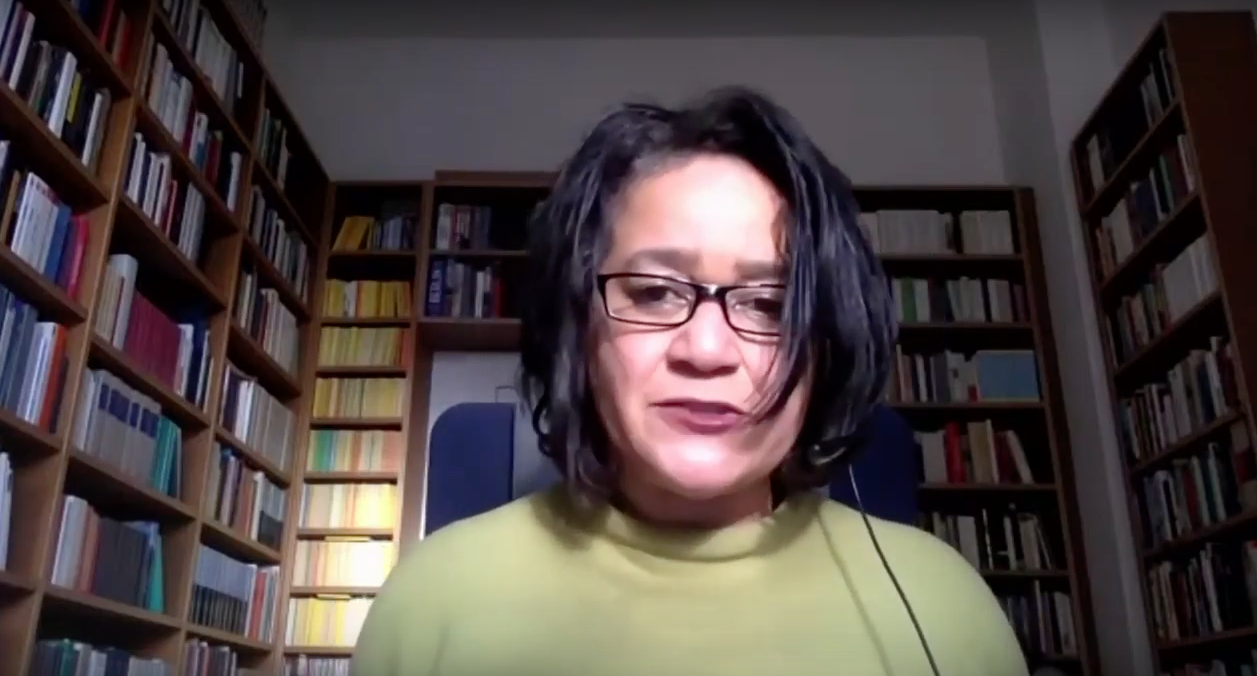
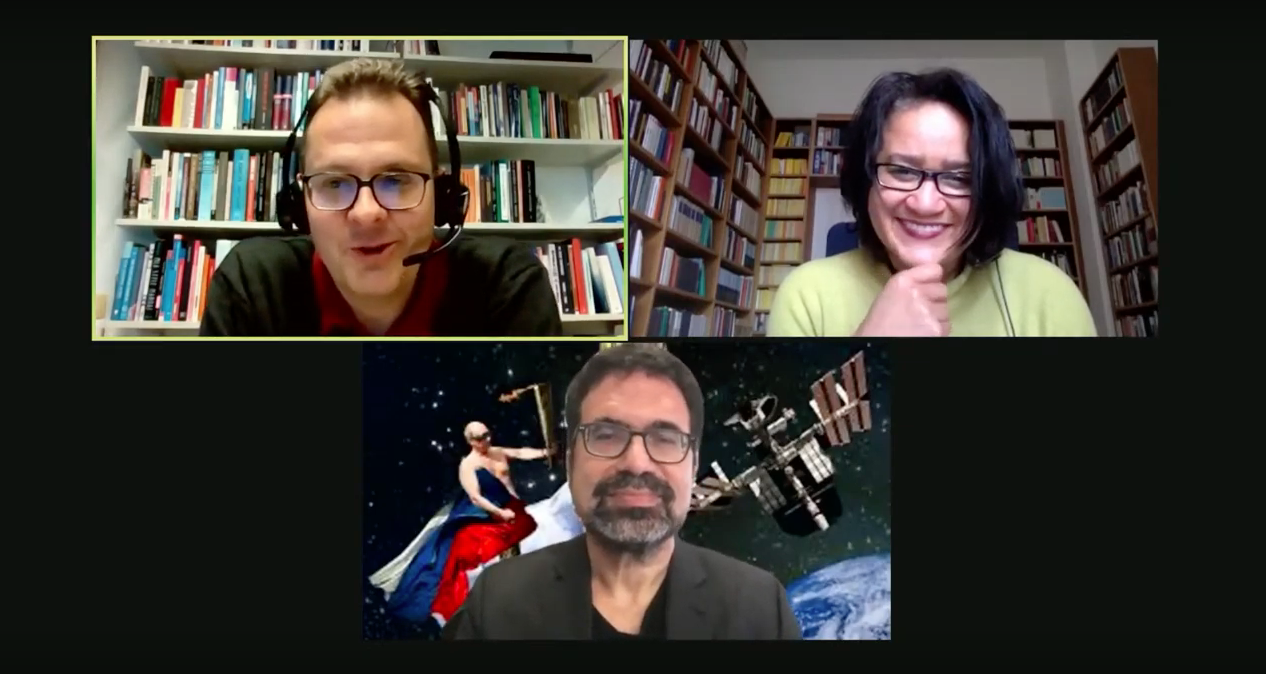
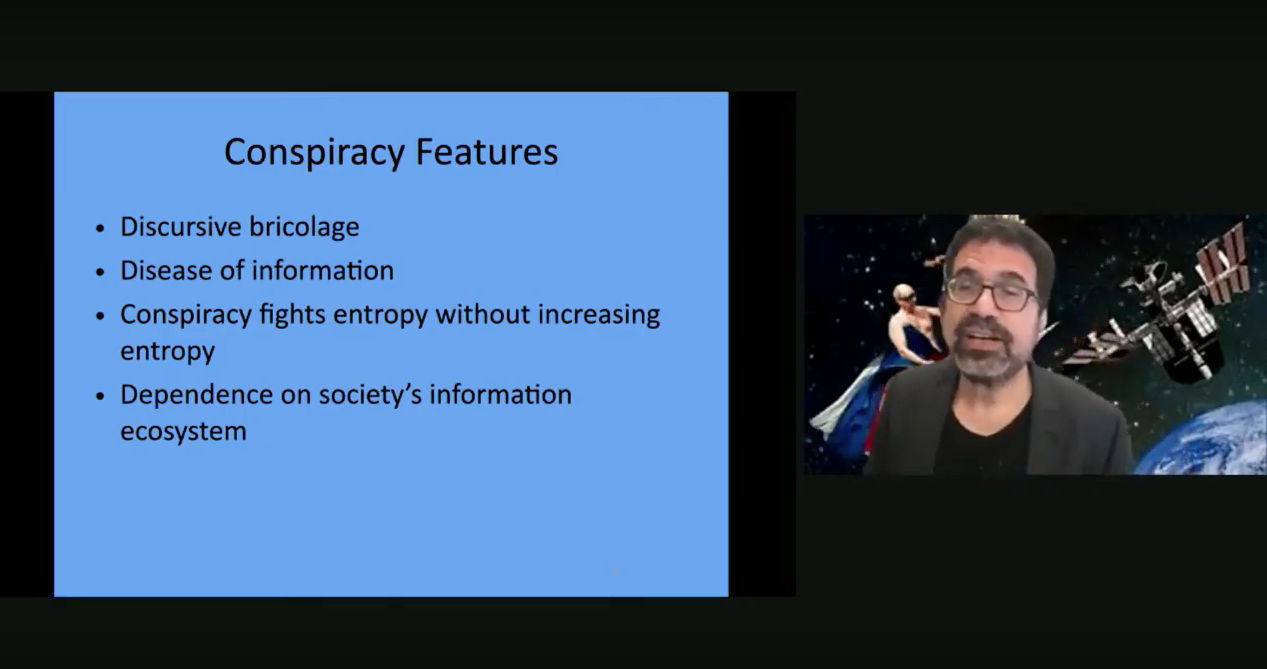
Eliot Borenstein: Eliot Borenstein ist Professor für Russistik und Slawistik an der New York University. Unter seinen vielfach ausgezeichneten Publikationen zur politischen Medienkultur Russlands finden sich zuletzt »Overkill: Sex and Violence in Contemporary Russian Popular Culture« [2007], »Plots against Russia: Conspiracy and Fantasy after Socialism« [2019] und »Pussy Riot: Speaking Punk to Power« [2020]. Demnächst erscheint seine Monographie zu viralen Netzphänomenen in Russland mit dem Titel »Meanwhile in Russia…: Russian Internet Memes and Viral Video«. Borenstein ist zudem Herausgeber des Blogs »All the Russians« für das NYU Jordan Center for the Advanced Study of Russia«.
Michael Butter has been Professor of American Literary and Cultural History at the University of Tübingen since 2014. He received his PhD from the University of Bonn in 2007 and his Habilitation from the University of Freiburg in 2012. He is the author of six monographs: The Epitome of Evil: Hitler in American Fiction, 1939–2002 (New York: Palgrave, 2009), Plots, Designs, and Schemes: American Conspiracy Theories from the Puritans to the Present (Berlin/Boston: de Gruyter, 2014), Der »Washington-Code«: Zur Heroisierung amerikanischer Präsidenten, 1775-1865 (Göttingen: Wallstein, 2016), “Nichts ist, wie es scheint”: Über Verschwörungstheorien (Berlin: Suhrkamp, 2018), a German introduction to conspiracy theories aimed at a general audience, which was translated into Polish, Portoguese and English as The Nature of Conspiracy Theories (London: Polity, 2020), From Panem to the Pandemic: An Introduction to Cultural Studies (Tübingen: Narr, 2023), a textbook for first-year students, and Die Alarmierten: Was Verschwörungstheorien anrichten (Berlin: Suhrkamp, 2025).
Ethel Matala de Mazza has been professor of modern German literature at Humboldt University since 2010. She is the author of three monographs, including Der populäre Pakt. Verhandlungen der Moderne zwischen Operette und Feuilleton (Fischer, 2018) and Der verfaßte Körper. Zum Projekt einer organischen Gemeinschaft in der Politischen Romantik (Rombach, 1999). She has served as a visiting professor at Johns Hopkins University, the University of Indiana, Bloomington, and the University of California, Berkeley, Harvard University, and the University of Chicago. She received her terminal degree in German literature at the University of Munich in 2007.
